Introduction to Zoisite Pricing and Market Overview
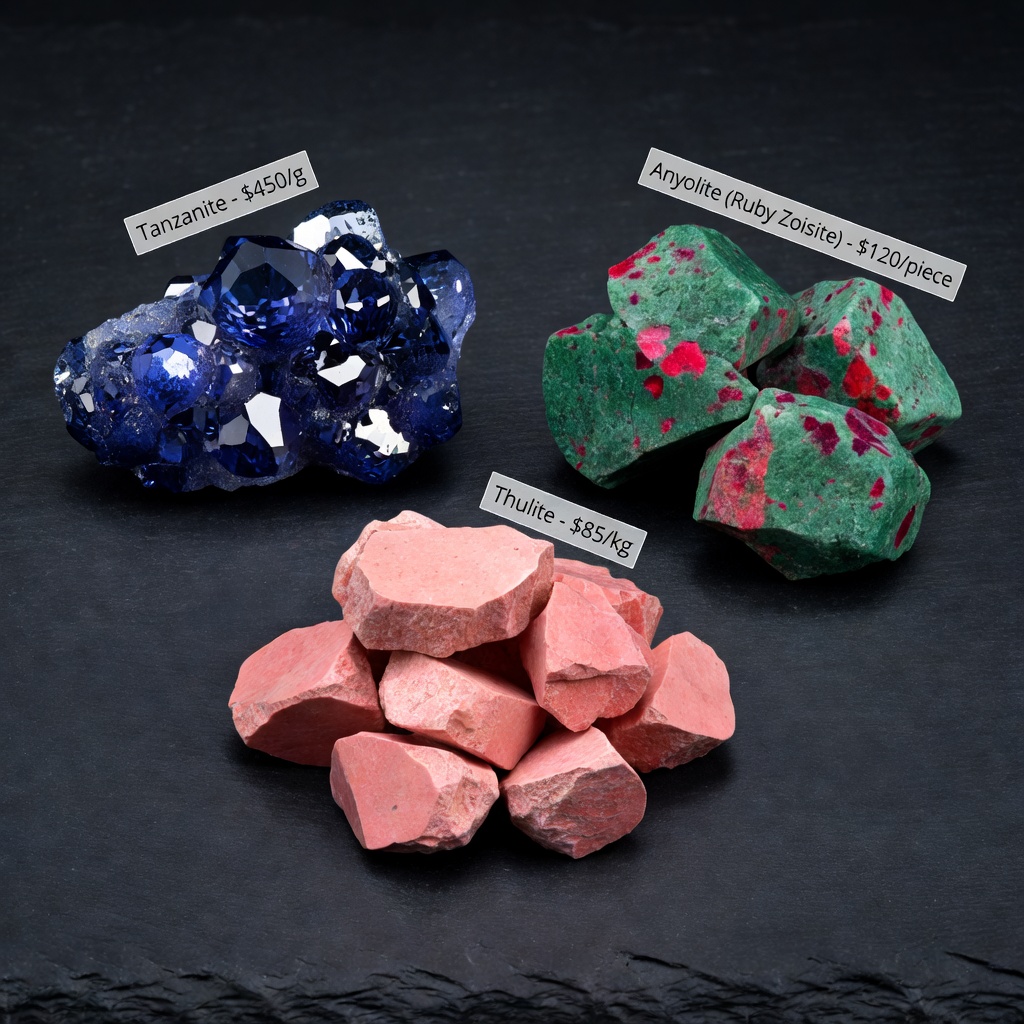
Navigating the diverse world of zoisite gemstones requires understanding that this mineral group encompasses several distinct varieties, each commanding vastly different price points in the global marketplace. As a comprehensive Zoisite Price Guide, this article examines how Tanzanite, Anyolite, and Thulite represent different ends of the value spectrum, from investment-grade precious stones to affordable collector specimens. The dramatic price variations between these zoisite varieties stem primarily from rarity, color intensity, and market demand, with Tanzanite often fetching thousands per carat while matrix stones like Ruby in Zoisite remain accessible to entry-level collectors.
Current 2024 market trends indicate continued volatility in the Tanzanite sector due to mining restrictions in Tanzania's Merelani Hills, while alternative zoisite varieties experience steady growth in the metaphysical and artisan jewelry markets. Understanding these dynamics helps buyers make informed decisions whether they seek a blue-violet investment piece or a distinctive pink cabochon for custom jewelry. The gemstone industry has witnessed increased scrutiny regarding ethical sourcing and treatment disclosure, factors that now significantly influence pricing structures across all zoisite categories.
Understanding Zoisite Varieties and Their Distinct Values
Tanzanite: The Premium Blue-Violet Variety
Tanzanite stands as the most valuable member of the zoisite family, commanding premium Tanzanite price per carat figures that rival fine sapphires in the upper quality tiers. This calcium aluminum silicate achieves its coveted blue-violet hue through trace vanadium content and standard heat treatment, with the most desirable stones exhibiting deep saturated color that shifts between royal blue and rich purple depending on viewing angle. Discovered exclusively in 1967 near Mount Kilimanjaro, Tanzanite's single-source origin contributes significantly to its investment status and escalating market values.
When evaluating Tanzanite for purchase, collectors should examine the stone's pleochroism, which reveals different colors when viewed from various crystallographic directions. High-quality specimens display strong trichroism showing blue, violet, and burgundy hues, with the cutting orientation specifically designed to maximize the blue-violet appearance most prized in the marketplace. Investment-grade Tanzanite typically weighs over three carats, as smaller stones rarely achieve the color saturation necessary for top-tier pricing categories.
Anyolite and Ruby in Zoisite Matrix
Ruby in Zoisite value derives from an entirely different aesthetic appeal, combining opaque green zoisite matrix with red corundum crystals and occasional black hornblende inclusions to create striking lapidary material. Unlike transparent Tanzanite, Anyolite (the proper mineralogical term for this combination) appeals to carvers and spiritual practitioners who value the contrasting colors and alleged metaphysical properties. The Anyolite market value depends heavily on the density and quality of ruby crystals embedded within the green host rock, with specimens containing distinct, well-formed red crystals commanding premium prices over uniform green material.
Collectors should note that Anyolite functions primarily as an ornamental and decorative stone rather than a faceted gemstone, though exceptional translucent sections may yield small cabochons or beads. The most valuable specimens originate from Tanzania's Longido mining district and display sharp color boundaries between the chrome-green zoisite and vivid red ruby crystals. When purchasing Anyolite for carving projects, examine the material for internal fractures that might compromise structural integrity during the cutting process.
Thulite and Pink Zoisite Varieties
Thulite gemstone pricing occupies the middle ground between investment-grade Tanzanite and commercial Anyolite, offering collectors an affordable entry point into the zoisite family with distinctive pink to rose-red coloration. This manganese-rich variety typically occurs in massive formations suitable for cabochons, beads, and decorative objects rather than faceted gemstones, though rare transparent crystals from Norway or North Carolina can yield cut stones. The color intensity in Thulite ranges from pale salmon to deep raspberry, with the most valuable specimens exhibiting uniform saturation without brownish or grayish modifiers.
Norwegian Thulite, historically associated with the region of Telemark, often commands higher prices due to its association with traditional Scandinavian lapidary arts and typically superior color stability compared to material from newer discoveries. When evaluating Thulite for jewelry applications, consider that the stone's hardness of 6.5 on the Mohs scale requires protective settings to prevent scratching during daily wear. Cabochon quality Thulite generally ranges from $10 to $100 per carat depending on color depth and translucency, making it significantly more accessible than Tanzanite for budget-conscious collectors.
Clinozoisite and Lesser-Known Varieties
Clinozoisite represents the monoclinic dimorph of zoisite, appearing in various green, gray, and yellow hues that rarely achieve gem quality but occasionally yield collector crystals. While not commercially significant compared to Tanzanite or Thulite, fine epidote-clinozoisite specimens from locations like Pakistan or Austria attract mineral collectors seeking complete crystal formations. These varieties typically trade as mineral specimens rather than cut gemstones, with values determined by crystal size, luster, and association with other minerals rather than standard gemological grading criteria.
Critical Factors Affecting Zoisite Gemstone Prices
Color Evaluation and Pleochroism
Understanding zoisite quality factors begins with color assessment, particularly the complex pleochroic nature that makes Tanzanite both challenging to cut and potentially valuable when properly oriented. The gemstone grading system for Tanzanite specifically prioritizes the depth of violet-blue saturation, with stones exhibiting rich royal blue hues commanding prices ten times higher than pale or predominantly violet specimens. Master cutters must orient the table of the stone perpendicular to the crystallographic b-axis to maximize blue color transmission while minimizing the brownish or yellowish tints visible from other angles.
For Thulite, color evaluation focuses on the purity of pink tones without brownish undertones, while Anyolite valuation examines the contrast ratio between green matrix and red ruby inclusions. Heat treatment, considered standard and permanent for Tanzanite, transforms brownish rough material into the coveted blue-violet hues, meaning that untreated stones with natural blue coloration (extremely rare) command significant premiums in specialized collector markets.
Clarity Standards Across Varieties
Clarity expectations vary dramatically between transparent Tanzanite and opaque matrix varieties like Anyolite. Investment-grade Tanzanite requires eye-clean clarity with no visible inclusions at six inches, though some collectors accept minor inclusions in stones over ten carats where color saturation compensates for reduced transparency. Thulite clarity grading accommodates translucent to opaque material, with the highest cabochon values assigned to stones exhibiting even color distribution and minimal surface-reaching fractures.
When examining Tanzanite specifically, watch for silk inclusions that may indicate potential durability issues or zoning patterns that create uneven color distribution. These characteristics significantly impact both aesthetic appeal and long-term value retention, particularly for stones intended as heirloom pieces or investment vehicles.
Cut Quality and Brilliance Optimization
The impact of cut quality on zoisite pricing cannot be overstated, particularly for Tanzanite where improper orientation destroys the stone's primary value proposition. Premium cutting commands 20-30% price premiums over commercial cutting because skilled lapidaries maximize color while maintaining optimal proportions for light return. Mixed cuts featuring step-cut crowns and brilliant-cut pavilions have become popular for Tanzanite, combining the color retention benefits of emerald cuts with the sparkle of brilliant faceting patterns.
For cabochon varieties like Thulite, cutting quality manifests in symmetrical dome profiles, smooth polish without surface imperfections, and optimal height-to-width ratios that maximize color display. Poorly cut cabochons with flat domes or uneven surfaces substantially reduce marketability and value, even when the rough material exhibited excellent color.
Carat Weight Premiums and Size Rarity
Zoisite pricing follows exponential rather than linear progression regarding carat weight, particularly for Tanzanite where crystals large enough to yield finished stones over five carats represent significant mining rarities. While commercial-grade Tanzanite under one carat might retail for $100-$300 per carat, equivalent quality stones exceeding ten carats command $800-$1,500 per carat due to the mathematical scarcity of large, clean crystals. This multiplier effect makes size one of the most critical value drivers for serious collectors and investors.
However, size premiums apply only when the larger stone maintains comparable color and clarity standards to smaller specimens. A large Tanzanite with washed-out color or prominent inclusions may actually prove less valuable per carat than a smaller, intensely saturated stone. When building a collection, prioritize color quality over size unless specifically seeking rare large specimens for investment portfolios.
Tanzanite Price Per Carat Breakdown (2024)
Current market analysis reveals distinct pricing tiers for Tanzanite price per carat based on standardized quality grades that account for color, clarity, and cutting precision. Understanding these blue zoisite value categories helps buyers establish realistic budgets and recognize genuine bargains versus potential misrepresentations.
AAA Grade: Investment Quality
AAA grade Tanzanite represents the pinnacle of commercial availability, displaying deep violet-blue color with strong saturation visible under all lighting conditions, including the challenging fluorescent lighting found in office environments. These stones typically range from $400 to $800 per carat for sizes between one and five carats, with prices escalating to $1,000-$2,000 per carat for exceptional specimens over five carats. When purchasing AAA grade material, insist on certification from recognized laboratories like GIA or AGL verifying that the color results from standard heat treatment rather than surface coatings or fracture filling.
Case Study: A 3.5-carat oval Tanzanite purchased in 2020 for $1,400 per carat ($4,900 total) recently appraised at $2,100 per carat ($7,350 total) due to escalating scarcity and improved cutting techniques that maximized its pleochroic blue axis. This appreciation illustrates the investment potential of top-tier material when properly documented and stored.
AA Grade: Fine Commercial Quality
AA grade Tanzanite offers excellent value for jewelry applications, displaying good violet-blue color that may appear slightly lighter than AAA material or show more prominent purple secondary hues. Pricing typically falls between $200 and $400 per carat, making this tier accessible for significant jewelry pieces like cocktail rings or pendants without compromising visual impact. These stones should still appear eye-clean with good brilliance, though they may exhibit slight windowing or less optimal color zoning compared to premium grades.
When shopping in this category, compare stones side-by-side under natural daylight and incandescent lighting to assess color stability. Some AA grade stones perform remarkably well in jewelry settings despite lower grading, particularly those with exceptional cutting that maximizes face-up color appearance.
Commercial Grade: Entry Level
Commercial grade Tanzanite, priced between $50 and $200 per carat, provides accessible entry points for collectors and jewelry enthusiasts seeking genuine material without investment-grade budgets. These stones typically display lighter blue or predominantly lavender colors, may show visible inclusions, or exhibit cutting that sacrifices brilliance for weight retention. While not suitable for speculative investment, commercial grade Tanzanite works beautifully in fashion jewelry, beaded designs, or as starter pieces for new collectors learning to appreciate the species.
Purchasers should verify that even commercial material has undergone proper heat treatment to ensure color stability, as improperly treated stones may fade over time when exposed to sunlight or heat sources. Setting commercial grade stones in closed-back mountings with reflective foil can enhance their apparent color depth and improve their visual presentation.
Carat Size Multipliers
Beyond quality grades, size significantly impacts Tanzanite price per carat calculations. Stones under one carat generally trade at the lower end of their respective quality ranges, while stones between two and five carats command standard pricing. However, once Tanzanite exceeds five carats, prices typically increase by 50-100% per carat due to the rarity of large clean crystals. Exceptional stones over twenty carats essentially become "price on request" items, with values determined by auction results and private treaty sales rather than standard market metrics.
Ruby in Zoisite and Thulite Pricing Analysis
Anyolite Value Assessment
The Ruby in Zoisite value proposition differs fundamentally from transparent gemstones, with pricing based on aesthetic composition rather than optical performance. Current market rates for Anyolite market value range from $5 to $50 per carat for rough material, while finished cabochons or carved objects may retail for $20 to $200 depending on artistic merit and ruby crystal density. Specimens featuring distinct, hexagonal ruby crystals standing in relief against the green zoisite matrix command the highest prices, particularly when the red corundum shows asterism (star effects) under direct lighting.
When purchasing Anyolite for lapidary projects, examine the material for structural integrity, as the differential hardness between ruby (9 Mohs) and zoisite (6.5 Mohs) can create polishing challenges and potential fracture points. High-value Anyolite often originates from specific Tanzania localities known for producing material with sharp color contrast rather than muddy, indistinct boundaries between green and red zones.
Thulite Gemstone Pricing Structures
Thulite gemstone pricing varies based on geographic origin, color intensity, and finished form, with rough material suitable for cabbing available for $2-$10 per carat while fine finished cabochons retail for $15-$75 per carat. Norwegian material typically commands 30-50% premiums over newer discoveries from Australia or the United States due to historical significance and generally superior color stability. Collector specimens featuring crystal formations rather than massive material trade as mineral specimens with values determined by aesthetic display qualities rather than carat weight.
For jewelry designers, Thulite offers excellent value compared to other pink gemstones like Morganite or pink sapphire, providing distinctive color at fraction of the cost. When purchasing Thulite beads for strand jewelry, expect to pay $50-$200 for sixteen-inch strands of 8-10mm beads, with price variations reflecting color consistency and drilling quality.
Collector-Grade Specimens
Beyond standard cabochon material, exceptional Thulite and Anyolite specimens featuring distinct crystal formations, association minerals, or exceptional size attract mineral collector attention. These pieces trade on the specimen market rather than the gemstone market, with values determined by display aesthetics, provenance documentation, and rarity of the specific formation. A Thulite specimen featuring sharp, terminated crystals on matrix might command $500-$2,000 depending on size and visual impact, while comparable weight in cabochon material would value significantly less.
Where to Buy Zoisite: Dealers, Shows, and Online Markets
Established Dealers and Certification Requirements
When seeking to buy zoisite gemstones, prioritize established dealers who provide detailed certified zoisite documentation from recognized gemological laboratories. Reputable sellers should offer GIA (Gemological Institute of America), AGL (American Gemological Laboratories), or Tanzanite Foundation certification for high-value Tanzanite, verifying origin, treatments, and quality assessments. Professional dealers maintain transparent pricing structures, offer examination periods for high-value purchases, and provide detailed invoices suitable for insurance and appraisal purposes.
Before committing to significant purchases, research dealer reviews through the Better Business Bureau, Gemological Institute alumni networks, and industry forums like PriceScope or the Gemology Online community. Established dealers typically specialize in specific zoisite varieties, with some focusing exclusively on investment-grade Tanzanite while others cater to the lapidary and metaphysical markets for Anyolite and Thulite.
Tanzania Direct Sourcing
Direct sourcing from Tanzania offers potential cost advantages for bulk purchases or unique specimens, though it carries significant risks regarding treatment disclosure and export documentation. The Merelani mining area occasionally allows limited tourist access through licensed tour operators, while Arusha maintains a robust gemstone market where rough and cut stones trade daily. However, buyers should exercise extreme caution regarding "bush treatments" where rough Tanzanite undergoes improper heating in charcoal fires, potentially resulting in unstable color or damaged crystals.
If pursuing direct sourcing, engage licensed export companies who handle customs documentation and provide legal provenance required for import into Western markets. Unlicensed export of rough gemstones from Tanzania violates local mining laws and can result in confiscation at border crossings, regardless of purchase legitimacy.
Online Marketplace Evaluation
Online platforms offer convenient access to zoisite varieties, but require careful vetting to avoid misrepresented or synthetic stones. When purchasing certified zoisite online, demand high-resolution photography showing the stone against white and gray backgrounds, videos demonstrating pleochroism (for Tanzanite), and detailed certification images. Avoid listings using stock photos or heavily processed images that obscure inclusions or color zoning.
Reputable online vendors provide return periods of at least seven days for examination by independent appraisers, secure payment methods offering buyer protection, and detailed descriptions of any treatments or enhancements. For Tanzanite purchases exceeding $1,000, consider using escrow services that release funds only after gemological verification.
Red Flags and Misrepresentation
Be alert for several warning signs indicating potentially problematic purchases: prices significantly below market rates (suggesting synthetic material, glass, or coated stones), reluctance to provide certification, or descriptions using vague terms like "natural color" for Tanzanite (which typically requires heat treatment). For Anyolite, verify that red inclusions are genuine ruby (corundum) rather than dyed minerals or red spinel, which some unscrupulous sellers substitute. Thulite requires verification that pink coloration results from natural manganese content rather than dye treatments applied to white zoisite.
Investment Potential and 2024 Market Predictions
Tanzanite Rarity and Single-Source Dynamics
From a gemstone investment guide perspective, Tanzanite presents unique opportunities due to its exclusive origin in a single mining district measuring approximately seven square kilometers at the base of Mount Kilimanjaro. Geological surveys suggest that economically viable Tanzanite deposits may deplete within the next two decades, creating supply constraints that historically correlate with price appreciation in gemstone markets. This geological scarcity, combined with increasing global demand from Asian markets particularly China and India, supports zoisite market trends indicating continued value growth for fine material.
However, investment success requires purchasing at appropriate quality tiers; commercial-grade Tanzanite rarely appreciates significantly, while exceptional untreated or finely colored stones demonstrate stronger historical performance. The Tanzania government's increasing regulation of the mining sector, including restrictions on rough exports and licensing requirements, further constrains supply while potentially increasing documentation costs passed to consumers.
Anyolite and Thulite Collectibility
While Tanzanite dominates investment discussions, high-quality Anyolite specimens from depleted Tanzanian localities and classic Norwegian Thulite demonstrate steady appreciation within specialized collector markets. These varieties appeal to mineral collectors and lapidary artists rather than pure investors, offering more modest but consistent value growth driven by aesthetic appeal and crafting demand. Rare Thulite exhibiting transparent crystal formations or Anyolite with exceptional ruby crystal size represent the most likely candidates for appreciation within these categories.
Comparative Analysis with Blue Gemstones
When evaluating Tanzanite as an investment vehicle, compare its performance against established blue gemstones like sapphire, aquamarine, and blue topaz. Tanzanite currently trades at significant discounts to fine Kashmir or Burmese sapphires while offering comparable beauty, suggesting potential for market realignment as supply constraints intensify. Unlike treated blue topaz, which faces unlimited synthetic competition, Tanzanite's singular origin provides natural supply limitations that support long-term value retention.
Investment tip: Focus on acquiring untreated or traditionally heated stones over five carats with certification from prestigious laboratories, as these pieces demonstrate the strongest auction results and insurance valuation trends. Avoid stones with clarity enhancement or coating treatments, which significantly impair resale liquidity and long-term value stability.
Treatments, Enhancements, and Pricing Transparency
Standard Heat Treatment Protocols
Understanding treated zoisite prices requires acknowledging that virtually all commercially available Tanzanite undergoes heat treatment to transform brownish or grayish rough material into the coveted blue-violet hues. This process, conducted at temperatures between 400-600 degrees Celsius, is considered permanent and stable, making heated Tanzanite fully accepted within the trade without price penalties. However, the distinction between natural vs treated gemstones becomes significant for investment pieces, where unheated stones exhibiting natural blue coloration (extraordinarily rare) command premiums of 50-200% over standard heated material.
When evaluating pricing, consider that heat treatment requires disclosure but does not constitute "enhancement" in the negative sense applied to temporary treatments like oiling or coating. Reputable dealers clearly label heat treatment status on certifications, allowing buyers to make informed decisions based on accurate representation.
Fracture Filling and Coating Detection
More problematic than standard heating are fracture-filling treatments using glass or resin to mask inclusions in lower-quality Tanzanite, or surface coatings applied to improve color appearance temporarily. These treatments significantly impact treated zoisite prices, with filled stones typically trading at 50-70% discounts to untreated equivalents due to durability concerns and potential color instability. Detection requires microscopic examination or advanced spectroscopic analysis, emphasizing the importance of purchasing certified stones from reputable sources.
Warning signs for coated stones include surface scratches revealing different color layers, unusual surface luster, or color concentrations concentrated along facet junctions. For fracture-filled material, look for flash effects when tilting the stone under lighting, or cloudy appearances in previously clear areas that suggest filler degradation.
Ethical Disclosure Requirements
Professional ethics within the gemstone trade require explicit disclosure of all treatments beyond standard heating, yet the zoisite market occasionally sees misrepresented material from informal mining operations. When purchasing significant Tanzanite investments, insist on reports specifying "no indications of heating" for premium natural material, or "heated" for standard treated stones. For Thulite and Anyolite, treatments are rare, but dye treatments occasionally appear in low-quality material, necessitating basic gemological testing for expensive purchases.
Insurance implications vary based on treatment status; fracture-filled stones may prove difficult to insure at full replacement value, while standard heated Tanzanite faces no such restrictions. Always update insurance appraisals every three to five years to reflect current market values and treatment verification.
Caring for Your Zoisite to Maintain Long-term Value
Cleaning Protocols and Chemical Avoidance
Proper zoisite care begins with understanding that despite reasonable hardness (6.5-7 Mohs), zoisite varieties suffer from perfect cleavage in one direction, making them susceptible to chipping or splitting if struck or subjected to ultrasonic vibrations. Never clean Tanzanite, Thulite, or Anyolite using ultrasonic cleaners or steam cleaning equipment, as these methods can exploit cleavage planes or damage heat-treated material. Instead, use mild soap and warm water with a soft brush, followed by careful rinsing and air drying or patting with lint-free cloths.
Avoid exposing zoisite gemstones to harsh chemicals including bleach, ammonia, or acids found in household cleaners, which can etch surfaces or attack fracture fillings in treated stones. Remove zoisite jewelry before swimming in chlorinated pools or using hot tubs, as thermal shock and chemical exposure create unnecessary risks for these collectible gemstones.
Storage and Scratch Prevention
Gemstone maintenance for zoisite requires separate storage from harder gems like diamonds, sapphires, or rubies that could scratch softer varieties. Store Tanzanite rings and pendants in individual soft cloth pouches or lined jewelry boxes with compartments, preventing contact with other pieces during storage or travel. For Anyolite specimens and Thulite carvings, display cases with padded bases protect against accidental impacts while controlling environmental factors like humidity and light exposure.
When traveling with valuable Tanzanite, carry pieces in hand luggage rather than checked baggage to prevent rough handling or temperature extremes in cargo holds. Consider removing rings during activities involving impact risks, such as gardening, sports, or heavy lifting, to protect both the stone and its setting.
Thermal Shock Protection
Zoisite varieties remain sensitive to sudden temperature changes, which can cause internal fracturing or exacerbation of existing inclusions. Never expose these gemstones to extreme heat sources like open flames, hot automotive interiors, or rapid transitions between temperature extremes. When cleaning, use lukewarm rather than hot water, and allow stones to adjust to room temperature gradually if they have been stored in cold environments.
Professional maintenance should include annual inspections by qualified jewelers who can check for loose settings, worn prongs, or developing chips before they compromise the stone's security. For high-value Tanzanite pieces, consider periodic re-polishing by master lapidaries to remove minor surface scratches that accumulate over years of wear, restoring original brilliance and maintaining resale value.
Final Buying Recommendations and Price Negotiation Tips
Budget Allocation Strategies
Successfully navigating this Zoisite Price Guide requires establishing realistic budgets aligned with quality expectations and intended use. For investment purposes, allocate minimum budgets of $2,000-$5,000 to acquire Tanzanite with genuine appreciation potential, focusing on stones over three carats with AAA color grades. Jewelry enthusiasts seeking wearable art might allocate $500-$1,500 for AA grade Tanzanite or exceptional Thulite cabochons that offer distinctive aesthetics without investment premiums.
When buying zoisite gemstones, resist the temptation to maximize size at the expense of quality; a smaller, intensely saturated stone typically provides greater long-term satisfaction and value retention than a larger, washed-out specimen. Consider setting aside 15-20% of your gemstone budget for custom cutting or re-cutting services that can transform poorly shaped rough or commercial-cut stones into optimized gems displaying maximum color and brilliance.
Essential Questions for Dealers
Before finalizing purchases, interrogate dealers regarding specific origin details, treatment histories, and return policies. Ask: "Does this certificate indicate heat treatment only, or are there other enhancements?" "What is your policy regarding independent verification if my appraiser disagrees with your quality assessment?" "Can you provide provenance documentation for this specific piece?" Reputable sellers welcome these questions and provide detailed responses without evasion or pressure tactics.
For significant investments, negotiate appraisal contingencies allowing return of the stone if independent evaluation reveals undisclosed treatments or quality misrepresentation. Professional dealers typically offer 5-10% flexibility on listed prices for cash payments or multiple-item purchases, though excessive bargaining may indicate the initial price was inflated or the seller lacks confidence in the material.
Return Policies and Documentation
Insist on written return policies allowing at least five business days for examination by independent gemologists, particularly for purchases exceeding $1,000. Secure detailed receipts describing the stone's measurements, treatments, and any guarantees regarding natural origin. Photograph the stone immediately upon receipt, documenting any existing inclusions or characteristics that prove identity in case of future disputes or insurance claims.
Building a Diversified Collection
Comprehensive zoisite varieties collections should balance investment-grade Tanzanite with affordable Thulite and Anyolite specimens that demonstrate the mineral group's remarkable diversity. Consider acquiring rough material alongside cut stones to appreciate the lapidary transformation process, or focus on specific localities known for exceptional material. Document your collection with photographs, certificates, and purchase records, maintaining organized files that facilitate insurance updates, estate planning, or future sales.
By following these guidelines and understanding the value factors outlined throughout this guide, collectors and investors can confidently navigate the zoisite marketplace, acquiring genuine, fairly priced specimens that provide both aesthetic pleasure and potential financial appreciation.
Frequently Asked Questions
How much does high-quality Tanzanite cost per carat?
Top-grade AAA Tanzanite typically ranges from $400 to $800+ per carat for stones under 5 carats, with prices increasing exponentially for larger sizes. Commercial grade stones with lighter saturation may cost $50-$200 per carat, while investment-grade deep violet-blue specimens can exceed $1,000 per carat.
Is Ruby in Zoisite (Anyolite) expensive compared to Tanzanite?
Ruby in Zoisite is significantly more affordable than Tanzanite, typically ranging from $5 to $50 per carat depending on the density and quality of ruby crystals within the green zoisite matrix. While Tanzanite is prized for its rarity and color, Anyolite is valued more for its unique aesthetic appeal and spiritual properties rather than investment potential.
What factors cause Zoisite prices to increase most dramatically?
The primary value drivers are color saturation (deep violet-blue for Tanzanite, vivid pink for Thulite), clarity with minimal inclusions, carat weight above 5 carats for Tanzanite, and untreated natural status. Origin documentation from Tanzania and unique optical phenomena like strong pleochroism also command premium pricing.
Where is the safest place to buy authentic Zoisite gemstones?
Purchase from established dealers who provide GIA or AGL certification, especially for high-value Tanzanite. Reputable gem shows like Tucson or Bangkok offer direct sourcing opportunities, while online purchases should be limited to vendors with detailed photos, return policies, and third-party verification. Avoid 'too good to be true' prices on auction sites.
Does Zoisite have good investment potential in 2024?
Tanzanite offers strong investment potential due to its single-source location in Tanzania and depleting mining deposits, suggesting future scarcity. However, Thulite and Anyolite are better suited for collectors rather than pure investors. Focus on untreated, certified stones over 3 carats with exceptional color for maximum appreciation potential.
How can I tell if my Zoisite is natural or treated?
Most Tanzanite on the market undergoes standard heat treatment to enhance blue-violet color, which is industry-accepted and permanent. Look for certification indicating 'heated' versus 'unheated.' Avoid stones with surface coatings or fracture filling. Thulite and Anyolite are rarely treated, making them easier to verify as natural through basic gemological testing.
What is the average price for a 2-carat Tanzanite engagement ring stone?
A 2-carat Tanzanite suitable for an engagement ring typically costs between $400 and $1,600 depending on quality grade. AA grade stones with good color saturation average $600-$800, while AAA grade with exceptional depth of color ranges from $800-$1,600. Setting costs and metal choice will add significantly to the total investment.
Why do Thulite and Anyolite prices vary so much between sellers?
Price variation stems from matrix quality, ruby crystal density in Anyolite, and cutting quality for Thulite cabochons. Rough specimens command different prices than finished jewelry pieces. Additionally, artisan-cut stones from specific regions like Norway (Thulite) or Tanzania (Anyolite) may carry premiums based on provenance and craftsmanship rather than just material value.