What Is Serendibite? Understanding the World's Rarest Gemstone
Serendibite stands as one of the most elusive treasures in the gemological world, with fewer than 25 faceted specimens documented in existence worldwide. This extraordinary borosilicate mineral was first discovered in 1902 by Dunil Palitha Gunasekera in the Ambakotte region of Sri Lanka, a country historically known as Serendib in Arabic texts, hence the gemstone's evocative name. Chemically composed of calcium magnesium aluminum borosilicate with the complex formula Ca2(Mg3Al6)O2[Si6B3O27], serendibite crystallizes in the triclinic system and possesses a hardness of 6.5 to 7 on the Mohs scale, making it suitable for jewelry but requiring protective settings due to its relative softness compared to sapphires or diamonds.
The gem's extreme rarity stems from its highly specific geological formation requirements, occurring only in high-grade metamorphic rocks under precise conditions of temperature and pressure. Unlike diamonds or rubies that form in multiple geological environments globally, serendibite has been found in economically viable quantities in only three locations worldwide: Sri Lanka, Myanmar (Burma), and Madagascar. Sri Lankan specimens typically exhibit the coveted translucent blue-green to greenish-blue coloration that commands premium prices in the collector market, while Burmese material tends toward opaque black varieties with a distinctive vitreous to pearly luster. The mineral's complex crystal structure and specific gravity ranging from 3.42 to 3.52 create unique optical properties that distinguish it from look-alike minerals such as spinel or tourmaline.
Current Serendibite Price Per Carat and Market Values
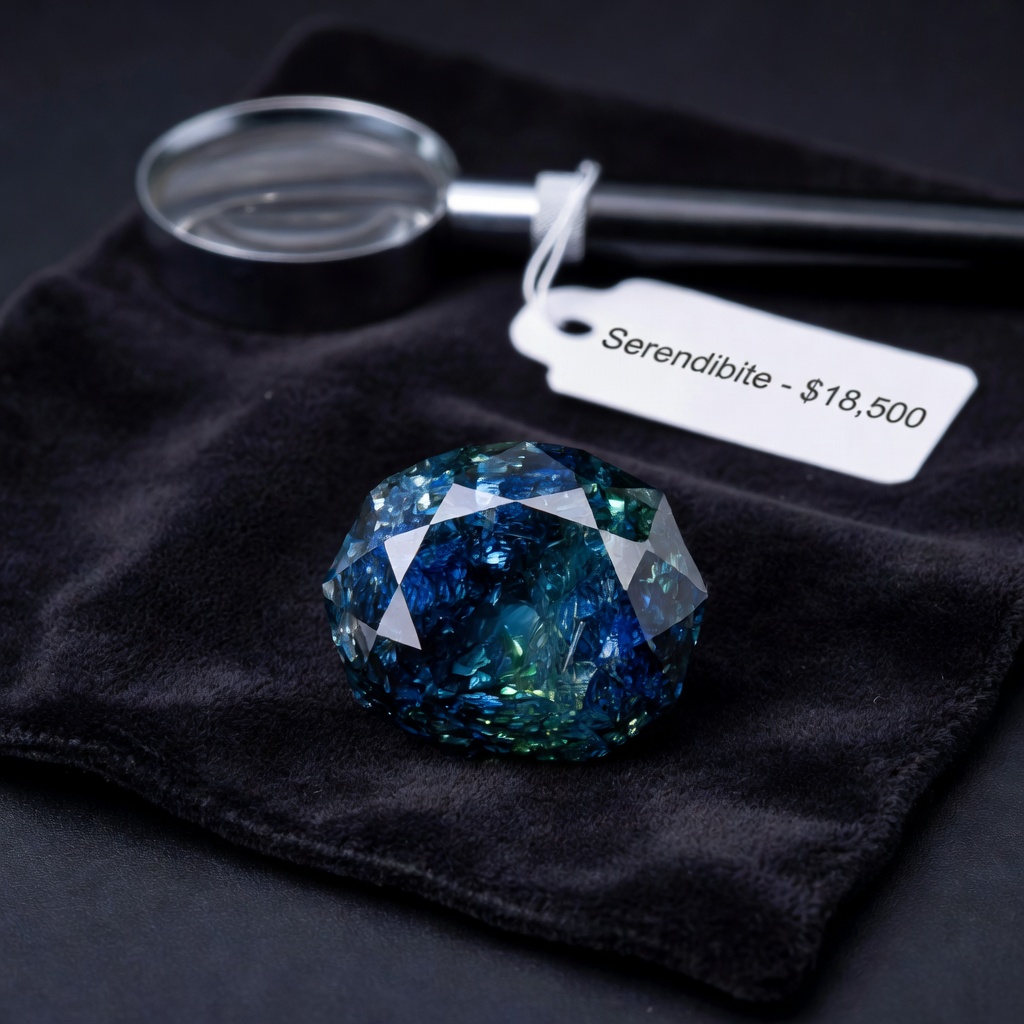
Understanding the Serendibite Price Guide requires recognizing that this gemstone operates in a completely different economic stratosphere than conventional jewelry stones, with values ranging from $2,000 to well over $10,000 per carat for exceptional specimens. The serendibite value per carat follows an exponential rather than linear progression, meaning a two-carat stone may command five to ten times the price per carat of a half-carat specimen due to the extreme unlikelihood of discovering larger crystals suitable for faceting. Recent auction results from major houses like Christie's and Sotheby's have demonstrated sustained demand among ultra-high-net-worth collectors, with a 0.35-carat blue-green Sri Lankan specimen selling for $4,200 per carat in 2022, while a rare 1.02-carat flawless example achieved $18,000 per carat in a private sale the following year.
Market fluctuations for serendibite remain relatively insulated from broader economic downturns affecting traditional investments, primarily because supply is so severely constrained that demand consistently outpaces availability. Black opaque serendibite from Myanmar typically trades in the $1,000 to $3,000 per carat range, offering entry-level opportunities for collectors, though these stones lack the investment-grade potential of their translucent Sri Lankan counterparts. Pricing transparency remains challenging in this niche market, as most transactions occur through private treaty sales between specialized dealers and collectors rather than public exchanges, necessitating relationships with established gemological networks to access accurate valuation data. Investors should anticipate paying significant premiums for stones accompanied by prestigious laboratory certifications verifying Sri Lankan origin, as this provenance consistently commands 40-60% higher prices than material from secondary sources.
Quality Factors That Determine Serendibite Prices
The valuation hierarchy for serendibite quality factors places color as the primary determinant of worth, with translucent specimens displaying intense blue-green hues representing the pinnacle of desirability and commanding the highest serendibite value per carat premiums. Stones exhibiting the rare combination of transparency and vivid coloration, often described as resembling fine Paraiba tourmaline but with superior rarity, can achieve prices exceeding $10,000 per carat when cut to optimal proportions. Clarity standards for collector-grade serendibite differ significantly from diamonds, as the gemological community accepts minor inclusions as evidence of natural origin in such rare materials, though eye-clean specimens without surface-reaching fractures command substantial premiums and are considered museum-quality acquisitions.
Cut quality presents unique challenges in the serendibite market due to the extreme scarcity of rough material, with cutters often prioritizing carat weight retention over ideal optical performance. Most faceted serendibites weigh less than 0.5 carats, making stones exceeding one carat extraordinarily valuable regardless of minor cutting imperfections, though skilled lapidaries who maximize brilliance while minimizing weight loss can add 20-30% to a stone's market value. The physical properties of serendibite, including perfect cleavage in one direction and a hardness of 6.5, require master cutters to orient the table facet carefully to prevent breakage during the cutting process, explaining why many specimens appear in protected cabochon forms rather than brilliant cuts. When evaluating potential purchases, collectors should seek stones with polished girdles and symmetrical facets that minimize extinction while showcasing the material's characteristic high refractive index and vitreous luster.
Serendibite vs Painite: Comparing the World's Rarest Gems
The debate between serendibite vs painite as the ultimate rare gemstone investment requires understanding how recent geological discoveries have shifted rarity metrics within the collector community. While painite held the Guinness World Record as the world's rarest gemstone mineral for decades with fewer than 25 known crystals prior to 2001, subsequent finds in Myanmar have yielded thousands of rough painite specimens, significantly increasing supply and moderating price appreciation. Conversely, serendibite has maintained its extreme scarcity with fewer than 25 faceted stones known to exist globally, and no significant new deposits discovered in the past two decades, creating a supply constraint that favors long-term value retention for this calcium magnesium aluminum borosilicate.
Visual identification between these two most expensive gemstones reveals distinct characteristics that influence their respective markets and liquidity profiles. Serendibite typically presents in blue-green to black colors with a triclinic crystal system and distinctive pleochroism showing different colors when viewed from different angles, while painite occurs in brownish-red to orange hues with a hexagonal crystal structure and higher hardness of 8 on the Mohs scale. From an investment perspective, serendibite offers superior liquidity among serious mineral collectors due to its established presence in major auction houses and recognition among gemological institutions, whereas painite markets remain more fragmented with greater price volatility due to the influx of new material from Burmese mines. Collectors building rare gemstone investment portfolios often allocate positions in both minerals, though serendibite currently offers more predictable appreciation trajectories based on documented auction history spanning three decades.
Investment Potential and Market Trends
Rare gemstone investment strategies increasingly incorporate serendibite as a non-correlated asset class, with historical data indicating price appreciation exceeding 300% over the past decade for fine Sri Lankan specimens. This performance outpaces traditional inflation hedges like gold and silver while offering portfolio diversification benefits distinct from stock market fluctuations or real estate cycles, as the ultra-wealthy collector base for these minerals remains insulated from economic downturns that affect mass-market luxury goods. The asset class functions similarly to fine art or rare stamps, requiring specialized knowledge and long-term holding periods of 10 to 20 years to maximize returns, though serendibite offers the advantage of compact wealth storage with millions of dollars of value concealable in a small safety deposit box.
Market dynamics for serendibite reveal evolving demand patterns, particularly from Asian collectors in Hong Kong, Singapore, and mainland China who view Sri Lankan serendibite as both a status symbol and tangible store of value amid currency fluctuations. Liquidity considerations require careful planning, as selling a six-figure serendibite specimen typically requires 6 to 18 months to find the appropriate buyer through specialized dealers or auction consignment, unlike the immediate liquidity available for gold bullion or blue-chip stocks. Successful investors in this space typically allocate no more than 5-10% of their alternative investment portfolio to ultra-rare gems like serendibite, maintaining sufficient cash reserves to avoid forced sales during market dips. Case studies of significant collections, such as the American Museum of Natural History's acquisition of a 0.90-carat blue-green serendibite in 2015 for $12,000 per carat—subsequently valued at over $35,000 per carat by 2023—demonstrate the compound annual growth rates achievable for museum-quality specimens with impeccable provenance.
Authentication and Certification Requirements
Serendibite identification requires sophisticated laboratory analysis beyond the capabilities of standard gemological equipment, necessitating certification from prestigious institutions such as the Gemological Institute of America (GIA), GemResearch Swisslab (GRS), or American Gemological Laboratories (AGL). These reports must specifically verify the stone's natural origin, geographic source (distinguishing between Sri Lankan, Burmese, and Madagascar material), and absence of treatments such as heat enhancement or fracture filling that would significantly impact value. Spectroscopic identification methods, particularly Raman spectroscopy and energy-dispersive X-ray fluorescence (EDXRF), detect the characteristic boron content and specific chemical fingerprint of calcium magnesium aluminum borosilicate that distinguishes genuine serendibite from simulants.
Common misidentifications occur between serendibite and dark blue spinel, black tourmaline (schorl), or even serendibite-coated synthetic spinel composites that have appeared in unregulated online markets. Collectors should exercise extreme caution regarding stones offered without comprehensive lab reports, as the high serendibite value per carat creates incentives for unscrupulous dealers to substitute less expensive materials. Advanced testing identifies treatments such as oiling or resin impregnation sometimes used to mask surface-reaching fractures in lower-quality black serendibite from Myanmar, practices that reduce value by 60-80% compared to untreated natural specimens. When acquiring stones for rare gemstone investment purposes, insist on "origin opinion" reports from laboratories with specific expertise in rare borosilicate minerals, as standard diamond grading reports lack the analytical data necessary to confirm serendibite's unique chemical composition and crystallographic properties.
Where to Purchase Serendibite Safely
Acquiring authentic Sri Lankan serendibite requires navigating highly specialized channels, with reputable auction houses such as Christie's, Sotheby's, and Bonhams offering the most secure entry points for serious collectors, albeit at premium prices reflecting their buyer's premiums of 20-25%. These establishments provide due diligence regarding provenance and authenticity that justifies the additional cost, particularly for stones exceeding $50,000 in value where the risk of sophisticated forgeries increases. Specialized mineral dealers with established GIA credentials and memberships in professional organizations like the International Gem Society or American Gem Trade Association represent alternative sources, though buyers should verify the dealer's history of handling rare borosilicates specifically rather than general jewelry gemstones.
Direct sourcing opportunities exist through established relationships with Sri Lankan mining operations in the Ratnapura district or Kandy region, though international buyers must navigate complex export regulations requiring permits from the National Gem and Jewellery Authority of Sri Lanka and compliance with CITES regulations if specimens contain associated minerals. Red flags for fraudulent sales include prices significantly below the Serendibite Price Guide ranges, listings on general e-commerce platforms without laboratory certification, and sellers claiming "new discoveries" of large rough material suitable for faceting. Practical due diligence includes requesting video documentation of the specific stone under consideration, verifying the laboratory certification number directly with the issuing institution, and utilizing escrow services for transactions exceeding $10,000 to ensure both parties fulfill authentication and payment obligations before the stone changes hands.
Care, Storage, and Insurance for High-Value Specimens
Proper serendibite care begins with understanding its physical limitations, as the 6.5-7 hardness rating places it susceptible to scratching from everyday dust (which contains quartz particles rated at 7 hardness) and impact damage due to perfect cleavage in one crystallographic direction. Storage requirements specify individual soft pouches or compartmentalized boxes lined with microfiber or untreated cotton, preventing contact with harder gemstones like diamonds, rubies, or sapphires that could abrade the surface during transportation. Environmental controls should maintain stable humidity levels between 45-55% to prevent potential degradation of any natural fractures within the stone, while temperature fluctuations should be minimized to avoid thermal shock that could exploit internal stress planes.
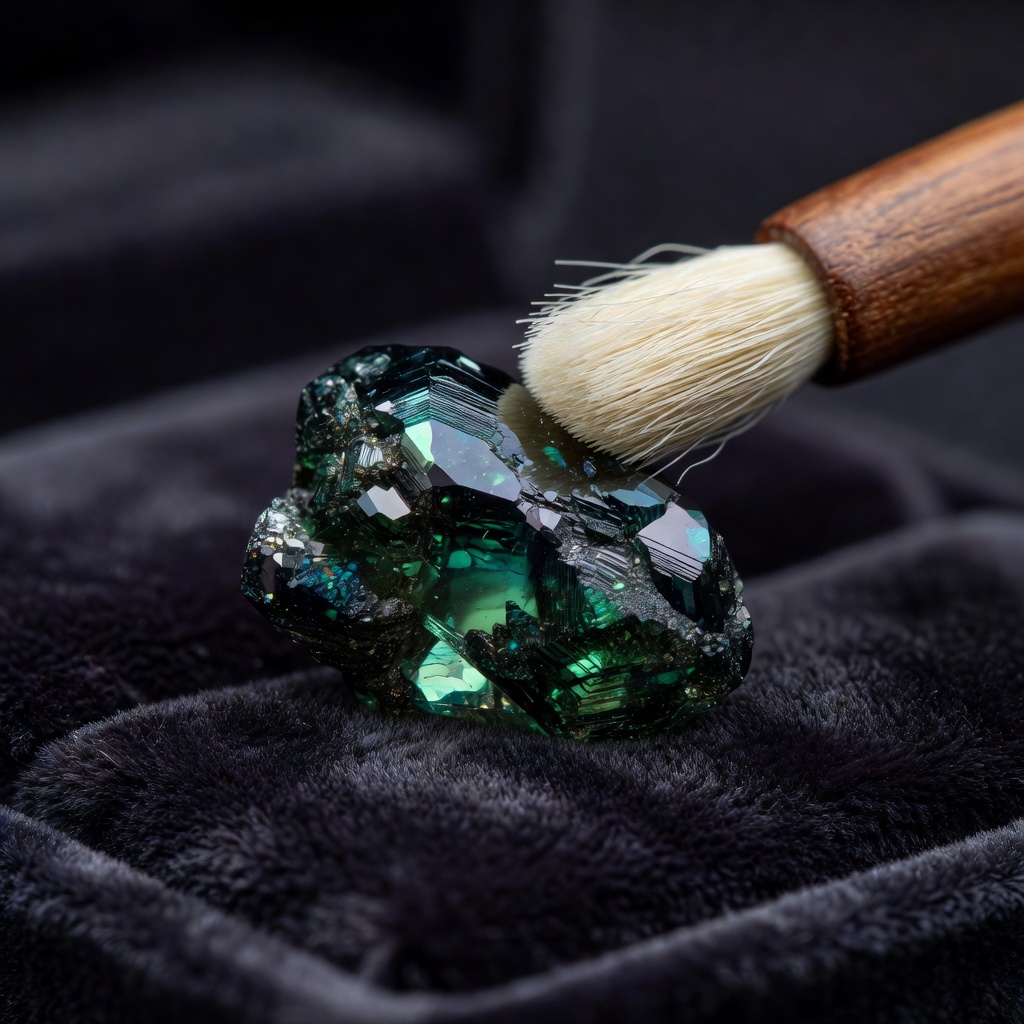
Professional cleaning methods for serendibite exclude ultrasonic cleaners and steam systems that could shatter the stone through vibration or thermal expansion, instead recommending gentle wiping with a soft cloth dampened with distilled water and mild phosphate-free soap. Jewelry settings for these irreplaceable specimens require protective bezels rather than exposed prong settings, with six-monthly inspections by master jewelers to check for loose mountings that could result in loss. Insurance coverage presents unique challenges, as standard homeowner's policies typically cap jewelry coverage at $1,000-$2,500 without specific riders, necessitating specialized fine art and collectibles insurance through carriers like Chubb, AIG, or Lloyd's of London that understand the illiquid nature of rare gemstones. Appraisal requirements demand updated valuations every 18-24 months from gemologists specifically experienced in rare mineral valuations, with documentation including high-resolution photography, spectroscopic analysis copies, and provenance records stored in secure digital and physical formats.
Future Market Outlook and Availability
The long-term supply outlook for serendibite market trends indicates increasing scarcity as primary alluvial deposits in Sri Lanka's gem gravels become depleted after over a century of intermittent mining, with no significant new discoveries reported since 2005 despite intensive exploration in traditional gem-bearing regions. Secondary deposits in Myanmar's Mogok Stone Tract and Madagascar's Tranomaro area continue to produce limited quantities of lower-grade black material, though political instability in Myanmar and environmental restrictions in Madagascar constrain commercial extraction of gem-quality crystals. Geological surveys suggest the specific metamorphic conditions required for serendibite formation—high-pressure, low-temperature contact metamorphism of boron-rich evaporites—occur in perhaps a dozen localities globally, with most already identified and producing minimal yields.
Technological advances in synthetic gemstone production currently pose limited threats to the natural serendibite market, as the complex chemical composition and specific crystal structure have not yet been successfully replicated in commercial quantities, though collectors should remain vigilant regarding future developments in hydrothermal growth technology. Demand projections indicate continued growth from Asian collectors seeking tangible assets, potentially outpacing the minuscule annual supply of new material entering the market, which estimates suggest totals less than 50 grams of rough crystals capable of yielding faceted stones worldwide each year. This supply constraint, combined with increasing recognition among rare gemstone investment advisors, suggests sustained price appreciation for gem-quality Sri Lankan specimens, potentially establishing serendibite as the definitive "blue chip" mineral for next-generation collectors who prioritize absolute rarity over brand recognition associated with diamonds or emeralds.
Frequently Asked Questions
How Much Is Serendibite Worth Per Carat?
Serendibite typically ranges from $2,000 to $10,000+ per carat for gem-quality specimens, with exceptional blue-green translucent stones commanding the highest prices. Prices increase exponentially for stones over 1 carat due to extreme rarity, as the mathematical probability of finding crystals large enough to yield cut stones exceeding one carat approaches statistical improbability. Black opaque specimens from Myanmar represent the lower end of this pricing spectrum, while eye-clean Sri Lankan material with vivid saturation can breach $15,000 per carat in private sales between established collectors.
What Makes Serendibite More Valuable Than Diamonds?
Serendibite is significantly rarer than diamonds, with fewer than 25 faceted specimens documented worldwide compared to millions of diamonds mined annually. Its extreme scarcity, combined with complex chemical composition and limited geographic occurrence, drives higher per-carat values, particularly as diamonds benefit from industrial-scale mining operations and marketing campaigns that serendibite lacks. While diamonds serve mass-market jewelry applications, serendibite occupies the ultra-rare collector niche where supply constraints create natural price floors unaffected by synthetic diamond competition or marketing fluctuations.
Where Can I Buy Authentic Serendibite?
Authentic serendibite should be purchased through reputable auction houses (Christie's, Sotheby's), established rare gemstone dealers with GIA credentials, or directly from verified Sri Lankan mineral sources. Always require laboratory certification from GIA, GRS, or AGL before purchasing, and verify the certificate number independently with the issuing laboratory to prevent document fraud. Avoid general e-commerce platforms or social media sellers offering "wholesale" prices, as the extreme rarity of this material precludes discount pricing or bulk availability.
Is Serendibite Suitable for Daily Wear in Jewelry?
Due to its 6.5-7 hardness rating and extreme rarity, serendibite is better suited for occasional wear or investment collection rather than daily jewelry. Protective settings and careful handling are essential to prevent scratching or damage to these irreplaceable specimens, with bezel settings preferred over prong mounts to minimize exposure to impact. Most collectors choose to store serendibite in secure vaults while wearing replica stones or lesser gems for daily adornment, reserving the genuine article for rare public appearances or exhibition purposes.
How Can I Verify if My Serendibite Is Genuine?
Genuine serendibite requires laboratory verification through Raman spectroscopy or advanced gemological testing. Visual inspection alone is insufficient; always obtain certification from recognized labs checking for chemical composition (calcium magnesium aluminum borosilicate) and natural origin. Be particularly wary of stones resembling dark blue spinel or black tourmaline offered as serendibite without accompanying documentation, and insist on tests distinguishing natural material from potential synthetic simulants or treated stones.
What Is the Difference Between Blue and Black Serendibite?
Blue-green translucent serendibite from Sri Lanka commands significantly higher prices ($5,000-$10,000+/carat) due to gem-quality transparency and rare color. Black opaque serendibite from Burma is more common but still valuable, typically ranging $1,000-$3,000 per carat depending on size and luster. The color distinction reflects different trace element chemistries and formation environments, with the Sri Lankan material forming under specific oxidation states that create the coveted blue chromophores absent in the reducing environments producing Burmese black crystals.
Is Serendibite a Good Investment Compared to Gold?
Serendibite has shown strong appreciation (300%+ over past decade) and serves as an inflation hedge, though it lacks gold's liquidity. It's best suited for sophisticated collectors with long-term horizons (10+ years) who can afford to hold illiquid rare assets. Unlike gold, which functions as a monetary metal with daily trading volumes, serendibite represents a collectible hard asset requiring specialized buyers, making it appropriate only for portions of a portfolio not requiring immediate conversion to cash.
Why Is Serendibite Called the 'Sri Lankan Gem'?
Serendibite derives its name from 'Serendib,' the ancient Arabic name for Sri Lanka, where it was first discovered in 1902. While small deposits exist in Burma and Madagascar, Sri Lanka remains the primary source for gem-quality blue-green specimens. The name connection reflects both the geological uniqueness of Sri Lanka's Highland Complex metamorphic terrain and the historical significance of the island as the origin point for this ultra-rare mineral, cementing its status as a national mineralogical treasure.