What Is Vivianite? An Overview
Vivianite stands as one of the most fascinating and chemically reactive minerals in the phosphate family, first discovered in 1817 by the English mineralogist John Henry Vivian, after whom it was named. This hydrated iron phosphate mineral captivates scientists, collectors, and spiritual practitioners alike due to its remarkable ability to transform before one's eyes when exposed to atmospheric conditions. Understanding comprehensive vivianite properties and information reveals why this mineral holds significant value across multiple disciplines, from geological research documenting Earth's anoxic environments to paleontological studies where it preserves delicate fossil structures. The mineral's unique characteristics make it an exceptional specimen for those studying sedimentary formations, while its striking aesthetic transformations appeal to mineral enthusiasts seeking dynamic display pieces for their collections.
Historically, vivianite emerged as an important indicator mineral for geologists mapping ancient lakebeds and bog formations throughout Europe and North America. Early mining operations in Cornwall, England, where Vivian first identified the mineral, revealed extensive deposits associated with tin and copper workings, providing valuable insights into the geochemical conditions of the region's geological history. Today, comprehensive vivianite properties and information guides researchers in identifying oxygen-depleted environments where this mineral forms, making it crucial for understanding paleoenvironments and the preservation of organic materials. Whether examined through the lens of scientific inquiry or metaphysical application, vivianite continues to reveal new dimensions of complexity that intrigue both academic researchers and crystal healing practitioners.
Physical Properties of Vivianite Mineral
Examining the vivianite mineral properties reveals a delicate and fragile crystal system that demands careful handling and specialized storage protocols. With a Mohs hardness rating of merely 1.5 to 2, vivianite ranks among the softest minerals known to science, meaning it can be easily scratched by a fingernail or even a copper coin, requiring collectors to implement protective measures during examination and transport. The mineral crystallizes in the monoclinic crystal system, typically forming prismatic or flattened tabular habits that showcase distinct crystal faces, though these formations remain vulnerable to damage from even slight pressure or abrasion. Specimens often display perfect cleavage in one direction, creating smooth surfaces that split easily along structural planes, while exhibiting a vitreous to pearly luster that contributes to its aesthetic appeal despite its fragility.
The specific gravity of vivianite ranges between 2.6 and 2.7, which feels surprisingly dense when held in the hand despite the mineral's soft texture, a characteristic resulting from its iron-rich chemical composition combined with water molecules integrated into the crystal lattice. When handling specimens, collectors should place them on cushioned surfaces and avoid stacking multiple pieces, as the weight of upper specimens can imprint or cleave lower ones, permanently damaging their crystalline structure. Practical examination of vivianite mineral properties requires using soft brushes rather than metal tools for cleaning, and storing specimens in individual compartmentalized boxes lined with acid-free tissue paper to prevent scratching. These physical characteristics make vivianite unsuitable for jewelry applications but highly prized as delicate museum-quality specimens that demonstrate the diverse structural possibilities within the phosphate mineral group.
Chemical Composition and Crystal Structure
The chemical formula Fe₃(PO₄)₂·8H₂O defines vivianite as a hydrated iron phosphate containing eight water molecules integral to its structural stability and optical properties, placing it within the broader phosphate mineral group alongside apatite and turquoise. This molecular arrangement features ferrous iron (Fe²⁺) bonded with phosphate groups in a layered structure that accommodates water molecules within the interstitial spaces, creating a flexible lattice that responds dynamically to environmental changes. The hydration level proves critical to the mineral's integrity, as dehydration can cause structural collapse or alteration of the crystalline form, explaining why specimens must maintain stable humidity levels during storage to preserve their chemical and physical characteristics.
Structural analysis using X-ray diffraction reveals that vivianite's monoclinic symmetry creates channels within the crystal lattice that facilitate the movement of water molecules and iron ions, contributing to the mineral's distinctive pleochroic properties and oxidation behavior. When studying vivianite crystal structure, researchers note that the weak bonding between layers explains the mineral's perfect cleavage and extreme softness, while the iron content provides the basis for the dramatic color changes observed upon oxidation. Laboratory studies demonstrate that controlled heating above 100 degrees Celsius drives off structural water, converting vivianite to metastrengite or other anhydrous phosphate compounds, irreversibly altering the specimen's appearance and value. This chemical vulnerability underscores the importance of maintaining cool, stable environments for long-term preservation of significant vivianite specimens.
Formation Process and Geological Occurrence
The vivianite formation process occurs exclusively in anoxic or oxygen-free environments where organic matter decays without atmospheric oxidation, creating reducing conditions that allow ferrous iron to remain in its reduced state rather than oxidizing to ferric iron. These specialized environments include deep lake sediments, peat bogs, marshlands, and the burial contexts of fossilized organisms, where bacterial decomposition consumes available oxygen and maintains the low-Eh conditions necessary for vivianite precipitation. Geological surveys indicate that vivianite typically nucleates around organic nuclei such as plant roots, shells, or bone fragments, forming radiating clusters or encrustations that can completely replace the original organic material while preserving its external morphology with remarkable fidelity.
Notable localities for exceptional vivianite specimens include the famous Anllanite Mine in Bolivia, which produces large, gem-quality transparent crystals up to several centimeters in length that rank among the world's finest examples of the species. German localities, particularly those in Bavaria and Saxony, have yielded historic specimens associated with bog iron ores that played significant roles in early European metallurgy, while Ukrainian deposits near Kerch provide exceptional examples of vivianite replacing fossil shells in Tertiary sediments. Australian occurrences in Victoria and New South Wales demonstrate the mineral's association with brown coal deposits, offering collectors opportunities to acquire specimens showing the complete vivianite formation process from initial nucleation to full crystal development. Understanding these geological contexts helps collectors appreciate that each specimen represents a unique snapshot of ancient anoxic conditions, often millions of years old, preserved through specific geochemical circumstances that may never repeat in exactly the same way.
Color Changes and Optical Characteristics
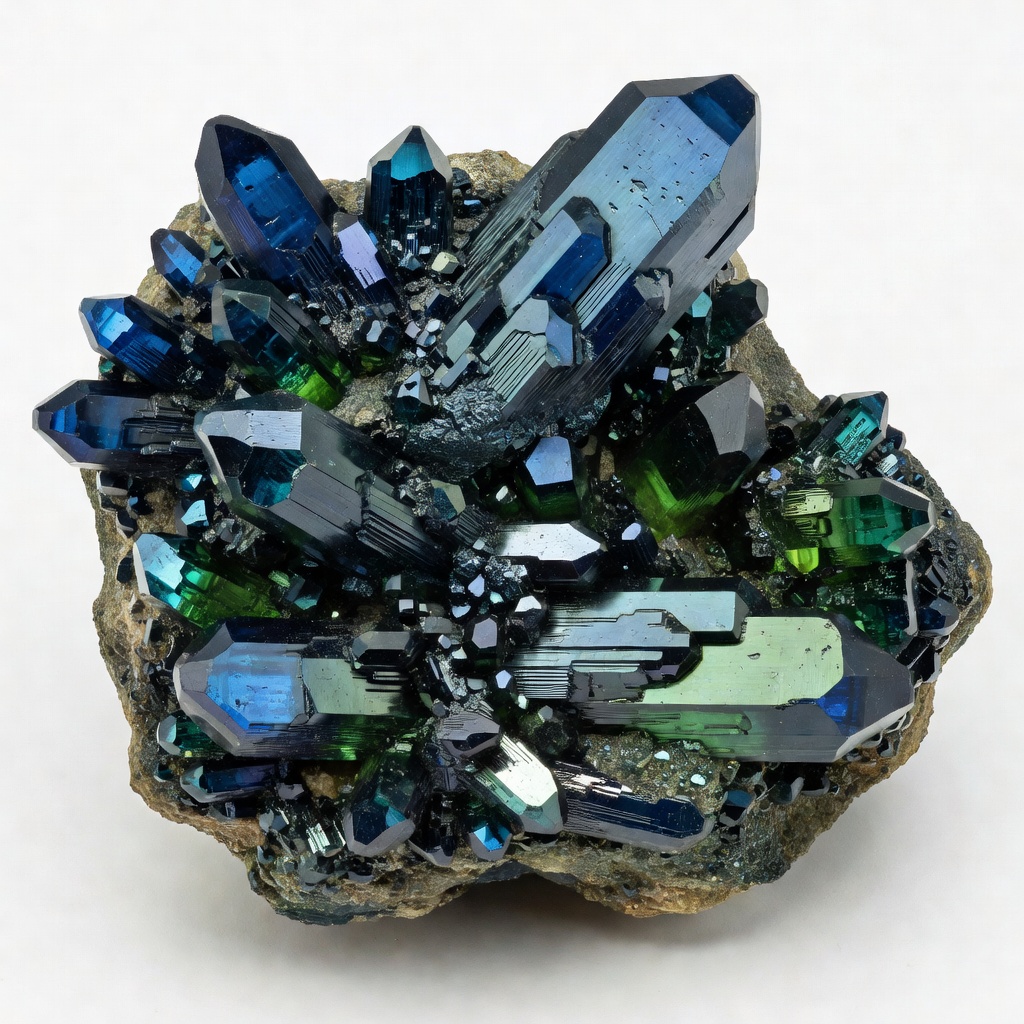
Perhaps the most mesmerizing aspect of blue vivianite identification involves observing the mineral's dramatic color transformation, as freshly exposed specimens appear colorless, pale green, or nearly transparent when first extracted from their anoxic burial environments, only to develop intense deep blue, blue-green, or bluish-black hues within minutes to hours of atmospheric exposure. This oxidation process occurs as ferrous iron (Fe²⁺) within the crystal lattice converts to ferric iron (Fe³⁺) upon contact with oxygen molecules, fundamentally altering the electronic configuration responsible for light absorption and reflection. Advanced collectors often photograph specimens immediately upon unpacking to document this color transition, creating valuable scientific records that illustrate the mineral's reactive chemistry while noting that the final color intensity correlates directly with the duration and intensity of oxidation exposure.
Optical examination reveals strong pleochroism in vivianite, meaning the mineral displays different colors when viewed from different crystallographic directions, typically showing colorless to pale green hues along one axis and deep blue along another, a property that helps distinguish genuine specimens from simulants. Transparency ranges from transparent to translucent in thin sections or small crystals, with larger specimens often appearing opaque due to internal fractures and inclusions, while a distinctive pearly sheen on cleavage surfaces provides additional diagnostic features for blue vivianite identification. Gemological testing demonstrates that vivianite's refractive index varies between 1.56 and 1.61 depending on crystallographic direction, requiring careful observation under polarized light to fully characterize optical properties. When evaluating specimens for purchase, collectors should examine edges and fracture surfaces where oxidation typically begins, looking for the characteristic blue color zoning that progresses inward from exposed surfaces, confirming the mineral's identity while providing visual evidence of its chemical reactivity.
Metaphysical Properties and Crystal Healing
Within crystal healing traditions, vivianite crystal meaning centers predominantly on heart chakra activation and emotional healing, with practitioners believing that the mineral's transformative color change mirrors the human capacity for emotional evolution and spiritual growth. Healers utilize vivianite to facilitate the release of stagnant emotional patterns, particularly those associated with grief, resentment, or heartbreak, suggesting that the mineral's oxidation process symbolizes the transformation of emotional wounds into wisdom and compassion. Meditation practices involving vivianite often incorporate the stone into heart-centered visualizations, where practitioners hold the crystal near the heart chakra while focusing on intentions of kindness, empathy, and emotional resilience, believing that the iron content provides grounding energy while the phosphate structure supports cellular-level healing vibrations.
The vivianite healing properties extend to promoting spiritual growth through enhanced connection with Earth energies, as the mineral's formation in organic-rich, water-saturated environments imbues it with strong elemental associations to water and earth. Crystal therapists recommend placing vivianite in meditation spaces or bedrooms to create calming, nurturing environments that reduce stress and anxiety, though they caution that the stone's sensitivity to light requires covering it when not in active use to preserve both its physical appearance and energetic properties. Practical applications include creating elixirs using the indirect method (placing the stone near but not in water) to capture vibrational essences without risking water damage to the specimen, or incorporating small specimens into crystal grids designed for emotional healing and compassion work. While scientific validation of these metaphysical properties remains limited, many practitioners report subjective experiences of increased emotional openness and reduced irritability when working with vivianite regularly, suggesting that the stone serves as a powerful focal point for mindfulness and emotional self-care practices.
How to Identify Genuine Vivianite
Accurate blue vivianite identification requires systematic examination combining visual inspection, physical testing, and knowledge of distinguishing characteristics that separate genuine specimens from similar-looking minerals such as lazulite, sodalite, or dyed calcite. Visual examination should focus on color zoning patterns, as authentic vivianite displays progressive oxidation from colorless or pale green centers to deep blue peripheries, whereas imitations typically show uniform coloration or artificial dye concentrations in fractures. The streak test provides definitive diagnostic information, as vivianite produces a characteristic white to pale blue streak when rubbed against unglazed porcelain, contrasting sharply with lazulite's white streak or sodalite's white streak with possible blue tint, while hardness testing confirms vivianite's extreme softness compared to harder simulants.
Microscopic examination reveals distinctive internal features including fluid inclusions, healing fractures, and the monoclinic crystal habit with characteristic prismatic forms terminated by pinacoidal faces, whereas synthetic or imitation materials often show rounded edges, conchoidal fracture patterns inconsistent with vivianite's perfect cleavage, or bubbles indicating glass manufacture. Advanced identification techniques include specific gravity testing using heavy liquids or hydrostatic weighing, with genuine vivianite showing values between 2.6 and 2.7, significantly higher than plastic imitations or lower than some substituted minerals. When purchasing specimens, collectors should request documentation of locality and obtain guarantees of authenticity from reputable dealers, as the market occasionally sees treated specimens where colorless phosphate minerals have been artificially oxidized to simulate vivianite's blue coloration, though these lack the progressive oxidation patterns and structural characteristics of natural material.
Proper Care and Storage Guidelines
Implementing appropriate vivianite gemstone care protocols proves essential for preserving both the aesthetic and scientific value of specimens, given the mineral's extreme sensitivity to light, oxygen, and physical abrasion. Exposure to light, particularly ultraviolet and intense visible spectrum illumination, accelerates the oxidation process causing irreversible darkening from vibrant blue to dull greenish-black or brownish hues, necessitating storage in completely dark environments such as opaque mineral drawers, light-tight cabinets, or containers wrapped in aluminum foil. Ideal storage conditions include airtight containers with controlled humidity levels between 45-55 percent to prevent dehydration while avoiding condensation that could promote chemical degradation, using materials such as polyethylene containers with gasket seals or vintage cigar boxes lined with acid-free foam padding.
Cleaning vivianite requires extreme gentleness, utilizing only soft camel-hair brushes or lint-free microfiber cloths to remove dust, strictly avoiding water, ultrasonic cleaners, or chemical solvents that could dissolve the mineral or accelerate oxidation reactions. For display purposes, collectors should use low-LED lighting with UV filters and limit exposure to brief viewing periods, returning specimens to dark storage immediately after observation to minimize cumulative light damage. Practical conservation strategies include photographing specimens under consistent lighting conditions to monitor color changes over time, maintaining detailed records of storage conditions, and handling specimens only with nitrile gloves to prevent oils from skin contact that might catalyze surface oxidation. When transporting vivianite, double-boxing methods using shock-absorbing materials prevent damage from vibration while ensuring complete darkness during transit, preserving the specimen's original coloration for future generations of collectors and researchers.
Collecting and Market Value
The market for high-quality vivianite specimens reflects the mineral's rarity, aesthetic appeal, and scientific significance, with prices ranging from modest amounts for small, partially oxidized fragments to premium prices exceeding thousands of dollars for large, gem-quality transparent crystals from Bolivian localities. Value determinants include crystal size and clarity, with specimens over two centimeters commanding significant premiums, preservation of original coloration without excessive oxidation, association with interesting matrix materials or fossil remains, and documented provenance from classic or historically significant localities. Investment-minded collectors should focus on exceptional specimens from depleted mines such as the Cornwall, England, localities or well-documented Bolivian material, as these represent finite resources likely to appreciate as mining operations cease and existing specimens enter permanent museum collections.
Current market trends show increasing demand for vivianite fossils, particularly specimens where the mineral has replaced the soft tissues of ancient organisms such as crinoids, bivalves, or vertebrate remains, creating striking blue fossil specimens that bridge paleontological and mineralogical collecting interests. Auction records indicate that specimens exhibiting the complete color transition from colorless to deep blue, particularly when photographed sequentially to document the oxidation process, achieve higher prices than already-oxidized material, as collectors value witnessing the mineral's natural chemical reactivity. When building a collection focused on vivianite properties and information, enthusiasts should prioritize obtaining representative specimens from different localities to compare variations in crystal habit, color intensity, and association minerals, while maintaining strict adherence to preservation protocols that protect these delicate investments from environmental degradation.
Conclusion: The Unique Value of Vivianite
Comprehensive understanding of vivianite properties and information reveals a mineral of extraordinary scientific value and aesthetic delicacy, bridging the disciplines of geology, chemistry, paleontology, and metaphysical practice through its unique formation requirements and reactive characteristics. The mineral's capacity to document anoxic environmental conditions while preserving organic remains provides invaluable data for reconstructing Earth's ancient ecosystems, while its dramatic color transformation serves as a visible reminder of the dynamic chemical processes occurring beneath our feet. For collectors, researchers, and spiritual practitioners alike, vivianite offers lessons in impermanence and transformation, requiring us to appreciate beauty in the present moment while implementing careful preservation strategies to maintain that beauty for the future.
Whether acquired for scientific study, investment potential, or healing applications, vivianite demands respect for its physical limitations and chemical sensitivities, rewarding careful stewardship with continued revelations about its complex nature. As global mineral markets evolve and significant deposits become increasingly depleted, well-preserved vivianite specimens will likely grow in historical and monetary value, making proper vivianite gemstone care and storage not merely preservation tactics but essential responsibilities for custodians of these geological treasures. By integrating knowledge of vivianite formation process, identification techniques, and conservation methods, enthusiasts can fully appreciate this remarkable phosphate mineral while ensuring its survival for future generations of scientists, collectors, and crystal healers to study and admire.
Frequently Asked Questions
What is vivianite and where is it commonly found?
Vivianite is a hydrated iron phosphate mineral (Fe₃(PO₄)₂·8H₂O) that forms in oxygen-free environments like lake sediments, peat bogs, and fossilized organic remains. Major deposits occur in Bolivia, Germany, Ukraine, Australia, and the United States.
Why does vivianite change color from colorless to blue?
Fresh vivianite is colorless or pale green, but upon exposure to air, it oxidizes rapidly, turning deep blue to greenish-blue. This color change occurs because iron in the mineral oxidizes from Fe²⁺ to Fe³⁺ when contacting atmospheric oxygen.
Is vivianite toxic or safe to handle?
Vivianite is generally safe to handle but should not be ingested. As an iron phosphate mineral, it poses minimal toxicity risks through skin contact, though collectors should wash hands after handling and avoid creating dust that could be inhaled.
How can I identify genuine vivianite versus similar minerals?
Genuine vivianite exhibits a white to pale blue streak, extreme softness (1.5-2 Mohs), perfect cleavage, and distinctive pleochroism. It is often confused with lazulite or sodalite, but vivianite's oxidation color change and lower hardness help distinguish it.
What are the metaphysical healing properties of vivianite?
Vivianite is believed to open the heart chakra, promoting compassion, emotional healing, and kindness. It is used in crystal healing to encourage spiritual growth, reduce stress, and help release negative emotional patterns while fostering inner peace.
How should I store vivianite to prevent oxidation and damage?
Store vivianite in a completely dark, airtight container away from light exposure, which accelerates oxidation. Maintain stable humidity levels, avoid temperature fluctuations, and never store in direct sunlight or display cases with bright lighting.
What is the hardness of vivianite on the Mohs scale?
Vivianite has a Mohs hardness of only 1.5 to 2, making it extremely soft and delicate. This softness means it can be scratched by a fingernail and requires careful handling to prevent surface damage.
Can vivianite be used in jewelry making?
Due to its extreme softness (1.5-2 Mohs) and sensitivity to oxidation, vivianite is generally unsuitable for jewelry. It is primarily collected as mineral specimens or used in metaphysical practices rather than worn as adornment.