Introduction to Vivianite and Its Market Value
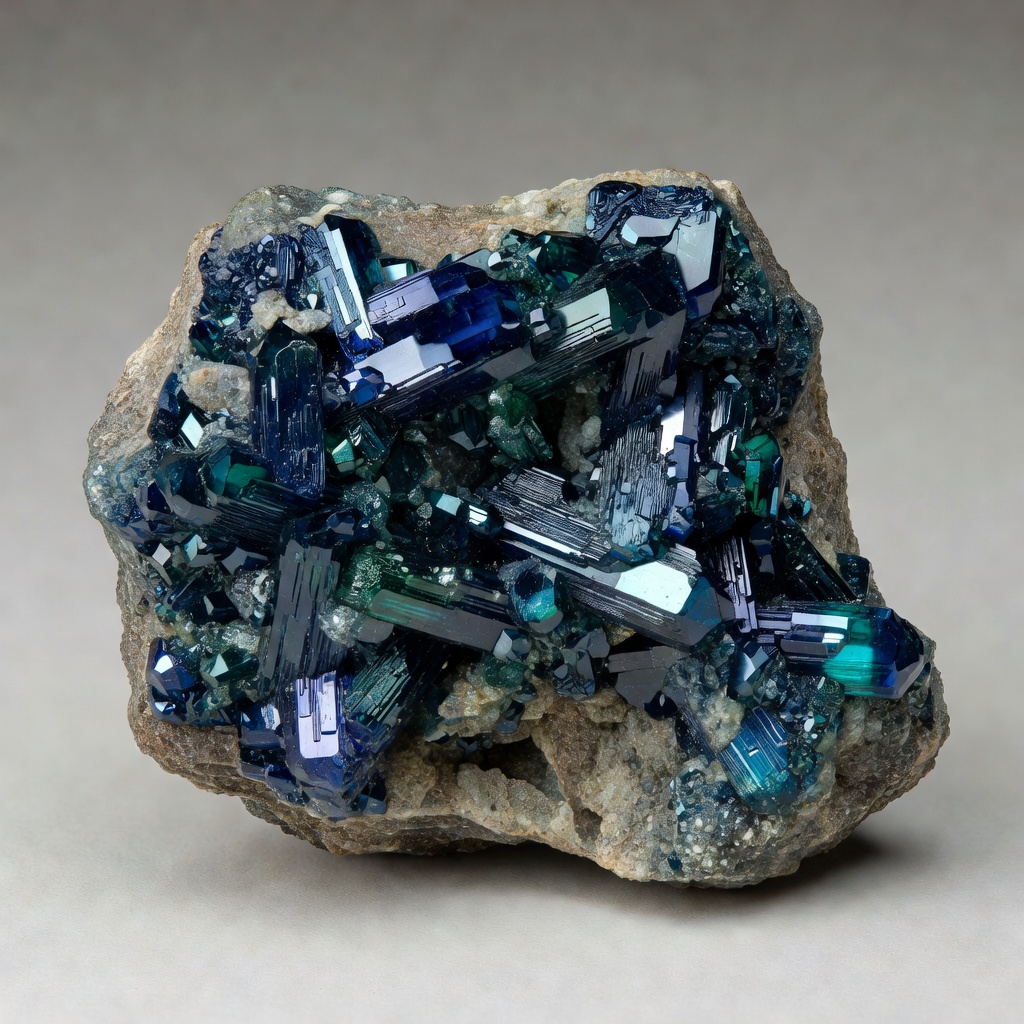
Vivianite stands as one of the most captivating yet challenging minerals in the phosphate family, represented chemically as Fe₃(PO₄)₂·8H₂O, or hydrated iron phosphate. This delicate mineral forms in reducing environments such as peat bogs, lake sediments, and the oxidation zones of metal deposits, where oxygen-poor conditions allow for its initial colorless or pale green crystallization. Upon exposure to air, vivianite undergoes a dramatic transformation, oxidizing to reveal striking shades of deep blue-green that have captivated mineral enthusiasts since its discovery in 1817 at Wheal Kind, Cornwall. Understanding the vivianite price guide requires appreciating both its geological rarity and its ephemeral beauty, as high-quality specimens represent fleeting moments of mineralogical perfection preserved against nature's tendency toward oxidation.
The surging popularity of vivianite among serious mineral collectors and alternative investors stems from its unique optical properties and the increasing difficulty of obtaining pristine specimens. Unlike robust minerals such as quartz or garnet, vivianite demands immediate collection and proper stabilization upon extraction, as exposure to atmospheric oxygen rapidly degrades both its color and structural integrity. This fragility creates a natural supply constraint that drives market values upward, particularly for specimens exceeding five centimeters in crystal length with minimal oxidation. Current market analysis reveals that exceptional vivianite specimens have appreciated by over 300% in the past decade, establishing this phosphate mineral as a legitimate collectible asset rather than merely a geological curiosity.
Navigating the vivianite market requires understanding the broad spectrum of quality grades available to collectors at various investment levels. Entry-level specimens suitable for educational purposes or beginning collectors typically range from $5 to $30 per gram, often featuring smaller crystals with partial oxidation or matrix-heavy presentations. Mid-tier specimens displaying good crystal development and desirable blue-green coloration command between $30 and $100 per gram, while museum-quality pieces with exceptional transparency, large crystal size, and perfect terminations can exceed $100 per gram, with top examples from depleted localities reaching $200 to $500 per gram. These price differentials reflect not merely aesthetic preferences but the fundamental scarcity of stable, high-quality material surviving the extraction and preservation process.
Factors Affecting Vivianite Pricing
Determining accurate vivianite crystal value requires sophisticated evaluation of multiple mineralogical characteristics that distinguish ordinary material from investment-grade specimens. Crystal size serves as the primary valuation metric, with single crystals exceeding three centimeters in length commanding exponential premiums over smaller aggregate formations. The completeness of crystal terminations proves particularly crucial, as vivianite's monoclinic prismatic habit often results in damaged or incomplete terminations during extraction from clay matrices or oxidation zones. Specimens featuring double-terminated crystals or complete cyclic twins from specific localities like the Kerchenskoe deposit in Crimea can achieve valuations five to ten times higher than similarly sized material with broken terminations, reflecting the extreme difficulty of extracting intact crystals without damage.
Color intensity and transparency establish the aesthetic hierarchy within vivianite pricing structures, creating distinct market segments based on visual impact. Freshly extracted material appears nearly colorless or exhibits pale greenish hues, gradually transitioning through teal to deep azure and finally to dark blue-green as oxidation progresses. The most valuable specimens maintain an optimal intermediate oxidation state displaying vivid transparent blue-green coloration, rather than the opaque dark blue of fully oxidized material or the colorless state of fresh specimens. Transparency levels directly correlate with pricing, with gemmy crystals allowing light transmission through their length commanding premiums of 40-60% over translucent or opaque examples of equivalent size, particularly when the pleochroic effect creates color-shifting phenomena under different lighting conditions.
Matrix association and aesthetic presentation significantly influence collector appeal and subsequent market valuations, transforming individual crystals into compositional artworks. Specimens featuring vivianite crystals aesthetically positioned on contrasting matrix materials such as fossilized bone, pyrite, or contrasting sedimentary rock achieve higher prices than loose crystals or matrix-poor examples. The Anloua locality in Cameroon produces specimens where vivianite crystals emerge from stark white matrix, creating dramatic visual contrast that doubles or triples value compared to similar crystals on dark matrix. Geographic provenance creates substantial price variations, with specimens from depleted or historically significant localities such as the Bunker Hill Mine in Idaho or the Morococala Mine in Bolivia commanding locality premiums of 50-200% above comparable material from active producing regions.
Current Market Prices by Grade
Understanding phosphate mineral pricing within the vivianite sector requires granular analysis of the three-tier market structure that categorizes specimens by quality, preservation, and aesthetic merit. Entry-level material suitable for educational collections or novice enthusiasts typically trades between $5 and $30 per gram, representing smaller crystals under two centimeters, partially oxidized material, or specimens with significant matrix attachment. These pieces often originate from secondary localities or represent damaged material from premium localities, offering accessible entry points for collectors seeking to understand vivianite's unique properties without substantial financial commitment. While lacking investment-grade characteristics, these specimens provide excellent opportunities for studying crystal morphology and oxidation patterns under controlled conditions.
The mid-range market segment, encompassing museum-quality pieces with good color and reasonable crystal development, dominates current trading volumes with prices ranging from $30 to $100 per gram. Specimens in this category typically feature crystals between two and five centimeters with intact terminations, desirable blue-green coloration, and stable preservation states that resist further oxidation. Recent sales data from major mineral auctions indicate that specimens from the Kerch Peninsula in Ukraine and the recently discovered deposits in Western Australia consistently achieve prices in the $50-80 per gram range when displaying optimal color and minimal matrix damage. This segment offers the best balance of aesthetic appeal and value retention for serious collectors, with historical price appreciation averaging 12-15% annually over the past five years.
High-end rare formations and exceptional large crystals constitute the investment-grade tier, routinely commanding $100+ per gram with premium examples exceeding $500 per gram for world-class specimens. These pieces feature single crystals exceeding five centimeters, exceptional transparency, perfect structural integrity, and often display complex crystal habits such as swallowtail twins or cyclic formations. The Bolivian deposits, particularly those from the Morococala and Siglo Veinte mines, produce some of the world's finest vivianite specimens, with exceptional pieces achieving prices comparable to fine gemstones on a per-carat basis. Market trends indicate accelerating appreciation in this tier, driven by depletion of classic localities and increasing recognition of vivianite's significance among phosphate mineral specialists, with top specimens appreciating 25-30% annually since 2019.
Best Sources for Purchasing Vivianite
Locating authentic vivianite specimens for sale requires navigating a specialized marketplace distinct from general mineral trading, where expertise in phosphate minerals determines dealer reliability. Established mineral dealers specializing in phosphates and secondary minerals, such as The Arkenstone, Marin Mineral Company, or Heritage Auctions' natural history division, provide the most secure acquisition channels for investment-grade material. These dealers offer detailed provenance documentation, stabilization guarantees, and return policies that protect buyers against misrepresented or artificially enhanced specimens. Online marketplaces including Mindat.org's classified sections and specialized Facebook mineral groups facilitate direct collector-to-collector transactions, though these require sophisticated authentication knowledge to navigate safely.
Major mineral shows and exhibitions provide unparalleled opportunities for direct evaluation of vivianite specimens before purchase, eliminating the risks associated with photographic misrepresentation inherent in online transactions. The Tucson Gem and Mineral Show, Munich Mineral Show, and Sainte-Marie-aux-Mines Mineral Fair consistently feature high-end vivianite specimens from Bolivian, Ukrainian, and Australian sources, allowing collectors to assess color accuracy, oxidation states, and structural stability in person. High-end auction houses including Bonhams, Christie's Natural History department, and Heritage Auctions regularly feature exceptional vivianite specimens in their mineral lots, often accompanied by detailed laboratory reports and historical provenance that justify premium prices. These venues prove particularly valuable for acquiring specimens from depleted localities where direct mining procurement is no longer possible.
Direct purchasing from mining operations offers potential cost savings for knowledgeable collectors capable of navigating international mineral trade regulations and stabilization requirements. The Kerch Peninsula in Crimea, despite geopolitical complications, continues to produce exceptional vivianite specimens through small-scale mining operations, while Bolivia's Oruro Department maintains active extraction at several localities including the Morococala Mine. Australian deposits in Western Australia and Queensland provide newer sources of high-quality material, often with less oxidation damage due to modern extraction techniques. However, collectors must exercise extreme caution regarding red flags including artificially oxidized specimens created through chemical treatment, stabilized material using undisclosed resins or oils, or synthetic vivianite grown in laboratory conditions and misrepresented as natural material. Always request specific gravity testing results and, for purchases exceeding $1,000, independent laboratory certification confirming natural origin and absence of enhancement treatments.
Investment Potential and Rarity
Evaluating rare mineral investment potential in vivianite requires understanding the fundamental supply constraints imposed by geological rarity and mining depletion patterns affecting classic localities. High-quality vivianite deposits represent geologically transient phenomena occurring in specific reducing environments, with many historically significant localities including the Anloua Mine in Cameroon and various English localities effectively exhausted of collectible material. The Kerch Peninsula deposits, which produced the majority of fine vivianite specimens during the 20th century, face increasing extraction difficulties and geopolitical accessibility issues, effectively capping future supply while demand continues growing among Asian and North American collectors. This supply-demand imbalance creates favorable investment fundamentals for stabilized, high-quality specimens from depleted sources, with historical performance exceeding traditional precious metals in certain quality tiers.
Comparative analysis with other phosphate minerals positions vivianite within a specialized collecting niche distinct from common specimens like apatite or turquoise. While apatite occurs globally in massive quantities and turquoise benefits from established jewelry markets, vivianite occupies the intersection of mineralogical rarity and aesthetic fragility that appeals specifically to sophisticated collectors. Unlike turquoise, which benefits from stabilized treatment acceptance in the jewelry trade, vivianite's value depends entirely upon natural preservation states, creating sharper quality distinctions between investment-grade and common material. The mineral's susceptibility to degradation ensures that existing high-quality specimens represent a shrinking supply base, as poorly stored material from previous decades continues to oxidize beyond collectible quality, effectively removing inventory from the market permanently.
Proper storage and preservation methods significantly impact long-term value retention, transforming vivianite from a passive collectible into an active conservation project requiring specialized knowledge. Investment-grade specimens require storage in oxygen-free environments or sealed containers with desiccants to prevent ongoing oxidation, with display cases requiring UV-filtering glass and stable humidity levels between 40-50%. Failure to maintain these conditions results in irreversible value degradation, distinguishing vivianite from more robust mineral investments like gold specimens or diamonds. Future market predictions suggest continued appreciation driven by emerging collector markets in China and the United Arab Emirates, where phosphate minerals gain recognition as sophisticated collecting categories, potentially doubling current price levels for top-tier specimens within the next decade.
Authentication and Quality Assessment
Mastering vivianite identification techniques proves essential for navigating markets where treatments, misrepresentations, and synthetic alternatives increasingly threaten unwary collectors. Visual identification begins with recognizing vivianite's distinctive monoclinic crystal system, typically forming prismatic crystals with distinctive cross-sections and perfect cleavage in one direction. Authentic specimens display strong pleochroism, showing color variation from pale olive to deep blue-green depending on viewing angle relative to crystal axes, a property difficult to replicate in synthetic or substituted materials. Natural vivianite crystals often exhibit slightly rounded terminations or contact points with matrix, whereas laboratory-grown specimens may display unnaturally perfect geometric forms lacking the subtle irregularities of natural growth conditions.
Physical testing methods provide definitive authentication for valuable specimens, particularly specific gravity measurements and streak testing. Natural vivianite exhibits specific gravity between 2.60 and 2.70, significantly lighter than visually similar minerals such as lazulite (3.0-3.1) or vivianite simulants created from dyed quartz or glass. The streak test reveals a blue-green streak on unglazed porcelain, though collectors should perform this test cautiously on matrix material rather than crystal faces to preserve specimen value. Advanced authentication techniques include Raman spectroscopy and X-ray diffraction analysis, which identify vivianite's unique phosphate mineral signature and distinguish it from similar-appearing minerals such as ludlamite or metavivianite, the latter being a partially oxidized form often misrepresented as pristine vivianite.
Common treatments and enhancements require vigilant detection, as unscrupulous dealers increasingly apply stabilization processes or artificial oxidation to enhance specimen appearance. Oil or polymer impregnation temporarily improves transparency and stabilizes fragile crystals, though these treatments typically degrade over 5-10 years, leaving specimens more fragile than originally and potentially discolored. Artificial oxidation using hydrogen peroxide or other oxidizers accelerates color development but creates unnatural color gradients and compromises structural integrity, reducing long-term value by 60-80% compared to naturally oxidized specimens. For purchases exceeding $500, collectors should insist upon certification from recognized laboratories such as the Gemological Institute of America (GIA) or independent mineralogical laboratories providing detailed reports on natural origin, treatment status, and specific locality confirmation through trace element analysis.
Caring for Your Vivianite Collection
Understanding mineral collecting costs extends beyond acquisition prices to encompass the specialized conservation requirements necessary for maintaining vivianite's value and appearance over decades. Oxidation prevention represents the primary ongoing expense, requiring archival-quality storage containers, oxygen absorbers, and climate-controlled display environments that maintain relative humidity between 40-50%. Serious collectors invest in sealed acrylic display cases with argon or nitrogen atmospheres for high-value specimens, though simpler vacuum-sealed containers with silica gel desiccants provide adequate protection for mid-range material. These conservation measures add approximately 10-15% to the total cost of ownership over a ten-year period, excluding potential climate control upgrades necessary for maintaining stable storage conditions in variable climates.
Display recommendations balance aesthetic appreciation with preservation requirements, necessitating compromises that casual collectors often underestimate. Direct sunlight exposure accelerates oxidation and causes irreversible color fading within months, requiring UV-filtering glass or acrylic and low-light LED illumination positioned to minimize heat generation. Display cases should feature gasketed seals and be opened only in low-humidity environments to prevent rapid oxidation during viewing sessions. For specimens valued over $5,000, professional conservators recommend rotating displayed pieces with stored backups every six months, allowing rest periods in oxygen-free storage to offset oxidative stress accumulated during display periods. These protocols, while seemingly extreme, distinguish serious collectors from those experiencing catastrophic specimen degradation and subsequent value loss.
Insurance considerations and appraisal requirements protect the financial investment represented by high-quality vivianite collections, though standard homeowners policies typically exclude mineral collections or impose strict limits insufficient for investment-grade material. Specialized collectibles insurance through companies like Collectibles Insurance Services or American Collectors Insurance requires professional appraisals from recognized mineralogical experts, costing $200-500 per specimen but providing replacement value coverage based on current market conditions. Appraisals should include detailed condition reports, provenance documentation, and high-resolution photography to establish baseline condition for future claims. Long-term value maintenance requires periodic re-evaluation by qualified mineralogists to assess oxidation progression and recommend conservation interventions, with professional conservation treatments for degrading specimens potentially costing 20-30% of specimen value but preserving 100% of investment potential.
Conclusion and Buying Recommendations
This comprehensive vivianite price guide establishes that successful acquisition of these delicate phosphate minerals requires synthesis of geological knowledge, market awareness, and conservation capability. Key price factors demanding evaluation include crystal size relative to locality norms, termination completeness, optimal oxidation state displaying vivid blue-green transparency, matrix aesthetics, and documented provenance from recognized deposits. First-time buyers should initiate their collections with entry-level material from active localities such as Bolivia or Western Australia, gaining practical experience in stabilization and storage before committing to investment-grade specimens exceeding $1,000. Building relationships with established phosphate mineral specialists provides educational benefits and acquisition opportunities unavailable to casual market participants, particularly regarding specimens from depleted localities that trade primarily through dealer networks.
Determining when to invest in premium specimens versus common material depends upon collecting objectives and risk tolerance regarding conservation requirements. Casual enthusiasts seeking aesthetic appreciation should focus on the $30-80 per gram range, acquiring visually striking specimens without the extreme fragility of top-tier material. Serious collectors and investors should target only the highest quality tier from depleted localities, accepting the substantial conservation responsibilities in exchange for superior appreciation potential and portfolio diversification. Before completing transactions, implement a final checklist verifying: documented locality and mining date, specific gravity confirmation for high-value pieces, absence of stabilization treatments or artificial oxidation, appropriate packaging for oxidation prevention during shipping, and seller reputation through mineral community references or established dealer associations. By adhering to these guidelines, collectors can navigate the complex vivianite market with confidence, acquiring specimens that provide both aesthetic satisfaction and potential financial appreciation while contributing to the preservation of these fleeting geological masterpieces.
Frequently Asked Questions
Why is vivianite so expensive compared to other minerals?
Vivianite's price reflects its rarity, delicate nature, and the difficulty in extracting high-quality specimens without oxidation. Unlike common quartz, vivianite forms in specific reducing environments and degrades rapidly when exposed to air, making pristine, well-crystallized specimens particularly valuable to collectors.
How much does high-quality vivianite cost per gram?
High-quality vivianite typically ranges from $30 to $100+ per gram depending on crystal clarity, color intensity, and matrix quality. Entry-level specimens may cost $5-15 per gram, while museum-grade pieces with exceptional transparency and deep blue-green coloration can exceed $200 per gram for top examples.
Does vivianite change color over time, affecting its value?
Yes, vivianite oxidizes from colorless or pale green to deep blue-green when exposed to air. While this color change is natural and often desirable, excessive oxidation can reduce transparency and structural integrity, potentially decreasing value. Properly stabilized specimens that maintain their optimal color saturation command premium prices.
Where can I buy authentic vivianite specimens?
Purchase from established mineral dealers, reputable auction houses, certified gem and mineral shows, or directly from mining operations in Bolivia, Ukraine, or Australia. Avoid unverified online marketplaces where synthetic, treated, or misrepresented specimens are increasingly common, especially for high-value pieces.
Is vivianite a good investment for mineral collectors?
High-quality vivianite from depleted localities can be a solid long-term investment due to decreasing mine outputs and increasing collector demand. However, it requires specialized storage knowledge to prevent degradation, making it most suitable for serious collectors rather than casual investors seeking quick returns.
How do I identify fake or treated vivianite?
Genuine vivianite exhibits distinct monoclinic crystal formations, a specific gravity of 2.6-2.7, and strong pleochroism. Be wary of artificially colored specimens, those with unnatural perfect clarity at low prices, or material lacking proper matrix association. Always request laboratory certification for purchases exceeding $500.
What factors determine the price of a vivianite specimen?
Key pricing factors include crystal size and perfection, depth of blue-green color, degree of transparency, matrix aesthetics and contrast, locality rarity, and preservation state. Specimens from closed or depleted localities such as Anloua, Cameroon or Kerchenskoe deposit, Ukraine command significant premiums.
Can vivianite be worn as jewelry?
While visually striking, vivianite is generally unsuitable for jewelry due to its extreme softness (1.5-2 on the Mohs hardness scale) and high susceptibility to oxidation, scratching, and breakage. It is primarily a collector mineral for cabinet display, which significantly affects its pricing structure compared to jewelry-grade gemstones.