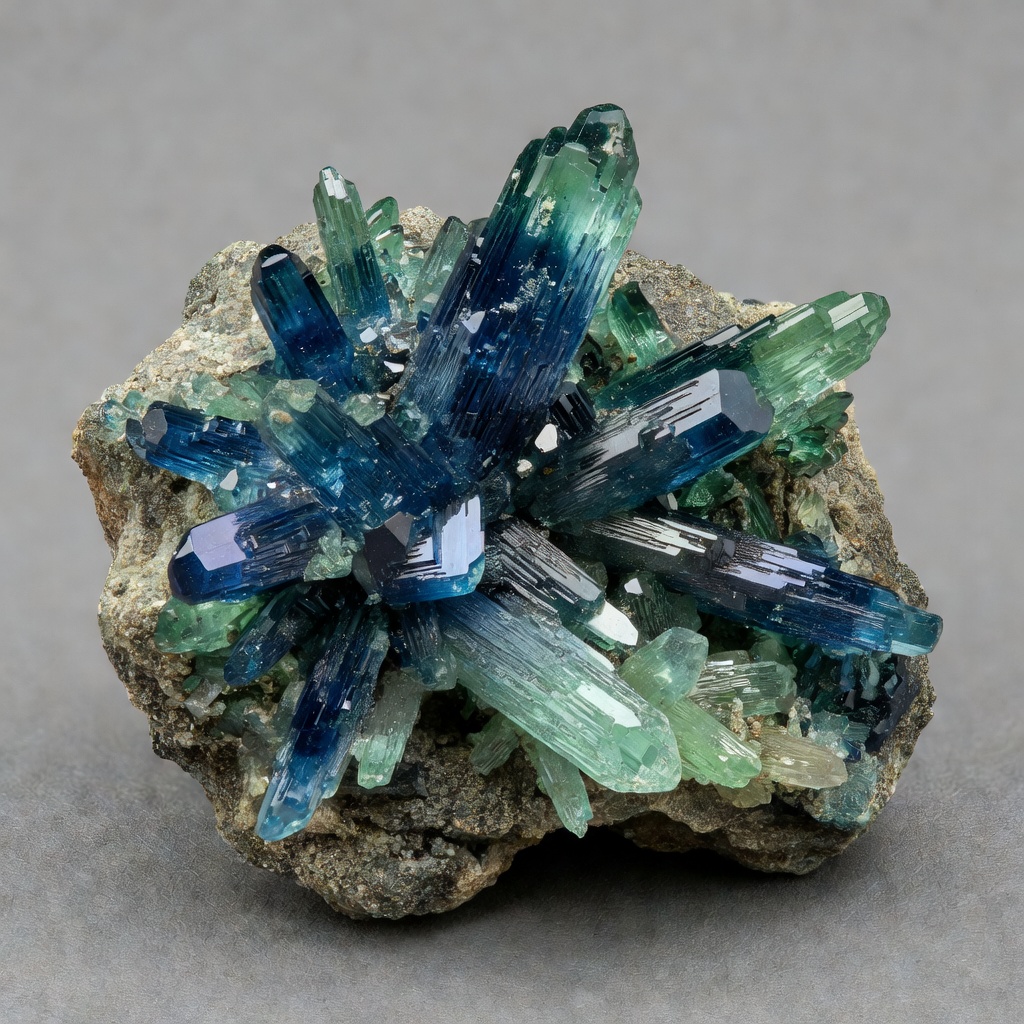
What Is Vivianite? Understanding This Rare Phosphate Mineral
Vivianite stands as one of the most captivating yet challenging minerals in the phosphate minerals group, bearing the chemical formula Fe3(PO4)2·8H2O. This hydrated iron phosphate forms in monoclinic crystal systems, typically developing as prismatic crystals, tabular forms, or earthy masses that capture the imagination of serious mineral collectors. First discovered in 1817 by John Henry Vivian, a prominent British mineralogist and mine owner after whom the mineral was named, vivianite has since become synonymous with both geological rarity and aesthetic transformation. The mineral occurs in diverse geological settings including fossilized bones, ore deposits rich in iron, lake sediments, and the oxidation zones of metal deposits, often forming as secondary mineral deposits where iron-rich waters interact with phosphate-bearing organic materials.
What distinguishes vivianite mineral specimens from other phosphate minerals is their remarkable sensitivity to environmental conditions and their propensity to preserve historical biological materials. Archaeologists frequently encounter vivianite encrusting medieval artifacts, ancient weapons, and even human remains buried in iron-rich, oxygen-poor soils, where the mineral acts as a natural preservative. For collectors, the appeal lies in the mineral's paradoxical nature: fresh specimens emerge from the earth appearing deceptively ordinary—colorless, pale green, or white—only to undergo a dramatic metamorphosis that ranks among the most striking color changes in the mineral kingdom. This transformation, combined with the mineral's relative scarcity in gem-quality crystal forms, positions vivianite as a must-have specimen for advanced collections focusing on secondary minerals or phosphates.
The Color Change Phenomenon: From Colorless to Deep Blue
The oxidation process that transforms fresh vivianite specimens represents one of mineralogy's most dramatic visual spectacles, creating blue vivianite crystals that range from pale sky blue to deep indigo and teal-green hues. When freshly extracted from their anaerobic environments, vivianite crystals remain essentially colorless or exhibit very pale greenish tints, containing iron exclusively in the reduced Fe2+ state. Upon exposure to atmospheric oxygen, a spontaneous oxidation reaction begins converting ferrous iron (Fe2+) to ferric iron (Fe3+), fundamentally altering the mineral's light absorption properties and creating the characteristic deep blue coloration that collectors prize. This timeline of color change varies significantly based on ambient light levels, humidity, and oxygen concentration, with initial tinges appearing within minutes to hours, while full oxidation may require weeks or months of exposure.
Understanding this color transformation proves crucial for both valuation and authentication in the vivianite market. Some collectors specifically seek partially oxidized specimens displaying color zoning—where transparent colorless cores transition to deep blue rinds—creating a visual depth impossible to replicate in treated stones. Conversely, specimens retaining their original colorless state command premium prices among purists who wish to witness the oxidation process personally. When documenting color change for authenticity verification, photographers should capture specimens under consistent lighting conditions immediately upon acquisition, then create time-lapse documentation showing the progressive development of blue coloration. This photographic record serves as provenance documentation, proving the natural origin of the color rather than artificial staining, and significantly enhances resale value for investment-grade specimens.
Impact of Oxidation on Specimen Value
The degree of oxidation significantly influences market values, creating distinct collecting niches within the vivianite community. Fully oxidized deep blue crystals from premier localities typically command the highest prices due to their immediate visual impact and stability, appealing to collectors who prioritize display aesthetics. However, specimens that retain transparent, colorless interiors with only surface oxidation offer unique scientific value, allowing mineral enthusiasts to study the oxidation front's progression while maintaining crystal clarity. When evaluating blue vivianite crystals, consider whether the color appears uniform and natural—indicating gradual oxidation—or patchy and artificial, which might suggest post-extraction treatment or staining.
Quality Assessment: Evaluating Clarity, Size, and Crystal Formation
Evaluating vivianite quality factors requires specialized knowledge of phosphate mineral crystallography and an understanding of how this exceptionally soft mineral survives the extraction process. Premium specimens display well-developed crystal terminations with sharp, defined faces and edges, often exhibiting the characteristic prismatic habit with vertical striations along the crystal length. The finest specimens from localities like Bolivia's Anaconda Mine showcase transparent to translucent crystals exceeding several centimeters in length, with glassy luster and minimal matrix attachment damage. When examining potential acquisitions, use diffused light to assess internal clarity, noting that natural inclusions of clay minerals or organic matter are common but should not significantly obstruct light transmission in high-grade specimens.
Matrix attachment quality plays a crucial role in mineral specimen grading, as vivianite crystals frequently form within clay or shale matrices that provide both geological context and structural support. Aesthetically pleasing matrix associations enhance value significantly, particularly when the matrix contrasts color-wise with the blue crystals—such as golden pyrite, white calcite, or dark manganese oxides. Size classifications follow standard mineral collecting conventions: thumbnail specimens measure under 3 centimeters, miniature specimens range from 3-5 centimeters, small cabinet pieces span 5-7 centimeters, and large cabinet specimens exceed 7 centimeters. For vivianite specifically, crystals exceeding 2 centimeters in length qualify as significant finds, while those surpassing 5 centimeters represent museum-grade material commanding substantial premiums in the vivianite price per gram market.
Transparency and Crystal Development
Transparency levels in vivianite range from transparent gem-quality crystals suitable for specialized jewelry applications to translucent and opaque forms better suited for display specimens. Transparent crystals allow light penetration revealing internal structure and inclusion patterns, commanding prices ten to twenty times higher than opaque material. When assessing crystal development, examine the prism faces for etching or dissolution features, which commonly occur due to vivianite's solubility in acidic environments. Perfectly terminated crystals with intact pyramidal or pinacoidal faces indicate careful extraction and minimal post-depositional damage, characteristics essential for investment-grade acquisitions.
World-Class Localities: Where Premium Specimens Originate
Geographic provenance significantly influences both the aesthetic characteristics and market value of vivianite specimens, with certain vivianite localities achieving legendary status among phosphate mineral specialists. The Anaconda Mine in the Pacajes Province of Bolivia currently produces the world's finest large crystals, yielding transparent, deep blue prisms up to 15 centimeters in length embedded in clay matrix. These Bolivian specimens set the standard for crystalline perfection, displaying exceptional transparency and intense coloration that command the highest vivianite price per gram figures in the current market. The unique geological conditions at this locality—specifically the interaction of phosphate-rich guano deposits with iron-bearing hydrothermal solutions—create the perfect environment for slow crystal growth resulting in large, pristine specimens.
The Kerchenskoe deposit in Crimea, Ukraine, historically produced vivianite crystals renowned for their exceptional transparency and delicate blue-green coloration, though current geopolitical circumstances have restricted new material from this source. Australian and New Zealand localities, particularly those in Victoria and the South Island, yield vivianite with unique matrix associations including fossilized shells and coal measures, offering distinctive aesthetic presentations unavailable elsewhere. In North America, the Phillips Mine in North Bergen, New Jersey, and various trap rock localities in Colorado produce smaller but well-crystallized specimens often associated with pyrite and siderite. When researching vivianite origins, collectors should prioritize documented specimens from exhausted or limited localities, as these represent finite resources with inherent investment potential due to increasing scarcity.
Locality-Specific Characteristics
Each premier locality imparts distinctive characteristics that experienced collectors use to identify vivianite origins. Bolivian material typically shows deeper blue coloration and larger crystal size compared to Ukrainian specimens, which tend toward lighter, more aquamarine tones with exceptional clarity. Australian vivianite frequently occurs as coatings on fossilized bones or within concretions, creating unique lapidary opportunities for cabochon cutting. Understanding these locality-specific traits helps collectors authenticate specimens and assess fair market values based on comparative rarity and aesthetic quality.
Vivianite Pricing Guide: Market Values and Investment Factors
Understanding vivianite price per gram structures requires navigating a complex marketplace where prices range from $10-50 for common, partially oxidized material to well over $500 per gram for exceptional gem-quality crystals from premier localities. Entry-level specimens suitable for beginning collectors typically consist of small, opaque crystals or fragments showing moderate oxidation, often available for $20-100 total investment. Mid-range specimens featuring transparent crystals 1-2 centimeters in length with good coloration generally command $200-800 depending on matrix quality and crystal integrity. Museum-grade specimens exceeding 5 centimeters with perfect terminations and deep blue coloration can reach $5,000-50,000 or more, particularly when accompanied by documented provenance from famous localities like the Anaconda Mine.
Several critical factors affect vivianite value beyond simple size metrics. Color intensity significantly impacts pricing, with specimens displaying rich, saturated indigo-blue hues commanding premiums over lighter, greenish-blue material. Crystal size follows an exponential rather than linear pricing model—doubling the crystal length typically quadruples the value due to the rarity of large, undamaged specimens. Locality prestige creates substantial price differentials; Bolivian specimens consistently outsell comparable material from lesser-known sources by factors of three to five. Current market trends indicate increasing demand for investment-grade phosphate minerals as collectors recognize the finite nature of high-quality vivianite deposits, suggesting strong potential for value appreciation in well-selected specimens.
Budget Allocation Strategies
For those new to mineral collecting, allocate initial budgets toward smaller, well-formed specimens from documented localities rather than large, damaged pieces. Intermediate collectors should focus on specimens 2-3 centimeters in length with complete crystal terminations, representing the best balance of visual impact and affordability. Advanced collectors and investors might target thumbnail specimens of exceptional quality for competitive mineral show displays, or acquire large cabinet pieces as anchor specimens for phosphate mineral collections. Always reserve 15-20% of your budget for professional documentation, proper storage equipment, and insurance coverage for valuable acquisitions.
Avoiding Scams: Identifying Fake, Treated, or Synthetic Vivianite
The scarcity and high value of fine vivianite specimens have unfortunately encouraged various enhancement techniques and fraudulent practices that collectors must recognize through careful vivianite identification protocols. Common treatments include oiling crystals to enhance transparency temporarily, applying polymer coatings to intensify surface color, and artificial staining using iron salts or dyes to simulate natural oxidation patterns. Unscrupulous dealers occasionally sell similarly colored minerals such as lazulite, blue calcite, or even dyed quartz as vivianite, exploiting inexperienced collectors' unfamiliarity with phosphate mineral characteristics. When examining potential purchases, inspect crystal surfaces under magnification for unusual surface films, color concentrations in fractures, or residues indicating artificial enhancement.
Distinguishing natural oxidation from artificial staining requires understanding how authentic vivianite develops color. Natural oxidation typically progresses from crystal surfaces inward, creating color zoning that follows crystallographic directions, whereas artificial dyes often pool in fractures or create unnaturally uniform coloration. Laboratory testing options provide definitive authentication for high-value specimens; Raman spectroscopy identifies the specific phosphate vibrational modes unique to vivianite, while X-ray diffraction (XRD) analysis confirms the crystalline structure and unit cell parameters. For specimens valued over $1,000, insist on certification from recognized laboratories such as the Gemological Institute of America (GIA) or independent mineralogical laboratories affiliated with major universities.
Red Flags in Online Listings
When purchasing vivianite online, exercise extreme caution regarding listings showing perfect, deep blue crystals at significantly below-market prices, as these often represent dyed materials or completely different minerals. Verify dealer credibility through membership in professional organizations like the Mineralogical Association or positive feedback on specialized mineral forums. Request multiple photographs under different lighting conditions, including backlighting to demonstrate transparency, and ask specific questions about the specimen's oxidation history and extraction circumstances. Reputable dealers willingly provide locality data, extraction stories, and return policies, whereas fraudulent sellers often provide vague provenance or refuse detailed examination requests.
Proper Storage and Care: Protecting Your Investment
Proper vivianite care protocols prove essential for preserving both the aesthetic qualities and monetary value of these delicate specimens over decades of ownership. Due to extreme light sensitivity, store vivianite in opaque containers or dark drawers when not on display, as prolonged light exposure accelerates oxidation and can cause color fading in already-oxidized specimens. Many serious collectors utilize acid-free tissue wrapping inside light-tight boxes, or store specimens submerged in mineral oil within sealed containers to prevent further oxidation—though oil storage affects display value and requires careful documentation of the original color state. For displayed pieces, utilize UV-protective acrylic cases that filter both ultraviolet and visible light wavelengths, positioning specimens away from windows and intense artificial illumination.
Humidity control represents another critical factor in mineral preservation, as vivianite can dehydrate in excessively dry environments, leading to surface crazing or crystal degradation. Maintain relative humidity between 40-60% in storage areas, using silica gel packets or humidifiers as necessary to achieve stable conditions. Handling precautions prove equally important given vivianite's extreme softness—ranking only 1.5-2 on the Mohs hardness scale—meaning it scratches easily from fingernail contact or household dust. Always handle specimens over soft surfaces using clean, dry hands or cotton gloves, and avoid contact with acidic materials or cleaning solutions that might etch crystal surfaces. When transporting specimens for exhibitions or sales, utilize custom-fitted foam padding and rigid containers to prevent movement and impact damage.
Display Options for Collectors
For collectors wishing to display their vivianite while minimizing degradation, consider rotating specimens between display and storage, limiting continuous light exposure to one-month periods followed by three-month dark storage cycles. LED lighting produces minimal heat and UV radiation compared to incandescent or halogen options, making it the preferred illumination choice for vivianite displays. Position display cases away from heating vents and direct sunlight, and consider installing hygrometers to monitor humidity levels continuously. These precautions, while seemingly extensive, protect specimens that may appreciate significantly in value while providing decades of viewing enjoyment.
Trusted Sources: Where to Buy Authentic Vivianite Safely
Knowing where to buy vivianite safely requires navigating between established dealer networks, auction platforms, and mineral shows while maintaining rigorous verification standards. Reputable mineral shows such as the Tucson Gem and Mineral Show, the Denver Gem and Mineral Show, and the Munich Mineral Show provide opportunities to examine specimens personally, speak directly with specialized phosphate mineral dealers, and compare quality across multiple vendors simultaneously. These face-to-face transactions allow for immediate assessment of color accuracy under various lighting conditions and provide access to specimens with established provenance and extraction histories. Established dealers specializing in phosphate minerals, such as those affiliated with the Micromount Society or phosphate mineral study groups, offer expertise that general mineral dealers cannot match, often providing detailed locality information and authenticity guarantees.
Online marketplaces require additional due diligence but offer access to specimens from remote localities unavailable through local dealers. Platforms like Minfind, iRocks, and The-Vug host established dealers with verified credentials and buyer protection policies, while auction houses like Heritage Auctions and Bonhams offer high-value specimens with professional grading and condition reports. When purchasing online, verify that listings include precise locality data down to the specific mine or claim, request multiple high-resolution photographs including scale references, and confirm return policies allowing for professional authentication upon receipt. Building long-term relationships with specialized vivianite dealers ensures access to pre-offering specimens and preferential pricing, as trusted collectors often receive first refusal on new acquisitions before public listings.
Documentation Requirements
Insist upon comprehensive documentation for any specimen valued over $500, including detailed locality information, extraction date (if known), previous ownership history (provenance), and any stabilization treatments applied. Authenticity certificates from recognized mineralogical laboratories provide additional security for investment-grade pieces, though these add 10-15% to purchase costs. Maintain detailed records of all acquisitions including purchase prices, dealer information, and condition photographs to support future insurance claims or resale activities. Proper documentation not only protects your investment but also contributes to the scientific record of mineral localities and occurrence data.
Vivianite in Jewelry: Practical Considerations and Limitations
While the aesthetic appeal of blue vivianite crystals suggests jewelry applications, vivianite jewelry presents significant challenges due to the mineral's exceptional softness and physical vulnerabilities. Ranking merely 1.5-2 on the Mohs hardness scale, vivianite scratches more easily than talc or gypsum, making it susceptible to damage from everyday contact with household dust (which contains silica particles ranking 7 on the hardness scale), metal surfaces, and even fingernails. This extreme softness, combined with perfect cleavage in one direction and brittle tenacity, means that vivianite rings face almost certain destruction within weeks of regular wear, while even protected pendant settings risk damage from accidental impacts. For these reasons, mineralogists and gemologists generally discourage vivianite use in engagement rings, wedding bands, or any jewelry intended for daily wear regardless of protective setting designs.
However, vivianite can serve successfully in occasional-wear jewelry pieces employing specific protective strategies. Bezel settings that fully encircle the stone's girdle provide superior protection compared to prong mounts, preventing edge chipping and reducing exposure to impacts. Pendant designs keep the stone away from hard surfaces during wear, while earrings minimize contact risks though they require secure mountings to prevent loss of these relatively soft stones. For collectors wishing to wear vivianite, consider protective coatings such as opticon or cyanoacrylate stabilization, though these treatments must be disclosed during sales and affect collector value. Maintenance protocols require extreme gentleness: clean only with lukewarm water and mild soap using soft brushes, never use ultrasonic cleaners or steam cleaning, and store pieces individually in soft cloth pouches to prevent scratching from other jewelry items.
Recommendations for Wearable Applications
If incorporating vivianite into jewelry, reserve such pieces for special occasions rather than daily wear, and consider them primarily as mineral specimens that happen to be wearable rather than functional jewelry. Protective settings should include backing plates to support the soft stone, and designs should minimize exposed edges. For those seeking the blue vivianite aesthetic in durable jewelry, consider alternative blue phosphate minerals such as lazulite (hardness 5.5-6) or aquamarine beryl (hardness 7.5-8), which offer similar coloration with practical durability. Always inform jewelers of vivianite's extreme softness before commissioning custom pieces, as standard jewelry fabrication techniques may fracture the stone.
Final Purchase Checklist: Making an Informed Decision
Before finalizing any vivianite acquisition, systematic evaluation ensures satisfactory purchases that enhance your mineral collecting portfolio while protecting your financial investment. Conduct thorough pre-purchase inspection examining crystal integrity under magnification, checking for repair work, stabilization treatments, or artificial color enhancement. Verify color stability by inquiring about the specimen's oxidation history—whether freshly extracted, partially oxidized, or fully stabilized—and request documentation of the original color state if applicable. For high-value specimens, negotiate prices based on comparable sales data from mineral price guides, auction records, and dealer networks, recognizing that vivianite pricing remains somewhat subjective based on aesthetic preferences for color intensity versus transparency.
Secure proper insurance and professional appraisal for specimens exceeding $1,000 in value, ensuring coverage specifically includes mineral specimens rather than generic jewelry or collectibles policies that may exclude fragile natural history items. When integrating new acquisitions into existing collections, consider thematic groupings—such as phosphate minerals, Bolivian minerals, or color-change minerals—that create cohesive display narratives and educational value. Establish relationships with conservators specializing in mineral preservation for periodic condition assessments of valuable pieces, and maintain detailed acquisition records including photographs, provenance documentation, and care instructions. Following this comprehensive vivianite buying guide approach ensures that each acquisition represents both a sound financial investment and a meaningful addition to your mineralogical collection.
Long-Term Collection Management
Successful mineral collecting requires viewing acquisitions as long-term stewardship responsibilities rather than mere possessions. Develop systematic cataloging methods tracking each specimen's locality, acquisition date, purchase price, and specific care requirements. Consider joining specialized mineral clubs or online forums focused on phosphate minerals to stay informed about new locality discoveries, treatment methods, and market trends affecting vivianite values. By approaching vivianite collecting with the same rigor applied to fine art or antiquities collecting, you ensure that these remarkable blue crystals remain pristine for future generations of mineral enthusiasts while potentially appreciating significantly in value.
Frequently Asked Questions
Why does vivianite change color when exposed to air?
Vivianite undergoes oxidation when exposed to oxygen, transforming from colorless or pale green in fresh specimens to deep blue, indigo, or greenish-blue as iron ions oxidize from Fe2+ to Fe3+. This color change is natural and irreversible, often increasing the specimen's visual appeal and value to collectors.
How much does vivianite typically cost per gram?
Vivianite pricing varies significantly based on quality, ranging from $10-30 per gram for common material with partial oxidation, to $100-500+ per gram for gem-quality transparent crystals from premier localities like Bolivia. Exceptional museum-grade specimens with perfect terminations can command even higher premiums.
Is vivianite safe to handle with bare hands?
While vivianite is not toxic in its mineral form, the extremely soft nature (1.5-2 Mohs hardness) makes it vulnerable to oils, acids, and physical damage from handling. Always handle with clean, dry hands or cotton gloves, and wash hands afterward, as the mineral can be porous and absorb skin oils that may accelerate degradation.
Can vivianite be used in engagement rings or daily-wear jewelry?
Due to its exceptional softness (1.5-2 Mohs) and perfect cleavage, vivianite is generally unsuitable for daily-wear jewelry like engagement rings. It is best reserved for occasional-wear pieces such as pendants or earrings in protective settings, or kept as display specimens. Even protected settings cannot prevent scratching from everyday contact.
How can I tell if my vivianite specimen is real or a fake?
Authentic vivianite exhibits specific characteristics including pleochroism (color changes when viewed from different angles), specific gravity of 2.6-2.7, and natural oxidation patterns. Be wary of pieces with unniform artificial coloring, incorrect crystal habits, or prices that seem too good to be true. When in doubt, request laboratory certification from reputable dealers.
What is the best way to store vivianite to prevent further oxidation?
Store vivianite in airtight, opaque containers away from light and heat. Many collectors use mineral oil or inert gas storage for unstable specimens, though this affects display value. For display pieces, use UV-protective acrylic cases with minimal LED lighting and rotate specimens into dark storage periodically to slow oxidation.
Where are the most reputable places to buy authentic vivianite?
Purchase from established mineral dealers specializing in phosphates, reputable auction houses like Heritage Auctions, or verified sellers at major mineral shows (Tucson, Denver, Munich). Online platforms like Minfind or iRocks offer buyer protections. Always verify dealer credentials, request provenance documentation, and ensure return policies before purchasing high-value specimens.
Does vivianite have any metaphysical or healing properties?
While some crystal healing practitioners associate vivianite with emotional healing, compassion, and heart chakra activation, these claims are not scientifically verified. The mineral's value lies primarily in its geological rarity and aesthetic beauty. Collectors should focus on its mineralogical significance rather than metaphysical properties when making purchasing decisions.