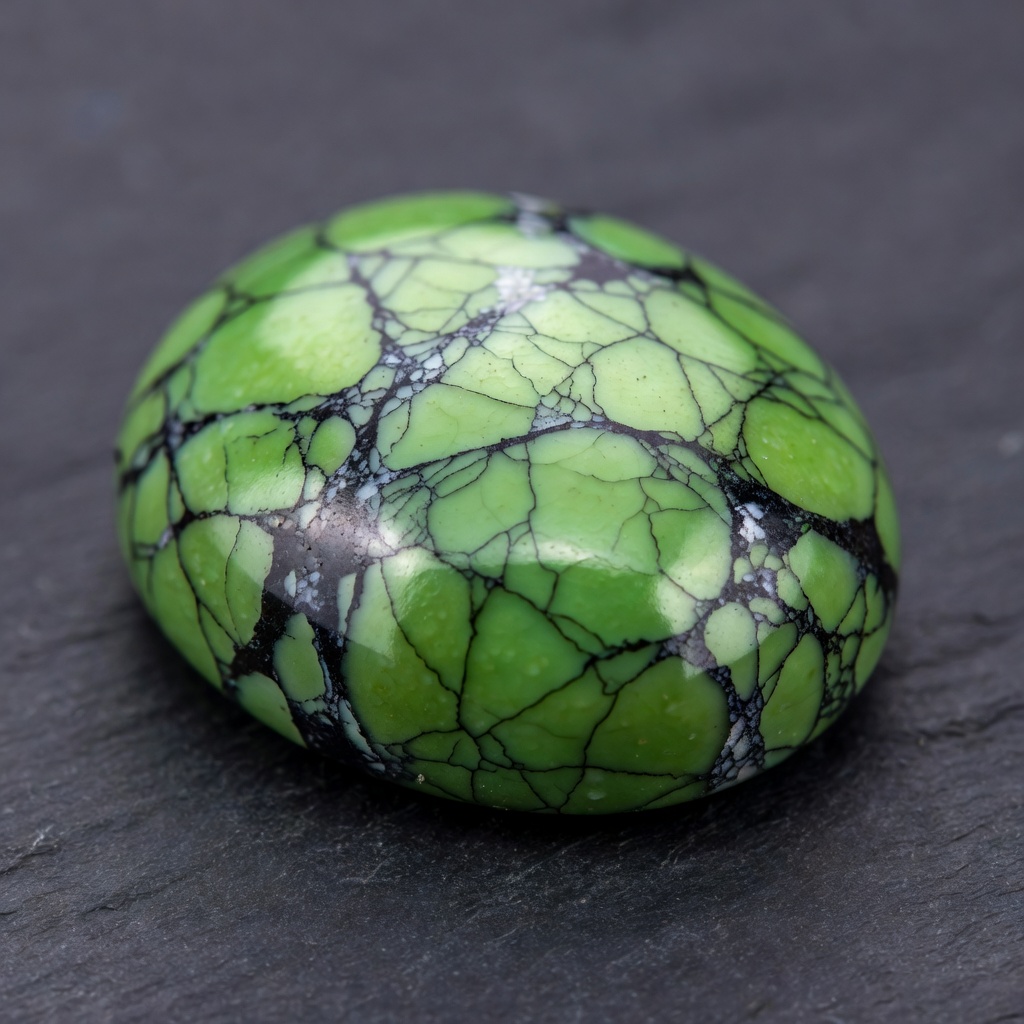
What Is Variscite? Understanding the Basics
Variscite is a captivating hydrated aluminum phosphate mineral with the chemical formula AlPO4·2H2O, belonging to the phosphate mineral group that forms through complex geological processes in near-surface environments. This remarkable gemstone derives its name from the historical region of Variscia in Germany, where it was first discovered and documented by mineralogists in the 19th century, honoring the ancient tribal name of the local Germanic peoples who once inhabited the area. As a secondary mineral, variscite forms through the alteration of phosphate-bearing rocks, typically developing in sedimentary settings where aluminum-rich materials interact with phosphate-rich solutions derived from organic matter or apatite deposits over extended geological time periods.
The historical significance of this green variscite stone extends beyond its German type locality to include important cultural uses among indigenous peoples of the American Southwest, who valued the material for ornamental and ceremonial purposes long before modern mineralogical classification. Unlike many gemstones that form deep within the earth's crust under high pressure and temperature conditions, variscite develops in relatively low-temperature environments near the surface, making it a fascinating subject for geologists studying near-surface chemical processes. Understanding these fundamental Variscite Properties and Information provides essential context for appreciating both the scientific importance and aesthetic appeal of this unique phosphate mineral.
Physical Properties and Chemical Composition
When examining Variscite Properties and Information for gemological purposes, understanding its physical characteristics becomes essential for proper identification, jewelry application, and care requirements. The mineral registers between 4 and 5 on the Mohs hardness scale, making it significantly softer than quartz but still suitable for jewelry when set in protective mountings that shield the stone from direct impact and abrasion during wear. Crystallographically, variscite belongs to the orthorhombic crystal system and exhibits distinct cleavage properties, while its specific gravity ranges from 2.42 to 2.58, providing important diagnostic data for laboratory identification and distinguishing it from similar appearing minerals.
The visual appeal of this phosphate mineral stems partly from its distinctive waxy to vitreous luster, which creates an appealing glow when properly polished and cut into cabochon forms that maximize its optical properties. Transparency levels vary from transparent to translucent, with the most prized specimens displaying a uniform translucency that enhances their depth of color and visual richness, while lower grade material may appear more opaque. These physical attributes make variscite particularly suitable for specific jewelry applications where protective settings can preserve its beauty while showcasing its unique optical characteristics that differ significantly from harder, more brilliant gemstones.
Geological Formation and Primary Sources
The formation of variscite represents a fascinating interplay between groundwater chemistry and aluminous host rocks, occurring when phosphate-rich groundwater percolates through aluminum-bearing formations in near-surface environments typically associated with sedimentary or metamorphic terrains. This secondary mineralization process takes place when phosphate solutions react with aluminum minerals such as clays or feldspars, creating the characteristic green variscite stone through precipitation and replacement processes that may take thousands to millions of years to produce significant deposits. The resulting mineral assemblages often include associated phosphate minerals such as crandallite, wardite, and strengite, which provide valuable geological indicators of the specific chemical conditions present during formation.
Significant deposits of this attractive phosphate mineral occur across several continents, with Utah variscite from the western United States representing some of the finest material available to collectors and jewelers worldwide. The famous Fairfield, Utah deposits produce specimens renowned for their intense apple-green coloration and distinctive matrix patterns, while the Lucin and Snowville areas also contribute notable material characterized by deep green hues and attractive web-like veining. International sources include Queensland in Australia, the original type locality in Germany, and various deposits in Brazil, Spain, and Poland, each producing green variscite stone with subtle variations in color intensity and matrix characteristics that reflect their unique geological origins and local chemical environments.
Visual Characteristics and Color Variations
The aesthetic appeal of variscite centers predominantly on its remarkable color spectrum, which ranges from delicate pale green to deep, saturated apple green and occasionally extends into rare blue-green hues reminiscent of tropical waters. These color variations result primarily from trace amounts of chromium and vanadium substituting for aluminum within the crystal lattice, with higher concentrations typically producing the more intensely colored specimens that command premium prices in the gemstone market, while iron content may contribute to yellower or browner tones in less desirable material. Unlike many gemstones where absolute uniformity is prized, variscite often displays fascinating matrix patterns including black, brown, or yellow spiderweb veining that creates unique, one-of-a-kind appearances similar to but distinct from the matrix patterns seen in turquoise.
When comparing green variscite stone to other green gemstones such as chrysoprase or jade, collectors and jewelers note significant differences in texture and visual character that aid in proper identification and appreciation. Variscite typically exhibits a more opaque, earthy quality with a distinctive waxy luster that differs from the glassy appearance of chrysoprase or the greasy to vitreous texture of jadeite, while its specific gravity and heft feel noticeably different in the hand. The matrix patterns in high-quality specimens from Utah often feature intricate, web-like networks of black or brown limonite that contrast beautifully against the green background, creating dramatic visual effects that make each piece uniquely identifiable and highly sought after by connoisseurs of fine phosphate minerals and Southwestern jewelry.
Variscite vs Turquoise: Key Differences
Distinguishing between variscite vs turquoise represents one of the most common challenges facing gemologists, jewelers, and collectors, as both minerals share similar matrix patterns, overlapping hardness ranges, and historical usage in Native American and Southwestern jewelry traditions. The most immediate visual distinction lies in the color palette: while turquoise exhibits characteristic sky-blue to blue-green tones resulting from copper content and occasional iron substitutions, variscite displays distinctly greener hues ranging from mint green to deep emerald, reflecting its fundamental chemical composition as an aluminum phosphate rather than a hydrated copper aluminum phosphate. This color difference, though sometimes subtle in lower-grade specimens or lighting conditions, becomes pronounced in high-quality material where variscite's verdant forest tones contrast sharply with turquoise's robin's egg blue or azure shades.
From a gemological perspective, detailed variscite vs turquoise comparisons reveal subtle but consistent differences in physical properties that allow for definitive identification in laboratory settings. Variscite typically registers between 4 and 5 on the Mohs hardness scale, overlapping with turquoise's range of 5 to 6, though individual specimens vary depending on specific composition, porosity, and the presence of included matrix materials that can affect durability. Laboratory identification provides definitive differentiation through refractive index measurements, with variscite showing values between 1.56 and 1.59 compared to turquoise's typical range of 1.61 to 1.65, alongside specific gravity testing where variscite's range of 2.42-2.58 typically falls lower than turquoise's 2.60-2.85, providing clear diagnostic separation between these two popular phosphate minerals.
Metaphysical Properties and Crystal Healing
Beyond its geological significance and aesthetic beauty, variscite carries profound variscite meaning in metaphysical and crystal healing communities, where practitioners value it as a powerful heart chakra stone that promotes emotional healing, compassion, and the expression of unconditional love. The gentle, nourishing energy attributed to this green variscite stone is believed to dissolve emotional barriers and energetic blockages within the fourth chakra, encouraging forgiveness and fostering deeper connections with oneself and others through its purported vibrational resonance with heart-centered awareness. Crystal healers often recommend variscite for individuals working through grief, heartbreak, or emotional trauma, suggesting that its calming presence helps stabilize mood swings while promoting a sense of inner peace and emotional equilibrium during difficult transitional periods.
The variscite healing properties extend beyond emotional heart work to include reputed benefits for mental clarity, stress reduction, and enhanced cognitive function, making it a popular choice for meditation practices aimed at quieting anxious thoughts and alleviating symptoms of depression or overwhelming mental chatter. Practitioners incorporate this phosphate mineral into spiritual routines to enhance connection with nature's energy and the elemental kingdom, believing that its earthy green coloration resonates with the natural world and promotes ecological awareness, grounding, and physical vitality. Some metaphysical traditions suggest that variscite aids in past-life recall and soul healing, helping individuals access deep-seated karmic memories and release patterns that no longer serve their highest good, while simultaneously encouraging courage, clear thinking, and decisive action during times of uncertainty or major life changes.
Jewelry Applications and Design Considerations
The unique characteristics of variscite make it particularly well-suited for specific jewelry applications where its beauty can be showcased while its physical limitations are accommodated through thoughtful design and protective setting techniques. Cabochon cuts dominate variscite jewelry production, as the domed, polished surface without facets maximizes the stone's waxy luster and displays its distinctive color and matrix patterns to full advantage, whether set into statement rings, pendants, or earrings that receive less daily wear and impact than bracelets or cuff designs. Sterling silver remains the preferred metal for setting Utah variscite, particularly in Southwestern and Native American jewelry traditions where the cool white metal provides striking contrast against the stone's warm green tones while offering affordable, artisan-crafted pieces that honor cultural design motifs and storytelling traditions.
However, proper variscite jewelry care requires careful consideration of the stone's relative softness and chemical sensitivity when designing pieces intended for regular or daily wear. Protective bezel settings that wrap completely around the stone's circumference offer superior protection compared to prong settings, preventing edge chipping and reducing exposure to household chemicals that might damage the porous phosphate mineral structure. Designers typically recommend reserving variscite for occasional wear pieces or special occasion jewelry rather than daily-wear rings or bracelets, as the 4 to 5 Mohs hardness rating makes the stone susceptible to scratching from harder materials and vulnerable to damage from acids, perfumes, and cleaning agents commonly encountered in everyday activities and household environments.
Authentication and Quality Assessment
Identifying genuine variscite requires careful examination and sometimes laboratory testing, as the market occasionally sees imitations created from dyed howlite, magnesite, or even polymer resins designed to mimic the appearance of natural green variscite stone at lower price points. Visual inspection techniques focus on examining matrix patterns, which in natural specimens display organic, irregular veining that extends through the stone with natural color gradations and three-dimensional depth, whereas dyed imitations often show color concentrations in surface cracks or unnaturally uniform color distribution that lacks the subtle variations of natural material. Authentic variscite typically exhibits slight variations in color intensity and natural inclusions that attest to its geological formation, while imitations may appear too perfect or display dye bleeding when examined with a 10x jeweler's loupe or gemological microscope.
Definitive identification of variscite vs turquoise and their respective imitations relies on laboratory testing methods that measure the physical constants unique to this phosphate mineral, including refractive index readings between 1.56 and 1.59 and specific gravity testing that should yield results between 2.42 and 2.58 for pure material. Gemologists also examine fluorescence characteristics under ultraviolet light, as natural variscite may show weak green or yellow fluorescence depending on its specific chemical composition, locality of origin, and trace element content. When assessing quality for purchase, collectors should evaluate the intensity and consistency of the green color, the attractiveness and pattern of any matrix present, and the overall craftsmanship of the cut, with premium specimens displaying vivid, uniform color with minimal matrix or attractive, symmetrical web patterns that enhance rather than detract from the stone's natural beauty and visual appeal.
Proper Care and Maintenance Guidelines
Maintaining the beauty of variscite jewelry requires adherence to specific variscite jewelry care protocols that account for the stone's porous nature and chemical sensitivity as a hydrated aluminum phosphate mineral. Cleaning should involve only warm water and mild dish soap applied with a soft microfiber cloth or gentle brush with natural bristles, thoroughly removing accumulated dirt, skin oils, and cosmetics without exposing the stone to harsh chemicals, ultrasonic vibrations, or steam cleaning that could cause structural damage, color alteration, or loosening of protective settings. After washing, pieces must be dried immediately with a soft, lint-free cloth to prevent water spots and stored in a dry environment away from direct sunlight, as prolonged moisture exposure can potentially affect the stone's stability or promote temporary discoloration of the surface.
Proper storage practices and wearing habits form essential components of variscite jewelry care that protect the relatively soft gemstone from mechanical damage and environmental hazards that could compromise its appearance and structural integrity. Always store variscite pieces separately from harder gemstones such as diamonds, sapphires, or rubies that could scratch the surface, preferably in individual soft cloth pouches or lined jewelry boxes with compartments that prevent contact with other pieces and minimize exposure to air pollutants. Remove variscite rings or bracelets before engaging in household cleaning, swimming in chlorinated pools or saltwater, or applying lotions, sunscreens, and perfumes, as exposure to acids, alkalis, and chemical solvents can etch or permanently discolor the stone's surface, while prolonged direct sunlight may cause gradual fading of the vibrant green tones that make this phosphate mineral so desirable in fine jewelry collections.
Collecting Tips and Investment Value
For mineral collectors and gemstone investors, understanding the factors that influence variscite value helps in making informed acquisitions that balance immediate aesthetic appeal with potential long-term appreciation and collection diversification. Color intensity serves as the primary value determinant, with vivid, saturated apple-green to emerald specimens commanding significantly higher prices per carat than pale, yellowish-green, or overly dark material, while the presence and pattern of matrix can either enhance or detract from value depending on whether the veining creates attractive symmetrical patterns or appears as distracting random inclusions that break up the color field. Geographic origin plays a crucial role in valuation, with Utah variscite from the Fairfield area particularly prized for its exceptional color quality, density, and historical significance, often selling at substantial premiums compared to material from Nevada, Australia, or other localities with different geological characteristics.
The rarity of fine, gem-grade variscite with minimal matrix and intense, uniform coloration makes high-quality specimens increasingly attractive to serious collectors seeking natural, untreated phosphate minerals for both display and investment purposes. Market trends indicate growing demand for unenhanced variscite that displays its original color and structure without stabilization, dyeing, or polymer impregnation treatments that are commonly applied to turquoise but less frequently to variscite due to its generally greater density and lower porosity. When building a collection, focus on acquiring specimens with documented provenance from renowned localities, as well-cut cabochons from Utah or exceptional rough material from classic German or Australian localities offer both immediate visual satisfaction and potential long-term value retention as mining operations continue to yield diminishing quantities of top-grade material suitable for fine jewelry and competitive mineral display purposes.
Frequently Asked Questions About Variscite
What is variscite used for?
Variscite is primarily used for cabochon-cut jewelry including rings, pendants, and earrings. It's also popular among mineral collectors and is utilized in crystal healing practices for emotional balance and heart chakra work.
How can you tell variscite from turquoise?
Variscite typically displays greener hues (apple green to emerald) compared to turquoise's blue tones. Variscite also tends to have a slightly higher hardness (4-5 Mohs vs turquoise's 5-6) and different matrix patterns. Laboratory testing of refractive index and specific gravity provides definitive identification.
Is variscite expensive?
Variscite is generally more affordable than high-grade turquoise, with prices ranging from $20 to $200 per carat depending on color intensity, clarity, and origin. Exceptional Utah specimens with vibrant green color and minimal matrix command premium prices.
Can variscite get wet?
Brief contact with water is safe for cleaning variscite, but prolonged soaking should be avoided as the stone is porous and can absorb liquids. Always dry thoroughly after cleaning and never expose to harsh chemicals, acids, or saltwater.
What are the healing properties of variscite?
Variscite is believed to resonate with the heart chakra, promoting emotional healing, compassion, and stress relief. It's thought to aid in past-life recall, enhance meditation, and help release negative energy while encouraging clear thinking and courage.
Where is variscite found?
Significant variscite deposits occur in Utah and Nevada (USA), particularly the famous Utah variscite mines. Other sources include Queensland (Australia), Germany (the type locality), Spain, Poland, and Brazil. Utah variscite is especially prized for its rich green color.
Is variscite a rare gemstone?
While variscite itself is not extremely rare, high-quality gem-grade material with intense green color and minimal matrix is relatively uncommon. Fine specimens from specific localities like Fairfield, Utah are considered collector's items due to their superior color and limited availability.
How do you clean variscite jewelry?
Clean variscite using only warm water, mild dish soap, and a soft microfiber cloth. Avoid ultrasonic cleaners, steam cleaning, and chemical jewelry dips. Store separately from harder gemstones to prevent scratching, and remove jewelry before swimming, showering, or applying lotions and perfumes.