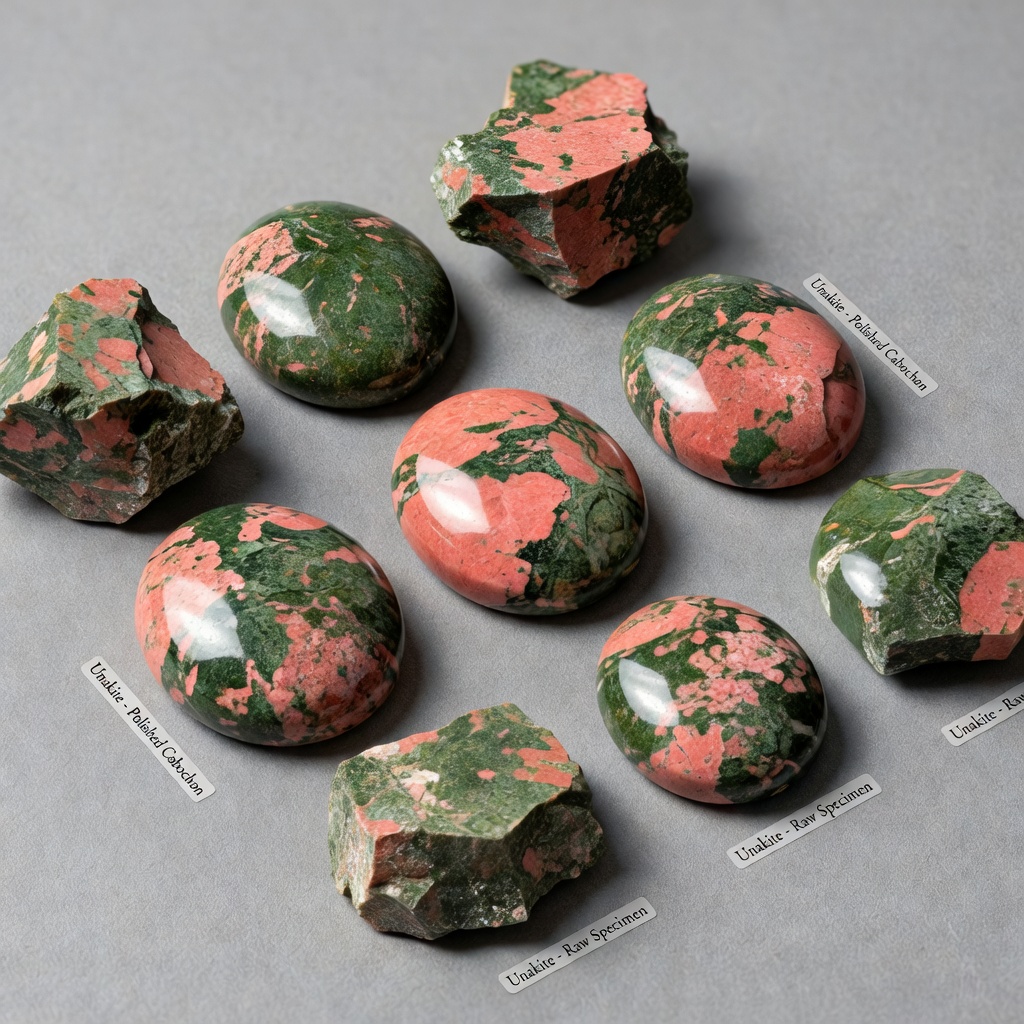
Introduction to Unakite and Its Market Value
Unakite represents one of the most distinctive ornamental stones in the lapidary world, characterized as an altered granite composed primarily of salmon-pink orthoclase feldspar, olive-green epidote, and translucent quartz crystals. This unique combination creates the mottled, moss-like appearance that has captivated jewelry makers and crystal enthusiasts since its discovery in the Unaka Mountains of North Carolina during the late 19th century. Understanding unakite stone value requires recognizing how this metamorphic rock bridges the gap between common construction material and collectible art stone, offering accessibility without sacrificing visual interest.
The contemporary unakite market overview reveals a diverse ecosystem spanning multiple industries, from mass-produced tumbled stones for metaphysical retail to bespoke cabochons for high-end silversmithing. Lapidary artists particularly favor unakite for its excellent workability, as the material accepts polish beautifully while maintaining structural integrity during cutting and carving processes. Unlike precious gemstones that command standardized pricing, unakite pricing varies significantly based on source location and specimen quality, with Virginia Blue Ridge material often fetching triple the price of imported rough due to its historical significance and superior color saturation.
Average Unakite Prices: What to Expect in 2024
Navigating the current unakite price guide requires understanding the three-tier pricing structure that dominates the market in 2024. Budget-grade unakite rough, suitable primarily for tumbling and basic educational specimens, typically trades between $0.10 and $0.50 per gram when purchased in bulk quantities. This entry-level material often originates from Chinese or South African deposits and may exhibit muted coloration or higher quartz content, making it perfect for beginners learning cabbing techniques without risking expensive stock.
Mid-range cabochons and beaded jewelry components represent the sweet spot for most consumers, with average unakite cost falling between $2 and $8 per gram depending on pattern contrast and polish quality. At this price point, buyers should expect distinct separation between the salmon-pink and green mineral components, creating the signature mottled appearance that distinguishes premium material. Premium display specimens and large carved pieces command $15 to $50 or more per gram for museum-quality material featuring exceptional color saturation, minimal fractures, and artistic craftsmanship that transforms raw stone into sculptural art.
Key Factors That Influence Unakite Stone Costs
When evaluating unakite quality factors, the color contrast ratio between salmon-pink feldspar and olive-green epidote serves as the primary value determinant, with the most sought-after specimens displaying approximately 60% green epidote to 40% pink feldspar in distinct, swirling patterns. Dealers and collectors specifically seek material where the boundaries between mineral components remain sharp and defined rather than muddy or blended, as this contrast creates the visual depth that makes unakite particularly striking when backlit or polished to a high shine. Specimens featuring orbicular patterns—rare circular formations resembling eyes or targets—can command prices ten times higher than standard mottled material due to their exceptional rarity.
Clarity considerations extend beyond mere transparency to encompass the structural integrity and absence of fractures, pitting, or white quartz veining that disrupts the characteristic mottled pattern. Unakite value determinants also heavily weigh geographic origin, with Virginia Blue Ridge material historically commanding premium prices over Chinese or South African sources due to its association with the stone's namesake region and typically superior color saturation. Additionally, the size of usable material significantly impacts pricing, as unakite deposits often contain fracture lines that reduce the percentage of recoverable cabbing material from a rough boulder, making large, intact pieces increasingly valuable for substantial carving projects.
Breaking Down Unakite Price Per Carat and Per Gram
Understanding the relationship between unakite price per carat and unakite price per gram requires grasping the fundamental conversion: one gram equals five carats, a distinction that significantly impacts purchasing decisions across different market segments. Rough material is typically sold by weight using grams or kilograms, reflecting the lapidary and tumbling markets where total material volume matters more than individual stone dimensions. Conversely, finished jewelry utilizes carat measurements, following gemstone industry standards that help consumers compare unakite against other semi-precious stones like jasper or agate.
Retail price ranges for finished pieces generally fall between $0.40 and $3.00 per carat for standard cabochons up to 50 carats, with smaller stones often commanding higher per-carat rates due to the fixed labor costs involved in cutting and polishing. Bulk purchasing economics reveal substantial savings opportunities, with many wholesalers offering 50% or greater discounts when buying kilogram lots of rough unakite directly from importers or mining operations. For example, a hobbyist purchasing five kilograms of rough material at $0.30 per gram pays $1,500 total, whereas buying equivalent material as pre-cut cabochons could easily cost $3,000 to $4,000, illustrating the financial advantage of developing lapidary skills for serious collectors.
Comparing Prices: Raw Unakite vs. Finished Jewelry
Rough unakite pricing for lapidary artists presents significant cost savings opportunities for those willing to invest time in self-cutting versus purchasing pre-made cabochons from commercial suppliers. Raw material direct from miners or rough dealers typically costs 60-80% less than finished goods, though this requires access to cutting equipment, polishing compounds, and the technical knowledge to maximize yield from irregular rough pieces. Professional cabbers calculate their pricing based on time investment, with a standard 30-carat cabochon requiring approximately 45 minutes to two hours of work, justifying the markup from raw material costs to finished goods.
Beaded unakite jewelry price analysis reveals how stringing labor and hardware costs add 200-400% markup over material value, with a simple strand of 8mm beads potentially retailing for $25-$40 despite containing only $8-$12 worth of raw stone. Unakite jewelry pricing escalates further when incorporating precious metal settings, with sterling silver mountings often doubling the retail price compared to base metal alternatives. Carved unakite figurines and spheres follow different economic models, with pricing based on artistic craftsmanship hours rather than just material weight, meaning a masterfully carved 500-gram sphere might retail for $300-$800 depending on the artist's reputation, while the raw material cost only $50-$100.
Best Places to Buy Unakite at Competitive Prices
Direct sourcing from rock and mineral shows remains the gold standard for where to buy unakite at competitive rates, with vendors offering cash discounts of 10-20% and bulk negotiation opportunities unavailable through online platforms. Major events like the Tucson Gem and Mineral Show or regional events in Virginia and North Carolina provide unique access to miners selling fresh material before it passes through multiple distribution layers, often resulting in prices 40% below retail. Building relationships with specific vendors at these shows can lead to "first pick" privileges when exceptional specimens become available, particularly important for collectors seeking rare orbicular or Virginia-origin material.
Online marketplace considerations require balancing convenience against cost, with Etsy artisan pricing typically reflecting individual craftsmanship quality and unique design elements rather than wholesale economics. eBay offers access to wholesale lots and shipping weight cost advantages for bulk buyers, though quality consistency varies significantly between sellers. Specialized gem and mineral dealers versus metaphysical crystal shops demonstrate typical 40-60% retail markup differences, with geological specimen dealers focusing on material quality and rarity while crystal shops emphasize energetic properties and aesthetic display, often justifying higher prices through curated presentation and metaphysical certifications.
Quality Grading: How It Affects Unakite Pricing
The unakite grading system employed by professional dealers categorizes material into three primary tiers that directly correlate with pricing structures and appropriate uses. Commercial grade characteristics include muted colors, heavy quartz inclusions, and structural fractures that limit the material to tumbling, landscaping, or educational purposes, typically pricing at the lowest market points of $0.10-$0.30 per gram. This grade suits beginners practicing cutting techniques or retailers selling bulk tumbled stones for metaphysical markets where individual specimen perfection matters less than volume availability.
Select grade standards require distinct pink-green contrast and approximately 70% usable material for cabbing, representing the standard for most jewelry applications and serious hobbyist collections. Unakite quality grades at this level command $1-$5 per gram for rough and $2-$8 per gram for finished cabochons, offering the best balance of aesthetic appeal and affordability. Collector grade criteria include rare orbicular patterns, large intact crystal faces showing the original granite matrix, and exceptional polish quality that reveals the stone's full optical depth, with prices ranging from $10-$50+ per gram depending on specimen size and pattern rarity, particularly for Virginia-origin material with documented provenance.
Investment Potential: Will Unakite Increase in Value?
Market liquidity analysis indicates that unakite investment value prospects remain modest compared to precious gemstones, positioning the material as an affordable collector stone rather than a high-tier investment vehicle. Unlike diamonds, sapphires, or emeralds that benefit from standardized grading systems and liquid resale markets, unakite transactions typically occur within specialized collector communities or lapidary circles, limiting quick liquidation potential. However, rare specimen categories including large unakite boulders exceeding 50 pounds and orbicular varieties showing concentric ring patterns demonstrate the strongest appreciation potential, with documented price increases of 5-8% annually for museum-quality pieces over the past decade.
When considering unakite resale price potential, collectors should focus on provenance documentation and unique aesthetic characteristics rather than treating the stone as a financial instrument. Comparison with jade and other green-pink gemstones reveals that while unakite lacks the cultural prestige and hardness of jadeite, it offers similar visual appeal at fractionally lower price points, suggesting steady demand among budget-conscious collectors and jewelry makers. Investment-minded buyers should prioritize Virginia-origin material, exceptional orbicular patterns, and pieces by recognized lapidary artists, as these categories show the most consistent secondary market interest among serious mineral collectors.
Avoiding Overpayment: Smart Buying Strategies
Smart buying unakite tips begin with developing an eye for identifying dyed or treated stones masquerading as natural material, particularly pieces showing unnaturally vivid colors or uniform patterning absent the natural variation found in genuine specimens. Dyed granite often presents with colors that appear painted on or seep into fractures unnaturally, whereas authentic unakite displays color integration throughout the mineral structure. Always request specific gravity testing results when purchasing high-value specimens, as genuine unakite maintains a density of 3.0-3.2, significantly heavier than plastic imitations or resin composites sometimes sold to unsuspecting tourists.
Unakite price comparison strategies should include weight calculation tips for online purchases, accounting for specific gravity considerations that mean a 30-carat cabochon will appear smaller than a 30-carat quartz piece due to unakite's higher density. Verification of seller reputation and return policies becomes particularly crucial when purchasing high-value unakite specimens over $500, as the market lacks standardized certification processes common to precious gems. Requesting multiple photographs under different lighting conditions, provenance documentation for claimed Virginia or North Carolina origin, and satisfaction guarantees protect buyers from overpaying for misrepresented material or treated stones that will fade or deteriorate over time.
Frequently Asked Questions About Unakite Pricing
How much does unakite cost per carat?
Unakite typically costs between $0.40 and $3.00 per carat for standard cabochons, with rough material often priced by the gram at $0.10 to $2.00 per gram depending on quality. Premium specimens with exceptional color contrast can reach $5-$10 per carat. The price variation reflects differences in color saturation, pattern distinctiveness, and whether the stone originates from premium Virginia deposits or more common international sources.
Is unakite expensive compared to other gemstones?
No, unakite is considered an affordable semi-precious stone. It is significantly less expensive than gems like jade, emerald, or ruby, making it accessible for beginning collectors and jewelry makers while still offering unique aesthetic appeal. Most consumers can acquire high-quality unakite cabochons suitable for fine jewelry settings for under $50, whereas equivalent-sized specimens of precious gemstones might cost thousands of dollars, positioning unakite as an excellent entry point for those interested in colored stone collecting.
What color unakite is most valuable?
The most valuable unakite displays a strong contrast between salmon-pink orthoclase feldspar and deep olive-green epidote, with minimal white quartz veining. Specimens with vivid, saturated colors and clear boundaries between mineral components command premium prices. Collectors particularly prize material showing approximately 60% green epidote to 40% pink feldspar, as this ratio creates the optimal visual balance, while rare orbicular patterns with concentric rings can increase value by tenfold or more compared to standard mottled material.
Can I buy unakite wholesale to get better prices?
Yes, purchasing unakite in bulk quantities (kilogram lots) can reduce prices by 50-70% compared to retail. Wholesale options are available at gem and mineral shows, through lapidary supply companies, and from rough stone dealers who specialize in bulk sales. Many wholesalers require minimum purchases of five to ten kilograms to access the best pricing tiers, making bulk purchasing most practical for lapidary clubs, jewelry businesses, or serious collectors who plan to cut their own material.
Does unakite increase in value over time?
While unakite is not typically considered a high-appreciation investment gem like diamonds or sapphires, rare specimens with exceptional patterns or large display-quality pieces may gradually increase in value. Most unakite holds steady value but should be purchased for enjoyment rather than speculation. Museum-quality Virginia-origin material and large carved pieces by recognized artists show the strongest historical appreciation, though the secondary market remains limited compared to precious gemstones.
How do I know if unakite is real before buying?
Genuine unakite has a specific gravity of 3.0-3.2 and shows natural variation in its pink and green mottling. Be wary of pieces with unnaturally bright or uniform colors, which may be dyed granite. Real unakite will not fade in sunlight and feels cooler to the touch than plastic imitations. When examining rough material, look for the characteristic granular texture of altered granite and the presence of quartz crystals, whereas imitations often show mold marks, perfect uniformity, or colors that appear painted on the surface rather than integrated throughout the stone.
Why do unakite prices vary so much between sellers?
Price variation stems from differences in quality grades, whether the seller is retail or wholesale, the cost of labor for polished pieces versus rough material, and origin location. Additionally, metaphysical crystal shops often charge premiums compared to geological specimen dealers. Shipping costs also impact pricing, as unakite's relatively high specific gravity makes transporting large specimens expensive, while specialized dealers may include certification of origin or provenance documentation that justifies higher asking prices for collectible-grade material.
Where is the best place to buy unakite online?
The best online sources include specialized gem and mineral dealers with certification policies, Etsy for handcrafted unakite jewelry with transparent pricing, and reputable geological supply companies for rough material. Always check seller ratings and return policies before purchasing. Avoid marketplace listings that lack detailed photographs or refuse to provide specific gravity information, and prioritize sellers who offer satisfaction guarantees, particularly when investing in higher-priced specimens exceeding $100.