What Is Unakite? Understanding This Unique Crystal
Navigating the world of gemstone purchasing requires knowledge and discernment, making this Unakite Buying Guide essential for both novice collectors and experienced crystal enthusiasts. Unakite, sometimes referred to as epidote granite or unakite jasper (despite not being true jasper), represents one of the most visually distinctive igneous rocks available in the metaphysical and jewelry markets. Understanding the fundamental unakite stone properties helps buyers appreciate why this stone commands attention and how to evaluate specimens effectively before making an investment.
The geological composition of authentic unakite consists primarily of three mineral components working in harmony: salmon-pink orthoclase feldspar, olive-green epidote, and clear to milky quartz. This unique combination forms through the alteration of granite during metamorphic processes, where the original feldspar crystals interact with hydrothermal fluids rich in iron and other minerals. The resulting rock displays a characteristic mottled or patchwork appearance that cannot be replicated exactly by artificial means, making genuine identification possible through careful visual inspection.
Historical records indicate that unakite was first discovered in the Unaka Mountains along the Tennessee-North Carolina border during the late 19th century, which inspired its common name. Geologists initially classified it as a type of granite before recognizing its distinct metamorphic origins and unique mineralogical signature. Today, while the Unaka Mountains remain a historically significant source, commercial deposits have been identified across South Africa, Brazil, China, and India, each producing slight variations in color saturation and pattern density that appeal to different collector preferences.
Visual Characteristics of Authentic Specimens
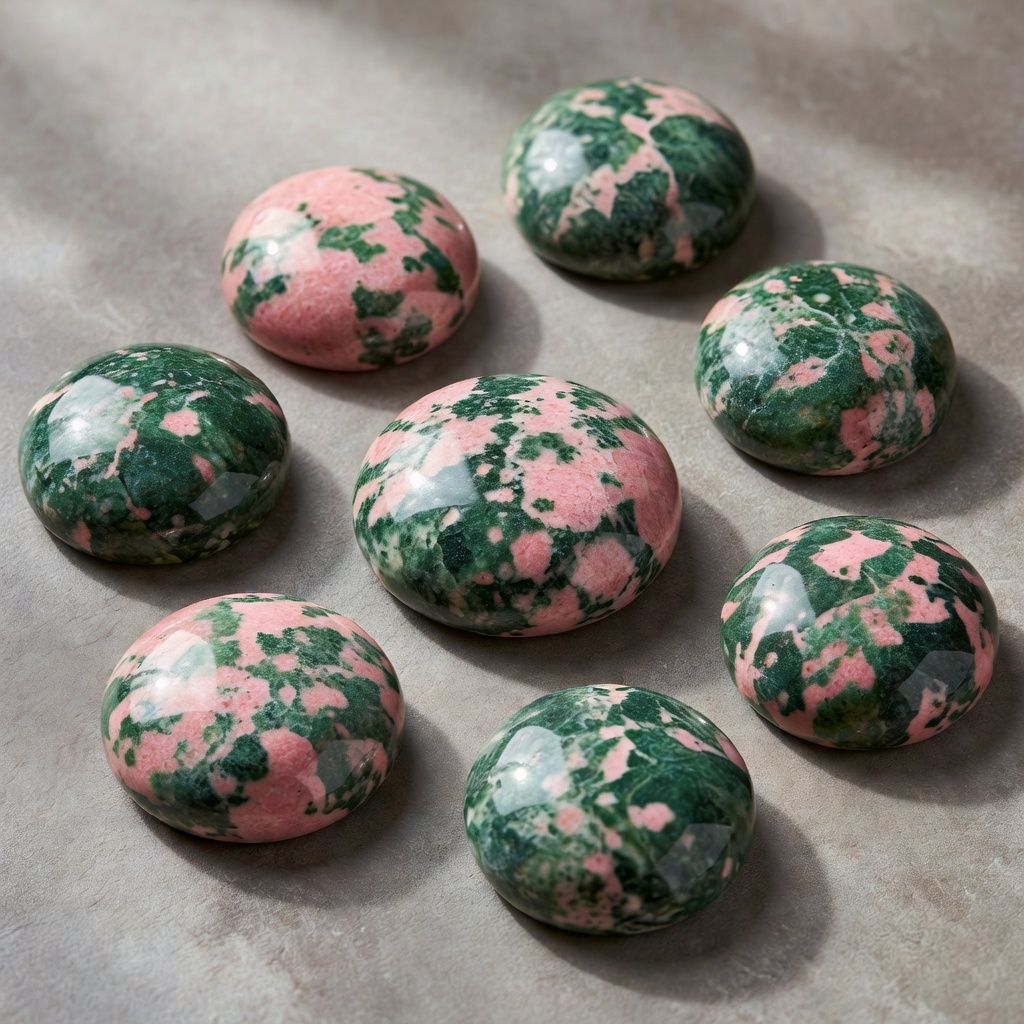
When examining potential purchases, look for the trademark color contrast that defines quality material. Genuine unakite displays distinct areas of peachy-pink feldspar interspersed with mossy to forest-green epidote, often with translucent quartz veining creating additional visual interest. The patterns should appear organic and irregular, never perfectly uniform or displaying straight lines that might indicate dye penetration along fractures. High-quality pieces show sharp boundaries between color zones rather than muddy, blended transitions that suggest inferior grade material or artificial color enhancement.
Key Quality Indicators for Premium Unakite
Discerning buyers must develop an eye for genuine unakite identification by understanding the specific attributes that separate museum-grade specimens from commercial-quality material. The evaluation process involves assessing color harmony, textural integrity, and physical durability through systematic observation and simple testing methods. Mastering these unakite quality factors ensures that your purchases retain both aesthetic appeal and monetary value over time, whether you are selecting beads for jewelry creation or raw specimens for mineral displays.
The ideal color balance in premium unakite features approximately equal distribution between the pink orthoclase and green epidote components, creating a visually pleasing equilibrium that highlights both minerals. Superior specimens exhibit vivid salmon-pink to terracotta tones in the feldspar portions, contrasting sharply with vibrant olive to sage-green epidote regions. Avoid stones where brownish or muddy-gray tones dominate, as these indicate weathering, poor mineral composition, or low-grade source material that lacks the characteristic vibrancy collectors and jewelers seek.
Texture and Surface Integrity Assessment
Authentic unakite possesses a granular crystalline texture visible upon close inspection, with individual mineral grains distinguishable under magnification or bright lighting. When evaluating cabochons or polished pieces, examine the surface for consistent luster without pitting, cracks, or resin-filled cavities that might indicate stabilization treatments. Run your fingers across the stone's surface; genuine unakite feels cool and slightly gritty due to its composite mineral nature, whereas dyed imitations often feel artificially smooth or waxy from polymer coatings.
Hardness and Durability Testing
Performing a simple Mohs hardness test helps confirm authenticity while revealing the stone's suitability for various applications. Unakite typically rates between 6 and 7 on the Mohs scale, meaning it will scratch glass (hardness 5.5) but can be scratched by quartz (hardness 7) or harder materials. Test an inconspicuous edge against a known glass surface; genuine unakite should leave a visible scratch without sustaining damage itself. This hardness level makes unakite suitable for most jewelry applications, though it requires protective settings for ring wear to prevent chipping during daily activities.
How to Spot Fake, Dyed, or Treated Unakite
The growing popularity of this distinctive stone has unfortunately led to an influx of imitations and enhanced material flooding the market, making fake unakite detection skills invaluable for serious buyers. Unscrupulous sellers may attempt to pass off dyed granites, polymer resins, or assembled composites as genuine unakite to capitalize on consumer demand. Developing expertise in unakite authenticity verification protects your investment and ensures you receive the genuine metaphysical and aesthetic properties associated with this unique metamorphic rock.
Common imitation materials include ordinary granite or gabbro dyed with pink and green aniline dyes to mimic unakite's characteristic coloration. These fakes typically display unnaturally vivid, almost neon colors that never occur in nature, with perfect uniformity across the stone's surface. Additionally, some manufacturers create composite stones by crushing low-grade material, mixing it with resin, and casting blocks that are then sliced and polished, resulting in patterns that look "too perfect" or display swirling effects unlike natural mineral segregation.
Visual Inspection Techniques
Examine specimens under bright natural light or using a jeweler's loupe to identify telltale signs of artificial enhancement. Dyed stones often show color concentrations within surface-reaching fractures or along grain boundaries where the dye solution pooled during the treatment process. Look for color bleeding when wiping the stone with a white cloth dampened with acetone or alcohol; while this test should be performed cautiously on finished jewelry, it will often remove surface dyes from treated stones. Genuine unakite maintains consistent coloration throughout the material, even at fractured edges or drilled holes.
Professional Verification Methods
For significant investments, request documentation from reputable gemological laboratories that can perform advanced spectroscopic analysis to identify mineral composition definitively. Professional gemologists use refractive index testing, specific gravity measurements, and polariscope examination to distinguish between natural unakite and assembled or dyed imitations. When purchasing from dealers, ask for written certification guaranteeing natural, untreated material, and verify that the seller maintains membership in professional organizations such as the American Gem Trade Association (AGTA) that require ethical disclosure of treatments.
Choosing Between Jewelry-Grade and Collector Specimens
Your intended application significantly influences the selection criteria when evaluating unakite jewelry quality versus raw collector pieces. Jewelry makers prioritize consistency, workability, and polish quality, while mineral collectors often seek dramatic pattern variations, crystal formations, or historical provenance. Understanding these divergent value propositions helps you allocate your budget effectively and select pieces that serve their intended purpose whether adorning a pendant or displaying in a mineral cabinet.
For jewelry applications, examine unakite cabochons for optimal cutting angles that maximize color contrast and pattern visibility. Premium cabochons feature high domes that capture light effectively, enhancing the dimensional appearance of the pink and green mottling. The polish should be mirror-like without surface imperfections, and the girdle (edge) should be evenly shaped to facilitate secure setting in bezels or prongs. Avoid cabochons with fractures extending to the surface, as these represent structural weaknesses that could lead to stone failure during setting or wear.
Bead Quality and Stringing Considerations
When purchasing unakite beads for necklace or bracelet construction, evaluate the drilling quality as carefully as the stone itself. Professional-grade beads feature centered holes drilled with diamond bits that leave clean entrances without chipping or cracking the surrounding material. Examine strands for uniformity in size, shape, and color consistency; while some variation is natural and desirable in genuine stone, extreme differences in thickness or hole alignment indicate poor manufacturing standards. High-quality beads should feel substantial and cool to the touch, with smooth holes that won't abrade threading materials.
Raw Specimens for Mineral Collectors
Collectors seeking raw material should prioritize pieces showing clear crystal faces of individual mineral components, particularly well-formed epidote crystals embedded in the pink feldspar matrix. Look for specimens with interesting geological features such as contact zones between unakite and surrounding country rock, or vugs (cavities) lined with crystalline quartz. Large display pieces with dramatic patterning command premium prices, while smaller palm stones or rough chunks offer affordable entry points for beginning collectors. Documented specimens from classic localities like the original Unaka Mountains carry historical premiums significantly above material from newer discoveries.
Unakite Pricing Guide: Understanding Market Values
Developing realistic budget expectations requires familiarity with current unakite price guide standards across different product categories and quality levels. Unlike precious gemstones with standardized per-carat pricing, unakite value fluctuates based on color intensity, pattern uniqueness, craftsmanship, and size relative to common market availability. Understanding these variables enables you to recognize fair pricing and avoid overpaying for commercial-grade material masquerading as premium stock.
Commercial-grade rough unakite typically sells for $5 to $15 per pound, depending on color saturation and the presence of fractures or inclusions that affect workability. Tumbled stones suitable for crystal healing practices or pocket pieces generally range from $2 to $10 each based on size, with palm stones (2-3 inches) commanding the higher end of this spectrum. Bead strands vary dramatically based on bead size and quality, with 8mm round bead strands retailing between $8 and $25, while high-grade, uniformly patterned 10mm beads may reach $40 per strand.
Pricing for Finished Jewelry and Carvings
Finished cabochons for silversmithing or wire wrapping typically sell for $20 to $100 or more, with premium pricing reserved for large pieces (30mm+) exhibiting exceptional color contrast and perfect polish. Hand-carved unakite spheres, eggs, or animal totems represent significant labor investments, with small spheres (40mm) starting around $25 and large display spheres (100mm+) reaching $200 to $500 depending on pattern perfection. Custom-cut designer cabochons featuring unique landscape patterns or dendritic inclusions may command prices comparable to mid-tier semiprecious gemstones.
Factors Influencing Premium Valuations
Several specific characteristics justify higher price points in the unakite market. Specimens exhibiting chatoyancy (cat's eye effect) in the epidote portions, though rare, can double or triple standard values. Pieces from exhausted or classic localities, particularly documented Unaka Mountain material, carry provenance premiums of 50% to 100% over similar-quality material from active commercial mines. Exceptionally large specimens suitable for museum displays or statement furniture pieces (specimen tables, lamp bases) enter the specialty market where pricing depends entirely on aesthetic impact and buyer competition rather than standard metrics.
Best Sources: Where to Buy Authentic Unakite
Locating reputable vendors represents a critical step in acquiring quality material, requiring research into where to buy unakite from ethical unakite sellers who prioritize authenticity and customer education. The marketplace spans from high-volume online retailers to local rock shops and individual lapidary artists, each offering distinct advantages regarding selection, pricing, and purchasing experience. Developing relationships with trustworthy suppliers ensures consistent access to quality inventory while minimizing the risk of acquiring misrepresented or treated material.
When vetting online crystal retailers, examine their About pages for information about sourcing practices, return policies, and staff gemological training. Reputable dealers provide detailed photographs showing multiple angles of individual pieces rather than stock images, and they clearly label any treatments or enhancements. Marketplaces like Etsy or eBay require careful seller evaluation through feedback scores and review analysis; prioritize sellers who demonstrate mineralogical knowledge in their listings and respond promptly to specific questions about treatment history or locality information.
Essential Questions for Vendors
Before completing purchases, engage vendors with specific inquiries that reveal their expertise and honesty. Ask directly whether the material has been dyed, stabilized with resin, or heat-treated to enhance colors, and request written confirmation of their responses. Inquire about the specific mine or region of origin, as different localities produce characteristic appearances that affect value. Professional dealers welcome these questions and provide detailed answers, while evasive or vague responses should trigger caution about the material's authenticity or the seller's knowledge level.
Alternative Purchasing Venues
Regional gem and mineral shows offer unparalleled opportunities to handle material personally, compare quality across multiple vendors simultaneously, and negotiate pricing for bulk purchases. Local rock shops provide the advantage of established community reputations and the ability to build ongoing relationships with knowledgeable proprietors. For unique, high-end pieces, consider purchasing directly from lapidary artists who cut their own material; these craftsmen can often provide provenance documentation and detailed information about the specific rough chunk from which your piece was created.
Proper Care and Maintenance of Unakite Stones
Preserving the beauty and integrity of your collection requires understanding proper unakite care protocols that protect this moderately hard composite stone from damage. While relatively durable compared to softer minerals like malachite or fluorite, unakite's complex mineral composition creates specific vulnerabilities that necessitate careful handling during cleaning unakite stones and daily wear. Implementing appropriate maintenance routines ensures your specimens retain their vibrant coloration and structural integrity for generations.
Safe cleaning methods begin with lukewarm water and mild dish soap applied with a soft microfiber cloth or natural bristle brush for textured pieces. Gently scrub away accumulated oils or environmental debris, then rinse thoroughly with clean water to prevent soap residue buildup that could dull the polish. Pat dry immediately with a lint-free cloth; avoid air-drying which can leave water spots on polished surfaces. This simple method effectively cleans unakite without risking chemical damage to the feldspar or epidote components.
Storage and Protection Strategies
Store unakite jewelry and specimens separately from harder gemstones such as diamonds, rubies, or sapphires that could scratch the surface during contact. Individual cloth bags, compartmentalized boxes, or foam-lined cases prevent abrasion between pieces. Keep unakite away from direct sunlight for extended periods, as UV exposure can gradually fade the pink orthoclase feldspar component, particularly in lighter-colored specimens. For display pieces, consider rotating them periodically or using UV-filtering glass in display cases to minimize light damage.
Wear and Usage Guidelines
While suitable for daily wear in protective settings, unakite rings require removal during activities involving hard impacts, harsh chemicals, or extreme temperature changes. Household cleaners, chlorine in swimming pools, and even prolonged exposure to acidic perspiration can etch the surface or weaken the stone over time. Pendants and earrings face fewer risks due to reduced contact with hard surfaces, making them ideal for showcasing this distinctive stone. Periodically inspect jewelry settings for looseness, as the granular structure of unakite can fracture if the stone shifts within a loose mounting.
Metaphysical Properties: Healing and Spiritual Uses
Beyond its geological fascination, unakite holds significant importance in crystal healing traditions, with practitioners seeking specific pieces based on unakite crystal healing attributes and energetic resonance. The unakite metaphysical properties associated with emotional healing, spiritual growth, and physical wellness have sustained demand for this stone throughout the New Age movement and contemporary wellness practices. Whether you approach these properties from a spiritual perspective or appreciate them as symbolic metaphors, understanding the traditional associations helps inform thoughtful selection of pieces for personal use or therapeutic application.
Traditional crystal healing associates unakite strongly with themes of rebirth, regeneration, and gentle transformation, making it particularly popular among those experiencing major life transitions or recovering from emotional trauma. The combination of pink heart-energy stones and green growth-energy stones creates a balanced vibrational signature believed to facilitate emotional healing while supporting physical vitality. Many practitioners specifically recommend unakite for support during pregnancy and childbirth, believing it promotes healthy gestation and eases the transition into motherhood through its nurturing energy signature.
Chakra Alignment and Meditation Practices
In chakra systems, unakite primarily resonates with the heart chakra (Anahata), bridging the lower physical chakras with the upper spiritual centers through its dual-color nature. Meditation practitioners often hold unakite palm stones or place larger specimens on the chest during supine meditation to facilitate emotional release and heart-centered awareness. The stone's connection to the third eye chakra through its quartz content supposedly enhances visualization practices and dream work, with some users placing unakite under pillows to promote insightful dreaming and subconscious healing.
Selecting Stones for Energetic Resonance
When choosing unakite for metaphysical purposes, practitioners often prioritize intuitive attraction over strict aesthetic criteria, allowing physical attraction to specific pieces to guide selection. Some believe that stones with more prominent pink portions emphasize emotional healing and love attraction, while those dominated by green epidote focus on physical healing and abundance manifestation. Double-terminated unakite points or wands are particularly prized for directing energy in healing layouts, while natural rough specimens are thought to retain more "earth energy" than highly polished pieces. Trust your personal response when handling different specimens, as the stone that "feels right" in your hand often serves your needs most effectively.
Smart Purchasing: Final Tips for Buyers
Culminating your research with strategic buying unakite tips ensures successful acquisitions that meet your expectations for quality, authenticity, and value. This comprehensive unakite purchase guide emphasizes due diligence, financial protection through policies, and long-term collection building strategies. Armed with geological knowledge and market awareness, you can navigate vendor relationships confidently while avoiding common pitfalls that disappoint inexperienced buyers.
Recognizing red flags protects you from fraudulent transactions; be wary of sellers offering "rare" unakite at exorbitant prices, as this material remains relatively abundant and affordable compared to precious gems. Avoid vendors who cannot or will not specify whether treatments have been applied, and be suspicious of perfectly uniform coloration across multiple pieces that suggests mass dyeing operations. Extremely low prices often indicate resin composites or dyed granite rather than genuine unakite, particularly when the material appears in large quantities with identical patterning.
Protecting Your Investment
Prioritize purchases from vendors offering reasonable return policies, preferably 14 to 30 days, allowing adequate time for professional verification or personal evaluation. Save all documentation including receipts, certificates of authenticity, and correspondence regarding treatment disclosures or locality claims. For significant investments, consider paying with credit cards or through platforms offering buyer protection services rather than cash transactions or wire transfers that offer no recourse if the material proves misrepresented.
Building a Meaningful Collection
Develop your collection systematically by starting with affordable tumbled stones or bead strands to familiarize yourself with genuine material before investing in high-end specimens. Document each acquisition with photographs, purchase details, and any provenance information to build a valuable archive that enhances resale potential or insurance coverage. Join local mineral clubs or online forums dedicated to unakite and epidote minerals to expand your knowledge through community interaction and gain access to private sales from reputable collectors upgrading their holdings.
Frequently Asked Questions About Unakite
How can I tell if my unakite is real or fake?
Genuine unakite features natural, mottled patterns of pink orthoclase and green epidote with quartz inclusions. Fake versions often use dyed granite or resin with unnaturally uniform colors. Real unakite has a Mohs hardness of 6-7 and cool temperature to the touch, while fakes may feel warmer or show dye concentrations in cracks.
What colors indicate high-quality unakite?
Premium unakite displays a balanced, harmonious blend of salmon-pink to terracotta feldspar and olive to moss-green epidote. Avoid stones with muddy brown tones or those where one color completely dominates. The best specimens show clear color separation with distinct patterning rather than blended, muddy appearances.
How much should I expect to pay for quality unakite?
Tumbled unakite stones typically range from $2-$10 depending on size, while high-quality beads cost $0.50-$3 per bead. Exceptional cabochons may run $20-$100+, and large spheres or carvings can reach $50-$300. Raw collector specimens vary widely based on size and pattern uniqueness, generally starting at $5-$15 per pound.
Can unakite be dyed or heat-treated to enhance colors?
While unakite is rarely treated due to its naturally attractive colors, some commercial specimens may be dyed to intensify the pink or green hues. Dyed stones will show color concentrations in fractures and may fade with sunlight exposure or alcohol testing. Always purchase from reputable sellers who disclose any treatments.
What is the difference between unakite and epidote?
Unakite is actually a rock composed of multiple minerals, primarily green epidote and pink orthoclase feldspar with quartz. Epidote is the single green mineral component. Pure epidote appears uniformly green, while unakite displays the characteristic pink-green mottled pattern. Unakite is also softer than pure epidote due to its feldspar content.
Is unakite durable enough for daily wear in jewelry?
With a hardness of 6-7 on the Mohs scale, unakite is moderately durable but requires some care. It's suitable for pendants, earrings, and occasional ring wear, but avoid wearing unakite rings during heavy manual labor. Protect from harsh chemicals, extreme temperature changes, and hard impacts that could chip the stone or damage settings.
Where does the best unakite come from?
While originally discovered in the Unaka Mountains of North Carolina/Tennessee, high-quality unakite is now sourced globally. South African, Chinese, and Brazilian unakite are common in the market. South African material often shows particularly vivid color contrast, while American unakite is prized by collectors for its historical significance.
Does unakite have any special care requirements?
Clean unakite with mild soap and lukewarm water using a soft cloth or brush. Avoid ultrasonic cleaners, steam cleaning, and harsh chemicals like bleach or acids. Store separately from harder stones like diamonds or sapphires to prevent scratching. Prolonged sun exposure may fade the pink feldspar component over time.