
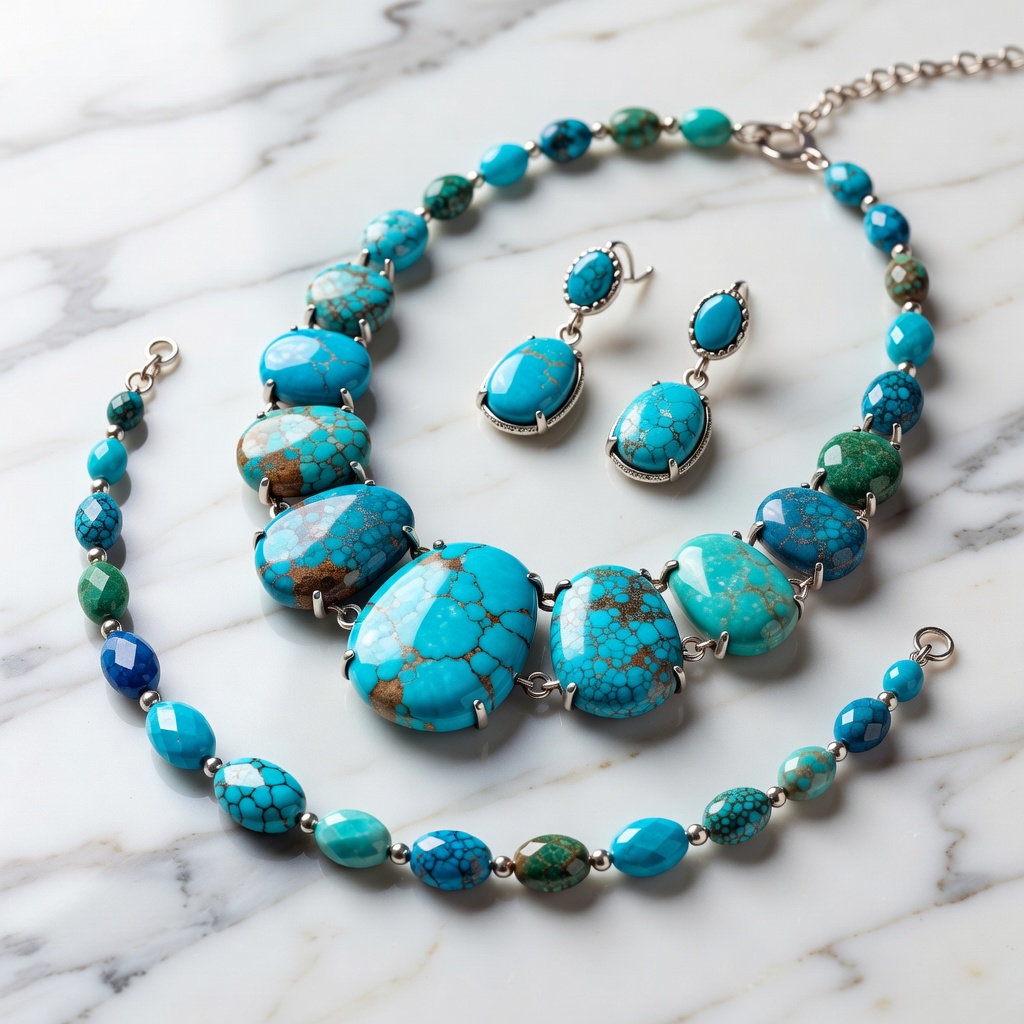
Why You Need a Turquoise Buying Guide
The global turquoise jewelry market has experienced unprecedented growth over the past decade, with collectors and fashion enthusiasts driving demand for this captivating blue-green gemstone. However, this surge in popularity has created a perfect storm for consumer deception, as unscrupulous sellers flood online marketplaces with synthetic stones, dyed howlite, and plastic imitations masquerading as genuine turquoise. Without a comprehensive turquoise buying guide, even seasoned jewelry enthusiasts risk purchasing worthless imitations at premium prices, potentially losing hundreds or thousands of dollars on misrepresented stones.
Understanding the nuances of authentic turquoise requires more than appreciating its aesthetic appeal; it demands knowledge of geological formations, treatment processes, and market valuation standards. Many first-time buyers mistakenly assume that vibrant blue stones labeled "turquoise" in online listings or tourist shops possess inherent value, unaware that approximately 90% of material sold as turquoise is actually treated, stabilized, or entirely fake. This guide serves as your essential roadmap to navigating these complexities, ensuring every purchase represents genuine value and authentic craftsmanship.
What Is Turquoise? Types and Origins Explained
Turquoise forms through a complex geological process involving the weathering and oxidation of copper deposits combined with aluminum and phosphorus, creating the hydrated copper-aluminum phosphate mineral that defines this beloved gemstone. This formation typically occurs in arid regions where copper-rich water percolates through host rock over millions of years, depositing minerals that crystallize into the distinctive blue to green shades collectors cherish. The presence of copper creates the signature blue coloration, while iron content produces green variations, and chromium or vanadium traces can yield rare lime-green specimens.
When learning how to identify real turquoise, understanding the four primary categories becomes essential for making informed purchases. Natural turquoise remains completely untreated, cut and polished in its raw state, representing the most valuable and rare category available. Stabilized turquoise involves impregnating softer natural material with clear epoxy resin to enhance durability and color, a legitimate practice that makes softer stones suitable for jewelry but should always be disclosed. Reconstituted turquoise consists of crushed stone fragments bonded together with resin, essentially creating a composite material with minimal natural stone content. Finally, imitation turquoise contains no genuine turquoise whatsoever, typically comprising dyed howlite, magnesite, plastic, or ceramic materials designed to mimic the appearance of authentic gems.
Geographic origin significantly impacts both value and characteristics, with certain mining districts commanding premium prices due to historical significance and depleted reserves. The Sleeping Beauty mine in Arizona produced the iconic sky-blue turquoise prized for its lack of matrix until its 2012 closure, making existing specimens highly coveted. Persian turquoise from Iran's Nishapur region has remained the gold standard for over two millennia, characterized by intense robin's egg blue hues with minimal veining. Chinese deposits currently supply approximately 80% of the global market, offering diverse quality ranges from high-grade natural specimens to heavily treated material, while Mexican turquoise from Sonora and Zacatecas often displays distinctive spiderweb matrix patterns preferred by Southwest jewelry artisans.
Key Turquoise Quality Factors Every Buyer Must Know
Mastering turquoise quality factors requires understanding the subtle interplay between color saturation, matrix patterns, and structural integrity that determines market value. The most prized specimens display an intense, even robin's egg blue sometimes described as "Persian blue," though high-quality green turquoise from specific localities can command equivalent prices when exhibiting exceptional clarity and hardness. Color consistency matters significantly; while natural variation exists, stones with mottled, chalky, or faded patches typically indicate lower-grade material or improper stabilization techniques that may deteriorate over time.
Matrix patterns—the host rock inclusions that appear as veining or webbing throughout the stone—create distinct aesthetic categories that appeal to different collector preferences. Solid-color turquoise without visible matrix represents the rarest and typically most expensive variety, particularly when displaying the coveted sky-blue hue associated with Sleeping Beauty deposits. Spiderweb matrix, characterized by fine, intricate dark lines resembling a spider's web, commands premium prices when the pattern is natural, evenly distributed, and contrasts beautifully against the blue or green background. However, buyers should scrutinize matrix patterns carefully, as artificially induced or painted black lines often indicate dyed howlite or magnesite imitations rather than genuine turquoise.
Hardness and durability considerations prove crucial when selecting turquoise for specific jewelry applications, as this relatively soft gemstone ranks 5-6 on the Mohs hardness scale. High-grade natural turquoise (Mohs 5.5-6) resists scratching and wear sufficiently for rings and bracelets with proper settings, while chalky or lower-grade material (Mohs 4-5) requires stabilization to survive daily wear. When examining potential purchases, gently press your fingernail (Mohs 2.5) against an inconspicuous edge; genuine turquoise should resist scratching, whereas very soft or reconstituted material may show indentations. This hardness factor directly impacts long-term value, as untreated stones suitable for daily wear without chipping or cracking represent the investment-grade specimens serious collectors pursue.
How to Identify Real Turquoise vs Fakes at Home
Developing expertise in how to identify real turquoise requires combining visual inspection techniques with simple physical tests that reveal treatment methods or imitation materials. Begin with careful observation under natural light, examining the stone for color consistency and surface texture; genuine turquoise displays subtle color variations, natural pitting, and matrix patterns that follow logical geological formations, whereas fakes often show unnaturally uniform color or perfectly symmetrical matrix lines that appear painted on. Real turquoise feels cool and slightly waxy or greasy to the touch due to its hydrated mineral composition, while plastic imitations feel lightweight and warm immediately upon contact.
Several reliable DIY tests can expose common deceptions without requiring gemological equipment. The hot needle test involves heating a sewing needle until glowing red, then touching it to an inconspicuous area of the stone; genuine turquoise resists heat damage, while plastic, resin, or wax-treated materials will emit a chemical odor, smoke, or melt slightly under contact. For dyed howlite or magnesite detection, dampen a white cloth with pure acetone (nail polish remover) and rub an unexposed area vigorously; if blue or green dye transfers to the cloth, the stone has been artificially colored. Examination under 10x magnification reveals the crystalline structure of genuine turquoise, showing random matrix patterns and natural surface irregularities, whereas imitation materials often display perfectly uniform color distribution or air bubbles trapped in plastic resins.
Understanding common substitution materials protects buyers from specific fraud types prevalent in today's market. Dyed howlite, a white porous mineral that naturally features gray veining, represents the most frequent turquoise imitation, easily identified by its pure white base visible at drill holes or chipped edges where dye concentration fades. Magnesite serves as another common substitute, typically displaying brownish or yellowish matrix lines rather than the black or dark brown veining found in authentic turquoise. Plastic and ceramic imitations feel suspiciously light for their size and often contain perfectly round air bubbles visible under magnification, while reconstituted turquoise reveals its manufactured nature through unnaturally uniform color and a slightly plasticky appearance when examined closely.
Most Valuable Turquoise Types: Sleeping Beauty to Persian
Sleeping Beauty turquoise represents the pinnacle of American gemstone collecting, distinguished by its pure, intense sky-blue coloration completely devoid of matrix or veining. Mined from the Globe, Arizona deposits between 1976 and 2012, this variety earned its name from the mountain resembling a sleeping woman that towered above the mine entrance. The mine's closure transformed Sleeping Beauty turquoise from a jewelry industry staple into an increasingly scarce collectible, with untreated natural specimens now commanding $50 to $200 per carat depending on size and color intensity, representing one of the strongest appreciation trajectories in the contemporary turquoise market.
Persian turquoise, sourced from the Nishapur mining district in northeastern Iran, maintains its 2,000-year reputation as the world's finest turquoise due to its intense robin's egg blue color and naturally occurring toughness. Unlike American varieties that often require stabilization, high-grade Persian material typically contains minimal porosity, allowing craftsmen to polish it to a waxy luster without resin enhancement. Historic Persian stones, particularly those set in Victorian or Art Deco jewelry pieces, carry substantial premiums beyond their intrinsic material value, with authenticated antique specimens regularly achieving prices exceeding $300 per carat at specialized auctions.
Several other American mining localities produce investment-grade turquoise that serious collectors actively pursue. Kingman turquoise from Arizona offers remarkable diversity, ranging from high-blue natural specimens with silver matrix to brilliant green varieties, with the "Kingman Blue" variety representing the mine's premium output. Royston turquoise, mined in Nevada near Tonopah, produces stones with distinctive color banding transitioning from dark blue to mossy green, often featuring heavy golden or brown matrix patterns highly prized in Southwestern jewelry. Bisbee turquoise, extracted as a byproduct of copper mining in Arizona until the 1970s, displays an unmistakable deep blue color with smoky red or chocolate-brown matrix, while Number 8 mine material from Nevada features distinctive spiderweb patterns with golden matrix against light blue backgrounds, with both varieties having achieved legendary status among connoisseurs following their mine closures.
Turquoise Price Guide: What You Should Pay in 2024
Understanding current turquoise price guide valuations requires recognizing the vast quality spectrum that causes prices to range from under one dollar to several hundred dollars per carat. Low-grade stabilized or reconstituted material typically sells for $1 to $5 per carat, suitable for fashion jewelry but possessing minimal investment potential or durability for heirloom pieces. Mid-grade natural or well-stabilized turquoise suitable for quality silver jewelry generally commands $10 to $30 per carat, offering an accessible entry point for collectors seeking authentic material without premium rarity pricing.
Gem-grade natural turquoise representing the top 1% of available material drives the upper end of the pricing spectrum, with untreated Sleeping Beauty, Lander Blue, or high-grade Persian specimens regularly achieving $50 to $200 per carat for cut stones, with exceptional examples occasionally exceeding $500 per carat. Treatment status creates the most significant price differential in turquoise valuation; untreated natural stones typically command 10 to 15 times the price of their stabilized equivalents, while reconstituted material holds only nominal value regardless of appearance. When budgeting for finished jewelry, expect to pay $30 to $100 for small stabilized turquoise rings or earrings, $100 to $500 for natural turquoise pendants or bracelets, and $500 to $2,000+ for high-grade untreated stones set in precious metals by recognized artisans.
Strategic purchasing decisions vary significantly based on intended use and collecting goals. Raw specimen collectors should prioritize matrix-free blue nodules from defunct mines, as these represent the strongest appreciation potential despite higher initial costs. Jewelry enthusiasts seeking daily wear pieces achieve optimal value by selecting stabilized turquoise in protective bezel settings, obtaining the aesthetic appeal of genuine stone at accessible price points while ensuring longevity. Investment-focused buyers should concentrate on documented natural stones from closed mines like Sleeping Beauty or Bisbee, preferably accompanied by provenance certificates or historical documentation that substantiates origin and treatment status for future resale.
Where to Buy Authentic Turquoise Jewelry Safely
Navigating turquoise jewelry buying tips requires distinguishing between vetted professional channels and high-risk marketplace platforms where misrepresentation runs rampant. Established online retailers specializing in Native American or Southwestern jewelry, such as those accredited by the Indian Arts and Crafts Association (IACA), provide authenticity guarantees and detailed treatment disclosures essential for informed purchasing. Conversely, major marketplace platforms like Etsy and eBay present significant risks despite hosting legitimate sellers, as the abundance of "Tibetan turquoise" (typically dyed magnesite) and "block turquoise" (reconstituted material) listings makes verification challenging without physical examination.
Physical purchasing venues offer distinct advantages for turquoise acquisition when approached with appropriate knowledge. Reputable jewelry stores with Graduate Gemologist (GG) staff can provide laboratory verification of turquoise authenticity and treatment status, though their inventory may command higher prices than direct-from-artist sources. Native American artisan markets, particularly the Santa Fe Indian Market or Gallup Inter-Tribal Ceremonial, allow buyers to purchase directly from recognized masters whose reputations depend on material authenticity, often providing the best combination of fair pricing and verified provenance. Gem and mineral shows, including the Tucson Gem and Mineral Show, offer opportunities to purchase rough material or finished jewelry directly from miners and cutters, though these venues require substantial expertise to avoid treated or fake material.
Essential due diligence questions separate trustworthy sellers from those hoping to exploit buyer ignorance. Always request specific treatment disclosure: "Is this natural, stabilized, or reconstituted turquoise?" Legitimate sellers provide immediate, clear answers while supplying origin information when available. Verify return policies before purchasing, ensuring at least a 10-day examination period to obtain independent verification if desired. For high-value acquisitions, request certificates of authenticity from recognized laboratories such as the Gemological Institute of America (GIA) or American Gem Trade Association (AGTA), particularly for pieces claimed to contain Sleeping Beauty or other investment-grade materials. Finally, examine how the seller stores and displays their turquoise; reputable dealers keep stones away from direct sunlight and heat sources that might damage untreated material, demonstrating genuine concern for preservation.
Turquoise Care: How to Protect Your Investment
Proper turquoise care and maintenance protocols ensure your gemstones retain their color, luster, and structural integrity across decades of enjoyment. Unlike diamonds or sapphires, turquoise remains porous and chemically sensitive, requiring cleaning methods that avoid harsh chemicals, ultrasonic vibrations, or steam exposure that could fracture the stone or dissolve stabilizing resins. The only safe cleaning method involves using lukewarm water with a mild, phosphate-free soap, gently wiping the stone with a soft microfiber cloth or cotton ball, then immediately patting dry with a lint-free towel to prevent water absorption into microscopic surface pores.
Storage solutions significantly impact long-term preservation, particularly for natural turquoise vulnerable to dehydration and color changes. Store each piece separately in soft fabric pouches or acid-free tissue paper to prevent scratching from harder gemstones or metal settings, keeping collections in a cool, dark environment away from direct sunlight that can fade natural coloration over time. Maintain moderate humidity levels between 40-60%, as extremely dry conditions can cause natural turquoise to craze (develop surface cracks) while excessive moisture promotes copper oxidation that alters color. Never store turquoise in plastic bags or sealed containers that trap moisture, and avoid contact with household chemicals, perfumes, hairsprays, or cosmetics that can permanently stain or etch the stone surface.
Establishing a regular maintenance schedule prevents deterioration and catches potential setting issues before stone loss occurs. For natural turquoise jewelry, annual re-oiling with a high-quality mineral oil (such as pure fractionated coconut oil or jojoba oil) helps prevent dehydration and maintains color saturation, applying sparingly with a cotton swab and wiping away excess after 24 hours. Inspect settings quarterly using a jeweler's loupe to check for loose prongs, worn bezels, or chips that might compromise stone security, particularly for ring stones subjected to daily impact. Remove turquoise jewelry before swimming in chlorinated pools, applying sunscreen, or engaging in household cleaning, as these activities expose the gem to chemicals and physical impacts that professional restoration cannot always reverse.
Is Turquoise a Good Investment? Market Insights
The investment potential of high-quality turquoise has strengthened considerably over the past two decades as major mine closures transform market dynamics from supply abundance to managed scarcity. When the Sleeping Beauty mine ceased operations in 2012, followed by the collapse of Number 8 mine production and declining output from Kingman, the market lost approximately 60% of its previous high-grade supply within five years. This supply constriction has driven consistent price appreciation of 8-12% annually for documented natural stones from defunct mines, outperforming many traditional commodities while remaining accessible to collectors with modest initial capital compared to diamonds or colored gemstones like rubies or sapphires.
The collector market demonstrates particular strength for vintage Native American jewelry pieces featuring natural turquoise from recognized mines, with auction houses like Bonhams and Heritage Auctions establishing dedicated American Indian art departments to accommodate growing demand. Historic pieces by renowned silversmiths such as Charles Loloma or Jesse Monongye set with Bisbee or Lander Blue turquoise regularly achieve five-figure prices at specialty auctions, with condition and provenance documentation driving premiums beyond raw material value. However, liquidity remains the primary challenge for turquoise investors; unlike gold or blue-chip stocks, selling significant collections requires finding specialized buyers through auction houses or dealer networks rather than immediate cash conversion, suggesting turquoise suits long-term wealth preservation rather than short-term speculation.
Risk mitigation strategies for turquoise investment focus on documentation, diversification, and quality concentration. Prioritize acquiring stones with verifiable mine origin and treatment status, as undocumented material faces skepticism from serious collectors regardless of visual quality. Diversify across mine sources and jewelry eras rather than concentrating solely on Sleeping Beauty, as market preferences may shift toward spiderweb varieties or green turquoise from Nevada deposits. Finally, focus investment dollars on the highest grades available rather than accumulating quantity of mediocre material; ten carats of gem-grade natural turquoise retains value more reliably than one hundred carats of stabilized commercial grade, ensuring your collection maintains relevance as market sophistication increases and synthetic alternatives improve.
Top 7 Turquoise Buying Mistakes to Avoid
Even knowledgeable enthusiasts occasionally fall prey to common pitfalls that compromise their turquoise buying guide objectives and financial outcomes. Mistake number one involves succumbing to "bargain" pricing on supposedly high-grade stones, particularly online listings offering "genuine Sleeping Beauty" rings for under $50 or "natural Persian turquoise" necklaces at discount store prices. When the average wholesale cost of rough Sleeping Beauty material exceeds $100 per carat, finished jewelry priced below material cost necessarily contains fake stones, heavily dyed substitutes, or undisclosed reconstituted material.
Mistake number two centers on accepting vague treatment descriptions or missing certificates for significant purchases. Sellers using terms like "genuine enhanced turquoise" or "real compressed turquoise" deliberately obscure whether material is stabilized, reconstituted, or dyed, while legitimate dealers explicitly state "natural, untreated" or "stabilized with clear resin." Mistake number three involves ignoring matrix authenticity warnings, specifically purchasing stones with perfectly uniform black webbing that appears painted rather than naturally integrated into the stone structure, a hallmark of dyed howlite or manufactured block turquoise.
Mistake number four comprises buying without origin documentation for investment-grade acquisitions, as undocumented material cannot be resold to serious collectors regardless of visual quality. Mistake number five involves neglecting hardness considerations when selecting rings or bracelets, purchasing soft, chalky natural turquoise (Mohs 4-5) for daily wear pieces that will inevitably chip, crack, or lose polish within months. Mistake number six entails shopping on unvetted platforms without return policies or seller verification, particularly social media "live sales" where high-pressure tactics and artificial lighting obscure material defects. Finally, mistake number seven assumes all blue stones labeled turquoise actually contain turquoise, failing to recognize that "white buffalo turquoise," "yellow turquoise," and "opalite turquoise" are trade names for entirely different minerals containing zero actual turquoise.
Frequently Asked Questions
How can I tell if turquoise is real or fake?
Real turquoise has natural color variations and matrix patterns, feels cool to the touch, and won't be damaged by a hot needle test. Fake turquoise often has uniform color, feels plastic-like, and may show dye if rubbed with acetone. Always buy from reputable sellers who provide treatment disclosures.
What is the best turquoise color to buy?
The most valuable turquoise displays a bright, even 'robin's egg' blue with minimal matrix. However, personal preference matters—some collectors prefer spiderweb matrix patterns. Natural stones with vibrant color and good hardness (Mohs 5-6) command the highest prices.
Why is Sleeping Beauty turquoise so expensive?
Sleeping Beauty turquoise commands premium prices because the Arizona mine closed in 2012, making natural, untreated material increasingly rare. Its signature pure sky-blue color without matrix is highly sought after by collectors and jewelry makers, driving prices to $50-$200+ per carat.
Is stabilized turquoise worth buying?
Yes, stabilized turquoise offers good value for jewelry wear. The stabilization process uses resin to harden softer natural turquoise, making it durable for daily use at 50-70% lower cost than untreated stones. It's authentic turquoise—just enhanced for practicality—but should always be disclosed as treated.
How much should I pay for real turquoise jewelry?
Expect to pay $30-$100 for small stabilized turquoise pieces, $100-$500 for natural turquoise jewelry, and $500+ for high-grade untreated stones like Sleeping Beauty. Be suspicious of 'real turquoise' rings or pendants under $20—they're likely fake or heavily treated.
Where does the most valuable turquoise come from?
Historically, Persian (Iranian) turquoise from the Nishapur region is considered most valuable. Today, American turquoise—especially from closed mines like Sleeping Beauty (Arizona), Lander Blue (Nevada), and Bisbee (Arizona)—commands the highest prices due to scarcity and collector demand.
Can turquoise be worn every day?
Natural turquoise (Mohs 5-6) requires careful daily wear as it can scratch and absorb chemicals. Stabilized turquoise is more durable for everyday jewelry. Remove turquoise rings before washing hands, cleaning, or applying lotions. Pendants and earrings are safer for constant wear than rings or bracelets.


