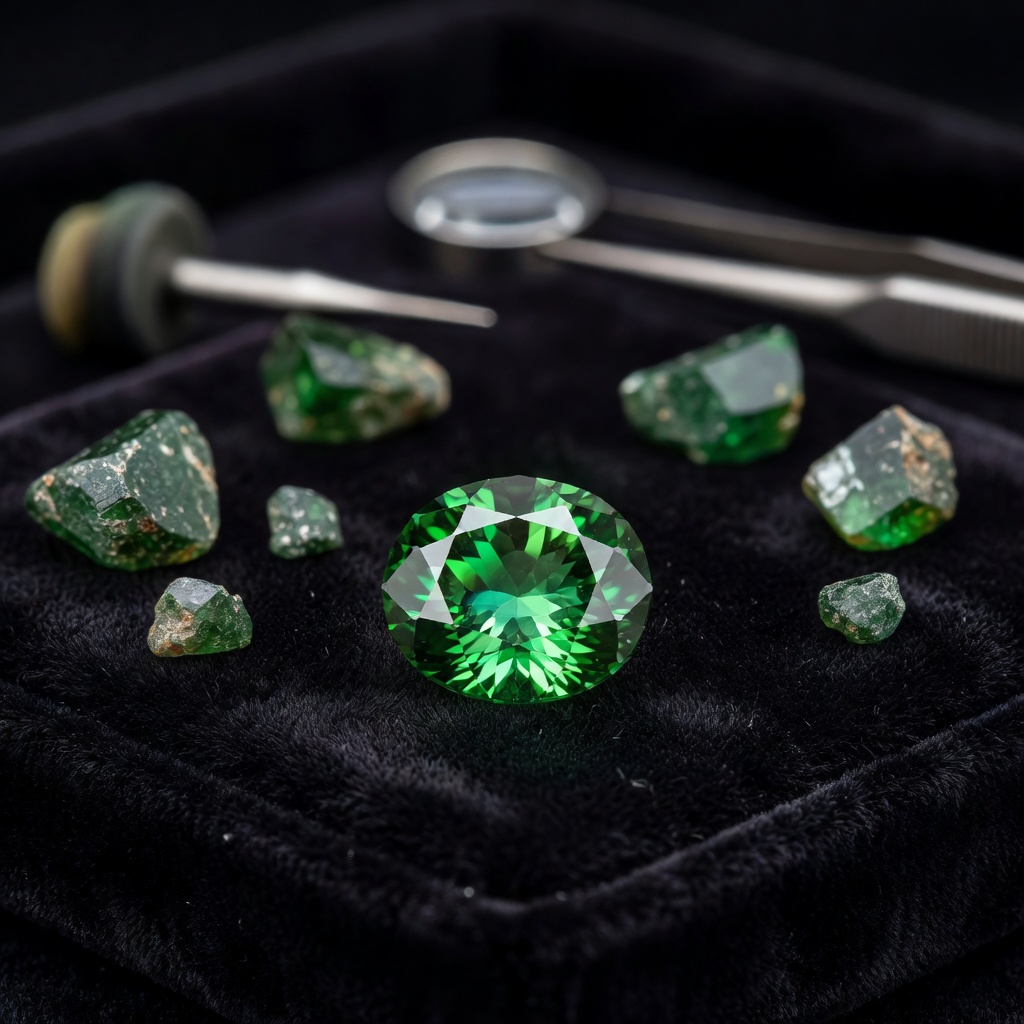
What Is Tsavorite Garnet? Origins and Discovery
Tsavorite garnet represents one of the most significant gemstone discoveries of the 20th century, emerging from the mineral-rich soils of East Africa in 1967. Scottish geologist Campbell Bridges first encountered this vivid green gem while prospecting in Tanzania's Lemshuku Mountains, initially finding specimens in the mountainous terrain that would later transform the colored gemstone market. The discovery occurred when Bridges noticed bright green crystals embedded in the metamorphic rock formations, recognizing immediately that he had found something extraordinary within the grossular garnet family. Following the initial Tanzanian discovery, substantial deposits were subsequently located across the border in Kenya near the world-renowned Tsavo National Park, inspiring the gem's evocative name that honors this iconic wilderness area.
As a distinguished member of the grossular garnet species, tsavorite possesses a unique chemical composition that distinguishes it from other green gemstones in the market. Unlike its demantoid cousin which contains andradite components, tsavorite derives its exceptional color from specific trace elements within the calcium aluminum silicate structure. The gem quickly gained recognition from Tiffany & Co., which introduced tsavorite to the international jewelry market in the 1970s under the guidance of company president Henry Platt. Today, understanding Tsavorite Garnet Properties and Information remains essential for collectors and jewelry enthusiasts seeking alternatives to traditional green gems, particularly as East African tsavorite continues to captivate with its natural brilliance and rarity.
Physical and Chemical Properties of Tsavorite
Understanding the scientific foundation of this green garnet gemstone reveals why tsavorite has become prized among gemologists and jewelry designers alike. The chemical formula Ca3Al2(SiO4)3 identifies tsavorite as a calcium aluminum silicate within the broader garnet group, specifically classified under the grossular variety that encompasses several color variations including hessonite and leuco garnet. This molecular structure contributes to the stone's remarkable stability and optical performance, creating a gem that withstands daily wear while maintaining its visual impact. The presence of chromium and vanadium within the crystal lattice replaces aluminum atoms, generating the intense green coloration that makes tsavorite immediately recognizable.
Tsavorite garnet properties include an impressive hardness rating of 7 to 7.5 on the Mohs scale, positioning it among the more durable gemstones suitable for various jewelry applications. This hardness level exceeds that of many popular gems including quartz and tourmaline, while the stone's excellent toughness—resistance to breaking and chipping—surpasses even that of emerald despite sharing similar color characteristics. The high refractive index of approximately 1.74 creates exceptional brilliance and fire, meaning tsavorite disperses light effectively to produce those desirable rainbow flashes that catch the eye across a room. When properly cut, this optical property allows tsavorite to rival the sparkle of diamonds while maintaining its distinctive verdant hue, making it particularly effective in engagement rings and statement pieces where maximum light return proves essential.
Color Characteristics and Quality Grading
The mesmerizing color spectrum of tsavorite ranges from vivid grass-green to deep forest-green hues, with the most valuable specimens displaying a saturated emerald-like tone without the darker overtones sometimes seen in lower-quality material. Color caused by trace amounts of chromium and vanadium creates variations that can shift from yellowish-green to bluish-green depending on the specific chemical concentrations within individual crystals. Professional gemologists evaluate tsavorite using the same criteria applied to other colored stones: hue, tone, and saturation, with the most desirable stones exhibiting pure green without brown or yellow undertones that might diminish the gem's vibrancy.
When selecting green tsavorite jewelry, understanding quality grading helps buyers make informed decisions about value and appearance. Stones displaying a bright, medium-to-dark tone with strong saturation command premium prices, particularly those that maintain consistent color throughout the crystal without zoning or banding. Unlike emeralds which often contain visible inclusions accepted as part of their character, tsavorite typically offers better clarity, allowing light to travel through the stone unimpeded and maximizing brilliance. Jewelry designers often favor tsavorite for pieces requiring matched stones, such as tennis bracelets or eternity bands, because finding multiple gems with consistent color proves more feasible than with emeralds while still providing that coveted rich green aesthetic.
Tsavorite vs Emerald: A Detailed Comparison
When evaluating tsavorite vs emerald, discerning buyers discover several compelling advantages that position tsavorite as a superior choice for specific jewelry applications. While both gems share that coveted rich green coloration associated with luxury and natural beauty, tsavorite offers superior durability with less brittleness than emerald, making it significantly more resistant to the chips and fractures that commonly plague emerald jewelry. This enhanced toughness stems from tsavorite's garnet structure, which lacks the cleavage planes present in emerald's beryl composition, resulting in a stone better suited for rings and bracelets subjected to daily impact and wear.
Beyond physical durability, tsavorite typically presents cleaner clarity with fewer inclusions than emeralds, which almost always contain visible internal characteristics described as "jardin" or garden. This clarity advantage means tsavorite achieves better transparency and brilliance without requiring the oil treatments commonly applied to emeralds to mask fractures and improve appearance. Perhaps most significantly for investors and collectors, tsavorite remains approximately 200 times rarer than emerald in gem quality, yet typically commands lower prices per carat, creating an attractive value proposition. While emerald maintains historical prestige associated with Cleopatra and ancient royalty, tsavorite offers modern collectors a contemporary alternative that combines rarity, durability, and untreated natural beauty in ways that traditional emeralds cannot match.
Mining Locations and Geographic Sources
The geographic origin of East African tsavorite significantly influences both its characteristics and market value, with primary deposits located in Kenya's Tsavo region and Tanzania's Umba Valley producing the majority of fine material available today. Kenyan tsavorite, particularly material from the Scorpion Mine and surrounding claims, often displays the most desirable vivid grass-green color with exceptional clarity, while Tanzanian production from the original Lemshuku discovery area and Tunduru fields yields stones that may exhibit slightly different color characteristics. These East African deposits formed through unique geological processes involving contact metamorphism between graphite-bearing gneiss and intrusive rocks, creating the specific conditions necessary for tsavorite crystallization.
Secondary sources discovered in Madagascar, Pakistan, and Antarctica have contributed limited quantities to the market, though these locations rarely produce material matching the quality of Kenyan and Tanzanian stones. The challenges of small-scale mining operations affect supply consistency, as many deposits require manual extraction using basic tools rather than mechanized mining, limiting production volume and increasing costs. Ethical sourcing initiatives have become increasingly important as the industry seeks to ensure fair wages and safe working conditions for artisanal miners while protecting the environment of these sensitive East African ecosystems. Buyers interested in provenance should seek dealers who can provide documentation tracing their East African tsavorite from specific mines, as geographic origin affects not only color quality but also supports sustainable mining practices in these developing regions.
Metaphysical Properties and Spiritual Meanings
Beyond its physical beauty, tsavorite garnet meaning encompasses a rich tapestry of spiritual associations that have emerged since the stone's relatively recent discovery. Crystal healers associate this vibrant green gem with heart chakra activation and emotional healing, believing that its energy resonates with the fourth chakra to promote compassion, forgiveness, and unconditional love. Practitioners often recommend wearing tsavorite near the heart center in pendant form to facilitate emotional release and encourage the healing of past traumas or relationship difficulties.
In the realm of abundance and prosperity, tsavorite crystal healing traditions suggest the stone attracts prosperity, abundance, and business success by aligning the wearer's energy with growth and expansion frequencies. Many entrepreneurs keep tsavorite specimens on their desks or wear tsavorite jewelry during important negotiations, believing the stone enhances clarity of purpose and attracts favorable opportunities. Additionally, tsavorite promotes vitality, growth, and connection with nature's energy, making it popular among those seeking to strengthen their bond with the natural world or enhance their gardening and agricultural pursuits. Meditation practitioners value tsavorite for its ability to ground spiritual energy into physical reality, helping manifest intentions through concrete action while maintaining emotional balance and heart-centered awareness.
Tsavorite Price Per Carat and Investment Potential
Understanding tsavorite price per carat requires recognizing the dramatic range that exists within the market, with price range typically between $200 to $8,000+ per carat depending on quality factors and size rarity. Commercial grade stones weighing under one carat with lighter color saturation or minor inclusions might cost $200-$500 per carat, making them accessible to entry-level collectors. However, fine quality gems with vivid green color, exceptional clarity, and precision cutting can command $2,000-$8,000 per carat or more for exceptional specimens, particularly those originating from renowned Kenyan mines.
Value factors include color saturation, clarity, cut precision, and carat weight, with each element playing a crucial role in determining final valuation. Unlike diamonds with standardized grading scales, tsavorite valuation remains somewhat subjective, requiring buyers to evaluate stones individually based on visual appeal and rarity. Stones over 3 carats are extremely rare and command premium prices, often exceeding $10,000 per carat for top-color material, as the geological conditions necessary for large crystal formation occur infrequently. Investment potential remains strong for high-quality tsavorite, particularly as East African mining operations face increasing challenges and exhaustion of known deposits, suggesting that fine material may become scarcer and more valuable over the coming decades.
Jewelry Settings and Design Considerations
Designing green tsavorite jewelry requires understanding both the stone's durability characteristics and its optical properties to create pieces that maximize beauty while ensuring longevity. Tsavorite proves ideal for rings, pendants, and earrings due to excellent hardness, though protective settings recommended for daily wear pieces help safeguard against accidental impacts. Bezel settings offer superior protection for the girdle and pavilion compared to prong settings, making them preferable for engagement rings or bracelets subject to regular contact with hard surfaces.
The gem's high refractive index and dispersion make it particularly stunning in mixed cuts that combine step-cut crowns with brilliant-cut pavilions, maximizing both color depth and light return. Tsavorite complements both white gold and yellow gold mountings beautifully, with white metals emphasizing the stone's cool green tones while yellow gold creates a warm, vintage aesthetic that recalls classical emerald jewelry. When designing with larger stones, jewelers must account for tsavorite's weight—slightly denser than diamond—to ensure proper balance and security in the mounting. Custom designs often incorporate accent diamonds to enhance tsavorite's brilliance, creating contrast that makes the green color appear even more vivid while providing additional structural protection to the center stone.
Care, Cleaning, and Maintenance Guide
Maintaining the beauty of this green garnet gemstone requires straightforward care practices that preserve both surface polish and internal clarity. Clean using warm soapy water and soft brush only, gently scrubbing around the setting to remove accumulated oils and debris that might dull the stone's brilliance. Mild dish soap diluted in lukewarm water provides sufficient cleaning power without risking damage to the gem or mounting, while a soft-bristled toothbrush reaches crevices where dirt collects.
Owners should avoid ultrasonic cleaners, steam cleaning, and harsh chemicals, as these methods can potentially damage the stone or loosen its setting despite tsavorite's relative durability. While tsavorite withstands normal wear better than many gems, exposure to thermal shock from steam cleaning or harsh acids from chemical cleaners may cause internal stress or surface pitting over time. Always store separately to prevent scratching from harder gemstones like diamonds or moissanite, ideally keeping tsavorite pieces in individual soft cloth pouches or compartmentalized jewelry boxes. Remove tsavorite jewelry before engaging in household cleaning, gardening, or sports activities to prevent exposure to chemicals or physical impact that might compromise the setting or stone.
Buying Guide: Authentication and Certification
Purchasing authentic tsavorite requires vigilance and knowledge to ensure you receive genuine, untreated material worth your investment. Always request certification from reputable labs like GIA or AGS when acquiring significant pieces, as these institutions provide detailed reports confirming species, variety, and any treatments applied to the stone. Professional certification documents the gem's exact weight, dimensions, color grade, and clarity characteristics, providing baseline documentation for insurance purposes and future resale.
Learning to identify natural vs synthetic stones through inclusion patterns helps buyers distinguish genuine tsavorite from lab-created alternatives or simulants like green glass or cubic zirconia. Natural tsavorite typically displays characteristic inclusions such as graphite crystals, needle-like apatite, or wavy growth patterns under magnification, while synthetics often appear too clean or display curved growth lines unlike natural crystals. Beware of treated stones—natural tsavorite is typically untreated, making it one of the few green gems that usually reaches the market in its natural state. Any indication of heat treatment, oiling, or fracture filling should significantly reduce the price, though such treatments remain rare in tsavorite compared to emerald. Working with established dealers who specialize in Tsavorite Garnet Properties and Information ensures access to properly vetted material with documented provenance and ethical sourcing.
Frequently Asked Questions About Tsavorite Garnet
What Makes Tsavorite Garnet Different From Other Green Gemstones?
Tsavorite offers superior brilliance and durability compared to emeralds, with a higher refractive index and typically better clarity. Unlike emeralds which often require oil treatments, tsavorite is usually untreated and exhibits exceptional fire and sparkle.
Is Tsavorite Garnet Rare?
Yes, tsavorite is extremely rare. Gem-quality tsavorite is estimated to be 200 times rarer than emerald. Stones over 3 carats are particularly scarce, making large specimens highly valuable to collectors and investors.
How Much Does Tsavorite Cost Per Carat?
Tsavorite prices range from $200 to $8,000+ per carat depending on quality. Commercial grade stones cost $200-$500 per carat, while fine quality gems with vivid green color can command $2,000-$8,000 per carat or more for exceptional specimens.
Can Tsavorite Garnet Be Worn Daily?
Yes, with a hardness of 7-7.5 on the Mohs scale, tsavorite is suitable for daily wear in jewelry. However, protective settings are recommended for rings to prevent chipping, and the stone should be removed during rough activities or exposure to harsh chemicals.
What Is the Spiritual Meaning of Tsavorite Garnet?
Tsavorite is associated with the heart chakra, promoting emotional healing, compassion, and love. It's believed to attract prosperity and abundance, enhance vitality, and strengthen connection with nature. Many crystal healers use it for manifestation and growth.
How Can I Tell if My Tsavorite Is Real?
Authentic tsavorite typically shows natural inclusions under magnification, has a high refractive index creating brilliant sparkle, and displays a pure green color without pleochroism. Professional certification from GIA or similar labs provides definitive authentication.
Does Tsavorite Garnet Require Special Care?
Tsavorite requires minimal special care. Clean it with warm soapy water and a soft brush, avoid ultrasonic cleaners and harsh chemicals, and store it separately from harder gemstones. Its durability makes it relatively low-maintenance compared to emeralds.
Where Does the Best Quality Tsavorite Come From?
The finest tsavorite typically comes from the Tsavo region of Kenya and the Umba Valley in Tanzania. Kenyan material often displays the most vivid grass-green color, while Tanzanian stones may show slightly yellowish or bluish undertones.