Introduction: Why Topaz Matters
Topaz is one of the most versatile gems in the market, known both as a beautiful topaz gemstone in jewelry and as a mineral specimen valued by collectors. Because it appears in many colors and is frequently treated, it’s easy for buyers to feel unsure about what they’re actually getting. This guide is designed to give you clear, practical Topaz Properties and Information so you can evaluate quality, durability, authenticity, and price with confidence.
You’ll learn what topaz is made of, how its physical and optical traits affect wearability, which colors are rare versus common, and how treatments impact stability and value. You’ll also get hands-on tips to identify topaz, avoid common look-alikes, and shop more safely online or in-store. This article is especially useful for gemstone collectors, jewelry buyers, jewelers, appraisers-in-training, and hobbyists who want reliable, actionable guidance rather than vague descriptions.
What Is Topaz? Mineral Basics
Topaz is a naturally occurring mineral composed of aluminum, silicon, oxygen, and elements that include fluorine and hydroxyl, often described as an aluminum silicate fluoride hydroxide mineral. It crystallizes in the orthorhombic system, commonly forming elongated, striated prismatic crystals that can be impressive in mineral collections. Understanding this mineral identity matters because it explains why topaz has high hardness but also a well-known weakness: perfect cleavage in one direction.
Geologically, topaz forms in silica-rich igneous environments and is often associated with granites and rhyolites, as well as in pegmatites and hydrothermal veins. Over time, weathering can move topaz crystals into alluvial deposits where they’re mined like placer gems. Major sources include Brazil (especially for fine colors), Nigeria, Pakistan, Russia, Sri Lanka, and parts of the United States, with different localities often known for distinct color tendencies and crystal habits.
There is also an important marketplace distinction between gem-quality topaz and industrial or specimen-grade material. Gem-quality stones are transparent to eye-clean and cut for brilliance, while specimen topaz may be included, opaque, or valued for crystal size, termination quality, and associated minerals (like quartz or mica). A practical example: a large, included crystal with great natural faces may be more desirable to a mineral collector than a smaller, cleaner stone intended for faceting.
Physical And Optical Properties
When evaluating topaz properties, the first headline trait is topaz hardness: it measures 8 on the Mohs scale, making it harder than quartz and many common jewelry stones. This hardness helps topaz resist everyday abrasion, but hardness is not the same as toughness. Topaz has perfect cleavage, meaning a sharp impact at the wrong angle can cause chipping or even splitting—an essential consideration for ring wearers and setters.
Topaz typically has a specific gravity around 3.4–3.6, which means it feels “heavier” than many look-alike gems of similar size. Optically, topaz has a vitreous (glassy) luster and a refractive index that supports bright reflections when well cut. In practice, a well-proportioned topaz can look very lively, but poor cutting—too shallow or overly deep—can make it appear watery or dark in the center.
These traits directly influence how topaz should be cut, set, and worn. A jeweler might recommend protective settings like bezels or halos for rings to reduce edge impacts, while earrings and pendants are generally safer for topaz due to lower contact risk. For example, an oval blue topaz ring in a tall prong setting can be attractive but more vulnerable at the girdle; a bezel-set cushion cut can significantly reduce chipping risk without sacrificing beauty.
Color Varieties And Their Causes
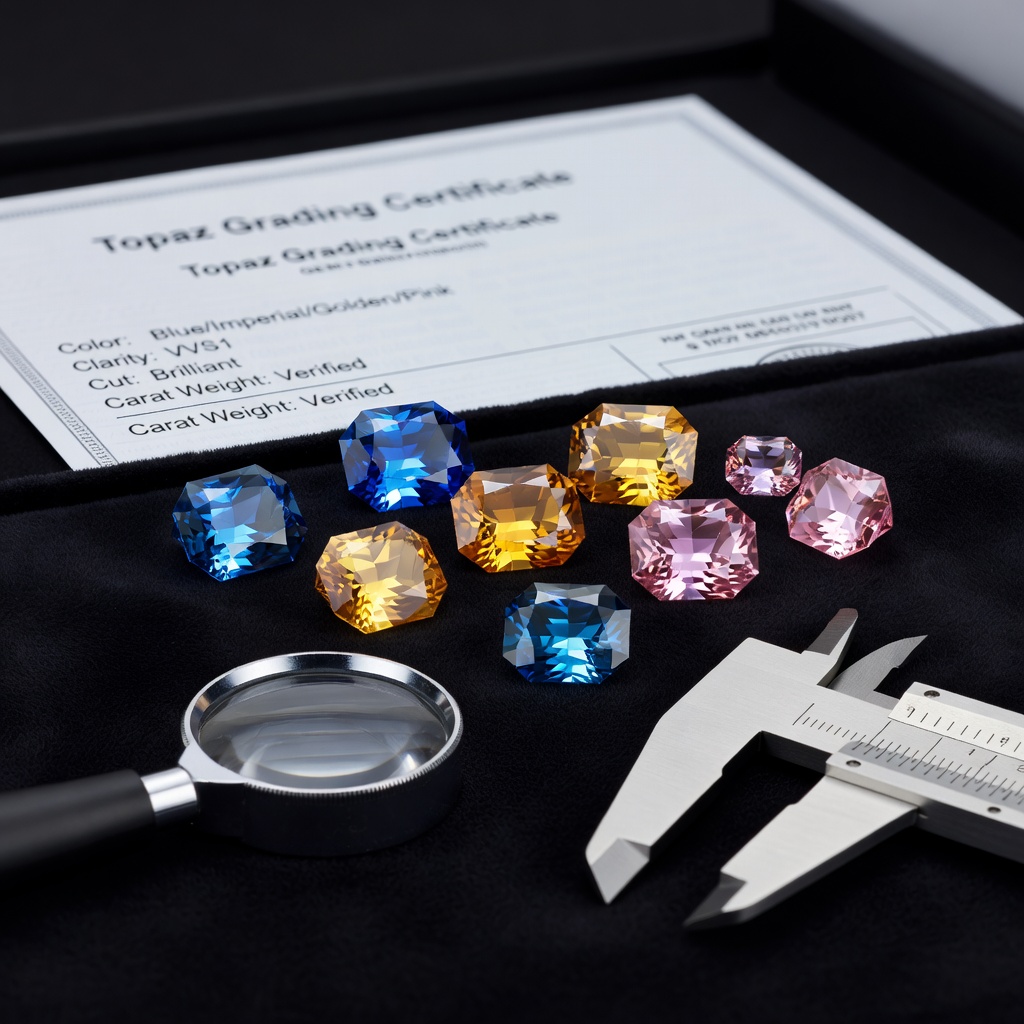
Topaz varieties cover a broad spectrum, including colorless, blue, yellow, brown, pink, and the highly prized imperial topaz (typically golden to reddish-orange, sometimes with pinkish tones). Colorless topaz is common in nature and is often used as starting material for treated blue stones. Natural blues exist but are comparatively rare, which is why so much of the market’s blue topaz is produced through enhancement.
Color in topaz can come from trace elements, lattice defects, and natural irradiation in the earth. Treatments (most commonly irradiation followed by heat) can intensify or transform color, especially into the familiar “Swiss Blue” and “London Blue” shades. As a practical buying example, if you see a highly saturated, uniform deep blue at an accessible price point, it is very likely treated—this is normal in the market and not inherently “bad,” but it should be disclosed.
In terms of value, rarity drives pricing: imperial topaz and natural, untreated fancy colors typically command higher prices than treated blues. Imperial topaz is prized for its warm, complex hues and scarcity, especially in fine clarity and larger sizes. By contrast, treated blue topaz is abundant, widely available in calibrated sizes, and usually priced for fashion jewelry rather than investment-grade collecting.
Treatments, Enhancements, And Stability
Most commercial blue topaz is created through irradiation and heat treatment of colorless or pale natural topaz. Some pink tones can also be treated, though naturally pink topaz exists and is typically priced much higher when verified. These processes are common and accepted in the industry, but ethical selling requires clear disclosure so buyers understand what they’re purchasing and how it may affect resale value.
Stability is an important part of Topaz Properties and Information because treatments can come with care implications. While many treated blues are considered stable under normal wear, prolonged exposure to intense heat, harsh conditions, or repeated high-energy cleaning methods can be risky. A practical rule for daily owners: if you don’t know your stone’s treatment history, avoid ultrasonic and steam cleaning, and keep topaz away from high-heat repair work unless the jeweler removes the stone first.
To identify topaz as treated versus natural, visual clues alone are often not enough, especially for blue stones. The most reliable method is documentation from a reputable gem lab report, especially for higher-value purchases like imperial topaz or large fancy colors. In a real-world case, two stones can look nearly identical under showroom lighting, yet one may be a rare natural color and the other a treated stone worth a fraction—paperwork and professional testing prevent expensive mistakes.
Value Factors And Pricing Guide
Topaz value is primarily driven by the standard “4Cs” plus rarity and treatment status: color, clarity, carat weight, cut quality, and how commonly that type appears in the market. Fine imperial topaz with strong orange-to-reddish tones and good clarity is often priced at a premium, particularly in larger sizes where rarity becomes dramatic. In contrast, most treated blue topaz remains affordable even at large carat weights, because supply is steady and color can be produced consistently.
Market trends show steady demand for statement-size blue topaz in fashion jewelry, while collectors tend to focus on imperial topaz and verified natural fancy colors. Cut quality matters more than many buyers expect: a well-cut topaz can look brighter and more expensive than a larger but poorly proportioned stone. For example, two 5-carat blue topaz gems may have similar color, yet the one with superior symmetry and light return will command a higher retail price and look better in the setting.
To avoid overpaying, treat disclosure is critical. Ask direct questions: “Is this topaz natural color or treated?” and “Is there a lab report confirming origin and treatments?” Compare prices across multiple reputable sellers and watch for vague listings that use marketing terms like “natural blue topaz” without clarifying treatment. As a practical tip, if a seller cannot provide any treatment disclosure or return policy for a higher-ticket stone, consider that a strong reason to walk away.
How To Identify And Test Topaz
If you’re trying to identify topaz at home, start with careful observation rather than risky scratch testing. Look for the overall “feel” and appearance: topaz often has crisp facet edges and a glassy luster, and it may feel heavier than expected for its size due to its specific gravity. A simple comparative test is to handle a similar-sized quartz or glass piece (if available) and notice whether topaz feels denser in the hand.
Hardness tests can be informative but should be used cautiously because scratching can damage value, and cleavage makes topaz vulnerable to chipping. If you do any hardness-related checking, use it as a last resort and only on an inconspicuous area, understanding the risk. A safer practical approach is to focus on signs of imitation: rounded, abraded facet edges can suggest softer materials like glass, while bubbles inside a stone are a classic indicator of glass imitation rather than natural topaz.
Professional testing is the best route for meaningful confirmation, especially for expensive purchases or stones represented as imperial or natural fancy colors. Gemologists may use refractive index readings, spectroscopy, and microscopy to distinguish topaz from common look-alikes and to evaluate treatment indicators. Common look-alikes include citrine (often warmer yellow with different optical behavior), aquamarine (a beryl with different refractive properties), and synthetic stones; when in doubt, a lab report provides clarity that home methods cannot match.
Buying Guide: What To Look For
A smart purchase starts with a checklist that protects your budget and your expectations. Look for treatment disclosure in writing, a clear return policy, and (for higher-value stones) an independent gem report. Ask for high-quality photos and videos under neutral lighting, and request measurements—not just carat weight—so you understand face-up size and setting compatibility.
Choosing between natural, treated, and synthetic topaz depends on goals. Treated blue topaz can be an excellent choice for affordable, bold color in earrings or pendants, while collectors and long-term value buyers tend to pursue natural fancy colors and imperial topaz with documentation. If the priority is durability and daily wear, you might also compare topaz with alternatives like sapphire for rings; topaz can still work, but it requires more mindful setting choices and wear habits.
Where you buy matters as much as what you buy. Reputable dealers and established jewelry stores are generally safer for accurate representation, while online marketplaces require extra verification such as seller history, independent reviews, and transparent listing details. A practical example for online buying: if a listing uses stock photos or avoids mentioning treatments, ask for a custom video showing the exact stone and request a written statement of any enhancements before you pay.
Care, Cleaning, And Long-Term Preservation
Effective topaz care tips start with understanding cleavage and impact risk. Even though topaz is hard, it can chip if struck, so rings should be designed with protection in mind—bezels, halos, and low-profile settings reduce exposure at the edges. If you wear a topaz ring daily, remove it for activities like gym workouts, gardening, moving furniture, or any task where a sharp knock is likely.
Cleaning topaz safely is straightforward: use warm water, mild soap, and a soft brush, then rinse and pat dry with a lint-free cloth. Avoid harsh chemicals and be cautious with ultrasonic and steam cleaners, especially if you don’t know the stone’s treatment history or if the jewelry has fragile settings. A practical routine for longevity is to do gentle at-home cleaning monthly and schedule a professional check once or twice a year for prong tightening and general condition.
To protect topaz long term, store pieces separately in soft pouches or a lined jewelry box so they don’t knock against harder gems or metal edges. Keep topaz away from high heat sources and avoid leaving it in direct sunlight for prolonged periods, especially for stones with uncertain treatment stability. For valuable pieces like imperial topaz, consider insurance documentation, including photos, receipts, and any gem reports, and update appraisals as market conditions change.
Frequently Asked Questions
What Are The Main Physical Properties Of Topaz I Should Know?
Topaz has a Mohs hardness of 8, perfect cleavage in one direction, a specific gravity around 3.4–3.6, and a vitreous luster. These properties affect how it is cut, set, and cared for. Hardness helps resist scratches, while cleavage means topaz can chip or split if hit sharply. Knowing these traits helps you choose protective settings and safer cleaning methods.
How Can I Tell If A Topaz Is Natural Or Treated?
Many blue and pink topaz on the market are irradiated and heat-treated. Lab testing (refractive index, spectroscopy) and a reputable gem report are the most reliable ways to confirm treatment. Visual cues alone are often insufficient because treated stones can look very natural. For higher-value purchases, insist on written treatment disclosure and independent documentation.
Which Topaz Color Is The Most Valuable?
Imperial topaz (golden to reddish-orange hues) and natural untreated fancy colors typically command the highest prices due to rarity. Treated blue topaz is common and generally less valuable. Value also depends on clarity, cut quality, and carat size, with premiums increasing sharply for larger stones in rare colors. If investment or collection value matters, prioritize verified natural color and strong documentation.
Is Topaz Suitable For Everyday Jewelry Like Engagement Rings?
Topaz is relatively hard (8) but has perfect cleavage, so it can chip or split under sharp impact. With a protective setting and mindful wear, it can be used in everyday jewelry, but it's less durable than sapphire or diamond. Many buyers choose topaz for its beauty and affordability, then protect it with a bezel or halo design. Removing the ring during high-impact activities significantly reduces risk.
How Should I Clean And Store Topaz Jewelry?
Clean topaz with warm soapy water and a soft brush. Avoid steam and ultrasonic cleaners for treated stones. Store topaz pieces separately in soft pouches to prevent scratches and impacts. For long-term preservation, schedule periodic inspections to ensure prongs and settings remain secure.
Where Can I Buy Reliable Topaz Gemstones?
Buy from reputable dealers who provide treatment disclosure and gem reports, established jewelry stores, and certified online retailers. Verify return policies and ask for lab certifications for high-value stones. When shopping online, request images or video of the exact stone rather than stock photos. A seller’s willingness to provide details and documentation is often a strong indicator of reliability.
How Does Treatment Affect Topaz Value?
Treatments like irradiation and heat make many attractive colors more affordable but usually lower resale value compared with rare natural colors. Always factor treatment disclosure into price and long-term value. Treated blue topaz can be a great choice for budget-friendly jewelry, while collectors typically pay more for natural, untreated fancy colors. If you’re comparing prices, make sure you’re comparing stones with similar treatment status and documentation.