Introduction to Tektites: Nature's Cosmic Glass
Tektites represent one of Earth's most fascinating geological mysteries, serving as tangible evidence of cosmic collisions that have shaped our planet's history. These naturally occurring glass objects form when massive meteorites strike Earth's surface with catastrophic force, melting terrestrial rocks and ejecting the molten material into suborbital trajectories. Unlike obsidian, which forms from volcanic activity, or actual meteorites, which originate from space, tektites occupy a unique category as terrestrial material transformed by extraterrestrial impact energy. Ancient civilizations across Southeast Asia and Australia revered these mysterious black stones as sacred objects, with archaeological evidence suggesting they were used in spiritual rituals, talismans, and even early tools long before modern science understood their true origins.
The tektite crystal meaning has evolved significantly from ancient times to present day, bridging the gap between scientific curiosity and metaphysical exploration. While meteorites contain extraterrestrial metals and minerals, tektites consist primarily of silicon dioxide derived from Earth's own crust, heated to temperatures exceeding 1,700 degrees Celsius during impact events. This distinction makes them particularly intriguing to collectors and researchers alike, as they essentially represent Earth matter that has undergone an extraterrestrial transformation. Historical records indicate that Chinese scholars documented these "inkstone stones" as early as the Tang Dynasty, while Aboriginal Australians incorporated Australites into their Dreamtime stories, recognizing these objects as something distinctly different from ordinary rocks.
Modern mineralogists differentiate tektites from similar materials through specific chemical and physical markers that reveal their violent birth process. Unlike volcanic glass such as obsidian, tektites contain lechatelierite, a pure silica glass that forms only under extreme shock pressures unattainable through volcanic processes. Additionally, tektites exhibit characteristic surface features including aerodynamic shapes, pitting, and flow textures that result from atmospheric re-entry and cooling. These features not only distinguish them from man-made glass but also provide clues about the specific conditions under which individual specimens formed, making each tektite a unique time capsule of ancient impact events.
The Formation Process: How Tektites Are Created
Understanding natural tektite formation requires grasping the immense energy released during major meteorite impacts, events capable of altering geological landscapes within seconds. When a meteorite measuring several kilometers in diameter strikes Earth at velocities exceeding 20 kilometers per second, the resulting shockwave generates temperatures high enough to vaporize and melt thousands of cubic kilometers of surface rock. This molten material, composed primarily of silica-rich soil and rock, gets ejected at ballistic velocities ranging from 5 to 10 kilometers per second, reaching heights of up to 100 kilometers above Earth's surface. The subsequent cooling and solidification process occurs during the descent phase, creating the characteristic glassy texture and aerodynamic shapes that define tektites.
The temperature dynamics during formation play a crucial role in determining the final characteristics of different tektite varieties. Laboratory analyses indicate that parent material must reach temperatures between 1,100 and 1,700 degrees Celsius to achieve the homogeneous glass structure observed in quality specimens. As these molten droplets travel through the upper atmosphere, they undergo rapid cooling at rates exceeding 100 degrees Celsius per second, which prevents crystallization and preserves the amorphous glass state. This rapid cooling also creates the distinctive surface features such as pitting and grooving, formed by atmospheric ablation similar to the heat shields used on spacecraft re-entering Earth's atmosphere.
Geochronological studies have established that major tektite strewn fields formed during specific impact events spanning millions of years, with ages ranging from approximately 700,000 years for Australites to 35 million years for Moldavite. The Ries impact crater in Germany correlates directly with Moldavite formation, while the Chesapeake Bay impact structure connects to North American tektites known as Bediasites. These age determinations, achieved through argon-argon dating and fission-track analysis, help scientists correlate tektite layers with specific extinction events and geological periods. Each strewn field represents a discrete impact event, meaning that tektites found within the same field share identical chemical signatures and formation ages, providing valuable data for impact geology research.
Global Tektite Varieties and Strewn Fields
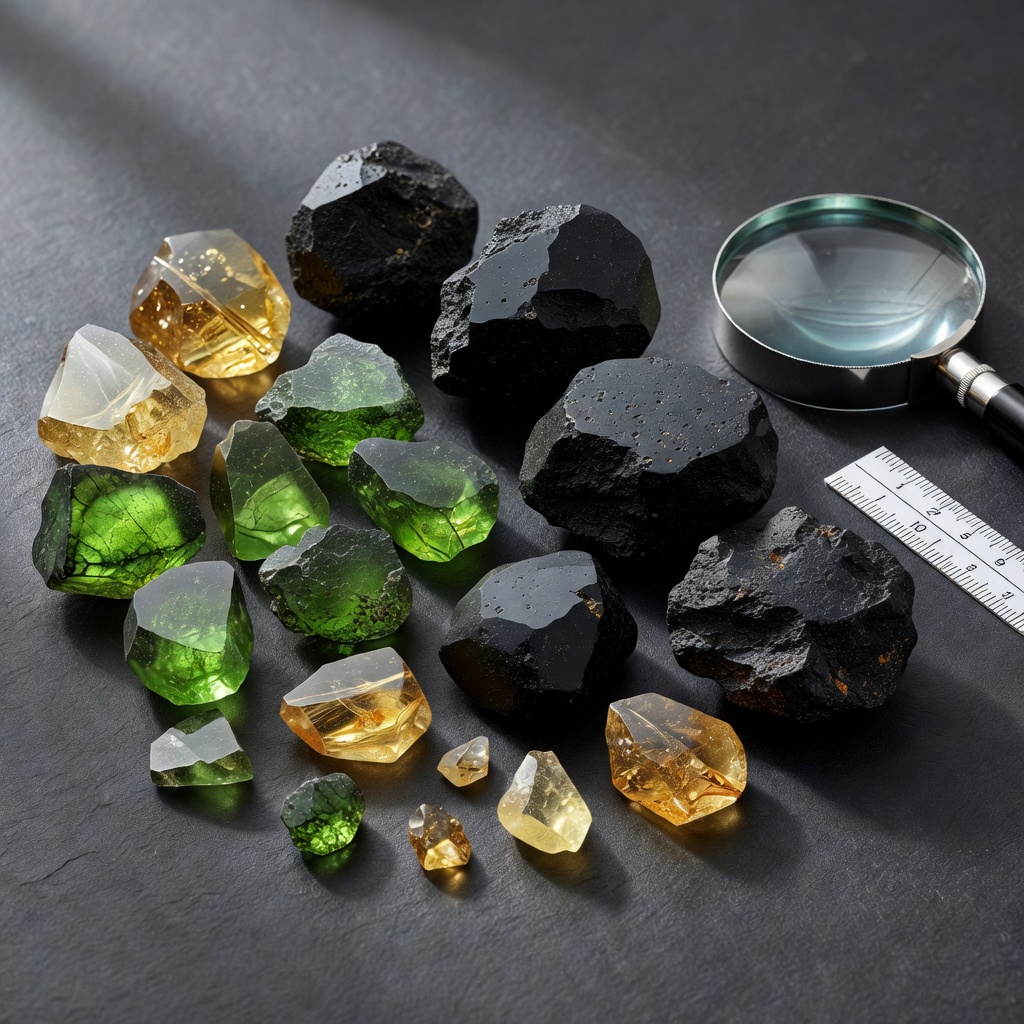
The distribution of tektite deposits across four continents reveals the global scale of major impact events throughout Earth's recent geological history. Each strewn field produces distinct varieties characterized by unique colors, shapes, and chemical compositions derived from local terrestrial material. The Moldavite tektite deposits of the Czech Republic represent perhaps the most famous variety, displaying translucent forest-green to olive coloration that distinguishes them from all other tektite types. Found primarily in the Vltava River basin and surrounding areas of Bohemia and Moravia, these 14.8-million-year-old specimens often exhibit sculptural, aerodynamic forms with deeply etched surfaces that catch light beautifully, making them highly prized among collectors and jewelry makers.
Southeast Asia hosts the largest known strewn field, producing Indochinite tektites that range from southern China through Thailand, Vietnam, Cambodia, and into Australia. These specimens typically present as opaque black to dark brown glass with blocky, irregular shapes resulting from lower velocity ejection compared to their Moldavite counterparts. Indochinites often display characteristic thumb-printed surfaces and deep pitting, with sizes ranging from small button-shaped specimens to massive blocks weighing several kilograms. The sheer volume of material in this strewn field suggests an enormous impact event, though the specific crater remains a subject of ongoing geological research, with some theories pointing to locations somewhere in central Southeast Asia.
Beyond these major varieties, several other distinct tektite types offer unique collecting opportunities and scientific value. Libyan Desert Glass, found in the Great Sand Sea of western Egypt, presents a striking transparent to translucent yellow-green appearance that differs significantly from the darker varieties found elsewhere. Formed approximately 29 million years ago, this silica-rich glass contains exceptionally low levels of the trace elements typically found in other tektites, suggesting a unique formation mechanism or source material. Australites, discovered primarily in southern Australia, display remarkable aerodynamic button and bowl shapes resulting from high-velocity re-entry at steep angles, while Bediasites from Texas represent the only known North American tektite variety, characterized by their dark color and association with the Chesapeake Bay impact structure.
Physical Properties and Scientific Characteristics
Comprehensive Tektite Properties and Information analysis reveals consistent chemical patterns across global varieties while highlighting distinct regional variations that help identify specimen origins. Chemical composition analysis consistently shows silica content ranging from 65% to 80%, with aluminum oxide comprising 10% to 20% and various metal oxides making up the remainder. This composition closely mirrors the average crustal abundance of elements, confirming the terrestrial origin of the parent material. However, the presence of lechatelierite—pure silica glass formed only under extreme shock pressures—serves as the definitive diagnostic feature distinguishing tektites from volcanic glasses or man-made materials.
Physical hardness testing places tektites at 5.5 to 6.5 on the Mohs scale, making them relatively durable though susceptible to scratching by harder materials like quartz or topaz. Specific gravity measurements typically range from 2.3 to 2.5, slightly lower than obsidian due to the presence of microscopic bubbles and flow channels formed during rapid cooling. These internal features, visible under magnification, include schlieren (wavy flow lines), elongated bubbles oriented parallel to the direction of flight, and occasionally crystalline inclusions of zircon or chromite that survived the melting process. Such characteristics provide forensic evidence of the extreme conditions experienced during formation.
Surface morphology offers additional diagnostic criteria for identification and classification purposes. Authentic tektites display natural pitting, grooving, and etching patterns created by atmospheric ablation during high-velocity descent. Unlike manufactured glass, which may show mold marks or uniform texture, genuine specimens exhibit irregular surface variations including U-shaped grooves, crescentic pits, and matte textures contrasting with glossy areas. Under transmitted light, thinner sections of Moldavite and Libyan Desert Glass reveal internal flow structures and bubble networks that appear as dark lines and spots, features impossible to replicate exactly in artificial glass production. These physical markers serve as crucial authentication tools for collectors and dealers verifying specimen authenticity.
Metaphysical Benefits and Healing Applications
The tektite healing properties recognized in contemporary crystal healing traditions draw upon ancient cultural associations while incorporating modern energy work concepts. Practitioners describe tektites as carrying exceptionally high-vibration cosmic energy resulting from their dramatic formation process, suggesting that the intense heat and pressure of meteorite impacts somehow imprinted transformative energetic signatures into the glass structure. Many crystal healers utilize these stones specifically for rapid spiritual evolution and awakening, believing that the violent yet creative origin of tektites helps facilitate breakthrough experiences and accelerated personal growth. This association with transformation makes them particularly popular among those undergoing major life transitions or seeking to release limiting patterns.
Chakra alignment practices specifically associate different tektite varieties with particular energy centers, though most types strongly influence the upper chakras. Moldavite, with its heart-centered green coloration, primarily activates the heart chakra while simultaneously stimulating the third eye and crown, creating a powerful column of energy that facilitates both emotional healing and spiritual insight. Black Indochinites, conversely, often work with the root and throat chakras, providing grounding while enhancing communication abilities and truth-speaking. Many practitioners report that holding a tektite during meditation induces immediate energetic sensations, including heat, tingling, or pulsating vibrations, particularly when placed on the forehead or held against the heart.
Protection and manifestation represent additional applications within metaphysical contexts, with tektites often employed as energetic shields against negative influences or electromagnetic pollution. Some practitioners create crystal grids incorporating tektites at the center to amplify intention-setting and manifestation work, believing that the glass acts as a conduit between earthly desires and cosmic forces. Shamanic practitioners historically used tektites as journeying stones, carrying them as talismans during spiritual travel to ensure safe passage and enhanced visionary experiences. Modern energy workers continue this tradition, placing tektites on altars or carrying them as pocket stones to maintain high vibrational fields throughout daily activities. Whether used for meditation, healing sessions, or personal empowerment, these cosmic glasses serve as powerful reminders of Earth's connection to the greater universe.
Moldavite vs. Other Tektites: Understanding the Differences
While all tektites share a common origin story, Moldavite tektite specimens stand apart from their counterparts through distinct visual, chemical, and energetic characteristics that command premium market values. The most immediate distinction lies in color and transparency; whereas Indochinites and Australites present as opaque black or dark brown glasses, Moldavite displays translucent to transparent forest-green, olive, or yellowish-green hues resulting from specific iron and magnesium content in the Bohemian source material. This transparency allows light to penetrate the stone, revealing internal structures and creating the characteristic glow that makes Moldavite particularly desirable for jewelry applications. The surface texture also differs significantly, with Moldavite typically showing deeper, more dramatic etching and sculptural forms compared to the relatively smoother surfaces of many black tektites.
Market dynamics reflect these differences, with genuine Moldavite commanding prices exponentially higher than common black varieties. While small Indochinite specimens might retail for $10 to $50 depending on size and quality, quality Moldavite pieces often start at $100 for small fragments and can exceed $1,000 for larger, well-formed specimens with intense color and minimal damage. This price differential stems primarily from scarcity; unlike the vast Indochinite strewn field, Moldavite deposits are limited to specific regions of the Czech Republic and Germany, with legal mining restrictions further limiting supply. Additionally, the distinctive green color and association with spiritual transformation have driven demand beyond the collector community into mainstream metaphysical markets, creating sustained price pressure on available inventory.
Energy workers and crystal practitioners often report distinct vibrational signatures between Moldavite and other tektite varieties, though such subjective experiences vary by individual sensitivity. Many describe Moldavite as producing immediate, intense energetic reactions characterized by heat, heart palpitations, or emotional release, earning it nicknames like "the stone of transformation" or "Holy Grail stone." Black tektites such as Indochinites typically generate more grounded, protective energies that build gradually rather than striking immediately. Some practitioners specifically choose Indochinites for shadow work and grounding during intense spiritual periods, while reserving Moldavite for specific breakthrough work or high-vibration meditation. Libyan Desert Glass occupies a middle ground, often associated with solar plexus empowerment and confidence building, with its golden coloration suggesting solar associations distinct from the forest energy of Moldavite or the earth-bound qualities of black varieties.
Authentication Guide: Identifying Genuine Tektites
As market demand for tektites has increased, particularly for high-value Moldavite, the proliferation of counterfeit specimens necessitates careful genuine tektite identification practices for collectors and enthusiasts. Common counterfeiting methods include molding glass into tektite-like shapes, melting bottles or industrial glass to create rough textures, and even coating ordinary glass with metallic paints to simulate surface features. Molded fakes often display telltale signs such as uniform coloration, perfectly round bubbles, or mold seams that appear as raised lines along the specimen's surface. Melted glass counterfeits may show unnatural pitting patterns created by salt or chemical treatments, or exhibit conchoidal fractures that differ from the natural ablation textures found on authentic specimens.
Visual inspection techniques provide the first line of defense against fraudulent specimens. Genuine tektites contain natural bubbles that are typically elongated, irregular, or teardrop-shaped, oriented parallel to the direction of flow during formation. These differ from the perfectly spherical bubbles found in most manufactured glass. Natural flow lines or schlieren appear as wavy, irregular streaks within the glass, visible when examining specimens against bright light. Surface textures should show random, asymmetric pitting and grooving rather than uniform patterns, with genuine Moldavite displaying characteristic "wrinkled" or "horsetail" textures created by chemical etching over millions of years. Weight provides another clue; tektites feel surprisingly light for their size due to low specific gravity and internal bubble content, whereas many glass fakes feel noticeably heavier.
Professional testing methods offer definitive authentication for valuable specimens or uncertain purchases. Refractive index testing provides reliable differentiation, with genuine Moldavite measuring between 1.48 and 1.50, distinct from common glass values of 1.50 to 1.52. Specific gravity testing using hydrostatic weighing can confirm density ranges between 2.32 and 2.38 for Moldavite, while black tektites typically fall between 2.40 and 2.50. Advanced spectroscopic analysis can identify the unique chemical signatures of specific strewn fields, though such testing requires laboratory facilities. For high-value purchases, buyers should request certificates of authenticity from reputable gemological laboratories or established dealers with return policies allowing professional verification. Purchasing from dealers who specialize specifically in tektites rather than general crystal sellers significantly reduces fraud risk, as specialists possess the expertise to distinguish subtle differences between genuine specimens and sophisticated fakes.
Practical Applications: Jewelry and Spiritual Use
Incorporating tektites into wearable art and spiritual practices requires understanding both their physical limitations and energetic potentials. Wire wrapping represents the preferred jewelry technique for these specimens, as drilling or faceting can compromise structural integrity due to internal stress lines and bubble inclusions. Artisans typically use silver, copper, or gold wire to create custom settings that showcase the natural shapes of tektites while protecting vulnerable edges. For Moldavite tektite jewelry, open-back settings allow light transmission through the translucent green glass, maximizing the stone's visual impact. When designing pieces, jewelers must account for the Mohs hardness of 5.5-6.5, ensuring that settings protect the stone from direct impact while allowing the natural textures to remain visible and tactile.
Meditation practices with tektites often involve specific protocols designed to maximize their reputed energetic properties while ensuring psychological safety. Many practitioners recommend starting with short sessions of five to ten minutes when working with high-vibration varieties like Moldavite, gradually increasing duration as sensitivity develops. Common techniques include placing the stone on the third eye during visualization work, holding it in the dominant hand during manifestation meditations, or positioning it on the heart chakra during emotional healing sessions. Crystal grid configurations frequently place tektites at the center or at cardinal points to create high-energy fields, often combining them with grounding stones like black tourmaline or hematite to balance the intense frequencies. Some advanced practitioners create "tektite water" by placing specimens near (not in) water vessels to structure the water with energetic imprints, though direct immersion risks glass degradation over time.
Display options for collectors emphasize both aesthetic presentation and preservation of specimen quality. For translucent varieties like Moldavite and Libyan Desert Glass, backlighting transforms ordinary specimens into glowing works of natural art, highlighting internal bubbles and flow structures. LED light bases designed for mineral displays provide safe, cool illumination that won't damage the glass over time. Black tektites benefit from angled lighting that emphasizes surface textures and pitting, creating dramatic shadows that reveal the sculptural quality of well-formed specimens. Museum-quality display cases with UV-protective glass prevent color fading in sensitive varieties while controlling humidity levels that might otherwise etch surfaces over decades. Collectors should handle specimens with cotton gloves to prevent skin oils from accumulating in surface pits, and should display pieces away from high-traffic areas where accidental impacts might chip or fracture these relatively fragile glass objects.
Care, Cleaning, and Storage Best Practices
Maintaining the beauty and integrity of tektite specimens requires specific protocols that acknowledge their glass nature while preserving their unique surface characteristics. Cleaning should involve only mild soap and lukewarm water applied with a soft brush, gently working around deep pits and grooves where debris accumulates. Ultrasonic cleaners and steam cleaning systems pose significant risks to tektites, as the intense vibrations and thermal shock can exploit internal stress fractures or bubbles, potentially causing specimens to shatter. Harsh chemical cleaners including ammonia, bleach, or acids should be strictly avoided, as these can etch the glass surface or alter the characteristic matte textures found on many specimens. After washing, pat specimens dry with a soft microfiber cloth rather than rubbing, which might catch on sharp surface features.
Physical protection strategies must account for the relative softness and brittleness of tektite glass compared to jewelry gemstones like sapphire or diamond. When wearing tektite jewelry, remove pieces before engaging in activities involving sharp impacts, extreme temperature changes, or exposure to harsh chemicals such as household cleaners or chlorine. Store specimens separately from harder minerals to prevent scratching; even quartz (Mohs 7) can abrade tektite surfaces if stored together in a drawer. For displayed collections, consider mounting specimens on padded stands or within shadow boxes that prevent accidental contact while allowing viewing from multiple angles. Temperature stability proves particularly important, as rapid heating or cooling can induce thermal shock cracks in glass containing internal stress from its rapid formation.
Long-term storage recommendations focus on environmental control and material compatibility. Individual soft cloth bags or acid-free tissue paper prevent scratching while allowing air circulation that prevents moisture accumulation. Avoid plastic bags or containers that might trap humidity, as prolonged moisture exposure can promote microscopic etching of the glass surface over decades. Store collections away from direct sunlight, particularly for Libyan Desert Glass and translucent Moldavite, as UV radiation may gradually alter coloration in sensitive specimens. For investment-grade pieces, maintain detailed provenance records including purchase documentation, location of origin within specific strewn fields, and any previous ownership history. Regular inspection of stored specimens allows early detection of any deterioration or damage, ensuring that these millions-of-years-old cosmic glasses remain preserved for future generations of collectors and researchers.
Sourcing Quality Specimens: Buying Guide
Navigating the tektite marketplace requires discernment to ensure authentic, quality specimens while avoiding overpriced or fraudulent offerings. Reputable sources include established mineral dealers with specific expertise in impact materials, regional gem and mineral shows where specimens can be examined physically, and certified online marketplaces offering return privileges. Specialized dealers who regularly visit source regions such as the Czech Republic for Moldavite or Southeast Asia for Indochinites often provide superior specimens compared to general crystal retailers, along with detailed provenance information. When buying tektite crystals online, prioritize vendors who provide multiple high-resolution photographs showing different angles and lighting conditions, detailed measurements, and specific locality information rather than vague regional descriptions.
Price expectations vary dramatically based on tektite variety, quality, size, and market conditions. Common black Indochinite specimens remain accessible to beginning collectors, with small pieces (under 10 grams) typically ranging from $10 to $30, while larger museum-quality pieces with exceptional surface features might command $200 to $500. Moldavite pricing follows a steeper curve, with small fragments (1-2 grams) starting around $50 to $100, medium specimens (5-10 grams) ranging from $200 to $600, and exceptional large pieces with intense color and sculptural form potentially exceeding $1,000. Libyan Desert Glass occupies a middle tier, with quality transparent yellow pieces ranging from $5 to $20 per gram depending on clarity and color intensity. Investment potential remains strongest for documented specimens from depleted or restricted localities, particularly high-quality Moldavite from specific Czech mines that have ceased production.
Collecting strategies should balance personal appreciation with potential value retention or appreciation. Focus on acquiring specimens with documented provenance, exceptional surface features, or unusual shapes that distinguish them from common material. Build relationships with reputable dealers who can notify you when exceptional pieces become available, as the finest specimens often sell quickly within established collecting networks. Consider specializing in a specific variety to develop deep expertise that informs purchasing decisions, whether that means collecting Australites with perfect aerodynamic button shapes, Bediasites with unique Texas provenance, or Moldavite with specific mine localizations. For serious collectors, maintaining detailed records including purchase dates, prices, dealer information, and geological data enhances both the educational and investment value of the collection. As global supplies of certain varieties diminish and mining restrictions tighten in source countries, well-curated collections of genuine, high-quality tektites represent both scientific treasures and potentially appreciating assets.
Frequently Asked Questions
What exactly is a tektite and how is it different from a meteorite?
A tektite is natural glass formed when a meteorite strikes Earth, melting terrestrial rocks and ejecting them into the atmosphere where they cool into glass. Unlike meteorites, which are extraterrestrial rock or metal, tektites are technically terrestrial material that has been transformed by impact energy.
What are the main healing properties associated with tektite crystals?
Tektites are believed to carry high-vibration cosmic energy that facilitates rapid spiritual evolution, enhances psychic abilities, and strengthens the auric field. They are often used for meditation, manifestation work, and clearing blockages in the upper chakras.
How can I tell if my Moldavite is real or fake?
Genuine Moldavite exhibits natural surface textures including pits, wrinkles, and flow lines, often contains internal bubbles or lechatelierite inclusions, and has a specific refractive index of 1.48-1.50. Fakes typically look too perfect, uniform in color, or show mold marks from manufacturing.
Where in the world are tektites found?
Major tektite strewn fields include the Czech Republic (Moldavite), Southeast Asia (Indochinites), Australia (Australites), Libya (Libyan Desert Glass), and Texas (Bediasites). Each location produces tektites with distinct colors and characteristics based on local soil composition.
Are tektites rare and valuable?
Rarity varies by type; while common black Indochinites are affordable, high-quality Moldavite and Libyan Desert Glass are increasingly rare and valuable. Factors affecting value include size, clarity, color intensity, and surface quality, with museum-grade specimens commanding premium prices.
Can tektites be worn as jewelry on a daily basis?
Yes, tektites can be worn daily but require care due to their glass nature and Mohs hardness of 5.5-6.5. They should be protected from sharp impacts, harsh chemicals, and extreme temperature changes. Wire wrapping is preferred over drilling to preserve structural integrity.
How old are tektites and how were they formed?
Tektites range from approximately 700,000 years old (Australites) to 35 million years old (Moldavite). They formed when large meteorites struck Earth with enough force to melt surface rocks, launching the molten material into suborbital trajectories where it cooled and solidified before falling back to Earth.
Do different colored tektites have different metaphysical properties?
Practitioners believe color variations correspond to different energy signatures; green Moldavite is associated with heart chakra healing and transformation, black Indochinites with grounding and protection, and golden Libyan Desert Glass with solar plexus power and confidence.