Introduction to Tektite Properties and Care Requirements
Tektites represent one of geology's most fascinating natural glass formations, created approximately 15 million years ago when massive meteorite impacts melted terrestrial silica and ejected it into the atmosphere before raining back down as aerodynamically shaped glass droplets. Unlike manufactured glass, these cosmic specimens feature unique surface characteristics including deep pitting, grooving, and natural etching patterns that tell the story of their violent formation and subsequent terrestrial aging. Whether you possess a delicate Besednice Moldavite with its characteristic spiky texture or a smooth, button-shaped Australite, understanding proper Tektite Care and Cleaning protocols becomes essential for maintaining both their scientific integrity and collector value over decades of ownership.
The porous nature of tektite surfaces makes them particularly susceptible to accumulating environmental contaminants, skin oils, and household dust that can gradually obscure their natural luster and interfere with scientific analysis. Serious collectors and researchers alike recognize that improper handling can result in permanent damage to surface sculptures that took millions of years to develop through slow terrestrial weathering processes. By implementing systematic maintenance routines from the moment of acquisition, you ensure that your meteorite glass specimens retain their optical properties, structural stability, and historical significance for future generations of enthusiasts and scientists.
Understanding Tektite Composition and Structural Fragility
Tektites consist predominantly of silica (SiO₂) ranging from 70-98% composition, placing them between 5.5 and 6.5 on the Mohs hardness scale—significantly softer than quartz but harder than typical window glass. This unique chemical signature results from the extreme temperatures exceeding 1,700°C generated during meteorite impacts, which vitrified surface sediments and soils into amorphous glass without crystalline structure. When engaging in Meteorite Glass Maintenance, collectors must remember that despite their apparent solidity, these specimens often harbor microscopic internal stress fractures created during the rapid cooling and aerodynamic sculpting of their molten descent through the atmosphere.
The glassy matrix of tektites exhibits differential weathering patterns depending on their burial environment and chemical composition, with varieties like Georgiaites showing extensive pitting while Indochinites display characteristic grooved surfaces. These surface irregularities, while aesthetically prized, create weak points where thermal shock or mechanical stress can initiate cracks that propagate through the entire specimen. Professional conservators note that tektites stored in environments with fluctuating humidity levels above 60% may develop surface oxidation or microscopic etching from atmospheric acids, particularly in urban areas with high pollution levels.
Identification of surface contaminants requires careful examination under 10x magnification to distinguish between natural lechatelierite inclusions and foreign substances such as calcium deposits, adhesive residues from previous labels, or organic matter from improper storage. Laboratory analysis has revealed that tektites exposed to cigarette smoke or cooking grease in household environments can develop sticky films that attract particulate matter, gradually obscuring the translucent quality prized in high-grade specimens. Regular inspection using oblique lighting helps collectors spot early signs of deterioration before they compromise the structural integrity or aesthetic value of these cosmic glass treasures.
Essential Tools and Supplies for Safe Tektite Cleaning
Proper Tektite Care and Cleaning begins with assembling a dedicated conservation kit containing tools specifically selected to avoid scratching or chemically interacting with silica glass surfaces. Invest in a set of soft-bristled natural hair brushes ranging from size 00 to size 4, ensuring the bristles are free of metallic ferrules that might accidentally contact the specimen during detail work around deep grooves. High-quality lint-free microfiber cloths designated exclusively for mineral specimens prevent cross-contamination from polishing compounds used on other collectibles, while white cotton gloves—preferably unbleached to avoid optical brighteners—create a barrier between skin oils and the tektite surface during handling.
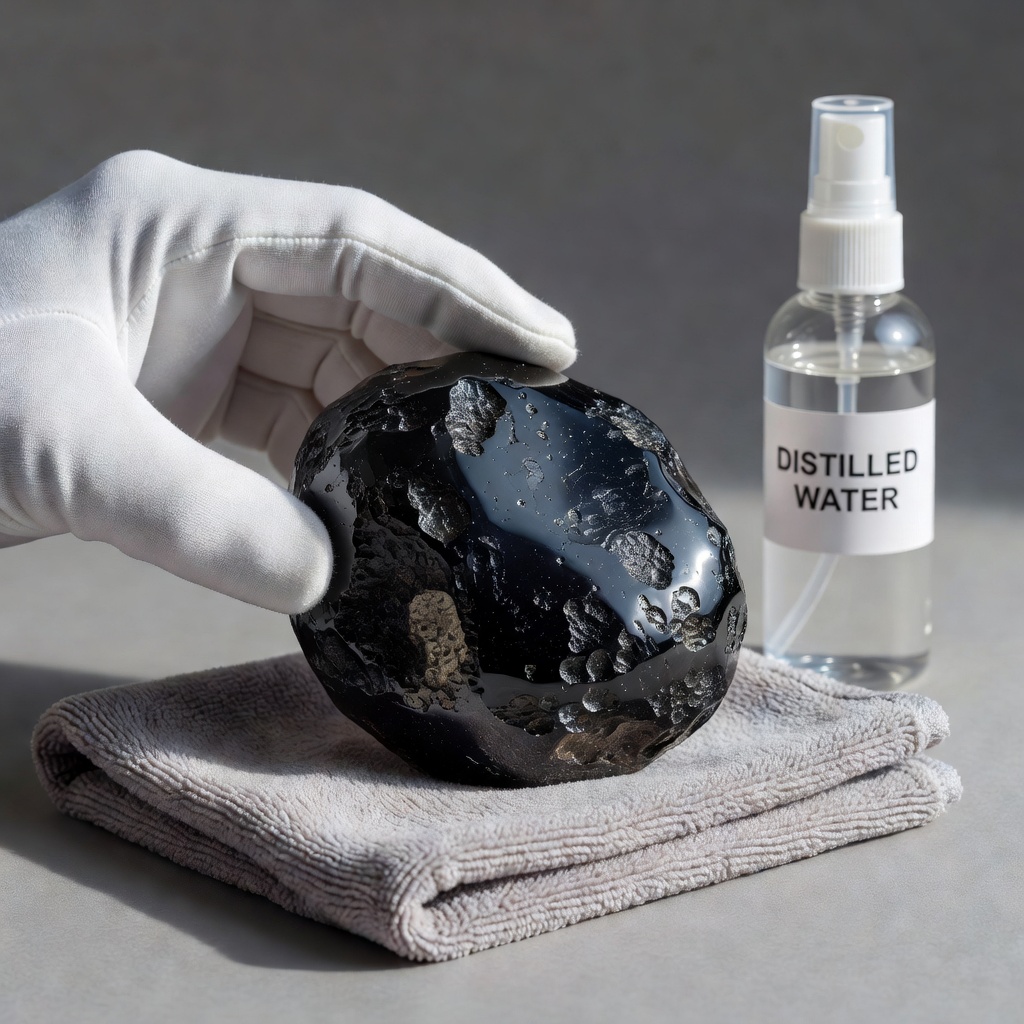
The choice between distilled water and tap water represents one of the most critical decisions in tektite maintenance, as municipal water supplies contain dissolved minerals, chlorine, and fluorine compounds that can deposit insoluble residues within surface pits. Distilled water, available at grocery stores or produced using home distillation units, eliminates the risk of calcification or etching that occurs when hard water evaporates on glass surfaces. For specimens requiring more intensive cleaning, prepare a dedicated wash basin using only borosilicate glass or high-grade polypropylene containers, avoiding metal sinks that might transfer ions or cause impact damage if the specimen is accidentally dropped.
Additional safety equipment should include a jeweler's loupe for pre- and post-cleaning inspection, pH-neutral archival tissue paper for blotting, and silicone desiccant packets for storage containers. Serious collectors often maintain a cleaning log documenting each specimen's maintenance history, noting any changes in appearance or weight that might indicate ongoing degradation. Creating a designated cleaning station away from high-traffic areas reduces the risk of accidents, while a soft pad or foam surface provides a secure working area where specimens can be rotated safely without fear of rolling off tables or countertops.
Step-by-Step Tektite Cleaning Process
Begin every cleaning session with a thorough visual inspection under bright, diffused light to identify loose particles, existing damage, or areas requiring special attention before introducing any moisture. The initial dry brushing technique involves gently sweeping the specimen with a soft brush held at a 45-degree angle to dislodge particulate matter from surface pits without driving debris deeper into the glass structure. For delicate varieties like Moldavite with fragile surface sculptures, use a bulb blower—similar to those used for camera lenses—to remove dust before physical contact, minimizing the risk of mechanical abrasion during the Moldavite Cleaning process.
Prepare a rinse bath using lukewarm distilled water between 70-85°F (21-29°C), as extreme temperatures can induce thermal shock in glass specimens with internal stress fractures. Submerge the tektite only if no surface adhesives or soluble minerals are present, gently agitating the water to encourage debris removal from deep grooves without scrubbing. For specimens too large for full immersion or those with attached matrix material, use a soft brush lightly dampened with distilled water to carefully wipe surfaces, working from the top down to prevent dirty water from flowing into previously cleaned areas.
Handling protocols during washing require maintaining three points of contact whenever possible, supporting the specimen from beneath rather than gripping edges that might chip under pressure. Never attempt to clean multiple specimens simultaneously in the same bath, as contact between tektites can create impact damage or scratching that permanently mars their surfaces. If encountering stubborn residues that resist gentle brushing, resist the temptation to increase pressure; instead, extend soaking time up to 30 minutes for particularly dirty specimens, allowing distilled water to soften deposits naturally without mechanical intervention.
Drying and Polishing Techniques for Maximum Luster
Post-cleaning drying methods significantly impact the final appearance of tektite specimens, with air-drying representing the safest approach for most collector-grade pieces. Position the cleaned specimen on a fresh microfiber cloth in a dust-free environment with stable temperature, allowing gravity and evaporation to remove moisture naturally over 12-24 hours. For collectors requiring faster results, the pat-dry method involves gently pressing—not rubbing—a clean microfiber cloth against the surface to absorb water droplets, particularly effective for Tektite Care and Cleaning routines involving specimens with deep pitting where trapped moisture might otherwise cause spotting.
Some collectors choose to enhance the appearance of their specimens through the application of food-grade mineral oil, which temporarily fills surface irregularities and creates a wet-looking luster that highlights translucency in high-quality pieces. Using a cotton swab, apply the thinnest possible film of oil, allowing it to sit for 24 hours before gently buffing with a clean cloth to remove excess; this technique proves particularly effective for dark Indochinites or dull Georgiaites that have become desiccated from long-term display. However, conservationists caution that oiled specimens require more frequent cleaning as the sticky surface attracts atmospheric dust, and oiled surfaces may interfere with specific gravity testing or spectroscopic analysis used in authentication procedures.
Buffing techniques should always prioritize the preservation of natural surface features over achieving a high-gloss manufactured appearance. Use circular motions with minimal pressure when polishing, working in sections to ensure complete coverage without overlooking grooved areas where water spots commonly form. For specimens displaying chatoyancy or silk-like inclusions, avoid any polishing compounds whatsoever, as these microscopic structures can be destroyed by even mild abrasive action. Professional collectors often photograph specimens before and after cleaning to document the effectiveness of their techniques and establish baseline appearance standards for future comparison.
Proper Storage Solutions for Long-Term Preservation
Long-term Tektite Storage Methods must address four critical environmental factors: humidity control, temperature stability, light exposure, and atmospheric chemistry. Ideal relative humidity ranges between 40-50%, maintained using silica gel canisters or electric dehumidifiers in display cabinets, as excess moisture promotes the growth of microscopic molds in surface pits while extreme dryness can exacerbate existing stress fractures through desiccation. Temperature fluctuations should remain within a narrow band of 65-75°F (18-24°C) year-round, avoiding attic spaces or exterior walls where seasonal extremes might induce thermal shock that fractures glass specimens.
Selection of archival-quality display cases requires attention to materials that off-gas acidic vapors; avoid oak cabinets or plywood backing that emit formic acid, instead choosing acid-free museum board, polyethylene, or polypropylene construction. Individual compartmentalized storage boxes with ethafoam padding prevent specimens from contacting each other during earthquakes or accidental jostling, while acid-free paper envelopes allow breathable storage for specimens not on display. For high-value collections, consider nitrogen-flushed display cases that eliminate oxidative reactions with atmospheric pollutants, particularly important for tektites recovered from marine environments that may contain chloride salts vulnerable to humidity-induced corrosion.
Protection from ultraviolet light exposure proves essential for preserving the color integrity of sensitive varieties like Libyan Desert Glass, which can fade from deep canary yellow to pale straw when subjected to prolonged sunlight or fluorescent lighting. Install UV-filtering acrylic or glass in display cases, positioning specimens at least three feet from windows even with protective filtration. Case studies from the Smithsonian Institution demonstrate that tektites stored in dark, climate-controlled vaults maintain their original surface characteristics indefinitely, while those displayed in natural history museums without adequate filtration require conservation treatment every decade to remove accumulated oxidation and pollutant films.
Specialized Care for Rare Tektite Varieties
Different tektite varieties demand species-specific conservation approaches based on their unique formation environments and physical characteristics. Moldavite specimens from the Czech Republic, particularly those from the Besednice locality, feature delicate surface sculptures and internal bubbles that make them exceptionally fragile compared to other tektite types. When performing Moldavite Cleaning, never submerge these pieces in water for extended periods, as water infiltration into surface-reaching bubbles can create internal pressure changes during drying that expand existing fractures. Instead, use barely dampened cloths and immediate gentle drying to preserve the olive-green coloration and distinctive wrinkled surfaces that command premium prices in the collector market.
Libyan Desert Glass Cleaning requires particular caution due to the material's high purity silica content (98%+) and extreme brittleness compared to other tektite varieties. These yellow-green specimens from the Great Sand Sea often contain lechatelierite inclusions and cristobalite crystals that fracture easily under mechanical stress. Clean Libyan Desert Glass using only compressed air and distilled water misting, avoiding all brushing actions that might catch on surface irregularities. Store these specimens in individual cushioned boxes away from harder minerals, as their relatively low density makes them susceptible to impact damage from adjacent specimens in mixed collections.
Large Indochinite Care protocols focus on managing the weight and size of these typically black, layered specimens that can exceed several kilograms in mass. When cleaning substantial Indochinite buttons or layered blocks, ensure adequate support using foam cradles that distribute weight evenly across the specimen's base rather than creating pressure points on protruding features. The characteristic grooved surfaces of Indochinites trap debris readily, requiring detailed work with soft brushes to clean individual channels without applying leverage that might snap delicate surface ridges. For Philippinite specimens displaying secondary ring-wave textures, maintain orientation during storage to prevent gravity from stressing asymmetric formations over decades of display.
Energetic Cleansing Practices vs. Physical Cleaning
The metaphysical community values tektites for their purported energetic properties, creating a distinction between physical dirt removal and spiritual "cleansing" that collectors must navigate carefully to avoid damaging specimens. Physical Tektite Preservation focuses on removing particulate matter and environmental contaminants that degrade the glass structure, while energetic clearing aims to reset subtle vibrations believed to accumulate during handling or use in meditation practices. Understanding this distinction prevents collectors from subjecting specimens to potentially damaging rituals—such as burying in salt or soaking in essential oils—that might seem spiritually beneficial but chemically destructive to silica glass.
For practitioners who use tektites in energy work, safe integration of metaphysical cleansing with physical conservation requires methods that respect the material fragility of these specimens. Moonlight exposure represents one of the safest energetic clearing techniques, as the gentle radiation and temperature changes of overnight exposure outdoors (barring dew or rain) cause no physical degradation while satisfying spiritual protocols. Smudging with white sage or palo santo can be performed safely by ensuring smoke residue does not deposit sticky particulates on the tektite surface; position specimens several feet from burning herbs and follow immediately with gentle dusting using a soft brush to remove any airborne ash that settles during the ritual.
Sound bath cleansing using singing bowls or tuning forks presents minimal physical risk provided specimens are secured in padded containers that prevent vibration-induced rolling or impact against hard surfaces. However, avoid direct contact between vibrating metal instruments and tektite surfaces, as resonance frequencies might theoretically interact with internal stress fractures, though no peer-reviewed studies have confirmed this risk. Collectors who regularly handle tektites during meditation should establish protocols for cleansing skin oils immediately after use, storing a microfiber cloth and distilled water spray bottle near their practice space to prevent the accumulation of acidic residues from perspiration that etch glass surfaces over time.
Common Mistakes and Cleaning Methods to Avoid
Despite good intentions, many collectors inadvertently damage their specimens through the application of inappropriate cleaning technologies or harsh chemical agents incompatible with Tektite Care and Cleaning best practices. Ultrasonic cleaners represent one of the most dangerous tools commonly misapplied to tektite collections; the high-frequency cavitation vibrations that effectively clean metal jewelry can exploit internal stress fractures within meteorite glass, causing catastrophic shattering of seemingly solid specimens. Similarly, steam cleaning equipment subjects tektites to rapid temperature fluctuations and high-pressure moisture injection that penetrates surface pits and induces thermal shock fractures invisible until the specimen completely fails weeks or months later.
Harsh chemical agents including hydrochloric acid, acetone, ammonia-based window cleaners, and abrasive scrubbing compounds permanently etch or scratch tektite surfaces, destroying the natural patina that authenticates age and locality. Even mild acids like vinegar or lemon juice can react with microscopic inclusions of metallic oxides within the glass matrix, creating unsightly staining or pitting that requires professional polishing to remediate. Commercial jewelry dips containing thiourea or other active ingredients strip away the microscopic surface layer of weathered glass that contains crucial geological information, effectively erasing millions of years of terrestrial history for the sake of temporary shine.
Extreme temperature changes during cleaning routines pose subtle but significant risks to tektite integrity. Never transfer specimens from warm storage directly into cold water, or vice versa, as the differential expansion rates between surface and interior glass create tension that propagates existing fractures. Similarly, using hair dryers or heat guns to accelerate drying introduces localized thermal stress that can craze the surface with a network of fine cracks resembling shattered safety glass. Always allow specimens to acclimate to room temperature for several hours before cleaning, and ensure cleaning water matches ambient temperature within a few degrees to prevent thermal shock damage.
When to Consult Professional Conservation Services
Certain conditions require the expertise of professional mineral conservators specializing in Meteorite Glass Maintenance rather than risking further damage through amateur intervention. Structural damage including visible cracks extending through the specimen, loose fragments held by minimal connection points, or evidence of previous repair attempts using inappropriate adhesives necessitates stabilization by conservators trained in glass consolidation techniques. These professionals utilize archival-grade adhesives like Paraloid B-72 or reversible conservation waxes that stabilize fractures without permanently altering the specimen or interfering with future scientific analysis.
Documentation procedures for insurance purposes or museum donation require professional condition reports that establish baseline states and authenticate any conservation treatments performed. Qualified conservators provide detailed photographic documentation, written condition assessments, and treatment proposals that satisfy institutional acquisition standards while preserving the provenance and scientific value of significant specimens. For collections valued above $10,000 or containing scientifically important material such as newly discovered locality specimens, annual professional inspection prevents minor issues from developing into irreversible damage that compromises research potential.
Finding qualified meteorite and mineral conservators requires consulting professional organizations such as the American Institute for Conservation (AIC), the International Institute for Conservation of Historic and Artistic Works (IIC), or regional mineralogical societies that maintain directories of specialists. When evaluating potential conservators, verify their experience specifically with vitreous materials and meteorite specimens, as general art conservators may lack familiarity with the unique stress patterns and chemical sensitivities of impact glass. Reputable conservators will provide treatment estimates, explain their methodology using reversible techniques, and offer storage recommendations tailored to your specific tektite varieties, ensuring that your cosmic glass treasures receive care commensurate with their geological significance.
Frequently Asked Questions About Tektite Maintenance
Can I use regular tap water to clean my tektite specimens?
No, always use distilled water for tektite care and cleaning. Tap water contains minerals and chemicals that can leave deposits on the glass surface or cause etching over time. Distilled water prevents mineral buildup in surface pits and preserves the natural luster of your meteorite glass.
How often should I clean my tektite collection?
Clean tektites only when visibly dirty or oily, typically every 3-6 months for displayed specimens. Over-cleaning can cause micro-abrasions. Handle pieces minimally and store properly to reduce cleaning frequency while maintaining optimal tektite care and cleaning standards.
Is it safe to use soap or detergents on tektites?
Avoid soaps and detergents as they can leave residue in surface pits and grooves. If necessary, use only a tiny drop of mild, unscented dish soap with distilled water, followed by thorough rinsing. Plain distilled water is usually sufficient for effective tektite care and cleaning.
Can I use ultrasonic cleaners for my Moldavite or other tektites?
Never use ultrasonic cleaners on tektites. The high-frequency vibrations can exploit internal stress fractures created during the meteorite impact formation, potentially shattering the specimen. Stick to gentle manual cleaning methods for all tektite varieties.
How do I remove fingerprints and skin oils from tektite surfaces?
Wear cotton gloves when handling to prevent oils. For existing prints, gently wipe with a microfiber cloth slightly dampened with distilled water. For stubborn oils, use a 50/50 solution of distilled water and isopropyl alcohol, applied sparingly as part of proper tektite care and cleaning.
What is the best way to store tektites long-term?
Store tektites in individual acid-free paper envelopes or foam-padded compartments away from direct sunlight. Maintain stable humidity between 40-50% and room temperature. Avoid plastic bags which can trap moisture, and display away from heat sources to prevent thermal shock.
Does sunlight damage tektite specimens?
Prolonged UV exposure can fade certain varieties like Libyan Desert Glass and may cause thermal stress. While brief display in natural light is fine, long-term tektite care and cleaning protocols recommend UV-protective glass for display cases and storage away from direct sunlight.
Should I oil my tektites to enhance their appearance?
Oiling is optional and primarily aesthetic. A tiny amount of mineral oil can temporarily enhance the wet-looking luster, but it attracts dust requiring more frequent cleaning. For scientific specimens, avoid oils as they may interfere with future analysis or authentication processes.