What Is Tanzanite? Introduction and Overview
Tanzanite stands as one of the most captivating discoveries in modern gemology, representing a variety of the zoisite mineral family that transformed the jewelry world following its discovery in 1967. This extraordinary blue-violet gemstone emerged from the foothills of Mount Kilimanjaro when Maasai tribesmen discovered transparent blue crystals scattered across the earth following a lightning-induced grass fire. Unlike ancient gemstones with millennia of recorded history, tanzanite burst onto the scene relatively recently, yet quickly established itself as a prized collector's item due to its singular beauty and extreme scarcity.
The gem's official christening came courtesy of Tiffany & Company, who recognized the commercial potential of this African treasure and named it after its country of origin. This marketing move by the prestigious jeweler elevated tanzanite from a mineralogical curiosity to a luxury commodity virtually overnight. Understanding essential tanzanite stone information reveals why this gem commands such attention: it originates from a single source on Earth, making it approximately 1,000 times rarer than diamonds. The Merelani Hills in Tanzania represent the sole location where gem-quality tanzanite occurs, creating a supply situation that geologists predict may exhaust within a single generation.
The significance of tanzanite origin Tanzania cannot be overstated in the gemological community. Unlike diamonds, rubies, or sapphires that occur across multiple continents, tanzanite's exclusivity creates both its value proposition and its vulnerability. This geological singularity means that once the Merelani deposits deplete, no additional sources will emerge to replenish the market, fundamentally distinguishing tanzanite from virtually every other precious gemstone available to collectors and jewelry enthusiasts today.
Physical and Chemical Properties of Tanzanite
Understanding the fundamental tanzanite gemstone properties requires examining its chemical composition and crystalline structure. Chemically classified as calcium aluminum silicate hydroxide with the formula Ca2Al3(SiO4)3(OH), tanzanite achieves its signature blue-violet coloration through trace amounts of vanadium within its crystal lattice. This vanadium content, combined with natural heat processes or artificial heat treatment, creates the mesmerizing color range that distinguishes high-quality specimens from lesser grades.
The tanzanite hardness rating of 6.5 to 7 on the Mohs scale places it in a moderate durability category, softer than sapphire (9) or diamond (10) but harder than opal or pearl. This hardness characteristic makes tanzanite suitable for various jewelry applications, though it requires thoughtful setting choices and wearing habits to prevent surface abrasion or damage. Specific gravity measurements typically range around 3.35, while the refractive index falls between 1.69 and 1.70, contributing to the gem's impressive brilliance and light performance when properly cut.
Crystallographically, tanzanite belongs to the orthorhombic crystal system, forming prismatic crystals with distinct cleavage characteristics. The gemstone exhibits perfect cleavage in one direction, meaning it can split cleanly along specific planes when subjected to sharp impact. This physical property demands careful handling during cutting, setting, and daily wear, as sudden blows or pressure applications could potentially fracture the stone along these natural cleavage planes. Jewelers must orient the table facet perpendicular to the cleavage direction to maximize durability in finished jewelry pieces.
Optical Characteristics: Color and Pleochroism
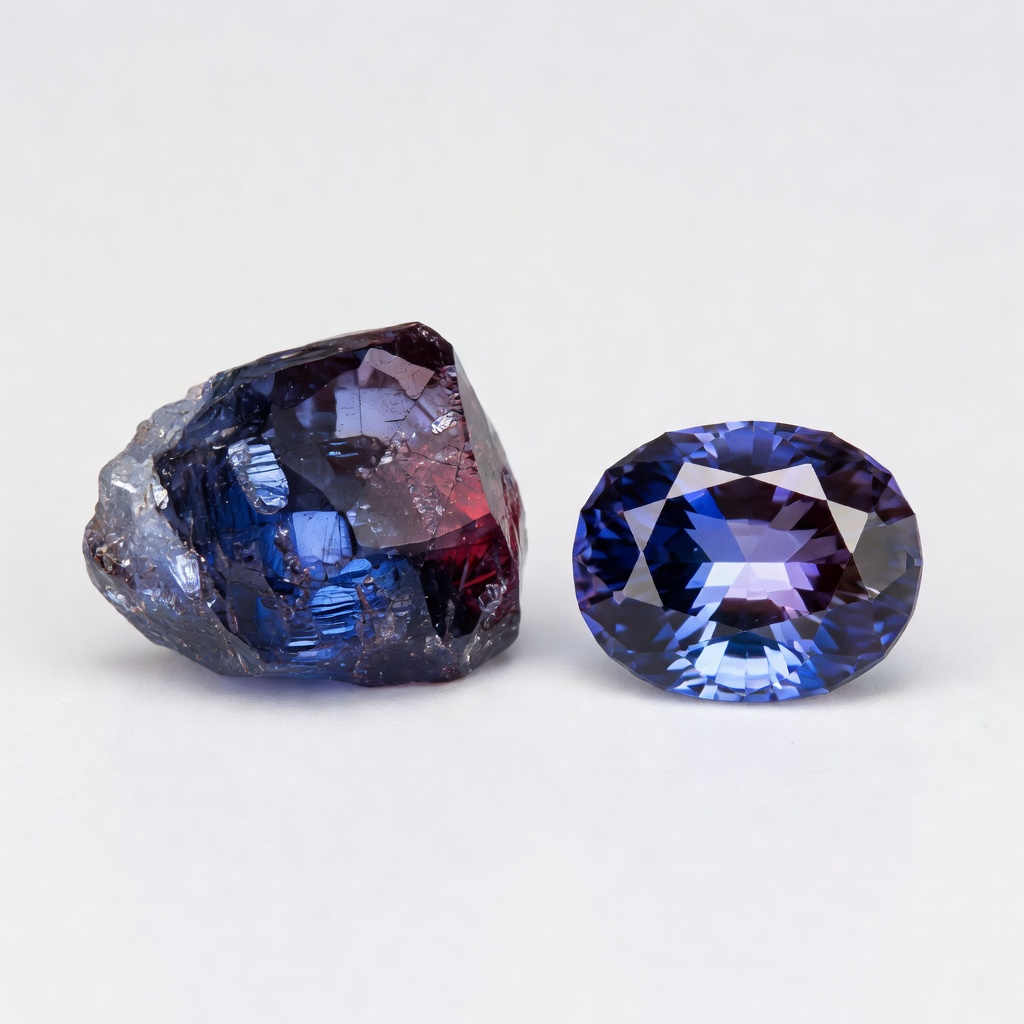
Perhaps no optical property defines tanzanite more dramatically than its remarkable tanzanite pleochroism, a phenomenon where the gemstone displays different colors when viewed from various crystallographic directions. Unlike dichroic gems that show two colors, tanzanite is trichroic, simultaneously exhibiting blue, violet, and burgundy (or bronze) hues depending on the viewing angle. This optical complexity presents both challenges and opportunities for lapidaries, who must carefully orient the rough crystal to maximize the desirable blue-violet face-up appearance while minimizing the less attractive brownish or burgundy tones.
Heat treatment plays a crucial role in developing tanzanite's commercial color palette. While some crystals emerge from the earth with natural blue coloring, the majority arrive as brownish zoisite that requires controlled heating to 500-600 degrees Celsius to unlock their violet-blue potential. This permanent treatment mimics the natural geothermal processes that originally formed the deposit, transforming dull brown crystals into the electric blue-violet gems coveted by collectors. It's important to note that virtually all tanzanite on the market has undergone this enhancement process, which is accepted as standard practice within the trade.
Color grading for tanzanite follows a scale from AAA+ (exceptional) down to B grade (commercial quality), with saturation and tone serving as primary differentiators. The finest specimens display deep, vivid blue-violet hues with strong saturation and minimal gray or brown modifiers. Lighting conditions significantly impact perceived color, with incandescent light emphasizing violet tones while daylight or fluorescent illumination brings out the blue components. When evaluating tanzanite gemstone properties for purchase, always examine stones under multiple lighting conditions to assess their full color range and ensure the hue remains attractive across various environments.
Geographic Origin: Tanzania's Unique Treasure
The story of tanzanite origin Tanzania represents one of geology's most exclusive distribution patterns, with the entire world supply originating from a remarkably small footprint in the Merelani Hills. Located approximately 70 kilometers southeast of Mount Kilimanjaro in the Manyara Region of northern Tanzania, this mining district encompasses roughly eight square miles divided into four distinct blocks (A, B, C, and D). No other locality on Earth has yielded gem-quality tanzanite despite extensive geological surveys across similar mineralogical environments globally.
The geological formation of these deposits spans approximately 585 million years, dating back to the Pan-African orogeny when tectonic forces created the conditions necessary for zoisite crystallization. Vanadium-rich rocks underwent intense heat and pressure deep within the earth's crust, forming the distinctive blue crystals that would remain hidden until erosion and tectonic uplift brought them near the surface. Modern mining operations must descend hundreds of meters underground through narrow shafts to reach the productive zones, with operations becoming increasingly dangerous and expensive as miners chase deeper deposits.
This singular source creates significant tanzanite value and rarity dynamics that influence market pricing and availability. Political instability, mining regulations, and infrastructure challenges in Tanzania periodically disrupt supply chains, causing price volatility in international markets. Environmental concerns and safety standards have also led to government interventions and mining moratoriums, further constraining an already limited supply. For collectors and investors, understanding these geographic constraints helps contextualize why tanzanite commands premium prices compared to more widely distributed gemstones, and why industry experts predict supply exhaustion within the next few decades.
Tanzanite Grading: The 4Cs and Quality Factors
Evaluating tanzanite value and rarity requires understanding how the standard gemstone grading criteria apply specifically to this unique material. While carat, clarity, cut, and color all influence pricing, color stands paramount as the primary value determinant in tanzanite grading. The most desirable stones exhibit a rich, saturated blue-violet where the blue component dominates but blends harmoniously with violet undertones. Stones leaning too heavily toward gray, brown, or pale lavender command significantly lower prices regardless of their size or clarity characteristics.
Clarity considerations for tanzanite generally prove more forgiving than for diamonds, as the gem type typically forms with relatively few inclusions. Most high-quality tanzanite falls into the "eye-clean" category, meaning inclusions are not visible to the unaided eye. Common inclusion types include needle-like crystals, fingerprint patterns, and growth tubes, though these rarely impact the stone's beauty unless positioned directly beneath the table facet. When shopping using a comprehensive tanzanite buying guide, prioritize stones with transparent clarity that allow light to pass freely, maximizing the gem's inherent brilliance and pleochroic display.
Cut quality significantly influences how effectively a tanzanite displays its optical properties and pleochroic colors. Master cutters must orient the rough crystal to ensure the table facet presents the most attractive blue-violet combination while minimizing the less desirable burgundy axis. Brilliant cuts with numerous facets typically enhance the gem's scintillation, though step cuts can emphasize the stone's clarity and color purity. Regarding carat weight, tanzanite availability decreases exponentially as size increases, with stones over five carats becoming genuinely scarce and specimens over twenty carats qualifying as museum-grade collectibles. Price per carat escalates dramatically at these larger sizes, reflecting the difficulty in recovering substantial clean rough from the mines.
Metaphysical Properties and Symbolic Meaning
Beyond its physical beauty, tanzanite metaphysical properties have garnered significant attention within crystal healing communities and spiritual practices. Practitioners associate this gemstone with transformation and spiritual awakening, believing it facilitates elevated consciousness and enhanced psychic abilities. The stone's blue-violet color spectrum aligns it with both the third eye chakra (intuition and insight) and the throat chakra (communication and truth), creating a bridge between internal knowing and external expression. Many crystal workers recommend tanzanite for meditation practices, suggesting it helps quiet the analytical mind while opening pathways to higher guidance.
In December birthstone listings, tanzanite joined turquoise and zircon as a modern alternative, offering those born in the final month of the year a distinctly contemporary option with deep symbolic resonance. Astrologically, the gem connects strongly with Sagittarius and Capricorn signs, though its transformative energies appeal to practitioners across all zodiac boundaries. The tanzanite stone information regarding its energetic properties often emphasizes its ability to dissolve old patterns and facilitate cellular healing, making it popular among those undergoing major life transitions or spiritual development work.
Contemporary metaphysical practitioners value tanzanite for its perceived ability to enhance communication on multiple levels—interpersonal, interdimensional, and spiritual. Some believe the gem helps articulate previously unexpressed emotions while simultaneously enhancing telepathic abilities and intuitive downloads. Whether approached from a scientific mineralogical perspective or an energetic healing standpoint, tanzanite consistently represents themes of rarity, transformation, and the bridging of different realms, mirroring its geological journey from obscure mineral to celebrated gemstone.
Tanzanite Care, Cleaning, and Maintenance
Proper tanzanite care and cleaning protocols are essential for preserving the beauty of this relatively soft gemstone with distinct cleavage characteristics. Unlike diamonds or sapphires that tolerate vigorous cleaning methods, tanzanite requires gentle handling due to its vulnerability to thermal shock and sudden temperature changes. Never expose tanzanite jewelry to extreme temperature variations, such as moving from a hot tub into cold water or leaving pieces in direct sunlight on a windowsill before entering an air-conditioned space. These thermal shocks can cause internal fracturing or cleavage breaks despite the stone appearing externally undamaged.
The safest cleaning method involves lukewarm water mixed with mild dish soap and a soft-bristled brush, such as a baby toothbrush or dedicated jewelry brush. Gently scrub the stone and setting to remove accumulated oils and debris, then rinse thoroughly and pat dry with a lint-free cloth. Ultrasonic cleaners and steam cleaning devices pose significant risks to tanzanite due to the stone's perfect cleavage and potential inclusions that could expand under vibration or heat stress. Similarly, avoid harsh chemicals including chlorine, bleach, and ammonia-based cleaners that might attack the gem's surface or loosen the setting.
Storage considerations play a crucial role in maintaining tanzanite gemstone properties over time. Always store tanzanite jewelry separately from harder stones like diamonds, rubies, or sapphires that could scratch its surface. Individual fabric-lined compartments or soft pouches provide optimal protection. Remove tanzanite rings before engaging in physical activities, household chores, or gardening to prevent sharp impacts that could cleave the stone. For pieces worn regularly, such as earrings or pendants, periodic professional inspections ensure settings remain secure and prongs haven't loosened through normal wear patterns.
Buying Tanzanite: Investment and Value Guide
Navigating the tanzanite buying guide requires understanding current market dynamics, quality indicators, and authentication protocols. Fine quality tanzanite typically ranges from $300 to $1,200 or more per carat, with exceptional AAA+ grade stones commanding premiums at the higher end of this spectrum. Investment-grade pieces generally feature deep saturation, minimal visible inclusions, and expert cutting that maximizes the pleochroic blue-violet display. When purchasing significant pieces, prioritize stones with certification from respected laboratories such as the Gemological Institute of America (GIA) or the American Gemological Laboratories (AGL), which verify natural origin, disclose treatments, and provide objective quality assessments.
Distinguishing natural tanzanite from synthetic or imitation stones demands attention to specific diagnostic features. Synthetic tanzanite, produced through hydrothermal growth processes, may show curved growth patterns or unusual inclusion types not found in natural material. Imitations including glass, cubic zirconia, or dyed quartz lack tanzanite's distinctive trichroism and specific refractive index range. Always request documentation verifying the stone's natural origin, and consider purchasing from dealers who specialize in colored gemstones rather than general jewelry retailers who may lack specific expertise in tanzanite value and rarity factors.
Investment potential for tanzanite remains strong based on supply constraints and increasing mining difficulties. As operations descend deeper into the Merelani Hills, production costs rise while yields decrease, creating upward pressure on wholesale prices. Historical data shows consistent appreciation for fine quality stones, particularly those over five carats with exceptional color. However, gemstone investments require long-term holding periods and proper insurance coverage. Focus on acquiring the finest quality your budget allows rather than larger stones of inferior color or clarity, as top-tier specimens demonstrate the strongest performance in secondary markets and auction environments.
Tanzanite vs Other Blue Gemstones
When evaluating blue gemstone options, understanding how tanzanite gemstone properties compare to alternatives helps inform purchasing decisions based on intended use, budget, and aesthetic preferences. Blue sapphire represents the most obvious comparison, offering superior hardness (9 on the Mohs scale) and durability for daily wear, particularly in engagement rings or bracelets subject to frequent impact. However, fine blue sapphires typically command higher prices than comparable tanzanite, and they lack the violet component and pleochroic complexity that makes tanzanite visually distinctive. For occasional wear pieces where color drama takes precedence over durability, tanzanite often provides better value.
Blue topaz offers a more affordable alternative with greater hardness (8 on the Mohs scale), though natural blue topaz is extremely rare and most commercial material has undergone irradiation treatment to achieve its color. The blue in treated topaz tends toward a lighter, sky-blue or Swiss-blue tone rather than the deep violet-blue of fine tanzanite. Iolite, sometimes called "water sapphire," presents another blue-violet option with strong pleochroism, though it typically shows more grayish tones and lacks tanzanite's saturation and brilliance. Price points for iolite remain significantly lower, reflecting its greater abundance and less vivid coloration.
For collectors seeking uniqueness, tanzanite buying guide considerations should emphasize its singular origin and finite supply compared to these alternatives. While sapphire deposits occur across multiple continents and topaz is widely distributed, tanzanite's exclusivity creates a different category of rarity that appeals to connoisseurs. The gem's trichroic nature also provides visual interest that monochromatic stones cannot replicate, showing color shifts as the wearer moves. When budget allows and the piece will receive appropriate care, tanzanite offers a combination of rarity, color complexity, and investment potential unmatched by other blue gemstones in its price range.
Final Thoughts on Tanzanite's Unique Properties
Synthesizing comprehensive tanzanite properties and information reveals a gemstone that transcends typical mineralogical classification through its combination of singular origin, optical complexity, and finite availability. The convergence of vanadium chemistry, specific geological conditions, and 585 million years of formation created a gem that cannot be replicated elsewhere on Earth. This uniqueness carries both beauty and responsibility, as each tanzanite specimen represents a non-renewable resource that future generations may only access through existing collections and jewelry pieces.
Ethical sourcing considerations increasingly influence the tanzanite value and rarity equation, with responsible mining practices and fair-trade certification gaining importance among conscientious collectors. The Tanzanian government and mining cooperatives continue working to improve safety standards and environmental protections within the Merelani Hills, though challenges remain in this artisanal mining environment. Buyers should inquire about provenance and support dealers who maintain transparent supply chains, ensuring that the beauty of tanzanite doesn't come at unacceptable human or environmental costs.
Looking forward, the long-term outlook for collectors and investors suggests continued appreciation for high-quality specimens as mining depths increase and production inevitably declines. Whether acquired for personal adornment, spiritual practice, or portfolio diversification, tanzanite offers a tangible connection to one of geology's most restricted distributions. As we approach the potential exhaustion of primary deposits within coming decades, appreciation for this remarkable gemstone—born from lightning, fire, and African earth—will likely intensify, cementing its status as a true geological phenomenon of the modern era.
Frequently Asked Questions
What are the key physical properties of tanzanite?
Tanzanite is a variety of zoisite with a Mohs hardness of 6.5-7, specific gravity of 3.35, and exhibits perfect cleavage. Its most distinctive property is strong trichroism, showing blue, violet, and burgundy colors when viewed from different angles. The gemstone has a refractive index of 1.69-1.70 and crystallizes in the orthorhombic system.
Why is tanzanite considered so rare?
Tanzanite is found in only one location on Earth—the Merelani Hills in Tanzania, covering just 4 square kilometers. Geologists estimate the supply may be depleted within one generation. It's approximately 1,000 times rarer than diamonds, making its single-source origin and limited geological formation critical factors in its exceptional rarity.
How does pleochroism affect tanzanite's appearance?
Pleochroism causes tanzanite to display three distinct colors (blue, violet, and burgundy) depending on the viewing angle and crystal orientation. This optical property means the stone can appear more blue or more violet based on how it's cut and viewed. Skilled cutters orient the gem to maximize the most desirable blue-violet face-up color.
What is the best color grade for tanzanite?
The finest tanzanite displays a deep, saturated blue-violet with strong color intensity, graded as AAA+. These top-tier stones show vivid blue primary hues with violet undertones and minimal gray or brown modifiers. Color is the most important value factor, with richer, more vibrant stones commanding significantly higher prices.
How should I clean and care for tanzanite jewelry?
Clean tanzanite gently with lukewarm soapy water and a soft brush. Avoid ultrasonic cleaners, steam cleaners, and harsh chemicals. Due to its perfect cleavage and 6.5-7 hardness, remove tanzanite jewelry before physical activities, extreme temperature exposure, or using household chemicals. Store separately in a fabric-lined box to prevent scratching.
Is tanzanite a good investment gemstone?
Tanzanite shows strong investment potential due to its single-source rarity and diminishing supply. Fine AAA+ grade stones have appreciated historically, with prices increasing as mining depths become more challenging. However, like all gemstone investments, quality certification, proper documentation, and long-term holding periods are essential for potential returns.
Where exactly is tanzanite mined?
Tanzanite is exclusively mined in the Merelani Hills of northern Tanzania, near the base of Mount Kilimanjaro in the Manyara Region. The mining area covers approximately 8 square miles and is divided into four blocks (A, B, C, and D). No other deposits have been discovered worldwide despite extensive geological surveys.
What is tanzanite's hardness and durability for daily wear?
Tanzanite's Mohs hardness of 6.5-7 makes it softer than sapphire or diamond, requiring careful wear. It's best suited for earrings, pendants, and occasional-wear rings rather than everyday engagement rings. The stone's perfect cleavage makes it vulnerable to sharp impacts, so protective settings and mindful wearing are recommended.