
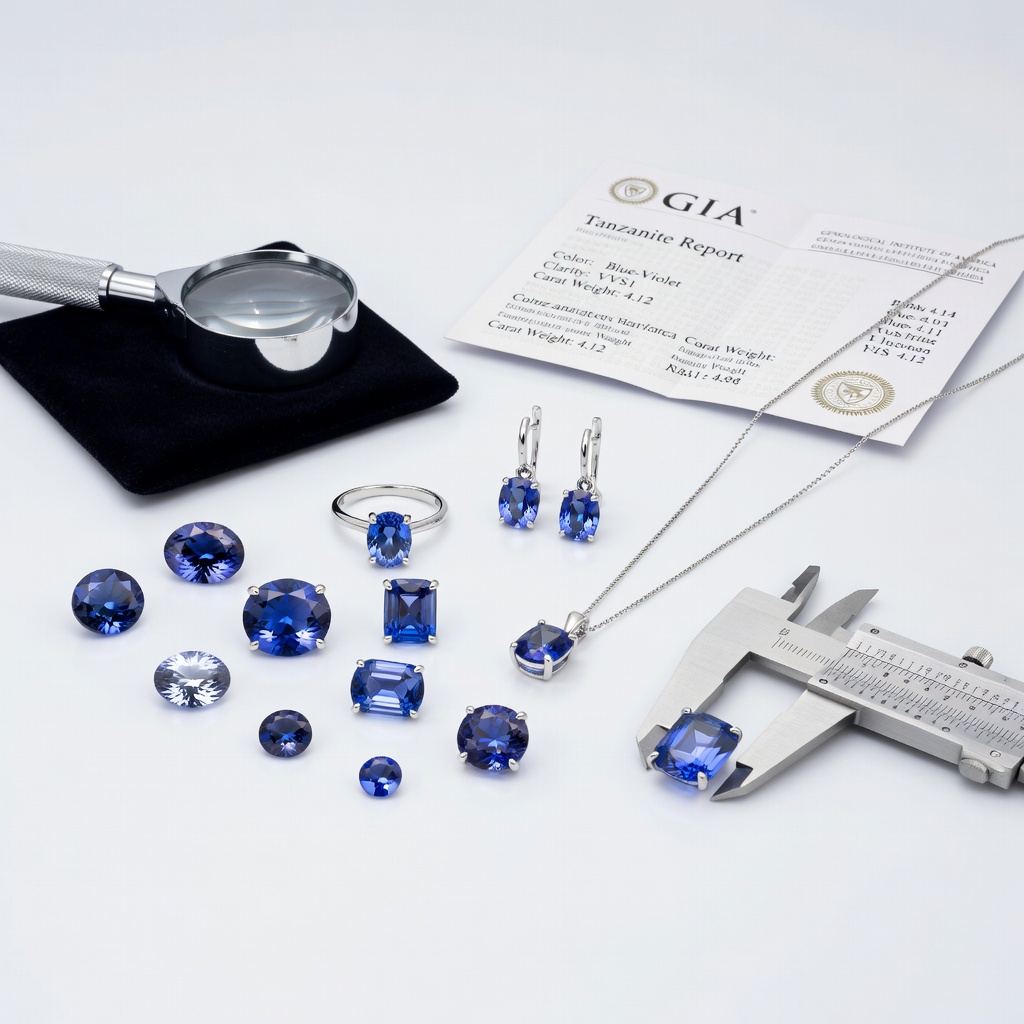
Why Tanzanite is the World's Most Sought-After Gemstone
Tanzanite stands alone in the gemstone world as a singular miracle of geology, found exclusively in a tiny mining area measuring merely eight square miles at the foothills of Mount Kilimanjaro. Unlike diamonds, rubies, or sapphires that appear across multiple continents, this remarkable blue-violet gemstone emerges from only one location on Earth, making it approximately 1,000 times rarer than diamond. When you decide to buy tanzanite jewelry, you are acquiring a piece of geological history that cannot be replicated elsewhere, a factor that drives both emotional attachment and tangible value appreciation in the collector market.
The mesmerizing pleochroism of tanzanite sets it apart from every other precious stone, displaying striking trichroism that reveals deep royal blue, vibrant violet, and subtle burgundy depending on the viewing angle and lighting conditions. This optical phenomenon creates an almost magical color-shifting quality that makes each gemstone appear alive with internal fire, captivating viewers whether under natural daylight or incandescent evening illumination. Expert gemologists consider this unique optical signature the primary reason serious collectors prioritize tanzanite over more common blue gemstones like sapphire or topaz.
Market dynamics surrounding tanzanite create urgent purchasing considerations for discerning buyers, as geological surveys suggest the Merelani Hills deposits may become commercially depleted within the next generation. With mining depths now reaching over 800 meters below surface level and extraction costs escalating dramatically, the window for acquiring high-quality specimens at current price points continues to narrow. Smart investors recognize that tanzanite investment potential correlates directly with supply scarcity, positioning the gemstone as a modern-day equivalent to precious Kashmir sapphires or Burmese rubies before their mines exhausted.
Collector value in today's gemstone market increasingly favors tanzanite for estate jewelry and legacy pieces, with auction houses reporting steady price appreciation for exceptional specimens over five carats. The gemstone has achieved recognition as an official birthstone for December alongside turquoise and zircon, expanding its appeal beyond traditional collector circles into mainstream luxury jewelry markets. When approached as part of a diversified tangible asset portfolio, investment-grade tanzanite offers both aesthetic pleasure and historical significance that transcends typical commodity trading.
Understanding Tanzanite: Origin and Unique Properties
The geological formation of natural tanzanite represents a perfect storm of mineralogical conditions that occurred approximately 585 million years ago during the Pan-African event. As tectonic plates shifted and Mount Kilimanjaro formed, extreme heat and pressure transformed calcium aluminum silicate deposits into the blue zoisite variety we treasure today, with vanadium and chromium trace elements creating the distinctive color spectrum. This singular geological event occurred nowhere else on Earth, ensuring that every piece of tanzanite jewelry connects directly to this specific East African location.
Exclusive mining operations concentrate in the Merelani Hills of the Manyara Region in northern Tanzania, where artisanal miners and commercial operations extract stones from narrow tunnels extending deep underground. The mining area's restricted size means that environmental factors, political stability, and local regulations directly impact global supply chains, creating volatility that affects tanzanite gemstone quality availability year over year. Buyers should understand that "Tanzania direct" purchases, while romantic, require extensive knowledge of export procedures and often involve significant documentation challenges at customs.
Pleochroism manifests as the defining optical characteristic of tanzanite, requiring cutters to orient the rough crystal carefully to maximize the blue or violet face-up appearance. When examining a loose stone, rotate it slowly under a single light source to observe the color shift from deep sapphire-blue to rich amethyst-violet to subtle raspberry-burgundy, confirming authentic trichroic properties. This phenomenon differs fundamentally from the dichroism seen in sapphires or the color-change effect in alexandrite, making tanzanite identification relatively straightforward for trained observers.
The color spectrum ranges from pale lavender and dusty periwinkle to the coveted deep royal blue that commands premium pricing, with ultra-rare green tanzanite occasionally surfacing in the market as true collector's items. While most consumers seek the saturated violetish-blue that dominates high-end jewelry, connoisseurs appreciate the subtle variations that indicate specific mining blocks within the Merelani Hills. Regarding tanzanite properties and durability, the gemstone ranks 6.5 to 7 on the Mohs hardness scale, making it suitable for earrings, pendants, and occasional-wear rings, though protective settings remain essential for daily wear pieces.
The 4Cs of Tanzanite Quality: Expert Evaluation Criteria
Mastering the tanzanite 4Cs requires understanding how color grading differs significantly from diamond evaluation, with hue and saturation taking precedence over all other factors. The industry recognizes AAA and AAAA tiers, with AAAA representing the pinnacle of deep, saturated violetish-blue where the stone appears almost electric in its intensity. When evaluating tanzanite quality factors, examine the stone against a white background under natural daylight; top-tier specimens display a dominant blue with violet secondary flashes, while lower grades appear washed out or overly grayish in tone.
Clarity standards for tanzanite remain more forgiving than diamonds, as the geological formation typically produces stones with minor inclusions visible only under magnification. Eye-clean specimens, meaning no visible inclusions to the unaided eye from six inches away, represent the standard for fine jewelry, though slight silk or fingerprint inclusions may be acceptable in stones over three carats if they do not affect transparency. Utilize a jeweler's loupe (10x magnification) to inspect for surface-reaching fractures or dark crystal inclusions that might compromise structural integrity, particularly important when considering tension settings or daily wear mounting styles.
Cut quality dramatically impacts both brilliance and color display, with master cutters facing the constant challenge of maximizing face-up appearance while retaining carat weight from pleochroic rough. Poorly cut stones may appear windowed or lifeless, showing washed-out centers where light leaks through the pavilion rather than reflecting back to the viewer. When assessing tanzanite grading, prioritize depth percentages between 60-70% for round brilliants and slightly deeper cuts for cushions or ovals, ensuring the stone returns maximum light while displaying the desired blue-violet saturation from the table-up position.
Carat weight pricing follows exponential rather than linear progression, with significant price jumps occurring at milestone sizes of one, two, three, and five carats. A three-carat AAAA stone might command triple the per-carat price of a two-carat equivalent, reflecting both rarity and the increased difficulty of finding large clean rough. Consider that tanzanite possesses a relatively high specific gravity (3.35), meaning a one-carat stone appears slightly smaller face-up than a same-weight diamond, so when budgeting, prioritize dimensions over raw weight to ensure satisfactory visual impact in the final setting.
Treatment, Certification, and Authenticity Verification
Understanding tanzanite treatment is essential for informed purchasing, as approximately 95% of all material undergoes controlled heat treatment to transform brownish-yellow rough into the coveted blue-violet hues. This process occurs at relatively low temperatures (500-600°C) and represents an accepted, stable industry standard that permanently enhances color without requiring special care or disclosure concerns during normal wear. Untreated stones that display natural blue coloration command extreme premiums, though they typically exhibit lighter saturation than their heated counterparts, making disclosure documentation crucial for valuation accuracy.
Tanzanite certification from reputable laboratories provides the necessary assurance regarding treatment history, natural origin, and quality parameters. Prioritize reports from GIA (Gemological Institute of America) or AGL (American Gemological Laboratories), which employ advanced spectroscopy to confirm natural versus synthetic origin and document any enhancement procedures. The Tanzanite Foundation also provides grading services specifically tailored to this gemstone variety, offering specialized color grading systems that many collectors find more descriptive than generic laboratory reports.
Distinguishing lab-grown tanzanite from natural material requires sophisticated gemological equipment, as synthetic producers have refined techniques that mimic natural inclusions and chemical signatures. However, synthetic material rarely exhibits the complex three-phase inclusions or subtle growth zoning seen in natural stones from the Merelani Hills. When questioning tanzanite authenticity, request that sellers provide specific disclosure regarding synthetic versus natural origin, as federal trade regulations mandate accurate representation of laboratory-created gemstones.
Critical questions to ask sellers include: "Has this stone undergone heat treatment, and if so, is it permanent and stable?" "Does the certification report specifically address natural versus synthetic origin?" and "Can you provide documentation tracing the stone back to the Tanzanite Foundation or recognized mining consortiums?" Reputable dealers maintain chain-of-custody documentation and welcome third-party verification, while evasive answers regarding treatment history or certification validity should immediately terminate negotiations.
Tanzanite Pricing Guide: What Affects Cost Per Carat
Current market ranges for tanzanite price per carat span from approximately $300 for commercial-grade material to well over $1,200 for exceptional investment-quality specimens, with significant variation based on color intensity, clarity, and size categories. Entry-level stones displaying pale lavender or grayish-blue tones might retail for $200-$400 per carat, while intensely saturated AAAA-grade material with deep violetish-blue coloration commands $800-$1,500 per carat in sizes under three carats. Understanding these tanzanite cost factors enables buyers to allocate budgets effectively, recognizing that color quality impacts visual appeal more dramatically than minor clarity characteristics.
Premium multipliers apply to stones exhibiting the rare "ultramarine" blue that rivals fine Kashmir sapphires, with such specimens fetching two to three times standard AAAA pricing. Flawless clarity under 10x magnification further increases value, particularly in sizes exceeding five carats where inclusion-free rough becomes exponentially scarcer. When evaluating tanzanite valuation, consider that untreated natural blue material, though rarely available, can command $2,000+ per carat regardless of size due to extreme collector interest.
Size-based price escalations create distinct market tiers at one, two, three, and five-carat thresholds, with each jump reflecting the mathematical difficulty of recovering large clean crystals from mining operations. A five-carat AAAA stone might retail for $6,000-$8,000 total, representing a per-carat price nearly double that of a two-carat equivalent quality stone. These discontinuities create opportunities for value-conscious buyers who prioritize face-up dimensions over raw weight, as well-cut stones between 1.90-1.95 carats often appear identical to two-carat specimens while costing significantly less.
Retailer markup structures vary dramatically between local brick-and-mortar jewelers, specialized online vendors, and luxury brand boutiques, with margins ranging from 30% to 300% above wholesale costs. Online retailers typically offer competitive tanzanite price per carat due to lower overhead, though buyers sacrifice the tactile evaluation experience. Luxury brands command premiums for design exclusivity and marketing cachet, though the underlying gemstone quality may not differ from equivalent stones at specialized dealers. Always compare certification parameters rather than relying solely on retailer reputation when assessing fair market value.
Where to Buy Tanzanite: Trusted Sources and Smart Shopping
When you decide to buy tanzanite jewelry, selecting the right vendor proves as important as choosing the stone itself, requiring careful evaluation of certification policies, return windows, and industry reputation. Established online retailers such as Blue Nile, James Allen, and specialized colored gemstone dealers offer extensive photography, 360-degree video inspection, and certified inventory with generous return policies typically spanning 30 days. These platforms employ GIA Graduate Gemologists who verify tanzanite authenticity before listing, providing documentation that travels with the purchase for insurance and future resale purposes.
Reputable brick-and-mortar jewelers offer the advantage of physical examination under various lighting conditions, allowing you to observe pleochroism and color saturation firsthand before committing to purchase. When visiting local establishments, inquire whether staff includes certified gemologists, request to view stones under daylight-equivalent lighting rather than heavily tinted showroom spots, and verify that inventory includes recent certifications rather than outdated appraisals. The best local dealers maintain relationships with Tanzanite Foundation members or direct mining operations, ensuring ethical sourcing and competitive pricing.
Direct purchasing in Tanzania appeals to adventurous buyers seeking provenance stories and potential cost savings, though this approach carries significant risks requiring extensive preparation. Arusha and Dar es Salaam host gemstone markets where rough and cut material changes hands, but export regulations require proper documentation, VAT receipts, and Kimberley Process-style certification to clear customs legally. Without experienced local guides or established dealer relationships, tourists often encounter treated glass simulants or synthetic corundum misrepresented as natural tanzanite, making independent laboratory verification essential before finalizing any East African purchase.
Auction houses including Sotheby's, Christie's, and Heritage Auctions offer estate pieces and collector-grade specimens for serious tanzanite investment portfolios, though buyers must perform rigorous due diligence before bidding. Request condition reports that specifically address any chips, abrasions, or treatments applied since the original cutting, and verify that auction estimates align with current retail replacement values rather than outdated appraisals. Online auction platforms require extra caution regarding return policies, as "all sales final" conditions prevail at many estate auctions, leaving buyers no recourse if stones prove to be simulants or significantly treated material.
Red Flags: Avoiding Scams and Fake Tanzanite
The marketplace for fake tanzanite remains unfortunately active, with unscrupulous sellers exploiting consumer enthusiasm through various deceptive practices that can cost unsuspecting buyers thousands. Unrealistic pricing represents the most obvious warning sign, as authentic AAAA-grade material cannot be sustainably sourced and sold below $400 per carat; offers advertising "museum quality" or "investment grade" stones for $99-$199 per carat invariably indicate glass, synthetic corundum, or heavily treated inferior material. When encountering such deals, remember that legitimate dealers face real procurement costs from Tanzanian mining operations, making genuine bargains on high-grade material economically impossible.
Synthetic simulants pose sophisticated challenges for detection, with coranite (synthetic corundum), cobalt-doped glass, and heated iolite representing common substitutions found in tourist markets and questionable online listings. Glass imitations often appear too perfect, lacking the subtle inclusions and growth characteristics of natural zoisite, while feeling noticeably lighter due to lower specific gravity. Iolite scams prove particularly deceptive as the natural gemstone exhibits pleochroism similar to tanzanite, though typically showing sapphire-blue to honey-yellow rather than violet-burgundy color shifts, requiring careful side-by-side comparison for proper identification.
Misleading origin claims frequently accompany tanzanite scams, with sellers attributing stones to "newly discovered" mines in Kenya, Madagascar, or Afghanistan to avoid Tanzanian export documentation requirements or to justify suspiciously low prices. Remember that genuine tanzanite occurs exclusively in Tanzania, and any claim of alternative origins indicates either ignorance or intentional fraud. Similarly, failure to disclose standard heat treatment or claims of "rare untreated" status without supporting spectroscopic analysis from major laboratories should trigger immediate skepticism during purchase negotiations.
High-pressure sales tactics including "going out of business" liquidations, "one-day-only" pricing, or claims that "the mine just closed forever" represent psychological manipulation designed to bypass rational evaluation processes. Legitimate dealers of investment-grade gemstones never rush educated buyers, instead encouraging independent appraisal and thoughtful consideration. Always verify seller credentials through the Better Business Bureau, Jewelers Vigilance Committee, or GIA Alumni directories, and walk away immediately from any vendor refusing to provide written guarantees of authenticity, treatment disclosure, and return privileges.
Caring for Your Tanzanite: Maintenance and Longevity Tips
Proper tanzanite care begins with understanding that despite its beauty, this gemstone requires gentler handling than diamonds or sapphires due to its distinct cleavage properties and moderate hardness. Safe cleaning methods involve lukewarm water mixed with mild phosphate-free dish soap, using only soft-bristled brushes (baby toothbrushes work excellently) to gently dislodge accumulated debris from pavilion facets and under gallery settings. Avoid steam cleaners, ultrasonic jewelry baths, and commercial dip solutions containing ammonia or alcohol, as these can loosen settings, damage surface polish, or cause thermal shock fractures in included stones.
Storage protocols play crucial roles in maintaining tanzanite durability over decades of ownership, as this gemstone can scratch softer materials like opal or pearl while suffering damage from harder stones like diamonds or rubies. Store pieces individually in soft cloth pouches or compartmentalized jewelry boxes with padded dividers, ensuring that pendants and earrings do not contact rings or bracelets during transport. Extreme temperature fluctuations pose particular risks, so remove tanzanite jewelry before swimming in cold water, entering saunas, or engaging in winter sports where rapid thermal contraction might stress internal inclusions.
Chemical avoidance extends beyond obvious hazards like chlorine bleach or hydrochloric acid to include everyday substances such as hairspray, perfume, and hand sanitizer that can dull surface luster over time. Apply all cosmetics and fragrances before donning tanzanite jewelry, and remove rings before washing dishes or using household cleaners containing abrasives or solvents. Professional jewelers should be consulted immediately if the stone sustains impact, as early intervention can prevent small chips from propagating into major fractures that compromise structural integrity.
Schedule professional inspections every 12-18 months to check for loose prongs, worn mountings, or surface abrasions that might compromise the setting's security. Re-polishing services can restore brilliance to scratched or dulled stones, though this process removes microscopic amounts of material and should be performed only by lapidaries experienced with zoisite's cleavage directions. With proper cleaning tanzanite jewelry protocols and protective wearing habits, these extraordinary gemstones maintain their captivating beauty for generations, becoming heirloom pieces that carry both financial and sentimental value forward.
Tanzanite Investment Potential: Is It Worth Buying?
Evaluating tanzanite investment viability requires analyzing supply constraints against market demand dynamics, with geological estimates suggesting commercially viable extraction may cease within 20-30 years at current depletion rates. The single-source limitation creates a finite supply scenario unmatched by diamonds, which enjoy multiple productive mines across several continents, positioning high-grade tanzanite as a potentially appreciating scarce resource. Historical data indicates that top-quality stones over five carats have appreciated 10-15% annually over the past two decades, outperforming many traditional investment vehicles while providing tangible enjoyment during ownership.
However, liquidity considerations present challenges for investors accustomed to the deep, instant markets characterizing gold or diamond trading. Selling tanzanite requires finding specialized colored gemstone dealers, auction houses, or private collectors willing to pay fair market value, a process that may take weeks or months rather than hours. Unlike diamonds with established Rapaport pricing, tanzanite valuation remains somewhat subjective, with color preferences and size requirements varying among potential buyers, necessitating patience and professional marketing when divesting from positions.
Investment-grade specifications favor stones exhibiting AAAA color saturation, flawless to eye-clean clarity, and weights exceeding five carats, with unusual colors like natural green or intense violet commanding additional premiums among specialist collectors. Documentation proves essential for investment pieces, requiring original laboratory certifications, purchase receipts, and updated appraisals from certified gemologists every three to five years to establish provenance and condition. Diversification within a gemstone portfolio might include several smaller high-quality stones rather than a single large specimen, spreading risk while maintaining exposure to the asset class.
When comparing rare tanzanite stones to alternative tangible assets, consider that while diamonds offer greater liquidity, they lack the single-source scarcity narrative driving tanzanite's collector appeal. Gold provides inflation hedging but generates no aesthetic dividends, whereas fine tanzanite serves simultaneously as wearable art and stored value. For investors with appropriate time horizons (minimum 5-10 years), risk tolerance for illiquidity, and appreciation for gemological beauty, carefully selected tanzanite investment pieces offer compelling potential within diversified alternative asset allocations.
Final Checklist: Your Tanzanite Buying Action Plan
Executing a successful tanzanite purchase requires systematic verification of quality parameters, seller credentials, and documentation standards before committing capital to this significant acquisition. Your tanzanite buying checklist should include: (1) Verify GIA or AGL certification is current and matches the specific stone via laser inscription or detailed plotting, (2) Confirm 30-day minimum return policy with full refund provisions, (3) Examine stone under natural daylight and incandescent lighting to assess color consistency, (4) Check for windowing or extinction using a loupe from the table-up position, (5) Validate treatment disclosure against laboratory reports, (6) Obtain independent appraisal within the return window for insurance and value verification, (7) Inspect mounting craftsmanship for protective prong coverage if purchasing set jewelry, (8) Review seller's BBB rating and industry affiliations, (9) Secure original purchase receipts and warranty documentation, and (10) Photograph the stone prior to acceptance to document condition.
Key questions to ask every seller include specific inquiries about the rough's mining block origin within Merelani, the date of cutting, whether the stone has undergone any treatment beyond standard heating, and what recourse exists if independent appraisal values fall significantly below purchase price. Inquire about the cutter's identity and reputation, as master-cut stones from renowned lapidaries like Victor Tuzlukov or John Dyer command secondary market premiums beyond generic commercial cutting. Demand written answers to verbal representations regarding tanzanite grading claims, as documentation provides essential evidence should disputes arise regarding quality misrepresentation.
Budget allocation strategy should prioritize color saturation over raw carat weight, as a deeply saturated two-carat AAA stone delivers more visual impact than a washed-out three-carat commercial grade piece. Allocate 60% of budget toward color and clarity parameters, 25% toward cut quality ensuring optimal light return, and only 15% toward achieving specific carat milestones, recognizing that well-proportioned stones slightly under magic sizes offer superior value. For investment purchases, divert additional funds toward certification from multiple laboratories (GIA and AGL) to maximize future resale confidence.
Documentation essentials extend beyond the initial transaction to include organizing certificates, receipts, appraisals, and care instructions in a fireproof safe or secure digital archive with cloud backup. Maintain records of professional cleanings and inspections to demonstrate proper care history when eventually selling or insuring the piece. When you purchase tanzanite through proper channels with complete documentation, you secure not just a beautiful gemstone but a transferable asset with established provenance and verified quality parameters.
Frequently Asked Questions
What is the best color grade for tanzanite?
AAAA grade tanzanite with deep, saturated violetish-blue color commands the highest value. AAA grade offers excellent value with slightly lighter but still vivid blue-violet hues. Avoid pale 'D' or 'C' grade stones for investment pieces.
How much should I expect to pay per carat for quality tanzanite?
Expect $300-$600/ct for AAA grade (1-2ct), $600-$1,000/ct for AAAA grade, and $1,200+/ct for exceptional stones over 3 carats. Prices increase exponentially with size and color intensity.
Is all tanzanite heat-treated, and is this acceptable?
Yes, approximately 95% of tanzanite is heat-treated to enhance blue color, which is an accepted industry standard. Untreated stones typically show brownish tints. Always require disclosure of any treatment.
How can I verify my tanzanite is real and not synthetic?
Request GIA or AGL certification, examine pleochroism (three colors visible when rotated), test hardness (won't scratch glass easily), and buy only from reputable sellers offering return policies. Professional gemological testing is definitive.
What certifications should I look for when buying tanzanite?
Prioritize GIA (Gemological Institute of America) or AGL (American Gemological Laboratories) certificates. Tanzanite Foundation grading is also reputable. Avoid in-house appraisals as sole documentation.
Is tanzanite a good investment compared to diamonds?
Tanzanite offers higher rarity and appreciation potential due to single-source supply, but has lower market liquidity than diamonds. Investment-grade stones (5ct+, AAAA) have shown 10-15% annual appreciation historically.
Can tanzanite be worn everyday in rings?
Tanzanite's 6.5-7 Mohs hardness makes it suitable for occasional wear, but vulnerable to scratching in daily rings. Protective settings (bezels) are recommended. Earrings and pendants are safer for frequent wear.
Where is the safest place to buy authentic tanzanite?
Established online retailers with GIA-certified inventory and 30-day returns (like James Allen, Blue Nile), or local jewelers with GIA Graduate Gemologists on staff. Always verify independent reviews and certification policies.


