What Is Taaffeite? Understanding This Rare Gemstone
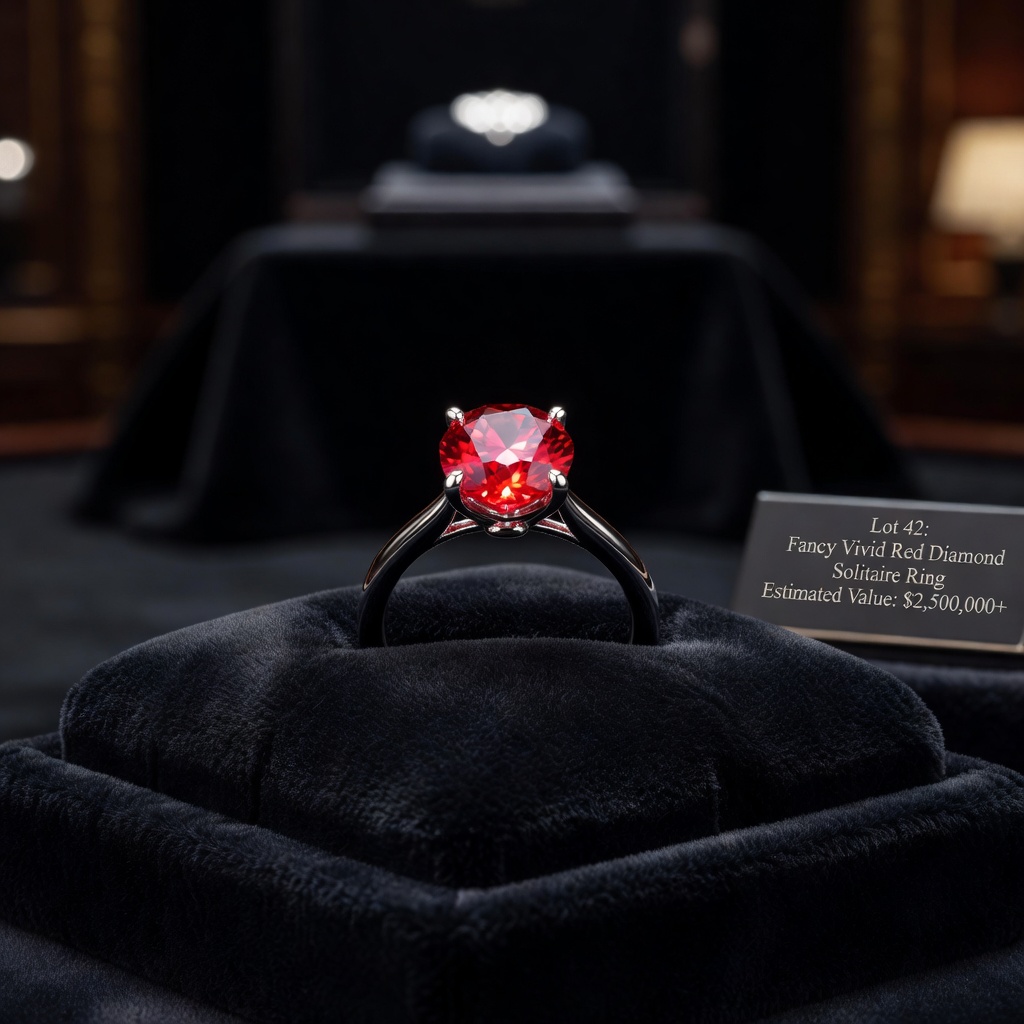
Taaffeite represents one of the most extraordinary discoveries in modern gemology, distinguished by its unique chemical identity as beryllium magnesium aluminum oxide with the molecular formula BeMgAl4O8. Unlike most gemstones that were initially documented in their rough crystalline form, taaffeite entered the mineralogical record through a remarkable case of misidentification that would ultimately redefine how gemologists examine precious stones. The gem was first brought to scientific attention in 1945 when Austrian gemologist Richard Taaffe examined a collection of cut stones that had been sold as spinel, only to discover through careful optical testing that one specimen exhibited properties inconsistent with that mineral. Today, taaffeite maintains its status as one of the rarest gemstones known to exist, with fewer faceted specimens available to collectors than even the legendary red diamonds that command headlines at international auctions.
Understanding taaffeite gemstone properties requires appreciation for its unique position in the mineral kingdom as the only mineral identified from a faceted stone before being found in nature. The gem's extreme rarity stems from the specific geological conditions necessary for its formation, requiring the unlikely combination of beryllium and magnesium in marble host rocks under precise metamorphic conditions. Collectors and investors seeking comprehensive Taaffeite Properties and Information should note that fewer than fifty faceted stones exceeding one carat have been documented in gemological literature, making each verified specimen a significant acquisition for any serious collection.
The Discovery and Historical Significance of Taaffeite
The story of taaffeite's discovery begins in Dublin, Ireland, where Richard Taaffe identified the first specimen among a parcel of mauve-colored stones that had been marketed and sold as ordinary spinel to an unsuspecting buyer. While examining these purported spinels under magnification, Taaffe noticed that one particular stone displayed double refraction—a property impossible for isotropic spinel—prompting immediate scientific investigation into its true nature. This discovery marked a pivotal moment in gemological history, as taaffeite became the first mineral ever identified from a faceted gemstone rather than from naturally occurring rough crystals, fundamentally changing how laboratories approach the authentication of mounted stones.
As the gemological community developed more sophisticated classification systems over the subsequent decades, certain elite specimens now receive the specialized quintg designation, indicating exceptional crystalline structure and color purity that distinguishes museum-quality examples from commercial material. The historical significance of rare purple taaffeite extends beyond its novelty; the discovery forced gemologists to reconsider their reliance on visual identification alone and adopt more rigorous optical and chemical testing protocols. Richard Taaffe's initial finding demonstrated that the gem world still held secrets even in the mid-twentieth century, inspiring renewed scrutiny of existing collections that subsequently revealed additional taaffeite specimens previously misidentified as spinel in major museums and private holdings.
Chemical Composition and Crystal Structure
At the molecular level, taaffeite consists of beryllium magnesium aluminum oxide represented by the chemical formula BeMgAl4O8, placing it in a unique position within the oxide mineral family despite its close relationship to the spinel group. The gemstone crystallizes in the hexoctahedral crystal system, forming distinct geometric patterns that differ microscopically from its spinel cousins despite superficial similarities in appearance and hardness. Taaffeite chemical composition requires the specific presence of beryllium—a relatively rare element in the earth's crust that typically concentrates in pegmatite formations rather than the metamorphic marbles where taaffeite occurs.
Isomorphism with spinel creates ongoing challenges for identification, as both minerals share comparable specific gravity ranges and can occur in similar geological environments. However, the presence of beryllium in taaffeite's crystal lattice distinguishes it definitively from magnesium aluminum spinel, creating subtle but measurable differences in optical and physical properties. Advanced analytical techniques such as energy-dispersive X-ray spectroscopy (EDS) can detect the beryllium content that separates taaffeite from spinel, providing gemologists with definitive chemical markers for authentication. The hexoctahedral structure manifests in distinctive crystal habits including octahedra and dodecahedra, though these forms are rarely preserved in alluvial deposits where most gem-quality material is recovered.
Physical Properties and Durability
Taaffeite demonstrates impressive durability with a hardness rating of 8 to 8.5 on the Mohs scale, making it suitable for various jewelry applications though requiring more care than harder stones like sapphire or diamond. The specific gravity of taaffeite typically ranges between 3.60 and 3.62, slightly overlapping with spinel's density range but often registering marginally lower in precise measurements. Despite its respectable hardness, taaffeite possesses perfect cleavage in one direction, meaning the stone can split cleanly along specific crystallographic planes if struck with sufficient force or subjected to extreme pressure during setting.
These fracture characteristics necessitate careful consideration during the cutting process, as lapidaries must orient the table facet to minimize the visibility of cleavage planes while maximizing the stone's optical performance. When evaluating taaffeite hardness mohs ratings for jewelry purposes, designers must balance the gem's scratch resistance against its vulnerability to cleavage damage, typically recommending protective settings for rings while considering pendants and earrings safer alternatives. The mineral typically exhibits conchoidal to uneven fractures when broken, and unlike diamond, it does not exhibit brittleness in the same manner, though sharp blows can still cause significant damage to finished gemstones.
Optical Properties and Color Varieties
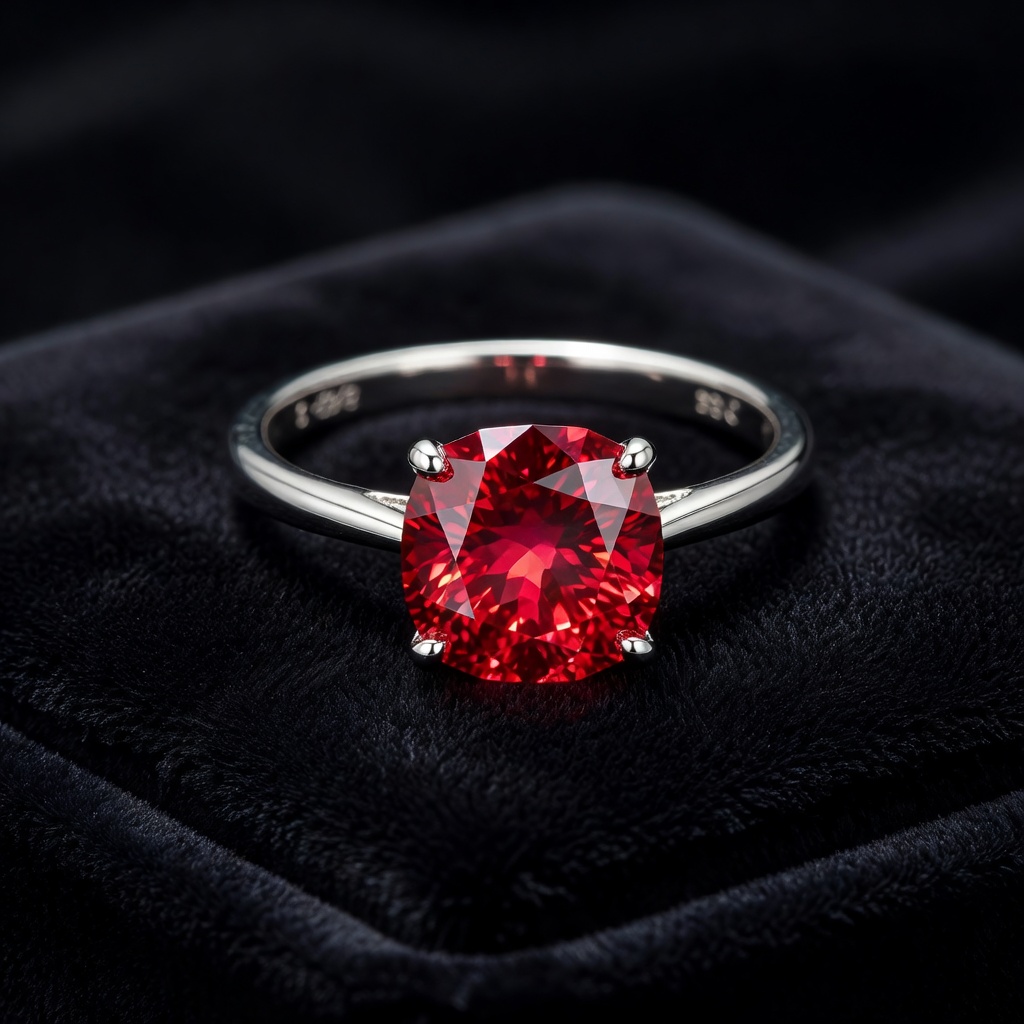
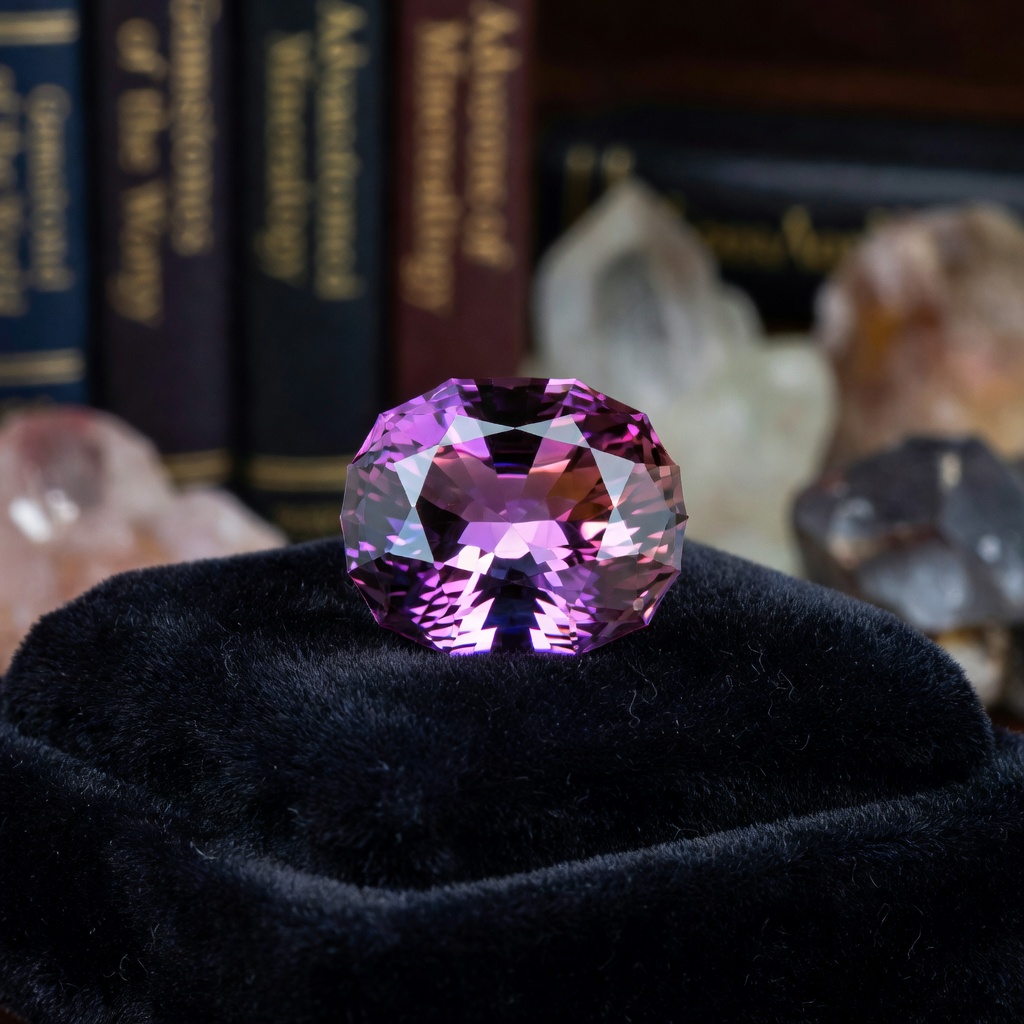
The optical properties of taaffeite reveal its sophisticated nature, displaying a refractive index range of 1.719-1.723 with measurable birefringence of 0.004-0.005 that creates subtle but distinctive optical effects under polarized light. While the rare purple taaffeite specimens command the highest premiums in the collector market, the gemstone actually occurs across a surprising spectrum of colors including delicate mauve, pinkish-lavender, blue-gray, and the exceedingly scarce red varieties that rival ruby in their intensity. Pleochroism becomes evident when viewing taaffeite through a dichroscope, showing different colors or intensities depending on crystallographic orientation—typically appearing violet to grayish-blue in the dichroic colors observed by gemologists.
Some extraordinary specimens exhibit color-change phenomena, shifting from greenish-blue under daylight to purple under incandescent lighting, similar to the behavior seen in high-quality alexandrite but occurring far more rarely in nature. The refractive index measurements provide crucial diagnostic data for laboratories, as the consistent range of 1.719-1.723 differs from spinel's broader variability and helps distinguish taaffeite from synthetic counterparts. When purchasing rare purple taaffeite, collectors should request spectroscopic analysis to verify authenticity, as the natural absorption spectrum shows characteristic lines at 458 and 478 nanometers that differ from both spinel and synthetic simulants.
Geographic Sources and Mining Locations
The primary source for gem-quality taaffeite remains the alluvial deposits of Sri Lanka (formerly Ceylon), where the gemstone occurs in weathered gravels and stream beds alongside other high-value minerals such as sapphire and spinel. Secondary deposits have been identified in Tanzania's Umba Valley, Myanmar's Mogok Stone Tract, and select locations in southern China, though these sources typically yield smaller and less frequent specimens than the Sri Lankan mines. Geological conditions necessary for taaffeite formation require specific marble host rocks enriched in both beryllium and magnesium, created through the metamorphism of aluminum-rich sediments under precise temperature and pressure conditions rarely encountered in the earth's crust.
Miners often discover taaffeite accidentally while processing gravels for more common gemstones, as the rough material closely resembles ordinary spinel or pale sapphire until subjected to laboratory analysis. The Sri Lankan deposits continue to produce the majority of documented specimens, with the Ratnapura district particularly noted for yielding fine material with exceptional clarity. Understanding taaffeite gemstone properties in relation to their geological origins helps collectors appreciate why certain color varieties dominate the market; the specific trace element concentrations in Sri Lankan marbles favor the formation of purple and mauve crystals rather than the red varieties found more rarely in East African deposits.
Identification: Distinguishing Taaffeite from Spinel
Distinguishing taaffeite from spinel requires careful attention to optical properties, as taaffeite's doubly refractive nature (anisotropic) contrasts sharply with spinel's single refraction (isotropic) when viewed through a polariscope. Gemologists rely on refractive index testing to separate these lookalike stones, noting that while spinel typically ranges from 1.712-1.736 depending on chemical composition, taaffeite maintains a tighter range of 1.719-1.723 with distinct birefringence visible in readings from different crystallographic directions. Spectroscopic analysis provides definitive identification through absorption lines; taaffeite displays characteristic bands in the blue-violet region at 458 and 478 nanometers, along with weak lines in the orange-yellow spectrum that differ from spinel's chromium-related absorption features.
Advanced gemological laboratories employ Raman spectroscopy and energy-dispersive X-ray fluorescence (EDXRF) to detect beryllium content, offering non-destructive confirmation that eliminates any doubt regarding a stone's identity. The process of taaffeite vs spinel identification has become increasingly important as high-quality spinel prices have risen, creating incentive for unscrupulous dealers to pass off less expensive spinel as rare taaffeite. Practical testing methods available to jewelers include the use of a Chelsea filter, where taaffeite typically shows a reddish reaction compared to spinel's inert response, though this test alone cannot provide definitive identification without supporting optical and chemical analysis.
Market Value, Pricing and Investment Potential
The taaffeite value per carat varies dramatically based on quality factors, with commercial-grade stones starting around $1,500 to $2,500 per carat while exceptional specimens with intense purple saturation can command prices exceeding $15,000 per carat at specialized dealers and auction houses. Several factors influence pricing, including the rarity of large clean crystals, with stones over two carats considered significant finds and specimens exceeding five carats achieving museum-piece status worth $50,000 or more per carat. Color saturation significantly impacts value, with vivid purple and red varieties commanding premiums of 300-400% over pale mauve or grayish specimens, while clarity characteristics must be evaluated carefully given the material's tendency toward natural inclusions.
When compared to diamonds and other precious gemstones, taaffeite carries a substantial rarity premium because the total known supply of faceted stones numbers fewer than one thousand pieces worldwide, making it a concentrated store of value for sophisticated collectors. Investment-grade specimens typically require certification from recognized laboratories such as GIA or AGL, with documentation verifying the beryllium content that distinguishes authentic taaffeite from simulants or misidentified spinel. The market for taaffeite value per carat continues to strengthen as awareness grows among high-net-worth collectors who seek alternatives to traditional diamond investments, particularly for rare red and color-change varieties that appear at auction only once every several years.
Taaffeite in Jewelry: Settings and Care
When incorporating taaffeite into jewelry designs, jewelers recommend protective settings such as bezels or partial bezels that shield the girdle and pavilion from direct impact, acknowledging that while the 8-8.5 Mohs hardness provides scratch resistance, the perfect cleavage requires mechanical protection. Engagement rings featuring taaffeite should utilize low-profile mountings that minimize exposure to daily knocks, while pendants and earrings offer safer alternatives that reduce the risk of cleavage damage during wear. The combination of beauty and rarity makes taaffeite suitable for occasional wear pieces that showcase its unique color while preserving its integrity for future generations.
Cleaning protocols restrict owners to mild soap and warm water with a soft brush, strictly avoiding ultrasonic cleaners and steam equipment that could exploit internal fractures or cleavage planes within the crystal structure. When considering taaffeite hardness mohs ratings for daily wear applications, jewelers typically recommend against using this gemstone in rings subject to hard use, reserving it for pieces that receive gentler treatment. Storage requires individual soft cloth pouches or compartmentalized boxes, as taaffeite can be scratched by harder gemstones including diamonds (10), sapphires (9), and even spinel (8), despite their similar appearance. Regular inspection by qualified jewelers can identify potential setting wear before it results in stone loss or damage.
Frequently Asked Questions About Taaffeite Properties and Information
What Makes Taaffeite One of the Rarest Gemstones in the World?
Taaffeite is exceptionally rare because it requires specific geological conditions combining beryllium and magnesium in marble host rocks. For decades after its 1945 discovery, fewer than 10 specimens were known to exist, and even today, fewer than 50 faceted stones over 1 carat have been documented.
How Can Gemologists Distinguish Taaffeite from Spinel?
While taaffeite and spinel appear visually similar, taaffeite is doubly refractive (anisotropic) showing pleochroism, whereas spinel is singly refractive (isotropic). Gemologists use refractive index testing (taaffeite: 1.719-1.723 vs spinel: 1.712-1.736) and spectroscopic analysis to confirm identification.
What Is the Typical Price Range for Taaffeite Per Carat?
Taaffeite prices typically range from $1,500 to $2,500 per carat for smaller commercial qualities, while fine specimens with strong purple saturation can command $5,000 to $15,000+ per carat. Large stones over 5 carats are considered museum pieces and can exceed $50,000 per carat.
What Does the Term 'Quintg' Refer to in Taaffeite Classification?
The quintg designation refers to a specialized grading classification used by certain gemological laboratories to identify premium taaffeite specimens exhibiting exceptional clarity, color saturation, and crystalline structure. This certification ensures authenticity for high-value collector specimens.
Does Taaffeite Come in Colors Other Than Purple?
Yes, while lavender to mauve purple is most common, taaffeite also occurs in pink, red, blue-gray, and extremely rare color-change varieties that shift between greenish-blue in daylight to purple under incandescent light. Red taaffeite is the rarest and most valuable color variety.
Is Taaffeite Durable Enough for Daily Wear in Jewelry?
With a hardness of 8-8.5 on the Mohs scale, taaffeite is suitable for jewelry but requires protective settings due to its perfect cleavage. It's best suited for pendants, earrings, and occasional-wear rings rather than daily-wear engagement rings, which should use protective bezel settings.
Where Can I Buy Authentic Taaffeite Gemstones?
Authentic taaffeite should only be purchased from reputable dealers who provide GIA or AGL certification. Due to its rarity, taaffeite is rarely available in retail jewelry stores; instead, seek specialized gem dealers, high-end auction houses (Christie's, Sotheby's), or established colored stone dealers with authentication guarantees.
How Should I Clean and Store Taaffeite Jewelry?
Clean taaffeite using warm soapy water and a soft brush only—never use ultrasonic cleaners or steam due to potential cleavage issues. Store separately in soft cloth pouches away from harder gemstones like diamonds (10), sapphires (9), and even spinel (8) to prevent surface scratching.