What Makes Taaffeite the World's Rarest Gemstone?
The extraordinary story of taaffeite begins in 1945 when Austrian gemologist Richard Taaffe discovered the first specimen among a batch of cut spinels in a Dublin jeweler's shop. While examining what appeared to be ordinary mauve-colored spinel, Taaffe noticed something peculiar: the stone displayed double refraction, a property impossible for cubic-system spinels which are singly refractive. This crucial distinction led to the identification of an entirely new mineral species, subsequently named in his honor, with a chemical composition of beryllium magnesium aluminum oxide that places it among the rarest crystalline structures on Earth.
For decades following its discovery, taaffeite remained so scarce that fewer than fifty raw crystals were known to exist in the entire world, making it infinitely rarer than diamonds which are commercially mined in billions of carats annually. Unlike diamonds, which benefit from extensive industrial mining operations across multiple continents, taaffeite emerges only under specific geological conditions where beryllium and magnesium combine in hexagonal crystal formations, creating a gemstone so elusive that most jewelers will never handle a single specimen throughout their careers. This extreme geological rarity establishes taaffeite as a true "unicorn" gem, surpassing even painite in scarcity when considering facet-grade material suitable for jewelry.
Current Taaffeite Price Per Carat (2024 Market Data)
The taaffeite price per carat in today's market reflects its position as one of the most valuable colored gemstones available to collectors, with pricing structures that vary dramatically based on quality parameters. Commercial-grade specimens exhibiting pale lavender hues and moderate inclusions typically command between $2,500 and $8,000 per carat, while fine-quality stones displaying vivid violet-purple saturation with excellent clarity can range from $15,000 to $35,000 per carat. These figures represent a significant increase from previous decades, demonstrating the gemstone's steady appreciation as awareness grows among high-net-worth collectors and investment portfolios diversify beyond traditional assets.
Perhaps the most striking aspect of taaffeite cost 2024 valuations involves the exponential premium applied to stones exceeding one carat, a threshold that separates commercially available material from true museum-grade rarities. While a one-carat fine taaffeite might command $20,000, a two-carat specimen of equivalent quality could easily exceed $50,000 per carat due to the extreme scarcity of larger crystals. Additionally, treatment status significantly impacts valuation, with untreated specimens commanding premiums of 40-60% above heated or clarity-enhanced stones, as collectors increasingly prioritize natural, unmodified rarity in their acquisition strategies.
Color Grading and Its Impact on Pricing
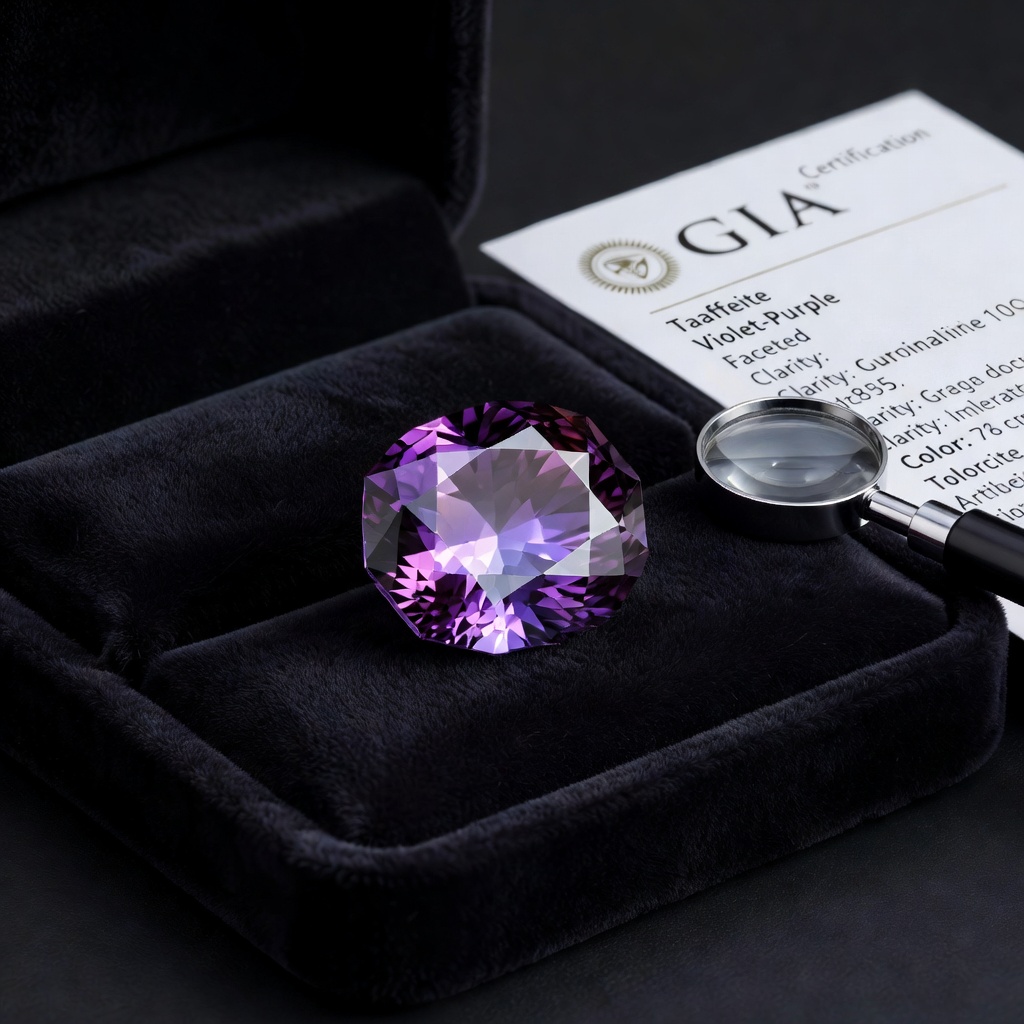
The mesmerizing color spectrum of taaffeite ranges from delicate mauve and lavender to rich violet-purple hues, with the most valuable specimens displaying strong pleochroism that reveals different colors when viewed from various angles under different lighting conditions. This optical phenomenon means a high-quality stone might appear violet-purple when viewed from one angle and shift to a reddish-purple or colorless tone from another, creating a dynamic visual experience that collectors prize highly. Stones exhibiting vivid saturation with strong pleochroic effects command the highest taaffeite gemstone value, while pale or grayish specimens—despite being equally rare—trade at significant discounts due to less desirable aesthetics.
Professional gemstone grading for taaffeite requires careful examination under standardized lighting conditions, as the pleochroic nature can mask or enhance color depending on the light source. Daylight-equivalent lighting typically reveals the true body color most accurately, while incandescent lighting may emphasize reddish secondary tones. When assessing taaffeite color for investment purposes, seek stones with medium to medium-dark tone and strong saturation without brownish or grayish modifiers, as these represent the most liquid and appreciable segments of the market. Case studies from recent auction results demonstrate that a vivid violet-purple taaffeite with excellent pleochroism can outsell a larger pale specimen by factors of three or four, underscoring the critical importance of color intensity in valuation models.
Clarity, Cut Quality, and Carat Weight Factors
As a Type II gemstone according to the GIA clarity classification system, taaffeite typically contains minor inclusions that are visible under magnification but may be eye-clean in finer specimens. Taaffeite clarity significantly impacts transparency and brilliance, with completely eye-clean stones representing less than ten percent of production and commanding substantial premiums in the marketplace. Inclusions such as fingerprint patterns, needle-like crystals, or two-phase inclusions are common, yet when subtle and strategically positioned, they do not detract from the stone's beauty or value as significantly as they might in diamonds, provided they do not threaten durability or severely impact visual appeal.
Gemstone cut quality presents unique challenges for taaffeite due to the extreme scarcity of rough material, often forcing cutters to prioritize weight retention over optimal brilliance. Unlike diamonds where cutters can afford to sacrifice carat weight for ideal proportions, taaffeite cutters typically favor step cuts or mixed cuts that minimize waste while displaying the stone's pleochroism effectively. Oval, cushion, and emerald cuts dominate the market, though brilliant cuts are occasionally seen in smaller stones. Carat weight follows an exponential rather than linear pricing curve, with stones exceeding two carats achieving "museum-grade" status and potentially commanding prices exceeding $75,000 per carat, as fewer than two dozen faceted specimens of this size are known to exist worldwide.
Taaffeite vs. Other Rare Gemstones: Investment Comparison
When evaluating taaffeite vs diamond cost structures, the disparity becomes immediately apparent: while a one-carat D-flawless diamond might trade between $15,000 and $25,000 depending on market conditions, a comparable quality taaffeite often commands similar or higher prices despite having virtually no commercial advertising or De Beers-style marketing supporting its value. However, comparing taaffeite to painite—the mineral that briefly dethroned it as the world's rarest gemstone—reveals a more nuanced picture, as recent painite discoveries in Myanmar have increased supply somewhat, while high-quality facet-grade taaffeite remains stubbornly scarce. Red beryl (bixbite) from Utah presents another comparison point, trading in similar $10,000 to $20,000 per carat ranges, though taaffeite typically maintains better name recognition among international collectors.
The rarest gemstone prices across categories reveal significant differences in market liquidity that impact investment strategies. Diamonds offer instant liquidity through thousands of dealers worldwide, whereas taaffeite requires finding specialized collectors or auction houses, potentially taking months to liquidate at fair market value. However, taaffeite investment potential shines through in historical appreciation rates, with fine specimens having appreciated 200-300% over the past two decades, often outperforming traditional equity markets during volatile periods. Alexandrite, another ultra-rare collector stone, has shown similar appreciation trajectories, suggesting that ultra-rare colored gemstones serve as effective portfolio diversifiers for investors with long-term holding capacities and sufficient capital to absorb the illiquidity premium.
Authenticity Verification and Certification Standards
Distinguishing authentic taaffeite from its close cousin spinel represents the first critical challenge for collectors, as both gems share similar colors and specific gravity ranges around 3.60. However, fundamental optical differences provide definitive identification: taaffeite exhibits double refraction with birefringence of 0.004-0.005 visible under polariscope examination, while spinel remains singly refractive. Additionally, taaffeite crystallizes in the hexagonal system versus spinel's cubic structure, creating distinct refractive index ranges (1.719-1.723 for taaffeite versus 1.718 for spinel) that require laboratory precision to differentiate conclusively.
Gemstone certification from prestigious laboratories such as the Gemological Institute of America (GIA), American Gemological Laboratories (AGL), or the Swiss Gemmological Institute (SSEF) provides essential documentation for any significant taaffeite purchase. These reports verify not only species identification but also crucial treatment status, as some specimens undergo low-temperature heating to improve clarity or color. Advanced spectroscopic analysis and inclusion photography included in premium lab reports help establish provenance and detect synthetic hydrothermally-grown taaffeite, which has recently appeared in the market. When acquiring investment-grade material, insist on "origin opinion" reports when possible, as Burmese (Myanmar) material often commands premiums over Sri Lankan stones due to historical associations with the finest colors.
Where to Buy Taaffeite: Trusted Sources and Red Flags
Serious collectors seeking to buy authentic taaffeite should focus on established taaffeite dealers specializing in rare colored gemstones, such as Pala International, The Arkenstone, or high-end jewelers with GIA Graduate Gemologists on staff who can provide detailed provenance documentation. Prestigious auction houses including Christie's, Sotheby's, and Bonhams regularly feature taaffeite in their Magnificent Jewels sales, particularly in Geneva, Hong Kong, and New York, where stones often come with decades of ownership history and previous auction records. Estate sales from prominent collections occasionally surface exceptional pieces, though these require even more rigorous authentication due to potential outdated or missing documentation.
The online marketplace presents significant risks for taaffeite acquisition, as the stone's rarity makes it a target for misrepresentation or outright fraud. Red flags include prices significantly below market rates (genuine taaffeite rarely sells for under $2,000 per carat even for small, pale specimens), sellers offering "taaffeite" set in inexpensive silver mountings (authentic material typically appears in high-karat gold or platinum settings due to value), and vague descriptions avoiding specific color grades or clarity assessments. Always require a return privilege of at least seven to fourteen days for independent verification, and never purchase significant specimens without accompanying reports from GIA, AGL, or SSEF laboratories. Reputable dealers will welcome third-party appraisal contingencies and provide detailed photographs showing pleochroism effects under different lighting conditions.
Investment Potential and Market Trends
The taaffeite investment landscape continues strengthening due to severe supply constraints from primary sources in Sri Lanka's Ratnapura district and Myanmar's Mogok Stone Tract, regions where political instability and environmental regulations increasingly restrict mining operations. Unlike diamonds, which benefit from massive industrial mining infrastructure, taaffeite production relies entirely on artisanal miners working alluvial deposits, yielding perhaps a few kilograms of rough material annually worldwide, with only a fraction suitable for faceting. This finite supply against growing demand from Asian collectors—particularly in China and Japan where rare gemstones symbolize exclusive wealth—creates the fundamental economic conditions for continued price appreciation.
Current gemstone market trends indicate a shift toward "trophy assets" among ultra-high-net-worth individuals seeking portable wealth stores that exist outside traditional financial systems. Taaffeite serves this niche perfectly, offering millions of dollars in value concentrated into pocketsized stones that appreciate independently of stock market fluctuations. Portfolio diversification benefits include low correlation with equities and bonds, inflation hedging characteristics, and the enjoyment factor of owning museum-quality natural art. However, investors must consider long-term storage requirements including bank vault facilities, specialized insurance riders through carriers like Chubb or Jewelers Mutual, and the necessity of updated appraisals every two to three years to reflect rapid market appreciation.
Caring for Your Taaffeite Collection
With a hardness of 8 to 8.5 on the Mohs scale, taaffeite offers excellent durability for jewelry wear, resisting scratching from everyday encounters better than many collector gems, though it requires protection from harder materials like diamonds, rubies, and sapphires that could mar its surface. When setting taaffeite gemstone specimens, consider protective bezel settings for stones over one carat, as these safeguard the girdle edges from chipping while the stone's excellent hardness prevents daily wear issues common to softer gems like opal or pearl. Despite its relative toughness, taaffeite should never endure hard blows or extreme temperature changes that could cause thermal shock, particularly in stones with visible inclusions that might expand differently than the host crystal.
Taaffeite care requires simple but specific protocols: clean your stones using warm water with mild soap and a soft natural-bristle brush, avoiding ultrasonic cleaners and steam cleaning systems that could potentially damage included crystals or weaken prong settings. Store taaffeite pieces separately in soft cloth pouches or individual compartments within a jewelry box to prevent contact with harder stones. For insurance and estate planning purposes, maintain high-resolution photographs showing pleochroism effects, current laboratory certifications, and updated appraisals reflecting current replacement values. Given the gemstone maintenance requirements are minimal compared to more fragile collector stones, taaffeite represents an ideal "wearable investment" for those fortunate enough to acquire these extraordinary rarities.
Frequently Asked Questions About Taaffeite Value
Why is taaffeite so expensive compared to other gemstones?
Taaffeite commands premium prices due to its extreme rarity—it's estimated that fewer than 50 raw crystals were known to exist for decades after its discovery. With only two primary sources (Sri Lanka and Myanmar) and minimal annual production, supply scarcity drives prices significantly higher than more common precious stones like sapphires or rubies.
How much does a 1-carat taaffeite typically cost?
A 1-carat taaffeite typically ranges from $2,500 to $8,000 for commercial quality, while fine specimens with vivid purple color and excellent clarity can command $15,000 to $35,000 per carat. Larger stones over 2 carats are exponentially rarer and can exceed $50,000 per carat at auction.
Is taaffeite rarer than diamond or painite?
Taaffeite is significantly rarer than diamond (which is commercially mined in billions of carats annually). While painite was historically considered the world's rarest mineral, recent discoveries have made high-quality taaffeite comparable in scarcity, with both stones existing in extremely limited quantities suitable for faceting.
How can I verify that my taaffeite is genuine and not spinel?
Authentic taaffeite can be distinguished from spinel through professional gemological testing. Key differences include double refraction in taaffeite versus single refraction in spinel, different crystal systems (hexagonal vs. cubic), and specific gravity variations. Always require certification from reputable labs like GIA or AGL before purchasing.
What is the most valuable color for taaffeite?
The most valuable taaffeite displays a saturated violet-purple to mauve color with strong pleochroism showing different colors when viewed from different angles. Stones with vivid, intense purple hues command the highest prices, while pale or grayish specimens are significantly less valuable despite being equally rare.
Where are the best places to purchase taaffeite safely?
The safest sources include established high-end colored gemstone dealers with GIA Graduate Gemologists on staff, prestigious auction houses (Christie's, Sotheby's), and select gemological museums or estate sales. Avoid general online marketplaces unless the seller provides independent laboratory certification and reasonable return privileges.
Does taaffeite appreciate in value over time?
Yes, taaffeite has shown strong historical price appreciation due to increasing collector demand and finite supply. Investment-grade specimens have appreciated 200-300% over the past two decades, often outperforming traditional investments. However, liquidity is lower than diamonds, making it suitable for long-term collectors rather than short-term speculation.
What is the difference between taaffeite and musgravite?
Musgravite is the magnesium-rich end member of the same mineral series as taaffeite (which is iron-rich). Both are extremely rare, but musgravite is even scarcer, with only a handful of faceted specimens known to exist. Musgravite typically commands higher prices per carat due to greater rarity, though both are considered among the world's most precious gemstones.