Understanding Sunstone: Properties and Composition
Sunstone belongs to the feldspar mineral family, specifically a variety of oligoclase or orthoclase feldspar that contains tiny copper or hematite platelet inclusions. These microscopic inclusions create the stone's signature optical phenomenon known as aventurescence, or the schiller effect, where light reflects off the metallic flakes to produce a glittering, sun-like sparkle. Gemstone enthusiasts can identify high-quality sunstone by this distinctive flash of color, which ranges from warm golden hues to brilliant coppery reds depending on the viewing angle. The most prized specimens display deep orange-red to peach colorations, though collectors also value clear varieties that showcase exceptional clarity and brilliance when cut properly.
As a feldspar gemstone, sunstone shares chemical similarities with moonstone and labradorite, yet its copper inclusions make it unique among its mineral cousins. Understanding these fundamental sunstone gemstone properties is essential for proper feldspar gemstone cleaning and maintenance routines. The crystalline structure contains specific planes of weakness that influence how owners should handle, clean, and store their sunstone jewelry to prevent accidental damage during daily wear or maintenance procedures.
Sunstone Durability and Vulnerability Factors
When evaluating sunstone hardness and durability, gemologists assign this feldspar variety a rating of 6 to 6.5 on the Mohs hardness scale. This measurement indicates that while sunstone can resist scratching from materials like fingernails (2.5) or copper pennies (3.5), it remains vulnerable to abrasion from everyday objects such as steel files (6.5) or household dust particles that may contain quartz (7). Understanding sunstone hardness Mohs scale ratings helps owners set realistic expectations about wearing these gemstones during various activities and emphasizes the importance of protective storage when the jewelry is not being worn.
Perhaps more concerning than surface scratching is sunstone's perfect cleavage in two directions, which creates natural planes where the crystal can split cleanly under stress. This structural characteristic makes sunstone particularly susceptible to chipping or breaking if struck against hard surfaces or subjected to impact during physical activities. Additionally, sunstone demonstrates significant sensitivity to thermal shock, meaning sudden temperature changes can cause internal fracturing or surface cracking as the crystal structure expands and contracts at different rates.
Daily Sunstone Care Best Practices
Implementing consistent sunstone jewelry care routines begins with removing rings, pendants, and earrings before engaging in physical activities, sports, or household chores. Simple actions like gardening, weightlifting, or washing dishes expose sunstone to hard surfaces and abrasive materials that can scratch the surface or loosen settings through impact. Professional jewelers recommend creating a designated dish or tray near entryways where you can safely deposit sunstone pieces before beginning potentially damaging activities, ensuring these treasures remain protected throughout your daily routine.
Chemical exposure poses another significant threat to sunstone's luster and structural integrity, requiring owners to apply cosmetics, perfumes, and hairsprays before putting on their jewelry. These beauty products often contain alcohols, acids, and other compounds that can etch the stone's surface or accumulate in setting crevices, creating unsightly buildup that dulls the aventurescence. Additionally, incorporating weekly visual inspections into your sunstone gemstone maintenance schedule allows you to identify loose prongs, worn settings, or early signs of damage before they result in lost stones or costly repairs.
Safe Home Cleaning Methods for Sunstone
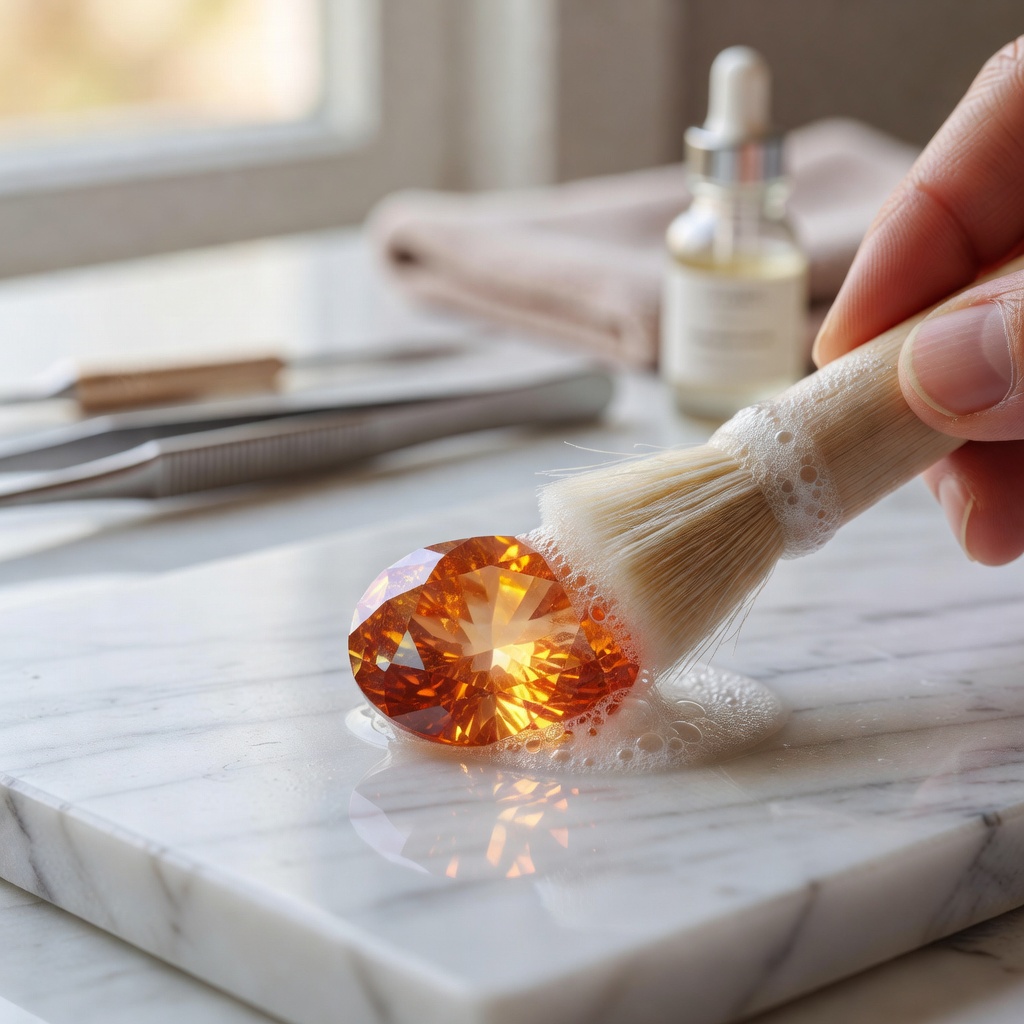
Learning how to clean sunstone properly ensures your gemstone maintains its brilliant schiller effect without risking damage to its delicate structure. Begin by preparing a cleaning solution using warm water—not hot—and a few drops of mild dish soap free from harsh detergents or degreasers. Submerge your sunstone jewelry in this solution for approximately fifteen to twenty minutes, allowing the soapy water to penetrate behind the stone and loosen accumulated oils, perspiration, and debris that diminish its natural sparkle.
After soaking, use a soft-bristled toothbrush or specialized jewelry brush to gently scrub the pavilion facets and setting areas where grime typically accumulates. Pay special attention to the area between the gemstone and its mounting, as this space often traps skin cells and lotions that create a cloudy appearance. Once cleaned, rinse the piece thoroughly under lukewarm running water, ensuring all soap residue washes away, then pat dry immediately using a lint-free microfiber cloth that won't leave fibers caught in the setting or scratch the stone's surface.
Cleaning Methods to Avoid
Despite their popularity for other jewelry types, ultrasonic cleaners present significant dangers for sunstone due to the gemstone's perfect cleavage planes. The high-frequency vibrations generated by these machines can cause microscopic fractures to expand along natural cleavage directions, potentially splitting an otherwise pristine gemstone into pieces within seconds. Even if immediate catastrophic failure doesn't occur, repeated ultrasonic exposure weakens the crystal structure over time, making future damage inevitable during normal wear.
Steam cleaning devices similarly threaten sunstone integrity through thermal shock risks, as the rapid transition from room temperature to high heat followed by cooling creates internal stress fractures. Harsh chemical cleaners containing ammonia, bleach, or acids should never contact sunstone surfaces, as these substances can dissolve the copper inclusions responsible for the stone's distinctive flash or etch the feldspar matrix itself. When considering sunstone cleaning methods, always prioritize gentle, manual techniques over aggressive mechanical or chemical processes that promise convenience but deliver destruction.
Proper Storage Solutions for Sunstone Jewelry
Effective sunstone storage tips emphasize individual containment in soft fabric pouches or padded jewelry box compartments that cushion the stone from accidental impacts. Unlike harder gemstones that can withstand casual tossing into a jewelry drawer, sunstone requires separation from diamonds, sapphires, rubies, and even quartz pieces that can scratch its surface during storage movement. Consider investing in a jewelry organizer with dedicated slots or silk-lined compartments that prevent different pieces from contacting one another when opening and closing the container.
Climate control represents another crucial aspect of sunstone storage tips, as extreme dryness can dehydrate the feldspar structure and lead to surface cracking or crazing over time. Store sunstone jewelry away from heating vents, sunny windowsills, or bathroom environments where humidity and temperature fluctuate dramatically. For long-term storage of valuable sunstone pieces, consider adding a small humidity-controlled packet or storing items in a bedroom closet rather than attics or basements where environmental conditions remain more stable and moderate throughout seasonal changes.
Environmental Protection Strategies
Comprehensive Sunstone Care and Cleaning protocols must address environmental factors beyond simple physical cleaning, particularly regarding light and heat exposure. Prolonged direct sunlight can fade the rich orange-red and peach colorations that make sunstone desirable, while excessive heat may dehydrate the crystal structure or cause existing inclusions to expand and create new fractures. When not wearing your sunstone jewelry, store pieces in opaque containers or drawers rather than glass display cases that magnify solar radiation throughout the day.
Acidic substances found in household cleaners, citrus fruits, and vinegar-based solutions can etch sunstone surfaces and compromise the metallic inclusions responsible for aventurescence. Always remove sunstone rings before cleaning bathrooms or kitchens, and avoid handling acidic foods while wearing sunstone bracelets or pendants. For travel purposes, invest in rigid, padded cases specifically designed for gemstone jewelry rather than tossing pieces into luggage pockets where they might encounter keys, phones, or other hard objects that could chip or fracture the stone during transit.
Professional Maintenance and Restoration
While home care maintains daily brilliance, professional sunstone maintenance becomes necessary when visual inspections reveal loose settings, significant scratches, or persistent cloudiness that resist home cleaning methods. Experienced jewelers possess specialized equipment to tighten prongs, check mounting security, and identify structural issues invisible to the naked eye that could lead to stone loss. Schedule professional inspections every six to twelve months for frequently worn pieces, or immediately after any impact incident that might have compromised the setting integrity.
Repolishing services offer restoration solutions for sunstone that has developed surface scratches or lost its characteristic luster through years of wear. Professional lapidaries can carefully remove microscopic layers of damaged material to reveal the fresh, reflective surface beneath, though this process slightly reduces the stone's overall dimensions and weight. For severe chips or fractures, jewelers may recommend resetting the stone in protective bezel settings rather than prong mounts, or replacing extremely damaged specimens with similar-quality sunstone to preserve the jewelry piece's overall design and value.
Troubleshooting Common Sunstone Issues
Even with diligent sunstone gemstone maintenance, owners occasionally encounter cloudiness or buildup in hard-to-reach areas beneath the pavilion or around complex setting designs. When standard cleaning fails to restore clarity, extended soaking in warm soapy water combined with wooden toothpicks or specialized jewelry picks can dislodge stubborn debris without scratching the metal or stone. For persistent cloudiness that suggests surface etching rather than simple dirt, consult a professional immediately, as DIY abrasive cleaning attempts will likely worsen the damage.
Minor surface scratches can sometimes be minimized at home using specialized jewelry polishing cloths designed for soft gemstones, though deep chips require professional assessment to determine whether repolishing or replacement represents the most cost-effective solution. Understanding when to attempt home remedies versus seeking professional intervention distinguishes knowledgeable collectors from those who accidentally destroy valuable pieces through well-intentioned but inappropriate interventions. Document any changes in your sunstone's appearance through photographs, as these records help jewelers diagnose whether damage results from impact, chemical exposure, or natural wear patterns.
Frequently Asked Questions About Sunstone Maintenance
Can I Clean Sunstone with an Ultrasonic Cleaner?
No, ultrasonic cleaners are not recommended for sunstone. Despite its moderate hardness (6-6.5 on the Mohs scale), sunstone has perfect cleavage planes that can split or fracture under ultrasonic vibrations, potentially destroying the gemstone.
How Often Should I Clean My Sunstone Jewelry?
Clean sunstone jewelry every 2-4 weeks with regular wear, or immediately after exposure to lotions, perfumes, or perspiration. Routine cleaning prevents buildup that can dull the stone's distinctive aventurescence (schiller effect).
Is Sunstone Safe to Wear Every Day?
Sunstone can be worn daily with caution, but it's softer than diamonds or sapphires. Remove it during physical activities, cleaning, or bathing. Its 6-6.5 Mohs hardness makes it susceptible to scratching from harder materials and daily wear.
Can Sunstone Be Damaged by Water?
Plain water won't damage sunstone, but sudden temperature changes can cause thermal shock. Always use lukewarm water for cleaning, never hot water. Avoid wearing sunstone in hot tubs or saunas where rapid temperature shifts occur.
What Is the Best Way to Store Sunstone Rings and Pendants?
Store sunstone pieces individually in soft fabric pouches or lined jewelry boxes, separated from harder gemstones. Keep away from direct sunlight and heat sources to prevent color fading and dehydration of the stone.
How Do I Restore Sunstone's Sparkle if It Looks Dull?
Soak the stone in warm water with mild dish soap for 15-20 minutes, then gently scrub with a soft toothbrush to remove oils and debris. If dullness persists, consult a professional jeweler for repolishing, as sunstone may develop surface scratches over time.
Can I Wear Sunstone in the Shower or Swimming Pool?
Avoid wearing sunstone in chlorinated pools, hot tubs, or showers. Chlorine and harsh soaps can damage the stone's surface over time, and temperature fluctuations in showers can stress the gem's cleavage planes.
Does Treated or Enhanced Sunstone Require Special Cleaning?
Most sunstone is untreated, but if your stone has been fracture-filled or coated, avoid all chemical cleaners and stick to mild soap and water only. When in doubt, assume the stone is untreated but clean gently to preserve any potential enhancements.