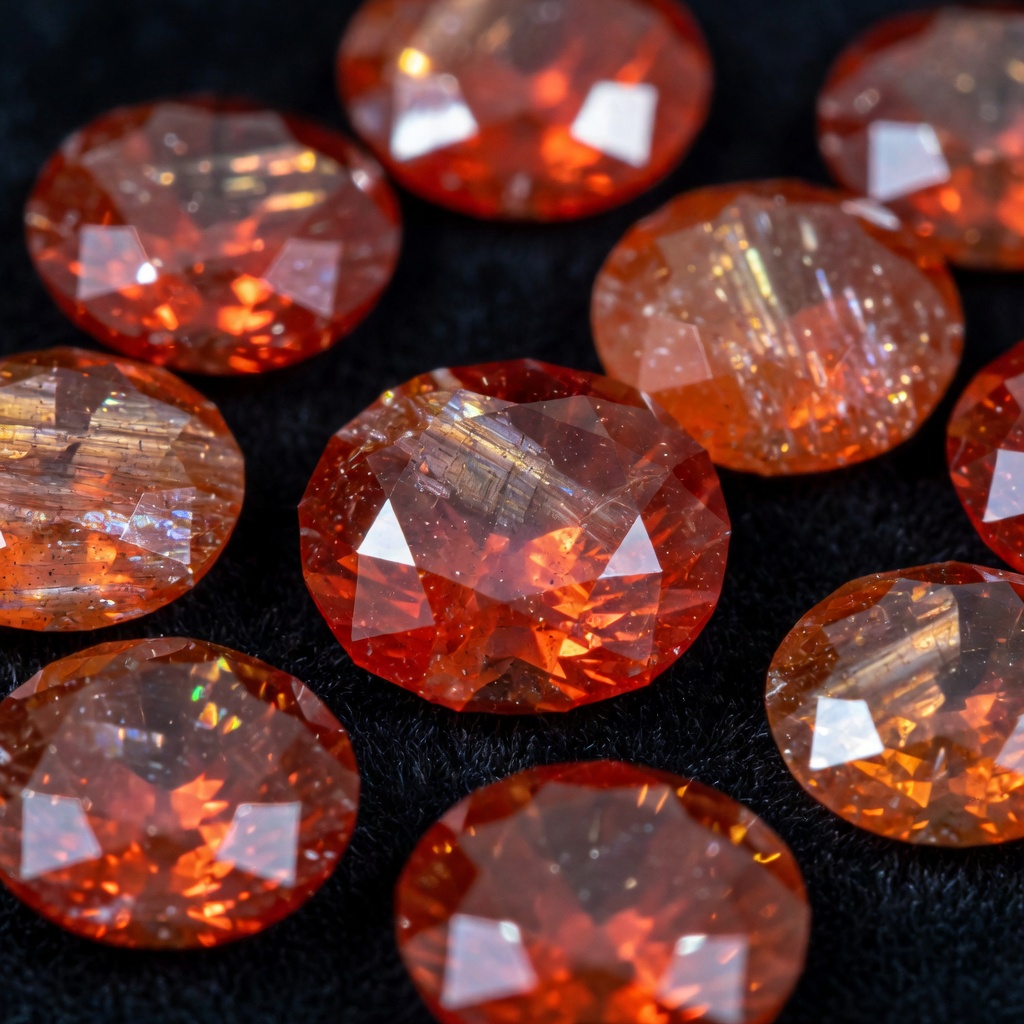
Introduction to Sunstone: Nature's Glittering Feldspar
Sunstone represents one of nature's most captivating optical phenomena, belonging to the plagioclase feldspar mineral family distinguished by microscopic metallic inclusions that create an internal glitter effect. This remarkable gemstone, scientifically classified as a variety of oligoclase or labradorite feldspar, contains tiny platelets of copper or hematite that align within the crystal structure to produce aventurescence—the distinctive schiller or flash that appears to dance across the stone's surface when moved under light. Unlike many gemstones that derive value solely from color or clarity, natural sunstone commands attention through this unique interaction between light and mineral inclusions, creating an effect reminiscent of sunlight reflecting off water or sparkling sand.
The historical significance of sunstone extends far beyond modern jewelry applications, reaching back to Viking navigation practices where Norse sailors reportedly used these crystals as solar compasses. Medieval texts suggest that Vikings, lacking magnetic compasses, could locate the sun's position even on overcast days by observing polarization patterns through sunstone crystals, allowing them to navigate the North Atlantic with remarkable precision. Today, this feldspar sunstone has experienced a renaissance in contemporary jewelry design, with avant-garde designers and luxury houses alike incorporating the stone's organic sparkle into engagement rings, statement pendants, and bespoke collections that celebrate its connection to ancient earth and cosmic navigation.
Types and Origins: Oregon Sunstone vs. Global Varieties
The geographic origin of sunstone significantly influences its visual characteristics, durability, and market value, with sources spanning three continents yet producing distinctly different aesthetic qualities. Oregon sunstone stands as the premier variety in the global market, mined primarily from the high desert regions of southeastern Oregon's Lake and Harney counties, where basalt flows have preserved these crystals for millions of years. What distinguishes Oregon material is the presence of native copper crystal inclusions rather than hematite, creating an intense schiller effect that ranges from subtle copper flashes to brilliant metallic glitter that can fill the entire stone, combined with an unparalleled color spectrum that includes champagne, salmon pink, raspberry red, and the exceedingly rare teal green and blue hues found nowhere else on earth.
Indian sunstone, primarily sourced from the Tamil Nadu and Orissa regions, presents a different aesthetic characterized by hematite inclusions that produce distinctive red or gold metallic flashes against a typically translucent to opaque body color ranging from honey yellow to soft orange. While beautiful, Indian material generally exhibits less intense aventurescence than top-tier Oregon specimens and rarely achieves the large crystal sizes available from American mines. Norwegian sunstone, discovered in the 1800s near the town of Tvedestrand, offers subtle optical phenomena with delicate schiller effects in pale yellow to colorless bodies, while Tanzanian deposits yield material similar to Indian varieties but often with smaller crystal sizes and more limited color ranges. When building a collection or making a significant purchase, understanding these geographic distinctions helps collectors recognize why Oregon sunstone typically commands premium pricing, particularly for stones exceeding five carats with intense copper schiller and rare green coloration.
Quality Factors: The Four Cs of Sunstone Evaluation
Evaluating sunstone quality factors requires a nuanced approach that balances traditional gemological assessment with appreciation for the unique optical phenomena that define this material. Color intensity serves as the primary value determinant, with the spectrum ranging from pale, almost colorless yellow through vibrant orange and deep raspberry red, extending to the collector-grade green and blue-green varieties that represent less than one percent of Oregon production. Unlike sapphires or rubies where saturation uniformity is paramount, sunstone often displays desirable color zoning—gradual transitions between peach and red or distinct bicolor patterns where green meets copper—creating unique artistic patterns that skilled lapidaries exploit through precise orientation during cutting.
Clarity assessment in sunstone diverges from diamond grading standards, as the same inclusions that create aventurescence would be considered flaws in other gemstones. Premium specimens maintain transparency or translucency while displaying dense, evenly distributed copper platelets that create consistent schiller across the table facet. Cut quality becomes paramount in maximizing optical performance, requiring cutters to orient the stone so that copper inclusions align parallel to the table facet, ensuring that the glittering effect remains visible face-up rather than being lost through the sides. Regarding carat weight, while smaller stones under three carats are readily available, the price per carat escalates dramatically for clean specimens exceeding ten carats, particularly those exhibiting rare colors or exceptional aventurescence, making size a significant factor in investment-grade material selection.
Understanding Aventurescence: The Science Behind the Sparkle
Sunstone aventurescence represents a fascinating intersection of mineralogy and optical physics, occurring when microscopic copper platelets—often measuring just a few micrometers in thickness—become suspended within the feldspar crystal lattice during the stone's formation. These metallic inclusions align in parallel layers due to the crystal's structural constraints, acting as tiny mirrors that reflect incident light back to the observer's eye, creating the glittering flash that distinguishes premium sunstone from ordinary feldspar. The phenomenon differs fundamentally from surface-based metallic luster or adamantine brilliance seen in diamonds; true aventurescence emanates from within the stone's body, creating a three-dimensional depth that appears to move and shift as the stone rotates, much like the iridescence of a soap bubble or the play-of-color in precious opal.
Optimal viewing conditions reveal the full majesty of this effect, with direct sunlight or single-point halogen lighting providing the best illumination to observe the metallic flash. Gemologists and collectors should examine potential purchases under various lighting conditions, as fluorescent office lighting may suppress the effect while natural daylight enhances it. The density and size distribution of copper inclusions directly correlate with market value; stones displaying sparse, scattered flashes command modest prices, while those exhibiting dense, full-coverage schiller that blankets the entire viewing area represent the pinnacle of desirability. When evaluating sunstone aventurescence, rotate the stone slowly under a light source—premium material will display continuous glitter across the crown facets, whereas inferior stones may show "dead zones" where the optical effect diminishes or disappears entirely.
Pricing Guide: Sunstone Value and Cost Per Carat
Understanding sunstone price per carat requires navigating a complex market segmented by quality tiers, geographic origin, and optical performance characteristics. Entry-level commercial grade material, typically featuring pale body color with weak or sporadic aventurescence, ranges from $10 to $50 per carat and suits mass-market jewelry applications where the feldspar's warm tones matter more than optical phenomena. Mid-tier specimens exhibiting decent transparency and moderate copper schiller in standard orange or red hues command $50 to $150 per carat, representing the sweet spot for quality jewelry pieces that balance visual impact with accessibility. Premium Oregon sunstone with intense, full-surface aventurescence, high clarity, and desirable colors like deep red or champagne can range from $200 to $500 per carat, with prices escalating rapidly for stones exceeding five carats due to the rarity of large, clean crystals.
The upper echelon of the market features rare bicolor and tricolor specimens displaying distinct zones of green, red, and clear feldspar, or exceptional clear stones with mirror-like copper schiller, which can command $1,000 to $3,000 per carat or more at specialty auctions. Market trends indicate steady appreciation for high-grade Oregon material, driven by limited mining permits and increasing collector interest in American gemstones, positioning fine sunstone as a legitimate alternative investment vehicle alongside more traditional precious gems. When budgeting for a purchase, remember that custom cutting fees add significantly to rough material costs, and unset stones often offer better value than finished jewelry, allowing you to commission bespoke settings that protect and display the aventurescence to maximum advantage.
Natural vs. Treated: Identifying Authentic Sunstone
The distinction between natural sunstone and treated or synthetic alternatives represents a critical concern for collectors and investors, as the gem market has seen increasing attempts to enhance lower-grade material or pass off imitations as premium Oregon specimens. Common treatments include heat enhancement, which can intensify pale colors to more marketable orange or red hues, and surface diffusion processes that attempt to create color concentrations near the surface to simulate rare green or blue natural coloration. Laboratory detection of these treatments requires advanced spectroscopy and microscopy, as heat-treated stones may show altered inclusion chemistry or stress fractures around copper platelets that differ from natural formation patterns.
Imitation materials present another challenge, with glass manufacturers producing convincing sunstone simulants by suspending metallic copper flakes within lead glass, creating an overly perfect aventurescence that lacks the random, organic distribution seen in genuine material. Red flags include unnaturally uniform color saturation, absence of natural inclusions visible under 10x magnification, and prices that seem too good to be true for claimed quality levels. For significant investments, insist upon certification from recognized laboratories such as GIA (Gemological Institute of America) or AGL (American Gemological Laboratories), which can definitively identify natural versus treated material and verify geographic origin claims. When examining uncertified stones, look for natural color zoning patterns and random copper platelet distribution under magnification, as these organic irregularities confirm natural formation processes that cannot be perfectly replicated in treated or synthetic alternatives.
Where to Buy: Trusted Sources and Purchase Strategies
Navigating the marketplace to buy sunstone online or in person requires discriminating between general jewelry retailers who may lack gemological expertise and specialty dealers who focus specifically on feldspar minerals or Oregon sunstone. Reputable specialty dealers provide detailed provenance information, allowing buyers to trace rough material from specific Oregon mines such as the Ponderosa, Dust Devil, or Sunstone Butte operations, each known for distinct color characteristics and quality ranges. When considering online purchases, demand high-resolution photography and video captured under various lighting conditions, including direct sunlight and diffused indoor lighting, to accurately assess aventurescence intensity and body color. Detailed photographs should show the stone from multiple angles, including the pavilion view, to check for windows or poor cutting that might diminish optical performance.
For serious collectors, attending the Tucson Gem and Mineral Show provides unparalleled access to rough dealers and mine owners offering direct-from-source material, often at prices below retail markup, though this requires advanced gemological knowledge to evaluate rough accurately. Direct mine purchases from Oregon operations offer transparency regarding ethical mining practices and origin authenticity, though minimum purchase quantities may apply. Regardless of purchasing venue, negotiate clear return policies allowing at least a 72-hour inspection period, during which you can examine the stone under your own lighting conditions and potentially submit it for independent laboratory verification. For transactions exceeding $5,000, consider using escrow services that release funds only upon your approval of the stone's condition and certification, protecting both buyer and seller in high-value acquisitions of rare green or large collector-grade specimens.
Care and Maintenance: Protecting Your Sunstone Investment
Preserving sunstone value over time requires understanding the material's physical limitations and implementing protective measures during wear, cleaning, and storage. With a Mohs hardness of 6.0 to 6.5, sunstone sits at the boundary between stones suitable for daily wear and those requiring protective settings, making it softer than quartz, topaz, or corundum but harder than opal or pearl. This hardness level means that while sunstone resists scratching from everyday dust and debris, it remains vulnerable to abrasion from harder gemstones like diamonds, sapphires, and even household dust containing silica particles over extended periods. For ring wear, which exposes stones to maximum mechanical stress, choose protective settings such as full bezels or half-bezels that shield the girdle and edges from direct impact, or reserve sunstone rings for occasional wear while selecting pendants or earrings for daily use where impact risk remains minimal.
Cleaning protocols must avoid ultrasonic and steam cleaners, as the thermal shock and vibration can cause existing fractures to propagate or loosen copper inclusions within the feldspar structure. Instead, clean sunstone using warm water with mild dish soap and a soft brush, drying immediately with a lint-free cloth to prevent water spots from affecting the surface luster. Store sunstone jewelry separately in soft pouches or compartmentalized boxes to prevent contact with harder gemstones that might scratch the surface or chip the edges. Should the surface become scratched or abraded over years of wear, professional re-polishing by a lapidary familiar with feldspar minerals can restore the original luster without significant weight loss, though this process requires removing the stone from its setting. Regular inspection of prongs and settings by a qualified jeweler ensures that protective mechanisms remain intact, safeguarding your investment against loss or damage during wear.
Frequently Asked Questions About Sunstone Buying
What exactly is sunstone and what causes its sparkle?
Sunstone is a plagioclase feldspar mineral containing microscopic copper or hematite platelet inclusions. These metallic inclusions align in parallel layers and reflect light, creating a phenomenon called aventurescence—the glittering flash that appears to move across the stone's surface when rotated.
Is Oregon sunstone superior to other varieties?
Oregon sunstone is generally considered the highest quality due to its larger size availability, intense copper schiller, and diverse color range including rare greens and blues. While Indian and Norwegian sunstones are beautiful, Oregon material typically commands premium prices for stones with strong aventurescence.
How much should I expect to pay for sunstone per carat?
Commercial grade sunstone ranges from $10-50 per carat, while fine quality Oregon sunstone with strong schiller costs $50-200 per carat. Rare collector pieces exhibiting multiple colors or exceptional clarity with intense aventurescence can exceed $500-1,000 per carat.
How can I tell if a sunstone is natural or treated?
Natural sunstone displays random copper platelet distribution and consistent color zoning. Treated stones may show surface-concentrated color or unnaturally uniform appearance. Always request certification from reputable labs like GIA for expensive purchases, and examine the stone under magnification for natural inclusion patterns.
What color sunstone is most valuable?
While red and orange sunstones are classic and desirable, rare green and blue-green Oregon sunstones command the highest prices due to extreme scarcity. Bicolor and tricolor stones displaying multiple distinct color zones with strong copper schiller are particularly prized by collectors.
Is sunstone durable enough for daily wear in rings?
With a Mohs hardness of 6.0-6.5, sunstone requires protective settings for daily ring wear. It's best suited for pendants, earrings, and occasional wear rings. If used in engagement rings or daily bands, bezel settings that protect the edges are strongly recommended to prevent chipping.
Where is the safest place to buy quality sunstone?
Purchase from established gemstone dealers who specialize in feldspar minerals or Oregon sunstone specifically. Reputable online platforms offering detailed photographs, return policies, and certification options are safe. Avoid tourist traps and street vendors where treatments and synthetics are commonly misrepresented.
What is aventurescence and why does it matter for value?
Aventurescence is the optical phenomenon where metallic inclusions create a glittering, metallic sheen within the stone. Strong, eye-visible aventurescence significantly increases value, while weak or absent schiller reduces the stone to standard feldspar pricing. The intensity and coverage of this effect are primary value determinants.