What Is Sugilite? Understanding This Rare Purple Gemstone
Sugilite represents one of the most captivating discoveries in modern gemology, first identified in 1944 by Japanese petrologist Ken-ichi Sugi on Iwagi Island, Japan. However, the material that commands today's purple sugilite gemstone prices originates almost exclusively from the Wessels Mine in the Kalahari Manganese Field of South Africa, discovered in 1979. This single deposit produces nearly all gem-quality sugilite available on the international market, creating inherent scarcity that fundamentally drives pricing structures across the industry.
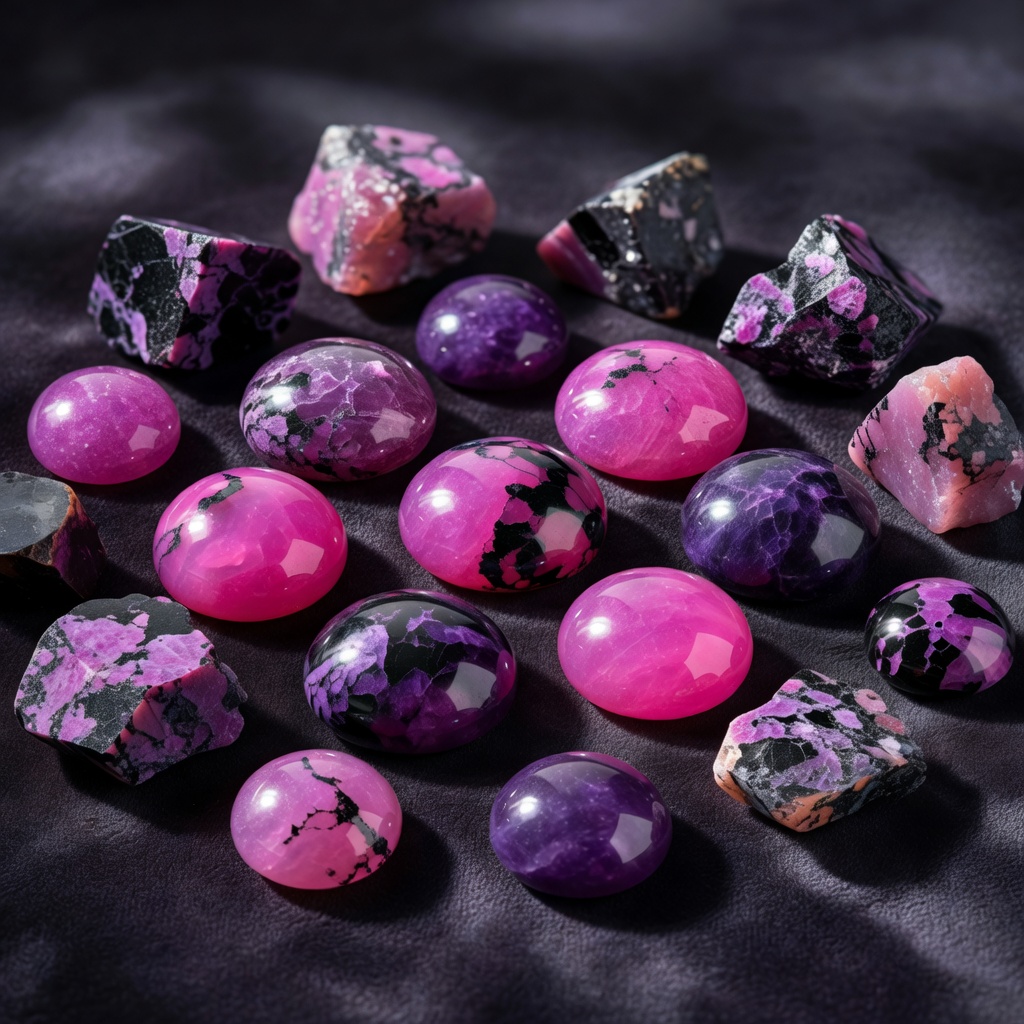
The chemical composition of sugilite features a complex potassium sodium lithium iron manganese aluminum silicate structure, with manganese content directly responsible for the gemstone's distinctive purple coloration. Higher manganese concentrations produce the vivid violet-magenta hues that collectors prize most highly, while iron and aluminum substitutions can create variations ranging from pale lilac to deep royal purple. This mineralogical uniqueness means that no two sugilite specimens exhibit identical color properties, making each piece a singular geological artifact with individual market valuations.
Beyond geological rarity, sugilite maintains significant spiritual cachet within metaphysical communities, where practitioners refer to it as the "love stone of the ages" or "healer's stone." This esoteric demand creates a dual market structure where both mineral collectors and alternative healing practitioners compete for limited high-grade material. The convergence of geological scarcity and spiritual significance establishes a price floor rarely seen in other semi-precious gemstones, with even commercial-grade material commanding premiums over comparable colored stones.
Current Sugilite Market Prices in 2024
The Sugilite Price Guide for 2024 reflects significant market tightening due to reduced output from South African mining operations, with retail prices increasing approximately fifteen percent year-over-year. Current market data indicates that commercial-grade opaque sugilite with visible matrix patterns ranges between $10 to $50 per carat for cabochon cuts suitable for beadwork and casual jewelry. Mid-tier translucent material displaying consistent purple coloration without excessive black manganese veining typically commands $75 to $150 per carat, depending on saturation levels and cut precision.
Premium gem-grade sugilite exhibiting high translucency, vivid violet-purple color, and minimal matrix inclusions now regularly sells for $200 to $500 per carat through established dealers, with exceptional specimens exceeding these ranges. Rough material pricing operates on different metrics, with quality rough sugilite commanding $2 to $10 per gram depending on color density and fracture patterns. Finished jewelry pieces incorporate significant markups beyond loose stone values, with designer gold mountings potentially doubling or tripling the per-carat investment requirement compared to purchasing loose cabochons.
The disparity between rough and finished pricing highlights the importance of lapidary skill in maximizing sugilite value, as improper cutting can reduce potential worth by fifty percent or more. South African export restrictions implemented in recent years have further constrained supply chains, causing wholesale prices to rise sharply for international buyers. Smart collectors now monitor auction results from premier venues like Bonhams and Heritage Auctions, where verified natural sugilite specimens consistently outperform initial estimates due to heightened collector competition.
Factors That Determine Sugilite Value
Understanding sugilite value per carat requires careful evaluation of multiple interacting quality factors that distinguish museum-grade specimens from decorative material. Color intensity stands as the primary valuation criterion, with deep purple-magenta shades resembling "grape jelly" or "royal velvet" commanding the highest premiums in the current market. Pale lavender or pinkish-lilac variations, while aesthetically pleasing, typically trade at sixty to seventy percent discounts compared to vivid violet specimens, as they indicate lower manganese content and reduced rarity.
Clarity levels create distinct market tiers, with translucent to semi-transparent material achieving prices five to ten times higher than opaque varieties. Gemologists assess sugilite transparency by examining how light penetrates the stone's body, with high-quality pieces allowing backlighting to create an internal glow effect. Opaque sugilite with solid color consistency still maintains value for certain jewelry applications, particularly in men's rings or heavy silver pendants where translucency matters less than durability and color impact.
The presence and pattern of black manganese matrix inclusions generate perhaps the most nuanced pricing considerations within sugilite valuation. While extensive matrix generally reduces per-carat values by creating visual distractions, artistic "picture stone" patterns where black veining creates landscape or floral motifs can command specialty premiums from lapidary artists. Matrix content exceeding twenty percent of the surface area typically relegates material to commercial grade, whereas specimens with less than five percent matrix distribution qualify for investment-grade classification and corresponding price multipliers.
Sugilite Quality Grades and Classifications
Professional gem dealers utilize standardized sugilite quality grades to communicate value propositions clearly between wholesalers and retail collectors. AAA or Investment Grade sugilite represents the apex of quality, requiring intense violet-purple color, high translucency allowing light transmission through at least three millimeters of material, and minimal matrix content below three percent. These specimens typically originate from specific depths within the Wessels Mine where geological conditions optimized manganese concentration while excluding contaminating minerals, explaining their extreme scarcity and four-figure per-carat valuations for exceptional pieces.
Commercial Grade sugilite encompasses the majority of market-available material, characterized by opaque to semi-opaque clarity, moderate purple coloration ranging from mauve to medium violet, and variable matrix content between ten to thirty percent. While suitable for fashion jewelry and metaphysical purposes, this grade appreciates more slowly than gem-grade material and functions primarily as an entry point for new collectors. Gem-Grade material occupies the middle tier, offering consistent color saturation, limited matrix patterns that do not detract from visual appeal, and sufficient translucency to distinguish it from common decorative stone.
The Royal Azel sugilite cost structure represents a specialized classification within the highest quality tier, named after the original Japanese designation for premium violet material. Royal Azel specimens must exhibit specific chromatic values approaching pure purple without reddish or bluish undertones, combined with a waxy luster that indicates optimal surface polish retention. These stones typically require custom cutting to maximize color display, with lapidaries often sacrificing weight retention to eliminate matrix inclusions, resulting in finished pieces that command premiums of five hundred percent or more above standard gem-grade pricing.
Sugilite vs. Other Purple Gemstones: Price Comparison
Comparative analysis of gemstone pricing factors reveals why sugilite occupies a unique market position distinct from more abundant purple alternatives like amethyst, charoite, or lepidolite. While fine Siberian amethyst typically ranges from $20 to $50 per carat and Russian charoite commands $10 to $100 per carat depending on chatoyancy patterns, sugilite consistently maintains higher price floors due to single-source dependency and finite reserves. Unlike amethyst, which occurs globally in volcanic deposits ranging from Brazil to Zambia, sugilite's restriction to the Wessels Mine creates artificial scarcity that protects value during market fluctuations.
Lepidolite and purple fluorite offer purple aesthetics at significantly lower price points, typically $2 to $20 per carat, but these materials lack the durability and color stability that justify sugilite premiums. Lepidite's perfect cleavage makes it unsuitable for jewelry subject to impact, while fluorite's Mohs hardness of four renders it too soft for daily wear rings. Sugilite's Mohs hardness of six to six-point-five, combined with its resistance to fading under normal lighting conditions, establishes it as a legitimate jewelry-grade material worthy of precious metal settings and long-term investment consideration.
Synthetic alternatives and imitations present ongoing challenges for the sugilite market, with dyed howlite, marble, and glass composites flooding lower price points on unregulated online platforms. These simulants typically sell for $1 to $5 per carat, creating confusion among novice buyers who fail to recognize natural sugilite's distinctive waxy luster and specific gravity of two-point-seven-four to two-point-seven-nine. The prevalence of these fakes actually reinforces authentic sugilite values by educating collectors about verification importance, driving demand toward certified specimens from reputable dealers who can document natural origin and untreated color.
How to Calculate Sugilite Worth for Jewelry
Calculating accurate sugilite market value 2024 for jewelry applications requires understanding how cutting styles, size parameters, and mounting choices interact to determine final retail pricing. Cabochon cutting represents the dominant style for sugilite jewelry, with high-domed cabochons maximizing color depth and translucency display while flat-bottomed versions prioritize weight retention over optical performance. Calibrated cabochons in standard jewelry sizes (eight millimeter rounds, ten by eight millimeter ovals) typically command ten to fifteen percent premiums over freeform cuts due to their immediate setting compatibility and reduced goldsmith labor requirements.
Size premiums in sugilite follow exponential rather than linear scaling, with specimens exceeding ten carats in solid-color, translucent material achieving prices three to five times higher per carat than five-carat equivalents. This disparity reflects the geological rarity of large, inclusion-free sugilite formations within the Wessels Mine host rock. Collectors seeking investment-grade pieces should target cabochons between fifteen to thirty carats, as this range represents the optimal intersection of visual impact and market liquidity, whereas museum-grade specimens exceeding fifty carats enter specialized auction territories with limited buyer pools.
Setting considerations significantly influence resale value calculations, with eighteen-karat gold mountings typically preserving or enhancing sugilite value compared to sterling silver alternatives. Gold settings indicate serious artistic intent and material confidence, signaling to future buyers that the stone warranted precious metal investment. When calculating total piece worth, appraisers generally value the sugilite component separately from the mounting using replacement cost methodologies, though signed pieces from renowned jewelry houses may achieve synergistic premiums where the whole exceeds the sum of component values.
Where to Buy Sugilite: Dealers vs. Online Marketplaces
Navigating the royal azel sugilite cost landscape requires discriminating between reputable specialist dealers and potentially problematic online marketplaces where misrepresentation remains common. Established gemstone dealers with direct South African mining connections offer the most reliable sourcing for high-grade material, often providing provenance documentation tracing specific specimens to Wessels Mine production lots. These specialists typically maintain physical inventory at major gem shows including Tucson, Denver, and Munich, allowing prospective buyers to examine color consistency and translucency under standardized lighting conditions before committing to four or five-figure purchases.
Online marketplaces present mixed opportunities for sugilite acquisition, with platforms like Etsy hosting legitimate lapidary artists who cut rough material into custom cabochons, while auction sites frequently list dyed imitations or low-grade composite material misrepresented as gem-grade. Warning signs of fraudulent listings include prices below ten dollars per carat for claimed translucent material, perfect uniformity suggesting dye penetration rather than natural color zoning, and sellers unable to provide specific gravity measurements or refractive index values. Authentic sugilite exhibits slight color variations under magnification and maintains a distinctive warm, waxy feel distinct from cold glass or plastic simulants.
For purchases exceeding five hundred dollars, insist upon certification from recognized laboratories including the Gemological Institute of America (GIA), American Gemological Laboratories (AGL), or GemResearch Swisslab (GRS). These reports verify natural origin, absence of dye treatment, and specific quality parameters including color grade and clarity classification. While certification adds fifty to two hundred dollars to initial acquisition costs, documented authenticity proves essential for resale liquidity and insurance valuation, particularly for Royal Azel grade material where treatment detection requires advanced spectroscopic analysis unavailable to casual buyers.
Investing in Sugilite: Future Price Predictions
Long-term sugilite value per carat projections indicate continued appreciation driven by geological depletion rather than speculative bubble dynamics, distinguishing sugilite from volatile cryptocurrency or trendy short-term investments. Mining operations at the Wessels Mine have progressively focused on manganese ore for steel production rather than gem material extraction, reducing gem-grade sugilite output by an estimated seventy percent over the past two decades. Industry analysts project that accessible high-grade reserves may exhaust within ten to fifteen years, creating a supply cliff that should drive prices for existing fine material upward by two hundred to three hundred percent based on comparable rare gemstone historical patterns.
Collector demand trends increasingly favor museum-grade specimens with documented provenance and exceptional aesthetic qualities, with auction records showing consistent outperformance of estimates for stones exceeding twenty carats with AAA color grades. Private collectors in Asian markets, particularly Japan and China, have developed particular affinity for sugilite due to its Japanese discovery heritage and association with spiritual protection, creating international competition for limited premium material. This demographic shift suggests that liquidity for high-end pieces will remain robust even if Western markets experience temporary softness.
Portfolio diversification benefits attract sophisticated gemstone investors seeking non-correlated assets that maintain physical tangibility unlike securities or digital currencies. Sugilite offers particular advantages for collections already containing blue stones (sapphire, tanzanite) or green stones (emerald, tsavorite) by providing complementary purple color balance while sharing similar rarity characteristics with tanzanite's single-source dependency. However, investors should maintain realistic liquidity expectations, as selling fine sugilite typically requires three to six months through specialist dealers rather than the immediate conversion possible with gold or diamonds.
Caring for Your Sugilite to Maintain Value
Proper maintenance protocols directly impact the preservation of purple sugilite gemstone prices over decades, as surface damage or color degradation can reduce resale values by fifty percent or more. Avoid ultrasonic cleaners and steam cleaning systems entirely, as the thermal shock and vibration can exacerbate existing fractures within the sugilite structure or cause previously stable matrix inclusions to expand. Instead, clean your sugilite using only lukewarm water with mild dish soap applied with a soft microfiber cloth, followed by immediate drying to prevent water spots that might temporarily dull the waxy luster characteristic of fine material.
Storage recommendations emphasize individual soft pouches or compartmentalized jewelry boxes that prevent contact with harder gemstones like diamonds, rubies, or sapphires that could scratch sugilite's surface. Prolonged exposure to direct sunlight should be minimized, as ultraviolet radiation can potentially fade manganese-based coloration over extended periods, though sugilite demonstrates better light stability than amethyst or kunzite. When not wearing sugilite jewelry, store pieces away from heating vents or windowsills where temperature fluctuations might stress the stone's internal structure.
Professional re-polishing services become necessary when surface scratches accumulate from normal wear, particularly on ring stones subject to daily contact with hard surfaces. Seek lapidaries experienced with manganese-based gemstones, as improper polishing compounds or excessive heat generation during the process can damage sugilite's distinctive surface characteristics. Budget approximately twenty to fifty dollars per carat for professional repolishing of high-grade material, recognizing that this maintenance investment preserves the stone's long-term value proposition and visual appeal for future generations.
Frequently Asked Questions About Sugilite Pricing
Why Is Sugilite So Expensive Compared to Other Purple Stones?
Sugilite commands high prices due to extreme scarcity—it's only found in significant quantities in South Africa's Wessels Mine, which has limited production. Unlike amethyst, which is abundant, high-grade translucent sugilite with rich purple color represents less than 1% of mined material, driving values to $200-$500 per carat for top specimens.
How Much Does High-Quality Sugilite Cost Per Carat in 2024?
In 2024, commercial grade sugilite ranges from $10-$50 per carat, while gem-grade translucent material costs $100-$300 per carat. Premium 'Royal Azel' sugilite with vivid purple color and minimal matrix can exceed $500 per carat, with museum-quality specimens reaching thousands for large cabochons.
What Is the Difference Between Royal Azel Sugilite and Regular Sugilite?
Royal Azel refers to the highest grade of sugilite, characterized by intense violet-purple color, high translucency, and minimal black matrix. Discovered by Ken-ichi Sugi, this premium material represents the top 0.1% of production and costs 5-10 times more than standard opaque sugilite with heavy matrix patterns.
How Can I Tell if Sugilite Is Real or Fake Before Buying?
Authentic sugilite feels warm and waxy to the touch, shows color variations under magnification, and has a specific gravity of 2.74-2.79. Fakes often consist of dyed marble (color pools in cracks), glass (perfect clarity), or plastics (too light). Always request lab certification for purchases over $500.
Is Sugilite a Good Investment Gemstone for Collectors?
Sugilite shows strong investment potential due to depleting reserves at the primary South African mine. High-grade specimens have appreciated 200-300% over the past decade. However, liquidity is lower than diamonds or sapphires, making it better suited for long-term collectors than short-term speculators.
Does the Black Matrix in Sugilite Decrease Its Value?
Generally yes—extensive black manganese matrix reduces value compared to solid-color material. However, artistic 'picture stone' patterns with balanced matrix distribution can command premium prices from lapidary artists. For investment purposes, matrix content should be minimal, covering less than 10% of the surface.
What Size Sugilite Offers the Best Value for Jewelry?
Sugilite under 5 carats offers the best entry-level value for jewelry, typically costing $20-$80 per carat for decent quality. Sizes between 10-20 carats show significant price jumps due to rarity of large clean pieces. Cabochons between 8-15 carats represent the sweet spot for wearable statement pieces.
Where Is the Best Place to Buy Authentic Sugilite?
Purchase from established dealers specializing in African gemstones, gem shows with direct mine connections, or verified Etsy lapidary artists with consistent review history. Avoid eBay listings with prices 'too good to be true' ($5 per carat). Reputable sources include Tucson Gem Show vendors and South African export specialists.