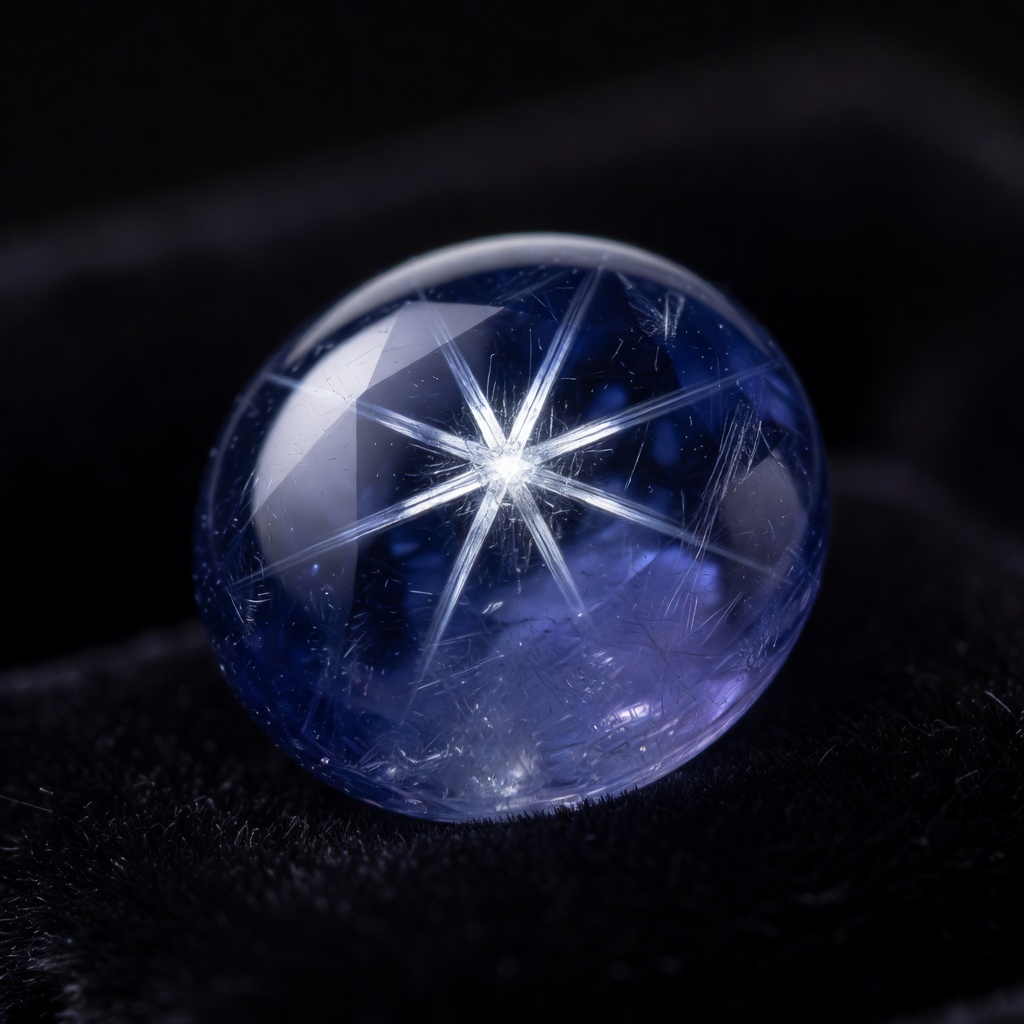
Introduction to Star Sapphires
Star Sapphire Properties and Information reveal one of nature's most captivating optical phenomena in the gemstone world. These extraordinary varieties of corundum display a mesmerizing six-rayed star that seems to float across the stone's surface when illuminated by a direct light source, creating an effect that has fascinated civilizations for millennia. Unlike their faceted counterparts that showcase brilliance through light refraction, star sapphires rely on internal structures to project their celestial signature, making each specimen a unique intersection of geology and artistry.
The historical significance of star sapphires spans diverse cultures and centuries, with particular reverence in ancient Asian civilizations where they were regarded as talismans of protection and divine favor. The famous Star of India, weighing 563 carats, exemplifies the cultural importance these gems held in royal collections and religious artifacts throughout history. Today, these gemstones command substantial attention in high-end jewelry markets and specialized collector circles, where connoisseurs seek specimens combining intense body color with razor-sharp asterism.
Contemporary jewelry designers increasingly incorporate star sapphires into bespoke pieces that highlight their mysterious, ethereal quality. The stones appear in everything from Art Deco revival brooches to modern minimalist pendant designs, appealing to collectors who appreciate gems that interact dynamically with light. Understanding the complex interplay of geological factors that create these stars helps both buyers and enthusiasts appreciate why fine specimens represent significant investments in the colored stone market.
The Science Behind Asterism
The asterism phenomenon that defines these gems results from a precise arrangement of microscopic inclusions within the corundum crystal structure. Specifically, needle-like crystals of rutile, composed of titanium dioxide, align themselves in three intersecting directions at 60 and 120-degree angles relative to each other. When light enters the cabochon-cut stone, it reflects off these countless parallel needles, creating the illusion of six rays converging at a central point on the dome's surface.
Rutile silk inclusions serve as the fundamental architectural element necessary for star formation, though their density and distribution critically determine the star's visibility and quality. Gemologists observe that stones containing too little silk appear translucent but fail to produce distinct stars, while excessive silk concentrations render the material overly translucent or opaque, obscuring both the star and the body color. The ideal balance creates a sharp, silvery-white star that contrasts beautifully against the gem's colored background, moving gracefully across the dome as the stone tilts under direct illumination.
Proper lighting conditions prove essential for observing the six-rayed star gemstone effect in its full glory. Single-point light sources such as penlights or direct sunlight provide the concentrated beams necessary to activate the reflection patterns, whereas diffuse ambient lighting may render the star invisible. This dependency on specific viewing angles and lighting explains why star sapphires often reveal their secrets dramatically when worn outdoors or under jewelry counter spotlights, then seemingly hide their celestial signature in shaded environments.
Physical Properties and Characteristics
Star Sapphire Properties and Information include impressive durability metrics that make these gems suitable for various jewelry applications, including rings and bracelets subject to daily wear. Ranking 9 on the Mohs hardness scale, star sapphires resist scratching from most materials encountered in everyday life, surpassed only by diamonds and moissanite in hardness. This exceptional durability stems from corundum's compact atomic structure, though the presence of rutile inclusions can occasionally create planes of weakness that require consideration during setting and wear.
The specific gravity of star sapphires typically ranges between 3.99 and 4.01, while their refractive index measures approximately 1.76-1.77, contributing to the stone's substantial feel and luster. These physical constants help gemologists distinguish natural corundum from simulants or synthetic alternatives during laboratory analysis. When examining rough material, the density of silk inclusions significantly impacts transparency, with heavily included specimens displaying a sleepy or milky appearance that contrasts with the glass-like clarity of high-quality faceted sapphires.
The interaction between silk density and body color creates distinct visual personalities among star sapphires that collectors learn to recognize and appreciate. Stones with moderate silk concentrations allow sufficient light penetration to reveal rich, saturated colors beneath the star, while densely included material may appear grayish or overly dark. Master cutters must evaluate these characteristics carefully before shaping the rough, as removing too much material during the cabochon cutting process might eliminate the precise inclusion alignment necessary for the star effect.
Color Varieties and Rarity
Blue star sapphire varieties represent the most recognized and commercially significant category within this gemstone family, with colors ranging from pale sky blue to intense royal and cornflower shades. The finest specimens display a velvety, slightly translucent quality where the six-rayed star appears to hover within the depth of the stone, creating a three-dimensional effect prized by connoisseurs. Myanmar's Mogok Stone Tract historically produced the most coveted blue star sapphires, characterized by their exceptional color saturation and sharp, silvery stars that remain visible even under suboptimal lighting conditions.
Beyond the classic blue, collectors actively seek pink star sapphires that exhibit delicate rose to hot pink hues, black star sapphires with their dramatic golden or white stars against dark backgrounds, and rare purple varieties that combine red and blue trace elements. Fancy colored star sapphires, including orange, yellow, and green specimens, appear occasionally in the market but remain significantly scarcer than their blue counterparts. Each color variety commands different valuation metrics, with intense, uniform saturation generally correlating to higher prices regardless of the specific hue.
Color uniformity presents a particular challenge in star sapphires because the rutile inclusions responsible for the star can also create color zoning or uneven saturation throughout the crystal. Premium specimens exhibit consistent color distribution across the entire dome, avoiding the windowing or banding that reduces visual impact. When evaluating a six-rayed star gemstone for purchase, collectors must balance the desirability of intense body color against the visibility and sharpness of the star, recognizing that exceptionally dark stones may obscure the asterism while overly light material appears washed out.
Geographic Origins and Sources
Burmese star sapphires from Myanmar maintain legendary status among gemologists and collectors for their combination of exceptional color and razor-sharp stars. The Mogok region's geological conditions produced corundum with optimal rutile alignment and density, resulting in stars that remain centered and distinct even when viewed from various angles. These specimens typically display the coveted "velvety" appearance caused by microscopic silk scattering light internally, creating a soft, glowing quality distinct from the glassier look of stones from other localities.
Sri Lankan deposits, historically known as Ceylon, yield star sapphires characterized by lighter, more translucent blues and often larger crystal sizes suitable for substantial cabochons. While some collectors prefer the pastel, watery blues typical of Ceylon material, these stones sometimes struggle to display stars as sharp as their Burmese counterparts due to differing inclusion patterns. The Ratnapura district remains particularly famous for producing star sapphires alongside its better-known faceted sapphire output, with local cutters developing specialized expertise in orienting rough to maximize asterism.
Secondary deposits in Thailand, Australia, and Montana USA contribute additional material to the market, each locality imparting distinct characteristics to their star sapphires. Thai stones often undergo heat treatment to improve color, while Australian deposits produce darker, more opaque material frequently used in men's jewelry and heavy silver settings. Montana's Yogo Gulch yields rare blue star sapphires with exceptional clarity and distinctive color, though limited production keeps these specimens primarily within American collector circles.
Cutting and Cabochon Requirements
The cabochon cut gems format remains absolutely essential for displaying asterism, as faceting would destroy the precise geometric relationships necessary for star formation. Master lapidaries shape star sapphires into smooth, domed cabochons with highly polished convex surfaces that allow light to enter, reflect off the internal rutile needles, and return to the viewer's eye as distinct rays. This cutting style requires exceptional skill because the cutter must orient the rough crystal so that the base of the finished stone runs precisely parallel to the layers of rutile inclusions within.
Critical alignment between the stone's base and the rutile needle layers determines whether the star appears centered on the dome or drifts toward one edge. Experienced cutters examine rough material extensively under strong lighting to map inclusion patterns before making the first cut, as improper orientation results in off-center stars or incomplete rays that significantly diminish value. The dome height requires careful calculation—too low and the star appears washed out and diffuse, too high and the stone becomes vulnerable to chipping while potentially displaying multiple ghost stars or distorted ray patterns.
Optimal dome height balances star visibility against structural durability, typically ranging from low to medium domes for most commercial material, with higher domes reserved for museum-quality specimens. The base of the cabochon must remain flat and parallel to ensure the star appears centered when the stone rests in a setting. Some cutters employ specialized techniques such as concave bases or double cabochons for unique effects, though traditional flat-based domes remain the industry standard for maximizing the asterism phenomenon in jewelry applications.
Evaluating Quality and Value
Star sapphire value factors center primarily on the quality of the asterism itself, specifically examining the sharpness, centrality, and movement of the star across the dome. Premium specimens display straight, distinct rays that reach from the center to the edge of the stone without fading or breaking, maintaining their definition when the stone tilts under light. The star should remain centered on the dome's apex rather than drifting toward one side, and the rays should move smoothly as the stone rotates, creating the illusion of a three-dimensional star floating within the gem.
The delicate balance between desirable body color and star visibility presents the primary valuation challenge for dealers and collectors. Dark, saturated blue star sapphires command higher per-carat prices, but only if the silk inclusions remain sufficient to produce a bright, contrasting star against the deep background. Stones that sacrifice star quality for intense color—or vice versa—typically trade at significant discounts compared to specimens that achieve harmony between these competing visual elements. Experienced buyers examine stones under various lighting conditions to ensure the star remains visible in normal wearing environments, not just under intense jewelry store spotlights.
Carat weight impacts star sapphire pricing exponentially rather than linearly, with fine specimens over five carats commanding substantial premiums and stones over twenty carats entering the investment-grade category. Unlike faceted sapphires where cutting weight loss averages 60-70%, cabochon cutting preserves more rough material, making larger star sapphires somewhat more available than large faceted stones. However, the combination of large size, sharp asterism, and intense color remains rare enough that exceptional specimens regularly achieve five-figure prices per carat at international auctions.
Treatments and Synthetic Identification
Heat treatment represents the most common enhancement for star sapphires, capable of improving color clarity by dissolving iron and titanium inclusions that cause undesirable green or gray overtones. However, excessive heat poses significant risks to the asterism phenomenon, as temperatures above 1600°C may destroy the rutile silk entirely, eliminating the star effect while potentially improving transparency and color for faceted stone use. Treated star sapphires generally trade at 30-50% discounts compared to untreated natural specimens, making disclosure and certification essential for informed purchasing decisions.
Diffusion treatment and painted stars represent more deceptive enhancement methods requiring careful laboratory detection. Titanium diffusion involves adding external titanium to the stone's surface, creating an artificial star that appears only on the surface rather than extending through the stone's depth. Painted or foil-backed imitations apply reflective material to the base of cabochons to simulate asterism in stones lacking natural silk. Professional gemologists identify these treatments through magnification, observing that artificial stars remain stationary when the stone moves or display perfect geometric regularity unlike natural asterism.
Synthetic Linde star sapphires, manufactured by Union Carbide from the 1940s through the 1970s, continue circulating in the market and require differentiation from natural material. These laboratory-created stones typically display stars that appear "too perfect"—perfectly straight rays with uniform brightness and curvature visible under magnification. Natural star sapphires show slightly wavy or irregular rays under close inspection, along with natural crystal inclusions and color zoning absent in synthetic counterparts. Reputable dealers provide certification from recognized laboratories such as GIA, AGL, or Gubelin to confirm natural origin and disclose any treatments.
Care, Cleaning, and Maintenance
Proper maintenance of blue star sapphire jewelry requires understanding the unique vulnerabilities created by the internal rutile inclusions that produce the coveted star effect. While the corundum matrix remains highly resistant to scratching, the interfaces between the host crystal and the rutile needles can create planes of weakness susceptible to thermal shock or ultrasonic vibration. Safe cleaning methods involve using warm water with mild dish soap and a soft-bristled brush or lint-free cloth to gently remove accumulated oils and debris from the dome surface.
Ultrasonic cleaners and steam cleaning devices pose significant risks to star sapphires despite their general safety for faceted corundum. The intense vibrations from ultrasonic baths can potentially expand existing fractures or weaken the structural integrity around rutile inclusions, while steam heat may cause thermal shock in stones with internal stress patterns. Jewelry owners should also avoid harsh chemical solvents, including chlorine bleach and commercial jewelry dips containing ammonia, which might affect any fillers or treatments applied to the stone.
Storage considerations protect both the star sapphire and surrounding jewelry pieces from damage. Individual storage in soft cloth pouches or separate compartments prevents harder diamonds or moissanite from scratching the cabochon surface, while simultaneously protecting softer gems like opals or pearls from being scratched by the sapphire's hardness. When traveling, secure packaging that prevents movement and impact ensures the stone's dome remains unchipped. Regular professional inspections by qualified jewelers can identify loose settings or developing damage before significant loss occurs.
Metaphysical Properties and Symbolism
Historical beliefs surrounding Star Sapphire Properties and Information emphasize these gems as powerful protective talismans capable of deflecting harm and revealing hidden truths. Ancient Persian and Asian traditions held that the star represented the threefold flame of faith, hope, and destiny, with the moving star symbolizing the wearer's connection to divine guidance through life's changes. Warriors historically carried star sapphires into battle believing the stones would protect them from enemies and reveal danger through the star's shifting position.
The "Stone of Destiny" moniker attached to star sapphires particularly during the Victorian era, when these gems became associated with fate, prophecy, and the discovery of one's true life path. Royal families across Europe and Asia incorporated star sapphires into regalia and coronation jewelry, believing the celestial pattern represented the eye of providence watching over their reigns. This association with divine insight and protection continues in contemporary ceremonial jewelry, where star sapphires often appear in ecclesiastical rings and spiritual leadership insignia.
Modern crystal healing practitioners attribute specific energetic properties to star sapphires, claiming they enhance intuition, facilitate meditation, and promote mental clarity during decision-making processes. Some healers place star sapphires on the third eye chakra during energy work, believing the six rays correspond to the body's energy meridians or the seal of Solomon's mystical protection. While these metaphysical claims lack scientific verification, they contribute significantly to the gemstone's market demand among collectors seeking stones with both aesthetic beauty and spiritual significance.
Frequently Asked Questions
What causes the star effect in star sapphires?
The star effect, called asterism, is caused by microscopic needle-like inclusions of rutile (titanium dioxide) arranged in specific geometric patterns at 60 and 120 degrees within the corundum crystal. When light hits these aligned inclusions and the stone is cut as a cabochon, it reflects a six-rayed star that moves across the dome as the stone is tilted.
How rare are star sapphires compared to regular faceted sapphires?
High-quality star sapphires are significantly rarer than regular faceted sapphires. While many sapphires contain rutile silk, only a small percentage have the precise alignment, density, and clarity needed to produce a sharp, well-centered star. Fine specimens with intense color and distinct asterism command premium prices above standard faceted stones of similar size.
What is the most valuable color for star sapphires?
Blue star sapphires, particularly those with intense cornflower or royal blue body color, are generally the most valuable. However, the star's quality is equally important—sharply defined rays that reach the gem's edge and remain centered when moved command higher prices than color alone. Rare pink and orange star sapphires can also achieve high values in the collector market.
Can star sapphires be faceted instead of cabochon cut?
Faceting a star sapphire would destroy the asterism effect because the star requires a smooth, domed surface (cabochon) to reflect light properly from the internal rutile needles. The cabochon cut allows light to enter, reflect off the parallel needle inclusions, and create the intersecting rays visible on the dome's surface.
How can I tell if a star sapphire is natural or synthetic?
Natural star sapphires typically show irregular, slightly wavy rays and may have zoning or color banding visible under magnification. Synthetic Linde stars usually display perfectly straight, sharp rays that appear too perfect, along with curved growth lines visible under magnification. Natural stones also often show uneven silk distribution, while synthetics have uniform inclusions.
Are star sapphires treated or enhanced?
Many star sapphires undergo heat treatment to improve color clarity, though excessive heat can destroy the rutile silk necessary for the star effect. Some stones receive diffusion treatment where titanium is added to create artificial stars. Untreated natural star sapphires with sharp asterism are the most valuable and should come with certification from gemological laboratories.
How should I clean and care for star sapphire jewelry?
Clean star sapphires using warm water with mild soap and a soft brush or cloth. Avoid ultrasonic and steam cleaners, as these can weaken the structural integrity around rutile inclusions or cause fractures. Store star sapphire jewelry separately from harder diamonds to prevent scratching, and protect them from harsh chemicals and extreme temperature changes.
What makes some star sapphires show a 12-rayed star instead of 6?
While most star sapphires display six rays, rare specimens may show 12 rays when two different sets of inclusions—typically rutile and hematite—are present simultaneously at different angles. These 12-rayed stars are extremely rare and highly prized by collectors, commanding significant premiums over standard six-rayed stones due to their scarcity.