What Determines Star Sapphire Value
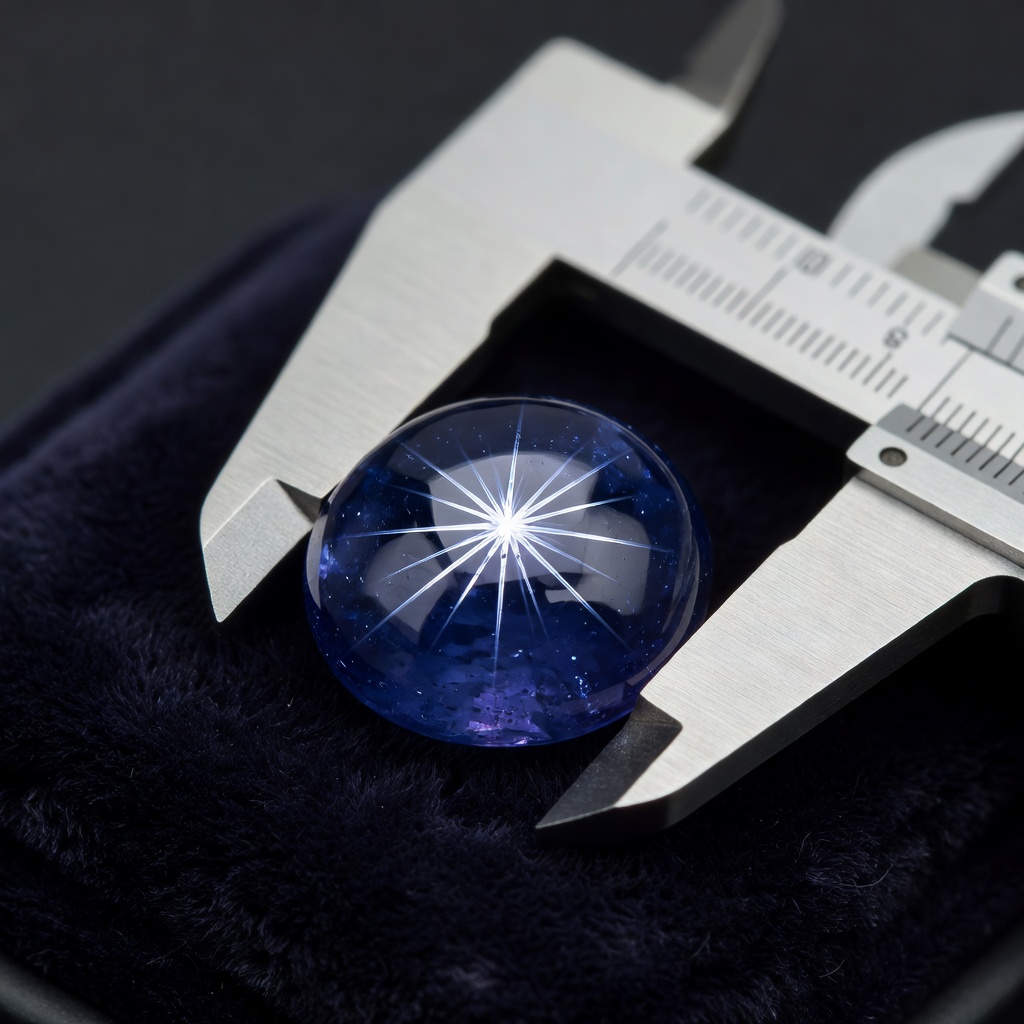
The mesmerizing phenomenon known as asterism creates the distinctive six-rayed star that makes these gemstones among the most captivating in the colored stone market. Unlike standard sapphires, star sapphires require a specific alignment of rutile silk inclusions that intersect at precisely 60 and 120 degrees to create the optical effect collectors prize. This geological coincidence occurs in less than 5% of corundum crystals, immediately establishing a scarcity premium that drives the foundational economics of any star sapphire price guide. The interplay between these microscopic titanium dioxide needles and the underlying crystal structure determines not only the star's visibility but also the gem's overall transparency and color saturation.
Rarity extends beyond mere statistical occurrence when evaluating asterism value factors in the current marketplace. While standard sapphires are valued primarily for color and clarity, star sapphires must balance these attributes with the quality of the optical phenomenon itself. Historical significance amplifies demand significantly, with royal collections from the Victorian era through Art Deco periods featuring these stones prominently. The 182-carat Star of Bombay, once owned by silent film star Mary Pickford, exemplifies how provenance and size combine to create seven-figure valuations at major auction houses.
The Star Effect: Assessing Asterism Quality
The sharpness and distinctness of the six rays serve as the primary determinants when calculating 6 ray star sapphire cost in wholesale and retail environments. Expert gemologists evaluate whether the rays reach fully from the center to the girdle edge without fading, creating the "legs" of the star with crisp, defined lines rather than fuzzy or broken segments. The star should remain centered directly over the cabochon's apex when viewed from directly above, moving gracefully across the dome as the light source or viewing angle shifts. This phenomenon, known as the "rolling star," indicates proper cutting orientation relative to the crystal's c-axis and adds significant premium value.
Star quality grading requires balancing the density of silk inclusions against the stone's body transparency, presenting cutters with a delicate optimization challenge. Too much silk creates a milky, translucent appearance that diminishes color vibrancy despite producing a strong star, while insufficient silk results in weak or incomplete rays. Premium specimens achieve what dealers call "eye-clean transparency" with a "wet look" luster while maintaining a vivid, distinct star under single-point lighting. Auction records from Christie's and Sotheby's demonstrate that stones achieving this balance command prices 300-400% higher than similar-colored sapphires with imperfect asterism.
Color Spectrum and Market Pricing
Intense cornflower blue hues represent the apex of blue star sapphire value, with untreated specimens from Kashmir or Burma achieving prices comparable to their faceted counterparts. These exceptional stones display a velvety blue body color that remains saturated under various lighting conditions, allowing the white star to contrast dramatically against the background. Dealers note that the most desirable blues possess a "sleepy" quality caused by microscopic inclusions that soften the color without compromising transparency. Market data indicates that fine blue star sapphires over 5 carats with sharp asterism trade at $2,000 to $5,000 per carat at wholesale, with retail premiums extending significantly higher for designer settings.
Black star sapphire price per carat operates within a distinctly different market segment, offering accessibility without sacrificing visual impact. These stones, typically Thai or Australian in origin, range from $20 to $100 per carat depending on star quality and size, making them popular choices for men's rings and statement jewelry. The golden or silver-white star against the deep black body creates a dramatic effect that has gained traction in contemporary fashion jewelry markets. Rare pink, purple, and color-shift varieties occupy niche positions, with untreated pink stars from Sri Lanka occasionally matching blue sapphire prices when they exhibit exceptional clarity and centered asterism.
Carat Weight and Price Scaling
The relationship between size and value follows an exponential rather than linear progression when analyzing star sapphire carat price structures across international markets. Stones weighing less than 3 carats generally trade at commercial rates suitable for fashion jewelry, while specimens exceeding 5 carats enter investment-grade territory where prices can multiply tenfold. This threshold effect occurs because maintaining perfect asterism orientation becomes geometrically more difficult as crystals grow larger, with most mining rough failing to yield cabochons over 10 carats with centered stars. Dealers report that large star sapphire investment pieces over 20 carats with documented origins see annual appreciation rates of 8-12%, outpacing many traditional investment vehicles.
Commercial grade stones typically weigh between 1 to 3 carats and serve the broader jewelry market, while museum-quality specimens exceeding 50 carats appear at auction perhaps once or twice annually. Jewelry setting considerations significantly impact per-carat valuations, as thick girdles required for star orientation reduce yield from rough and necessitate heavier mountings. Savvy collectors prioritize purchasing loose stones with laboratory reports rather than mounted pieces, as settings can obscure treatments or synthetic origins that would otherwise affect pricing. The wholesale market distinguishes between "cutters" (rough requiring polishing) and "specimen" material (ready for jewelry), with finished stones carrying 40-60% premiums over rough equivalent weights.
Geographic Origins and Premium Pricing
Ceylon star sapphire pricing reflects the island's reputation for producing stones with exceptional transparency and lighter, electric blue hues that appeal to contemporary designers. Sri Lankan deposits yield a higher percentage of star-quality rough compared to other localities, with the Ratnapura district specifically known for large crystals suitable for substantial cabochons. These stones typically exhibit a more delicate, refined star compared to their Burmese counterparts, with silk inclusions that create a silky sheen without excessive clouding. The steady supply from Ceylon has established baseline pricing standards, with fine untreated stones representing the benchmark against which other origins are measured.
Burmese star sapphires command significant premiums in Burmese star sapphire value assessments due to their historical association with imperial quality and richer, darker royal blue colors. Mogok mines produce stones with stronger, more defined asterism resulting from denser rutile silk concentrations, though this often comes at the cost of reduced transparency. The political situation in Myanmar has restricted supply, driving prices 20-40% higher than equivalent Ceylon stones for certified Burmese origins. Thai, Australian, and African sources provide commercial-grade material that fills market demand for accessible price points, with African stones from Madagascar and Tanzania increasingly recognized for their unique violet-blue hues and competitive pricing.
Natural vs Synthetic Value Differences
The chasm between natural vs synthetic star sapphire valuations represents one of the most dramatic price differentials in the gemstone industry, with laboratory-created specimens trading at 90-99% discounts to their natural counterparts. This disparity reflects not merely rarity but the geological timescales required for natural asterism formation, as synthetic stones can be manufactured within weeks using flame fusion or flux growth methods. Identification requires careful examination under magnification, as natural stones display characteristic inclusions including zircon halos, crystal fingerprints, and irregular growth zoning absent in synthetic material. The market has developed sophisticated detection protocols using advanced spectroscopy to distinguish between natural and created origins, protecting consumer confidence in high-value transactions.
Lab created star sapphire price points typically range from $10 to $50 per carat regardless of size, making them accessible for fashion jewelry where appearance outweighs investment considerations. However, these stones often display "too perfect" asterism with rays that remain static rather than rolling across the surface, and the stars may appear painted on rather than floating within the stone. While synthetics have gained acceptance in costume jewelry and industrial applications, they possess virtually no resale value or appreciation potential. Collectors should demand independent laboratory certification for any purchase exceeding $500 to ensure natural origin verification and avoid the sophisticated composite stones (assembled doublets) occasionally misrepresented as solid natural gems.
Treatments and Their Impact on Cost
Heat treatment significantly affects heat treated star sapphire price structures by altering both body color and asterism intensity, creating distinct market tiers based on modification levels. Traditional heating at moderate temperatures (1300-1600°C) can dissolve excessive silk to improve transparency while preserving enough rutile to maintain the star effect, resulting in stones that trade at 30-50% discounts to untreated equivalents. This process is considered permanent and stable, making heat-treated stones acceptable for jewelry purposes though less desirable for investment portfolios. Buyers should expect full disclosure of any thermal modification, as undisclosed treatments discovered later can devastate resale values and collector confidence.
Treated star sapphire value drops precipitantly when diffusion processes enter the equation, with surface-diffused stones representing the lowest tier of the legitimate market. This treatment involves adding coloring agents (titanium and iron) to the surface layer of pale or colorless corundum, creating a superficial blue appearance that may wear away during polishing or setting. Beryllium diffusion, a more controversial treatment, penetrates deeper but fundamentally alters the stone's chemistry and should always be disclosed as "treated" rather than merely "heated." Transparency in treatment disclosure serves as the cornerstone of ethical pricing, with reputable dealers providing laboratory reports detailing any enhancement processes and adjusting prices accordingly, often by 60-80% below untreated natural material.
Certification and Authentication Standards
Understanding certified star sapphire price premiums requires familiarity with the hierarchical system of international gemological laboratories and their specific areas of expertise. The Gemological Institute of America (GIA) provides definitive origin and treatment reports that serve as the industry standard for North American transactions, while Swiss laboratories including Gübelin, SSEF, and GRS command particular respect in Asian and European auction markets. These institutions employ advanced spectroscopic analysis and inclusion mapping to verify natural origin, geographic source, and enhancement status with scientific precision. Investment-grade stones carrying reports from multiple laboratories typically command 15-25% premiums over singly-certified material due to the increased confidence in attribution.
Professional star sapphire appraisal for insurance or estate purposes requires specialists familiar with the unique value factors affecting cabochon corundum rather than standard faceted gem appraisers. Accurate valuations must account for the orientation quality of the asterism, the specific shade and saturation of body color, and the documented provenance of the rough material. Origin determination documentation significantly affects collector premiums, with Kashmir or Burmese attributions requiring microscopic examination of inclusion scenes characteristic of those specific geological environments. For estate pieces and auction markets, unbroken provenance chains and vintage laboratory reports from recognized institutions add substantial value, particularly for Art Deco or Victorian era mountings containing untreated classic material.
Current Market Trends and Investment Outlook
The vintage and estate segment demonstrates remarkable resilience in star sapphire investment value assessments, with untreated classic stones from the 1920s-1950s appreciating steadily despite broader economic fluctuations. These pieces benefit from both the inherent rarity of high-quality rough available during that period and the craftsmanship of historical jewelry houses such as Cartier, Van Cleef & Arpels, and Tiffany. Auction results from 2020-2024 indicate that untreated Burmese stars over 10 carats with documented provenance have outperformed gold and stock market indices, with specific lots achieving 300% of their high estimates. This performance reflects a flight to tangible assets among high-net-worth collectors seeking portable stores of value with aesthetic appeal.
Emerging star sapphire market trends emphasize ethical sourcing and traceable supply chains, with younger collectors prioritizing stones from conflict-free zones with documented mining practices. Blockchain verification systems and mine-to-market documentation are becoming standard expectations for stones exceeding $10,000, adding transparency premiums to pricing structures. Recent auction records highlight exceptional specimens, including a 47.16-carat untreated Burmese star sapphire that sold for $2.9 million in 2022, establishing new per-carat benchmarks for the category. Industry analysts project continued strength in the untreated natural segment while predicting commoditization of heavily treated stones, reinforcing the importance of quality and documentation for long-term value retention.
Expert Buying Strategies
Mastering the buying star sapphires guide requires adapting the traditional four Cs framework to accommodate the unique characteristics of asterism-bearing stones. Color evaluation must occur under diffused lighting to avoid washout from the star's reflection, while Cut assessment focuses on dome height (ideally two-thirds the width for optimal star movement) and symmetry. The Star itself constitutes the third C, judged by ray straightness, centering, and visibility under standard office lighting rather than intense pin spots. Clarity evaluation accepts more inclusions than faceted sapphires, provided they do not break the surface or create structural weaknesses that could lead to chipping during setting.
Star sapphire purchasing tips for wholesale environments emphasize the importance of viewing stones under multiple lighting conditions, including natural daylight and incandescent sources, as asterism appearance varies dramatically with illumination type. Negotiation tactics differ significantly between wholesale rough purchases and retail acquisitions, with loose stones offering 40-60% savings over mounted equivalents but requiring separate setting costs. Red flags indicating synthetic or heavily treated stones include perfectly centered stars that remain stationary when tilted, unusually low prices for claimed Burmese or Kashmir origins, and vendors reluctant to provide independent laboratory reports. Reputable dealers will always offer examination periods and return policies for significant purchases, recognizing that star sapphires must be evaluated in person to assess the subtle interplay of color, transparency, and asterism that determines true value.
Frequently Asked Questions
How much does a star sapphire cost per carat?
Commercial-grade star sapphires range from $50-$200 per carat, while fine-quality blue specimens command $500-$2,000 per carat. Exceptional Burmese or Ceylon stones with sharp stars can exceed $5,000-$10,000 per carat for sizes over 5 carats. The price varies dramatically based on the intensity of the asterism, with perfectly centered, sharp-rayed stars adding significant premiums over commercial-grade material with weak or off-center stars. Buyers should expect to pay exponentially higher rates as carat weight increases, particularly for untreated natural stones with documented origins from prestigious localities.
What makes a star sapphire expensive?
The primary value drivers include asterism sharpness (distinct, centered six-ray star), intense body color (especially cornflower blue), transparency, size over 3 carats, and untreated natural origin from prestigious localities like Burma or Kashmir. Historical provenance and vintage cutting styles can add substantial premiums beyond the intrinsic material value, particularly for stones associated with notable jewelry periods or previous celebrity ownership. The geological rarity of finding large crystals with properly oriented rutile inclusions creates natural scarcity that supports high valuations, while untreated status ensures long-term appreciation potential.
Are black star sapphires more valuable than blue ones?
No, black star sapphires are generally less valuable than blue varieties, typically ranging from $20-$100 per carat. However, they offer excellent durability and striking appearance for men's jewelry, while untreated vivid blue star sapphires command the highest premiums in the market. The price differential reflects both historical preference and rarity, as blue corundum with suitable asterism occurs less frequently than black (iron-rich) varieties. Black stars appeal to fashion-conscious buyers seeking bold, contemporary looks without the investment-level pricing of fine blue specimens.
How can I tell if a star sapphire is real?
Natural star sapphires show an imperfect, slightly wobbly star that moves with the light source, whereas synthetics often display a perfect, static star. Real stones contain natural inclusions visible under magnification, and the star appears to float on the surface rather than looking painted on. The "roll test" remains the most reliable quick indicator: when tilting the stone, the star should travel across the dome and may even appear to glide over the curved surface. Additionally, natural stones typically show color zoning or banding under magnification, while synthetics display curved growth lines or perfectly uniform coloration indicative of laboratory manufacturing.
Do star sapphires increase in value over time?
Untreated, high-quality natural star sapphires from reputable origins typically appreciate 5-10% annually, particularly those over 5 carats with documentation. However, treated stones and commercial grades may depreciate or remain stable depending on market demand. Investment performance correlates strongly with certification quality and origin prestige, with Burmese and Kashmir stones showing the strongest historical appreciation. The finite nature of high-quality mining output, combined with increasing collector interest in colored gemstones as alternative investments, supports optimistic long-term value projections for premium specimens.
What is the difference between Ceylon and Burmese star sapphires?
Ceylon (Sri Lankan) star sapphires typically offer better transparency and lighter, brighter blues with delicate stars, while Burmese stones feature richer, darker royal blue colors with stronger asterism. Burmese origins generally command 20-40% price premiums due to rarity and historical prestige. The silk inclusions in Ceylon stones tend to be finer and more evenly distributed, creating a softer "velvet" effect, whereas Burmese silk is often denser, producing sharper but potentially more distracting stars. Collectors often prefer Ceylon material for earrings and delicate jewelry where transparency matters, while Burmese stones suit rings and statement pieces where color intensity takes precedence.
Should I buy a treated or untreated star sapphire?
For investment purposes, always choose untreated stones with certification, as they retain value better. For jewelry wear, mildly heat-treated stones offer good value at 30-50% lower prices, though diffusion-treated stones should be avoided as they have minimal resale value. Heat treatment is considered a permanent enhancement that does not require special care, making it acceptable for pieces intended primarily for adornment rather than asset appreciation. The decision ultimately depends on your budget and intentions: treated stones allow access to larger sizes and better colors at accessible price points, while untreated material preserves capital and offers appreciation potential.
Where is the best place to buy certified star sapphires?
Purchase from established gem dealers with GIA or AGL credentials, reputable auction houses for investment pieces, or specialized colored stone retailers offering return policies and independent laboratory reports. Avoid tourist markets and deals that seem too good to be true. Major auction houses like Christie's, Sotheby's, and Bonhams provide the safest venue for high-value acquisitions, offering pre-sale condition reports and guarantees of authenticity. For retail purchases, seek dealers who are members of professional organizations such as the American Gem Trade Association (AGTA) or the International Colored Gemstone Association (ICA), as these memberships require adherence to strict ethical standards regarding disclosure and treatment representation.