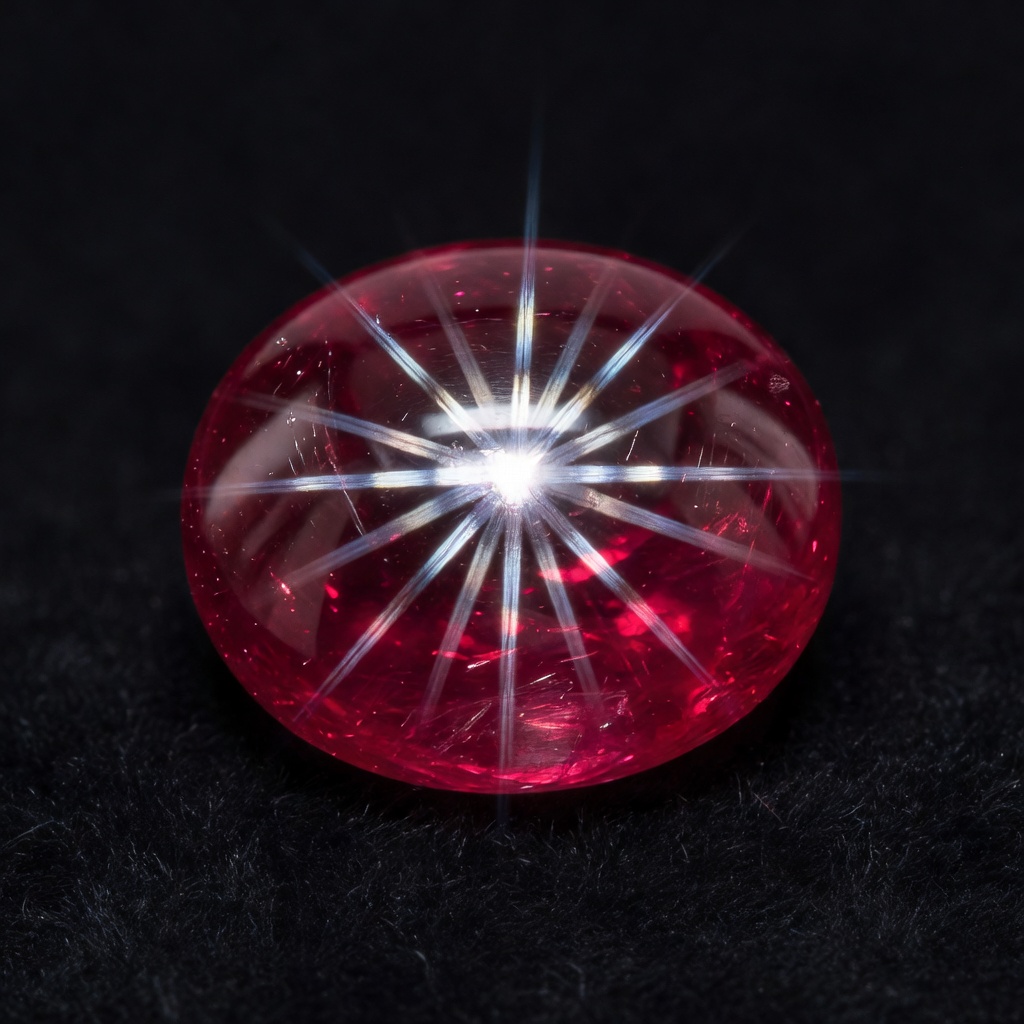
Understanding Star Ruby Properties and Information: A Comprehensive Guide
Star rubies represent one of nature's most captivating optical phenomena, combining the rich, passionate hues of corundum with a mesmerizing celestial display that seems to dance across the gem's surface. Unlike their faceted counterparts that dazzle through brilliance and fire, these unique specimens command attention through a phenomenon known as asterism—a three-dimensional star pattern that appears to glide across the dome as the stone moves. For collectors, jewelers, and gemstone enthusiasts seeking authoritative star ruby properties and information, understanding the intricate balance between geological formation, optical physics, and masterful lapidary work is essential for appreciating these rare treasures. Whether you are considering a significant investment or simply wish to understand what distinguishes a mediocre specimen from a museum-quality masterpiece, this guide provides the detailed technical knowledge and practical insights necessary to navigate the sophisticated world of star ruby gemstone evaluation.
What Makes Star Rubies Unique?
At their core, star rubies are a phenomenal variety of corundum, the same aluminum oxide mineral family that produces sapphires and traditional rubies, distinguished specifically by the presence of intersecting needle-like inclusions that create a visible star pattern. While standard rubies are prized for their transparency and saturated red color, star rubies embrace a silkier, more translucent character that allows light to interact with internal structures in extraordinary ways. Historically, these gems have held profound significance across civilizations; ancient Burmese warriors believed inserting star rubies into their flesh made them invulnerable in battle, while Hindu traditions associated the six-rayed star with the celestial union of Shiva and Shakti, representing cosmic balance and divine protection.
The distinction between regular rubies and star varieties extends beyond mere appearance into the realm of rarity and collector psychology. Where faceted rubies dominate the high jewelry market, star rubies appeal to connoisseurs who appreciate the intersection of natural art and geological accident. Current market trends show increasing demand for untreated, high-clarity star rubies from classic Burmese localities, with auction houses reporting steady appreciation for fine specimens exceeding ten carats. Unlike many gemstones where clarity imperfections diminish value, star rubies literally depend on specific inclusions—the rutile silk—to exist, creating a fascinating paradox where the right kind of imperfection generates extraordinary worth.
Geological Formation and Origins
The journey of a star ruby begins deep within the Earth's crust, typically forming in metamorphic environments such as marble or high-aluminum basaltic rocks subjected to intense heat and pressure over millions of years. These conditions facilitate the crystallization of corundum mineral properties while simultaneously allowing titanium and oxygen to bond, creating the microscopic rutile needles essential for asterism. The geological recipe requires precise timing: the corundum must crystallize first, followed by a secondary heating event that introduces titanium into the matrix, which then exsolves into needle-like crystals aligned along the hexagonal crystal structure's specific axes.
Myanmar (historically Burma) remains the most prestigious source for star ruby origins, particularly the Mogok Stone Tract, where gems often exhibit the coveted "pigeon blood" red hue combined with sharp, well-centered stars. Sri Lanka (Ceylon) produces stones typically lighter in tone—ranging from pinkish-red to purplish-red—with excellent transparency and delicate silk that creates elegant, though sometimes less distinct, star patterns. Madagascar has emerged as a significant modern source, offering stones that often bridge the color characteristics of Burmese and Ceylon material. For optimal star formation, geological conditions must maintain stable temperatures between 600-800°C during the rutile exsolution phase, ensuring the needles align perfectly at 60 and 120-degree angles without dissolving back into the host crystal.
Case Study: The Rosser Reeves Star Ruby
One of the world's finest examples of geological perfection, the 138.72-carat Rosser Reeves Star Ruby, demonstrates how ideal formation conditions create exceptional results. Originating from Sri Lanka and currently housed at the Smithsonian Institution, this stone exhibits a sharp six-rayed star visible even under diffuse lighting—a rarity caused by exceptionally dense, perfectly aligned rutile silk throughout its dome. The specimen's transparency allows light to penetrate deeply, reflecting off the numerous silk layers to create a three-dimensional, floating star effect that lesser stones cannot achieve, illustrating how geological patience creates immortal beauty.
The Science Behind the Six-Rayed Star Effect
The asterism effect that defines these gems results from a sophisticated interaction between light physics and crystallographic structure. When rutile inclusions align in three specific directions corresponding to the hexagonal crystal system's vertical axis and two horizontal axes at 60-degree intervals, they create reflective planes within the stone. Light entering the cabochon dome reflects off these aligned needles and returns to the viewer's eye as intersecting bands of light, forming the characteristic six-rayed star ruby pattern. Each ray pair runs perpendicular to its corresponding needle direction, creating the symmetrical hexagram that seems to glide across the stone's surface as it moves—a phenomenon gemologists call "en asteria."
Proper viewing technique proves crucial for appreciating this effect; unlike faceted gems that sparkle under various lighting conditions, star rubies require a single, intense point light source such as a penlight or direct sunlight to manifest their full glory. Under diffuse fluorescent lighting, the star may appear weak or disappear entirely, explaining why many collectors first discover the full potential of their stones only under specific conditions. While six-rayed stars represent the standard, extremely rare specimens occasionally display twelve-rayed stars caused by the combination of rutile and hematite inclusions aligned at different angles, though these are typically less distinct and command specialized collector interest.
Physical and Chemical Properties
Understanding the fundamental star ruby properties and information requires examining both the chemical composition and physical characteristics that distinguish these gems. As members of the corundum family, star rubies possess a remarkable hardness of 9 on the Mohs scale, making them second only to diamonds in scratch resistance and suitable for daily wear in rings and bracelets. This durability stems from their aluminum oxide (Al₂O₃) chemical composition combined with trace amounts of chromium that provide the red coloration. Specific gravity typically ranges between 3.99 and 4.01, while the refractive index measures approximately 1.760 to 1.778, contributing to the stone's inherent luster and light-handling capabilities.
The hexagonal crystal system of corundum manifests in both the rough material and finished cabochons, with the six-sided prismatic habit influencing how lapidaries orient stones to center the star. Color variations span from delicate pinkish-red and purplish-red to the intensely saturated red that borders on pigeon blood, though star rubies rarely achieve the same depth of color as faceted stones due to the light-scattering nature of their silk inclusions. Transparency levels vary from nearly opaque to semi-transparent, with the finest specimens balancing sufficient translucency to allow the star to shine through while maintaining enough silk density to create a sharp, distinct asterism pattern.
The Critical Importance of Cut: Cabochon Requirements
The transformation from rough crystal to finished gem demands specific ruby cabochon cut techniques that differ dramatically from standard faceting approaches. Faceted cuts, while maximizing brilliance in transparent rubies, would destroy the star effect by allowing light to exit the stone through multiple angled surfaces rather than reflecting back through the dome. The cabochon cut—a smooth, domed surface without facets—serves as the only viable cutting style for star rubies because it allows light to enter through the dome, reflect off the oriented rutile inclusions below, and return to the viewer's eye as a cohesive star pattern.
Optimal cabochon geometry requires careful calculation of dome height relative to the stone's diameter; too flat a dome creates a "window effect" where light passes directly through the center without reflecting, leaving a dead spot in the middle of the star, while excessive height produces an awkward, bullet-like profile that sits poorly in jewelry settings. Master cutters must orient the rough crystal so that the base runs parallel to the plane containing the rutile needles, ensuring the star centers perfectly on the dome's apex. Symmetry proves paramount, as any off-center placement or uneven dome curvature results in a wandering star or uneven ray lengths that significantly diminish the gem's value and visual appeal.
Practical Cutting Tips for Lapidaries
When preforming star ruby rough, experienced lapidaries often begin by grinding a small test window on the base to examine the silk's orientation under a strong penlight before committing to the final cabochon shape. This preliminary step prevents costly mistakes, as discovering after dome formation that the crystal was misoriented results in either a lopsided star or the need to recut, sacrificing significant carat weight. The dome should feature a smooth, polish-free surface that enhances the star's visibility, though some cutters opt for a very fine matte finish to reduce glare and emphasize the asterism effect.
Color, Clarity, and Quality Assessment Criteria
Evaluating star ruby value requires balancing three competing factors: body color, transparency, and star quality. The ideal specimen displays a vivid, saturated red—approaching the legendary pigeon blood hue—while maintaining sufficient translucency to allow light penetration without appearing muddy or too dark. However, the presence of dense rutile silk necessary for a sharp star inherently reduces transparency, creating the central challenge of star ruby assessment. Premium stones achieve the delicate equilibrium where enough silk exists to create a bright, distinct star without completely obscuring the rich red body color beneath.
The star itself demands rigorous examination under controlled lighting conditions. A high-quality asterism displays straight, distinct rays that reach fully from the center to the stone's perimeter, remain centered on the dome apex, and demonstrate strong "roll effect"—the apparent movement of the star across the dome as the light source or stone moves. The rays should appear sharp and silvery-white against the red background, not blurry or diffuse. Surface imperfections, including cracks, pits, or polishing lines, significantly impact quality grades, as these not only detract from beauty but can threaten the stone's durability. Internal cracks pose particular concerns, as they may expand during setting or wear, potentially splitting the stone.
Market Value and Investment Considerations
The star ruby value spectrum ranges dramatically based on size, origin, treatment status, and quality parameters. Commercial-grade specimens with milky transparency, off-center stars, and purple-gray undertones may command $100 to $500 per carat, while fine Burmese examples with sharp, centered stars and vivid red color can exceed $10,000 per carat for stones over five carats. Origin significantly influences pricing, with Burmese material commanding premiums of 50-100% over comparable Sri Lankan stones due to historical prestige and typically superior color saturation. Untreated stones—verified by reputable laboratories—carry substantial premiums over heat-treated material, as collectors increasingly seek natural specimens with unaltered asterism.
Investment potential concentrates in exceptional specimens exceeding ten carats with documented provenance, unenhanced status, and optimal star quality. The collector market shows particular interest in vintage pieces from the Art Deco period, when star rubies enjoyed peak popularity in men's jewelry and cufflinks. When considering high-value acquisitions, insist upon certification from recognized laboratories such as the Gemological Institute of America (GIA), American Gemological Laboratories (AGL), or Gübelin Gem Lab, which can definitively establish origin, detect treatments, and confirm natural versus synthetic status. These documents prove essential for insurance, resale, and estate planning purposes, providing the scientific verification that underpins significant gemstone investments.
Caring for and Maintaining Star Ruby Jewelry
Proper maintenance ensures that star ruby jewelry retains its beauty across generations, though specific care protocols differ from those for faceted gems. For routine cleaning, immerse the jewelry in warm water mixed with mild dish soap, then gently scrub with a soft-bristled toothbrush to remove accumulated oils and debris from the cabochon dome and setting. Rinse thoroughly under lukewarm running water, ensuring the drain is closed or covered, and pat dry with a soft, lint-free cloth. This method safely removes everyday grime without risking damage to the stone or its mounting.
Ultrasonic cleaners and steam cleaning devices pose significant risks to star rubies and should be strictly avoided. The vibrations from ultrasonic baths can loosen the stone in its setting or exacerbate existing fractures within the gem, while steam's thermal shock and pressure may cause sudden temperature changes that crack the stone. Additionally, avoid exposure to harsh household chemicals, including chlorine bleach and ammonia-based cleaners, which can damage both the gem and its metal setting. Store star ruby pieces separately from harder gemstones like diamonds or moissanite in individual soft pouches or compartmentalized jewelry boxes to prevent surface scratching. Schedule annual professional inspections with a qualified jeweler to check setting security, as the rounded dome of cabochon cuts can be more prone to loosening in bezel or prong settings than faceted stones with sharp edges.
Natural vs. Synthetic: Identification and Treatments
Distinguishing natural vs synthetic star ruby specimens requires understanding modern manufacturing techniques and their telltale characteristics. Synthetic star rubies, primarily created through the Verneuil (flame fusion) process or flux-grown methods, entered the market in the late 19th century and continue to challenge identification today. Verneuil synthetics often display perfectly straight, overly sharp star rays that appear "too perfect" compared to the slightly wavy, organic appearance of natural asterism. Under magnification, these synthetics may reveal curved growth lines (striae) resembling the rings of a tree trunk, gas bubbles, or unnaturally uniform color distribution—features absent in natural specimens formed through geological processes.
Common treatments present additional complications for buyers. Heat treatment, while standard in the ruby industry, requires careful application for star stones; excessive temperatures can dissolve the rutile silk, diminishing or eliminating the star effect. Diffusion treatment, where titanium is introduced into the surface layer to create artificial asterism, produces stars that appear superficial and may fade with repolishing. Dyeing, sometimes applied to pale stones to simulate rich red color, can be detected by examining surface-reaching fractures where dye concentrates. For absolute certainty regarding natural vs synthetic star ruby status and treatment history, submit specimens to gemological laboratories equipped with advanced spectroscopy and microscopy, as visual identification alone proves insufficient for high-value transactions.
Red Flags in the Marketplace
When evaluating potential purchases, exercise caution with stones priced significantly below market value or sold without documentation claiming "natural" status. Inspect the star's behavior carefully: synthetic stars often remain stationary or show minimal movement when the light source moves, while natural stars glide fluidly across the dome. Additionally, examine the stone's base; natural star rubies often show irregular, rough bases where they were attached to the host rock, while synthetics typically feature perfectly flat, polished bottoms from laboratory manufacturing processes.
Frequently Asked Questions
What Causes the Star Effect in Star Rubies?
The star effect, called asterism, is caused by microscopic rutile needle inclusions (known as silk) arranged in specific intersecting angles within the corundum crystal. When light hits these aligned needles, it reflects back as a six-rayed star pattern that appears to float on the gem's surface.
Are Star Rubies More Valuable Than Regular Rubies?
Generally, high-quality faceted rubies command higher prices per carat than star rubies. However, exceptional star rubies with sharp, centered stars, vivid red color, and good transparency can be extremely valuable, sometimes exceeding $10,000 per carat for fine Burmese specimens.
Can Star Rubies Be Heat Treated?
Yes, star rubies can be heat treated, but excessive heating can dissolve the rutile silk necessary for the star effect, potentially diminishing or eliminating the asterism. Low-temperature heating is sometimes used to improve color without damaging the silk inclusions.
What Is the Best Color for a Star Ruby?
The most valuable star rubies display a vivid, saturated red color similar to 'pigeon blood' red, though slightly purplish-red or pinkish-red hues are also desirable. The key is strong color saturation combined with enough translucency to allow the star to shine through clearly.
How Do I Clean Star Ruby Jewelry Safely?
Clean star rubies using warm water, mild dish soap, and a soft-bristled brush or cloth. Avoid ultrasonic cleaners, steam cleaners, harsh chemicals, and sudden temperature changes, as these can damage the stone or loosen the setting. Rinse thoroughly and dry with a soft lint-free cloth.
How Can I Tell if a Star Ruby Is Real or Synthetic?
Natural star rubies typically show irregular, slightly wavy star rays and natural inclusions visible under magnification. Synthetic stars usually have perfect, overly sharp stars with curved growth lines or bubble inclusions. Always request certification from reputable labs like GIA or AGL for verification.
Why Must Star Rubies Be Cut as Cabochons?
Star rubies must be cut as cabochons (domed, unfaceted stones) because the star effect results from reflected light off internal inclusions. Faceting would cut through the surface-reflected rays, destroying the asterism. The domed cabochon shape allows light to enter, reflect off the silk inclusions, and return to the viewer's eye as a star.
What Does the Six-Rayed Star Symbolize in Different Cultures?
The six-rayed star has symbolized divine guidance, protection, and destiny across cultures. In Hindu tradition, it represents the celestial balance of Shiva and Shakti. In Western traditions, it symbolizes hope and faith. Many believe star rubies bring good fortune, ward off evil, and enhance meditation practices.