
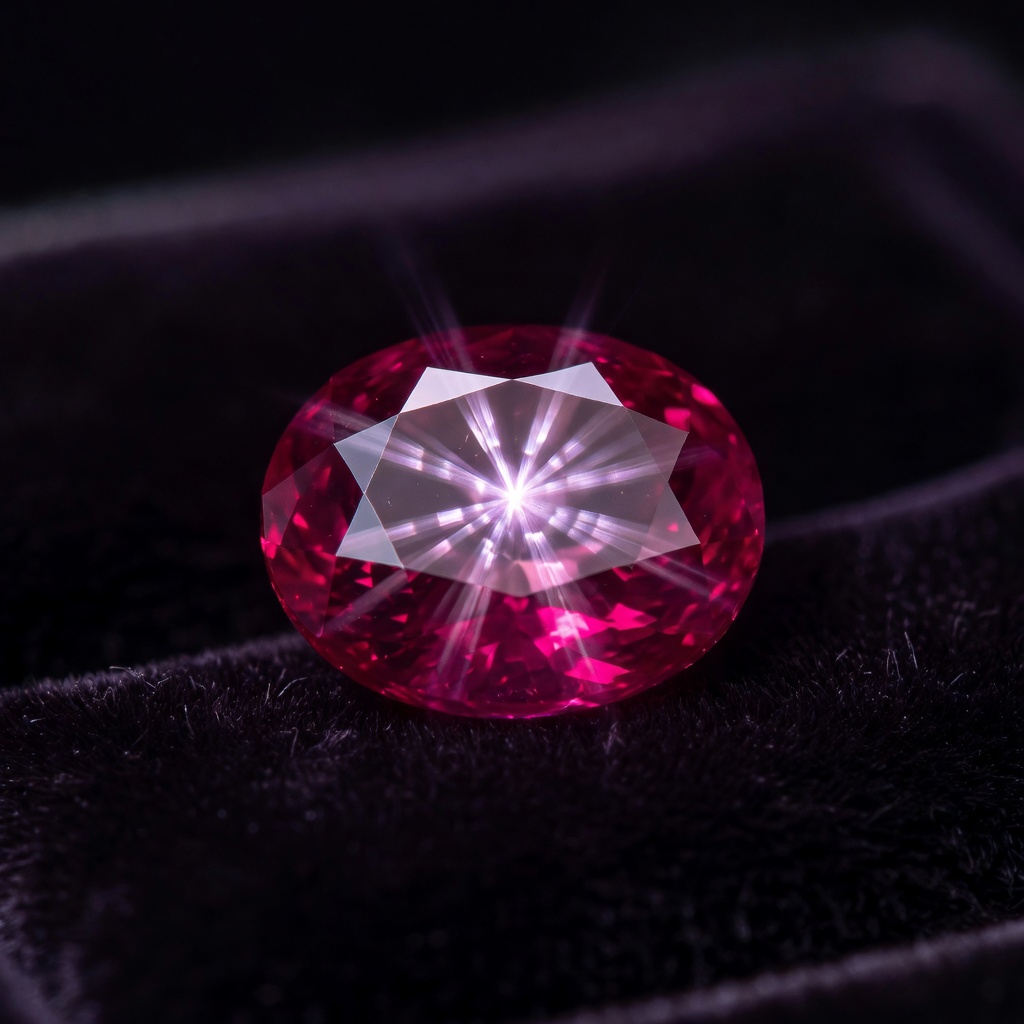
Introduction to Star Rubies and Their Unique Value
Star rubies represent one of nature's most captivating optical phenomena, where intersecting rutile needle inclusions create a luminous six-rayed star that appears to float across the gemstone's surface. This effect, known as asterism, occurs when light reflects off properly aligned needle-like crystals of titanium dioxide suspended within the corundum structure. Unlike standard faceted rubies that derive value primarily from color and clarity, star rubies command premium prices based on the precision, sharpness, and movement of their celestial display.
Historically, these mystical gemstones have adorned the crown jewels of India and Southeast Asia, with Eastern cultures believing the star pattern represented destiny and divine protection. The famous "Rosser Reeves Star Ruby," weighing an impressive 138.7 carats, exemplifies the royal status these stones have maintained throughout centuries of human civilization. When navigating this star ruby price guide, collectors must understand that asterism gemstones follow entirely different valuation metrics than their faceted counterparts, with the interplay between silk inclusions and body color creating a complex pricing matrix that rewards patience and expertise.
Critical Factors Affecting Star Ruby Prices
The valuation of star rubies hinges on three primary characteristics that must exist in perfect harmony to command top market prices. The sharpness and centering of the six-ray star remains paramount, with premium specimens displaying razor-thin, well-defined rays that converge precisely at the dome's apex. Stars that appear fuzzy, broken, or off-center immediately reduce star ruby value per carat by significant margins, as the visual impact diminishes dramatically when the asterism lacks crystalline definition.
Body color intensity ranges from acceptable pinkish-red tones to the coveted deep "pigeon blood" red that characterizes the finest Burmese material. However, achieving this saturated color while maintaining sufficient silk to create the star effect presents a geological paradox that makes fine specimens extraordinarily rare. These pricing factors interact dynamically: too much silk obscures transparency and dulls the color, while too little silk results in weak or incomplete asterism that fails to capture light properly.
Current Market Prices by Quality and Carat Weight
Understanding the current star ruby price per carat requires segmenting the market into distinct quality tiers that reflect the gemological characteristics discussed previously. Commercial grade star rubies, typically featuring faint stars with partially visible rays and lighter pink to purplish body colors, currently trade between $50 and $500 per carat in today's market rates 2024. These entry-level stones often originate from African deposits or represent heavily treated material, making them suitable for fashion jewelry but poor candidates for investment portfolios.
Fine quality specimens exhibiting sharp, centered stars with medium to dark red body colors command substantially higher premiums, ranging from $1,000 to $5,000 per carat depending on size and origin documentation. At the apex of the market, premium Burmese star rubies displaying intense pigeon blood color combined with perfect asterism routinely achieve prices between $5,000 and $25,000 per carat, with exceptional stones exceeding 10 carats occasionally reaching six figures at international auction houses.
Origin Impact: Burmese vs Sri Lankan vs African Star Rubies
Geographic provenance significantly influences star ruby valuations, with Burmese star ruby material commanding premiums of 40 to 60 percent over comparable quality stones from other localities. Myanmar's legendary Mogok Stone Tract produces rubies with the ideal chemical composition for combining intense body color with the precise silk density necessary for sharp asterism. Political instability and export restrictions have further constrained supply, driving gemstone origin value premiums even higher for documented Burmese material with verifiable provenance.
Sri Lankan (Ceylon) star rubies offer accessible entry points for collectors, typically displaying lighter pink to raspberry tones with excellent transparency and often superior star sharpness compared to Burmese material. While these stones lack the intense red saturation of their Burmese counterparts, they provide an excellent balance of beauty and affordability, generally trading at 30 to 50 percent below comparable Burmese stones. African origins from Madagascar and Tanzania have emerged as significant sources, with Madagascan material particularly noted for producing large cabochons with distinct stars, though typically in pinkish-red hues rather than the coveted deep reds of Myanmar.
Natural vs Synthetic Star Ruby Price Comparison
The price differential between natural and laboratory-created star rubies remains substantial, with natural stones typically costing 10 to 50 times more than their synthetic counterparts depending on quality grade. Synthetic star ruby prices generally range from $10 to $50 per carat, making them attractive options for fashion-forward jewelry pieces where the visual effect matters more than investment potential. These lab-created star ruby specimens display perfect stars with consistent color, though trained gemologists can identify them through examination of curved growth striations and distinctive inclusion patterns visible under magnification.
When considering synthetic alternatives, buyers should evaluate their intended use carefully. For daily wear jewelry where durability and appearance take precedence over appreciation potential, synthetic star rubies represent smart purchases that eliminate concerns about damage or loss. However, collectors seeking store-of-value assets or heirloom pieces should invest exclusively in natural material, as synthetics possess no secondary market value and will not appreciate over time regardless of market conditions.
Cutting Quality: Cabochon Standards for Maximum Value
The cabochon cut star ruby requires masterful lapidary work to maximize asterism while maintaining pleasing proportions and symmetry. Proper dome height typically measures between 60 and 70 percent of the stone's width, creating the optimal angle for light reflection off the rutile needles. Domes that are too flat fail to concentrate light properly, resulting in weak or invisible stars, while excessive height creates "windowing" where light leaks through the center and reduces the star's visibility.
Symmetry requirements prove equally critical, as an off-center star can reduce cutting quality valuations by 20 to 40 percent regardless of other positive attributes. Master cutters must orient the rough crystal precisely to ensure the star appears centered when viewed from directly above, accounting for the trigonal crystal structure of corundum. High polish standards eliminate surface imperfections that could scatter light or harbor dirt, while maintaining a perfectly symmetrical elliptical or circular outline that frames the star effectively without distracting visual elements.
Certification and Treatment Disclosure
Acquiring a certified star ruby from reputable laboratories such as GIA, AGL, or SSEF provides essential documentation regarding origin, treatment status, and natural authenticity. These reports verify whether the stone has undergone heat treatment, which typically reduces market value by 20 to 30 percent compared to unheated material. Heat treatment dissolves some rutile silk to improve transparency and color, potentially weakening the star effect while enhancing body color, creating a trade-off that sophisticated collectors must evaluate carefully.
Detection of diffusion-treated stones and glass-filled fractures requires advanced laboratory equipment beyond the capabilities of most dealers. Diffusion treatment introduces color only at the surface level, creating a shallow star that disappears if the stone is recut or scratched deeply. Glass filling masks fractures but significantly compromises durability and value, representing treatments that ethical sellers must disclose but unscrupulous vendors may hide. Always insist on recent laboratory reports for high-value treated star ruby purchases, verifying that any enhancements align with disclosed pricing structures.
Smart Buying Strategies for Collectors
When buying star rubies, collectors must evaluate potential sources across a spectrum from auction houses to specialized gem dealers and online marketplaces. Established auction houses like Christie's and Sotheby's offer curated selections of investment-grade material with comprehensive provenance documentation, though buyer's premiums add 15 to 25 percent to hammer prices. Specialized gem dealers with GIA graduate gemologists on staff provide personalized service and the opportunity to examine stones under various lighting conditions before purchase.
Essential collector tips include conducting thorough inspection protocols using a single penlight source to verify that the star moves smoothly across the dome as the light source shifts position. Static stars that remain fixed indicate poor cutting orientation or synthetic origin, while sharp, mobile stars suggest fine natural material. Negotiation tactics should leverage market timing, with prices often softening during summer months when the jewelry industry traditionally slows, and always insist on origin documentation that can be verified through independent laboratory testing.
Investment Potential and Value Appreciation
High-quality star rubies represent compelling alternative assets within diversified investment portfolios, particularly untreated Burmese specimens that have historically appreciated 8 to 12 percent annually over the past two decades. This star ruby investment performance stems from fundamental supply constraints: the geological conditions necessary for creating fine star rubies occur rarely, and existing mines face depletion or political access restrictions. Market trends increasingly favor untreated specimens as consumer education improves and disclosure requirements tighten globally.
Portfolio allocation recommendations suggest limiting gemstone investments to 5 to 10 percent of total net worth, with star rubies comprising a portion of that allocation alongside faceted colored stones and diamonds. Value appreciation potential correlates directly with quality tiers, with commercial grade material showing minimal appreciation while premium unheated Burmese stones consistently outperform traditional equity markets during inflationary periods. The tangible nature of these assets, combined with their portability and universal recognition among wealthy collectors globally, provides downside protection unavailable in paper investments.
Care and Maintenance to Preserve Value
Proper star ruby care ensures that these valuable gemstones maintain their optical performance and structural integrity across generations. Cleaning protocols should utilize only mild soap and lukewarm water with a soft brush, as ultrasonic cleaners can damage the delicate silk inclusions responsible for the star effect. Harsh chemicals including chlorine, bleach, and acids can etch the surface or attack any glass fillings present in treated stones, permanently diminishing both beauty and value.
Storage recommendations involve keeping star rubies separate from harder gemstones like diamonds that could scratch the surface, ideally in individual soft pouches or compartmentalized jewelry boxes. Regular professional inspections of settings prevent loss through worn prongs while allowing jewelers to clean areas unreachable by home methods. For maintaining gemstone value, owners should retain all original laboratory reports and purchase documentation, as complete provenance significantly enhances resale values when liquidating collections or upgrading to finer specimens.
Frequently Asked Questions
How much does a 1-carat star ruby cost?
A 1-carat star ruby typically ranges from $100 to $3,000 depending on quality. Commercial grade stones with faint stars and pinkish color cost $100-$300, while fine quality Burmese specimens with sharp asterism and deep red color can command $2,000-$3,000 per carat.
What is the most expensive star ruby ever sold?
The 'Rosser Reeves Star Ruby,' a 138.7-carat Burmese specimen, is among the most valuable, estimated at over $10 million. In recent auctions, untreated Burmese star rubies over 10 carats have sold for $50,000-$100,000 per carat.
Are synthetic star rubies worth buying?
Synthetic star rubies are worth buying for fashion jewelry and casual wear, costing $10-$50 per carat compared to $500+ for natural stones. However, they hold no investment value and should always be disclosed as lab-created to avoid fraudulent pricing.
How can I tell if a star ruby price is fair?
Verify fair pricing by checking the star's sharpness under single light source (should be distinct, not blurry), ensuring the star moves smoothly across the dome (not fixed), confirming origin with certification, and comparing with recent auction results from GemGuide or Rapaport.
Do star rubies increase in value over time?
High-quality untreated Burmese star rubies have historically appreciated 5-10% annually, outperforming many traditional investments. However, treated stones, synthetics, and lower-quality material show minimal appreciation and are poor stores of value.
Why are Burmese star rubies more expensive than others?
Burmese star rubies command premiums due to their rare 'pigeon blood' red body color combined with fine silk that produces exceptionally sharp stars. Myanmar's Mogok mines produce the world's finest specimens, but political instability and export restrictions have further limited supply.
Can star rubies be treated or enhanced?
Yes, heat treatment is common to improve color, reducing value by 20-30%. Diffusion treatment adds surface color but is considered less valuable. Glass filling to hide fractures significantly degrades value. Always request lab reports to verify treatment status before purchasing.
Where is the best place to buy star rubies?
Reputable specialized gem dealers with GIA graduate gemologists on staff offer the best combination of selection and expertise. Major auction houses (Christie's, Sotheby's) for investment-grade stones, and established trade shows like Tucson Gem Show for direct sourcing. Avoid general retail jewelry stores for high-value purchases.


