Introduction to Smoky Quartz Market Values
The global gemstone market has witnessed significant shifts in brown quartz crystal valuations throughout 2024, making a comprehensive Smoky Quartz Price Guide essential for both collectors and jewelry enthusiasts. Current market analysis reveals that smoky quartz prices range dramatically from modest $5 per carat specimens to exceptional collector pieces commanding $500 or more per carat, depending on origin and quality characteristics. This remarkable price spectrum reflects the dual nature of smoky quartz as both an accessible commercial gemstone and a rare collector's mineral.
Several critical factors create these substantial price variations in the marketplace today. Stones originating from historically significant localities such as Scotland's Cairngorm Mountains command substantial premiums over mass-produced Brazilian material, while natural coloration versus laboratory irradiation significantly impacts valuation. Additionally, the increasing scarcity of large, inclusion-free crystals from depleted Alpine deposits has driven prices upward for investment-grade specimens, particularly those exceeding ten carats with exceptional clarity.
Understanding Quality Factors That Drive Pricing
Professional gemologists evaluate smoky quartz quality factors through a systematic assessment of color saturation, clarity grades, and transparency levels that directly correlate with market value. The most prized specimens display a rich, uniform brown coloration ranging from warm cognac tones to deep chocolate hues, with color intensity serving as the primary value determinant. Light, grayish-brown stones often receive lower grades, while specimens exhibiting intense saturation without appearing muddy or black command premium pricing in the fine jewelry sector.
Clarity standards for smoky quartz distinguish between eye-clean specimens, which show no visible inclusions to the unaided eye, and included material that may contain rutile needles, liquid feathers, or mineral inclusions. Eye-clean stones typically fetch prices 300-400% higher than heavily included material of similar size and color. Transparency levels further subdivide the market, with gem-grade transparent material suitable for faceting commanding substantially higher prices than translucent cabochon-grade rough, which is typically valued at 60-70% less per carat than its transparent counterparts.
Price Per Carat Breakdown by Grade
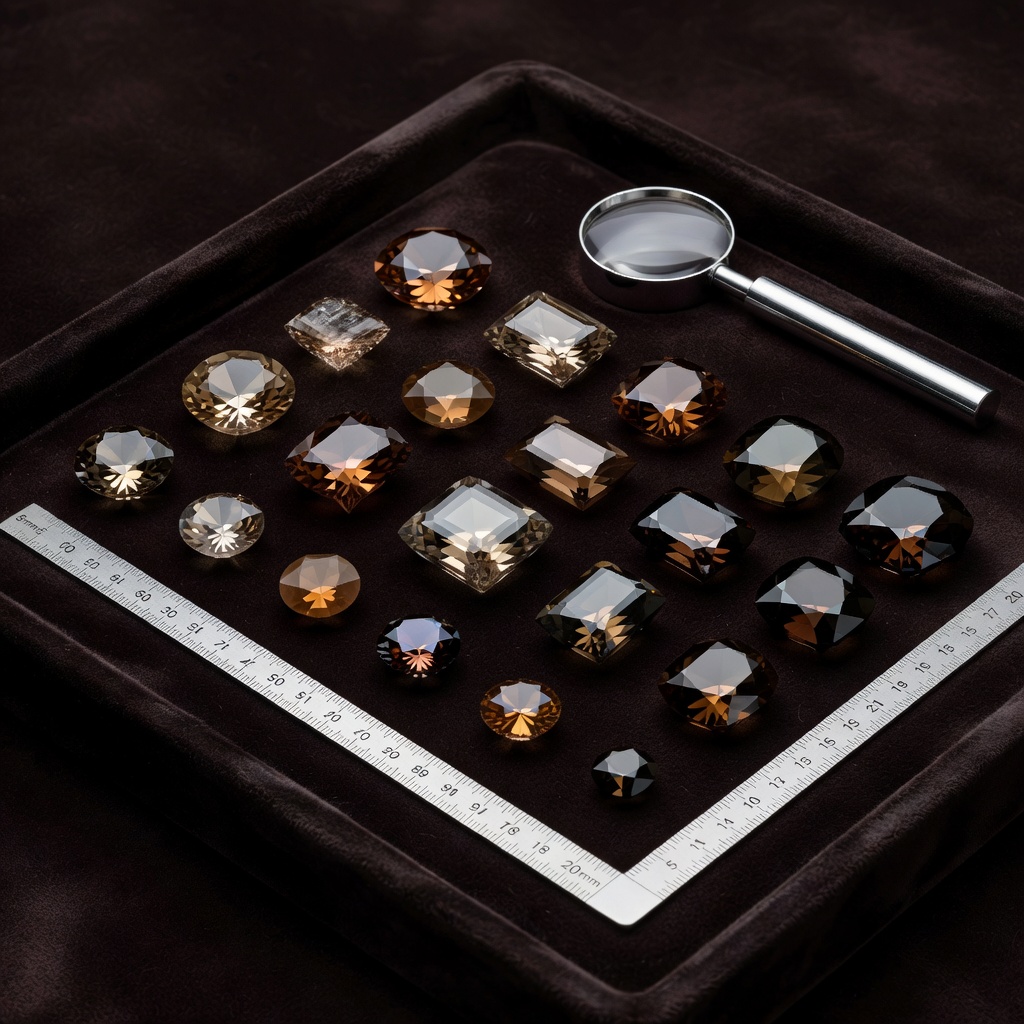
Understanding smoky quartz value per carat requires familiarity with the three-tier grading system used by major dealers and auction houses worldwide. Commercial grade material, characterized by light coloration, moderate inclusions, and standard calibrated cuts, typically trades between $5 and $20 per carat, making it accessible for fashion jewelry and entry-level collections. These stones often originate from high-volume Brazilian deposits and may undergo irradiation treatment to enhance their color saturation, representing the bulk of the current market supply.
Fine quality smoky quartz, ranging from $20 to $100 per carat, features medium to dark color saturation, eye-clean clarity, and precision cutting that maximizes brilliance and color depth. This category includes naturally colored specimens from reputable localities and represents the sweet spot for serious jewelry collectors seeking both beauty and value retention. At the apex of the market, collector specimens command $100 to $500 or more per carat, encompassing large crystals over 50 carats, rare morion varieties with natural deep black coloration, and historically significant pieces with documented provenance from depleted mines.
Natural vs. Irradiated Smoky Quartz Values
The distinction between natural vs irradiated smoky quartz represents one of the most significant value differentiators in the brown quartz market, with untreated specimens commanding substantial premiums among knowledgeable collectors. Natural smoky quartz derives its color from aluminum impurities and natural radiation exposure within the earth over millions of years, creating subtle color zoning and depth variations visible under magnification. In contrast, irradiated stones undergo artificial gamma ray or neutron bombardment to simulate natural coloration, resulting in uniform saturation that, while aesthetically pleasing, lacks the geological history prized by serious mineral collectors.
Identification methods for detecting treatment include examining color distribution patterns, as natural stones often show uneven coloration concentrated near crystal terminations, while irradiated material typically displays uniform color throughout. Professional certification from laboratories such as GIA (Gemological Institute of America) or AGL (American Gemological Laboratories) provides definitive verification of natural origin, with certified natural specimens from specific localities commanding 20-40% price premiums over treated material. For investment purposes, collectors should insist upon accompanying documentation that specifies "no indications of heating or irradiation" to ensure maximum resale value and authenticity.
Color Varieties and Their Market Premiums
The brown quartz family encompasses several distinct color varieties, each commanding unique market premiums based on rarity and aesthetic appeal, with morion quartz price levels reflecting its status as the most coveted variety. Morion quartz, characterized by its intensely dark, nearly opaque black-brown coloration, occurs rarely in nature and typically costs two to three times more than standard smoky varieties. Authentic natural morion from specific Alpine localities or Scotland's Cairngorm region represents the pinnacle of the collector market, with exceptional crystals achieving prices exceeding $1,000 per carat at specialized mineral auctions.
Scottish Cairngorm quartz holds particular historical significance, having been mined since the 18th century for traditional Scottish jewelry and dirk decorations, with authentic specimens carrying provenance premiums of 50-100% over similar-quality material from other localities. Regional preferences significantly impact color premiums, with Asian markets traditionally favoring lighter, more translucent cognac-colored stones, while European and North American collectors prefer deeper, more saturated specimens. Understanding these geographic preferences allows savvy buyers to identify undervalued material that may appreciate as market tastes evolve or specific mining localities become depleted.
Cut, Carat Weight, and Clarity Considerations
Evaluating smoky quartz gemstone prices requires careful consideration of cutting style, with standard calibrated cuts offering the most cost-effective options for jewelry applications while custom designer faceting commands significant premiums. Standard oval, cushion, and round brilliant cuts maximize rough utilization efficiency, typically resulting in 15-20% lower per-carat prices compared to fancy cuts such as marquise, pear, or specialty designer shapes that require greater rough wastage and skilled labor. Step cuts, including emerald and Asscher styles, particularly enhance the color depth of high-clarity smoky quartz but may increase costs by 25-30% due to material loss during cutting.
Price scaling for large carat weights follows non-linear patterns, with stones exceeding ten carats commanding exponential premiums due to the rarity of large, clean rough material. A twenty-carat eye-clean smoky quartz might cost three to four times more per carat than a five-carat stone of similar quality, reflecting the scarcity of large crystals free from fractures and inclusions. Cabochon cutting provides excellent value for opaque or heavily included material, with smooth-domed stones typically priced 40-50% below faceted equivalents, making them ideal for bohemian-style jewelry and men's accessories where brilliance takes secondary importance to color and texture.
Geographic Origins and Rarity Pricing
Provenance significantly influences valuation in the brown quartz market, with cairngorm quartz value serving as the benchmark for locality-based pricing premiums among serious collectors. Scottish Cairngorm specimens, particularly those mined historically before the 20th century, command exceptional prices due to their cultural significance and the depletion of traditional mining sites, with documented antique crystals achieving prices five to ten times higher than equivalent modern Brazilian material. Swiss Alpine specimens, especially those from the Uri and Valais regions, similarly command collector premiums due to their association with classic mineralogy and the exceptional clarity typical of high-altitude Alpine deposits.
Brazilian commercial deposits currently supply approximately 80% of the world's smoky quartz market, offering consistent quality at accessible price points, though specimens lack the rarity premiums associated with European localities. Colorado smoky quartz, particularly from the Pikes Peak region, occupies a middle market position, offering American collectors domestically sourced material with moderate premiums over Brazilian goods. When purchasing origin-specific material, buyers should request detailed provenance documentation including mining district information and, when possible, historical mining records to verify authenticity and support future resale values.
Retail vs. Wholesale Buying Strategies
Navigating the buying smoky quartz wholesale market requires understanding typical markup structures, with retail jewelry stores typically applying 200-300% markups over wholesale costs to cover overhead, certification, and setting services. Brick-and-mortar establishments generally price commercial grade smoky quartz jewelry between $50 and $200 per carat at retail, while the same material might trade for $15-40 per carat in wholesale lots of ten carats or more. Online marketplaces offer intermediate pricing, typically 20-30% below physical retail stores, though buyers must factor in shipping costs and the inability to examine stones personally before purchase.
Wholesale purchasing requires establishing dealer relationships and typically involves minimum order quantities ranging from $1,000 to $5,000 for access to tier-one pricing. Mineral shows and gemological conventions provide opportunities for wholesale acquisitions without ongoing business relationships, allowing collectors to purchase rough or cut stones at 40-60% below retail. When buying wholesale, prioritize established dealers who provide detailed treatment disclosure and origin information, as the wholesale market contains significant quantities of misrepresented irradiated material passed off as natural coloration to unsuspecting buyers.
Investment Potential and Resale Considerations
Evaluating smoky quartz investment value requires realistic expectations regarding appreciation potential, as brown quartz generally offers stability rather than dramatic value increases compared to precious gems like sapphire or emerald. The market demonstrates particular stability for rare specimens from depleted mines, with Scottish Cairngorm and certain Alpine localities showing modest annual appreciation rates of 3-5% over multi-decade holding periods. However, commercial grade material typically maintains steady value without significant appreciation, functioning better as wearable assets than speculative investments.
Collector trends increasingly favor documented natural specimens with established provenance, suggesting that investment-focused buyers should prioritize untreated stones with laboratory certification and detailed locality information. Resale considerations necessitate maintaining original purchase documentation, certificates of authenticity, and high-resolution photography to maximize secondary market values. Insurance valuations should reflect replacement costs rather than purchase prices, typically requiring independent appraisals every three to five years to account for market fluctuations and ensure adequate coverage for rare specimens.
Frequently Asked Questions
How much is smoky quartz worth per carat?
Smoky quartz typically ranges from $5 to $100 per carat for jewelry-grade stones, with commercial quality pieces costing $5-$20 per carat, fine quality ranging $20-$100 per carat, and rare collector specimens or large crystals potentially exceeding $500 per carat depending on origin and clarity. The vast price range reflects differences in color saturation, clarity grades, and whether the stone has undergone treatment processes. Larger stones over ten carats with exceptional clarity command disproportionately higher per-carat prices due to the scarcity of large clean rough material in the market.
Is irradiated smoky quartz less valuable than natural?
Yes, naturally colored smoky quartz generally commands 20-40% higher prices than irradiated specimens, particularly for high-end collector pieces. However, irradiated stones are common in commercial jewelry and offer affordable alternatives while maintaining identical physical properties and durability. The price differential stems primarily from collector preferences for geological authenticity rather than aesthetic differences, as modern irradiation techniques can produce visually identical coloration to natural material.
What is morion quartz and why is it more expensive?
Morion quartz is an intensely dark, nearly black variety of smoky quartz. It commands premium prices due to its rarity and the depth of its natural coloration, often costing 2-3 times more than lighter smoky varieties. Authentic natural morion from specific localities like Scotland or Switzerland is particularly valuable to collectors because it represents the deepest color saturation achievable in the quartz family without treatment. The scarcity of large, clean morion crystals suitable for faceting further drives prices upward in the specialty gem market.
How can I tell if smoky quartz is real or synthetic?
Genuine smoky quartz contains natural inclusions, shows varying color distribution, and feels cool to the touch. Synthetic quartz appears too perfect with uniform color. Professional testing using refractive index measurements (1.544-1.553) or certification from gemological laboratories provides definitive verification. Additionally, natural smoky quartz often exhibits characteristic color zoning under magnification, with darker concentrations near crystal terminations, while synthetic material displays unnaturally uniform coloration throughout the crystal structure.
Does smoky quartz increase in value over time?
While smoky quartz is not typically considered a high-appreciation investment gem like sapphire or ruby, rare specimens from depleted mines (such as certain Scottish or Alpine localities) may appreciate modestly over decades. Most commercial smoky quartz maintains steady value but does not significantly increase. The stone functions best as a wearable asset with stable liquidity rather than a speculative investment vehicle, though museum-quality specimens with exceptional size and provenance occasionally achieve notable price appreciation at specialty auctions.
Why is some smoky quartz so cheap while other pieces are expensive?
Price differences stem from color intensity, clarity, size, origin, and treatment status. Mass-produced irradiated Brazilian quartz with light color and inclusions is inexpensive, while large, naturally dark, eye-clean crystals from historic localities like Cairngorm, Scotland command premium prices due to rarity and collector demand. The cutting quality also significantly impacts pricing, with custom precision-cut stones costing substantially more than commercial mass-produced cuts. Additionally, certification and documentation costs add value to higher-priced specimens while being unnecessary for inexpensive commercial material.
Where is the best place to buy authentic smoky quartz?
Reputable gem dealers, established jewelry stores with GIA-certified staff, and specialized mineral shows offer the best authenticity guarantees. Online marketplaces like GemSelect or specialized auction houses work for experienced buyers. Always request origin documentation and certification for purchases over $500. When buying locally, seek dealers who specialize in colored gemstones rather than general jewelry stores, as specialized dealers typically possess greater expertise in identifying treatments and verifying natural origin. Building relationships with trusted dealers provides access to pre-screened inventory and advance notice of exceptional specimens.
What cut of smoky quartz offers the best value for jewelry?
Standard oval and cushion cuts typically offer the best value due to efficient rough utilization and high market demand. Fancy cuts may cost 20-30% more due to labor costs. Cabochons provide excellent value for opaque or included material, while step cuts like emeralds maximize color in high-clarity stones but may waste more rough material. For budget-conscious buyers seeking maximum visual impact, consider calibré-cut stones in rectangular or square shapes, which offer excellent yield from rough material while providing modern, versatile aesthetics suitable for various jewelry styles.