Understanding Smoky Quartz: Properties and Origins
Smoky Quartz represents one of the most fascinating varieties of crystalline silicon dioxide, distinguished by its translucent to opaque appearance and characteristic earthy tones. With a Mohs hardness rating of 7, this gemstone offers reasonable durability for various jewelry applications while remaining accessible to cutters and polishers. The mineral's chemical composition remains identical to clear quartz and amethyst, yet natural geological processes create the distinctive smoke-like coloration that makes this variety highly sought after by collectors and jewelry enthusiasts alike.
The captivating brown to gray hues of natural Smoky Quartz emerge through a complex interaction between aluminum impurities and natural irradiation occurring deep within the earth's crust. Over millions of years, radioactive elements in surrounding minerals emit gamma rays that alter the oxidation states of aluminum atoms within the quartz crystal lattice, creating color centers that absorb light and produce the characteristic smoky appearance. This natural radiation process occurs at an incredibly slow pace, meaning that deeply colored specimens often indicate extensive geological timeframes and stable environmental conditions during formation.
Major mining operations for commercial Smoky Quartz concentrate in Brazil's Minas Gerais region, where massive pegmatite deposits yield crystals weighing hundreds of pounds with exceptional clarity and consistent coloration. Colorado's Pike's Peak area represents another significant source, particularly known for producing crystals with distinctive clarity and association with amazonite and topaz in granitic environments. Scotland's Cairngorm Mountains provide historical significance, lending their name to the "Cairngorm" variety, which traditionally exhibits a light to medium brown tone distinct from the darker Morion specimens found in European alpine deposits.
Discerning collectors should understand the distinction between Cairngorm and Morion varieties when evaluating specimens for their collections. Cairngorm quartz, named after the Scottish mountain range, typically presents as translucent with warm brown to yellowish-brown tones and often contains characteristic rutile needle inclusions. Morion quartz identification requires attention to its very dark, nearly opaque black-brown coloration resulting from intense natural irradiation, creating a dramatic appearance highly prized in Art Deco jewelry and contemporary statement pieces. Both varieties command respect in the gemological community, though Morion's rarity and intense coloration generally position it at higher price points in the current market.
Color Variations: From Light Gray to Deep Morion
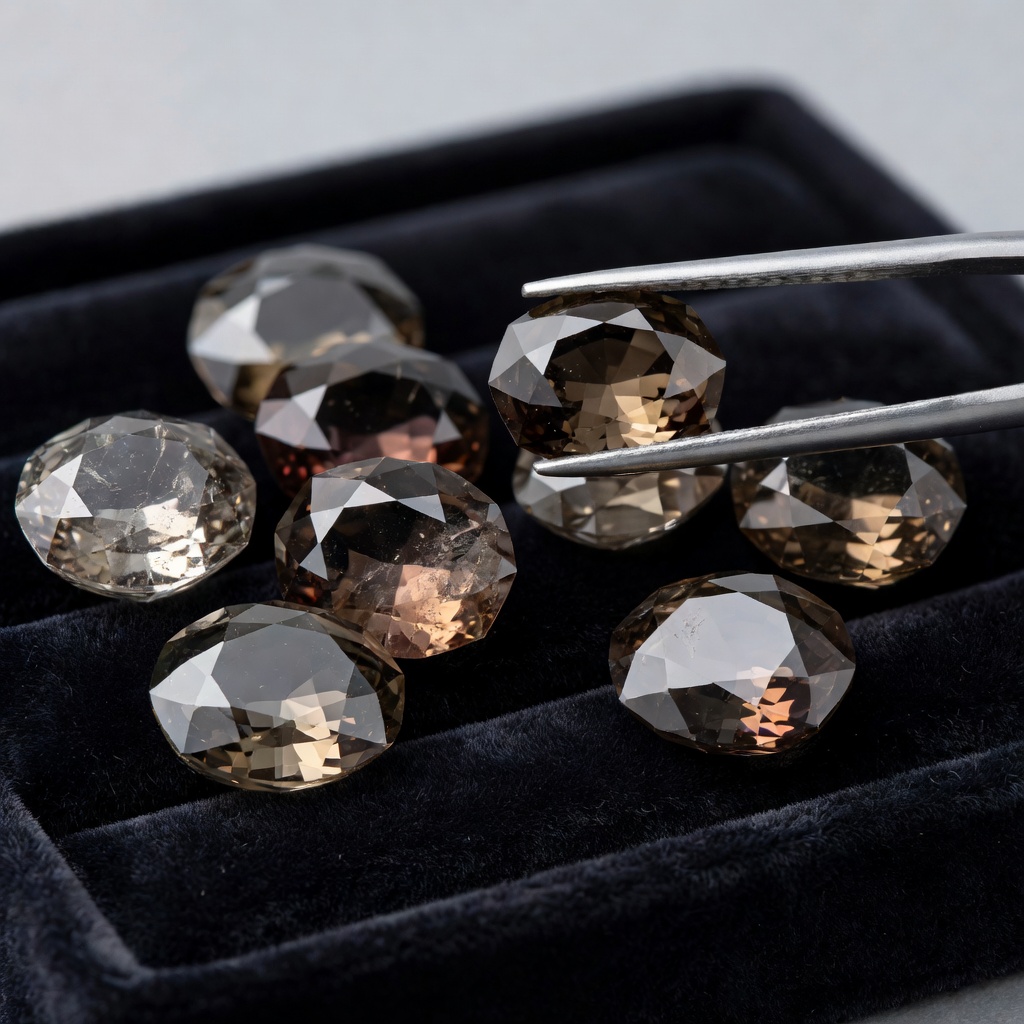
The spectrum of acceptable Smoky Quartz colors spans an impressive range from pale, silvery gray reminiscent of morning fog to the intense black-brown saturation of premium Morion specimens. Unlike many gemstones where specific hues determine value, Smoky Quartz offers versatility across its color range, with market preferences varying significantly by region and intended use. Light gray specimens with excellent clarity appeal to minimalist jewelry designers seeking subtle elegance, while the deep chocolate and espresso tones favored in traditional European markets demonstrate the gem's remarkable chromatic diversity.
Color saturation directly influences both the aesthetic appeal and market value of Smoky Quartz specimens, creating distinct pricing tiers within the commercial landscape. Stones exhibiting medium to dark brown tones with even distribution throughout the crystal structure typically command premium positioning, as these hues maximize the gem's distinctive "smoky" character and provide optimal contrast when set in precious metals. However, exceptionally clear light gray specimens with high brilliance can achieve comparable values when cut precisely to maximize light return, particularly in fancy shapes like cushions and emerald cuts that emphasize clarity over saturation.
Regional color preferences reveal fascinating cultural variations in Smoky Quartz consumption patterns across global markets. North American buyers increasingly gravitate toward darker, more saturated specimens that read as nearly black in certain lighting conditions, reflecting contemporary trends favoring bold, dramatic jewelry statements. Conversely, Asian markets often demonstrate preference for lighter, more translucent varieties that allow maximum light transmission and subtle color shifts throughout the day, creating different investment and collection opportunities depending on target demographics.
The orientation of cutting significantly impacts how Smoky Quartz displays its color, requiring skilled lapidaries to consider crystal structure when maximizing visual appeal. Quartz exhibits directional color properties based on the optical axis, meaning that cutting the table perpendicular to the c-axis typically yields the most intense color presentation, while parallel orientation may result in washed-out or uneven appearance. Experienced cutters often sacrifice carat weight to achieve optimal color orientation, particularly with lighter rough material, ensuring that finished gemstones display the rich, uniform tones that discerning buyers expect from high-quality Smoky Quartz.
Natural vs. Treated: Identification Essentials
Distinguishing between natural and irradiated Smoky Quartz represents a critical skill for collectors and jewelry buyers seeking transparency in their acquisitions. While both natural geological processes and laboratory irradiation can produce the characteristic brown coloration, understanding the differences helps buyers make informed decisions about value, authenticity, and personal preferences. The gemstone industry employs various enhancement techniques to improve the appearance of pale or colorless quartz, making disclosure and identification knowledge essential components of ethical purchasing practices.
Natural vs irradiated Smoky Quartz presents distinct visual characteristics that experienced gemologists and informed consumers can often recognize without specialized equipment. Natural specimens typically display uneven color distribution, with concentrations of darker tones near crystal terminations or along fracture planes where natural radiation exposure varied during formation. These stones may show color zoning, phantoms, or gradient shifts that tell the story of their geological formation. In contrast, artificially irradiated material often exhibits remarkably uniform color saturation throughout the crystal, lacking the organic variation that characterizes naturally colored specimens.
Safety considerations regarding irradiated gemstones concern many buyers, though modern treatment protocols ensure that enhanced Smoky Quartz poses no health risks to consumers. Reputable treatment facilities use controlled radiation exposure followed by appropriate safety holding periods to allow any residual radioactivity to decay to safe levels before releasing stones to market. Regulatory bodies in major trading centers monitor these processes, and sellers should provide documentation confirming that irradiated gems meet international safety standards for wearable jewelry items.
The importance of seller disclosure cannot be overstated when purchasing Smoky Quartz, as treatment status significantly affects both value and collectibility. Natural, untreated specimens command substantial premiums in the collector market, particularly for large crystals or exceptional Morion varieties with documented provenance. Reputable dealers should explicitly state whether stones have been subjected to irradiation or heat treatment, and buyers should request written confirmation of natural status when investing in high-value pieces. Certification from recognized gemological laboratories provides additional security, documenting not only treatment status but also geographical origin when possible.
Quality Assessment: The Four Cs Framework
Evaluating Smoky Quartz quality requires applying the established Four Cs framework—Color, Clarity, Cut, and Carat weight—while understanding how these factors specifically manifest in this unique quartz variety. Unlike diamonds or sapphires where rigid grading scales apply, Smoky Quartz assessment allows for greater flexibility in personal preference, though certain universal standards distinguish commercial material from fine specimens worthy of significant investment. Mastering these evaluation criteria enables buyers to select stones that balance aesthetic appeal with long-term value retention.
Smoky Quartz clarity grades range from eye-clean specimens showing no visible inclusions to those containing characteristic mineral inclusions that may actually enhance value for certain collectors. Commercial jewelry typically demands eye-clean stones where no inclusions are visible to the unaided eye from a distance of six inches, ensuring that the gem's smoky color remains the focal point. However, collectors of mineral specimens often specifically seek stones containing rutile needles, chlorite phantoms, or other inclusion patterns that create visual interest and prove natural formation, meaning that clarity standards vary significantly based on intended use.
Optimal cutting styles for Smoky Quartz depend largely on the rough material's color depth and clarity characteristics, with different shapes maximizing various optical properties. Step cuts such as emerald and asscher shapes excel at displaying the gem's color depth and clarity, making them ideal for darker specimens where light return matters less than color presentation. Brilliant cuts including rounds and ovals suit lighter material better, as the faceting pattern maximizes light reflection and can make pale stones appear more lively and saturated than their actual color grade would suggest.
Carat weight pricing structure for Smoky Quartz follows a relatively linear progression compared to precious gems like ruby or sapphire, though significant premiums emerge for exceptional large specimens. Commercial-grade material remains affordable even in sizes exceeding ten carats, making Smoky Quartz an excellent choice for bold cocktail rings and statement pendants without prohibitive cost. However, prices escalate dramatically for large crystals exceeding fifty carats that maintain eye-clean clarity and deep, even coloration, particularly for natural Morion specimens or those with documented origins from depleted mines like Scotland's Cairngorm deposits.
Color zoning and uniformity evaluation require careful examination under various lighting conditions to assess how evenly the brown to gray tones distribute throughout the crystal. Premium specimens exhibit consistent color from crown to pavilion without noticeable windows or light patches, while lower-grade material may show distinct banding or center-to-edge variations. Buyers should examine stones face-up, through the side, and against a white background to detect any zoning issues that might affect the gem's appearance when set in jewelry or displayed in a collection.
Pricing Guide: What to Expect in 2024
Understanding current Smoky Quartz price per carat ranges empowers buyers to budget appropriately while recognizing genuine value opportunities in the marketplace. The pricing landscape for 2024 reflects steady demand for this versatile gemstone, with distinct tiers separating commercial material from investment-grade specimens. While Smoky Quartz remains among the more affordable colored gemstones, significant price variations exist based on quality factors, treatment status, and size parameters that informed buyers must navigate carefully.
Current market data indicates that commercial-grade Smoky Quartz typically trades between $2 and $10 per carat, representing material suitable for fashion jewelry and casual wear pieces. This tier includes lighter-toned specimens, those with minor inclusions visible under magnification, and stones under five carats in standard cuts. Mid-grade material with medium to dark coloration, eye-clean clarity, and precision cutting commands $10 to $30 per carat, offering excellent value for significant jewelry pieces where appearance matters but budget constraints exist.
Premium Smoky Quartz pricing escalates to $20-$100 per carat for exceptional specimens exhibiting deep, even Morion coloration, flawless clarity, and expert cutting that maximizes both brilliance and color depth. Large crystals exceeding twenty carats that maintain these quality standards may exceed $100 per carat, particularly for natural, untreated material with documented origins from desirable locations like Colorado or Scotland. Factors commanding these premium pricing tiers include rarity of large clean crystals, intensity of natural coloration without enhancement, and historical provenance that adds collector value beyond mere material worth.
When comparing Smoky Quartz value against other quartz varieties like Amethyst and Citrine, buyers will find that Smoky Quartz generally occupies a middle price position. While fine Amethyst with deep Siberian color may command higher per-carat prices due to market preferences for purple hues, and Citrine remains slightly less expensive due to abundant supply, Smoky Quartz offers distinctive advantages in durability and versatility. The gem's neutral brown-gray tones complement a wider range of skin tones and wardrobe choices than more color-specific alternatives, potentially offering better long-term wearability and style flexibility for jewelry investments.
Investment potential for Smoky Quartz remains modest compared to precious gems like emerald or sapphire, though the market demonstrates consistent stability that appeals to conservative collectors. Unlike trend-dependent stones that experience volatile price swings, Smoky Quartz maintains steady demand across jewelry manufacturing and mineral collecting communities. Specimens most likely to appreciate include large natural Morion crystals with documented provenance, exceptional untreated specimens from historically significant locations, and stones featuring rare inclusion patterns or phantom formations that appeal to specialized collectors.
Jewelry Applications and Setting Recommendations
Selecting appropriate Smoky Quartz jewelry settings requires balancing aesthetic considerations with practical durability concerns specific to this Mohs 7 gemstone. While sufficiently hard for daily wear, Smoky Quartz lacks the toughness of sapphire or diamond, necessitating thoughtful setting choices that protect the stone while showcasing its distinctive coloration. Modern jewelry designers increasingly favor this gem for both contemporary and vintage-inspired creations, offering consumers diverse options for incorporating smoky tones into their personal collections.
Durability considerations vary significantly between rings intended for daily wear versus pendants and earrings subjected to less mechanical stress. Smoky Quartz rings face constant exposure to hard surfaces, cleaning chemicals, and impact risks that may cause chipping or abrasion over time, making protective settings essential for longevity. Bezels and partial bezels offer superior protection compared to prong settings, wrapping the gem's vulnerable girdle and edges in metal while creating a sleek, modern aesthetic that complements the stone's earthy sophistication.
Best metal pairings for Smoky Quartz include sterling silver, white gold, and rose gold, each offering distinct visual effects that enhance different color variations within the stone. Sterling silver and white gold create striking contrast against warm brown tones, emphasizing the gem's smoky character and providing contemporary, sophisticated presentation. Rose gold complements lighter specimens with pinkish undertones, creating romantic, vintage-inspired pieces, while yellow gold offers traditional warmth that harmonizes with the deepest Morion varieties for classic, timeless appeal.
Protective settings for daily wear pieces should incorporate design elements that elevate the stone above potential contact surfaces while securing it against impact. Halo settings surrounding Smoky Quartz with diamond or white sapphire accents not only protect the center stone's perimeter but also create optical contrast that makes the smoky center appear darker and more saturated. For active individuals, gypsy or flush settings that embed the stone within the metal band provide maximum security, though these styles sacrifice some light return and brilliance compared to elevated settings.
Design styles that complement smoky tones span historical periods from Art Deco geometry to Bohemian freeform aesthetics, offering versatility for diverse personal styles. Art Deco-inspired pieces featuring baguette-cut Smoky Quartz in symmetrical, architectural settings highlight the gem's sophisticated, mysterious qualities, while Bohemian designs incorporating rough or tumbled stones in organic silver settings emphasize natural, earthy connections. Contemporary minimalist settings that rely on clean lines and negative space allow the stone's color to command full attention, suitable for professional environments where subtle elegance prevails over ostentation.
Authentication and Certification Standards
Securing proper documentation for Smoky Quartz purchases protects consumers from misrepresentation while ensuring ethical sourcing practices within the gemstone trade. While not every purchase requires laboratory verification, understanding when to request professional assessment helps buyers avoid costly mistakes when investing in significant specimens. Reputable gemological laboratories provide standardized evaluation criteria that transcend seller claims, offering objective data regarding treatment status, synthetic identification, and quality assessment.
Buyers should request laboratory reports for stones exceeding five carats, pieces costing over $500, or specimens marketed as natural, untreated material from specific localities. These reports verify whether color results from natural irradiation geological processes or artificial enhancement, significantly affecting value and collectibility. Additionally, certification proves essential for estate pieces or antique jewelry where treatments may not have been disclosed according to modern standards, protecting both buyers and sellers in secondary market transactions.
Reputable gemological laboratories including the Gemological Institute of America (GIA), American Gem Society (AGS), and International Gemological Institute (IGI) offer standardized testing protocols for quartz varieties. These institutions utilize advanced spectroscopy, microscopy, and radiation detection equipment to identify treatments, synthetics, and natural characteristics unique to genuine Smoky Quartz. While smaller regional laboratories may offer competent services, reports from these major institutions carry universal recognition and facilitate easier resale or insurance valuation.
Red flags indicating synthetic or imitation materials include perfectly uniform color without natural zoning, the presence of curved striations characteristic of hydrothermal synthetic quartz, or gas bubbles suggesting glass imitation. Genuine Smoky Quartz exhibits natural inclusions, color zoning, and specific refractive index measurements that distinguish it from look-alike materials such as smoky topaz (actually irradiated colorless topaz), andalusite, or treated glass. Buyers should examine stones under magnification for natural crystal growth patterns and test for double refraction using a polariscope when possible, as quartz exhibits distinctive optical properties that imitations cannot replicate.
Understanding origin reports and ethical Smoky Quartz sourcing documentation addresses growing consumer concern regarding environmental impact and fair labor practices in mining operations. Responsible vendors should provide chain-of-custody documentation tracing stones from specific mines known for environmental compliance and fair wage standards. Scotland's Cairngorm sourcing and certain Brazilian artisanal mining operations offer examples of ethical extraction, while buyers should approach material from conflict zones or regions with documented labor abuses with appropriate skepticism regardless of attractive pricing.
Smart Shopping: Where and How to Buy
Navigating the modern gemstone marketplace requires distinguishing between legitimate vendors and those employing deceptive practices to move inferior merchandise. Whether choosing to buy Smoky Quartz online or through traditional brick-and-mortar establishments, consumers must develop critical evaluation skills and insist on transparency regarding treatment status, quality grading, and return policies. The accessibility of this gemstone through multiple channels offers advantages for comparison shopping, though each purchasing method presents unique considerations for ensuring satisfactory acquisitions.
Evaluating online vendors versus brick-and-mortar stores involves weighing convenience and selection against the ability to physically examine stones before purchase. Established online retailers specializing in colored gemstones often provide extensive inventories with detailed photography, competitive pricing due to lower overhead costs, and educational resources that physical stores cannot match. However, the inability to assess color accuracy through digital displays or examine clarity characteristics under magnification necessitates choosing vendors with robust return policies, typically offering minimum thirty-day inspection periods with full refunds.
Essential questions to ask before purchasing include specific inquiries about treatment status ("Is this stone naturally colored or has it been irradiated?"), origin documentation ("Can you provide the mining location?"), and quality specifics ("What is the clarity grade and are there any visible inclusions?"). Reputable dealers welcome detailed questions and provide specific answers rather than vague assurances. Buyers should also inquire about whether the stone has undergone any temporary treatments such as oiling or waxing to improve appearance, practices that require disclosure but sometimes go unmentioned by less scrupulous sellers.
Photography tricks represent common pitfalls in online gemstone purchasing, with unscrupulous sellers using enhanced lighting, wet stones, or colored backgrounds to exaggerate color depth and hide inclusions. Professional gemstone photography should display stones against neutral gray or white backgrounds under standardized lighting conditions, with multiple angles showing the crown, pavilion, and side profiles. Buyers should request additional images or video if listings show only highly stylized promotional photography, and should be wary of stones appearing significantly darker or more saturated than typical for their price range.
Return policies and inspection periods provide crucial protection when buying Smoky Quartz, particularly for significant investments or untreated natural specimens. Standard industry practice allows for inspection periods ranging from seven to thirty days, during which buyers can examine the stone under various lighting conditions, have it evaluated by an independent appraiser, or compare it against other options. Avoid vendors offering "final sale" terms on untreated gemstones or those charging substantial restocking fees, as these policies often indicate seller awareness of undisclosed treatments or quality issues.
Care and Maintenance Best Practices
Proper Smoky Quartz care tips ensure that these beautiful gemstones maintain their appearance and structural integrity across decades of enjoyment. While relatively durable compared to softer gem materials, Smoky Quartz requires specific handling protocols to prevent fading, scratching, or fracture damage that could diminish both beauty and value. Implementing consistent maintenance routines protects your investment while preserving the distinctive smoky coloration that makes these stones unique.
Safe cleaning methods for Smoky Quartz involve only lukewarm water and mild dish soap applied with a soft-bristled brush, avoiding harsh chemicals, ultrasonic cleaners, and steamers that could damage the stone. The mild detergent solution effectively removes skin oils, cosmetics, and environmental grime that accumulate during normal wear, restoring brilliance without risking chemical reactions or thermal shock. After cleaning, stones should be rinsed thoroughly in clean water and patted dry with a lint-free cloth rather than rubbed, which could transfer fibers or create static that attracts dust.
Avoiding ultrasonic cleaners and steamers remains particularly important for Smoky Quartz due to the potential presence of liquid-filled inclusions or internal fractures that could expand under thermal or vibrational stress. While the gemstone's Mohs hardness of 7 resists scratching from dust and normal wear, its toughness rating indicates susceptibility to cleavage or fracturing along internal planes when subjected to rapid temperature changes or mechanical vibration. Even eye-clean specimens may contain microscopic fractures invisible to the unaided eye that could propagate under ultrasonic treatment, potentially destroying the stone.
Storage recommendations emphasize keeping Smoky Quartz jewelry separate from harder gemstones like diamonds, rubies, and sapphires that could scratch the quartz surface during contact. Individual soft pouches or compartmentalized jewelry boxes prevent abrasion between pieces, while maintaining pieces away from direct sunlight prevents the color fading that can occur with prolonged UV exposure. For long-term storage of loose specimens or valuable jewelry, acid-free tissue paper and darkness provide optimal preservation conditions.
Protecting Smoky Quartz from prolonged sun exposure addresses the specific vulnerability of this gemstone to photochemical reactions that can lighten or alter its coloration over time. The same natural irradiation processes that create the smoky color can reverse slightly under intense UV exposure, meaning that display pieces left in sunny windows or jewelry worn constantly during outdoor activities may gradually fade. Removing rings before swimming in chlorinated pools or hot tubs also prevents both chemical damage and thermal shock, ensuring that your Smoky Quartz retains its mysterious, smoky depths for generations.
Frequently Asked Questions
How can I tell if Smoky Quartz is natural or artificially irradiated?
Natural Smoky Quartz typically shows uneven color distribution and may contain natural inclusions, while irradiated stones often display uniform color saturation. Professional gemological testing can definitively identify treatment, and reputable sellers should always disclose enhancement status.
What is the average price range for quality Smoky Quartz?
Commercial-grade Smoky Quartz typically costs $2-$10 per carat, while fine specimens with deep, even color and excellent clarity can command $20-$100 per carat. Exceptional large crystals or rare Morion specimens may exceed these ranges.
Does Smoky Quartz fade in sunlight?
Yes, prolonged exposure to direct sunlight can cause Smoky Quartz to fade or lose its depth of color over time. Store your jewelry in a dark place when not wearing it, and avoid leaving display pieces in sunny windows.
Is Smoky Quartz durable enough for engagement rings or daily wear?
With a Mohs hardness of 7, Smoky Quartz is reasonably durable but softer than sapphire or diamond. It's suitable for daily wear in protective settings like bezels or halos, though rings may show scratches over time requiring professional polishing.
What is the difference between Morion and regular Smoky Quartz?
Morion refers to very dark, nearly black Smoky Quartz that is naturally irradiated and typically opaque to translucent. Regular Smoky Quartz ranges from light gray to medium brown and is usually more transparent. Morion commands higher prices due to rarity.
Can I clean Smoky Quartz in an ultrasonic cleaner?
No, ultrasonic cleaning is not recommended for Smoky Quartz as the vibrations can exacerbate existing fractures or cleavage planes. Clean gently using lukewarm water, mild dish soap, and a soft brush, then pat dry with a lint-free cloth.
Which precious metals pair best with Smoky Quartz jewelry?
Sterling silver and white gold create striking contrast with the warm brown tones, while yellow gold offers a vintage aesthetic. Rose gold complements the pinkish undertones in lighter specimens. The choice depends on personal style and skin tone.
Should I buy loose Smoky Quartz or pre-set jewelry?
Loose stones allow for independent quality verification and custom setting design, ideal for collectors or specific jewelry projects. Pre-set pieces offer convenience and immediate wearability but make detailed inspection of the stone more difficult.