
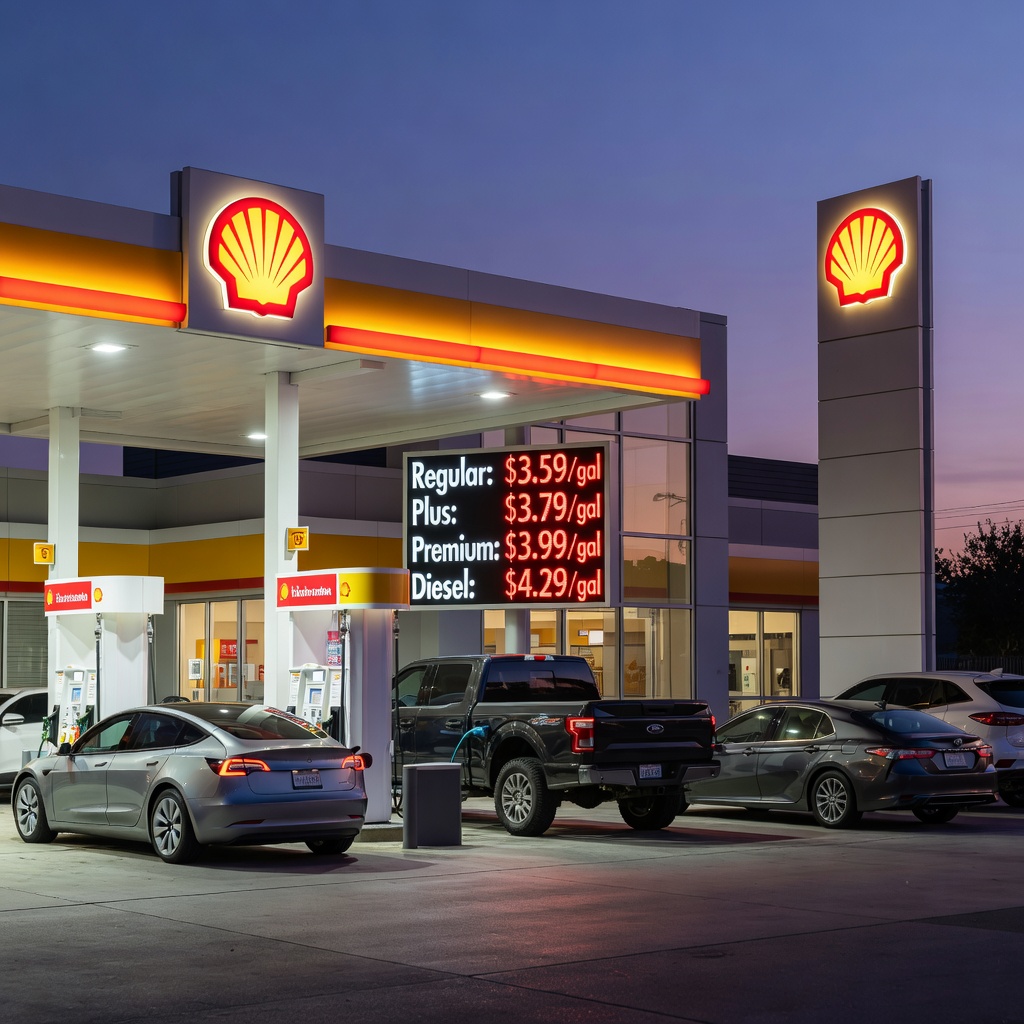
Introduction to Shell Fuel Pricing
Navigating the complex landscape of fuel costs requires reliable information and strategic planning, especially when managing household transportation budgets. The Shell Price Guide serves as an essential resource for motorists seeking transparency in an often volatile market, offering insights into daily rate fluctuations and regional variations across the United Kingdom. Understanding how Shell positions its pricing relative to supermarket competitors and independent retailers empowers drivers to make informed decisions that can save hundreds of pounds annually on fuel expenses.
Tracking Shell fuel prices today has become increasingly important as global energy markets experience unprecedented volatility due to geopolitical tensions and supply chain disruptions. Unlike fixed-price commodities, petrol and diesel rates change daily based on wholesale costs, making real-time price awareness crucial for budget-conscious consumers. This comprehensive guide explores every aspect of Shell's pricing methodology, from the factors driving daily rate changes to practical strategies for locating the most affordable refueling options in your area.
Throughout this article, you will discover actionable methods for reducing fuel expenditures while maintaining access to Shell's premium fuel quality and service standards. We examine the economics behind premium versus regular fuel grades, reveal how location impacts pricing dramatically, and provide step-by-step instructions for maximizing loyalty program benefits. Whether you operate a high-performance vehicle requiring specialized fuel or seek economical commuting solutions, this guide equips you with the knowledge needed to optimize your refueling habits effectively.
Current National Average Shell Fuel Prices
As of the latest market analysis, standard unleaded petrol at Shell stations typically ranges between 142p and 148p per litre across major UK regions, though these figures fluctuate daily based on wholesale market movements. Diesel prices currently command a premium of approximately 2-4p per litre compared to unleaded, reflecting ongoing supply constraints and higher refining costs associated with middle distillate production. Premium fuels such as Shell V-Power Nitro+ generally retail at 10-15p above standard grades, positioning them competitively within the high-performance fuel segment while maintaining accessibility for everyday consumers.
Regional variations significantly impact these averages, with Shell petrol station near me prices varying substantially between London boroughs and northern England locations. Motorway service stations consistently charge the highest premiums, often adding 8-12p per litre compared to urban supermarkets, while rural forecourts may fall somewhere between these extremes depending on delivery logistics and local competition intensity. Shell diesel price updates indicate particular sensitivity to international heating oil demand, causing greater volatility during winter months when commercial heating requirements peak.
Comparing current trends to previous quarters reveals a gradual stabilization following the extreme volatility experienced during 2022-2023, though prices remain elevated compared to pre-pandemic baselines. The gap between Shell and supermarket fuel has narrowed slightly as major retailers engage in aggressive price wars, yet Shell maintains its value proposition through enhanced additive packages and loyalty rewards that offset marginal per-litre premiums for frequent customers.
Understanding Shell's Pricing Structure
Shell employs a dynamic pricing model that responds to multiple market variables, ensuring Shell fuel prices today reflect both global commodity costs and local competitive pressures. Each station receives daily pricing directives based on Platts wholesale market assessments, adjusted for regional delivery costs, operational overheads, and targeted profit margins. This sophisticated algorithm considers competitor pricing within a five-mile radius, creating micro-market competition that benefits consumers in densely populated areas while potentially disadvantaging rural motorists with limited alternatives.
The distinction between company-owned and franchise-operated stations significantly impacts the Shell Price Guide, as independent operators possess greater autonomy in setting final pump prices. Company-owned locations typically follow corporate pricing matrices more rigidly, offering consistency but less flexibility for local promotional activities. Conversely, franchise partners may adjust rates based on immediate cash flow requirements, local event traffic, or specific community pricing agreements, sometimes resulting in surprisingly competitive rates at independently operated sites.
Taxation substantially influences the final price consumers pay at the pump, with fuel duty and VAT accounting for approximately 65% of the total retail cost. Current fuel duty stands at 52.95p per litre for both petrol and diesel, with VAT applied at 20% on the total price including duty. When international oil prices drop, government tax components remain fixed, meaning consumers see only partial benefits from wholesale market declines, while price increases in crude markets translate immediately to higher pump prices due to percentage-based VAT calculations.
Shell V-Power vs Regular Fuel: Price Analysis
Conducting a thorough Shell V-Power price comparison reveals consistent premiums of 8-12p per litre above standard unleaded petrol, translating to approximately £4-£6 additional cost per average tank fill. This pricing differential reflects the sophisticated additive package and enhanced refining processes required to achieve higher octane ratings and superior detergency properties. For drivers covering 12,000 miles annually in a vehicle averaging 40mpg, choosing V-Power exclusively adds roughly £120-£150 to yearly fuel expenditures compared to regular unleaded options.
The performance benefits justifying this premium include improved engine cleaning that prevents carbon deposit buildup on intake valves and fuel injectors, potentially reducing long-term maintenance costs for high-mileage vehicles. High-compression engines and turbocharged powertrains particularly benefit from V-Power's 99RON octane rating, which allows advanced ignition timing and prevents damaging knock or pre-ignition events. However, for standard commuter vehicles with naturally aspirated engines designed for 95RON fuel, the performance gains may prove imperceptible during normal driving conditions, making the additional cost difficult to justify purely on mileage improvements.
Strategic fuel selection involves assessing your vehicle's specific requirements and driving patterns rather than defaulting to premium options. Performance cars and luxury vehicles with manufacturer recommendations for high-octane fuel should utilize V-Power consistently to maintain warranty compliance and optimal power delivery. Conversely, economy-focused hatchbacks and older vehicles without variable valve timing systems rarely demonstrate measurable efficiency gains from premium fuels, suggesting occasional V-Power use solely for engine cleaning purposes—perhaps every fourth tank—provides adequate detergent benefits without sustaining the full financial premium year-round.
Regional Price Variations Across Locations
The phenomenon known as the "postcode lottery" dramatically affects cheapest Shell fuel locations, with identical fuel grades varying by as much as 15p per litre between affluent suburban areas and industrial estates within the same city. Motorway service stations represent the extreme end of this spectrum, operating as captive markets where travelers face prices 10-15p higher than equivalent urban stations due to 24-hour operational costs and limited competition. Strategic drivers planning long journeys should refuel before entering motorway networks, utilizing apps to identify Shell petrol station near me prices along alternative A-road routes that frequently offer significant savings.
Urban center locations face opposing economic pressures, with high commercial rents and congestion charges contributing to elevated pricing despite intense competition from supermarket forecourts. Conversely, out-of-town retail parks often host Shell stations with aggressive pricing strategies designed to attract shopping center traffic, sometimes matching or undercutting supermarket fuel prices during promotional periods. Coastal tourist destinations demonstrate seasonal volatility, with prices increasing 3-5p during summer months when visitor traffic peaks and station operators capitalize on reduced price sensitivity among holiday motorists.
International comparisons reveal fascinating disparities in Shell's global pricing strategies, with UK stations generally falling within the upper-middle tier of European pricing due to substantial tax burdens. German Shell stations typically operate 5-8p cheaper before tax adjustments, while French locations face similar structural costs to the UK but often feature more aggressive promotional discounting. Understanding these regional mechanics helps motorists identify consistent patterns, such as Tuesday and Wednesday typically offering lower prices as stations adjust rates mid-week following Monday's wholesale market assessments.
How to Find the Cheapest Shell Stations Near You
Locating cheapest Shell fuel locations requires leveraging digital tools that aggregate real-time pricing data across extensive station networks. The Shell Go+ application provides the most accurate Shell fuel prices today, displaying current rates at nearby stations while integrating loyalty point balances and personalized offers. Users can filter results by fuel type, view station amenities, and plan routes that incorporate strategically priced refueling stops, with the app updating prices every four hours based on station reports and automated fuel management systems.
Third-party comparison platforms such as PetrolPrices.com and Confused.com's fuel price checker offer comprehensive market views that contextualize Shell rates against competitors, helping identify whether traveling an extra mile for Shell fuel represents genuine value or unnecessary expense. These services rely on crowdsourced data and automated scraping, typically updating every 24-48 hours, making them slightly less current than official Shell channels but valuable for identifying pricing trends across broader geographic areas. Advanced users can set price alerts that notify them when local Shell stations drop below predetermined thresholds, enabling strategic postponement of refueling when prices temporarily spike.
Timing your visits strategically impacts costs significantly, with early morning refueling (between 6-8 AM) often catching stations before daily price increases take effect based on overnight wholesale market movements. Tuesday afternoons frequently present optimal pricing windows as stations adjust rates following Monday's market close while avoiding mid-week demand spikes. Additionally, avoiding refueling immediately before bank holidays or during severe weather warnings prevents paying panic-buying premiums that can add 5-8p per litre during supply concerns, regardless of actual availability.
Shell Fuel Rewards and Loyalty Programs
The Shell Fuel Rewards program, branded as Shell Go+ in the UK market, transforms routine refueling into a strategic cost-reduction opportunity through accumulated benefits and partner integrations. Members earn rewards every ten visits regardless of spend amount, receiving £3 fuel vouchers or equivalent shop discounts that effectively reduce net fuel costs by approximately 2-3p per litre for regular users. The program additionally offers 10% savings on forecourt food and beverages, plus exclusive access to promotional pricing events where fuel drops below wholesale cost levels to drive traffic during off-peak periods.
Maximizing program benefits requires understanding the tiered reward structure and partner ecosystem. Linking your Shell Go+ account with Tesco Clubcard or Nectar points creates compound savings opportunities, effectively earning double loyalty currency on single transactions. Credit card partnerships, particularly with American Express and specific high-street banks, provide additional cashback ranging from 1-3% on fuel purchases when linked to the loyalty program. Strategic users time large purchases—such as motorway services during family trips—to coincide with bonus point promotions, accelerating progress toward reward thresholds.
Beyond immediate discounts, the program provides personalized pricing offers based on purchasing history, with infrequent users occasionally receiving "win-back" discounts of 5-10p per litre to encourage return visits. Business users operating fleet vehicles can access Shell Fleet Solutions, offering consolidated billing and volume discounts that reduce costs by 3-5p per litre for organizations consuming over 1,000 litres monthly. The mobile application's digital wallet functionality ensures rewards never expire unused, automatically applying the best available discount during payment to maximize savings without requiring manual voucher management.
Factors Affecting Shell Fuel Prices
Global crude oil markets serve as the primary driver behind Shell fuel prices today, with Brent crude fluctuations directly impacting wholesale petrol and diesel costs within 48-72 hours of trading desk adjustments. Geopolitical instability in major producing regions, OPEC+ production quota decisions, and strategic petroleum reserve releases by consuming nations create volatility that retail stations must hedge against through rapid price adjustments. Currency exchange rates further complicate this equation, as oil trades globally in US dollars; pound sterling weakness against the dollar effectively increases import costs even when crude prices remain stable, a factor particularly relevant during periods of UK economic uncertainty.
Local market dynamics significantly influence the Shell Price Guide, with supermarket fuel wars creating downward pressure that forces Shell and other major brands to narrow margins to maintain market share. When Tesco, Sainsbury's, or Asda initiate aggressive promotional pricing—often selling fuel at or below cost to drive footfall into convenience stores—Shell stations within three-mile radiuses typically respond within 24 hours to prevent customer attrition. Seasonal demand patterns also affect pricing, with summer driving seasons and pre-Christmas travel peaks supporting higher margins, while January and February typically feature the year's most competitive pricing as demand contracts post-holiday.
Environmental regulations and biofuel mandates increasingly impact retail pricing, with Renewable Transport Fuel Obligation requirements adding complexity to refining costs. The transition to E10 petrol (containing 10% ethanol) required substantial infrastructure investments that stations partially recovered through marginal price increases, while future B7 diesel standards and potential synthetic fuel introductions promise further cost implications. Refinery maintenance schedules, particularly during spring and autumn turnaround seasons, temporarily constrain supply and support price premiums lasting two to four weeks until production capacity returns to normal levels.
Money-Saving Tips for Shell Customers
Developing strategic refueling habits represents the most effective method for reducing monthly fuel expenditures without compromising vehicle performance or convenience. Rather than allowing tanks to run nearly empty—which forces refueling at potentially expensive locations out of desperation—maintaining tanks at half-full enables price shopping opportunities when passing cheapest Shell fuel locations during regular travel routes. Combining small top-ups during promotional periods with the Shell Go+ program creates compound savings, particularly when utilizing the "fuel save" vouchers earned through grocery partnerships that provide instant discounts at the pump.
Vehicle-specific fuel selection significantly impacts long-term costs, requiring honest assessment of whether your engine truly benefits from premium grades or merely tolerates them. While the marketing surrounding Shell V-Power price comparison emphasizes performance benefits, vehicles with compression ratios below 10:1 rarely achieve mileage improvements sufficient to offset the 10p per litre premium. However, direct-injection engines prone to carbon buildup may justify occasional premium fills every third or fourth tank to maintain injector cleanliness and prevent expensive intake valve decarbonization services that cost significantly more than the cumulative fuel premium.
Payment method optimization adds another layer of savings, with specific credit cards offering 3-5% cashback on fuel purchases that effectively negates Shell's premium over supermarket alternatives. Fuel accumulator apps that lock in wholesale prices when market rates drop allow advance purchase of fuel credits at discounted rates, redeemable at any Shell station regardless of subsequent price increases. Finally, maintaining proper tire pressure, removing roof racks when unused, and avoiding aggressive acceleration reduces consumption by 10-15%, effectively creating a perpetual discount on every litre purchased regardless of station pricing.
Future Shell Price Trends and Predictions
Industry analysts project moderate volatility in Shell diesel price updates and petrol costs through the coming quarters, with wholesale markets expected to stabilize between $75-85 per barrel barring major geopolitical disruptions. The transition toward electric vehicles creates interesting pressure on remaining petrol demand, potentially supporting higher per-litre prices as fixed infrastructure costs spread across declining sales volumes. However, this effect may be offset by increased competition among remaining fuel retailers fighting for market share in a contracting market, suggesting price wars may intensify before terminal decline occurs.
Government policy decisions present the greatest uncertainty for future Shell Price Guide projections, with potential fuel duty increases to offset tax revenues lost to electrification posing significant upside risks to retail prices. The proposed introduction of E20 petrol (20% ethanol content) by 2025 could temporarily reduce prices due to ethanol's lower cost base, though compatibility concerns may create a two-tier market where standard E10 commands premiums similar to current unleaded rates. Carbon border adjustments and shipping emission regulations will likely add marginal costs to imported fuel, particularly affecting diesel derived from international refining sources.
Technological innovations in fuel retailing promise to disrupt traditional pricing models, with dynamic pricing algorithms adjusting rates hourly based on real-time demand patterns rather than daily wholesale updates. Shell's investment in renewable natural gas and hydrogen infrastructure suggests future diversification beyond traditional hydrocarbons, potentially offering alternative fueling options at premium price points for early adopters. For conventional fuel customers, the Shell Price Guide will increasingly emphasize total cost of ownership comparisons, integrating vehicle efficiency data and loyalty rewards to demonstrate value propositions as headline per-litre prices continue gradual ascension toward predicted 160p+ averages by 2026.
Frequently Asked Questions About Shell Fuel Pricing
What is the Shell Price Guide and how often is it updated?
The Shell Price Guide is a comprehensive resource tracking current fuel costs at Shell stations across the United Kingdom and international markets. Prices are updated daily based on global oil markets, local taxes, and regional competition, though individual station prices may vary throughout the day depending on specific operational factors and immediate competitive responses.
Why are Shell fuel prices different at each station?
Shell prices vary by location due to operational costs, local competition, delivery distances from refineries, and whether the station is company-owned or independently operated. Motorway service stations typically charge more due to higher operating costs and captive market dynamics, while urban supermarkets may feature lower margins to drive convenience store traffic.
How can I find today's Shell fuel prices near me?
Use the Shell Go+ app or website to find real-time prices at your nearest stations. Third-party apps like PetrolPrices also track Shell rates, or you can check individual station forecourt displays before filling up to ensure transparency and avoid surprises at the pump.
Is Shell V-Power worth the extra cost compared to regular unleaded?
Shell V-Power offers enhanced engine cleaning and performance benefits for high-performance vehicles. For standard cars, the mileage improvement may not offset the 5-10p per litre premium, though occasional use helps maintain engine health and prevents carbon buildup in direct-injection engines.
Do Shell prices change at specific times during the day?
Shell stations typically update prices early morning or late evening based on wholesale cost changes. However, there's no set schedule, and prices can change multiple times daily depending on market volatility and competitor pricing actions in the immediate area.
How do Shell Fuel Rewards help reduce fuel costs?
The Shell Go+ program offers 10% off food and drink, plus fuel savings through accumulated visits. Members earn rewards every 10 visits, receive birthday discounts, and can link partner grocery loyalty cards for additional fuel discounts that compound with other payment method savings.
Are Shell prices generally higher than supermarket petrol stations?
Shell typically charges 2-4p more per litre than supermarket fuel stations due to premium additive packages and site locations. However, Shell's loyalty rewards and occasional promotional pricing can offset this difference for regular customers, particularly when utilizing cashback credit cards and partner point conversions.
What factors influence Shell fuel prices the most?
Global crude oil prices, currency exchange rates, government fuel duty and VAT, refining costs, and local market competition are the primary factors. Seasonal demand and biofuel content requirements also affect Shell's retail pricing, creating a complex environment where multiple variables shift simultaneously.