What Is Serendibite? Understanding This Ultra-Rare Gemstone
Serendibite stands as one of the most elusive treasures in the gemological world, classified chemically as a magnesium calcium borosilicate mineral with properties that captivate collectors and scientists alike. This extraordinary gemstone remained virtually unknown to the broader public for decades, with fewer than 25 faceted specimens documented worldwide until 2005, cementing its status as one of the rarest minerals on Earth. Unlike diamonds, rubies, or sapphires that dominate commercial jewelry markets, serendibite represents the pinnacle of exclusivity, with most gemologists never encountering a genuine specimen throughout their entire careers. The stone's complex formation requirements and limited geographical distribution make each discovered crystal a significant geological event, often accompanied by scientific publication and museum acquisition rather than commercial sale.
Collectors prize serendibite not merely for its scarcity but for its distinctive gemological characteristics that distinguish it from more common blue gemstones like spinel or kyanite. The mineral exhibits a unique combination of chemical complexity and optical properties that require sophisticated testing to authenticate, making it a favorite among serious mineral enthusiasts who appreciate technical challenges. When serendibite does appear at auction or in private sales, it commands immediate attention from institutional collectors and high-end gemstone investors who recognize that the opportunity to acquire such material may not arise again for years. For gemologists, studying serendibite offers insights into extreme metamorphic processes, as its formation requires specific temperature and pressure conditions rarely found in nature.
Chemical Composition and Crystal Structure
The chemical formula for serendibite, Ca₂(Mg,Al)₆(Si,Al,B)₆O₂₀, reveals its classification as a boron-aluminum silicate with complex substitution patterns between magnesium and aluminum, as well as silicon and boron within the crystal lattice. This intricate chemistry places serendibite among the most compositionally sophisticated gemstones, requiring precise ratios of calcium, magnesium, boron, aluminum, and silicon that seldom occur together in natural geological settings. The presence of boron particularly distinguishes serendibite from other silicate minerals, as boron-rich environments capable of producing gem-quality crystals remain exceptionally rare in the Earth's crust. Laboratory analysis using electron microprobe techniques confirms that even minor variations in this chemical formula can significantly affect the mineral's color, transparency, and overall gemological properties.
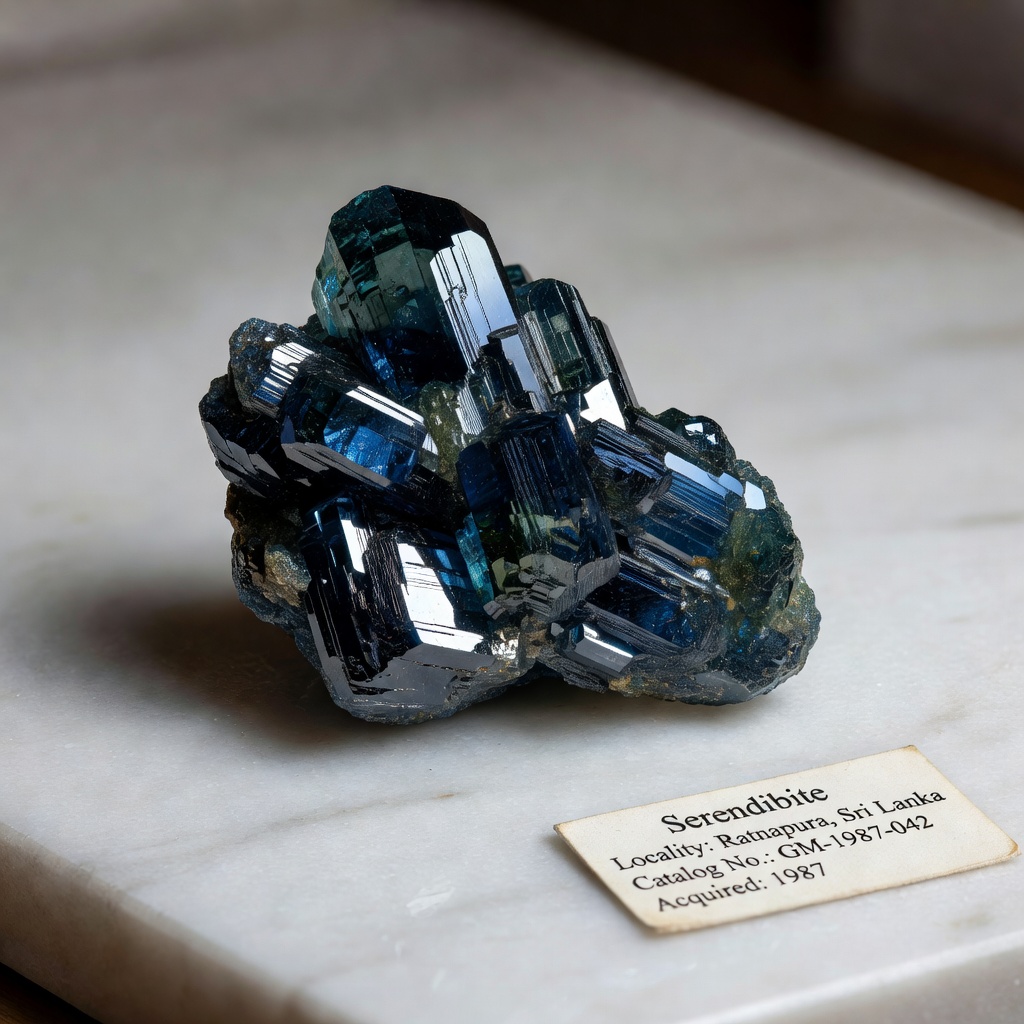
Crystallographically, serendibite belongs to the monoclinic crystal system, forming prismatic crystals that often exhibit distinctive pseudo-hexagonal habits when viewed from certain angles. These crystals typically develop in high-grade metamorphic environments where limestone or dolomite has undergone contact metamorphism with boron-rich pegmatites or granitic intrusions. The monoclinic structure creates specific optical properties including directional hardness variations and pleochroism that gemologists use for identification purposes. Geological surveys indicate that serendibite formation requires temperatures exceeding 600 degrees Celsius combined with specific pressure conditions found only in the lower crustal regions, explaining why surface exposures remain so uncommon despite extensive mining operations in potential host rocks worldwide.
The relationship between serendibite's chemical composition and its visual appearance demonstrates fascinating geochemical principles that collectors find academically rewarding. Higher magnesium content typically correlates with deeper blue and green colorations, while aluminum-rich specimens may appear darker or nearly black due to increased light absorption within the crystal structure. Trace elements including iron and titanium can create subtle color variations ranging from teal to greyish-blue, though pure serendibite ideally presents a translucent cyan or blue-green hue prized by connoisseurs. Understanding these compositional nuances allows experienced collectors to evaluate specimens based on chemical purity indicators visible only through spectroscopic analysis, adding another layer of complexity to the acquisition process.
Physical Properties and Durability Factors
Serendibite registers between 6.5 and 7 on the Mohs hardness scale, placing it in a category similar to quartz and tanzanite but significantly softer than corundum varieties like sapphire or ruby. This moderate hardness presents both opportunities and challenges for jewelry applications, as the material resists minor scratching from everyday dust particles yet remains vulnerable to abrasion from harder gemstones commonly found in jewelry collections. When considering serendibite for wearable pieces, gemologists recommend protective settings that shield the stone from direct impact, particularly for ring designs that might encounter hard surfaces during daily activities. The hardness variation across different crystallographic directions, a characteristic of monoclinic minerals, means that serendibite may show differential wear patterns depending on how the stone was oriented during cutting.
The specific gravity of serendibite ranges from 3.42 to 3.52, indicating a relatively dense mineral that feels substantial when held in the hand compared to lighter gemstones of similar size. Density measurements provide crucial diagnostic data for gemologists attempting to distinguish serendibite from visually similar materials like blue spinel, which typically exhibits lower specific gravity values around 3.60 or higher depending on chemical composition. This density stems from the heavy calcium and magnesium content within the crystal structure, creating a tactile experience that experienced collectors often describe as "weighty" or "substantial" compared to glass imitations or synthetic substitutes. Laboratory testing using hydrostatic weighing methods offers the most accurate specific gravity determinations, helping to confirm authenticity when visual inspection proves inconclusive.
Durability concerns extend beyond hardness to include cleavage properties, as serendibite exhibits distinct prismatic cleavage in one direction that can create vulnerability to chipping or splitting under mechanical stress. This cleavage plane requires careful consideration during the cutting process, as lapidaries must orient the stone to minimize exposure of this weakness at the table or girdle areas where impact most commonly occurs. The fracture patterns typically appear conchoidal to uneven, creating sharp edges when broken that differ from the smooth cleavage surfaces, a characteristic useful for rough identification in the field. Compared to sapphire's excellent toughness rating or spinel's isotropic durability, serendibite demands more cautious handling and protective jewelry designs, though its rarity often justifies these accommodations for serious collectors seeking to display the stone in wearable formats.
Visual Characteristics: Color Variations and Optical Properties
The color spectrum of serendibite spans from delicate pale blue-green and teal hues to deep blue, dark grey, and nearly black tones depending on chemical composition and lighting conditions. High-quality specimens display a translucent to transparent appearance with a distinctive cyan or blue-green coloration that gemologists describe as "electric" or "oceanic," though such material remains extraordinarily scarce in sizes exceeding one carat. Darker specimens, while more common, still maintain value among collectors due to their rarity, though they lack the visual impact of lighter, more transparent crystals that allow light to interact with the complex internal structure. Color zoning occasionally appears in larger crystals, creating bi-colored or pleochroic effects that skilled lapidaries may emphasize or minimize depending on cutting orientation.
Pleochroism represents one of serendibite's most distinctive optical properties, causing the stone to display different colors when viewed from various crystallographic directions, typically showing blue, green, or colorless tones depending on orientation. This phenomenon results from differential absorption of light waves vibrating in different planes within the monoclinic crystal structure, creating a dynamic visual experience that changes as the stone moves under light sources. Gem cutters must carefully consider pleochroism when faceting serendibite, as improper orientation can result in "dead" areas where light transmission appears minimal or colorless, significantly reducing the stone's aesthetic appeal and market value. Advanced cutting techniques involving computer modeling help optimize pleochroic display, ensuring that the finished gem shows its most attractive color face-up while maintaining acceptable brilliance and fire.
Transparency levels in serendibite vary from translucent to transparent, with the latter commanding premium prices due to the extreme rarity of inclusion-free material in this mineral species. Most rough serendibite contains microscopic inclusions, twinning planes, or fracture fillings that limit clarity, making eye-clean specimens above one carat virtually unheard of in the commercial market. The luster quality ranges from vitreous to sub-adamantine, creating a glass-like to diamond-like surface reflection that enhances the stone's appearance when properly polished with fine abrasives. Surface reflection patterns under magnification often reveal diagnostic growth features and inclusion suites that help distinguish natural serendibite from synthetic imitations or treated look-alike materials, providing gemologists with essential identification clues during laboratory examination.
Historical Discovery and Etymology
The mineralogical world first encountered serendibite in 1902 when Dunil Palitha Gunasekera, a pioneering Sri Lankan mineralogist, identified the unusual blue-green crystals in the gem gravels of Ratnapura district, historically known as the "City of Gems." Gunasekera recognized that these specimens differed chemically and physically from the spinels and sapphires commonly found in the alluvial deposits of Sri Lanka, though initial identification proved challenging due to the mineral's complex composition and resemblance to other blue gemstones. His discovery occurred during a period of intense mineralogical exploration in Ceylon, as British colonial geologists and local experts systematically cataloged the island's extraordinary gem wealth, yet serendibite remained unrecognized by international scientific communities for several years following its initial finding. The type specimen, now preserved in the geological museum of the University of Peradeniya, established the standard against which all subsequent serendibite discoveries are compared.
The name "serendibite" derives directly from "Serendib," the ancient Arabic name for the island of Sri Lanka, immortalized in Persian literature through "The Three Princes of Serendip," the fairy tale that gave rise to the English word "serendipity." This etymological connection proves remarkably appropriate, as the discovery of gem-quality serendibite requires fortunate circumstances combining specific geological conditions with the luck of exploration in remote metamorphic terrains. Early mineralogical literature occasionally confused serendibite with ferro-axinite or blue spinel, leading to misidentification of specimens in museum collections that modern analytical techniques have subsequently corrected. The historical confusion surrounding serendibite's identity persisted until advanced X-ray diffraction methods became available in the mid-20th century, allowing definitive characterization of its unique crystal structure.
Key historical specimens include the remarkable 0.35-carat blue-green crystal discovered in the original Ratnapura locality, which remains on permanent display at the Smithsonian Institution's National Museum of Natural History alongside other ultra-rare gemstones. The British Museum of Natural History in London preserves several Sri Lankan specimens acquired during colonial expeditions, while private collections in Myanmar and Thailand hold additional historically significant crystals obtained through early 20th-century trading networks. These institutional collections serve as reference standards for modern gemologists, providing opportunities for comparative study when new potential serendibite discoveries emerge from mining operations in Madagascar or New York State. Documentation of these historical specimens reveals that most early serendibite crystals weighed less than one carat, with stones exceeding two carats virtually unknown until the Burmese discoveries of the late 1990s expanded available material.
Global Occurrences and Mining Locations
Sri Lanka maintains its status as the type locality for serendibite, with the Ratnapura district continuing to produce occasional specimens from alluvial gem gravels derived from weathered metamorphic source rocks in the Highland Complex. The Sri Lankan deposits typically yield small, water-worn pebbles rather than crystalline matrix specimens, as the original host rocks have eroded over millions of years, concentrating heavy minerals including serendibite in stream sediments. Miners in Ratnapura recognize serendibite by its distinctive density and color, though confusion with spinel or kornerupine remains common until laboratory confirmation, meaning many potential serendibite crystals may have been overlooked or sold as other minerals throughout the decades. The Mogok Stone Tract in Myanmar (Burma) emerged as the second significant source during the late 1990s, producing larger crystals with exceptional transparency that redefined market expectations for this rare species.
Madagascar joined the list of serendibite localities in the early 21st century, with discoveries in the Tranomaro area of the Anosy Region providing crystalline specimens attached to host rock matrix, a rarity for this mineral typically found as loose alluvial pebbles. These Madagascan occurrences occur in high-grade calc-silicate rocks associated with graphitic marbles, offering geologists valuable insights into the specific metamorphic conditions required for serendibite formation. In North America, the Johnsburg area of Warren County, New York, produced significant serendibite crystals during mining operations at the Parker Mountain and Berry Road localities, where contact metamorphism between limestone and granitic pegmatites created ideal chemical environments. Russian deposits in the Aldan Shield of Siberia represent the northernmost known occurrences, though production from these localities remains minimal compared to the tropical sources.
Geological settings favoring serendibite formation consistently involve contact metamorphic zones where boron-rich pegmatites or granites intrude into magnesium-rich carbonate rocks such as dolomite or limestone. These skarn environments require specific temperature gradients between 600 and 800 degrees Celsius combined with low silica activity, conditions that rarely coincide in nature except in specialized tectonic settings. Current mining challenges include the exhaustion of easily accessible alluvial deposits in Sri Lanka and Myanmar, combined with increasing depth requirements for hard-rock mining in New York and Madagascar where surface exposures have been thoroughly explored. Environmental regulations and land-use restrictions further complicate new discoveries, as many potential host rock formations occur in protected areas or regions with limited mining infrastructure, ensuring that serendibite will maintain its ultra-rare status for the foreseeable future.
Market Value, Pricing, and Investment Information
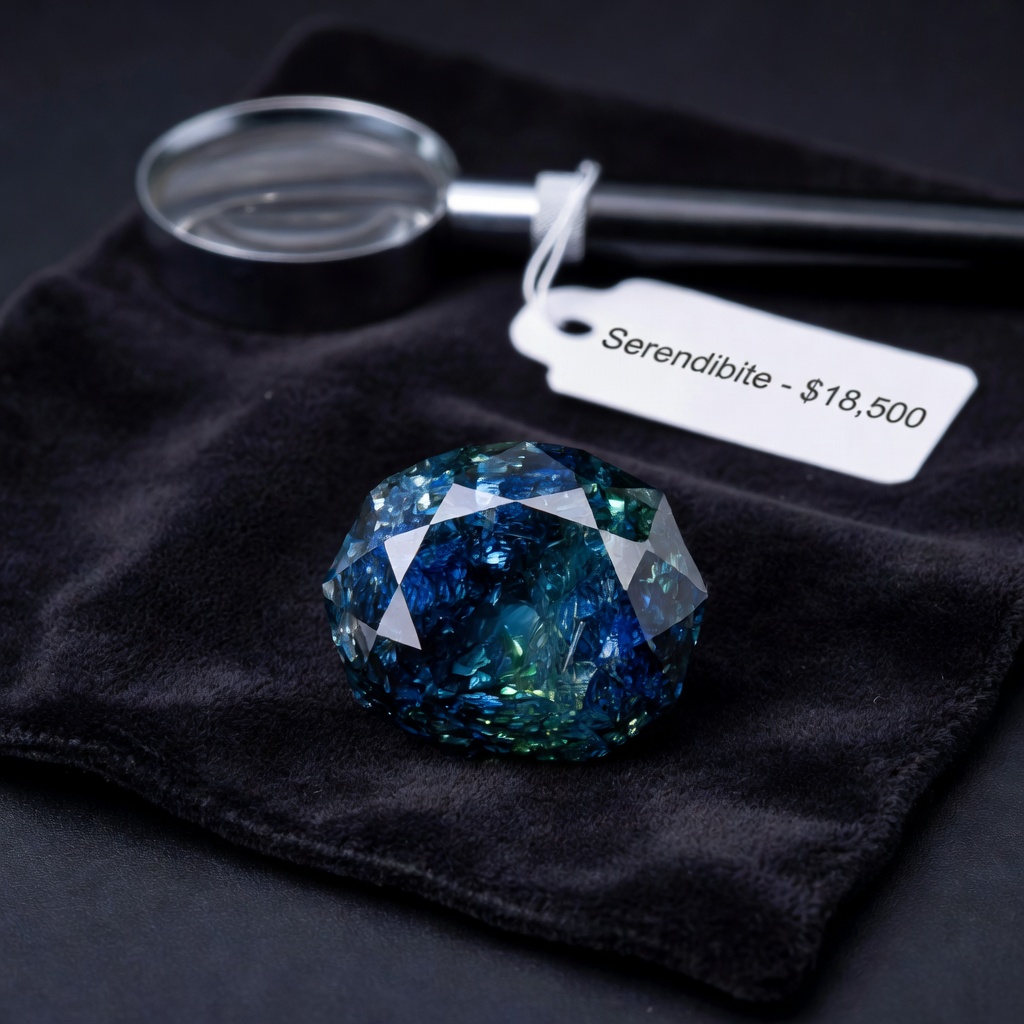
The market value for serendibite ranges dramatically from $2,000 to $18,000 per carat, with the upper extremes reserved for exceptional transparent specimens over one carat displaying the coveted blue-green coloration and minimal inclusions. Commercial-grade material, often appearing dark grey to black with limited transparency, typically commands prices between $2,000 and $5,000 per carat, still exceeding the per-carat values of many common precious stones due to extreme scarcity. Fine quality serendibite exceeding two carats with good transparency can surpass $10,000 per carat, approaching the investment tiers of unheated Burmese rubies or Colombian emeralds, though liquidity remains limited due to the specialized nature of the collector market. These price points reflect not only geological rarity but also the significant challenges associated with cutting and polishing serendibite, as rough material often loses substantial weight during processing due to inclusions and cleavage constraints.
Several factors determine the specific value of individual serendibite specimens, with color saturation ranking foremost among connoisseur preferences, particularly for stones exhibiting the rare cyan to teal hues reminiscent of fine Paraiba tourmaline. Clarity significantly impacts pricing, as eye-clean serendibite remains virtually unknown above one carat, making slightly included material acceptable to serious collectors who prioritize rarity over perfection. The cut quality affects value substantially, with well-executed faceting that minimizes windowing and maximizes pleochroic display commanding premiums over poorly oriented or native-cut stones. Provenance also influences pricing, with documented Sri Lankan or Burmese origins typically achieving higher values than Madagascan or New York material due to historical significance and perceived quality associations, though exceptional specimens from any locality can break auction records.
Notable auction records include the sale of a 2.05-carat blue-green serendibite from Myanmar that achieved $18,000 per carat at a specialist mineral auction in 2018, setting a benchmark for top-tier material. Investment potential for serendibite remains strong among ultra-high-net-worth collectors seeking tangible assets with historical appreciation patterns, as prices have consistently outperformed traditional equity markets over 20-year holding periods. Unlike diamonds or sapphires with established wholesale markets, serendibite functions primarily within the private treaty sales and specialized auction circuits frequented by mineral museums and serious collectors, requiring expert guidance for entry-level investors. Market trends indicate increasing demand from Asian collectors, particularly in China and Japan, where appreciation for rare boron-based minerals aligns with cultural valuations of exclusivity and natural artistry.
Serendibite vs Other Rare Gemstones: Comparison Guide
When evaluating serendibite against painite, red beryl, and tanzanite regarding rarity and value, serendibite consistently ranks within the top five rarest gemstones despite recent painite discoveries that increased that mineral's availability. Prior to 2005, serendibite held the distinction of being the world's rarest gemstone, with painite having produced only two known crystals and serendibite fewer than 25 faceted specimens, though modern finds have slightly altered this hierarchy. Red beryl (bixbite) from Utah's Wah Wah Mountains occurs more frequently than serendibite, with annual production measured in kilograms rather than grams, though fine crystals still command prices exceeding $10,000 per carat. Tanzanite, while geographically restricted to a single mining district in Tanzania, actually occurs in quantities sufficient for commercial jewelry markets, making it far more accessible than serendibite despite its "rare" marketing designation.
Distinguishing serendibite from blue spinel and kyanite requires careful gemological testing, as all three minerals can exhibit similar blue to blue-green colorations that confuse even experienced dealers. Blue spinel typically shows higher refractive indices (1.712-1.736) compared to serendibite's 1.701-1.706 range, while kyanite's distinctive bladed crystal habit and variable hardness (4.5-7 depending on direction) differ markedly from serendibite's consistent prismatic cleavage. Spectroscopic analysis provides definitive identification, as serendibite shows characteristic absorption features in the blue-violet region that neither spinel nor kyanite replicate, while fluorescence patterns under long-wave ultraviolet light also differ significantly between these species. Specific gravity testing offers a quick field diagnostic, with serendibite's 3.42-3.52 range falling between kyanite's 3.53-3.65 and spinel's 3.58-4.06, though overlapping values necessitate confirmatory testing for valuable specimens.
The rarity hierarchy among the world's top ten rarest gemstones currently positions serendibite alongside taffeite, musgravite, and painite in the upper echelons of exclusivity, far exceeding the scarcity of benitoite, grandidierite, or jeremejevite. Serendibite commands premium prices compared to more common precious stones not merely because of absolute rarity but due to the combination of rarity with gemological properties suitable for faceting and jewelry use, unlike some minerals that remain too soft or fragile for wearability. While a fine sapphire might cost $5,000 per carat, the knowledge that thousands of similar sapphires enter the market annually diminishes exclusivity compared to serendibite, where a single new discovery might represent a significant percentage of the year's global production. This extreme scarcity creates investment dynamics similar to fine art markets, where provenance, documented history, and unique characteristics drive value appreciation independent of commodity market fluctuations affecting diamonds or gold.
Care, Maintenance, and Jewelry Considerations
Proper cleaning of serendibite requires gentle techniques using mild soap and lukewarm water applied with a soft brush, avoiding ultrasonic cleaners that can exacerbate existing fractures or cause damage along cleavage planes. The monoclinic crystal structure with its distinct cleavage direction makes serendibite particularly susceptible to damage from ultrasonic vibrations, which can cause internal fracturing or surface reaching breaks that significantly diminish value. Steam cleaning presents similar risks due to thermal shock potential, as rapid temperature changes can stress the crystal lattice, making simple soap and water the only recommended cleaning method for this delicate gemstone. After washing, serendibite should be dried with a soft lint-free cloth rather than air-drying to prevent water spots from forming on the surface, particularly important for stones with surface-reaching inclusions that might trap moisture.
Storage recommendations emphasize keeping serendibite specimens separate from harder stones like diamonds, sapphires, or rubies that could scratch the surface during contact, ideally in individual soft cloth pouches or compartmentalized jewelry boxes. When traveling with serendibite jewelry, padded containers that prevent movement and contact with metal settings or other gemstones provide essential protection against chipping or abrasion. Long-term storage should avoid exposure to direct sunlight or extreme temperature fluctuations, as these conditions can potentially affect color stability over decades, though serendibite generally shows better light stability than kunzite or other photo-sensitive minerals. For loose specimens or crystals, acid-free tissue paper and rigid specimen boxes prevent damage to crystal edges and terminations that represent significant value factors for mineral collectors.
Jewelry setting options for serendibite focus on protective designs, with bezel settings providing the most security by surrounding the girdle with metal that absorbs impact before reaching the stone. Prong settings, while allowing maximum light entry for pleochroic display, require thicker, more robust prongs than those used for diamonds, and should be inspected regularly for wear or loosening that might allow the stone to escape. Pendant and earring designs suit serendibite better than rings or bracelets, as these locations experience less mechanical stress during normal wear, reducing the risk of cleavage damage from accidental impacts. Precautions regarding heat sensitivity mandate that jewelers remove serendibite stones before applying torch heat for sizing or repairs, as the mineral's composition can react adversely to temperatures above 400 degrees Celsius, potentially causing color change or structural damage.
Authentication and Certification Guidelines
Authentication of genuine serendibite requires certification from recognized gemological laboratories such as the Gemological Institute of America (GIA) or the American Gemological Laboratories (AGL), which possess the advanced spectroscopic equipment necessary to confirm this rare species. Professional certification documents the stone's refractive indices, specific gravity, spectroscopic features, and geographic origin when determinable, providing essential documentation for insurance purposes and future resale. Given serendibite's value and rarity, obtaining certification from laboratories with specific experience in rare gem identification proves crucial, as generalist labs might lack reference standards or expertise to distinguish serendibite from similar-appearing minerals. The certification process typically involves non-destructive testing methods including Raman spectroscopy, energy-dispersive X-ray fluorescence (EDXRF), and conventional refractometry to establish a complete gemological profile.
Common simulants and synthetics in the market include blue spinel, kyanite, and treated blue tourmaline, with some unscrupulous dealers occasionally offering serendibite-colored glass or synthetic corundum as genuine material. Synthetic serendibite has not been commercially produced due to the mineral's limited market demand and complex chemical composition, meaning most fraudulent offerings involve substitution with naturally occurring but less valuable minerals rather than laboratory-created products. Advanced testing methods including infrared spectroscopy and laser ablation inductively coupled plasma mass spectrometry (LA-ICP-MS) can detect chemical compositions inconsistent with natural serendibite, identifying substitutions or treatments that visual inspection might miss. Refractive index measurements provide initial screening, as values outside the 1.701-1.706 range immediately disqualify stones from serendibite classification, while microscopic examination can reveal growth patterns and inclusion suites characteristic of specific localities.
Red flags when purchasing serendibite include prices significantly below market rates for the stated quality, as the extreme scarcity of this material prevents deep discounting except in cases of questionable authenticity or undisclosed damage. Dealer verification requires checking credentials with professional organizations such as the American Gem Trade Association (AGTA) or International Colored Gemstone Association (ICA), and requesting detailed provenance documentation that traces the stone from mine to market. Potential buyers should insist on viewing serendibite under various lighting conditions to verify pleochroism, as this optical property proves difficult to simulate in substitute materials and provides immediate visual confirmation of authenticity for experienced observers. For high-value acquisitions, independent second opinions from gemological laboratories unaffiliated with the seller provide essential due diligence, protecting investments that might exceed the price of comparable-weight diamonds or other mainstream precious stones.
Frequently Asked Questions About Serendibite
What is serendibite and why is it considered so rare?
Serendibite is an extremely rare magnesium calcium borosilicate mineral that ranks among the world's rarest gemstones. Until 2005, fewer than 25 faceted specimens were known to exist globally. Its rarity stems from very specific geological formation conditions requiring high-grade metamorphic environments with precise chemical combinations of calcium, magnesium, boron, and aluminum, making new discoveries exceptionally uncommon.
What are the key physical properties of serendibite?
Serendibite typically exhibits a hardness of 6.5 to 7 on the Mohs scale, a specific gravity between 3.42 and 3.52, and distinct monoclinic crystal structure. It displays prismatic cleavage in one direction with a conchoidal to uneven fracture. The mineral has a vitreous to sub-adamantine luster and shows strong pleochroism, appearing in different colors when viewed from various angles.
Where is serendibite found in the world?
Serendibite was originally discovered in Sri Lanka (specifically Ratnapura district) in 1902. Other significant sources include the Mogok Stone Tract in Myanmar (Burma), Madagascar, and Johnsburg in New York State, USA. Smaller deposits have been found in Russia and Antarctica. Sri Lankan and Burmese specimens are particularly prized by collectors due to their superior color and clarity.
How much is serendibite worth per carat?
Serendibite commands premium prices ranging from $2,000 to $18,000 per carat depending on quality factors. Fine blue-green transparent specimens over one carat can exceed $10,000 per carat, while darker or included stones may sell for $2,000-$5,000 per carat. Exceptional museum-quality crystals can command significantly higher prices at specialty auctions due to extreme scarcity.
What colors does serendibite naturally occur in?
Serendibite naturally occurs in colors ranging from pale blue-green and teal to deep blue, dark grey, and nearly black. The most valuable specimens display a translucent to transparent blue-green or cyan coloration. Pleochroism causes the stone to show different shades—typically blue, green, or colorless—when viewed from different crystallographic directions, adding to its visual complexity.
Is serendibite suitable for everyday jewelry wear?
Due to its moderate hardness (6.5-7) and distinct cleavage, serendibite requires protective settings for jewelry use and is not ideal for everyday rings or bracelets that receive impact. It works best in earrings, pendants, or occasional-wear rings with protective bezel settings. Owners should avoid ultrasonic cleaners, harsh chemicals, and sudden temperature changes to prevent damage.
How can you identify genuine serendibite from simulants?
Authentic serendibite can be identified through specific gemological tests including refractive index measurements (1.701-1.706), specific gravity testing, and spectroscopic analysis showing characteristic absorption patterns. Common simulants include blue spinel, kyanite, and treated tourmaline. Professional certification from GIA or AGL laboratories is essential when purchasing, as visual identification alone is unreliable for amateurs.
Who discovered serendibite and what does its name mean?
Serendibite was discovered in 1902 by Dunil Palitha Gunasekera, a Sri Lankan mineralogist, in the gravels of Ratnapura, Sri Lanka. The name derives from 'Serendib,' the old Arabic name for Sri Lanka (Ceylon), immortalized in the Persian fairy tale 'The Three Princes of Serendip' which gave rise to the word 'serendipity'—fitting for such a fortuitous and rare discovery.