Understanding Serendibite: The World's Rarest Gemstone
Discovered in 1902 by Sri Lankan mineralogist Dunil Palitha Gunasekera in the gem-rich gravels of Ratnapura, serendibite derives its name from the ancient Arabic word "Serendib," the historical name for Sri Lanka. This rare serendibite gemstone represents one of mineralogy's most elusive treasures, with fewer than three hundred faceted specimens known to exist worldwide, making it rarer than red beryl, painite, and even high-quality alexandrite. The extreme scarcity stems from its complex chemical composition—calcium magnesium aluminum borosilicate with traces of iron and titanium—which requires highly specific geological conditions involving contact metamorphism between limestone and granite pegmatites.
Sri Lankan serendibite initially remained largely unknown to the gem trade until the late 20th century, when additional discoveries in Myanmar's Mogok Stone Tract introduced slightly more material to the market. However, both localities produce sporadic quantities at best, with most mining operations yielding only minuscule crystals unsuitable for faceting. The gemstone's distinctive pleochroism, displaying different colors when viewed from various crystallographic angles, creates an optical phenomenon that captivates collectors but also challenges cutters attempting to maximize color saturation in finished stones.
Key Quality Factors for Serendibite Evaluation
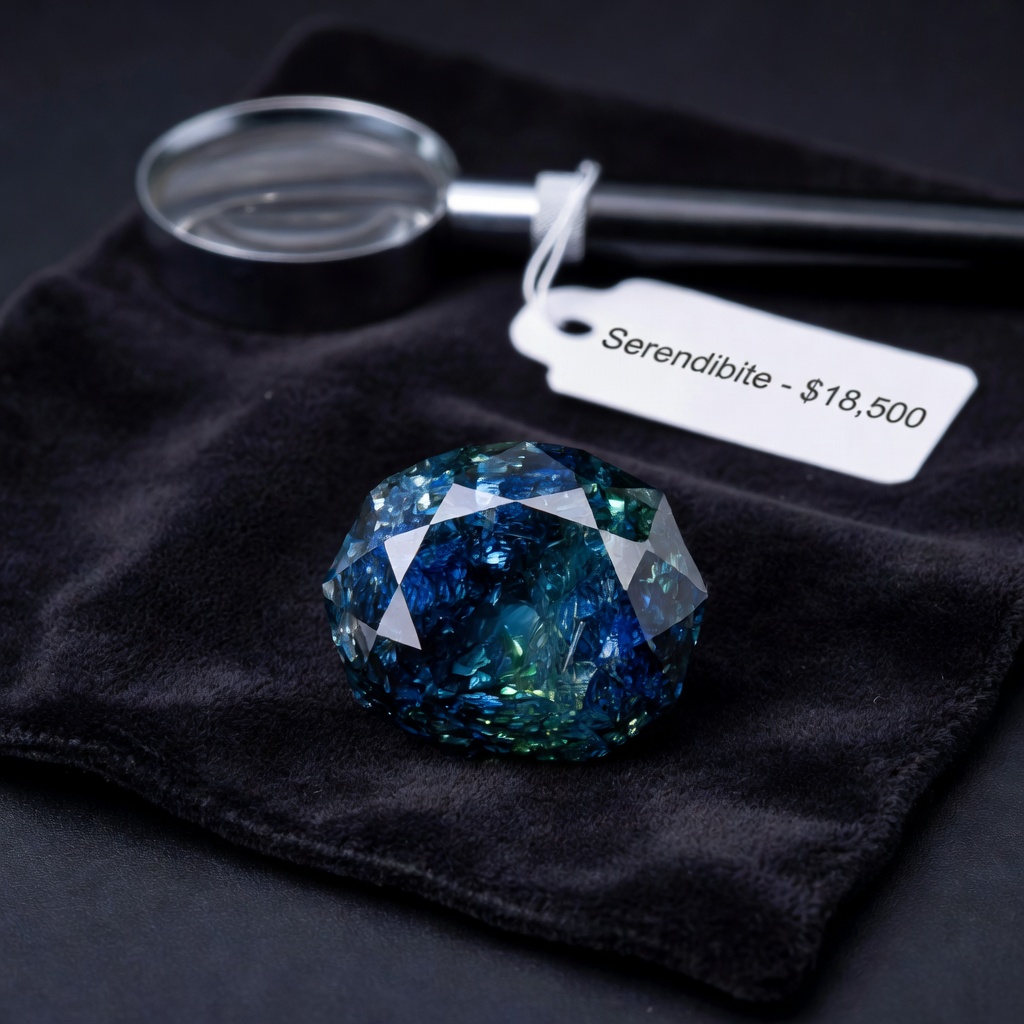
When assessing serendibite quality factors, color hierarchy plays the paramount role in determining value, with translucent blue-green specimens commanding the highest premiums due to their visual similarity to fine paraiba tourmaline and grandidierite. Secondary varieties including opaque black and pale yellow serendibite offer more accessible entry points for collectors, though they typically achieve only twenty to thirty percent of the value commanded by top-color blue-green material. The most exceptional specimens exhibit a mesmerizing teal or cyan coloration that seems to glow from within, a result of the stone's unique interaction with light.
Clarity standards for this rare serendibite gemstone differ significantly from those applied to commercial gems like sapphires or diamonds. Eye-clean specimens are exceptionally rare; most contain characteristic inclusions including tension fractures, two-phase inclusions, and growth zoning that actually help gemologists confirm natural origin. Carat weight dramatically impacts value, as stones exceeding one carat face-up are considered museum-grade due to the extreme scarcity of rough material large enough to yield such sizes. When evaluating pleochroism, look for strong trichroism showing blue-green, black, and white or colorless directions, which indicates high crystallographic quality and typically correlates with superior transparency in the finished gem.
Serendibite Price Per Carat: Investment Reality
Understanding serendibite price per carat requires recognizing the dramatic range that exists within this ultra-niche market, with current valuations spanning from $2,500 for translucent black specimens to $20,000 or more per carat for exceptional blue-green stones exceeding one carat with good clarity. This pricing structure places serendibite among the most expensive collectible rare gemstones on a per-carat basis, rivaling fine alexandrite and untreated Burmese ruby in the upper echelons of the market. However, unlike diamonds or sapphires, serendibite lacks standardized grading systems, meaning each stone must be evaluated individually based on its unique combination of color intensity, clarity characteristics, and provenance.
When comparing investment potential, serendibite occupies a unique position relative to other ultra-rare gems like painite and red beryl. While painite holds the Guinness World Record for rarity, serendibite actually commands higher prices per carat in the current market due to superior aesthetics and greater collector recognition. Liquidity considerations present significant challenges for investors, as the specialized collector market for serendibite lacks the immediate liquidity of mainstream gemstones, often requiring six to eighteen months to locate appropriate buyers through private networks or specialized auction houses. Long-term appreciation trends from 2010 to 2024 demonstrate steady value increases of approximately eight to twelve percent annually for fine specimens, outperforming many traditional investments while requiring specialized knowledge to navigate successfully.
How to Identify Authentic Serendibite vs. Imitations
Authentic serendibite identification has become increasingly critical as unscrupulous dealers attempt to pass off less expensive rare gems as this ultra-rare species. Common simulants include grandidierite, which shares similar blue-green hues but lacks serendibite's higher refractive index and specific gravity. Blue tourmaline (indicolite) and treated spinel represent additional deceptive alternatives that may confuse inexperienced buyers, particularly when viewed through jewelry store lighting rather than natural daylight. Understanding the serendibite vs grandidierite distinction requires recognizing that while both gems display trichroic colors, serendibite typically shows stronger pleochroism with more dramatic color shifts between blue-green and near-colorless directions.
Diagnostic properties provide definitive identification criteria: serendibite possesses a specific gravity ranging from 3.42 to 3.52 and a refractive index between 1.701 and 1.706, significantly higher than grandidierite's 2.85 specific gravity and 1.602-1.636 refractive index. Under magnification, look for distinctive inclusion patterns including tension fractures surrounding mineral inclusions and two-phase inclusions containing both liquid and gas bubbles. However, visual and basic physical testing alone cannot guarantee authenticity. Laboratory verification utilizing Raman spectroscopy and X-ray diffraction analysis remains absolutely essential for any significant purchase, as these techniques identify the unique crystalline structure and chemical fingerprint that distinguish serendibite from all other mineral species.
Cut and Clarity: Maximizing Brilliance in Rare Stones
Optimal cutting styles for serendibite must balance aesthetic display with the economic reality of working with material worth thousands of dollars per carat. Cushion and oval cuts best display the stone's characteristic pleochroism without creating excessive windowing or light leakage, while step cuts tend to emphasize the gem's color zoning in ways that detract from overall beauty. Experienced lapidaries often orient the table perpendicular to the c-axis to minimize the black or dark pleochroic direction, maximizing the face-up blue-green appearance that collectors prize most highly.
Clarity expectations for serendibite quality factors differ fundamentally from diamond grading paradigms. Collectors accept minor inclusions as proof of natural origin in rare specimens, understanding that completely flawless serendibite likely indicates synthetic production or misidentification. Symmetry importance cannot be overstated, as precise faceting proves crucial for displaying the color shift effects that make this gem so captivating. The cutter faces a constant dilemma regarding weight retention versus beauty, as the scarcity and value per carat of rough material creates pressure to preserve maximum weight, sometimes at the expense of optimal proportions. The finest examples strike a balance, sacrificing some carat weight to achieve the brilliance and color consistency that justify premium pricing.
Trusted Sources: Where to Buy Serendibite Safely
Navigating this Serendibite Buying Guide requires understanding that legitimate sources for such rare material remain limited to a small circle of specialized dealers and auction houses. Reputable dealers possessing credentials from the Accredited Gemologists Association (AGA) or International School of Gemology (ISG) typically maintain relationships with old-world Sri Lankan and Burmese mining families who occasionally release material from private stashes. These specialists provide not only stones but also the crucial documentation and provenance history that authenticate collectible rare gemstones of this caliber.
Major auction houses including Christie's, Sotheby's, and Heritage Auctions periodically feature serendibite in their rare gem and mineral sales, offering the advantage of pre-sale inspection periods and established buyer protection policies. For hands-on examination, the Tucson Gem and Mineral Show and Baselworld provide rare opportunities to view multiple specimens simultaneously and compare color qualities directly before committing to five-figure purchases. Red flags demanding immediate caution include undocumented stones lacking laboratory reports, prices below $1,500 per carat for any quality (indicating probable simulant or treatment), and high-pressure sales tactics suggesting limited-time availability. Genuine serendibite transactions require patience, due diligence, and verification timeframes measured in weeks rather than hours.
Essential Documentation and Certification
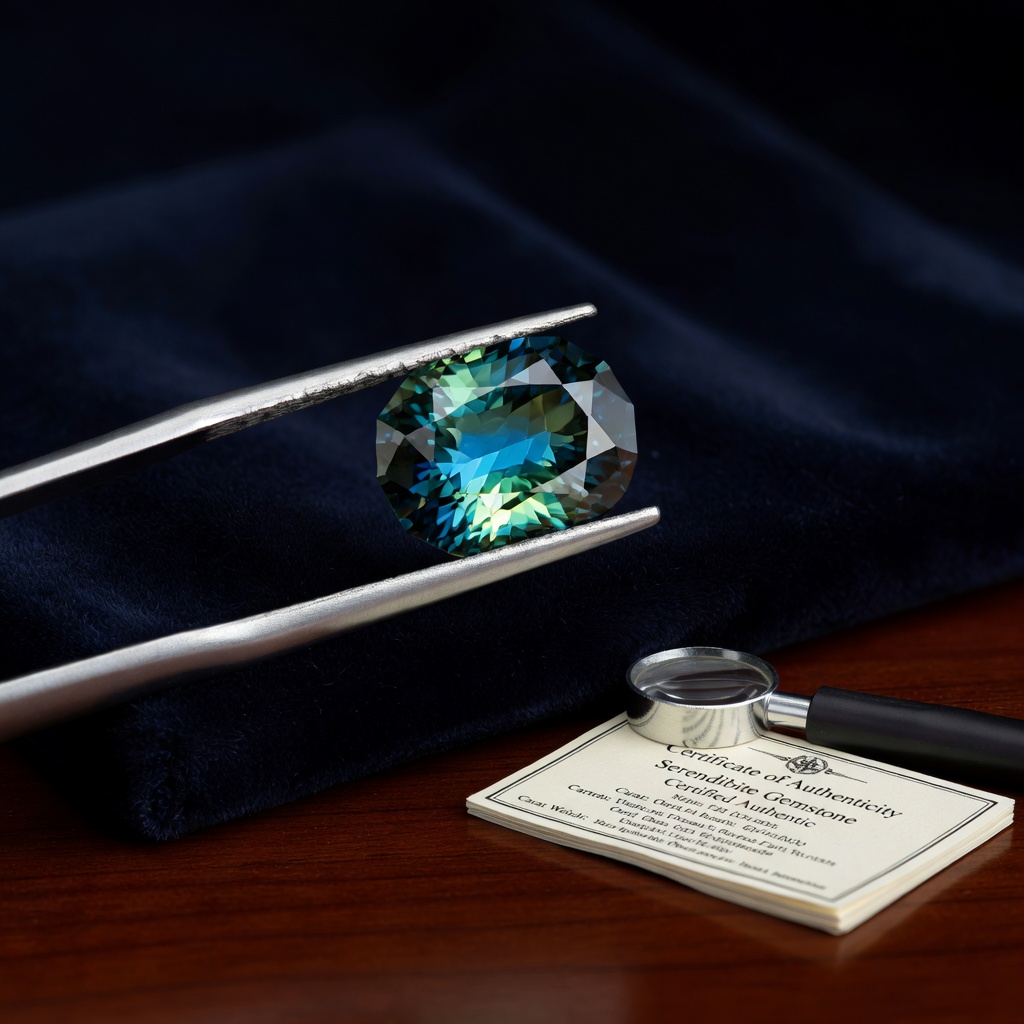
Comprehensive documentation forms the cornerstone of authentic serendibite identification and investment security. Required reports from laboratories such as the Gemological Institute of America (GIA), American Gemological Laboratories (AGL), or the Swiss Gemmological Institute (SSEF) must confirm both species identification and natural origin, explicitly stating "Natural Serendibite" without qualifying language suggesting potential synthesis or treatment. These reports should include detailed photographs and specific measurements of refractive index and specific gravity that match known serendibite parameters.
Origin verification carries significant premium implications, with specific documentation for Sri Lankan versus Myanmar (Burma) specimens affecting both value and legal import considerations in certain jurisdictions. Treatment disclosure remains critical, though heating and oiling treatments remain rare for this species due to its inherent rarity and the risk of damaging specimens worth tens of thousands of dollars. Provenance documentation establishing chain of custody from rough extraction through cutting to final sale provides additional security for investment-grade specimens, particularly for stones exceeding two carats or possessing exceptional color characteristics that might attract fraudulent claims in future resale transactions.
Caring for Your Serendibite Collection
Proper maintenance of this rare serendibite gemstone requires understanding its physical limitations compared to harder jewelry staples. With a hardness of 6.5 to 7 on the Mohs scale, serendibite demands protective settings and careful handling to prevent surface abrasion or chipping from impact. Unlike diamond or corundum jewelry that withstands daily wear, serendibite pieces suit occasional wear in protected environments, with bezel settings preferred for rings and secure, well-padded storage essential when not being worn.
Cleaning protocols must avoid the aggressive methods used for tougher gems. Warm soapy water using mild dish detergent and a soft brush represents the only safe cleaning method; ultrasonic cleaners and steam cleaning devices risk shattering the stone due to liquid inclusions and internal tension fractures common to the species. Storage requirements mandate separate compartments or individual pouches to prevent scratching by harder gems like diamond, ruby, or sapphire that might share a jewelry box. Annual inspections by jewelers familiar with rare gems ensure that prongs remain secure and settings continue to protect these irreplaceable treasures from loss or damage during wear.
Building a Rare Gem Portfolio: Serendibite's Strategic Value
Integrating serendibite into a serious gem collection requires strategic portfolio diversification that balances this ultra-rare species with other blue-chip colored stones. Savvy collectors pair serendibite with alexandrite, paraiba tourmaline, and fine spinel to create holdings that span different color categories, hardness levels, and market liquidity profiles. This approach mitigates the illiquidity inherent in the serendibite market while maintaining exposure to the appreciation potential of collectible rare gemstones as an asset class.
Insurance considerations demand specialized jewelry insurance policies requiring professional appraisals from gemologists experienced with ultra-rare materials, as standard homeowners policies often lack sufficient coverage limits or fail to recognize the replacement difficulty of stones with no current market availability. Resale channels typically favor private collector networks over auction consignment for stones under three carats, as auction house fees may consume significant portions of appreciation gains for lower-value specimens. Understanding market timing proves essential, as the rare gem collecting market exhibits cyclical patterns tied to economic conditions affecting ultra-high-net-worth individuals, with serendibite values typically remaining stable during downturns due to extreme scarcity but experiencing rapid appreciation during periods of collector market expansion.
Frequently Asked Questions
What makes serendibite so expensive compared to other rare gems?
Serendibite commands premium prices due to extreme scarcity—fewer than 300 faceted specimens exist worldwide—combined with complex mining conditions in Sri Lanka and Myanmar, and high collector demand from ultra-high-net-worth gem connoisseurs seeking the 'holy grail' of mineral collecting.
How can I tell if my serendibite is real or a grandidierite imitation?
While both show similar blue-green colors, serendibite has a higher refractive index (1.701-1.706 vs. 1.602-1.636) and specific gravity (3.42-3.52 vs. 2.85). Professional gemological testing using Raman spectroscopy is essential for definitive identification, as visual differences are subtle.
Is serendibite durable enough for daily wear in jewelry?
With a hardness of 6.5-7 on the Mohs scale, serendibite requires protective settings and is best suited for occasional wear pieces like pendants, earrings, or cocktail rings rather than daily-wear engagement rings, as it can scratch and chip more easily than corundum or diamond.
What is the average price per carat for investment-grade serendibite?
Investment-grade blue-green serendibite typically ranges from $8,000 to $20,000+ per carat for eye-clean stones over 0.5 carats, while translucent black specimens command $2,500-$5,000 per carat. Prices escalate exponentially for stones exceeding 1 carat due to extreme rarity.
Where is serendibite currently being mined?
Primary sources include the Ratnapura district in Sri Lanka (original locality) and the Mogok Stone Tract in Myanmar (Burma). Both locations produce extremely limited quantities sporadically, with most 'new' material actually being old stock from private collections re-entering the market.
Should I buy serendibite as a financial investment or collector's item?
Serendibite should be purchased primarily as a passion investment and collector's treasure rather than liquid financial asset. While values have appreciated historically, the market is illiquid and requires specialized knowledge, patience, and appropriate insurance for proper portfolio integration.
What colors does natural serendibite occur in?
Natural serendibite occurs in pale yellow, greenish-blue, blue-green (most valuable), grayish-blue, and black varieties. The prized blue-green color results from iron and titanium content, while black specimens contain higher iron concentrations. Color zoning and pleochroism are common in all varieties.
How do I clean and maintain serendibite jewelry safely?
Clean serendibite using only warm water with mild dish soap and a soft brush; avoid ultrasonic cleaners, steam cleaners, and harsh chemicals. Store separately from harder gemstones, remove before physical activities, and have prongs checked annually by a jeweler familiar with rare gems.