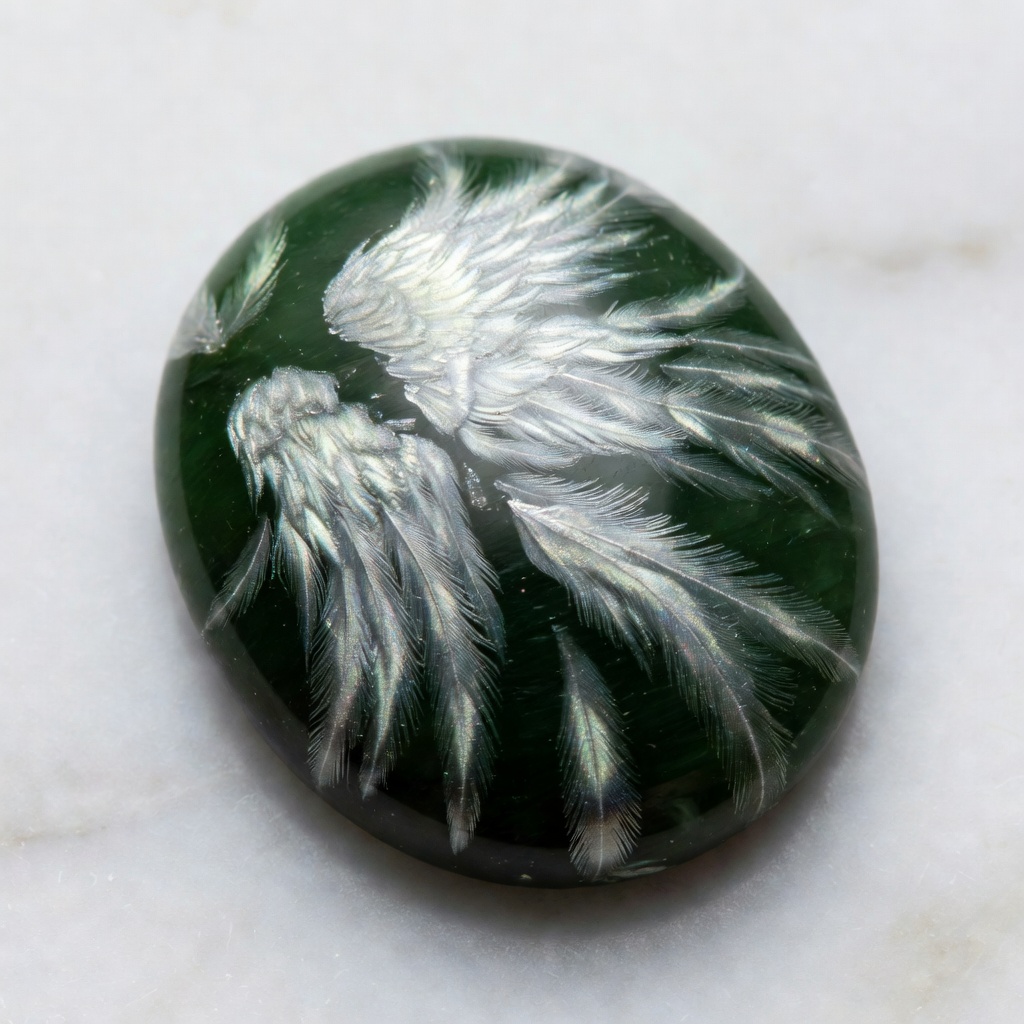
Seraphinite Price Guide: Understanding the Value of the Angel Wing Stone
Navigating the Seraphinite Price Guide requires understanding both the geological uniqueness and market dynamics of this captivating green gemstone. Known for its distinctive silvery chatoyancy that resembles angel wings, seraphinite has emerged as a sought-after collector's stone with specific pricing tiers based on quality, origin, and form. Whether you are a lapidary artist seeking rough material, a jewelry designer sourcing cabochons, or a collector evaluating seraphinite investment potential, comprehending the factors that drive seraphinite value per carat ensures informed purchasing decisions. This comprehensive guide examines current market rates, quality indicators, and authentication methods to help you accurately assess the worth of this rare clinoclore variety from the remote mines of Siberia.
What is Seraphinite? Understanding the Angel Wing Stone
Seraphinite is a gem-quality variety of clinoclore, belonging to the chlorite mineral group, characterized by its deep green base color and striking silvery chatoyant patterns that shimmer across the stone's surface. These reflective inclusions, composed of mica-like minerals, create the feathery, wing-like formations that earned the stone its spiritual moniker as the angel wing stone among metaphysical practitioners. The green chlorite gemstone forms through the alteration of iron-rich ultramafic rocks under specific hydrothermal conditions, resulting in the perfect alignment of mineral fibers that produces the coveted optical phenomenon.
The physical properties of seraphinite significantly impact both its workability and market value, with a Mohs hardness rating of only 2 to 2.5 making it one of the softer gemstones available for jewelry use. This extreme softness, combined with perfect cleavage in one direction, means that lapidaries must exercise exceptional care when cutting and polishing the material to prevent fractures and surface damage. Collectors prize the stone not only for its aesthetic beauty but also for its reported spiritual properties, including claims of promoting connection with angelic realms and facilitating deep meditative states, which drives consistent demand in the metaphysical market despite the mineral's geological rarity.
The primary source of gem-quality seraphinite remains the Korshunovskoye iron skarn deposit located in Eastern Siberia's Irkutskaya Oblast, near Lake Baikal. This remote location presents significant extraction challenges due to extreme weather conditions and limited mining infrastructure, contributing to the stone's scarcity and premium pricing. While minor deposits exist in other localities, including Turkey and Austria, the Siberian material consistently commands the highest values due to superior color saturation and more dramatic chatoyant patterning.
Key Factors That Determine Seraphinite Prices
Evaluating seraphinite quality factors requires careful examination of several interdependent characteristics that directly impact market value. The intensity and definition of chatoyancy represent the primary value determinant, with premium specimens displaying sharp, silvery feather-like patterns that shift dramatically under direct lighting versus diffuse illumination. Stones exhibiting broad, undefined flashes or dull gray reflections rather than brilliant silver chatoyancy fall into commercial grades, while those featuring crisp, angel-wing formations with high reflectivity command top-tier pricing.
Color saturation plays an equally crucial role in seraphinite value assessment, with deep forest green to black-green bases providing the optimal contrast for the silvery inclusions. Pale olive or yellowish-green specimens, while still attractive, generally retail for significantly less than their deeply saturated counterparts, as the rich green background enhances the visual impact of the chatoyant patterns. Professional graders also examine the distribution of these patterns across the stone, preferring specimens where the feathery inclusions cover the majority of the surface rather than concentrating in isolated patches.
Clarity considerations in seraphinite differ fundamentally from transparent gemstones like diamonds or sapphires, as complete transparency would actually eliminate the chatoyant effect that gives the stone its value. Instead, buyers seek an optimal balance where the green matrix remains sufficiently translucent to show depth while hosting dense, reflective inclusions. Structural integrity presents another critical evaluation point, as the stone's perfect cleavage and softness make it susceptible to internal fractures that compromise both durability and appearance. Cabochons destined for jewelry must be free of surface-reaching fractures and significant internal cracks, while collectors might accept minor structural imperfections in exceptional display specimens where the chatoyancy remains undisturbed.
Current Seraphinite Price Per Carat and Gram
Understanding the seraphinite price per carat structure helps buyers navigate a market where prices vary dramatically based on quality tiers and sales formats. Commercial-grade material, typically cut into beads or basic cabochons with minimal chatoyancy or pale coloration, generally trades between $2 and $5 per carat. These stones may show patchy silver patterns or diluted green backgrounds but remain suitable for costume jewelry and beginning collectors seeking affordable entry points into the seraphinite value per carat market.
Fine quality seraphinite, characterized by distinct, well-distributed chatoyancy and rich green coloration, commands prices ranging from $10 to $30 per carat depending on size and cutting precision. Stones in this category display the characteristic angel-wing patterns clearly visible under normal lighting conditions and work well in protective jewelry settings such as pendants and earrings. Museum-grade specimens, representing the apex of the market with exceptional pattern density, deep color saturation, and flawless structural integrity, can achieve $50 to $100 or more per carat, particularly for large cabochons exceeding 20 carats where such clean material becomes increasingly scarce.
For lapidary artists and bulk buyers, rough seraphinite pricing typically follows a per-gram rather than per-carat structure, reflecting the material's density and the significant weight loss during cutting due to the stone's cleavage challenges. Rough material suitable for cabbing generally ranges from $0.50 to $3 per gram depending on pattern visibility and fracture density, with specimen-grade rough containing visible chatoyant surfaces commanding premiums up to $10 per gram. When calculating finished stone values, cutters must account for typical yields of only 15-25% from rough to polished gem, explaining the substantial price jumps between raw material and finished cabochons.
Siberian Seraphinite vs. Other Origins: Price Impact
The distinction between Siberian seraphinite prices and material from other localities represents one of the most significant variables in the gemstone market. Authentic Korshunovskoye Siberian seraphinite consistently commands 40-60% premiums over comparable material from Turkish or Austrian deposits due to superior chatoyancy intensity and deeper, more consistent green coloration. The Siberian material develops under unique geological conditions within iron skarn deposits that produce the dense, aligned mica inclusions necessary for dramatic optical effects, whereas other localities often yield stones with scattered, less reflective inclusions.
Turkish seraphinite, while genuinely belonging to the clinoclore species, typically presents lighter green backgrounds and more subdued, grayish chatoyancy that lacks the brilliant silver flash characteristic of top-tier Siberian specimens. Austrian material, though historically significant in mineral collections, rarely achieves gem quality suitable for jewelry, instead serving educational and specimen purposes at lower price points. When evaluating rare green mineral value, origin documentation becomes crucial, as unscrupulous sellers may represent lower-grade Turkish material as premium Siberian stone to justify inflated prices.
The pricing disparity continues widening due to supply constraints affecting the Korshunovskoye deposit, where geopolitical tensions, harsh Siberian winters limiting mining seasons, and increasing export restrictions have reduced material flow to Western markets. These scarcity factors ensure that verified Siberian seraphinite maintains stronger price retention and appreciation potential compared to more readily available alternatives. Collectors seeking investment-grade material should prioritize stones with documented provenance from established Siberian mining operations, as this origin verification significantly impacts resale values and collector desirability.
Pricing by Form: Rough, Cabochons, Beads, and Jewelry
The format in which seraphinite enters the market dramatically affects pricing structures and value propositions for different buyer categories. Raw mineral specimens valued for display purposes command prices based on aesthetic presentation, with collector-grade pieces featuring natural chatoyant surfaces on matrix selling for $50 to $500 depending on size and pattern visibility. These specimens appeal to mineral collectors who appreciate the stone in its natural state, with premium prices awarded to pieces showing three-dimensional crystal formations or association with other minerals such as magnetite or diopside.
Professional cutting adds significant value to seraphinite cabochon prices, with well-executed domed tops and flat backs optimized to display chatoyancy commanding substantial premiums over rough material. A skilled lapidary can transform $10 worth of rough into a $150 cabochon through precise orientation of the stone's cleavage planes and careful polishing to maximize the angel-wing effect. Cabochon pricing also correlates with shape desirability, with calibrated rounds and ovals for jewelry settings fetching higher per-carat rates than freeform specimens, though artistic carvings and specialty shapes can achieve premium pricing in the designer market.
Bead strands represent the most accessible entry point for seraphinite jewelry investment, with pricing determined by uniformity, drilling quality, and chatoyancy consistency across the strand. High-quality 16-inch strands of 8mm round beads with visible patterning typically retail between $40 and $120, while graduated strands or those featuring hand-cut focal beads command higher prices. Finished jewelry incorporating seraphinite shows the widest price variations, with simple sterling silver pendants containing commercial-grade stones available for $75 to $150, while custom-designed 18K gold pieces featuring exceptional Siberian cabochons can exceed $2,000, with the gemstone representing 30-50% of the total value.
Market Trends and Investment Potential
Analyzing seraphinite investment potential requires understanding the intersection of geological scarcity and evolving market demand that has characterized this gemstone's trajectory over the past two decades. Unlike traditional investment gems such as diamonds or rubies, seraphinite occupies a niche within the collector market where value appreciation relies heavily on supply constraints rather than speculative trading. The Korshunovskoye deposit faces increasing operational challenges, with Russian mining regulations and environmental restrictions limiting annual extraction volumes, effectively capping new supply while existing inventories gradually deplete.
The metaphysical and healing crystal markets have emerged as significant demand drivers, with gemstone market trends showing sustained growth in angel wing stone consumption among practitioners seeking stones for chakra work and spiritual connection. This demographic values seraphinite not merely as decorative material but as functional tools for meditation and energy work, creating price inelasticity where enthusiasts willingly pay premiums for authentic, high-quality specimens. Historical data indicates that fine-quality Siberian seraphinite has appreciated approximately 5-8% annually over the past decade, outperforming many common gemstones while remaining accessible enough for modest investment portfolios.
Collector market stability distinguishes seraphinite from volatile speculative stones, as the gemstone appeals to a dedicated base of mineral enthusiasts and jewelry artists who prioritize aesthetic and geological significance over rapid price fluctuations. However, potential investors should recognize that commercial-grade material shows minimal appreciation, with value concentration occurring exclusively in fine and museum-grade specimens with verified Siberian origins. For those building gemstone portfolios, seraphinite offers diversification benefits as a non-correlated asset class, though liquidity remains lower than mainstream gems, requiring patience when seeking buyers for high-value specimens.
Where to Buy Seraphinite: Dealers, Shows, and Online
Securing quality material requires knowing where to buy seraphinite from sources that guarantee authenticity and fair pricing. Established seraphinite dealers specializing in Russian minerals provide the most reliable avenue for acquiring verified Siberian material, with reputable firms in Tucson, Arizona, and Idar-Oberstein, Germany, maintaining direct connections with Russian mining operations. These specialists offer detailed provenance documentation and typically grade their inventory according to the chatoyancy and color standards that determine value, allowing buyers to make informed comparisons across different price tiers.
Major gem and mineral shows present optimal purchasing opportunities for serious collectors and jewelry makers seeking competitive pricing and first selection of new material. The Tucson Gem and Mineral Show, held annually in February, hosts numerous Russian mineral dealers who bring their finest seraphinite specimens for direct sale, often offering show-exclusive pricing 15-25% below retail rates. Similarly, the Munich Mineral Show in Germany serves as a European hub for Siberian gemstones, where buyers can examine material under professional lighting conditions and negotiate bulk purchases for rough or cabochon inventory.
Online marketplaces including Etsy and eBay offer convenience but require heightened vigilance regarding authenticity claims and photographic accuracy. When purchasing through these platforms, buyers should prioritize sellers with extensive positive feedback specifically for seraphinite sales, detailed photographs showing chatoyancy under different lighting angles, and clear return policies. Wholesale purchasing strategies for jewelry makers involve establishing relationships with direct importers who can provide consistent quality grading and volume discounts on bead strands or calibrated cabochons, typically requiring minimum orders of $500 to $1,000 to access trade pricing tiers.
Authentication: Avoiding Fake and Treated Seraphinite
Distinguishing real seraphinite vs fake material has become increasingly important as market demand drives the proliferation of imitations and treatments. Common counterfeits include dyed green jasper or agate with painted or printed silver patterns that mimic chatoyancy but lack the three-dimensional depth and light movement of genuine seraphinite. Glass imitations present another challenge, though these typically show too-perfect uniformity in their patterns and lack the natural inclusions and slight surface irregularities characteristic of the soft, natural mineral.
Detection of treated seraphinite requires careful examination for resin infill in fractures, a common treatment that improves the stone's durability and clarity but significantly reduces value. Under magnification, filled fractures show telltale signs including gas bubbles within the resin, flash effects where the filling material meets the stone, and surface-reaching features with unnatural glossy appearances. Laboratory certification from recognized gemological institutions such as GIA or AGL provides definitive seraphinite authentication for high-value purchases, with reports confirming natural origin, absence of treatment, and geographic source when possible.
Visual inspection techniques for buyers include testing hardness with a copper penny (seraphinite scratches easily, rating below 3 on the Mohs scale), examining chatoyancy under single-source lighting (authentic material shows sharp, mobile lines rather than static painted patterns), and checking for natural color zoning. Serpentine, sometimes misrepresented as seraphinite, feels noticeably greasy or waxy compared to seraphinite's more satin-like luster and lacks the distinctive silvery reflectance. When authentication doubts persist, consulting with a qualified gemologist who specializes in rare gemstones provides the safest verification method before completing significant investments.
Caring for Your Seraphinite to Maintain Value
Proper seraphinite care protocols are essential for maintaining gemstone value given the material's extreme softness and sensitivity to environmental factors. Cleaning should never involve ultrasonic or steam cleaners, as the violent vibrations and thermal shock can cause immediate fracturing along cleavage planes or loosening of stones in settings. Instead, gently wipe the surface with a soft, damp microfiber cloth followed by immediate drying with a lint-free towel, avoiding harsh chemical cleaners, acids, or prolonged water exposure that might affect any treatments or weaken the stone's structure.
Storage solutions must account for seraphinite's vulnerability to scratching from harder gemstones, requiring separate storage in soft cloth pouches or individual compartments within jewelry boxes. Keeping seraphinite away from harder materials such as diamonds, sapphires, or even quartz prevents surface abrasion that would diminish the chatoyant luster essential to the stone's value. For collectors displaying rough specimens, maintaining stable humidity levels prevents dehydration that might cause surface crazing, while avoiding direct sunlight preserves the depth of green coloration that could fade with prolonged UV exposure.
Jewelry setting considerations play a crucial role in long-term preservation, with bezel settings offering superior protection compared to prong settings that leave vulnerable edges exposed. Regular professional inspections help identify loose settings before the soft stone falls out or sustains impact damage. When surface scratches eventually accumulate through normal wear, professional re-polishing by a lapidary familiar with chlorite minerals can restore the original chatoyant luster, though this process removes minute amounts of material and should be performed sparingly on valuable specimens to preserve carat weight and dimensional integrity.
Frequently Asked Questions
How much does seraphinite cost per carat?
Seraphinite typically ranges from $2 to $30 per carat for commercial to fine quality stones, with exceptional museum-grade specimens commanding $50-$100+ per carat. Beads and rough material are often sold by gram rather than carat weight.
Why is Siberian seraphinite more expensive than other origins?
Siberian seraphinite from the Korshunovskoye deposit commands premium prices due to superior chatoyancy, deeper green coloration, and limited supply caused by mining restrictions and harsh weather conditions limiting extraction.
Is seraphinite a good investment stone?
While not a traditional investment gem like diamonds or sapphires, high-quality seraphinite has shown steady 5-8% annual appreciation due to increasing scarcity and growing metaphysical market demand, making it suitable for collector portfolios.
How can I tell if my seraphinite is real?
Authentic seraphinite displays natural silvery chatoyancy that shifts with lighting, has a hardness of 2-2.5 (softer than glass), and shows natural inclusions. Fakes often use dyed stones with painted patterns or glass with too-perfect uniformity.
What is the difference between seraphinite and chlorite?
Seraphinite is actually a variety of clinoclore, which belongs to the chlorite mineral group. While all seraphinite is chlorite, not all chlorite displays the distinctive silvery 'angel wing' chatoyancy that defines gem-quality seraphinite.
Does seraphinite increase in value over time?
Quality seraphinite has historically appreciated in value, particularly Siberian material, due to limited new supply entering the market and increasing collector interest. However, commercial-grade material shows slower appreciation than fine specimens.
Where is the best place to buy quality seraphinite?
The best sources include reputable mineral dealers at major gem shows (Tucson, Munich), specialized Russian gemstone importers, and established online mineral marketplaces with authentication guarantees. Avoid tourist trap shops where treated or fake stones are common.
What factors make seraphinite expensive?
Premium pricing is driven by intense silver chatoyancy patterns resembling angel wings, deep green color saturation, large clean cabochon sizes (rare due to cleavage), verified Siberian origin, and professional cutting that maximizes the feather pattern display.