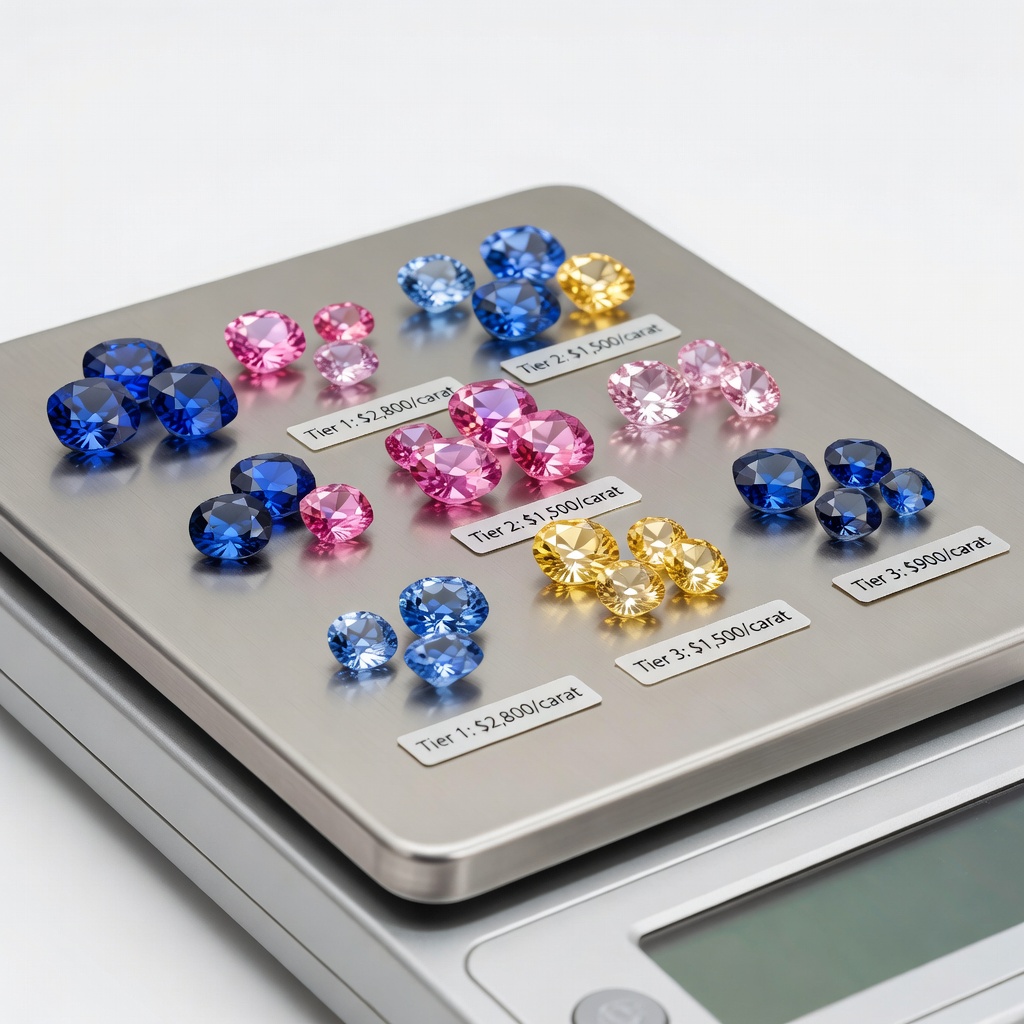
Understanding Sapphire Pricing Fundamentals
Navigating the world of precious gemstones requires understanding that sapphire prices vary dramatically across the market spectrum, ranging from as little as $25 per carat for commercial-grade material to well over $10,000 per carat for exceptional, untreated specimens. This comprehensive Sapphire Price Guide reveals that unlike diamonds, which benefit from standardized grading systems and price transparency, the sapphire market operates with significantly more variability and subjectivity. The industry distinguishes between commercial, fine, and extra-fine quality grades, with each tier representing vastly different aesthetic qualities, treatment histories, and long-term value propositions for collectors and jewelry enthusiasts alike.
Price transparency remains notably limited in the sapphire trade compared to the diamond industry, making thorough research absolutely essential before making any significant purchase. While the Rapaport Report provides diamond dealers with standardized pricing matrices, no equivalent universal pricing guide exists for colored gemstones, requiring buyers to compare multiple sources and understand the nuanced factors driving sapphire cost per carat. Smart consumers should request detailed certification from reputable laboratories and compare stones with similar characteristics across different retail channels to establish fair market value benchmarks before committing to a purchase.
The 4Cs: How Color, Clarity, Cut and Carat Impact Cost
Color: The Primary Value Driver
When evaluating blue sapphire pricing, color emerges as the single most critical factor determining value, with vivid, saturated blues commanding the highest premiums in the marketplace. The most desirable hues range from velvety cornflower blue to deep royal blue, with medium-dark tones exhibiting strong saturation fetching prices 200-300% higher than pale or overly dark stones. Gemological laboratories assess color using three criteria: hue (the basic color), tone (lightness or darkness), and saturation (intensity), with stones receiving grades from faint to vivid, where vivid stones with medium-dark tones represent the pinnacle of desirability and command corresponding price premiums.
Clarity and Its Cost Implications
Sapphire quality factors include clarity grades that consider the presence, type, and visibility of inclusions, which are naturally occurring internal characteristics common in corundum crystals. Eye-clean stones, meaning those without visible inclusions to the naked eye, typically cost 30-50% more than those with slight inclusions, while heavily included material may require fracture filling or other treatments to appear presentable. However, unlike diamonds where clarity is paramount, sapphires often tolerate certain inclusions if they do not significantly impact the stone's durability or interfere with the passage of light through the gem.
Cut Quality and Brilliance
Master craftsmanship in cutting can increase a sapphire's value by 20-40%, as precision faceting maximizes the stone's ability to return light to the viewer's eye while minimizing windowing or extinction. Well-cut sapphires exhibit balanced proportions, symmetrical facets, and appropriate depth percentages that enhance the gem's inherent color without sacrificing brilliance. Poor cutting decisions, such as cutting too shallow to save weight or misaligned facets that leak light, can render even high-quality rough material less desirable and significantly reduce the per-carat value in the secondary market.
Carat Weight and Exponential Pricing
The relationship between size and price follows an exponential curve in the sapphire market, with sapphire cost per carat jumping dramatically once stones exceed two carats in weight. While a fine one-carat blue sapphire might retail for $1,500 per carat, an equivalent-quality three-carat stone could command $4,000-5,000 per carat due to the rarity of larger crystals without significant inclusions or color zoning. This pricing phenomenon creates strategic opportunities for buyers seeking value, as stones in the 1.5 to 1.9-carat range often offer superior visual presence while avoiding the steep price escalations associated with crossing the two-carat threshold.
Origin Premium: Why Kashmir and Burmese Sapphires Cost More
The Kashmir Sapphire Mystique
Among natural sapphire prices, Kashmir sapphires occupy the pinnacle of the market, sometimes costing ten times more than equivalent-quality stones from other origins due to their legendary velvety blue color and extreme rarity. These gems, mined briefly in the late 19th century from a remote Himalayan location, exhibit a unique cornflower blue hue with a slight milky haziness caused by microscopic inclusions that actually enhance their visual appeal rather than detract from it. The mines have been essentially depleted for over a century, making authentic Kashmir sapphires true museum-quality collector's items that appear at auction only rarely, with exceptional stones fetching $100,000 or more per carat.
Burmese Sapphire Excellence
Burmese sapphires from Myanmar command 3-5x premiums over stones from other locations, prized for their rich, saturated royal blue colors that result from the geological conditions specific to the Mogok Stone Tract. These stones typically exhibit higher clarity and more intense color saturation than their Ceylon counterparts, justifying their elevated position in sapphire market trends and investment portfolios. However, ethical sourcing concerns have complicated the Burmese sapphire trade, requiring buyers to verify that their purchases comply with international sanctions and ethical mining standards while still recognizing the geological superiority of these historic deposits.
Alternative Origins for Value
Ceylon (Sri Lankan) and Madagascar sapphires offer exceptional value propositions for buyers seeking fine quality without the extreme premiums associated with Kashmir or Burmese origins. Sri Lankan stones often display lighter, brighter blue tones with excellent transparency and typically command $800-2,000 per carat for fine qualities, representing a sweet spot in the natural sapphire prices spectrum. Madagascar has emerged as a major producer of high-quality sapphires in recent decades, offering stones with color profiles similar to Kashmir or Burma at significantly lower price points, though they generally lack the historical prestige that drives collector premiums.
Treatment Types and Their Massive Price Impact
The Untreated Sapphire Rarity
Untreated sapphire value stands apart in the gemstone market, as completely natural stones represent less than 1% of commercial supply and command premiums of 50-100% over treated equivalents. These rare gems have undergone no thermal enhancement or chemical treatment, maintaining exactly the color and clarity nature provided when the crystal formed deep within the earth's crust. For collectors and investors, untreated status serves as a crucial differentiator, with laboratories like GIA and AGL providing specific "no heat" notations on certificates that authenticate the stone's natural state and justify higher acquisition costs.
Standard Heat Treatment
Standard heat treatment, which involves heating sapphires to temperatures between 1,600 and 1,800 degrees Celsius to improve color and clarity, remains widely accepted in the trade but reduces values by 30-50% compared to untreated stones. This permanent and stable treatment dissolves rutile inclusions and intensifies blue coloration, transforming otherwise unmarketable rough material into beautiful, saleable gems. While heat-treated sapphires offer excellent value for jewelry purposes, savvy buyers following a comprehensive sapphire buying guide should ensure they pay appropriately discounted prices compared to untreated specimens and receive full disclosure of any thermal enhancement.
Problematic Enhancement Techniques
Diffusion treatment and fracture filling represent aggressive enhancement methods that devalue stones by 70-90% and require specific disclosure under Federal Trade Commission guidelines. Surface diffusion introduces foreign elements like beryllium into the sapphire's outer layers to create artificial color, while fracture filling injects glass or epoxy into surface-reaching cracks to improve apparent clarity. When developing your sapphire buying guide checklist, always insist on treatment disclosure from reputable laboratories, as these heavily treated stones, while affordable, lack durability and cannot command prices associated with natural or simply heated material.
Beyond Blue: Pricing Fancy Color Sapphires
Padparadscha: The Lotus Flower Gem
While blue varieties dominate mainstream markets, Padparadscha sapphires represent the rarest and often most valuable color variety, displaying a delicate pink-orange hue reminiscent of a tropical sunset or lotus blossom. These extraordinary gems command sapphire cost per carat ranges from $3,000 to $15,000 depending on size and color purity, with untreated specimens from Sri Lanka or Madagascar achieving the highest valuations. True Padparadscha requires precise color balance without brown or gray modifiers, making stones that meet strict gemological definitions extraordinarily scarce and highly sought after by connoisseurs who appreciate their unique aesthetic among fancy color options.
Pink and Purple Varieties
Pink sapphires have experienced surging popularity in engagement rings and fashion jewelry, with prices ranging from $500 to $3,000 per carat depending on color intensity and origin. Vivid hot pink stones, sometimes called "hot pink" or "bubblegum" sapphires, command premiums similar to fine blue stones, while softer pastel shades offer accessible entry points for collectors. Purple sapphires, which owe their color to varying combinations of chromium and vanadium, typically fall between pink and blue pricing tiers, with rich violet hues achieving stronger prices than pale lavender specimens.
Yellow, Green and Color-Change Options
Yellow and green sapphires provide budget-friendly alternatives within the corundum family, typically trading between $100 and $800 per carat while still offering excellent hardness and brilliance for daily wear jewelry. These stones derive their color from iron and trace elements rather than the titanium and iron combination responsible for blue hues, resulting in generally lower market demand but exceptional value propositions. Color-change sapphires, which shift between blue and purple depending on lighting conditions, command 2-3x premiums over standard colors due to their chameleon-like optical phenomenon, with Alexandrite-like green-to-red changes representing the most valuable and rare variations.
Current Market Price Ranges by Quality Tier
Commercial Grade Entry Points
Commercial grade sapphires, typically priced between $25 and $250 per carat, represent accessible entry points for budget-conscious buyers or fashion jewelry applications where absolute quality takes second precedence to size and color. These stones often undergo heavy treatments including diffusion, fracture filling, or extensive heat modification to improve apparent quality, and they frequently exhibit visible inclusions, windowing, or uneven color distribution. While suitable for costume jewelry or pieces where the setting provides significant aesthetic contribution, commercial-grade material rarely retains value and should be purchased with realistic expectations regarding long-term durability and resale potential.
Good Quality for Daily Wear
The good quality tier, spanning $250 to $800 per carat, offers heat-treated stones with eye-visible inclusions that do not significantly detract from face-up appearance, making them ideal for engagement rings and everyday jewelry. These sapphires typically originate from Madagascar, Thailand, or Australia, displaying attractive medium blue colors with reasonable saturation and acceptable clarity for social viewing distances. This category represents the sweet spot for many consumers following a practical sapphire buying guide, balancing aesthetic appeal with affordability while ensuring sufficient quality for heirloom pieces that withstand generational wear.
Fine Grade Collector Pieces
Fine grade sapphires command $800 to $3,000 per carat, featuring minimal to no treatment, eye-clean clarity, and vivid color saturation that distinguishes them from commercial material. Stones in this category often come with prestigious laboratory certificates verifying their natural status or limited enhancement, accompanied by detailed origin reports that may indicate Ceylon, Madagascar, or occasionally Burmese sources. These specimens appeal to serious collectors and discerning jewelry buyers who view their purchases as alternative investments while enjoying superior optical performance and the security of owning gemstones with documented provenance.
Extra-Fine Investment Grade
Extra-fine grade material, priced from $3,000 to $10,000 or more per carat, encompasses untreated sapphires with exceptional color, flawless clarity, and prestigious origins that place them among the world's finest gemstones. These stones typically exceed two carats, display the coveted velvety blue associated with Kashmir or the intense saturation of fine Burmese material, and carry certificates from laboratories like Gübelin or SSEF that command respect in international auction houses. Representing the pinnacle of sapphire market trends for high-net-worth collectors, these gems function simultaneously as wearable art and tangible stores of value that historically appreciate during periods of economic uncertainty.
Where to Buy: Price Comparison Across Retail Channels
Online Retailers and Digital Marketplaces
Online retailers typically offer 20-30% savings compared to brick-and-mortar establishments, leveraging lower overhead costs to provide competitive sapphire cost per carat while maintaining extensive inventories. Reputable digital vendors provide high-resolution photography, detailed certification, and generous return policies that mitigate the risks of purchasing without physical inspection. However, this sapphire buying guide strongly recommends vetting online sellers through industry associations like the American Gem Trade Association (AGTA) and verifying that their photographs represent actual inventory rather than stock images, as color accuracy remains crucial when evaluating blue and fancy color varieties.
Auction Houses and Estate Sales
Major auction houses like Christie's, Sotheby's, and Bonhams provide access to rare, museum-quality sapphires unavailable through standard retail channels, though buyers must account for 15-25% buyer's premiums added to the hammer price. Estate sales and smaller regional auctions occasionally offer undervalued vintage pieces where sapphires were acquired decades ago at significantly lower prices, creating opportunities for knowledgeable buyers to acquire fine material below current market rates. Successful auction participation requires advance registration, careful examination of condition reports, and setting strict budget limits to avoid emotional bidding that ignores the buyer's premium impact on total acquisition costs.
Brick-and-Mortar Jewelers
Traditional jewelry stores charge higher prices than online competitors, reflecting the costs of maintaining physical showrooms, professional gemologists on staff, and immediate inventory availability. The premium paid to local jewelers often proves worthwhile for significant purchases, as they provide personalized service, immediate setting options, and ongoing maintenance relationships including cleaning, prong checking, and potential buy-back programs. When evaluating sapphire cost per carat at retail establishments, consider the total value proposition including appraisal services, warranties, and the ability to examine stones under various lighting conditions before committing to a purchase.
Wholesale and Trade Channels
Wholesale dealers offer the best per-carat prices for sapphires, sometimes 40-60% below retail, but require industry connections, business licenses, or minimum purchase quantities that exclude casual consumers. Gem and mineral shows, such as the Tucson Gem and Mineral Show, provide limited opportunities for the public to access wholesale pricing from international dealers, though buyers must possess sufficient knowledge to evaluate stones without the safety net of consumer protection policies. For serious collectors considering investment-grade purchases, establishing relationships with wholesale cutters and dealers in major trading centers like Bangkok, Jaipur, or Colombo can yield significant savings on high-quality material.
Expert Tips for Getting the Best Value
Strategic Carat Weight Selection
When applying this Sapphire Price Guide to actual purchases, prioritize color over carat weight for maximum visual impact, as a smaller, vividly saturated stone outperforms a larger, washed-out gem in nearly every lighting condition. Consider targeting the 1.5 to 1.9-carat range for the best price-per-carat value, as these stones appear nearly as substantial as two-carat gems while avoiding the exponential price jumps associated with crossing major psychological weight thresholds. Additionally, slight variations in cutting proportions can result in "spread" stones that appear larger than their actual carat weight suggests, offering better face-up value without the premium associated with heavier weights.
Certification Verification
Always request certificates from GIA (Gemological Institute of America), AGL (American Gemological Laboratories), or Gübelin before finalizing any significant sapphire purchase, as these laboratories reliably disclose treatments, origins, and quality assessments that protect your investment. Be wary of in-house certificates or reports from unknown laboratories that may use grading standards designed to flatter the seller's inventory rather than inform the buyer accurately. When comparing prices between certified and uncertified stones, factor the $100-300 certification cost into your valuation, remembering that documented provenance significantly enhances resale value and insurance replacement accuracy.
Red Flags to Avoid
Beware of deals that appear "too good to be true," as they almost invariably indicate glass-filled sapphires, synthetic material, or heavily treated stones being misrepresented as fine natural gems. When following a comprehensive sapphire buying guide, examine stones under magnification for gas bubbles (indicating glass filling), curved growth lines (signifying synthetic origin), or surface residue from diffusion treatments. Reputable sellers welcome independent appraisal periods and provide detailed written disclosures regarding treatments, while questionable dealers pressure for immediate decisions or offer vague descriptions like "natural sapphire" without specifying enhancement status.
Investment Potential: Do Sapphires Appreciate in Value
Historical Performance Data
Fine untreated sapphires have demonstrated consistent appreciation of 5-8% annually over the past decade, outperforming many traditional investment vehicles while providing the tangible enjoyment of ownership that stocks and bonds cannot match. Investment-grade stones must meet strict criteria: completely untreated status, rare or prestigious origin, exceptional color saturation, and sizes typically exceeding three carats to ensure liquidity among serious collectors. Sapphire market trends indicate that while commercial-grade treated stones depreciate significantly upon purchase, much like new automobiles, museum-quality specimens function as alternative hard assets that hedge against inflation and currency fluctuations.
Liquidity Considerations
Unlike gold or publicly traded stocks, sapphires present liquidity challenges requiring specialized resale channels including auction houses, private treaty sales between collectors, or consignment with high-end jewelers who maintain client lists seeking specific gemstones. The secondary market for fine sapphires remains less efficient than financial markets, meaning forced sales often result in discounts to quick buyers rather than full retail recovery. Prospective investors should view gemstone acquisition as a long-term strategy with holding periods of five to ten years minimum, allowing time for market appreciation to overcome the bid-ask spread inherent in illiquid luxury assets.
Future Market Outlook
Continued market demand from Asia, particularly China and India, drives prices upward for top-quality sapphires as emerging wealth creates new generations of collectors competing for finite supplies of fine material. Climate change and political instability threaten traditional mining operations in Myanmar, Kashmir, and Sri Lanka, potentially constraining future supply while demand continues growing among luxury consumers seeking alternatives to diamonds. Current sapphire market trends suggest that untreated, vividly colored stones from any reputable origin will likely maintain or increase value, making them suitable diversification tools for sophisticated portfolios that include tangible assets alongside traditional securities.
Frequently Asked Questions About Sapphire Pricing
How much does a 1 carat sapphire cost?
A 1 carat sapphire ranges from $300 for commercial-grade heat-treated stones to $3,000+ for fine untreated gems. Expect to pay $800-1,500 for good quality with minimal treatment. The exact price depends on color intensity, clarity, origin, and whether the stone has undergone any thermal enhancement.
Are sapphires more expensive than diamonds?
Generally no - diamonds cost more per carat at the same quality level. However, rare untreated Kashmir sapphires can exceed diamond prices, sometimes reaching $100,000+ per carat. For everyday jewelry, diamonds typically command higher prices, while fine colored sapphires offer better value retention and unique aesthetic appeal.
Does heat treatment affect sapphire value?
Yes significantly. Heat-treated sapphires cost 30-50% less than untreated stones. Standard heat treatment is permanent and stable, making it acceptable for most buyers seeking value. The key is ensuring you pay appropriately discounted prices for treated material and receive full disclosure from the seller.
What color sapphire is most valuable?
Vivid, medium-dark blue sapphires (cornflower to royal blue) command highest prices. However, Padparadscha (pink-orange) sapphires are rarer and can be equally or more valuable per carat. The most valuable stones exhibit strong saturation without being too dark or too light, regardless of the specific hue.
How can I tell if a sapphire price is fair?
Compare certified stones with similar color, clarity, carat, origin, and treatment status. Use price guides from GIA and AGL, and get quotes from multiple reputable dealers before buying. Always examine stones under different lighting conditions and verify that certificates match the specific gemstone being offered.
Are lab-created sapphires cheaper than natural?
Yes, significantly. Lab-created sapphires cost $50-200 per carat versus $300-10,000+ for natural stones. They have identical properties but lack rarity and investment value. Synthetic sapphires serve well for fashion jewelry or temporary pieces, but do not appreciate in value or carry the prestige of natural gems.
Do sapphires hold their value?
Fine untreated sapphires from reputable dealers typically retain 60-80% of retail value. Commercial-grade treated stones may retain only 20-30%. Investment-grade stones can appreciate over time. Proper certification, quality photography, and documentation of provenance significantly enhance resale potential when liquidating your collection.
What certification should I look for when buying a sapphire?
Seek GIA (Gemological Institute of America), AGL (American Gemological Laboratories), or Gübelin certificates. These labs reliably disclose origin and treatments, protecting your investment. Avoid relying solely on in-house grading reports or certificates from unknown laboratories that may use lax standards to inflate perceived quality.