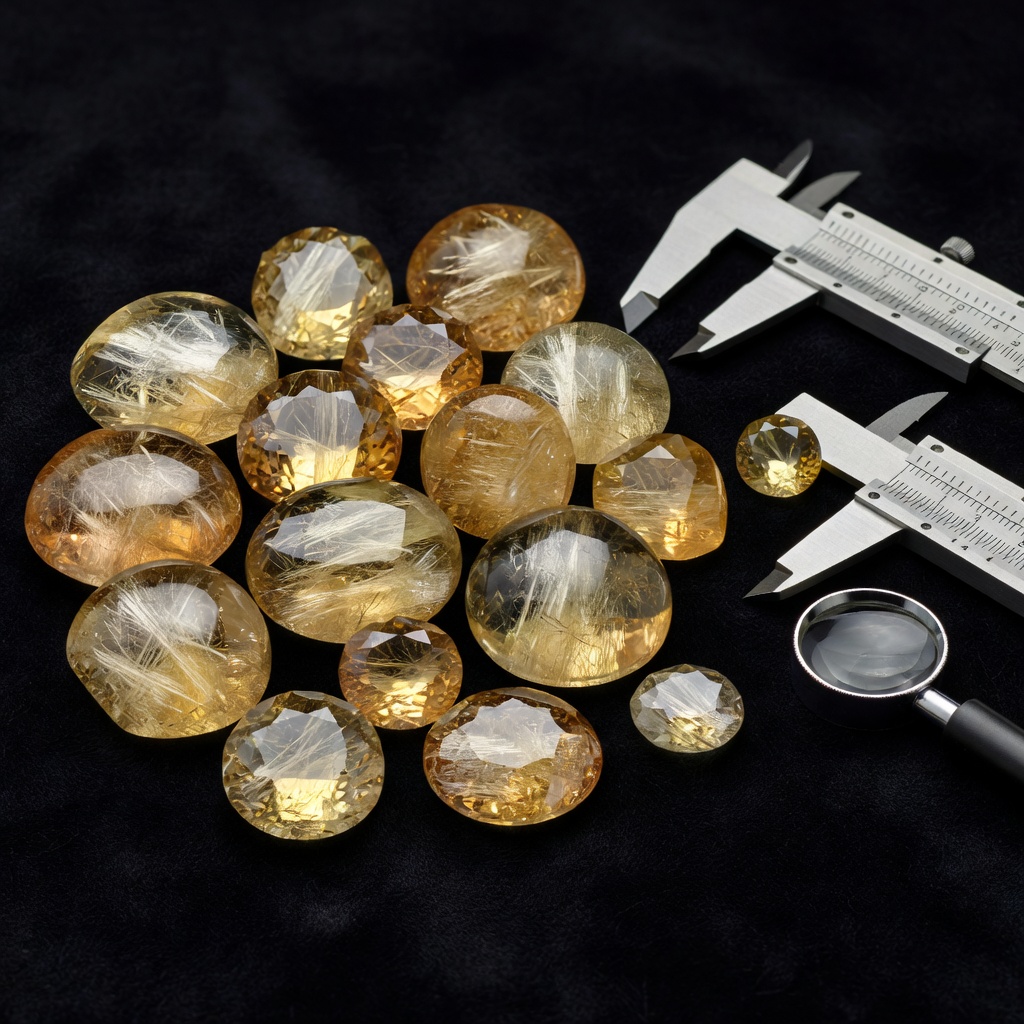
Understanding Rutilated Quartz and Its Market Value
Rutilated quartz, often revered as Venus hair stone in historical gemological texts, represents one of nature's most captivating geological anomalies where titanium dioxide crystals become suspended within clear quartz hosts. These golden, red, or black needle-like inclusions create mesmerizing internal landscapes that transform ordinary quartz into extraordinary gemstones prized by both jewelry designers and mineral collectors. Unlike most gemstones where clarity commands premium prices, rutilated quartz derives its value specifically from these dramatic internal features, creating a unique market dynamic where visible inclusions enhance rather than diminish worth.
The contemporary market for rutilated quartz has expanded significantly over the past decade, driven by increasing consumer appreciation for one-of-a-kind stones that defy traditional gemological standards. Jewelry designers particularly favor this material for statement pieces and bohemian-luxe collections, while specimen collectors seek out rare formations displaying star patterns, dense parallel needles, or phantom growth zones. This dual demand structure creates distinct pricing tiers, with commercial jewelry-grade material accessible to entry-level buyers and museum-quality specimens commanding prices comparable to precious gemstones.
Current market pricing for rutilated quartz spans an exceptionally broad spectrum, reflecting the stone's varied quality grades and aesthetic characteristics. Entry-level cabochons suitable for silver jewelry settings typically start around $2 per carat, while exceptional specimens featuring dense golden rutile patterns in water-clear quartz can exceed $500 per carat at specialty auctions. Understanding this Rutilated Quartz Price Guide requires recognizing that value correlates directly with visual impact, rarity of inclusion patterns, and the overall harmony between rutile formations and host crystal clarity.
Key Factors That Determine Rutilated Quartz Prices
Rutile Density and Distribution Patterns
The concentration and arrangement of rutile needles within the quartz host serve as primary value determinants in the rutilated quartz market. Stones featuring dense, intersecting networks of rutile that create three-dimensional depth command significant premiums over specimens with sparse, scattered inclusions. Master cutters often orient rough material specifically to showcase "landscape" patterns resembling golden forests, starburst formations, or geometric grids, with these artistic internal vistas increasing rutilated quartz value per carat by factors of ten or more compared to randomly oriented material.
Distribution symmetry plays a crucial role in pricing, particularly for faceted stones where rutile alignment must complement the cutting style without creating structural weaknesses. Specimens displaying parallel needle formations that create cat's eye or star effects represent the pinnacle of desirability, frequently achieving prices above $300 per carat when properly oriented. Conversely, stones with rutile concentrated only at the periphery or displaying chaotic, muddy patterns fall into commercial grades regardless of overall carat weight.
Color Intensity and Visual Impact
The chromatic character of rutile inclusions dramatically influences market valuation, with golden-yellow varieties establishing the baseline for commercial pricing while rare red and copper tones command substantial premiums. Intense saturation without brownish or grayish secondary tones indicates high-quality material, particularly when the rutile displays metallic luster that catches light within the stone. Golden rutilated quartz price points escalate rapidly when needles exhibit rich, brassy gold rather than pale straw colors, with top-tier golden specimens sometimes matching the per-carat values of semi-precious gems like amethyst or citrine.
Silver and black rutile varieties, sometimes marketed as sagenitic quartz, occupy distinct market niches where aesthetic preferences rather than rarity dictate pricing. While less common than golden rutile, black needle formations appeal to contemporary jewelry markets seeking dramatic contrast, typically pricing 15-25% above standard golden material but below premium copper varieties. The visual impact of these color variations depends heavily on lighting conditions, with high-quality stones displaying lively chatoyancy or sheen that enhances their apparent value beyond static color assessment.
Host Quartz Clarity and Transparency
The optical quality of the enclosing quartz crystal functions as a value multiplier in rutilated quartz quality grades, with limpid, water-clear hosts providing the ideal canvas for displaying rutile inclusions. Even spectacular rutile patterns lose market value when suspended within cloudy, milky, or heavily fractured quartz that obscures visibility. Gemologists evaluate host clarity using standards similar to diamond grading, seeking eye-clean material that allows rutile needles to appear suspended in three-dimensional space without distracting inclusions or internal strain patterns.
Practical purchasing decisions require balancing clarity against pattern density, as extremely dense rutile networks naturally reduce apparent transparency while increasing visual interest. The most valuable specimens achieve an optimal equilibrium where thick, distinct rutile needles remain clearly visible against a backdrop of high-clarity quartz, creating depth perception that draws the viewer into the stone. This clarity standard becomes particularly important for faceted rutilated quartz, where light return through the table must illuminate the internal rutile structure without creating dead zones or excessive windowing.
Price Per Carat Breakdown by Quality Grade
Commercial Grade Market Positioning
Commercial grade rutilated quartz dominates the mass-market jewelry sector, typically retailing between $2 and $15 per carat depending on geographic origin and cutting quality. This category encompasses cabochons and calibrated stones featuring sparse rutile inclusions, cloudy host material, or needles that appear thin and wispy rather than bold and defined. Manufacturers favor this grade for sterling silver jewelry lines and fashion accessories where the distinctive appearance of rutilated quartz provides visual interest without the cost associated with fine gem material.
While commercial grade material lacks investment potential, it offers excellent entry points for consumers seeking to explore Venus hair stone pricing without significant financial commitment. These stones often originate from high-volume Brazilian mining operations where material is cut into standard sizes for bezel settings or wire-wrapped pendants. Buyers should expect minimal clarity in the host quartz and rutile patterns that appear random rather than artistically arranged, though occasional bargains emerge when cutter error places interesting inclusion patterns in otherwise commercial rough.
Fine Jewelry Grade Valuation
The fine jewelry grade represents the sweet spot for included quartz market value, spanning $20 to $100 per carat for stones exhibiting exceptional pattern density, color saturation, and cutting precision. At this level, rutile needles appear thick and well-defined, often creating recognizable patterns such as golden stars, parallel beams, or intricate networks that gem cutters specifically orient to maximize visual impact. These stones typically find homes in gold or platinum settings where the metalwork complements rather than competes with the internal stone architecture.
Case studies from high-end jewelry auctions reveal that fine grade rutilated quartz with documented Brazilian or Madagascar origins consistently outperforms generic material in resale markets. A notable example includes a 12-carat golden rutilated quartz ring that sold for $890 at a 2023 estate auction, representing approximately $74 per carat and demonstrating the strong secondary market for well-documented, aesthetically superior stones. Collectors targeting this grade should prioritize stones with certificates of origin and seek patterns where rutile density creates three-dimensional depth rather than superficial surface appearances.
Collector and Investment Grade Premiums
At the apex of the market, collector-grade specimens command $100 to $500-plus per carat, with exceptional pieces occasionally exceeding these ranges at specialized mineral shows or private sales. This tier includes stones displaying rare red or copper rutile, star-pattern formations, or phantom quartz combinations where rutile needles appear suspended between distinct growth zones of the host crystal. Investment collectors particularly seek large specimens exceeding 20 carats with museum-quality patterns, recognizing that such pieces appreciate independently of fashion trends due to their geological uniqueness.
The valuation of investment-grade material requires expert assessment of rarity factors including exact rutile chemistry (some specimens contain ilmenite or other titanium variants), historical significance of the mining location, and uniqueness of the inclusion pattern. A documented specimen from exhausted Kazakhstan mines featuring dense copper rutile recently sold for $450 per carat, illustrating how provenance and scarcity drive pricing at this level. Buyers entering this market segment should engage certified gemologists familiar with inclusion identification and maintain detailed provenance documentation to protect future resale value.
Color Varieties and Their Impact on Pricing
Golden and Yellow Rutile Market Dynamics
Golden rutilated quartz constitutes approximately seventy percent of the commercial market, establishing the baseline for general pricing while offering significant variation based on saturation and needle thickness. The most desirable golden specimens display intense, metallic brass-gold coloration reminiscent of spun gold thread, with prices increasing exponentially as color intensity moves from pale yellow to rich amber-gold. Market analysis indicates that golden rutile with high luster and thick, well-defined needles commands 40-60% premiums over standard golden material, particularly when set in high-karat gold jewelry where the metal and inclusions create harmonious color stories.
Despite being the most common color variety, premium golden rutilated quartz maintains strong market liquidity due to consistent demand from both Asian and Western jewelry markets. Chinese collectors particularly favor stones displaying "wealth patterns" where dense golden rutile forms shapes resembling coins or ingots, paying significant premiums for these fortuitous formations. When evaluating golden rutilated quartz price considerations, buyers should examine stones under various lighting conditions, as some specimens appear vibrant under direct light but muddy under diffused illumination, affecting their practical value in jewelry settings.
Red and Copper Rutile Rarity Premiums
Red and copper-toned rutile inclusions represent the rarest naturally occurring color variants, commanding immediate 30-50% price premiums over equivalent-quality golden material due to extreme scarcity in the supply chain. These colors result from iron content variations within the titanium dioxide structure, with true red rutile (sometimes called "flame rutile") appearing almost exclusively in specimens from specific Madagascar and Kazakhstan deposits. The market for red rutilated quartz remains relatively niche but intensely competitive among serious collectors, with fine specimens rarely appearing in general jewelry channels and instead trading through specialized mineral dealers.
Pricing for copper rutile follows complex patterns based on the specific hue achieved, with reddish-copper commanding higher prices than brownish-copper tones. A recent market survey revealed that 5-carat copper rutilated quartz cabochons with exceptional clarity retail between $150 and $250 per carat, compared to $40-$80 for equivalent golden specimens. Jewelry designers targeting luxury markets increasingly seek these rare color variants for limited edition collections, creating upward pressure on prices as fashion demand intersects with geological scarcity.
Black and Silver Sagenitic Varieties
Black and silver rutile inclusions, often classified under the broader term sagenitic quartz, occupy a distinctive market position where gothic and contemporary aesthetic preferences drive demand independent of traditional gemological rarity metrics. These varieties typically form through different mineralogical processes than golden rutile, sometimes involving tourmaline or other mineral inclusions alongside titanium dioxide, creating complex internal textures. Pricing for black rutilated quartz generally falls between golden and red varieties, with standard material ranging $25-$75 per carat depending on pattern contrast against the host crystal.
The value proposition for silver and black varieties depends heavily on cutting style, with cabochons that display star patterns or geometric grids commanding significant premiums over standard oval or round cuts. Contemporary designers have embraced these darker varieties for unisex and architectural jewelry lines, creating stable demand that insulates prices from the volatility affecting trend-dependent colored stones. When purchasing sagenitic quartz, buyers should verify that black needles represent natural rutile rather than artificially induced inclusions, as treated black material commands substantially lower prices and may prove unstable over time.
Cut, Carat Weight, and Shape Considerations
Cabochon Versus Faceted Cutting Impact
The cutting style selected for rutilated quartz dramatically affects both aesthetic presentation and final retail pricing, with cabochons generally dominating the market due to their ability to showcase inclusion patterns without optical interference. Smooth, domed cabochon cuts allow observers to view rutile formations through a magnifying lens effect created by the curved surface, making this the preferred style for specimens with dense or complex internal patterns. However, expertly faceted rutilated quartz commands higher rutilated quartz value per carat when the cutter successfully balances brilliance with rutile visibility, creating scintillation that dances among the golden or black needles.
Faceted rutilated quartz requires exceptional rough material with high clarity and strategically oriented rutile formations that won't create structural weaknesses at the girdle or points. The cutting process for these stones demands specialized expertise, as standard faceting angles may need adjustment to prevent rutile needles from creating undesirable dark reflections or structural flaws. Consequently, custom-faceted rutilated quartz typically retails for 50-100% more than equivalent cabochon material, reflecting both the higher rough quality requirements and the skilled labor necessary to execute successful cuts.
Size Premiums and Jewelry Standards
Standard jewelry sizes for rutilated quartz typically range from 1 to 5 carats, where market liquidity remains highest and cutting rough yields optimal efficiency. Within this range, prices scale relatively linearly with carat weight, though stones exceeding 3 carats with exceptional patterns begin commanding modest scarcity premiums. The practical wearing considerations of jewelry design constrain demand for extremely large stones in standard jewelry applications, though statement pieces and cocktail rings increasingly incorporate rutilated quartz specimens between 10 and 20 carats where dramatic pattern visibility justifies the size.
Large specimens exceeding 50 carats transition from jewelry material to collector specimens or lapidary art objects, where pricing follows different metrics based on display potential and pattern uniqueness. A 100-carat golden rutilated quartz specimen with landscape-quality patterning might retail for $8,000-$15,000 as a display piece, representing $80-$150 per carat, while the same material in 2-carat jewelry sizes might command only $30-$50 per carat. This inversion of standard gemstone pricing paradigms reflects the decorative art market's influence on large included quartz market value, where uniqueness trumps wearability.
Custom Cutting and Artisan Value Addition
Artisan cutters specializing in included quartz can significantly enhance material value through creative cutting techniques that transform rough crystals into sculptural objects or precision jewelry components. Custom cutting costs for rutilated quartz typically range from $50 to $200 per stone depending on complexity, with this investment often returning multiples in final retail value when the cutter successfully reveals hidden patterns or creates unusual shapes like hexagons, kites, or freeform asymmetrical designs. Experienced buyers often purchase rough rutilated quartz specifically to commission custom cuts that maximize unique inclusion patterns invisible in standard calibrated shapes.
The rutile quartz buying tips for evaluating cut quality include examining the stone's profile to ensure adequate dome height on cabochons (flat stones appear lifeless), checking that faceted stones maintain symmetrical rutile visibility across the table, and verifying that no surface-reaching fractures compromise durability. Artisan-cut specimens should display polished surfaces free of scratches or polishing lines that detract from the stone's natural beauty, with the cutting style complementing rather than fighting the internal rutile architecture. Collectors building serious collections often establish relationships with specific cutters known for maximizing the visual impact of rutilated quartz rough.
Natural vs. Treated: How Enhancement Affects Value
Identifying Heat-Treated Material
Heat treatment represents the most common enhancement in the rutilated quartz market, with lower-grade golden material sometimes subjected to controlled heating to intensify color saturation or convert pale rutile to more desirable golden tones. While heat treatment remains permanent and stable, it typically reduces rutilated quartz value per carat by 20-40% compared to naturally intense material, though disclosure varies significantly across market segments. Identifying heat-treated stones requires gemological expertise, as treated material often displays unnaturally uniform color distribution or rutile needles that appear slightly melted or rounded at the edges rather than sharply defined.
Professional laboratories utilize spectroscopic analysis to detect heat treatment signatures, though experienced dealers can often identify suspect material through careful examination of inclusion characteristics. Naturally intense golden rutilated quartz typically shows slight color variation along individual rutile needles, whereas treated stones may display suspiciously consistent coloration throughout. When purchasing investment-grade material, always request certificates from recognized laboratories that specifically address treatment status, as undisclosed heating significantly impacts long-term value retention and resale potential.
Synthetic Rutile Detection Methods
Synthetic rutile inclusions created through hydrothermal growth processes have emerged in the market, though they remain relatively rare compared to treated natural material. These laboratory-created stones display overly perfect, uniform rutile distribution with needles that appear identical in thickness and orientation—patterns that nature rarely produces. Under magnification, synthetic rutilated quartz often reveals curved growth lines or seed plates invisible in natural material, while the rutile needles may lack the slight irregularities and natural zoning characteristic of geological formation processes.
Price discrepancies between synthetic and natural rutilated quartz remain substantial, with synthetic material typically retailing at 60-80% discounts compared to equivalent-appearance natural stones. However, synthetic rutilated quartz serves legitimate purposes in fashion jewelry and industrial applications where natural rarity isn't required. Buyers should view extremely low prices for apparently high-quality material as red flags requiring verification, particularly when purchasing from unfamiliar sources or online marketplaces where photographic manipulation can mask synthetic characteristics.
Industry Disclosure Standards and Ethics
The colored gemstone industry maintains varying standards regarding treatment disclosure for rutilated quartz, with reputable dealers adhering to guidelines established by organizations like the American Gem Trade Association (AGTA) and International Colored Gemstone Association (ICA). While heat treatment is generally considered acceptable if disclosed, dyeing or irradiation treatments that create artificial colors (particularly bright blue or green rutilated quartz) significantly devalue material and require explicit disclosure under fair trade practices. Professional appraisers evaluate treated material based on its actual market value rather than the value of equivalent natural stones, protecting consumers from overpaying for enhanced products.
When navigating rutilated quartz quality grades, consumers should inquire specifically about treatments even when not volunteering the information, and secure written guarantees regarding natural origin for significant purchases. Some treatments, particularly surface coating or fracture filling to improve apparent clarity, remain controversial and potentially unstable over time. Building relationships with dealers who specialize in untreated material provides the best protection against enhancement misrepresentation, though such dealers typically command slight premiums reflecting their curation expertise and inventory costs.
Geographic Origins and Regional Price Variations
Brazilian Mining and Volume Pricing
Brazil dominates global rutilated quartz production, supplying approximately eighty percent of commercial and fine jewelry grade material through extensive deposits in Minas Gerais and Bahia states. Brazilian rutilated quartz benefits from consistent quality standards and established supply chains that keep prices competitive, with volume mining operations producing sufficient rough to satisfy mass-market jewelry demands. The consistency of Brazilian golden rutile—typically displaying warm, brassy tones—has established market expectations for standard material, making these stones the reference point for rutilated quartz value per carat calculations across the industry.
Import costs and mining regulations in Brazil affect retail pricing significantly, with recent environmental compliance requirements increasing extraction costs by an estimated 15-20% over the past five years. These increased costs pass through to consumers, though Brazilian material remains more affordable than equivalent quality from restricted localities. Buyers seeking standard commercial grade material benefit most from Brazilian sourcing, where economies of scale allow competitive pricing even for stones with reasonably dense rutile patterns and good clarity.
Madagascar and Kazakhstan Premium Localities
Madagascar and Kazakhstan produce the world's most prized rutilated quartz, particularly specimens featuring rare red, copper, or silver rutile formations that rarely occur in Brazilian deposits. Madagascar material often displays exceptional clarity and distinct phantom quartz associations where rutile appears suspended between growth zones, while Kazakhstan produces dense, star-pattern rutile formations highly sought by Asian collectors. These premium localities command immediate 25-75% price premiums over Brazilian equivalents due to restricted supply, difficult extraction conditions, and superior aesthetic characteristics.
Political instability and infrastructure challenges in these regions create supply volatility that affects pricing unpredictably, with fine Madagascar material sometimes disappearing from markets for months during civil unrest or transportation disruptions. Savvy collectors monitor geopolitical conditions in these regions to anticipate price fluctuations, often purchasing during stable periods to avoid scarcity premiums. Documentation proving Madagascar or Kazakhstan origin adds significant value to investment-grade specimens, with provenance-verified stones from exhausted mines achieving auction prices rivaling precious gems.
Import Logistics and Regulatory Impact
International trade regulations and import duties substantially influence final retail pricing for rutilated quartz, particularly for high-value specimens requiring detailed customs documentation and potential export permits from source countries. Stones originating from conflict zones or regions with restricted mineral export laws may face confiscation risks or require expensive legal documentation to verify legitimate provenance. These compliance costs add significantly to included quartz market value for investment-grade material, explaining why documented specimens command premiums over undocumented stones of equivalent visual quality.
Currency fluctuations between the US dollar and Brazilian real or Malagasy ariary create pricing opportunities for international buyers, with favorable exchange rates sometimes reducing effective costs by 10-15% during specific market windows. However, import duties ranging from 0% to 5.5% in major markets like the United States, plus potential state sales taxes, must be factored into total acquisition costs. Wholesale buyers importing significant quantities must also consider the Kimberley Process implications and customs valuation disputes that occasionally arise with high-value gemstone shipments.
Where to Buy: Comparing Retail vs. Wholesale Pricing
Online Marketplaces and Digital Retail
Online gemstone marketplaces offer unprecedented access to rutilated quartz inventory, with platforms like Etsy, eBay, and specialized gem sites hosting thousands of listings ranging from $5 commercial cabochons to $5,000 collector specimens. Digital retail typically offers 20-30% savings compared to brick-and-mortar stores due to reduced overhead costs, though buyers sacrifice the ability to examine inclusion patterns under various lighting conditions before purchase. Reputable online dealers provide high-resolution photography, video rotation, and detailed descriptions of rutile patterns, with established sellers offering return policies that mitigate the risks of buying included stones sight unseen.
When utilizing rutile quartz buying tips for online purchases, prioritize sellers who provide measurements rather than just carat weights (since rutilated quartz density varies), offer multiple lighting condition photos, and specify origin and treatment status explicitly. Avoid listings using stock photos or vague descriptions like "golden needles" without density specifications, as these often indicate commercial-grade material masquerading as fine jewelry grade. Established online gem dealers with GIA-certified staff or AGTA membership provide the safest purchasing environment for investment-grade material, though their prices reflect this expertise and curation.
Brick-and-Mortar and Gem Show Advantages
Physical gem shops and mineral shows offer irreplaceable advantages for evaluating rutilated quartz, allowing buyers to examine how rutile patterns interact with light, assess actual color saturation against skin tones, and verify clarity without photographic enhancement. Tucson Gem and Mineral Show, Denver Gem Show, and similar international events provide access to wholesale pricing typically 30-50% below retail, particularly when purchasing directly from rough importers or cutting houses. These venues also offer educational opportunities through dealer interactions, where experienced sellers explain specific inclusion patterns and origin characteristics that influence value.
Gem shows specifically cater to various market segments, with the AGTA show focusing on fine jewelry grade material while the Tucson Electric Park venue offers rough and specimen material suitable for collectors and lapidaries. Serious buyers should attend preview days or early buyer events to access premium inventory before general admission crowds deplete the best specimens. Building relationships with specific dealers at these shows often yields preferential pricing on future purchases and early access to new acquisitions before public listing.
Avoiding Overpriced or Misrepresented Material
The rutilated quartz market contains significant pricing inconsistencies where identical material might retail for $20 per carat at one venue and $80 per carat at another, depending on location demographics and dealer expertise. Red flags for overpricing include claims of "rare" golden rutilated quartz (the most common variety), vague locality descriptions like "South American" when Brazilian is meant, or pricing based on mystical properties rather than gemological quality. Buyers should research recent auction results and wholesale pricing guides to establish baseline expectations before negotiating significant purchases.
Misrepresentation risks include dyed material sold as natural red rutile, glass imitations containing embedded metal wires, or heavily fractured stones stabilized with resins without disclosure. Professional gemological testing costs between $50-$200 but provides essential protection for purchases exceeding $500, verifying both natural origin and treatment status. When Venus hair stone pricing seems too good to be true—such as $10 per carat for apparent fine jewelry grade material—investigate thoroughly before purchasing, as these bargains typically indicate undisclosed treatments, synthetic material, or misidentified similar minerals like rutilated citrine or included quartz varieties lacking titanium dioxide needles.
Investment Potential and Future Market Trends
Rarity Trends and Supply Constraints
The investment outlook for high-quality rutilated quartz remains bullish due to increasing mining restrictions in prime localities and declining yields from established Brazilian deposits. Environmental regulations in Minas Gerais have forced closure of several historic rutilated quartz mines over the past decade, while political instability threatens Madagascar production that supplies rare red and copper varieties. These supply constraints suggest continued appreciation for documented, investment-grade specimens, with market analysts projecting 5-8% annual value increases for top-tier material over the coming decade.
Unlike diamonds or sapphires where laboratory synthesis threatens natural stone values, rutilated quartz investment potential benefits from the difficulty of replicating complex, random rutile patterns in synthetic environments. Collector preferences continue shifting toward specific aesthetic categories including "angel hair" (sparse, delicate needles), "thunderbolt" (dense intersecting formations), and "phantom" varieties where rutile appears between distinct quartz growth layers. Specimens exemplifying these desirable patterns from depleted mines represent the strongest investment candidates, particularly when accompanied by early 21st-century mining documentation.
Evolving Collector Preferences
Contemporary collectors increasingly value rutilated quartz as mineral specimens rather than merely cutting rough, driving demand for intact crystals showing natural terminations and matrix attachments rather than faceted gems. This trend elevates prices for euhedral quartz crystals with internal rutile displays, particularly double-terminated specimens or those exhibiting skeletal growth forms. The intersection of mineral specimen collecting and jewelry design has created hybrid markets where "mineral jewelry" featuring partially rough, partially polished rutilated quartz commands premiums over traditional fully-faceted stones.
Asian markets, particularly China and Japan, increasingly influence global pricing for premium rutilated quartz, with Chinese collectors paying significant premiums for stones displaying feng shui favorable patterns or imperial gold coloration. Japanese appreciation for "landscape quartz" (rutilated quartz resembling natural scenery) has driven prices for appropriately patterned cabochons well above standard market rates. International buyers should monitor these cultural preference shifts, as emerging wealthy collectors in these regions may drive future price appreciation for specific aesthetic categories currently undervalued in Western markets.
Building Graded Collections Strategically
Constructing a valuable rutilated quartz collection requires strategic diversification across quality grades, color varieties, and geographic origins while maintaining focus on aesthetic excellence within each tier. Novice collectors should begin with fine jewelry grade golden material ($20-$50 per carat) to develop eye for quality before investing in rare varieties, while established collectors target specific gaps such as Kazakhstan star-rutile or Madagascar red phantom specimens. Documentation proves crucial for investment collections, with each specimen requiring origin certificates, treatment disclosure statements, and professional photographs establishing provenance and condition.
Insurance and storage considerations differentiate rutilated quartz from other investments, as these stones require protection from prolonged UV exposure (which may fade some treated colors) and impact damage that could fracture rutile-rich zones. Collectors should maintain detailed inventories with replacement value estimates updated annually based on market trends, with high-value specimens stored in safety deposit boxes rather than home collections. As the market matures, expect increased standardization of grading systems specifically for included quartz, potentially creating certification premiums similar to those enjoyed by diamonds and colored stones with laboratory reports.
Frequently Asked Questions
How Much Is Rutilated Quartz Worth Per Carat?
Rutilated quartz typically ranges from $2 to $500 per carat depending on quality. Commercial grade with sparse inclusions costs $2-$15 per carat, while fine jewelry grade with dense, golden rutile patterns runs $20-$100 per carat. Exceptional collector specimens with rare red rutile or star patterns can exceed $500 per carat.
Is Golden Rutilated Quartz More Expensive Than Other Colors?
Golden rutilated quartz is the most common and generally most affordable, though intense gold saturation commands premium prices. Red and copper rutile varieties are typically 30-50% more expensive due to rarity, while black sagenitic quartz occupies a mid-range price point depending on pattern density.
How Can I Tell if Rutilated Quartz Is Real or Synthetic?
Natural rutilated quartz shows organic, random rutile distribution with varying needle thickness and slight imperfections. Synthetic versions display overly perfect, uniform patterns. Always request gemological certification for expensive pieces, and examine under magnification for natural inclusion zoning that synthetics cannot replicate.
Does Rutilated Quartz Increase in Value Over Time?
High-quality rutilated quartz with exceptional patterns has shown steady appreciation of 5-8% annually, particularly rare red rutile specimens. However, commercial-grade material remains stable but doesn't appreciate significantly. Investment potential depends on rarity of inclusion patterns and increasing mining restrictions in prime localities.
What's the Difference Between Cheap and Expensive Rutilated Quartz?
Cheap rutilated quartz features sparse, thin rutile needles, cloudy host material, and dull coloration. Expensive specimens display dense, thick rutile formations creating dramatic patterns (like stars or landscapes), water-clear quartz transparency, and vivid gold or red color saturation. Cut quality and size also separate commercial from collector grades.
Where Is the Best Place to Buy Rutilated Quartz?
Reputable gem shows offer the best selection and competitive pricing for rutilated quartz. Established online dealers with return policies provide convenience for standard grades. For investment pieces, purchase from dealers who specialize in included quartz and provide origin documentation and gemological reports.
Are Treated Rutilated Quartz Stones Worth Less?
Heat-treated rutilated quartz typically sells for 20-40% less than untreated natural material with equivalent appearance. However, treatments are widely accepted in the industry if disclosed. Be wary of artificially dyed stones (usually bright blue or green), which hold minimal value compared to natural coloration.
What Size Rutilated Quartz Offers the Best Value?
Stones between 3-10 carats offer optimal value for jewelry, providing visible patterns without excessive per-carat premiums. Large specimens over 50 carats with display-quality patterns command scarcity premiums. For budget buyers, 1-2 carat sizes maximize affordability while still showcasing the stone's characteristic inclusions.