Introduction: Why Ruby Properties And Information Matter
Understanding Ruby Properties and Information is the fastest way to avoid overpaying, buying an undisclosed treated stone, or choosing a ruby that won’t hold up to daily wear. Buyers use ruby gemstone properties to compare stones fairly, collectors use them to confirm rarity and provenance, and jewelers rely on them to choose safe settings and maintenance methods. A ruby’s measurable physical and optical traits influence everything from brilliance to durability, while market factors like origin and treatment status can change the price dramatically for stones that look similar in a photo.
This guide explains how rubies form, what their key properties are, and how ruby color and clarity drive value. You’ll also learn about common ruby treatments, practical ruby identification techniques, and the basics of ruby valuation and certification. By the end, you’ll have a clear buying checklist, realistic expectations about price and quality trade-offs, and actionable ruby care tips to protect your jewelry long term.
Formation And Geology Of Rubies
Rubies are the red variety of corundum (aluminum oxide, Al2O3), colored primarily by trace chromium. The geological conditions required are relatively specific: aluminum-rich rocks must form in environments with enough chromium present, but not too much iron (which can darken or brown the color). This combination is uncommon, which helps explain why fine rubies are rarer than many other gemstones, and why ruby formation and origin of rubies are central to value discussions.
Major ruby-producing regions include Myanmar (Burma), Mozambique, Madagascar, Sri Lanka, Thailand, Tanzania, and Afghanistan. Origin can influence appearance (for example, the typical fluorescence and “glow” seen in some low-iron rubies) and can also influence price due to historical market demand. A practical example: two rubies with similar lab-graded color may still price differently if one has documented Burmese origin and the other has an origin that is more commonly associated with commercial-grade material. When comparing stones, origin should be considered alongside treatment status and overall quality rather than used as a standalone shortcut.
Rubies occur in several deposit types, and the deposit style often affects crystal quality and inclusion patterns. Primary (in-situ) deposits are where rubies remain in the host rock, commonly associated with metamorphic marbles or high-grade metamorphic terrains. Alluvial deposits form when rubies weather out of their host rock and are transported by water, often yielding rounded crystals; these stones may show surface wear but can also be easier to recover in sizes that suit jewelry. In metamorphic deposits (especially marble-hosted), rubies often show silk (rutile needles) that can improve visual softness and, in rare cases, create star rubies when cut as cabochons.
Physical And Optical Properties
Rubies share core ruby gemstone properties with sapphire because both are corundum. On the Mohs scale, ruby hardness is 9, making it one of the best gemstones for rings and everyday jewelry—second only to diamond in mainstream fine jewelry use. However, hardness is not the same as toughness: rubies can chip if struck at the wrong angle, especially if the stone has fractures, cavities, or certain treatments. A practical jeweler tip is to choose protective settings (like bezels or well-designed prongs) for rubies with thin girdles or visible inclusions near the edges.
Key measurable optical and physical values that professionals reference include a refractive index around 1.762–1.770 (with birefringence approximately 0.008) and specific gravity around 4.00. These values help gemologists confirm identity and separate ruby from common simulants (like red spinel, garnet, or glass) during ruby identification. In a real-world scenario, a seller’s claim of “natural ruby” becomes more trustworthy when a stone’s RI and SG match corundum, especially when paired with inclusion evidence and a lab report.
Optically, rubies may display pleochroism (often red to purplish-red or orangey-red depending on crystal orientation), which affects how the stone looks in different lighting and from different angles. Luster is typically vitreous, and well-cut stones can show strong brightness; poorly oriented or overly deep cuts can appear dark in the center (“extinction”). A practical cutting tip for buyers is to view the ruby under multiple light sources—daylight, warm indoor light, and spotlighting—to ensure the face-up color remains attractive rather than turning too dark or too pink.
Color, Clarity And What Drives Value
When discussing ruby color and clarity, color is usually the dominant factor in pricing. Hue (the basic color), tone (lightness/darkness), and saturation (intensity) combine to create the overall visual impression. Highly valued rubies are typically a vivid red with strong saturation and a medium to medium-dark tone; stones that are too dark can look maroon, while stones that are too light can read as pink sapphire in some markets. A practical buying exercise is to compare several rubies side-by-side at the same time, because the eye judges “best red” more accurately with direct comparison than from memory.
Trade terms like “pigeon blood” generally refer to a vivid, saturated red with a subtle bluish undertone, but definitions can vary by lab and market. Some rubies skew purplish-red, which can still be beautiful, while orangey-red rubies may be priced lower in many segments because they look less “pure red.” If you’re buying for jewelry rather than collecting, prioritize the red that looks best on skin tone and in your typical lighting—this can be more satisfying than chasing a label that may not be consistently applied.
Clarity in rubies is complex because inclusions are expected, and completely inclusion-free stones can raise questions about origin or synthetic rubies. Common natural features include rutile “silk,” crystals, fingerprints, and healed fractures; these can be harmless or problematic depending on type and location. For example, fine silk can improve the perceived glow and soften the color, while open fractures reaching the surface may reduce durability and increase the likelihood of aggressive treatments like glass filling. In ruby valuation, buyers often face trade-offs: a slightly included ruby with exceptional color may be worth more than a cleaner ruby with weaker color.
Treatments, Enhancements And How To Detect Them
Ruby treatments are common, and understanding them is essential to pricing, durability, and disclosure. The most widely accepted treatment is heat treatment, which can improve color and clarity by dissolving rutile silk or altering the distribution of color-causing elements. Heat-treated rubies can be excellent jewelry stones, but they typically trade at a discount compared with similarly attractive untreated stones. A practical tip when comparing prices is to ask the seller to specify: “Heat only?” versus “Heat with additives?” because that distinction can change both value and care recommendations.
Lead glass filling (often used for heavily fractured, lower-grade ruby) can dramatically improve transparency and apparent color by filling fractures with a high-lead glass. These stones can look impressive in photos but may be far less durable and can be damaged by heat from repairs, re-tipping prongs, or certain cleaning methods. A real-world example: a customer brings a ruby ring to resize, and the jeweler’s torch heat turns the filled areas cloudy or causes damage—this is why disclosure matters and why filled rubies require cautious servicing.
Diffusion treatment (surface-related enhancement) can add or strengthen color in a shallow layer, meaning repolishing or abrasion can reduce the effect. Detection methods range from basic to advanced: requesting a reputable lab report is the most reliable, while microscopy can reveal clues like flash effects, filled fractures, or altered inclusion scenes. If you’re evaluating a ruby without a report, use a 10x loupe to look for glassy-looking fractures, bubbles, or an unnatural “wet” appearance in cracks—these can be red flags for filling. When the price seems too good for the apparent quality, treat that as a signal to confirm treatment status before purchase.
Grading, Certification And Valuation
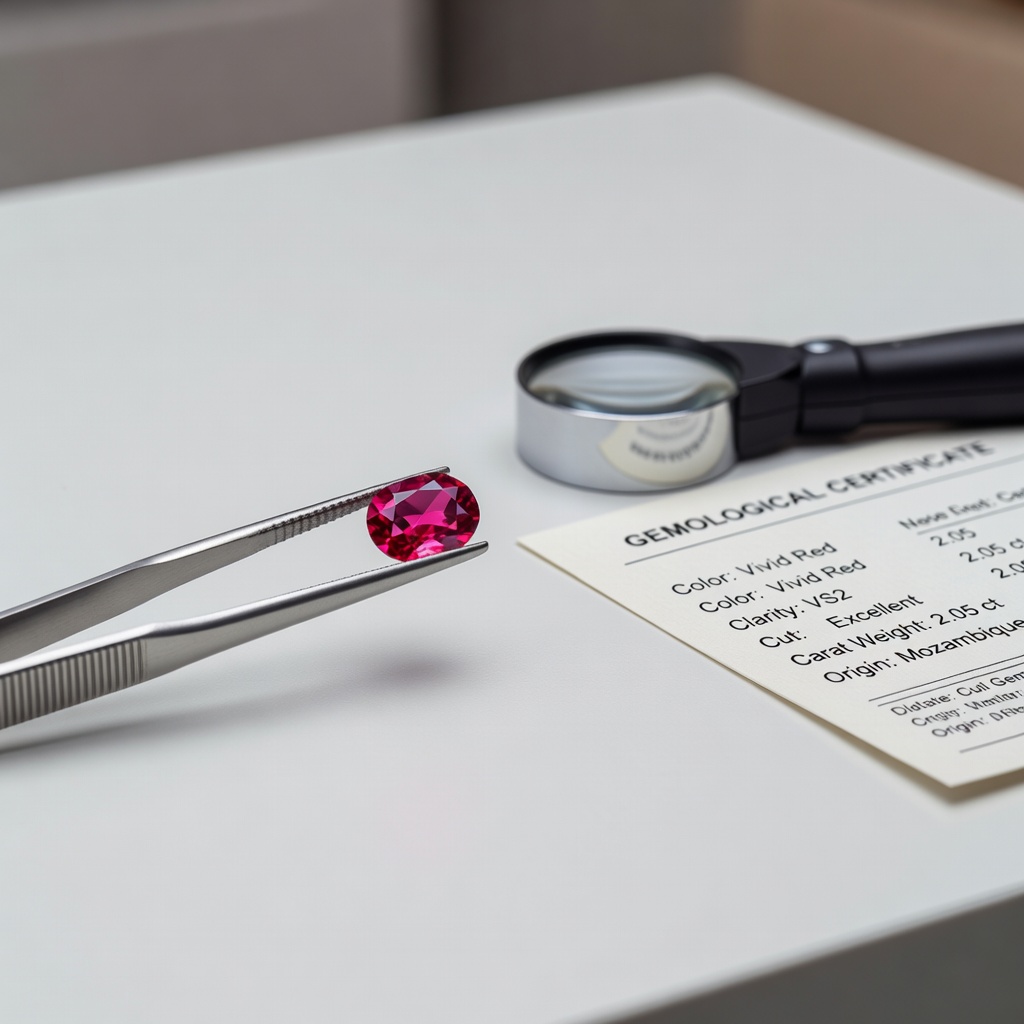
Professional grading and certification turn “seller claims” into documented facts and are central to responsible Ruby Properties and Information research. Labs typically assess color, clarity, cut, carat weight, and—crucially—treatment status; some also provide an origin opinion if evidence supports it. A good report helps buyers compare stones across vendors and protects resale value by making the ruby’s identity and enhancements transparent. As a practical example, two similar-looking rubies can have a large price gap if one is certified “no indications of heating” and the other is “heat with glass filling.”
Ruby valuation is driven by a blend of beauty and scarcity factors: top color, larger size, strong transparency, and favorable origin can create steep price jumps per carat. Size matters because fine ruby rough is rare; a clean, well-colored 2.00 ct ruby is not “twice” as rare as a 1.00 ct—it can be exponentially rarer, which is why price-per-carat often climbs sharply with size. Provenance and historical documentation can also add value for collectors, particularly if tied to notable estates or older jewelry pieces with traceable history.
When to seek third-party certification depends on your risk and budget, but a practical threshold is: if the ruby is expensive enough that a mistake would hurt, get a report. For higher-value stones, choose widely recognized gemological labs known for colored stone reporting and treatment detection, and ensure the report number can be verified. Also confirm that the report is current and matches the stone (measurements, carat weight, identifying features), especially for online purchases and secondhand transactions.
Identification And Testing Techniques
Ruby identification starts with careful observation, then moves to basic instruments, and finally to lab testing when needed. A 10x loupe is the most practical first step: look for natural inclusion patterns like silk, crystals, or healed fissures, and watch for suspiciously perfect clarity or curved growth features that can suggest synthetic rubies. In person, examine how the ruby performs in different lighting and whether the color concentrates in certain areas, which may hint at some treatments or imitations.
Instrument tests provide more objective confirmation. A refractometer reading consistent with corundum (around 1.762–1.770) is a strong indicator you’re dealing with ruby/sapphire rather than red spinel or garnet. A polariscope can show the stone’s doubly refractive nature, and specific gravity testing can further narrow options when separating ruby from look-alikes. UV reactions can be helpful but should be interpreted carefully: some rubies fluoresce strongly, while others do not, and fluorescence alone does not prove origin or natural status.
Distinguishing natural from synthetic or simulant often requires a combination of tools and experience. Flame-fusion synthetics may show curved growth lines, while flux-grown synthetics can have flux inclusions that look different from natural silk or mineral crystals. Simulants like glass may show bubbles and lower hardness, and composite stones may reveal junction lines where materials meet. A practical rule for consumers: if the ruby is presented as high-value or “investment grade,” send it to a professional laboratory—especially if the seller cannot provide a verifiable report or offers only vague assurances about treatment.
How To Buy Rubies: Practical Buying Guide
Knowing how to buy rubies comes down to using a consistent checklist and refusing to skip disclosure. Start by judging face-up color in neutral lighting: aim for an appealing red with good saturation and minimal dark extinction. Next, assess clarity at normal viewing distance (about 25–30 cm) and then under 10x magnification, noting any fractures that reach the surface. Finally, ask directly about treatment status and request certification for any ruby where price and claims (origin, “no heat,” “pigeon blood”) materially affect value.
For online purchases, the biggest risk is lighting and photography. Favor sellers who provide multiple videos under different light sources, close-ups of inclusions, and clear return policies. Compare similar stones across vendors using carat weight, measurements (to avoid overly deep stones that face up small), treatment disclosure, and lab documentation; this is a more accurate approach than comparing price-per-carat alone. A practical negotiation tip in-person is to ask for the rationale behind the price—origin, treatment, and color grade—and then compare it to at least two alternative stones on the spot.
Buying for investment versus jewelry use requires different priorities. For potential resale strength, focus on top color, larger size, minimal treatment (ideally no heat, when supported by a reputable lab), and strong documentation. For daily-wear jewelry, durability and serviceability matter: a well-cut, heat-treated ruby can be an excellent choice, while a glass-filled ruby may be risky for rings that will be exposed to knocks, cleaning products, and routine repairs. If you’re unsure, choose a ruby with transparent disclosure and a setting that protects the stone, even if it means selecting a slightly smaller carat weight.
Care, Maintenance And Long-Term Preservation
Good ruby care tips begin with cleaning methods that match the ruby’s condition and any treatments. For most natural and heat-treated rubies, warm water, mild dish soap, and a soft brush are safe and effective; rinse thoroughly and dry with a lint-free cloth. Make cleaning a routine, especially for rings, because lotions and soaps can dull brilliance over time and make inclusions harder to evaluate. A practical habit is to clean at home monthly and have a jeweler check prongs every 6–12 months if the piece is worn often.
Repairs and resetting require caution because heat, chemicals, and vibration can harm certain treated stones. Avoid exposing rubies to harsh chemicals like bleach and strong acids, and be cautious with ultrasonic cleaners if the stone has fractures, cavities, or any possibility of filling. Glass-filled rubies are particularly sensitive: even some common jewelry repair steps can cause damage or cloudiness, so always tell your jeweler about any known ruby treatments before service. If you don’t know the treatment status, treat the ruby as “sensitive” until confirmed otherwise.
Long-term preservation also includes smart storage and documentation. Store ruby jewelry separately or in a fabric-lined compartment to prevent rubbing against diamonds or other hard stones that can scratch metal or abrade facets over time. Keep receipts, lab reports, photos, and any provenance documents together, and consider adding the piece to your insurance schedule if its value is meaningful. As a practical example, a well-documented ruby with a verifiable lab report and clear treatment disclosure is typically easier to resell and easier to insure at an appropriate replacement value.
Frequently Asked Questions
What Are The Most Important Ruby Properties To Check Before Buying?
Check color (hue, tone, saturation), clarity (visible inclusions), treatment status, carat weight, and whether the stone has certification from a reputable lab. These factors work together: a ruby with great color but heavy filling may be less durable and less valuable than it looks. Also confirm measurements and cut quality so the ruby faces up bright and appropriately sized for its weight.
How Does Heat Treatment Affect A Ruby's Value?
Heat treatment is common and accepted; it can improve color and clarity but typically lowers value compared with untreated stones, especially for high-quality examples. The discount varies with market segment, color quality, and whether the treatment is “heat only” or involves additional enhancement. For many jewelry buyers, a well-disclosed heat-treated ruby can offer strong beauty at a more approachable price.
Can I Tell If A Ruby Is Synthetic Or Natural At Home?
Not reliably. Some visual clues (perfect clarity, unusual growth patterns) may hint at synthetics, but proper identification requires gem testing equipment or a lab report. A loupe can help you spot red flags, yet many natural rubies can be clean and some synthetics can include inclusions that mimic nature. If value is significant, professional testing is the safest path.
What Makes A Ruby “Pigeon Blood” And Is It Worth More?
“Pigeon blood” refers to a vivid, saturated red with a slight blue undertone. It is rare and typically commands premium prices when natural and untreated. Because the term can be applied differently depending on the lab and market, it’s best to rely on the ruby’s actual appearance and an independent report rather than the label alone.
Are All Rubies Heat-Treated?
Many commercial rubies are heat-treated to improve color and clarity. However, untreated rubies exist and are more valuable when they display excellent natural color. The best approach is to assume nothing and request clear disclosure backed by a reputable laboratory report when the purchase is important.
How Should I Clean And Care For My Ruby Jewelry?
Clean rubies with warm soapy water and a soft brush. Avoid harsh chemicals and be cautious with ultrasonic cleaners if the stone has fillings or severe inclusions. When in doubt—especially if you don’t know the stone’s treatment status—use gentle cleaning and ask a jeweler to evaluate the ruby before any aggressive cleaning or repair.
Do Rubies From Certain Origins (E.G., Burma) Cost More?
Yes. Origin can significantly affect price—historically, Burmese (Myanmar) rubies with strong color command higher prices, but certification is needed to confirm origin. Market demand also shifts over time as new sources produce fine material, so origin should be weighed alongside color quality, clarity, size, and treatment status. A credible lab origin opinion is the most practical way to support an origin-based price premium.