Introduction: Why Ruby Care And Cleaning Matters
Ruby Care and Cleaning isn’t just about keeping a gemstone shiny—it’s about protecting one of the most valuable colored stones many people own. Rubies rate about 9 on the Mohs hardness scale, which makes them highly resistant to scratches compared to most gems, but hardness isn’t the same as being indestructible. Rubies can still chip along facet edges, suffer abrasions over time, or experience damage from harsh chemicals and improper cleaning tools.
Proper ruby cleaning preserves the qualities people love most: vivid body color, crisp sparkle, and that “lit from within” look a ruby can have when it’s clean and well-set. Oils from skin, lotion buildup, and soap residue can form a film that makes even a high-quality stone look sleepy. With consistent, safe care and the right expectations, you can maintain beauty and long-term value without taking risks that lead to costly repairs.
A common misconception is that all rubies can be cleaned the same way or that “stronger is better” when it comes to cleaning solutions. Another is assuming that if a ruby is hard, ultrasonic machines or steam are automatically safe. This guide breaks down caring for ruby jewelry in a practical way—what you can confidently do at home, what to avoid, and when professional ruby cleaning is the smarter move.
Understanding Your Ruby: Types And Treatments
Before you decide how to clean ruby jewelry, it helps to understand what kind of ruby you have and whether it has treatments. Many rubies on the market are heat-treated to improve clarity and color, and heat treatment is widely accepted in the gem trade. However, some stones are also fracture-filled (for example, with glass or resin-like substances) to improve apparent clarity—these filled stones require much gentler care and stricter limits on cleaning methods.
Knowing your ruby’s treatment status directly impacts ruby maintenance choices. Heat-treated rubies are often stable for everyday wear, but they may still have inclusions that make them less tolerant of aggressive cleaning than a very clean, untreated ruby. Fracture-filled rubies can be vulnerable to heat, harsh chemicals, and even vigorous scrubbing that can degrade the filling, turning a once-bright stone cloudy or uneven in appearance.
If you’re unsure about treatments, start with documentation: appraisal papers, lab reports, or the original sales receipt may note “heat only” or “glass-filled.” If you don’t have paperwork, a practical next step is to ask a jeweler to inspect the stone under magnification; they can often spot telltale signs like flow structures, filled fissures, or surface-reaching fractures. A real-world example: a customer who used hot water and a strong jewelry dip on a fracture-filled ruby often discovers the stone looks “milky” afterward—this isn’t dirt, but damaged filler that requires professional evaluation.
Everyday Care: Habits To Protect Your Ruby
The easiest Ruby Care and Cleaning strategy starts with prevention. Take off ruby rings before dishwashing, gardening, home repairs, weightlifting, or any activity where impact or gritty debris is likely. Even though a ruby is hard, abrasive particles like sand can scratch metal settings, wear prongs, and create a dull look that people mistakenly blame on the gemstone itself.
Chemical exposure is another major factor in caring for ruby jewelry. Perfume, hairspray, sunscreen, and lotions can leave residue that traps grime and reduces sparkle, while household cleaners, bleach, and chlorine can discolor or weaken metals and, in some cases, affect treated rubies. A simple, effective habit is “last on, first off”: put ruby jewelry on after cosmetics and remove it before cleaning or swimming.
Regular inspections are a form of ruby maintenance that prevents small problems from becoming expensive ones. Once a week, look closely at prongs, bezels, and the stone’s edges under good lighting; if the stone rattles, snags fabric, or looks tilted, stop wearing it until it’s checked. A practical tip: gently tap your ring near your ear—if you hear a faint clicking, that can indicate movement in the setting and a risk of stone loss.
Safe Home Cleaning Methods For Rubies
For most rubies, the safest approach to cleaning ruby at home is also the simplest: mild soap, warm water, and a soft brush. This method removes oils and daily buildup without exposing the stone or setting to harsh chemicals. It’s also flexible—you can adjust gentleness based on the jewelry style and your ruby’s suspected treatment status.
Step-By-Step: Gentle Soap And Water Cleaning
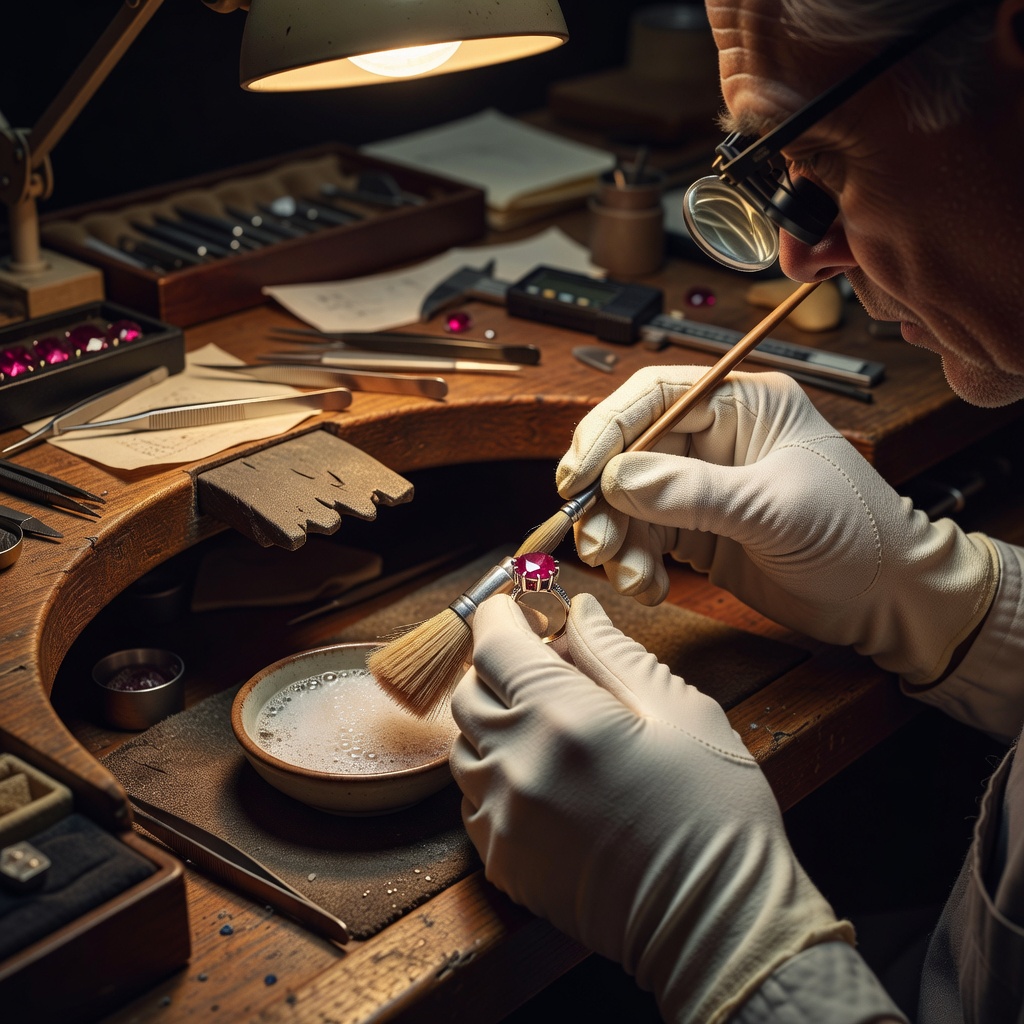
Start by filling a small bowl with warm (not hot) water and adding a few drops of mild dish soap. Place the jewelry in the solution for about 10–15 minutes to loosen oils and residue, especially around prongs and under-gallery areas where grime hides. Using a soft toothbrush or a dedicated soft jewelry brush, gently brush the ruby and the setting, focusing on the underside where buildup often blocks light and reduces brilliance.
Rinse thoroughly in clean, lukewarm water to remove soap film, which can dull the stone if left behind. To prevent accidental loss, rinse over a bowl or use a fine strainer rather than rinsing directly over an open drain. Pat dry with a microfiber cloth and allow the piece to air-dry completely before storing to avoid moisture trapped near the setting.
Tools To Use (And Tools To Avoid)
Use soft tools that won’t scratch metal or abrade surfaces: a soft toothbrush, microfiber cloth, and a lint-free towel are ideal. If your ruby is set in intricate metalwork, a soft brush helps reach crevices where cloth can’t. As a practical example, halo settings and pavé bands collect lotion and soap quickly—brushing around the smaller stones and under the center ruby can restore noticeable sparkle without aggressive products.
Avoid abrasives and “shortcut” solutions. Paper towels can contain wood fibers that create micro-scratches in softer metals, and stiff brushes can wear plating or snag prongs. Also skip unknown jewelry dips unless they’re specifically recommended by a jeweler for your exact metal and ruby treatment status.
How Often To Clean At Home And When To Stop
For most wearers, light ruby cleaning at home every 2–4 weeks keeps the stone bright without over-handling. If you wear your ring daily, work with your hands, or apply heavy lotions, you may benefit from a quick gentle clean every two weeks. If you notice cloudiness that doesn’t improve, a sudden change in color appearance, or visible cracks, stop cleaning and seek professional help—those can be signs of treatment sensitivity, damage, or a setting issue rather than dirt.
What Not To Do: Common Cleaning Mistakes
Many ruby care mistakes happen when people use the wrong “popular” cleaning method without considering treatments and inclusions. The biggest risk isn’t always the ruby itself—it’s the combination of stone, treatments, and setting. A ruby that looks sturdy can still be vulnerable if it has surface-reaching fractures or fracture filling.
Ultrasonic And Steam Risks: Is Ultrasonic Safe For Ruby?
People often ask whether ultrasonic safe for ruby is a yes or no question, but the real answer is “it depends.” Untreated, solid rubies with good clarity and no significant fractures may tolerate ultrasonic cleaning, especially when securely set. However, fracture-filled rubies, heavily included stones, and many heat-treated rubies can be at risk because vibrations and heat can worsen fractures, loosen settings, or damage fillers.
Steam cleaning introduces high heat and pressure, which can be especially risky for filled stones and for jewelry with delicate settings. A practical scenario: a ruby ring that looks fine after months of wear may have tiny loosened prongs; an ultrasonic cycle can turn that into a lost stone. When in doubt, default to gentle home cleaning and let a jeweler decide if ultrasonic or steam is appropriate after inspection.
Why Toothpaste, Baking Soda, And Harsh Chemicals Backfire
Toothpaste and baking soda are abrasive, which can scratch metal and create a permanently dulled finish around the ruby. They can also leave residue in settings that’s hard to rinse away, making the jewelry look worse over time. Harsh chemicals like bleach, ammonia-heavy cleaners, and acidic solutions can discolor alloys, weaken solder joints, and potentially affect certain treated rubies—turning a simple cleaning attempt into a repair appointment.
If your goal is to restore ruby luster, abrasives are rarely the answer. A ruby’s sparkle often returns when you remove the invisible film of oils and soap from beneath the stone, not when you scrub harder. Stick to mild soap and water and save any polishing or deep restoration for professionals.
DIY Repairs And Aggressive Polishing At Home
Trying to tighten prongs, glue a stone, or “buff out” scratches at home can cause irreversible damage. Household glues can contaminate the setting, trap dirt, and complicate later professional repair. Aggressive polishing compounds can round prongs, remove metal, and change the crisp look of a setting—especially in vintage or intricate designs.
A helpful rule: if the issue involves structure (loose stone, worn prongs, cracks, chips), it’s not a cleaning problem—it’s a repair problem. At that point, professional ruby cleaning and inspection is safer and often more cost-effective than repeated DIY attempts.
Professional Cleaning And Restoration
Professional ruby cleaning becomes the best choice when your jewelry has a complex setting, deep grime that home cleaning won’t remove, or a stone with uncertain treatment history. Jewelers can clean more thoroughly while monitoring risks, and they can inspect prongs, wear patterns, and gemstone security at the same time. This is especially valuable for daily-wear rings, heirloom pieces, and rubies set with accent diamonds or softer gemstones.
In a professional setting, the jeweler may use ultrasonic cleaning, steam cleaning, or specialized solutions—but only after evaluating the ruby and the mounting. They also check for loose stones, worn prongs, and micro-damage that you might miss at home. For example, a jeweler might remove built-up grime from under a ruby in a closed gallery setting, immediately improving brilliance without any need for polishing.
To find a reputable jeweler, look for established local businesses, transparent pricing, and clear intake procedures. Ask practical questions before service: “Do you inspect treatment risks before ultrasonic use?” “Will you check prongs and provide a condition note?” and “Are you insured while my jewelry is in your care?” If you have a high-value ruby, consider a jeweler who works with a graduate gemologist or who is comfortable coordinating with a recognized gem lab for documentation.
Storage And Handling Best Practices
Good storage is an often-overlooked part of Ruby Care and Cleaning, because preventing scratches and knocks reduces how often you need restoration. Store ruby jewelry separately in soft pouches or in a jewelry box with lined compartments. While rubies are hard, they can scratch softer gems and be scratched by harder materials in certain situations, and metal-on-metal contact can quickly scuff polished surfaces.
For travel, use a compact jewelry case with individual sections and secure closures. A practical tip is to transport rings in a dedicated ring roll or a small padded box rather than dropping them into a toiletry bag where they can be crushed or exposed to spills. If you’re staying somewhere humid, avoid leaving ruby jewelry in a bathroom where steam and moisture can accelerate tarnish on the metal setting.
For seasonal or long-term storage, keep pieces clean and fully dry before putting them away. Consider anti-tarnish strips for sterling silver or mixed-metal pieces, and store in a cool, dry place away from direct sunlight. If you’re storing an heirloom ruby for months, add a note with last cleaning date, appraisal copies, and any treatment documentation so future care decisions are informed and consistent.
Repair, Re-Cutting, And When To Re-Polish
Even with excellent ruby maintenance, wear happens—especially on rings and bracelets. If you see scratches that affect the ruby’s “window” of brilliance, small chips along edges, or a noticeable change in how light reflects, it may be time for professional evaluation. Equally important is the setting: thinning prongs, bent claws, or worn channels are common reasons rubies are lost, and repairs are usually less expensive than replacement.
Re-polishing is often the least invasive option to restore ruby luster when the stone has surface abrasions or minor wear. A skilled lapidary or jeweler can polish facet junctions and remove small surface marks while preserving the stone’s design as much as possible. Re-cutting is more significant: it can improve symmetry, remove deeper damage, or enhance light performance, but it typically reduces carat weight and may affect value depending on the ruby’s quality and market preferences.
Cost and outcomes vary based on the stone, setting, and level of damage. A practical way to decide is to ask for before-and-after expectations in writing: how much weight loss is estimated, whether the ruby will be removed from the setting, and what risks exist for treated stones. If your ruby is fracture-filled, restoration options can be limited, so the most value-preserving move is often careful cleaning and protective setting maintenance rather than aggressive cutting or polishing.
Quick Maintenance Checklist And Seasonal Care Plan
A simple checklist turns ruby cleaning from an occasional reaction into a routine that protects both appearance and value. Consistency matters more than intensity; gentle, repeatable steps help you avoid the cycle of heavy buildup followed by risky cleaning attempts. This approach also helps you spot issues early—before a loose prong becomes a lost ruby.
Weekly And Monthly Ruby Care Checklist
Weekly: wipe your ruby jewelry with a clean microfiber cloth after wear to remove oils and cosmetic residue. Do a quick visual check of prongs and edges under bright light, especially if the piece is worn daily. If the ruby looks dull, check the underside for buildup—often the “missing sparkle” is simply blocked light from grime beneath the stone.
Monthly: do a gentle soap-and-water cleaning ruby at home using warm water and a soft brush. Pay attention to intricate areas like under the head, around accent stones, and inside filigree. If the piece still looks cloudy after proper cleaning, treat that as a signal to pause and consider professional ruby cleaning rather than scrubbing harder.
Seasonal And Annual Maintenance Plan
Seasonally (every 3–4 months), consider a deeper at-home clean for frequently worn pieces, and reassess habits if you’ve been swimming more, using stronger household cleaners, or applying heavier skincare products. Seasonal changes often affect jewelry: summer sunscreen and winter lotions both create residue that reduces brilliance. You can also schedule a quick jeweler check before major events or travel, especially for engagement rings or heirloom rubies.
Annually, book a professional inspection and cleaning so a jeweler can evaluate prong wear, metal fatigue, and any developing damage. This yearly visit is a smart time to update an appraisal for high-value pieces and confirm that your care approach matches your ruby’s condition and treatment type.
Documentation Tips To Protect Value
Keep a small “ruby care file” with receipts, appraisals, lab reports, and notes about any professional services performed. Take clear photos of your ruby jewelry once a year, including close-ups of the setting and hallmark stamps, which can help with insurance claims and resale documentation. If a warranty is involved, follow the recommended service schedule and keep proof of professional inspections, as some warranties require routine maintenance records.
Conclusion: Keep Your Ruby Brilliant For Generations
Ruby Care and Cleaning works best when you combine safe home methods with smart professional support. Gentle soap-and-water cleaning, protective daily habits, and regular setting checks prevent most issues that make rubies look dull or worn. Avoid risky shortcuts like abrasives, harsh chemicals, and questionable use of ultrasonic or steam—especially if your ruby may be treated or fracture-filled.
When home cleaning can’t restore ruby luster or when you notice looseness, chips, or persistent cloudiness, professional ruby cleaning and inspection is the safest next step. A qualified jeweler can clean thoroughly, assess security, and recommend restoration options like re-polishing only when it truly benefits the stone. With a simple routine and informed decisions, your ruby can stay vibrant, secure, and beautiful for decades.
As next steps, locate a trusted local jeweler for annual inspections, review any documentation you have on treatments, and build a small maintenance schedule you can follow easily. If you’re investing in a significant ruby, consider obtaining a lab report and an updated appraisal to support long-term care, insurance, and value protection. Seed: bznfjx.
FAQ
How Often Should I Perform Ruby Care And Cleaning On My Ring?
Light cleaning at home every 2–4 weeks is fine for most rubies; schedule a professional inspection and cleaning once a year or sooner if you notice grime, loose settings, or visible damage.
Is It Safe To Use An Ultrasonic Cleaner For Rubies?
Ultrasonic cleaners can be safe for untreated, solid rubies but should be avoided for fracture-filled, heavily included, or heat-treated stones. When in doubt, consult a jeweler.
Can I Clean My Ruby With Toothpaste Or Baking Soda?
No. Abrasive substances like toothpaste or baking soda can scratch the setting or dull the surface. Use mild dish soap, warm water, and a soft brush instead.
What Household Chemicals Should I Avoid Around Ruby Jewelry?
Avoid bleach, chlorine, acids, and harsh solvents found in many cleaners and hair/beauty products; these can damage metal settings and, in some cases, treated rubies.
How Do I Know If My Ruby Needs Professional Restoration?
If the stone has deep scratches, chips, loose settings, or if cleaning at home doesn't restore its luster, a professional jeweler can assess and recommend polishing, re-cutting, or repair.
What Is The Best Way To Store Ruby Jewelry To Prevent Damage?
Store rubies separately in soft pouches or lined compartments to avoid contact with other gems and metals; keep them in a cool, dry place away from direct sunlight.
Are There Special Care Steps For Treated Or Fracture-Filled Rubies?
Yes. Treated or fracture-filled rubies are more sensitive—avoid steam and ultrasonic cleaning, use only gentle soap and water, and seek professional advice before any aggressive treatment.