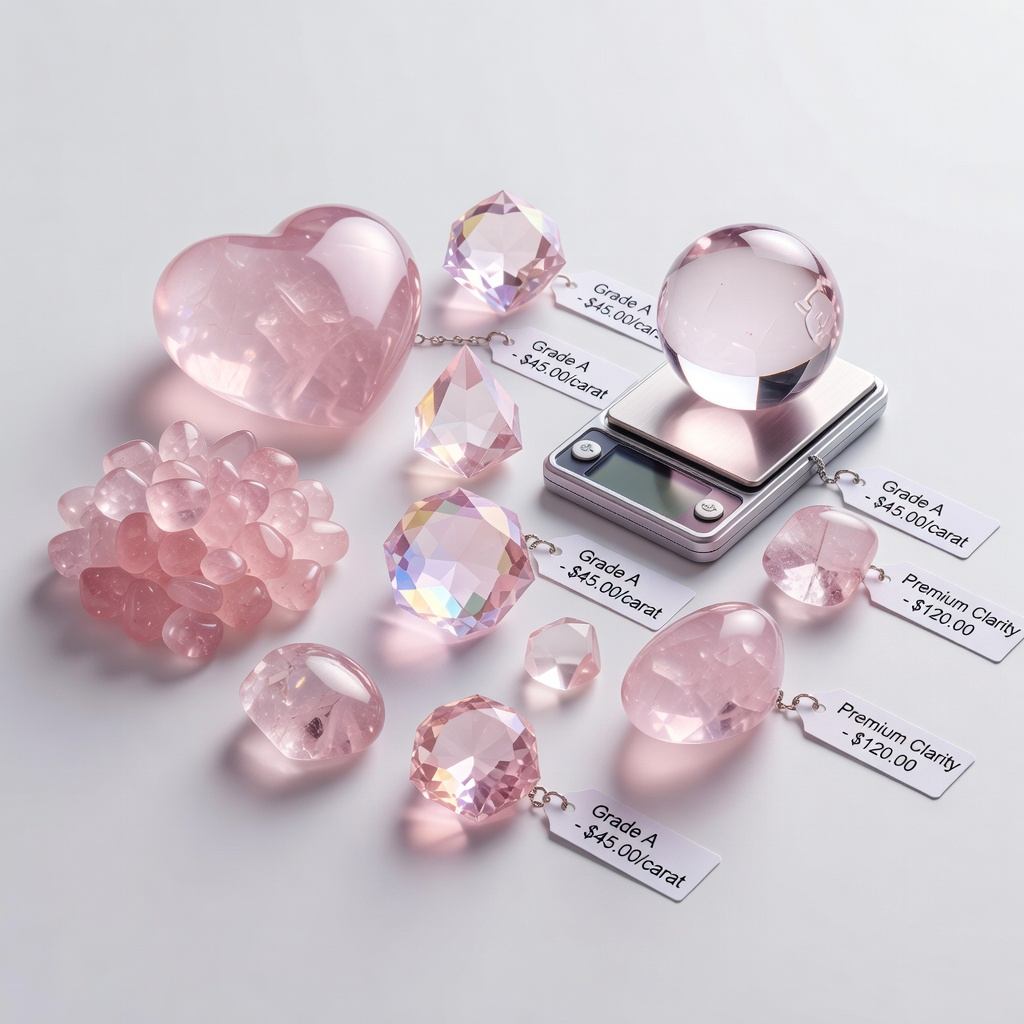
Understanding Rose Quartz Value in Today's Gem Market
Rose quartz has captivated collectors and jewelry enthusiasts for centuries with its gentle pink hues and accessible pricing, but navigating the market requires understanding the complex factors that separate a $5 tumbled stone from a $500 faceted gem. Whether you are a first-time buyer seeking an affordable engagement ring alternative or a seasoned collector hunting for rare star rose quartz specimens, understanding current market dynamics ensures you make informed purchasing decisions. This comprehensive rose quartz price guide breaks down exactly what you should expect to pay across different grades, cuts, and retail channels while helping you identify genuine value in a market flooded with treated stones and mass-produced beads.
What Determines Rose Quartz Value?
The valuation of rose quartz operates on a nuanced spectrum that surprises many first-time buyers who expect uniform pricing for this abundant mineral. Unlike diamonds with rigid grading scales, rose quartz valuation requires assessing multiple qualitative factors that interact dynamically to establish fair market value. Understanding these rose quartz value factors empowers you to evaluate whether a particular specimen represents a smart purchase or an overpriced disappointment.
Color Saturation and Uniformity
Color serves as the primary value determinant in rose quartz, with deeper, more saturated pink tones commanding significant premiums over pale, milky specimens. The most desirable rose quartz exhibits a vivid, even pink coloration throughout the entire stone without zoning or color banding that creates uneven appearance. Stones displaying intense raspberry or strawberry pink hues can cost three to five times more than their pale blush counterparts, particularly when the color remains consistent under different lighting conditions. When examining potential purchases, rotate the stone under natural daylight and incandescent lighting to verify color stability, as some lower-grade materials appear washed out or brownish under certain light sources.
Clarity and Transparency
Clarity dramatically impacts rose quartz pricing, with transparent to semi-transparent gem-grade material representing less than 5% of total production and commanding correspondingly higher prices. Most rose quartz contains microscopic rutile inclusions that create a cloudy or milky appearance, which suits carving and cabochon work but reduces value for faceted gemstones. Eye-clean specimens without visible inclusions when viewed at 6 inches distance can fetch $10-$20 per carat, while heavily included material suitable only for beads might sell for under $1 per carat. For collectors seeking maximum brilliance in jewelry settings, prioritize stones with excellent clarity that allow light to pass through cleanly rather than scattering off internal fractures or mineral deposits.
Cut Quality and Craftsmanship
The transformation from rough stone to finished gemstone adds substantial value, with precision cutting contributing a 30-50% premium over commercial cutting due to optimal light performance and symmetry. Custom cuts designed specifically for rose quartz's unique optical properties—such as Portuguese cuts that maximize color depth or rose cuts that highlight clarity—demand higher prices than standard oval or round brilliant cuts. Poorly executed cuts with uneven girdles, misaligned facets, or excessive windowing (light leakage through the bottom) significantly diminish value regardless of the rough material's inherent quality. When evaluating faceted rose quartz, examine the stone face-up to check for even patterning and life, then tilt it to ensure the center does not appear dark or "dead" due to cutting errors.
Carat Weight and Size Availability
While rose quartz remains relatively affordable in smaller sizes, prices escalate non-linearly for large, clean specimens over 20 carats due to the rarity of finding flawless rough material in substantial dimensions. Standard commercial material abounds in sizes up to 10 carats, but gem-grade pieces exceeding 50 carats become exponentially rarer and can command $50-$100 per carat for exceptional specimens. Star rose quartz particularly demonstrates this size premium, with asterism specimens over 100 carats fetching prices comparable to fine sapphires due to the difficulty of finding large rough with oriented rutile needles. For statement jewelry pieces, expect to pay significantly more per carat for single large stones compared to purchasing equivalent total weight in smaller matched stones.
Current Rose Quartz Cost Per Carat (2024 Market Rates)
The rose quartz cost per carat varies dramatically across quality tiers, with 2024 market data revealing distinct pricing bands that reflect the stone's diverse applications from craft materials to high jewelry. Wholesale prices have remained relatively stable compared to other gemstones, though retail markups vary significantly between metaphysical shops, fine jewelry boutiques, and online marketplaces. Understanding these baseline figures helps establish realistic budgets whether you seek bulk material for jewelry making or a single statement piece for personal collection.
Commercial Grade Pricing
Commercial grade rose quartz suitable for beaded bracelets, tumbled pocket stones, and basic cabochons typically ranges from $0.50 to $3 per carat depending on color intensity and surface polish quality. This category encompasses the vast majority of rose quartz sold globally, including cloudier material with visible inclusions and lighter pink coloration that characterizes mass-produced metaphysical crystals. Bead strands containing 15-16 inch lengths of 6-8mm rose quartz beads generally retail between $8-$25, translating to approximately $0.50-$1.50 per carat when calculated by total gemstone weight. While affordable, this grade works beautifully for casual jewelry and energy work, though it lacks the transparency and brilliance required for fine jewelry settings.
Fine Jewelry Grade Rates
Gem-quality faceted rose quartz with good clarity and vivid color commands $5-$15 per carat, positioning it as an accessible alternative to morganite or pink sapphire for engagement rings and cocktail jewelry. Stones in this category exhibit eye-clean clarity, allowing light to return brightly from precisely cut facets, with color saturation deep enough to remain distinct when set in metal mountings. A well-cut 5-carat rose quartz suitable for a solitaire ring typically retails between $75-$200 for the loose stone alone, before setting costs. When purchasing at this level, insist on detailed photographs showing the stone against a white background and from multiple angles to verify the absence of windowing or significant inclusions.
Collector and Star Rose Quartz Premiums
Rare star rose quartz displaying sharp six-rayed asterism commands $20-$50+ per carat, with exceptional museum-quality specimens exceeding $100 per carat for large, perfectly centered stars. These phenomenal gems contain aligned rutile inclusions that reflect light in a star pattern, requiring expert cutting to center the star on the dome of a cabochon while maintaining even color distribution. A 10-carat star rose quartz with sharp, distinct rays and translucent body color might retail for $300-$500, while comparable non-phenomenal material would cost under $100. Collectors should verify asterism visibility under single-point lighting and ensure the star moves smoothly across the stone's surface when tilting the gem, indicating proper cutting orientation.
Marketplace Price Comparison Examples
Current listings on major gem marketplaces illustrate these price differentials clearly: GemRockAuctions shows commercial cabochons at $2-$4 per carat, while similar-sized star rose quartz ranges $25-$40 per carat. Etsy listings for rose quartz jewelry reveal sterling silver rings with commercial-grade stones averaging $45-$85, whereas 14k gold settings with fine gem-grade material start around $300. Wholesale mineral suppliers offer rough rose quartz at $0.10-$0.30 per gram (approximately $0.50-$1.50 per carat) for uncut material, demonstrating the value added through cutting and polishing processes.
Raw vs. Polished Rose Quartz Price Breakdown
The transformation from rough mineral specimen to finished gemstone creates dramatic value escalations that buyers should understand when sourcing rose quartz for different purposes. Raw rose quartz price points accommodate everyone from industrial buyers seeking tons of material to lapidary artists wanting select pieces for custom cutting. Understanding these tiered pricing structures helps you source material efficiently whether you run a jewelry business or seek affordable rough for personal crystal collections.
Bulk Rough Stone Economics
Uncut rose quartz rough suitable for tumbling, carving, or cabochon production typically sells for $2-$8 per pound at wholesale mineral shows and direct-from-mine suppliers, with premium color rough commanding up to $15 per pound. This material often arrives in matrix form or as massive chunks requiring trimming and preforming before usable gem material emerges. A 50-pound lot of decent quality rough might yield approximately 30-40% usable material after cutting away fractures and cloudy sections, effectively doubling the per-carat cost of usable gem rough. When purchasing bulk rough, examine representative samples for internal cracks using a strong flashlight, as surface appearance often hides structural weaknesses that render material unsuitable for cutting.
Polished Cabochon Valuations
Polished rose quartz cabochons—domed, unfaceted stones ideal for bezel settings and wire wrapping—retail between $10-$40 depending on size, dome height, and surface quality. Standard 10x8mm oval cabochons in commercial quality sell for $3-$8 each, while calibrated cabochons with high domes and mirror polishes command $15-$25 for the same size. Large statement cabochons exceeding 30 carats with exceptional clarity can reach $75-$150, particularly when cut from rare rough exhibiting star potential or unusual color zoning. For jewelry makers, purchasing calibrated cabochons ensures consistent sizing for production work, though custom-cut freeform cabochons offer unique character for one-of-a-kind pieces.
The Faceted Gemstone Premium
Faceted rose quartz commands approximately five times the price of equivalent rough material due to labor costs, equipment wear, and the significant weight loss during cutting—often 60-70% of the original rough weight disappears during faceting. A 10-carat piece of rough yielding a 3-carat faceted gem effectively concentrates the rough's value plus cutting expertise into the final stone. Custom-cut precision gems from award-winning lapidaries can command $25-$50 per carat for standard sizes, with designer-cut specialty shapes reaching $75+ per carat. When commissioning custom cutting, provide the lapidary with clean, inclusion-free rough to maximize value, as cutting cannot improve inherent clarity issues and will only expose internal flaws more dramatically.
Decorative Specimens and Sculptures
Large decorative rose quartz pieces including geodes, spheres, hearts, and carved sculptures range from $50-$500+ based primarily on aesthetics, size, and craftsmanship rather than gemological properties. Polished spheres measuring 4-6 inches diameter typically cost $60-$150, while massive 12-inch diameter museum-quality spheres with perfect clarity can exceed $1,000. Hand-carved spheres command premiums over machine-produced versions due to the labor-intensive process of maintaining perfect symmetry. Carved figurines, obelisks, and freeform sculptures vary wildly in price based on artistic merit and material quality, with simple carved hearts retailing for $15-$30 while intricate deity carvings in gem-grade material might cost $300-$800.
Rose Quartz Jewelry Prices by Category
Rose quartz jewelry prices extend far beyond the base gemstone cost to encompass metalwork complexity, designer reputation, and retail markup structures that vary significantly between mass-market and boutique channels. Understanding these layered pricing components helps you allocate your budget effectively between the center stone and its setting. Whether seeking an affordable fashion piece or a bespoke heirloom, knowing industry-standard pricing prevents overpaying for inferior craftsmanship.
Sterling Silver Settings and Affordable Options
Sterling silver rings featuring rose quartz typically retail between $25-$150, with price variations reflecting gemstone quality, ring complexity, and brand positioning. Simple solitaire styles with commercial-grade cabochons occupy the lower end ($25-$50), while intricate Art Nouveau-inspired settings with high-quality faceted stones approach the upper range. Gold-plated silver options offer a middle ground at $40-$85, providing the warm tone of gold without the material cost, though the plating will eventually wear requiring replating services. When purchasing silver rose quartz jewelry, verify that the setting uses solid sterling rather than silver-plated base metals that can trigger allergies or tarnish rapidly, and ensure the stone is securely set with proper prongs or bezels that protect the relatively soft quartz (hardness 7) from chipping.
Gold Setting Premiums
Upgrading from silver to solid gold adds $200-$500+ to rose quartz jewelry prices depending on karat weight and the amount of metal used in the design. A simple 14k yellow gold solitaire mounting for a 2-carat rose quartz might add $250-$350 to the total cost, while elaborate halo settings with diamond accents can add $800-$1,500. Rose gold settings particularly complement rose quartz by harmonizing with the stone's pink tones, though the copper content in rose gold alloys requires consideration for those with metal sensitivities. For investment-minded buyers, remember that while gold retains intrinsic value, the labor costs associated with setting represent sunk costs that you will not recover upon resale.
Necklaces and Pendants
Rose quartz necklaces range from $30-$300 depending on design complexity, chain quality, and whether the piece features a single statement stone or multiple beads. Simple drilled pendants with leather cords start around $25-$40, while designer pieces featuring rose quartz briolettes (teardrop-shaped faceted drops) with diamond accents in gold settings can reach $400-$800. Strand necklaces of rose quartz beads vary from $35 for 18-inch commercial-grade strands to $200+ for graduated strands featuring rare, gem-quality beads with exceptional clarity. When evaluating beaded necklaces, examine the knotting between beads—silk knotting prevents beads from rubbing against each other and provides security if the strand breaks, justifying higher prices over unknotted strands.
Designer and Custom Creations
Bespoke rose quartz jewelry from established designers or custom commissions typically starts at $500 and can exceed $2,000 for complex pieces featuring exceptional stones and intricate metalwork. Designer brands like David Yurman or Tiffany & Co. command significant premiums for rose quartz pieces, with simple silver designs starting at $300+ due to brand cachet. Custom commissions allow precise control over stone selection and setting design, with bench fees typically ranging $150-$500 plus materials and the stone cost. When commissioning custom work, request wax models or CAD renderings before final production to verify proportions and ensure the setting adequately protects the rose quartz while showcasing its color effectively.
Quality Grades That Impact Price
Professional gem dealers utilize standardized grading systems to communicate rose quartz quality grades, though these scales lack the strict uniformity of diamond grading. Understanding these tiers helps you match quality expectations with appropriate price points and avoid overpaying for misrepresented material. When sellers use these grades, verify that their definitions align with industry standards rather than proprietary marketing terms.
Grade AAAA (Museum Quality)
Grade AAAA represents the apex of rose quartz quality, featuring exceptional deep pink color approaching raspberry tones, flawless clarity without visible inclusions, and precision cutting that maximizes brilliance. These rare specimens comprise less than 1% of production and often originate from specific depleted mines known for superior color, such as certain Brazilian or Madagascan localities. Prices for AAAA material easily exceed $50 per carat for faceted stones, with large specimens becoming centerpieces of serious collections. When investing at this level, demand detailed provenance documentation and independent laboratory certification verifying natural, untreated status, as this grade rarely appears on the open market and requires expert authentication.
Grade AAA (Fine Jewelry)
Grade AAA rose quartz offers vivid, even pink coloration that remains distinct in various lighting, eye-clean clarity showing no visible inclusions to the unaided eye, and excellent cut quality with proper proportions. This grade suits high-end jewelry applications where the stone must withstand close scrutiny, such as engagement rings or statement cocktail pieces. Expect to pay $15-$30 per carat for AAA faceted material, with star rose quartz in this grade commanding $40-$60 per carat. These stones typically receive custom cutting rather than commercial factory cutting, ensuring optimal light performance and symmetry that justifies the investment in precious metal settings.
Grade AA (Commercial Gem)
Grade AA encompasses the majority of "gem quality" rose quartz sold in jewelry stores, characterized by light to medium pink color, minor inclusions visible under close inspection but not distracting in normal wear, and good polish with acceptable cutting. This practical grade offers excellent value for fashion jewelry and gifts, with faceted stones ranging $5-$12 per carat and cabochons at $3-$8 per carat. While inclusions may be present, they should not break the surface or threaten durability, and color should remain pleasingly pink rather than brownish or grayish. Grade AA material works beautifully in protective bezel settings that minimize the visibility of minor clarity characteristics while showcasing the gentle pink color.
Grade A (Craft and Industrial)
Grade A rose quartz features pale, washed-out color, visible inclusions including clouds and fractures, and irregular shapes or commercial cutting with windowing or dull polish. This grade serves metaphysical practices, beading projects, and casual jewelry where gemstone perfection matters less than affordability. Pricing ranges $0.50-$3 per carat, with bulk rough material often sold by the pound rather than carat weight. While unsuitable for fine jewelry, Grade A material offers accessible entry points for crystal healing practitioners and beginning jewelry makers experimenting with wire wrapping or basic settings.
Smart Rose Quartz Buying Tips
Navigating the rose quartz market requires vigilance against common pitfalls including dyed imitations, misrepresented grades, and inflated retail markups. These rose quartz buying tips draw from industry insider knowledge to help you secure genuine stones at fair market values. Implementing these strategies protects your investment while ensuring you acquire authentic, natural specimens suitable for your intended purpose.
Visual Verification Techniques
Always request detailed, high-resolution photos and videos from multiple angles including side views to assess true color depth and clarity before purchasing loose stones online. Static images often hide windowing (see-through areas indicating poor cutting) and color zoning that dramatically affect value, while videos under natural daylight reveal the stone's true appearance. For expensive purchases over $100, insist on photographs against a neutral gray card to prevent color distortion from white balance issues, and request magnification photos showing the stone's surface condition and any visible inclusions. Be particularly wary of listings using heavily saturated or filtered images that make pale stones appear vividly pink—compare the stone against known color references or request comparison photos next to a standard object like a coin for scale.
Vendor Vetting and Certification
Purchase exclusively from reputable dealers offering clear return policies (minimum 7-day inspection period) and authenticity guarantees, particularly when buying star rose quartz or high-value specimens. Established sellers on platforms like GemRockAuctions, specialized crystal shops with physical addresses, and members of professional organizations like the American Gem Trade Association (AGTA) adhere to ethical disclosure standards regarding treatments and origins. For purchases exceeding $500, request a certificate of authenticity from a recognized gemological laboratory such as GIA, AGL, or IGI verifying the stone as natural, untreated rose quartz. Avoid sellers who cannot provide specific locality information (country and mine, if known) or who claim all their material is "AAA grade" without objective justification, as this often indicates ignorance or deliberate misrepresentation.
Avoiding Treated and Synthetic Stones
Be vigilant against dyed rose quartz, which appears in the market with unnaturally saturated hot pink or uniform magenta colors that rarely occur in nature—natural rose quartz typically shows subtle color variation and softer tones. To test for dye, examine the stone under magnification looking for color concentration in surface-reaching fractures or along girdle edges where dye accumulates, or perform a simple acetone test on an inconspicuous area (though this may damage the polish). Synthetic rose quartz exists but remains rare in the jewelry market; however, glass imitations are common, identifiable by perfect clarity, absence of inclusions, and the presence of round gas bubbles visible under magnification. When in doubt, consult a gemologist, as treated or synthetic material carries significantly lower value than natural, untreated specimens.
Strategic Timing for Purchases
Maximize value by purchasing during post-holiday sales in January and February when retailers discount remaining inventory, or during major gem show seasons (February Tucson shows, September Denver shows) when vendors offer show specials to move stock. Wholesale bulk purchases made directly at mining localities or major trade shows can reduce per-carat costs by 40-60% compared to retail, though this requires minimum purchase commitments typically starting at $500-$1,000. For individual collectors, following specific Etsy shops or Instagram dealers and purchasing when they announce "rough pay sales" or inventory clearance events yields significant savings on high-quality material. Avoid purchasing from tourist shops in mining regions or airport gift shops, where markup percentages often exceed 300% due to captive audiences and impulse buying psychology.
Rose Quartz vs. Other Pink Gemstones: Price Comparison
Evaluating how much is rose quartz worth requires contextual comparison against alternative pink gemstones to understand its exceptional value proposition within the colored stone market. While rose quartz lacks the rarity of precious pink gems, its affordability and durability make it uniquely accessible for large, impactful jewelry designs impossible with more expensive alternatives. This comparative analysis helps buyers make informed decisions when selecting pink stones for specific applications and budgets.
Rose Quartz vs. Pink Sapphire
Pink sapphire, belonging to the corundum family, commands $500-$5,000+ per carat depending on saturation, representing a 100-fold price increase over comparable quality rose quartz at $5 per carat. While sapphire offers superior hardness (9 vs. 7 on the Mohs scale) making it ideal for daily-wear engagement rings, rose quartz allows for substantially larger statement pieces at equivalent cost—a 2-carat pink sapphire might cost $1,500, while a 50-carat rose quartz cocktail ring could cost merely $250 including the setting. For collectors seeking pink gems, rose quartz provides the aesthetic of pink sapphire's color family without the investment risk, though it requires more protective settings due to its relative softness. The price differential also makes rose quartz ideal for trend-driven fashion jewelry where the high cost of sapphire would prove prohibitive for temporary styles.
Rose Quartz vs. Morganite
Morganite, the pink variety of beryl, typically ranges $150-$300 per carat for fine quality, positioning it 15-30 times higher than equivalent rose quartz at $10 per carat for comparable clarity and cut quality. Both stones share similar hardness (7.5-8 for morganite vs. 7 for rose quartz) and pale pink coloration, though morganite often exhibits peach or salmon undertones while rose quartz tends toward cooler pink tones. Morganite's association with luxury jewelry brands like Tiffany and Cartier has elevated its cachet and price, while rose quartz remains democratically priced despite offering similar visual impact in earrings, pendants, and brooches where hardness matters less. For budget-conscious brides seeking "something pink," rose quartz offers a $500 alternative to $3,000+ morganite engagement rings while maintaining comparable beauty and acceptable durability for careful wear.
Rose Quartz vs. Kunzite
Kunzite, the pink variety of spodumene, shares similar pricing with fine rose quartz at $10-$50 per carat, though kunzite presents unique challenges including perfect cleavage (tendency to split along specific planes) and pronounced color fading in sunlight. While kunzite can display more vivid lilac-pink hues than typical rose quartz, its brittleness makes it unsuitable for rings or bracelets subject to impact, whereas rose quartz offers more forgiving wearability despite equal hardness ratings. Both stones appeal to collectors of pink gems, but rose quartz offers better long-term stability and lower maintenance requirements, as kunzite requires protection from both physical shock and UV exposure. The price parity between these stones makes rose quartz the practical choice for jewelry applications, while kunzite suits protected pendant or earring settings where its color intensity justifies the handling precautions.
Value Proposition Analysis
Rose quartz delivers unmatched value for pink gemstone jewelry by offering the largest size-per-dollar ratio, reasonable durability, and stable color that doesn't fade or change with exposure to light or common chemicals. While precious pink gems retain investment value and status symbolism, rose quartz democratizes access to pink gemstone aesthetics, allowing jewelry enthusiasts to own substantial, beautiful specimens without financial strain. For designers, rose quartz provides a affordable medium for experimenting with bold, architectural designs that would cost thousands in sapphire or tourmaline. Ultimately, rose quartz represents the optimal intersection of beauty, durability, and affordability in the pink gemstone spectrum, making it ideal for both beginner collectors and seasoned gem enthusiasts seeking volume and variety.
Investment Potential and Resale Value
While rose quartz offers exceptional aesthetic value, understanding its limitations as a financial investment prevents unrealistic expectations regarding appreciation and liquidity. Unlike blue-chip gemstones such as diamonds, rubies, or sapphires, rose quartz does not function as a traditional investment vehicle due to abundant supply and limited collector demand for standard material. However, specific categories of exceptional rose quartz demonstrate modest appreciation potential that serious collectors should recognize.
Market Reality for Standard Material
Mass-market rose quartz jewelry and commercial-grade loose stones typically retain only 20-30% of their retail purchase price upon resale, similar to costume jewelry depreciation rates, due to abundant supply and minimal brand premium. Standard beads, tumbled stones, and commercial cabochons possess virtually no resale market outside of garage sales or metaphysical swap meets, making them poor candidates for investment portfolios. The secondary market for common rose quartz remains thin, with eBay and Etsy listings for pre-owned pieces often selling at 50-70% discounts from original retail prices even when unworn. Purchasers should approach rose quartz as a consumable luxury or spiritual tool rather than an appreciating asset, budgeting for enjoyment rather than financial return.
Appreciation Potential for Rare Specimens
Exceptional specimens including star rose quartz with sharp asterism, large transparent crystals exceeding 100 carats, or material from historically significant depleted mines may appreciate 10-15% over decades, barely outpacing inflation. These investment-grade pieces require specific characteristics: star stones must display sharp, distinct rays visible in diffuse lighting rather than requiring pinpoint lights; large crystals must remain inclusion-free and well-terminated; and historic locality material must possess documented provenance from closed mines such as certain Brazilian pegmatites. Even these specimens lack the liquidity of precious gems, potentially requiring years to find qualified buyers willing to pay premium prices. Collectors seeking appreciation should focus on acquiring museum-quality pieces under $1,000 where modest percentage gains still represent tangible dollar returns, rather than speculating on ultra-rare specimens priced in the thousands.
Collectibility Factors
The strongest investment argument for rose quartz centers on personal enjoyment and educational value rather than monetary appreciation, as building a comprehensive collection of varieties—including star stones, transparent gems, and crystallized specimens—provides years of study pleasure for minimal total investment compared to other gem collections. Unlike diamonds that require insurance and secure storage, rose quartz collections face lower theft risk and storage costs, reducing the total cost of ownership. For metaphysical practitioners, the perceived energetic value and personal use derived from working with the stones often exceeds any financial consideration, making "investment" a holistic concept encompassing spiritual rather than monetary returns. When purchasing, prioritize stones that speak to you aesthetically and energetically, as this intrinsic value remains constant regardless of market fluctuations.
Where to Buy Rose Quartz at Fair Prices
Sourcing rose quartz through appropriate channels significantly impacts both price paid and authenticity assurance, with different venues catering to distinct buyer needs from bulk craft supplies to fine jewelry investment pieces. Understanding the strengths and limitations of each marketplace type helps you match purchasing channels with your specific requirements for quality, quantity, and service. Strategic sourcing can reduce costs by 50% or more compared to uninformed retail purchasing.
Online Marketplaces and Specialized Retailers
Etsy offers access to thousands of independent cutters and small mining operations, with prices typically 30-40% below brick-and-mortar stores; focus on shops with 1,000+ positive reviews and detailed photographs showing stones from multiple angles. GemRockAuctions and GemSelect provide wholesale-to-public access with competitive rose quartz cost per carat, particularly for faceted stones and matched pairs, though buyers must possess gemological knowledge to evaluate listings independently. Specialized crystal shops like Healing Crystals or The Crystal Council offer curated selections with ethical sourcing transparency, charging modest premiums for guaranteed untreated material and detailed locality information. When buying online, utilize platforms offering buyer protection programs and avoid sellers requesting payment via wire transfer or cryptocurrency, which eliminates recourse for misrepresented goods.
Physical Retail Options
Local crystal and metaphysical shops provide tactile evaluation opportunities essential for assessing color and energy, though prices often run 50-100% higher than online sources due to overhead costs; use these venues for single specimen purchases where physical examination justifies the premium. Gem and mineral shows, particularly the Tucson Gem and Mineral Show (February) and regional shows organized by the American Federation of Mineralogical Societies, offer wholesale pricing and direct miner access, with rough material available at 40-60% below retail. High-end jewelry stores stock designer rose quartz pieces but command significant markups; visit these primarily for design inspiration before sourcing similar stones independently for custom settings. When visiting physical stores, carry a jeweler's loupe (10x magnification) to inspect stones for treatments or damage, and don't hesitate to negotiate prices, particularly at shows where vendors expect haggling.
Wholesale and Bulk Purchasing
For jewelry makers, resellers, or crystal healers requiring volume, direct import from Brazilian or Madagascan suppliers through Alibaba or IndiaMart offers pricing at $0.05-$0.20 per gram for commercial rough, though minimum orders typically start at 50-100 kilograms. Domestic wholesalers like Crystal River Gems or Morocco Minerals provide smaller minimums (5-10 pound lots) at slightly higher per-pound prices ($4-$10) but offer easier communication and faster shipping. Gem and mineral clubs often organize group buys that secure wholesale pricing for individual members, representing an excellent entry point for serious collectors seeking quantity discounts without commercial import complications. When buying wholesale, request sample lots before committing to large purchases, as photographic representation of rough material often exaggerates quality while minimizing fracture and inclusion content.
Red Flags and Warning Signs
Avoid sellers offering "AAA grade" rose quartz at prices significantly below market rates (under $1 per carat for claimed gem-grade material), as this usually indicates dyed material, glass imitations, or gross misrepresentation of quality. Be suspicious of listings using stock photos rather than images of the actual stone for sale, particularly on eBay or Facebook Marketplace where scam listings proliferate. Sellers refusing to provide locality information, treatment disclosure, or return policies should be avoided regardless of apparent bargains, as ethical dealers transparently share this information. Finally, steer clear of tourist shops in mining regions or airport gift shops where "authentic" rough stones often sell at 300-500% markups compared to direct mine purchases or reputable online dealers.
Final Checklist Before You Buy
Completing due diligence before finalizing a rose quartz purchase protects against buyer's remorse and ensures your acquisition matches both your aesthetic desires and budget constraints. This rose quartz price guide concludes with actionable verification steps applicable whether you are spending $20 on a tumbled stone or $2,000 on a custom jewelry piece. Systematic evaluation prevents common purchasing errors and establishes documentation essential for insurance and future resale.
Seller Verification and Documentation
Verify seller reputation through independent review platforms including Trustpilot, Better Business Bureau, or gem-specific forums like PriceScope, looking for patterns of complaints regarding misrepresented color or undisclosed treatments rather than isolated negative reviews. For purchases over $500, confirm the seller maintains business licensing and tax identification numbers, indicating established operations rather than fly-by-night schemes. Request and retain all documentation including detailed receipts specifying color, clarity, cut, carat weight, and treatment status, alongside photographs of the actual stone dated at purchase—this documentation proves essential for insurance claims and verifying authenticity if questions arise later. When buying investment-grade material, obtain a certificate of authenticity from a recognized gemological laboratory, ensuring the certificate number matches a security feature on the stone or its packaging.
Policy Comprehension and Price Verification
Thoroughly understand return policies, noting whether returns are accepted for any reason or only for misrepresentation, and whether return shipping costs fall to the buyer or seller—ethical dealers offer at least 7-day inspection periods with full refunds for any reason. Compare prices across minimum three sources for similar quality pieces, utilizing gem price guides like those published by the International Gem Society or GemVal to establish fair market ranges for the specific grade you are considering. For custom jewelry commissions, secure written quotes detailing metal type, gram weight, stone specifications, and delivery timelines before providing deposits, typically limited to 50% upfront with balance due upon completion. Document all communications regarding representations about the stone's origin, treatment status, or quality grades, as these records provide recourse if the delivered item fails to match descriptions.
Insurance and Long-term Care Planning
Photograph your purchase immediately upon receipt using daylight-balanced lighting against a neutral background, capturing any unique inclusions or identifying characteristics that prove ownership and condition for insurance purposes. For pieces valued over $1,000, obtain specialized jewelry insurance through riders on homeowner's policies or standalone jewelry insurance providers like Jewelers Mutual, ensuring coverage extends to mysterious disappearance and damage rather than just theft. Establish care protocols including storage in soft pouches separate from harder gemstones (diamond, sapphire, ruby) that could scratch the relatively soft quartz surface, and cleaning using only mild soap and water rather than ultrasonic cleaners that can loosen settings or fracture included material. By completing this comprehensive verification process, you ensure your rose quartz purchase delivers lasting satisfaction and value commensurate with your investment.
Frequently Asked Questions About Rose Quartz Pricing
How much does rose quartz cost per carat?
Commercial grade rose quartz costs $0.50–$3 per carat, while fine jewelry grade ranges from $5–$15 per carat. Rare star rose quartz with asterism can command $20–$50+ per carat.
Why is some rose quartz extremely cheap while other pieces are expensive?
Price varies dramatically based on color depth, clarity, cut quality, and size. Pale, cloudy rough stones are abundant and cheap, while vivid pink, transparent, faceted gems are rare and expensive. Mass-produced beads cost pennies, but custom-cut gemstones require skilled labor.
What is the most valuable type of rose quartz?
Star rose quartz displaying sharp six-rayed asterism is the most valuable, especially in larger sizes over 10 carats. Gem-grade faceted stones with deep, even pink color and exceptional clarity are also highly prized by collectors.
Does rose quartz increase in value over time?
Standard commercial rose quartz rarely appreciates. However, exceptional specimens like star rose quartz, museum-quality crystals, or pieces from depleted mines may gain 10-15% value over decades. It's best purchased for beauty rather than investment.
How can I verify I'm getting a fair price when buying rose quartz?
Compare similar pieces across multiple sellers, check for treatments or dyes, request certification for expensive purchases, and assess the Four Cs: Color, Clarity, Cut, and Carat weight. Reputable sellers provide detailed photos and return policies.
Is rose quartz more expensive than amethyst or citrine?
Generally, no. Amethyst and citrine typically cost 2-5 times more than rose quartz of similar quality because they're rarer in gem-grade form. Rose quartz is more abundant, making it one of the most affordable pink gemstones available.
Where should I buy rose quartz to avoid overpaying?
Shop at established gem dealers, reputable Etsy shops with 1000+ reviews, gem shows where you can inspect pieces, and specialized crystal retailers. Avoid tourist shops, mall kiosks, and sellers without clear return policies, as they often mark up prices 200-300%.