Introduction to Rhodonite Maintenance
Rhodonite captivates collectors and jewelry enthusiasts with its distinctive pink-to-red base color dramatically accented by striking black manganese oxide veining. This manganese silicate mineral, prized for both its aesthetic beauty and emotional healing properties, requires attentive care to maintain its distinctive appearance over decades of wear. Proper Rhodonite Care and Cleaning practices are essential because this gemstone is relatively soft compared to diamonds or sapphires, making it susceptible to surface damage that can dull its characteristic vitreous luster.
Understanding the specific vulnerabilities of your rhodonite pieces allows you to prevent premature aging and preserve their investment value. Common risks include scratches from contact with harder materials, chemical damage from household cleaners or beauty products, and thermal shock from sudden temperature fluctuations. By implementing a consistent maintenance routine, you can ensure that your pink rhodonite jewelry continues to display its signature rosy glow and dramatic black matrix patterns for generations.
Understanding Rhodonite's Physical Properties
Before diving into specific cleaning protocols, it is crucial to understand the physical characteristics that define how rhodonite interacts with its environment. With a rhodonite Mohs hardness rating between 5.5 and 6.5, this gemstone sits in the middle range of mineral hardness, making it softer than quartz but harder than turquoise or opal. This hardness level means that while rhodonite can withstand normal wearing conditions, it is vulnerable to scratching from everyday materials like steel files, quartz dust, and even household dust particles that accumulate over time.
Perhaps more concerning than surface scratches is rhodonite's perfect cleavage in two directions, which creates planes within the crystal structure that can split cleanly under impact or pressure. This internal architecture makes the stone particularly susceptible to breaking if dropped or subjected to sharp blows, even if the surface appears undamaged initially. Additionally, rhodonite exhibits sensitivity to acids commonly found in household cleaners, high heat that can alter its color, and sudden temperature changes that create internal stress fractures.
Daily Handling and Preventative Care
Implementing smart daily habits forms the foundation of effective rhodonite maintenance tips that prevent damage before it occurs. Always remove rhodonite rings, bracelets, and necklaces before engaging in physical activities such as exercise, sports, or heavy lifting, as the combination of impact and sweat can accelerate wear. Similarly, take off your jewelry before cleaning the house, washing dishes, or swimming in chlorinated pools or saltwater, as these environments expose the stone to harsh chemicals and abrasive particles that compromise its surface integrity.
Your beauty routine should also accommodate your gemstone's needs by applying cosmetics, perfumes, hairsprays, and lotions before putting on your rhodonite jewelry. These products often contain alcohol, acids, and oils that can create a dull film on the stone's surface or damage its polish over time. Additionally, make it a habit to inspect your settings every few weeks, checking prongs for looseness and ensuring that the stone sits securely in its mounting, as catching a loose prong early prevents the heartbreaking loss of a cherished piece.
Safe Home Cleaning Methods
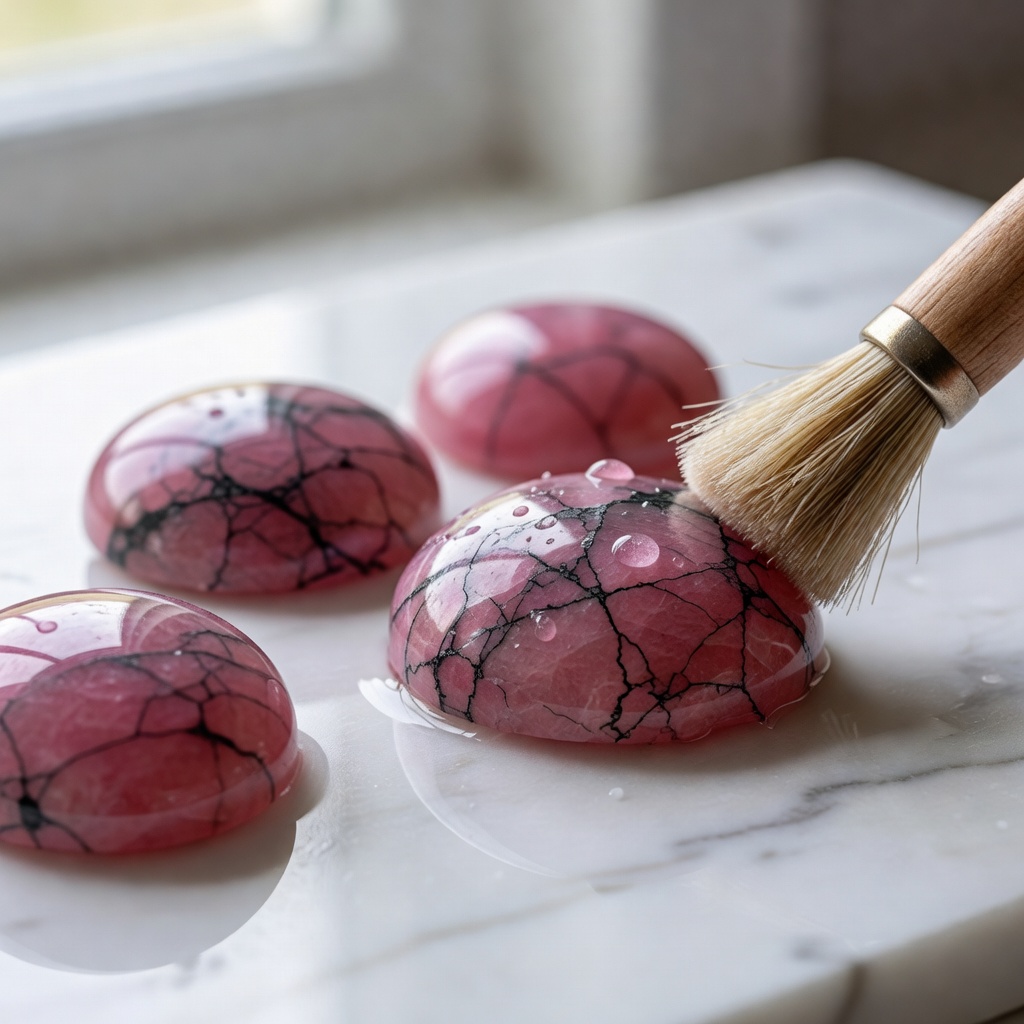
When your rhodonite requires cleaning, gentle hand washing remains the safest and most effective approach among all rhodonite cleaning methods available to home collectors. Begin by filling a small bowl with lukewarm water—not hot, as temperature extremes can shock the stone—and add a few drops of mild pH-neutral dish soap without moisturizers or antibacterial additives. Submerge your jewelry briefly and use only a soft-bristled baby toothbrush or clean makeup brush to gently dislodge dirt from the surface and around the setting, working in small circular motions to avoid scratching.
Proper rinsing techniques prove equally important when learning how to clean rhodonite stone effectively, as soap residue left in crevices can attract more dirt and create a cloudy appearance over time. Hold the jewelry under lukewarm running water, rotating it carefully to ensure water flows behind the stone and through any intricate filigree work or gallery walls. For pieces with complex settings or significant buildup, you may need to repeat the washing process two to three times, ensuring that all traces of oils and grime dissolve completely before proceeding to the drying stage.
Cleaning Techniques to Avoid
While modern jewelry cleaning technology offers convenience for many gemstones, several common methods pose significant dangers when cleaning pink rhodonite jewelry. Ultrasonic cleaners, which use high-frequency sound waves to agitate cleaning solutions, are particularly hazardous for rhodonite because the vibrations exploit the stone's perfect cleavage planes. These invisible structural lines can propagate into visible fractures or cause complete breakage during the intense shaking process, potentially destroying heirloom pieces in seconds.
Steam cleaning represents another high-risk method that subjects rhodonite to thermal shock by exposing it to concentrated jets of hot vapor followed by rapid cooling. This extreme temperature fluctuation creates internal stress within the crystal lattice that may result in crazing, cracking, or color alteration. Furthermore, never expose rhodonite to harsh chemicals including bleach, ammonia, vinegar, or alcohol-based cleaners, as these substances can etch the surface, dissolve protective coatings, or react with the manganese content to permanently alter the stone's distinctive pink coloring.
Proper Drying and Polishing
After washing, the drying process requires the same gentle attention that characterizes all aspects of rhodonite crystal care to prevent water spots and moisture damage. Lay a clean, lint-free microfiber cloth on a flat surface and place your jewelry on it, then pat gently to absorb excess water rather than rubbing, which could trap microscopic particles against the stone and create scratches. Avoid using paper towels, tissues, or terry cloth towels, as these materials are too abrasive and may leave fibrous residue caught in prongs or under bezels.
Allow your rhodonite to air dry completely for at least thirty minutes to one hour before returning it to storage, ensuring that no moisture remains trapped between the stone and its setting where it could cause metal corrosion or stone loosening over time. Once dry, you can restore the natural luster by gently buffing the surface with a clean portion of your microfiber cloth or a specialized jewelry polishing cloth designed for delicate gemstones. Use light pressure and straight-line motions rather than circular rubbing to minimize the risk of creating fine scratches on the relatively soft stone surface.
Storage Solutions for Protection
Proper storage represents a critical component of comprehensive rhodonite storage solutions that prevent accidental damage during periods of non-use. Always store individual rhodonite pieces in separate soft cloth pouches, fabric-lined jewelry boxes with dedicated compartments, or acid-free tissue paper that cushions the stone from impact. This separation prevents harder gemstones from scratching your rhodonite and stops multiple pieces from tangling, which can cause prongs to catch on chains or stones to knock against each other.
When organizing your collection, maintain strict separation between rhodonite and harder gemstones such as diamonds (Mohs 10), rubies and sapphires (Mohs 9), or even quartz (Mohs 7), as contact with these materials will inevitably scratch rhodonite's softer surface. Store your jewelry in a cool, dry place away from direct sunlight, which can fade the pink coloration over time, and avoid damp environments like bathrooms where humidity can accelerate tarnishing of metal settings. Consider adding silica gel packets to your storage containers to control moisture levels, particularly if you live in humid climates.
Professional Maintenance Services
Despite your best efforts at home, certain situations demand professional Rhodonite Care and Cleaning services to restore your jewelry to optimal condition. If you notice surface scratches that catch the light or feel rough under your fingernail, a professional gemologist can perform re-polishing using diamond-impregnated polishing compounds and specialized lapidary equipment designed for stones in the 5.5-6.5 hardness range. This process removes a microscopic layer of damaged material to reveal the fresh, unblemished stone beneath, though it should be performed sparingly to preserve the stone's weight and dimensions.
Professional jewelers also possess specialized steam equipment that operates at controlled temperatures and pressures safer than consumer-grade machines, allowing for deep cleaning of heavily soiled pieces or intricate vintage settings that trap dirt. Should you discover chips, cracks, or loose stones during your regular inspections, immediate professional repair prevents further damage—gemologists can often stabilize small fractures with special optical adhesives or reset loose stones before they fall out completely. Establish a relationship with a jeweler experienced in handling colored gemstones, as they will understand the specific vulnerabilities of rhodonite compared to harder stones like diamonds.
Troubleshooting Common Issues
Even with diligent care, rhodonite jewelry may occasionally develop issues that require specific intervention strategies to resolve. If your stone appears cloudy or develops a filmy buildup that persists after normal washing, this often indicates accumulated body oils, soap residue, or cosmetic products that have bonded with the surface. Create a slightly stronger cleaning solution using a drop of mild dish soap in warm water and soak the piece for two to three minutes only, then use a wooden toothpick wrapped in soft cotton to gently trace around the setting edges where grime accumulates most stubbornly.
For rhodonite that has lost its characteristic shine due to microscopic surface scratches or dulling, professional intervention usually provides the only permanent solution, though you can temporarily improve the appearance by rubbing a tiny amount of mineral oil on the surface with a soft cloth. When dealing with intricate vintage settings or carved rhodonite beads that trap dirt in crevices, avoid using metal tools that could scratch the stone; instead, use a damp cotton swab to apply cleaning solution precisely where needed. If home methods fail to restore clarity or if you notice any structural damage like new cracks or significant chips, cease cleaning attempts immediately and consult a professional to prevent exacerbating the damage.
Frequently Asked Questions About Rhodonite Maintenance
Can I use an ultrasonic cleaner for my rhodonite jewelry?
No, ultrasonic cleaners are not recommended for rhodonite. The vibrations can exploit the stone's perfect cleavage planes, causing internal fractures or complete breakage. Stick to gentle hand washing with mild soap and water.
How often should I clean my rhodonite stone?
Clean rhodonite jewelry every 2-3 weeks if worn regularly, or immediately after exposure to sweat, cosmetics, or chemicals. For pieces worn occasionally, cleaning every few months is sufficient to prevent buildup.
Is it safe to put rhodonite in water?
Yes, brief exposure to lukewarm water is safe for cleaning rhodonite. However, avoid prolonged soaking, hot water, or salt water, as these can damage the stone's surface or settings over time.
Can I wear rhodonite jewelry every day?
While possible, daily wear requires extra caution due to rhodonite's 5.5-6.5 hardness rating. Remove it during physical activities, cleaning, or showering to prevent scratches and chemical exposure that dull the stone's appearance.
Why is my rhodonite losing its shine?
Dullness usually results from accumulated body oils, soap residue, or microscopic scratches. Clean the stone thoroughly with mild soap, or have it professionally polished if the surface has become scratched from contact with harder materials.
What is the best way to store rhodonite to prevent damage?
Store rhodonite separately in soft cloth pouches or fabric-lined jewelry boxes with individual compartments. Keep it away from harder gemstones like diamonds (Mohs 10) or quartz (Mohs 7) that can scratch its surface.
Can I use vinegar or baking soda to clean rhodonite?
No, avoid acidic cleaners like vinegar and abrasive substances like baking soda. Rhodonite is sensitive to acids and scratching. Use only mild pH-neutral dish soap and lukewarm water with a soft brush.
How can I tell if my rhodonite needs professional cleaning?
Seek professional help if home cleaning doesn't remove deep-set dirt, if the stone appears loose in its setting, or if you notice chips, cracks, or significant surface scratches that require re-polishing by a gemologist.