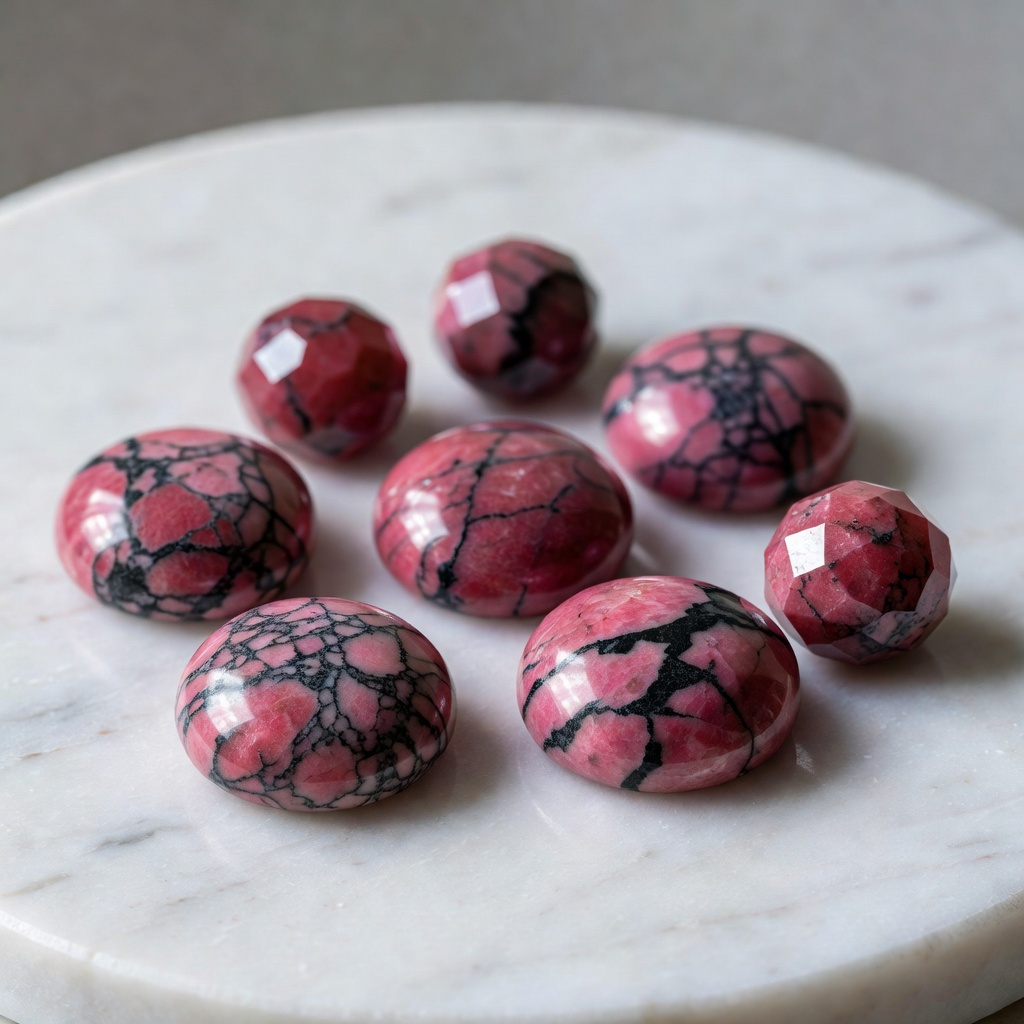
What Is Rhodonite? Understanding This Pink Manganese Gemstone
Rhodonite is a captivating manganese silicate mineral that has captured the attention of gem enthusiasts and jewelry designers for centuries with its distinctive pink to red hues contrasted by dramatic black veining. Chemically classified as (Mn,Fe,Mg,Ca)SiO₃, this striking gemstone forms through metamorphic processes where manganese-rich rocks undergo intense heat and pressure, creating the unique crystalline structure that defines high-quality specimens. The name itself derives from the Greek word "rhodon," meaning rose, which perfectly describes the gemstone's characteristic pink coloration that ranges from delicate pastels to intense raspberry tones.
The most recognizable feature of genuine rhodonite is the presence of black manganese oxide dendrites and veins that create intricate spiderweb patterns across the pink base color, making each piece truly one-of-a-kind. Historically, this gemstone holds particular significance in Russian decorative arts, where massive blocks of fine material were extracted from the Ural Mountains during the 18th and 19th centuries to create elaborate architectural elements, decorative boxes, and ceremonial carvings for the Russian imperial family. Today, collectors and jewelry aficionados prize rhodonite not only for its aesthetic appeal but also for its cultural heritage, particularly when sourcing material from historic Siberian deposits that represent some of the finest rhodonite gemstone material ever discovered.
Evaluating Rhodonite Quality: The Essential Four Cs
When assessing rhodonite gemstone quality, understanding the standard grading criteria helps buyers make informed decisions and recognize premium specimens worth investment. Unlike diamonds, where standardized grading systems dominate the market, evaluating rhodonite requires attention to specific characteristics unique to this manganese silicate mineral, including the interplay between base color intensity and matrix patterning.
Color Grading and Value Impact
Rhodonite color grading focuses primarily on the intensity and uniformity of the pink to red base color, with the most valuable specimens displaying an intense, saturated rose-red or raspberry pink hue without brownish or grayish undertones. Pale pink material with washed-out coloration typically commands lower prices, while stones exhibiting vivid, uniform coloration throughout the entire gem face represent the pinnacle of quality for collectors. The contrast between the pink base and the black manganese oxide veining significantly affects aesthetic appeal, with well-defined, artistic spiderweb patterns commanding premiums over chaotic or sparse veining distributions.
Clarity, Cut, and Carat Considerations
Clarity assessment in rhodonite differs from transparent gemstones like sapphires or emeralds, as this material ranges from opaque to semi-translucent, with the most valuable specimens displaying a desirable degree of translucency that allows light to penetrate slightly while still showing distinct color character. When examining potential purchases, look for material free of cracks, excessive pitting, or chalky white inclusions that detract from the overall appearance, though some manganese oxide veining is not only expected but desired for authentic character. Cut optimization typically favors cabochon cuts that showcase the material's distinctive patterns and color zoning, though high-clarity translucent material occasionally receives faceted cuts to maximize brilliance; regardless of cutting style, carat weight significantly influences price, with large, clean specimens over 20 carats becoming increasingly rare and valuable.
Natural vs. Treated Rhodonite: Identification and Disclosure
Understanding the distinction between natural vs treated rhodonite represents a critical competency for serious collectors and jewelry buyers, as enhancement treatments can significantly impact both value and durability. While rhodonite does not typically undergo the high-temperature heat treatments common to sapphires or rubies, various surface and fracture treatments exist in the marketplace that require careful identification and transparent disclosure from sellers.
Common Enhancement Techniques
The most frequently encountered treatments include waxing and oiling, where colorless substances are applied to surface-reaching fractures to improve clarity appearance and enhance the stone's luster temporarily. Lower-grade material may undergo dyeing processes to intensify pale pink colors to more marketable red tones, while polymer resins or glass fillings occasionally appear in fractured material to stabilize otherwise unsuitable rough. These treatments, while not inherently fraudulent when disclosed, dramatically affect rhodonite value, with untreated natural material commanding significantly higher prices per carat than enhanced stones of similar visual appearance.
Visual Inspection and Ethical Considerations
Identification techniques require careful examination under 10x magnification, where filled fractures may display flash effects or trapped air bubbles, while dyed stones often show color concentrations in fractures or unnaturally uniform coloration absent the subtle variations characteristic of natural material. Ethical disclosure requirements mandate that sellers clearly communicate any treatments applied to rhodonite gemstones, and buyers should request laboratory certification for significant purchases to verify natural origin. When examining potential acquisitions, trust your instincts if prices seem too good to be true for claimed high-quality material, as this often indicates undisclosed treatments or synthetic substitutes rather than genuine natural specimens.
Rhodonite Pricing Guide: Understanding Market Value and Cost Factors
Navigating the rhodonite price per carat landscape requires understanding the multiple variables that influence valuation, from origin and color intensity to clarity characteristics and matrix pattern desirability. Unlike more standardized gemstone markets, rhodonite pricing exhibits considerable variation based on aesthetic qualities and provenance, making education essential for avoiding overpayment or missing genuine bargains.
Price Ranges and Quality Tiers
Commercial quality rhodonite suitable for beaded jewelry and costume pieces typically ranges from $2 to $10 per carat, featuring opaque material with pale coloration and minimal distinctive patterning. Mid-grade cabochons suitable for silver jewelry settings generally command $10 to $50 per carat, offering better color saturation and more attractive black veining patterns. Fine translucent Siberian rhodonite with intense raspberry color, distinct spiderweb veining, and semi-transparent clarity represents the pinnacle of the market, routinely achieving $100 or more per carat for exceptional specimens, with museum-quality large pieces occasionally fetching significantly higher prices at specialty auctions.
Origin Premiums and Matrix Valuation
Geographic origin profoundly affects rhodonite value, with material from Russia's Ural Mountains, specifically the Malysheva and Srednyaya Padma mines, commanding substantial premiums due to historical significance and superior color characteristics. Australian rhodonite from the Broken Hill region offers excellent quality with unique patterning variations, while Brazilian material often provides affordable entry points for new collectors. The valuation of unique matrix patterns follows subjective aesthetic preferences, with collectors particularly seeking "picture stones" that display landscape-like scenes or symmetrical spiderweb formations that enhance the gem's artistic value beyond standard commercial pricing structures.
Choosing the Right Rhodonite Jewelry Settings and Styles
Selecting appropriate rhodonite jewelry settings requires careful consideration of the gemstone's physical properties, particularly its moderate hardness of 5.5 to 6.5 on the Mohs scale, which makes it susceptible to scratching and impact damage compared to harder gems like sapphires or diamonds. Protective setting designs become paramount for preserving the beauty of this manganese silicate mineral over years of wear, requiring thoughtful selection of mounting styles that safeguard vulnerable edges and surfaces.
Protective Setting Recommendations
For rhodonite ring settings, bezel settings that surround the entire gemstone perimeter with metal provide optimal protection against chipping and corner damage, making them preferable to prong settings that leave edges exposed to daily impacts. V-prongs can offer reasonable protection for faceted stones while maximizing light exposure, though they require more frequent maintenance checks to ensure stones remain secure. Pendant settings should incorporate substantial metal backing and protective bails that prevent the gemstone from contacting clothing or skin acids directly, while earrings benefit from secure friction backs or screw posts that prevent loss during active wear.
Best Applications and Bead Quality
Given durability considerations, rhodonite performs best in pendants and earrings that experience minimal physical contact with hard surfaces, followed by occasional-wear rings reserved for special events rather than daily activities. When selecting rhodonite bracelets or necklaces featuring bead strands, examine drill holes for smooth finishes that prevent cord abrasion, and evaluate bead uniformity in color and patterning for cohesive design aesthetics. High-quality bead material should display consistent polish without pitting, and strands should be knotted between beads to prevent scattering if breakage occurs, particularly for investment-grade Siberian material worth protecting.
Prime Sources: Where the World's Best Rhodonite Is Mined
The geographic origin of rhodonite significantly influences both aesthetic characteristics and market value, with certain localities producing material so distinctive that experienced collectors can often identify sources based on visual characteristics alone. Understanding these prime sources helps buyers authenticate claims of premium material and appreciate the geological diversity that creates variations in this manganese silicate mineral.
Russian Siberian Rhodonite Heritage
Siberian rhodonite represents the gold standard for collectors, historically extracted from the Ekaterinburg region in the Ural Mountains where massive deposits yielded material with intense raspberry-red color and distinctive black manganese oxide veining. Russian lapidaries have worked this material since the 1700s, creating elaborate decorative objects including the famous sarcophagus for Emperor Alexander II, with the finest jewelry-grade material coming from the Malysheva mine complex. Contemporary Siberian production remains limited, making vintage Russian material increasingly valuable, while modern mining in the same region continues to produce small quantities of exceptional collector-grade specimens characterized by superior translucency and color saturation compared to most global sources.
Australian and Global Deposits
Australian rhodonite from the Broken Hill district in New South Wales produces material with unique pink to red coloration often featuring distinctive mineral associations with galena and other sulfide minerals, creating interesting textural variations prized by collectors. Brazil generates significant commercial quantities ranging from pale pink to intense red, often serving as the primary source for affordable beaded jewelry and cabochons. Other notable sources include Sweden's Långban and Pajsberg mines, which historically produced fine crystalline specimens, and various locations in the United States including Massachusetts, New Jersey, and Colorado, where smaller deposits yield material primarily of interest to mineral collectors rather than jewelry manufacturers.
Authentication Guide: How to Spot Fake Rhodonite and Simulants
The growing popularity of pink gemstones has unfortunately led to an increase in fake rhodonite and misrepresented simulants entering the market, requiring buyers to develop authentication skills or establish relationships with reputable gemological laboratories. While genuine rhodonite possesses distinctive characteristics difficult to replicate perfectly, several common imitations can confuse inexperienced purchasers, particularly in online marketplaces where photography manipulation obscures true material properties.
Common Imitations and Visual Analysis
Dyed agate represents the most prevalent imitation, typically displaying unnaturally uniform pink coloration with artificially induced black veining that follows fracture patterns rather than the random dendritic distribution characteristic of natural manganese oxide deposits. Rhodochrosite, while a genuine manganese carbonate mineral itself, sometimes masquerades as high-end rhodonite, though it displays characteristic curved white or beige banding rather than rhodonite's angular black spiderweb veining. Pink jasper and dyed howlite occasionally appear as rhodonite substitutes, though these materials lack the vitreous luster and specific gravity of genuine manganese silicate mineral specimens.
Testing and Professional Certification
Simple at-home tests include hardness testing using a copper penny (hardness 3.5) and a steel knife (hardness 5.5); genuine rhodonite will resist scratching by copper but may show slight marks from steel, whereas softer imitations like howlite scratch more easily. Visual pattern analysis under magnification reveals natural inclusions and veining textures impossible to replicate exactly in dyed materials, which often show color concentrations along fracture lines. For significant investments, seek professional gemological laboratory certification from recognized institutions such as GIA, AGL, or Gubelin, which can definitively identify material composition, detect treatments, and confirm geographic origin when characteristic inclusions permit such determination.
Rhodonite vs. Rhodochrosite: Critical Differences for Buyers
Confusion between rhodonite vs rhodochrosite represents one of the most common identification challenges facing pink gemstone enthusiasts, as both minerals contain manganese and display similar color palettes ranging from pale pink to intense red. However, these distinct species possess different chemical compositions, physical properties, and visual characteristics that significantly impact their suitability for various jewelry applications and their respective market values.
Visual and Physical Distinctions
Rhodonite displays characteristic black manganese oxide veining that creates spiderweb or dendritic patterns across a pink to red background, while rhodochrosite exhibits distinctive white, beige, or light pink curved banding that resembles bacon strips or concentric growth rings. Hardness testing provides definitive differentiation, with rhodonite measuring 5.5-6.5 on the Mohs scale compared to rhodochrosite's softer 3.5-4.0 rating, making rhodochrosite significantly less suitable for rings or bracelets subjected to daily wear. Specific gravity differences also exist, with rhodonite feeling noticeably heavier in the hand compared to rhodochrosite of equivalent size due to its denser silicate composition versus the carbonate structure of rhodochrosite.
Market Positioning and Durability
While both gemstones command respect in the collector community, rhodonite generally offers superior durability for jewelry applications, though fine transparent rhodochrosite crystals can achieve higher per-carat prices due to their rarity. Pink gemstone comparison shopping requires careful examination of patterning; rhodonite's angular black veining contrasts with rhodochrosite's soft curved banding, and the latter often displays greater translucency in high-grade specimens. For jewelry purposes, rhodonite provides better longevity in protective settings, while rhodochrosite remains primarily a collector's mineral or suitable only for very protected pendant or earring designs where impact risks remain minimal.
Essential Care and Maintenance for Rhodonite Gemstones
Proper rhodonite care tips ensure that your manganese silicate gemstones maintain their beauty and structural integrity across decades of ownership, protecting both sentimental and financial investments. Given its moderate hardness and potential porosity in some specimens, rhodonite requires specific handling protocols that differ significantly from harder gemstones like diamonds or sapphires.
Cleaning Methods and Chemical Precautions
Cleaning rhodonite jewelry requires gentle methods using warm water, mild dish soap, and a soft-bristled brush to remove accumulated oils and debris without risking damage to the stone's surface or any potential filler materials in treated specimens. Never expose rhodonite to ultrasonic cleaners or steam cleaning systems, as the vibrations can loosen fillings in treated stones and potentially exacerbate existing fractures within the material. Avoid harsh chemicals including chlorine, bleach, and household cleaners, which can dull the polish, attack any wax or oil treatments, and potentially cause discoloration in dyed material, while also protecting the setting metals from unnecessary chemical exposure.
Storage and Environmental Precautions
Store rhodonite pieces separately from harder gemstones such as diamonds, rubies, or sapphires to prevent scratching, ideally in individual soft cloth pouches or compartmentalized jewelry boxes with fabric lining. Remove rhodonite rings before engaging in household chores, sports activities, or gardening, as impact against hard surfaces can chip or fracture the stone despite protective settings. Avoid prolonged exposure to direct sunlight and extreme heat, which can fade color in some treated specimens and potentially cause thermal shock in stones with internal fractures, and always apply cosmetics, perfumes, and hairsprays before putting on rhodonite jewelry to minimize chemical contact.
Expert Tips for Purchasing Authentic Rhodonite Online and In-Store
Successfully navigating the marketplace to buy rhodonite online or through physical retailers requires due diligence, knowledge of industry standards, and awareness of potential pitfalls that separate reputable dealers from disreputable operators. Whether seeking affordable beaded strands or investment-grade Siberian cabochons, following established protocols protects consumers from misrepresentation and ensures satisfactory acquisition experiences.
Vetting Dealers and Documentation
Establish relationships with established gem dealers who specialize specifically in colored gemstones rather than general jewelry retailers, as specialists possess superior expertise in identifying treatments and sourcing high-quality material from specific localities. Always request origin documentation for claimed Siberian or other premium sources, and ask specific questions about treatments using terminology like "Has this material been dyed, filled, or waxed?" to test seller knowledge and honesty. Reputable dealers willingly provide detailed photographs showing multiple angles and magnified views of specific pieces, and they maintain transparent return policies allowing for independent professional inspection within reasonable timeframes.
Red Flags and Online Safety
Exercise extreme caution when encountering prices significantly below market norms for claimed quality levels, as genuine fine rhodonite commands appropriate prices reflecting mining costs and material scarcity. Vague treatment disclosures such as "may have been treated" or "traditional enhancement" without specifics indicate potential undisclosed modifications that affect value. When buying online, verify seller ratings across multiple platforms, look for membership in professional organizations like the American Gem Trade Association (AGTA), and use secure payment methods offering buyer protection. For significant purchases, insist on shipping insurance and require signature confirmation to prevent loss or switching scams during transit.
Frequently Asked Questions
How much does rhodonite cost per carat?
Rhodonite typically ranges from $2 to $50 per carat for commercial quality, while fine translucent Siberian material with intense pink color and distinct black veining can command $100+ per carat for collector specimens.
Is rhodonite durable enough for everyday rings?
With a hardness of 5.5-6.5 on the Mohs scale, rhodonite is relatively soft and brittle, making it better suited for pendants, earrings, and occasional-wear rings rather than daily-wear engagement rings.
How can I tell if rhodonite is real or fake?
Genuine rhodonite exhibits natural black manganese oxide veining against a pink/red background, feels cool to the touch, and shows a vitreous luster. Fakes often have unnaturally uniform color or perfectly patterned veining.
What's the difference between rhodonite and rhodochrosite?
While both are pink manganese minerals, rhodonite displays black dendritic veining throughout, whereas rhodochrosite shows characteristic white or beige curved banding patterns and is generally softer and more translucent.
Does rhodonite receive any treatments I should know about?
Some rhodonite is waxed or oiled to improve luster and fill surface-reaching fractures, while lower-grade material may be dyed to enhance color. Always request treatment disclosure from sellers.
What is the best color of rhodonite to buy?
The most valuable rhodonite displays an intense, uniform rose-red to raspberry pink color with contrasting black manganese oxide veining creating an attractive 'spiderweb' pattern, particularly in translucent to semi-translucent material.
Can rhodonite be worn in water or while swimming?
It's best to avoid prolonged water exposure as rhodonite can be porous and may absorb chemicals from chlorinated pools or saltwater, potentially damaging the polish or causing discoloration over time.
Where is the best place to buy authentic rhodonite gemstones?
Purchase from established gem dealers who provide origin information and treatment disclosure, specialize in colored gemstones rather than general jewelry, and offer return policies allowing for professional inspection.