
Understanding Rhodochrosite's Unique Properties
Rhodochrosite stands apart in the gemstone world due to its distinctive chemical composition and physical characteristics that demand specialized attention. With a rhodochrosite hardness rating of just 3.5 to 4 on the Mohs scale, this stunning pink gemstone is significantly softer than popular jewelry stones like quartz (7) or sapphire (9), making it more susceptible to surface damage from everyday encounters. The stone's manganese carbonate care requirements stem from its fundamental chemical structure—manganese carbonate—which reacts adversely to acidic environments and harsh chemical agents commonly found in household cleaning products.
The mineralogical property of perfect cleavage presents another critical consideration for owners, as rhodochrosite possesses distinct planes where the crystal structure allows clean breaks under sufficient impact. This characteristic means that even a minor drop onto a hard surface or accidental knock against a countertop edge can result in chipping, cracking, or complete fracture of the stone. When evaluating a rhodochrosite specimen for jewelry purposes, examine the setting carefully to ensure protective bezel settings rather than exposed prong settings that leave the stone vulnerable to direct impact during daily activities.
Daily Wear and Handling Best Practices
Implementing consistent rhodochrosite jewelry care routines begins with adopting the "last on, first off" principle that seasoned gemologists recommend for all delicate gemstones. When dressing for the day, always put on your rhodochrosite pieces after applying cosmetics, hairspray, perfume, and lotions, as these products contain alcohols, acids, and oils that can etch the stone's surface or create a filmy residue that dulls its characteristic raspberry-pink to rose-red luster. Similarly, remove your rhodochrosite jewelry first when undressing to prevent accidental snagging on clothing fibers that might torque the stone in its setting.
Daily gemstone handling protocols require removing rhodochrosite before engaging in physical activities, exercise routines, household chores, or swimming sessions. The chlorine in swimming pools and hot tubs can chemically react with the manganese carbonate composition, while the impact from free weights or accidental strikes during gardening can exploit the stone's perfect cleavage planes. Additionally, prolonged exposure to direct sunlight can fade the vibrant coloration that makes rhodochrosite so desirable—consider storing pieces in a jewelry box when spending extended periods outdoors, particularly during summer months when UV intensity peaks.
Safe At-Home Cleaning Methods
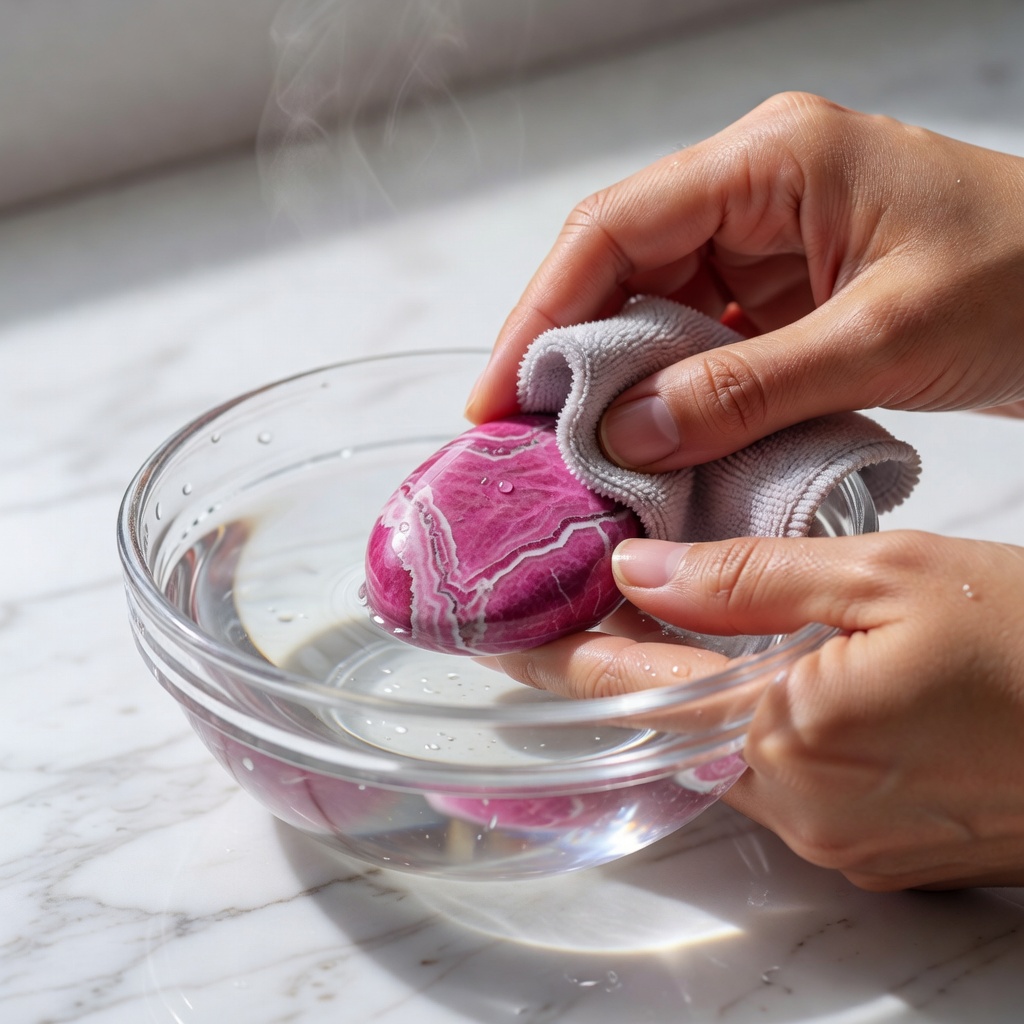
Learning how to clean rhodochrosite properly requires understanding that less intervention is often better than aggressive scrubbing when dealing with soft, cleavage-prone gemstones. Prepare a cleaning solution using only lukewarm water—never hot or boiling water, as thermal shock can stress internal fractures—and a mild, phosphate-free dish soap that contains no degreasing agents or citrus extracts. Fill a small bowl with the solution and allow your jewelry piece to soak for no more than two to three minutes to loosen any accumulated oils or debris without saturating the stone or loosening delicate settings.
For safe gemstone cleaning, use only a soft lint-free microfiber cloth or a natural camel hair brush with extremely gentle pressure to dislodge particles from the surface and around prongs. Avoid circular motions that might grind microscopic debris against the soft surface; instead, employ straight-line strokes following the natural crystal structure when possible. After cleaning, pat the stone immediately with a soft, absorbent towel to remove excess moisture, then place the piece on a clean cloth in a well-ventilated area away from direct heat sources to allow complete air drying before returning it to storage. Never use hair dryers or heating vents to speed drying, as rapid temperature changes can cause internal damage.
Cleaning Techniques and Products to Avoid
Understanding rhodochrosite cleaning mistakes can prevent irreversible damage that compromises both the beauty and value of your gemstone. Never subject rhodochrosite to ultrasonic cleaners, as the high-frequency vibrations can exploit microscopic inclusions and cleavage planes, causing internal fractures to propagate or completely shattering the stone. Similarly, steam cleaners generate intense heat and pressure that can cause thermal shock or force moisture into tiny surface-reaching fractures, leading to cloudiness or structural weakening over time.
Gemstone cleaning dangers extend beyond mechanical methods to include common household chemicals that many owners mistakenly believe are safe for jewelry. Avoid ammonia, bleach, vinegar, lemon juice, and commercial jewelry dips or tarnish removers designed primarily for harder metals like silver or gold. These acidic or alkaline agents can react with the manganese carbonate composition, causing pitting, etching, or a permanent dulling of the surface polish. One collector reported significant surface damage after soaking a rhodochrosite pendant in a popular silver cleaning solution for just thirty seconds, demonstrating how quickly chemical reactions can occur with this sensitive gemstone.
Proper Storage Solutions
Implementing effective rhodochrosite storage tips begins with recognizing that this delicate gemstone requires isolation from harder jewelry pieces that might scratch or abrade its surface during routine storage movements. Store each rhodochrosite piece individually in a soft cloth pouch made of unbleached cotton or velvet, or designate a padded compartment within a jewelry box that prevents contact with other items. Never toss rhodochrosite into a shared jewelry dish where it might rattle against diamond rings, sapphire earrings, or metal bracelets that can leave permanent scratches on the stone's relatively soft surface.
Optimal gemstone storage solutions for rhodochrosite involve maintaining stable environmental conditions that preserve the stone's chemical integrity and color stability. Keep your storage area away from heating vents, windows that create temperature fluctuations, or bathrooms where humidity spikes can affect metal settings. Ideally, maintain moderate humidity levels between 40-50% and stable room temperatures between 65-75°F (18-24°C). For valuable specimens, consider storing them in acid-free tissue paper within airtight containers that include silica gel packets to control moisture, particularly if you live in regions with high humidity or seasonal weather extremes.
Professional Maintenance and Restoration
Establishing a relationship with a qualified jeweler for professional rhodochrosite care ensures that your gemstone receives expert attention before minor issues escalate into major damage. Schedule annual inspections where a professional can examine prong integrity, check for loose stones, and assess whether the setting still provides adequate protection for the cleavage-prone crystal structure. During these visits, jewelers can also professionally clean areas that home methods cannot safely reach, using specialized tools that avoid the vibration and chemical hazards associated with consumer cleaning devices.
Gemstone maintenance services become necessary when surface scratches accumulate from normal wear, creating a network of microscopic abrasions that scatter light and diminish the stone's characteristic vitreous to pearly luster. Professional re-polishing using fine diamond compounds and specialized lapidary equipment can restore the original brilliance to dulled surfaces, though this process removes a microscopic layer of material and should not be performed excessively. If you notice the stone becoming loose in its setting, visible cracks developing, or sudden changes in clarity, seek immediate professional intervention rather than attempting temporary DIY fixes that might exacerbate the structural compromise.
Troubleshooting Common Issues
Effective rhodochrosite stone maintenance requires recognizing the difference between surface residue and actual structural damage when addressing cloudiness or dullness. When body oils, cosmetics, or soap residue accumulate on the surface, creating a hazy appearance that obscures the stone's transparency, gently wipe the gemstone with a barely dampened microfiber cloth using minimal water exposure. For stubborn fingerprints or lotion buildup, a single drop of mild soap on the cloth—never directly on the stone—followed by immediate drying with a soft towel often restores clarity without requiring full immersion cleaning.
Surface scratches on rhodochrosite represent a more serious concern that requires professional intervention rather than DIY polishing attempts. Unlike harder gemstones that might respond to home polishing compounds, fixing dull gemstones like rhodochrosite demands lapidary expertise to avoid exacerbating the damage through improper technique. If your stone exhibits cloudiness that persists after gentle cleaning, examine it under magnification to distinguish between residue buildup and internal fracturing—cloudiness confined to the surface typically responds to professional cleaning, while internal haziness may indicate cumulative damage from impact or improper cleaning methods used previously.
Long-term Preservation Strategies
Serious collectors and owners should approach rhodochrosite preservation with documentation strategies that protect both the physical stone and its financial value over decades. Photograph your pieces under consistent lighting conditions immediately after acquisition, noting any unique inclusions or color zoning patterns that serve as identification markers, and obtain professional appraisals from certified gemologists every three to five years for insurance purposes. Maintain detailed records of cleaning dates, professional services performed, and any observed changes in the stone's appearance to establish a maintenance history that proves valuable for resale or inheritance situations.
For long-term gemstone care, consider adopting a special-occasion wear philosophy rather than incorporating rhodochrosite into daily jewelry rotations. Reserve these pieces for evening events, celebrations, or professional settings where the risk of physical impact or chemical exposure remains minimal compared to workplace or athletic environments. Monitor the storage environment seasonally, checking for humidity fluctuations that might affect metal settings or temperature swings near windows that could stress the stone's internal structure. By treating rhodochrosite as a cherished occasional treasure rather than an everyday accessory, you significantly extend its lifespan while preserving the vibrant pink coloration that makes this manganese carbonate gemstone so coveted among collectors.
Frequently Asked Questions
Can I Clean Rhodochrosite with Regular Tap Water?
Yes, you can use lukewarm tap water to clean rhodochrosite, but avoid hot water as temperature extremes can damage the stone. Use only mild soap and ensure you dry the gemstone thoroughly immediately after cleaning to prevent water spots.
Is Ultrasonic Cleaning Safe for Rhodochrosite Jewelry?
No, ultrasonic cleaning is not safe for rhodochrosite. The vibrations can cause internal fractures, loosen settings, and damage the stone's surface due to its relatively soft nature (3.5-4 on the Mohs scale) and perfect cleavage.
How Should I Store My Rhodochrosite Jewelry When Not Wearing It?
Store rhodochrosite in a soft cloth pouch or padded jewelry box compartment, separately from harder gemstones like diamonds or sapphires. Keep it away from direct sunlight, extreme temperatures, and humidity fluctuations to preserve its color and integrity.
Can I Wear Rhodochrosite Every Day, or Should It Be Reserved for Special Occasions?
Due to its softness (3.5-4 Mohs), rhodochrosite is best reserved for occasional wear rather than daily use. If worn daily, it is susceptible to scratching, chipping, and exposure to chemicals from cosmetics and household cleaners.
What Household Substances Can Damage Rhodochrosite?
Avoid contact with vinegar, lemon juice, ammonia, bleach, hairspray, perfume, and lotions. The manganese carbonate composition makes rhodochrosite particularly sensitive to acids and harsh chemicals that can etch or dull the surface.
How Often Should I Clean My Rhodochrosite Gemstone?
Clean rhodochrosite only when necessary—typically every few months for occasional wear, or monthly if worn frequently. Over-cleaning can cause unnecessary wear, so wipe with a soft dry cloth after each use to remove oils and postpone deep cleaning.
Why Is My Rhodochrosite Becoming Dull and Losing Its Shine?
Dullness usually results from accumulated body oils, soap residue, or microscopic scratches on the surface. Clean gently with mild soapy water, or consult a professional jeweler for re-polishing if the dullness persists after cleaning.
Can I Use Baking Soda or Toothpaste to Clean My Rhodochrosite?
No, never use baking soda, toothpaste, or abrasive powders on rhodochrosite. These materials are too harsh and will scratch the soft surface of the stone. Stick to mild soap and water with a soft cloth only.


