Understanding Red Diamond Rarity: Why Prices Reach Millions
The astronomical natural red diamond cost stems from a unique geological phenomenon known as plastic deformation, a process that occurs deep within the earth's mantle under extreme pressure. Unlike other fancy colored diamonds that derive their hues from chemical impurities such as nitrogen or boron, pure red diamonds obtain their color when the crystal lattice undergoes structural deformation during formation, causing light to bend in ways that reveal the rare red spectrum. This process is so anomalous that gemologists estimate fewer than thirty significant natural red diamonds exist in the entire world, making them more scarce than pink, blue, and green diamonds combined. When considering red diamond rarity in statistical terms, the probability of discovering a one-carat rough red diamond exceeds one in five million carats mined, explaining why these stones command prices that rival prime Manhattan real estate per carat.
The closure of Australia's Argyle mine in November 2020 has permanently altered the supply landscape for these crimson treasures, creating unprecedented scarcity in an already constrained market. Prior to its closure, the Argyle mine produced approximately ninety percent of the world's pink and red diamonds, yet even during its peak operation, only a handful of true reds emerged annually from millions of tons of kimberlite ore. Today, with no active mines producing significant quantities of red diamonds and no new geological surveys indicating viable deposits, collectors face a finite supply against exponentially growing demand from Asian and Middle Eastern markets. This supply constraint has triggered a paradigm shift in Red Diamond Price Guide methodologies, with auction houses now implementing waiting lists for qualified bidders seeking to acquire stones that may not surface again for decades.
Current Red Diamond Price Per Carat Breakdown (2024)
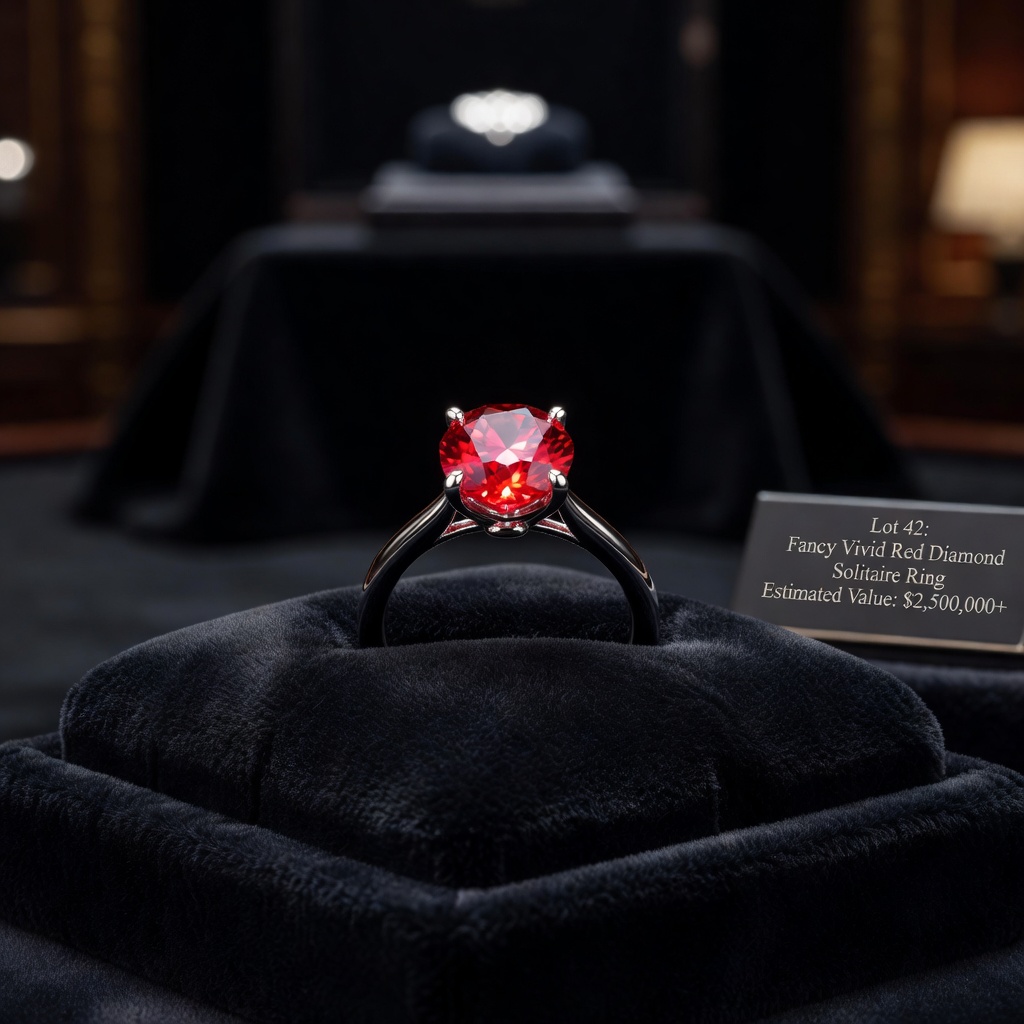
Navigating the Fancy red diamond prices market requires understanding a pricing structure that defies conventional gemstone valuation models. For stones in the one-carat range, buyers should expect to invest between $200,000 and $1,000,000 per carat, with the variance determined primarily by color intensity, origin documentation, and the absence of secondary color modifiers such as purple or orange. When examining the two to three-carat category, which represents the threshold for museum-quality specimens, prices escalate dramatically to between $1.5 million and $3 million per carat for stones possessing Fancy Red or Fancy Vivid Red grades. The ultra-exclusive five-carat and larger category has shattered previous records, with exceptional specimens commanding upward of $5 million per carat at recent Geneva and Hong Kong auctions, establishing new benchmarks for the Red Diamond Price Guide framework.
Color intensity creates distinct pricing tiers that collectors must understand before entering this market. Fancy Red diamonds, displaying a pure red hue without modifiers, typically occupy the mid-range of the pricing spectrum, while Fancy Deep Red stones with exceptional saturation can command twenty to thirty percent premiums due to their dramatic visual presence. The pinnacle of the market belongs to Fancy Vivid Red diamonds, which exhibit the most intense and pure coloration achievable; these specimens often sell for double the price of Fancy Red stones in equivalent sizes and clarities. For example, a recent 1.05-carat Fancy Vivid Red VS2 diamond sold for $2.4 million at auction, while a similar-sized Fancy Red VVS1 stone achieved $980,000, demonstrating how color intensity often supersedes clarity grades in valuation matrices for these rare gems.
The Argyle Red Diamond Premium: Australia's Legacy
Argyle red diamonds represent the zenith of colored diamond collecting, commanding price premiums of forty to sixty percent above similarly graded stones from Brazilian or African origins. The Argyle Tender, an annual invitation-only event operated by Rio Tinto until the mine's closure, established the standard for red diamond excellence, presenting stones that consistently displayed unparalleled purity and a distinctive "blood red" coloration unmatched by other sources. These diamonds originated from the Lamproite pipe of Western Australia's East Kimberley region, where unique geological conditions produced crystals with exceptional color saturation and remarkable clarity characteristics. The provenance of Argyle reds has become so significant that stones accompanied by original Tender documentation achieve hammer prices at auction that regularly exceed pre-sale high estimates by substantial margins.
The post-2020 secondary market for Argyle reds has demonstrated remarkable resilience and appreciation, with red diamond investment value increasing exponentially as collectors recognize the finite nature of these assets. Unlike other commodities that fluctuate with mining outputs, Argyle reds now exist in a permanently fixed supply, with each passing year seeing fewer stones available as they enter long-term private collections and museum holdings. Distinctive characteristics of Argyle reds include their tendency toward smaller carat weights—rarely exceeding two carats in cut stones—coupled with exceptional brilliance due to the mine's specific kimberlite composition. When compared to Brazilian reds, which often display brownish secondary tones, or African stones that may show orange modifiers, Argyle diamonds consistently demonstrate the purest red spectrum, justifying their status as the blue-chip standard within the red diamond category.
4Cs of Red Diamonds: How Cut, Clarity, and Carat Affect Value
The traditional diamond grading system undergoes significant modification when applied to reds, as the Red Diamond Price Guide prioritizes color above all other factors. Color grading for red diamonds involves nuanced analysis of hue, tone, and saturation, with gemologists examining stones under controlled lighting to detect any brown, orange, or purple modifiers that might diminish value. Unlike colorless diamonds where D-color represents perfection, red diamonds achieve maximum value when displaying a pure spectral red without undertones, a characteristic that requires expert cutting to maximize color concentration. The Gemological Institute of America (GIA) employs a specialized color grading scale for these stones, ranging from Fancy Red to Fancy Deep Red and Fancy Vivid Red, with each increment representing exponential value increases rather than linear progression.
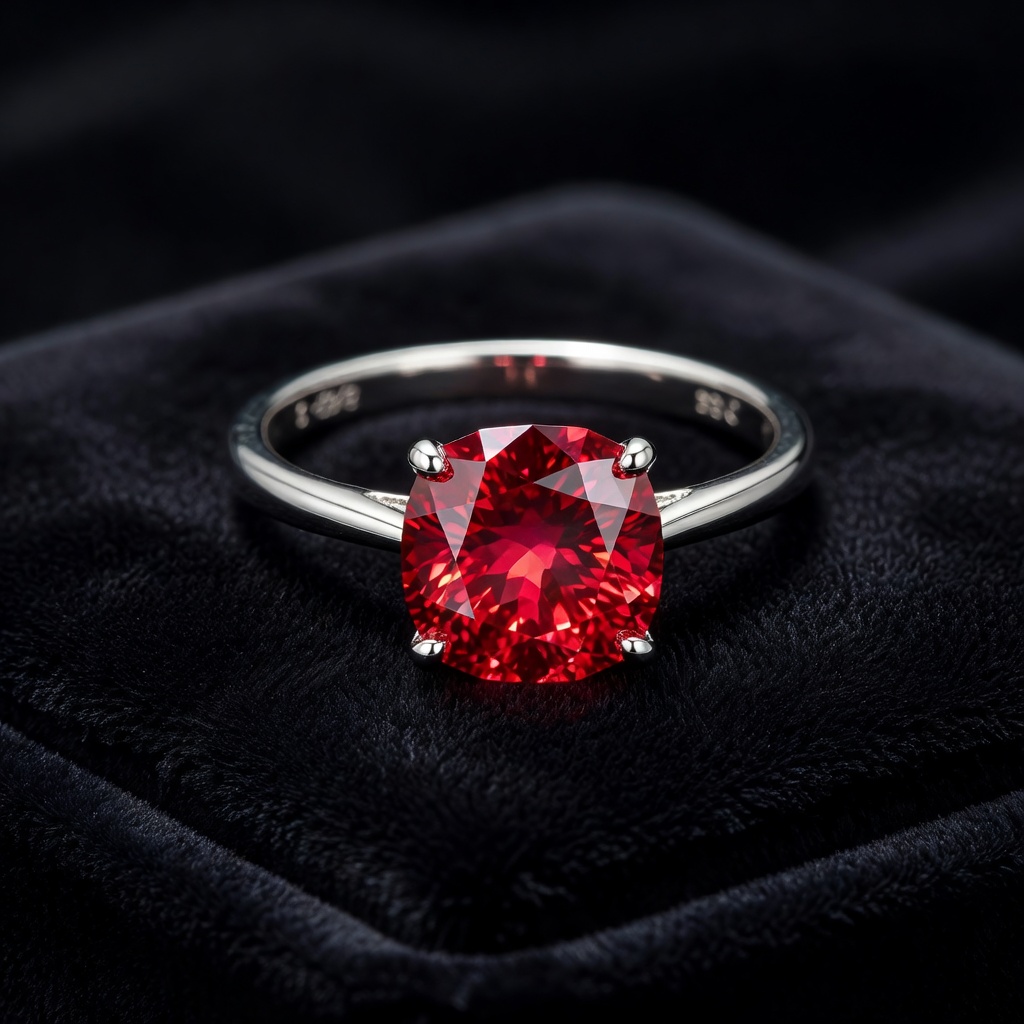
Clarity considerations differ fundamentally for red diamonds compared to their colorless counterparts, as the intense coloration often masks inclusions that would significantly devalue a D-flawless stone. A VS2 or SI1 red diamond with exceptional color may command higher prices than a VVS1 stone with weaker saturation, allowing collectors to optimize their natural red diamond cost by prioritizing color over clarity. Cut selection plays a crucial role in maximizing red color intensity, with radiant and cushion cuts preferred over round brilliants because their elongated facets and depth proportions enhance color concentration through the stone's table. The exponential pricing model becomes particularly apparent above one carat, where prices multiply non-linearly; a two-carat red diamond typically costs four to five times more than a one-carat stone of equivalent quality, reflecting the extreme rarity of larger crystals that survived the cutting process without color loss.
Investment Analysis: Red Diamonds as Alternative Assets
Historical performance data positions red diamonds among the most lucrative alternative investments of the twenty-first century, with red diamond investment value appreciating over five hundred percent during the past two decades. Analysis of Christie's and Sotheby's auction archives reveals consistent double-digit annual returns, with the Hancock Red's legendary 1987 sale establishing a trajectory that has seen prices compound annually at rates exceeding fifteen percent. Unlike traditional equities or precious metals, red diamonds demonstrate zero correlation with stock market volatility, maintaining or increasing value during economic downturns such as the 2008 financial crisis and the 2020 pandemic recession. This counter-cyclical performance makes them exceptional portfolio diversifiers for ultra-high-net-worth individuals seeking to preserve capital against currency devaluation and geopolitical instability.
Liquidity considerations require investors to adopt long-term holding strategies, with industry experts recommending minimum ten-year horizons to realize optimal returns on Fancy red diamond prices. While blue-chip art or vintage automobiles may offer quicker turnaround at auction, red diamonds benefit from extended holding periods that allow rarity premiums to compound as existing stones disappear into private collections or museum exhibitions. Portfolio allocation strategies typically suggest limiting red diamond exposure to five to ten percent of total alternative assets, balancing these illiquid holdings against more tradable commodities like gold or blue-chip stocks. Insurance and storage costs, while substantial for multi-million dollar stones, represent minimal percentages of total asset value when amortized across the appreciation trajectory these assets consistently demonstrate.
Legendary Red Diamonds: Record-Breaking Sales and Valuations
The Moussaieff Red stands as the crown jewel of Fancy red diamond prices, a 5.11-carat triangular brilliant-cut stone currently valued at over twenty million dollars, representing approximately $3.9 million per carat. Discovered by a Brazilian farmer in the 1990s and originally weighing 13.9 carats in rough form, this Fancy Vivid Red internally flawless diamond underwent masterful cutting by William Goldberg to maximize its extraordinary color, losing over sixty percent of its rough weight in the process. The stone's current owners, the Moussaieff jewelry house of London, have declined numerous offers exceeding the twenty-million-dollar valuation, considering the diamond irreplaceable at any price. This specimen exemplifies how exceptional reds transcend commodity status to become cultural artifacts with valuations determined by historical significance rather than mere market metrics.
The Hancock Red, a modest 0.95-carat purplish-red diamond, revolutionized the Argyle red diamonds market when it sold for $880,000 at Christie's New York in 1987, setting a per-carat record of $926,315 that stood for decades. This sale awakened the investment community to red diamond potential, proving that size mattered less than color intensity in determining value. Museum-grade specimens such as the De Young Red (2.90 carats) and the Kazanjian Red (5.05 carats) carry insurance valuations exceeding thirty million dollars collectively, though neither has appeared at auction in recent decades. Recent 2023-2024 auction results continue this upward trajectory, with a 1.21-carat Fancy Red diamond selling for $2.85 million at Sotheby's Hong Kong and private sales of Argyle Tender stones reportedly achieving fifty percent premiums over pre-closing era prices, confirming the sustained appetite for these ultimate rarities.
Authentication and Certification: Avoiding Treated Stones
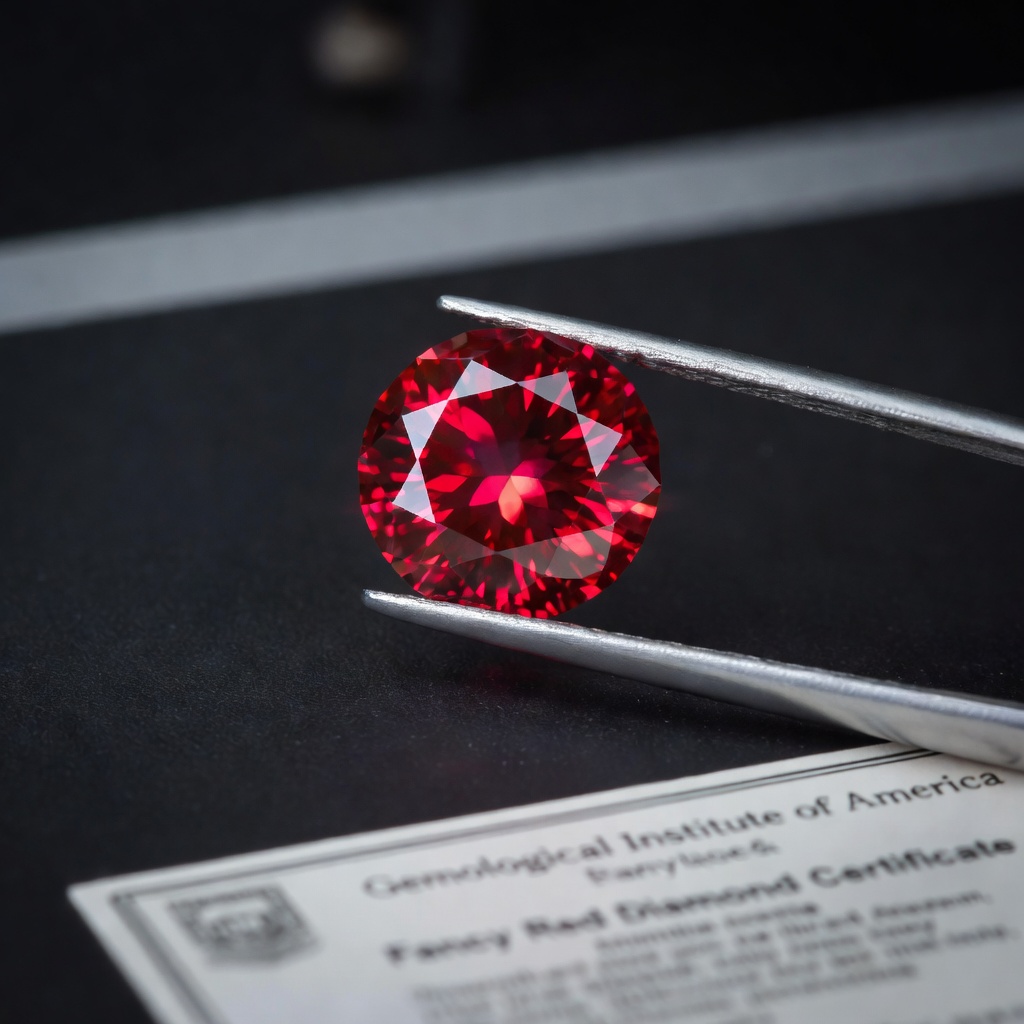
Red diamond certification represents the most critical due diligence step in acquiring these high-value assets, as the market contains numerous treated and synthetic stones that visually mimic natural reds at fraction of true Red Diamond Price Guide values. The Gemological Institute of America (GIA) provides the industry-standard Color Origin Report, which specifically distinguishes between Natural, Treated, and Laboratory-Grown designations through advanced spectroscopic analysis and photoluminescence testing. Common treatments include High Pressure High Temperature (HPHT) enhancement, which can modify brownish diamonds into red appearances, and irradiation processes that create artificial color concentrations. These treatments, while undetectable to the naked eye, reduce values by seventy to ninety percent and eliminate investment potential, making professional laboratory verification absolutely mandatory before any acquisition.
Red flags signaling potential fraud include prices significantly below market rates—specifically any red diamond offered below $200,000 per carat without exceptional clarity or color issues—and vague provenance documentation that avoids specific mine origins or discovery dates. Reputable laboratories beyond the GIA include the American Gemological Laboratories (AGL) and Gübelin Gem Lab, both of which provide detailed origin opinions and treatment detection for high-value colored diamonds. When examining certification, buyers should verify that the report includes a color origin opinion stating "Natural Color" explicitly, along with spectral analysis data confirming the plastic deformation patterns unique to natural formation. Purchasing uninsured stones or accepting "private lab" certificates from unknown entities constitutes unacceptable risk in a market where a single treated stone misrepresented as natural could result in million-dollar losses.
Smart Buying Strategies: Dealers, Auctions, and Private Sales
Acquiring red diamonds requires navigating a bifurcated marketplace consisting of established auction houses and specialized colored diamond dealers, each offering distinct advantages for different red diamond investment value strategies. Christie's, Sotheby's, and Bonhams provide the most transparent pricing data through public auction records, allowing buyers to benchmark natural red diamond cost against recent comparable sales while benefiting from pre-sale vetting processes that reject treated stones. However, auction environments often create competitive bidding scenarios that push prices fifteen to twenty percent above private market values, making specialized dealers preferable for disciplined investors seeking specific characteristics without auction premiums. Leading colored diamond specialists such as Leibish & Co., JF Diamonds, and rare stone boutiques in Geneva's Rue du Rhône maintain inventories of certified reds and offer expertise in recut potential—an important consideration since older cuts may benefit from modern recutting to maximize color intensity and value.
Due diligence for acquisitions exceeding one million dollars should include provenance research verifying the stone's chain of ownership, examination of recut potential to enhance value, and analysis of resale market liquidity for the specific color grade and carat weight. Negotiation tactics in private transactions often involve extended payment terms or trade considerations involving other colored diamonds, as sellers of ultra-rare reds frequently prefer asset exchanges over cash transactions for tax efficiency. Insurance requirements mandate specialized coverage through high-value jewelers block policies or fine art insurers such as Lloyd's of London, with storage typically requiring bank vault facilities or private safe deposit boxes equipped with climate control and 24/7 monitoring. Smart buyers also establish relationships with wealth management advisors who specialize in tangible assets, ensuring that red diamond acquisitions integrate appropriately with broader estate planning and wealth preservation strategies.
Future Market Outlook: Will Red Diamond Prices Keep Rising?
Supply-demand fundamentals strongly suggest continued appreciation in Fancy red diamond prices, as geological surveys conducted since the Argyle closure have identified no new deposits capable of producing significant quantities of red diamonds. The diamond mining industry has shifted focus to lower-cost, higher-volume operations in Canada and Russia, where geological formations lack the specific lamproite compositions necessary for red diamond formation. Meanwhile, demand acceleration from Asian collectors, particularly connoisseurs in Hong Kong, Singapore, and mainland China, has created bidding wars at recent auctions that suggest price plateaus remain distant. This confluence of fixed supply and expanding demand creates a textbook scarcity market where red diamond rarity ensures that existing stones become progressively more valuable as collector competition intensifies.
Economic recession resilience further strengthens the investment thesis for reds, with historical data showing these assets maintained value during the 2008 financial crisis and appreciated during the 2020 pandemic when traditional markets collapsed. The emerging synthetic red diamond market poses minimal threat to natural stone valuations, as laboratory-created reds, while chemically identical, lack the geological history and extreme rarity that constitute the primary value proposition for collectors. Industry analysts project annual price increases of eight to fifteen percent for investment-grade natural reds over the next decade, with Argyle-origin stones potentially outperforming these estimates due to their irreplaceable provenance. For investors seeking non-correlated assets with demonstrated century-long appreciation trajectories, natural red diamonds represent perhaps the ultimate store of concentrated value in the tangible asset universe.
Frequently Asked Questions About Red Diamond Valuation
How much does a 1 carat red diamond cost?
A 1-carat natural fancy red diamond typically costs between $200,000 and $1,000,000+, depending on color intensity, clarity, and origin. Argyle red diamonds command premiums at the higher end of this range, while stones with secondary purple or orange modifiers may cost less.
Why are red diamonds more expensive than pink or blue diamonds?
Red diamonds are significantly rarer than both pink and blue varieties. While hundreds of pinks and blues enter the market annually, fewer than 30 significant natural red diamonds are known to exist globally. This extreme scarcity, combined with high collector demand, creates prices 5-10 times higher per carat than other fancy colors.
Are red diamonds a good investment compared to gold or stocks?
Red diamonds have historically outperformed traditional investments, appreciating over 500% in the past 20 years. Unlike gold, they have zero correlation to stock markets, making them excellent portfolio diversifiers. However, they require 10+ year holding periods and specialized insurance, making them suitable only for high-net-worth investors with long-term horizons.
Can red diamonds be laboratory-created, and do they hold value?
Yes, laboratories can create synthetic red diamonds using HPHT methods, but these sell for 70-90% less than natural stones. Lab-created reds lack investment potential and rarity value. Always demand GIA certification specifying 'Natural' color origin before purchasing, as treated or synthetic stones are common in the market.
What is the most expensive red diamond ever sold?
The Moussaieff Red, a 5.11-carat fancy red diamond, holds the record for the highest per-carat price for a red diamond at auction, though exact figures remain private. Discovered in Brazil in the 1990s, it is currently valued at over $20 million and is considered one of the world's greatest gemstone treasures.
How do I verify that a red diamond is natural and not treated?
Always require a GIA (Gemological Institute of America) report specifically stating 'Natural Color' origin. The certificate should include a color origin opinion and spectroscopic analysis. Avoid stones with vague documentation or prices significantly below market rates ($200k+ per carat), as these often indicate HPHT treatment or synthetic origin.
Where is the best place to buy a red diamond?
Purchase only from established auction houses (Christie's, Sotheby's, Bonhams) or specialized colored diamond dealers with GIA-certified gemologists on staff. For stones over $1 million, consider private sales through wealth management advisors. Never purchase red diamonds from online marketplaces or uncertified dealers due to high fraud risks.
Will red diamond prices continue to rise after the Argyle mine closure?
Industry experts predict continued price appreciation due to supply constraints—no significant new red diamond deposits have been discovered since the Argyle mine closed in 2020. With growing Asian collector demand and fixed supply, prices are expected to increase 8-15% annually, though economic downturns may cause temporary plateau periods.