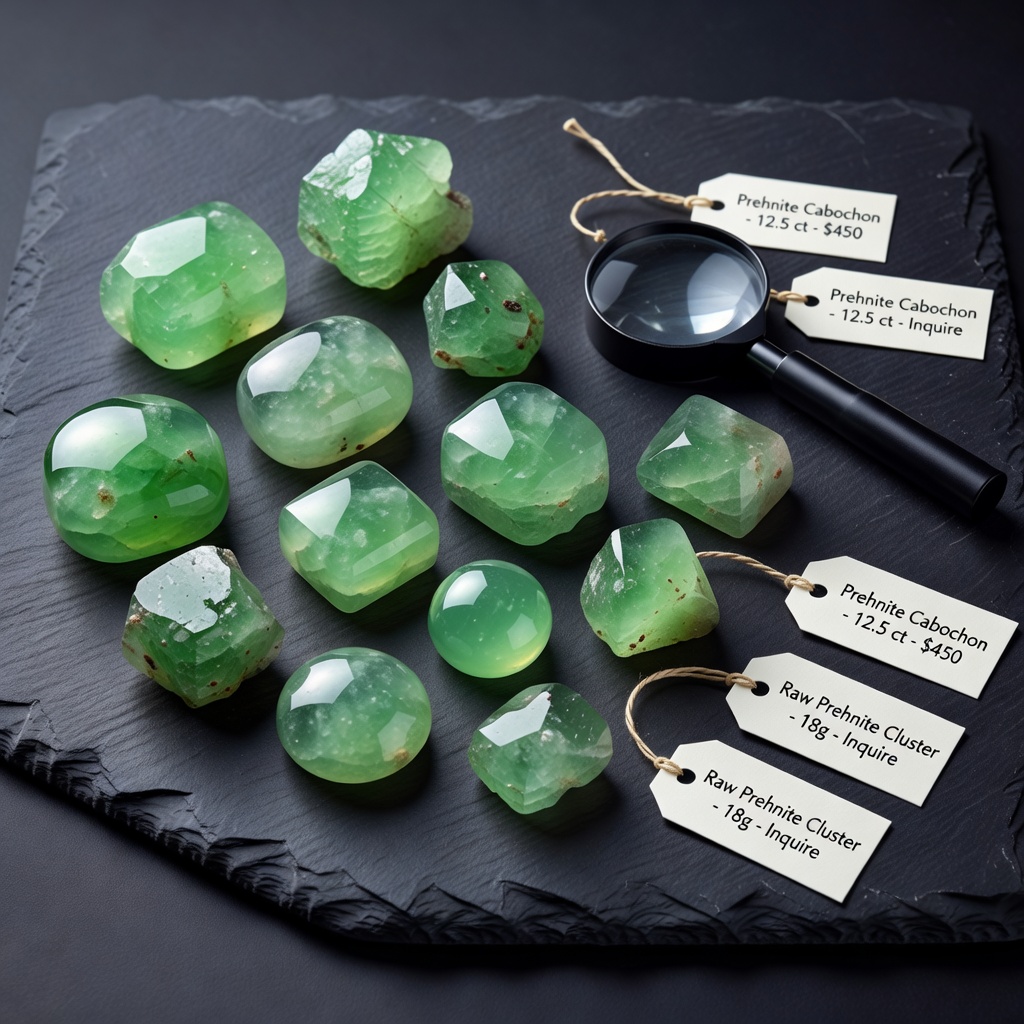
Prehnite Price Guide: Understanding Value in the Green Gemstone Market
Prehnite has emerged as a compelling choice for gemstone enthusiasts seeking the lush aesthetics of green stones without the prohibitive costs associated with emeralds or high-grade jade. This calcium aluminum silicate mineral, first discovered in South Africa by Colonel Hendrik von Prehn during the late 18th century, offers a unique combination of accessibility and beauty that has steadily grown its market presence. Unlike many precious gemstones that command luxury price points, prehnite occupies a distinctive niche where collectors and jewelry designers can acquire substantial, high-quality specimens without exceeding modest budgets. Understanding the comprehensive Prehnite Price Guide requires examining multiple quality factors, sourcing origins, and market dynamics that collectively determine whether a particular stone commands $5 per carat or exceeds $300 per carat in today's competitive gemstone marketplace.
What Is Prehnite? Understanding the Stone's Value
Prehnite represents a phyllosilicate mineral characterized by its distinctive pearlescent luster and typically translucent to transparent appearance, though gem-quality transparent material remains relatively scarce in larger sizes. The stone's chemical composition as a hydrated calcium aluminum silicate contributes to its moderate hardness of 6 to 6.5 on the Mohs scale, making it suitable for various jewelry applications while requiring protective settings for daily wear rings. When Colonel Hendrik von Prehn first identified the mineral in the Cape Province of South Africa during the 1780s, little did he realize that his namesake stone would eventually become one of the most affordable green gemstones available to modern consumers.
The relative abundance of prehnite deposits across multiple continents, including Australia, China, Mali, and the United States, creates a stable supply chain that keeps baseline pricing accessible compared to rarer green alternatives. While a fine Colombian emerald might command thousands of dollars per carat, comparable visual impact prehnite specimens often cost merely one to two percent of that investment. This affordability does not compromise aesthetic appeal; rather, it positions prehnite as an intelligent choice for statement jewelry pieces where large carat weights are desired without budgetary constraints. However, market availability varies significantly by quality tier, with museum-grade transparent faceting material commanding premium prices that reflect genuine scarcity rather than artificial market manipulation.
The 4 Cs of Prehnite Quality Assessment
Evaluating prehnite value requires systematic analysis of color, clarity, cut, and carat weight, though the importance of each factor differs somewhat from diamond grading standards or even other colored gemstone protocols. Color saturation represents the primary value determinant, with the spectrum ranging from undesirable pale yellow-green or milky white specimens to highly sought-after vivid apple green and rare deep bottle-green varieties. Clarity assessment distinguishes between the abundant translucent cabochon-grade material, which typically contains internal clouding or characteristic inclusions, and the scarce transparent faceting-grade crystals that command significant price premiums in the Prehnite gemstone pricing hierarchy.
Color Saturation and Clarity Standards
Premium prehnite exhibits intense green coloration without excessive yellow or gray undertones, though subtle variations can significantly impact market value between wholesale and retail transactions. Translucent cabochons, which represent the majority of commercially available material, should display even color distribution without prominent dark spots or zoning that detract from the stone's milky, glowing appearance. Transparent faceting-grade prehnite requires eye-clean clarity with minimal inclusions, as any internal features become immediately apparent when light passes through the table facet during brilliance assessment.
Cut Quality and Material Optimization
Skilled lapidaries must navigate prehnite's perfect cleavage and moderate hardness when fashioning gems, as poorly executed cuts can fracture valuable rough material or create windows that leak light rather than reflecting it back to the viewer. Cabochon cuts remain the most common and economically efficient choice, maximizing yield from translucent rough while showcasing the stone's characteristic waxy luster and potential cat's eye phenomena. Faceted prehnite requires superior rough material and specialized expertise, with step cuts and mixed cuts typically performing better than brilliant cuts due to the gem's relatively low refractive index and body color characteristics.
Prehnite Price Per Carat: From Commercial to Collector Grade
Understanding Prehnite price per carat requires segmenting the market into distinct quality tiers, each representing different aesthetic standards, rarity levels, and appropriate end uses within jewelry manufacturing and collector circles. Commercial grade material dominates the mass market through bead strands, cabochon parcels, and calibrated stones intended for silver jewelry production, offering accessibility for budget-conscious consumers and beginning lapidaries. Fine faceted specimens appeal to sophisticated collectors and high-end jewelry designers who recognize the rarity of transparent, inclusion-free prehnite suitable for precision cutting and setting in precious metals.
Commercial Grade Pricing Tiers
Standard cabochons and bead-quality prehnite typically retail between $5 and $30 per carat, depending on size consistency, color uniformity, and the presence of attractive epidote inclusions that may enhance rather than detract from value. These specimens usually display pale to medium green coloration with varying degrees of translucency and may contain minor surface-reaching inclusions or internal fractures that do not significantly impact durability when set in protective bezel or pendant mountings. Wholesale parcels purchased directly from cutting houses in Jaipur or Shenzhen often reduce these costs by 40-60%, making prehnite an economically viable option for jewelry designers creating accessible price-point collections.
Fine and Collector Grade Valuations
Exceptional faceted prehnite with high clarity and vivid coloration commands $50 to $200 per carat, with pricing escalating rapidly for stones exceeding five carats due to the exponential rarity of clean rough material in larger sizes. Museum-grade specimens featuring rare chatoyancy, exceptional transparency, or unique collector-worthy inclusions may exceed $300 per carat, particularly when accompanied by documentation certifying origin from depleted classic localities such as the original South African finds or specific Australian deposits. Investment-minded collectors should focus on untreated stones over ten carats with documented provenance, as these represent the category most likely to maintain or appreciate in value over extended holding periods.
How Color Affects Green Prehnite Value
Color evaluation represents the most critical factor in Green prehnite value determination, with subtle variations in hue, tone, and saturation creating dramatic price differentials between seemingly similar specimens. The ideal color resembles fresh apple green or young leaf green, displaying medium to medium-dark tone with moderately strong saturation that appears vivid rather than washed out or overly dark. Pale yellow-green specimens, while attractive in their own right, command significantly lower prices and typically fall into commercial grade classifications unless rescued by exceptional size or clarity characteristics.
The rarest and most valuable color variety exhibits a deep "wine bottle" green or forest green saturation found primarily in specific Australian and Malian deposits, where iron content and geological formation conditions create unusually intense coloration rarely seen in standard material. These deep green specimens can command double or triple the price of standard apple green prehnite, particularly when transparency allows for faceting rather than cabochon preparation. Color zoning represents a serious depreciation factor, with uneven distribution of green versus white or yellow areas reducing value by 30-50% compared to uniformly colored stones of otherwise equivalent quality.
Prehnite with Epidote: Understanding the Price Premium
One of the most distinctive varieties in the Prehnite Price Guide involves material containing epidote inclusions, where black needle-like crystals of calcium aluminum iron sorosilicate create dramatic contrast against the green prehnite matrix. When aesthetically arranged, these inclusions form landscape patterns, star bursts, or linear arrangements that transform ordinary prehnite into collector specimens commanding significant premiums over inclusion-free material. The visual appeal factor depends entirely on inclusion pattern quality; scattered, messy epidote needles without compositional harmony may actually reduce value, while artistic arrangements can increase prices by 30-50%.
Chatoyant and Phenomenal Varieties
Certain prehnite with epidote inclusions displays chatoyancy, or the cat's eye effect, created when parallel-aligned needle inclusions reflect light in a sharp, mobile line across the cabochon surface. These chatoyant specimens occupy a specialized collector market where prices range from $75 to $300 per carat depending on line sharpness, body color intensity, and overall translucency. The finest cat's eye prehnite combines a bright, silvery eye line with vivid green body color and minimal distracting inclusions outside the parallel needle structure, creating a gemstone that rivals more expensive chrysoberyl cat's eye at a fraction of the investment.
2024 Prehnite Market Trends and Sourcing Regions
Current Prehnite gemstone pricing reflects significant quality differentials between major producing regions, with South African material historically setting the standard for fine color, while Australian deposits yield exceptional clarity grades and Chinese production dominates the commercial cabochon market. South African prehnite from the Northern Cape Province typically exhibits the classic apple green color that defines the species, though production volumes have decreased compared to historical peaks, creating scarcity premiums for documented material from classic localities. Australian deposits, particularly those in the Northern Territory and Western Australia, increasingly supply the fine faceting market with cleaner rough that cuts brighter, more transparent gems suitable for high-end jewelry applications.
Ethical mining certifications have begun impacting wholesale pricing structures, with responsibly sourced prehnite commanding 15-25% premiums over material from undocumented supply chains, particularly in European and North American markets where consumer awareness of provenance issues continues growing. Supply chain fluctuations related to shipping costs and import regulations have marginally affected retail accessibility, though prehnite remains insulated from the extreme volatility seen in rarer gemstones due to distributed global production and substantial existing inventories. The rise of direct-to-consumer online sales has compressed traditional retail markups, allowing consumers to access fine material at prices previously available only to industry insiders.
Where to Buy Prehnite: Price Comparison Strategies
Strategic purchasing decisions significantly impact the final cost when acquiring prehnite, with price variations of 200-300% common between different retail channels for equivalent quality material. Online gemstone retailers specializing in loose stones typically offer the most competitive pricing, operating with lower overhead than brick-and-mortar jewelry stores while providing detailed photographs, videos, and certification options that mitigate the risks of remote purchasing. Established platforms like GemSelect, Minerals.net, and direct importer websites often sell commercial grade prehnite at $8-15 per carat, while comparable stones in physical jewelry stores may carry tags of $40-60 per carat due to markup chains involving multiple intermediaries.
Gem Show Advantages and Risk Mitigation
Serious buyers and jewelry professionals should consider attending major gem shows such as the Tucson Gem and Mineral Show or the Hong Kong Jewellery & Gem Fair, where direct access to cutters and miners eliminates retail markups and allows for physical examination of material before purchase. These venues offer opportunities to acquire fine faceted prehnite at wholesale prices ranging from $30-80 per carat rather than the $100-250 retail equivalents, though buyers must possess sufficient gemological knowledge to evaluate quality independently. Red flags indicating inflated prices or misrepresented treatments include vague locality descriptions, refusal to provide laboratory certification for expensive specimens, and prices significantly below market norms that suggest synthetic or imitation material masquerading as natural prehnite.
Prehnite Jewelry Cost: Settings and Design Considerations
When evaluating Prehnite jewelry cost, consumers must consider the substantial price differentials between purchasing loose stones and acquiring finished pieces, with setting work, metal choices, and designer premiums significantly impacting final investment requirements. Simple sterling silver settings with commercial grade cabochons might retail for $75-150 total, while equivalent designs in 14k yellow or white gold elevate costs to $300-600 due to precious metal content and specialized jewelry manufacturing processes. Designer brand markups can increase these figures by 300-500%, particularly when prehnite appears in collections by luxury houses that emphasize gemstone narrative and artisan craftsmanship over material value alone.
Metal Selection and Design Complexity
Sterling silver remains the most popular and affordable metal choice for prehnite jewelry, complementing the stone's cool green tones while keeping pieces accessible to broad consumer markets, though silver requires more frequent maintenance to prevent tarnishing. Fourteen karat gold settings, whether yellow, white, or rose, provide superior durability and prestige, with the warm tones of yellow gold particularly enhancing the apple green coloration of fine prehnite specimens. Custom jewelry fabrication costs typically range from $200-800 depending on design complexity, representing a cost-effective alternative to branded luxury pieces while allowing for personalized settings that maximize individual stone characteristics.
Frequently Asked Questions About Prehnite Pricing
How much does prehnite cost per carat on average?
Commercial grade prehnite typically ranges from $5 to $30 per carat, while high-quality faceted specimens can command $50 to $200 per carat. Rare collector pieces with exceptional clarity, large size, or unique inclusions like epidote may exceed $300 per carat.
Is prehnite expensive compared to emeralds or peridot?
Prehnite remains significantly more affordable than fine emeralds, often costing 90% less than high-grade Colombian emeralds. While slightly more expensive than common peridot, prehnite offers better availability in larger carat sizes without exponential price jumps, making it ideal for statement jewelry.
What color of prehnite is most valuable?
Vivid apple green and rare deep 'wine bottle' green command the highest prices, particularly in transparent to translucent clarity grades. Pale yellow-green or cloudy white specimens are considerably less valuable and fall into commercial pricing tiers suitable for beaded jewelry.
Does prehnite with epidote inclusions cost more than clean material?
Yes, aesthetic prehnite with distinctive black epidote needle inclusions often sells for 30-50% premiums over inclusion-free material, provided the inclusions create attractive landscape patterns. However, scattered, messy inclusions without visual appeal may actually reduce the stone's value.
How can I tell if prehnite is real before buying?
Genuine prehnite typically shows a distinctive milky translucency, vitreous to waxy luster, and may contain characteristic 'fingerprints' or epidote inclusions. It has a hardness of 6-6.5 on the Mohs scale. Request certification from GIA or similar labs for expensive specimens, and beware of glass imitations that lack natural inclusions.
Is prehnite a good investment gemstone?
While prehnite offers beauty and accessibility, it is not considered a strong investment stone due to relatively abundant supply. However, rare chatoyant specimens, large flawless pieces over 10 carats, or material from depleted specific localities may retain or appreciate modestly in value over decades.
Where is the best place to buy affordable prehnite?
Direct importers and specialized online gemstone retailers like GemSelect or Minerals.net typically offer the best prices, often 40-60% below jewelry store markups. Avoid airport gift shops and tourist district jewelers where prices are inflated for impulse buyers unfamiliar with gemstone values.
Do treatment processes affect prehnite pricing significantly?
Most prehnite on the market is completely untreated, which maintains standard pricing. Heat-treated or dyed specimens should cost 50-70% less and must be disclosed by reputable sellers. Always request a lab report confirming natural, untreated status before purchasing high-end prehnite over $500.