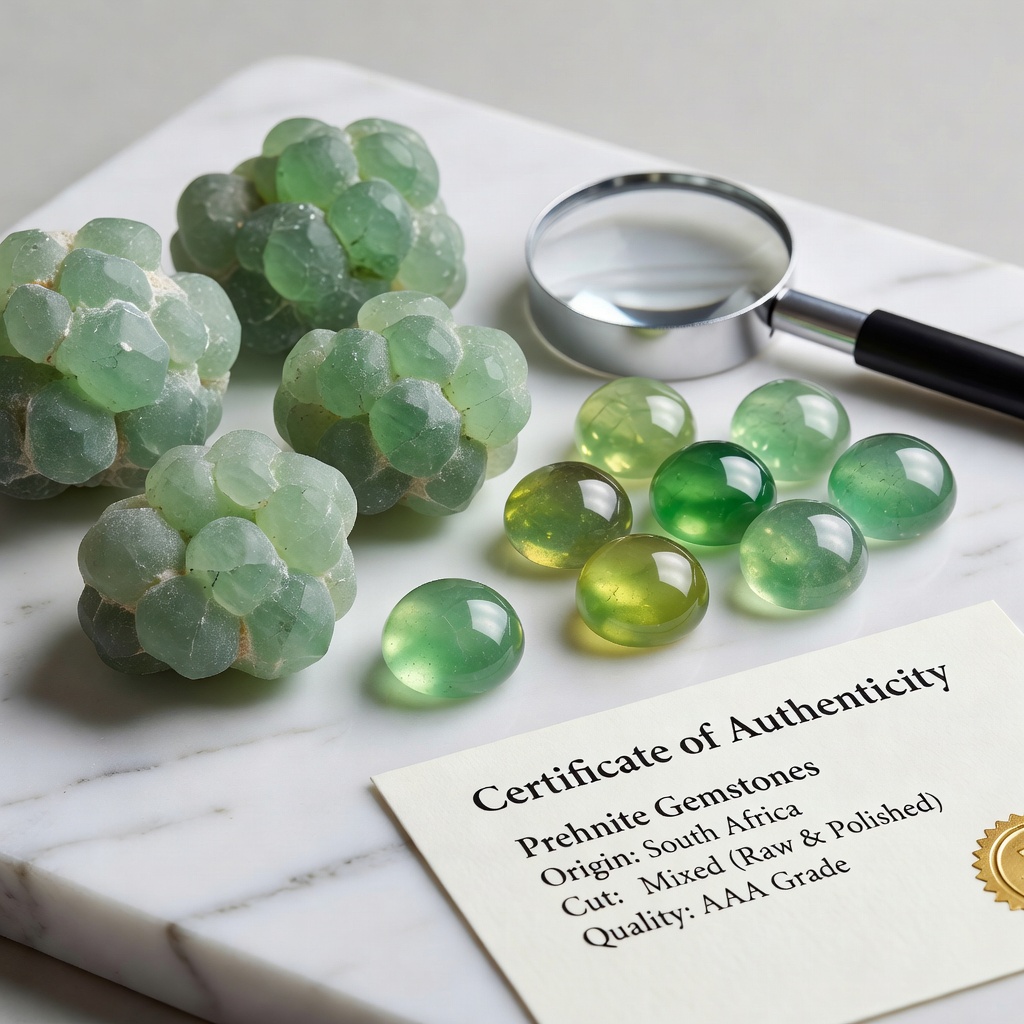
Introduction to Prehnite: The Stone of Prophecy
Prehnite, a calcium aluminum silicate mineral, forms in the hydrothermal vents of igneous rocks where hot, mineral-rich fluids deposit crystalline structures within cavities and fractures. This fascinating gemstone was first discovered in South Africa's Karoo region during the late 18th century and was subsequently named after Colonel Hendrik von Prehn, who brought specimens back to Europe. Unlike many gemstones that require extreme pressure to form, prehnite develops in relatively low-temperature environments, often creating botryoidal formations that resemble clusters of green grapes. This unique geological origin contributes to the stone's distinctive waxy luster and soft, glowing appearance that distinguishes it from harder, more brilliant gems.
Historically, prehnite earned the moniker "Stone of Prophecy" due to ancient beliefs that it enhanced precognition and strengthened memory recall during meditation practices. South African indigenous healers traditionally used the stone to facilitate connection with ancestral wisdom, while medieval European lapidaries associated it with divine foresight and dream interpretation. These metaphysical associations continue to drive collector interest today, particularly among enthusiasts seeking stones with documented historical significance beyond mere aesthetic appeal.
The contemporary jewelry market has witnessed a significant resurgence in prehnite demand over the past decade, driven by growing consumer preference for unique, untreated gemstones with distinctive character. Jewelry designers increasingly feature prehnite in artisan collections, capitalizing on its jade-like appearance at a fraction of the cost while offering collectors access to rare epidote-included specimens. Whether you are a first-time buyer seeking an affordable green gemstone or a seasoned collector hunting for museum-quality botryoidal formations, this Prehnite Buying Guide will provide the essential knowledge needed to make informed purchasing decisions.
Evaluating Prehnite Gemstone Quality: The Essential Criteria
When assessing prehnite gemstone quality, color serves as the primary value determinant, with premium specimens displaying a vivid apple-green hue that rivals fine jade. Commercial-grade material often presents yellowish-green or grayish tones that diminish market value, though these variations may appeal to buyers seeking specific aesthetic effects. When examining color distribution, inspect the stone under natural daylight and incandescent lighting to detect any zoning or uneven saturation that might indicate lower quality. Top-tier prehnite should exhibit consistent coloration across the entire table surface without brownish undertones that suggest iron contamination or environmental damage during formation.
Clarity standards for prehnite differ significantly from those applied to diamonds or sapphires, as the stone naturally occurs in translucent to semi-transparent forms that showcase its characteristic milky glow. Cabochon-cut prehnites, which feature smooth, domed surfaces without facets, typically contain silk-like inclusions that create a soft, billowy appearance prized by collectors. However, rare transparent specimens suitable for faceting command substantial premiums due to their scarcity, requiring eye-clean clarity without visible fractures or clouding that would interfere with light performance. When evaluating cabochons specifically, look for stones that display a centered "eye" or cat's eye effect caused by parallel fibrous inclusions, as these chatoyant specimens represent some of the most desirable prehnite varieties available.
Cut quality significantly impacts prehnite's visual performance, requiring skilled lapidaries who understand how to maximize the material's soft glow rather than attempting to create brilliant sparkles typical of harder gems. Cabochons should feature symmetrical domes with smooth, polished surfaces free from scratches or polishing lines that indicate hasty manufacturing. For the rare faceted prehnites, cutters typically employ step cuts or mixed cuts that emphasize color while minimizing windowing, where light passes directly through the stone without reflection. When examining any cut prehnite, verify that the girdle edges remain thick enough to prevent chipping during setting, particularly important given the stone's moderate hardness.
Understanding Color Variations and Market Value
The green prehnite value hierarchy begins with vivid apple-green specimens that display saturated color without secondary yellow or brown undertones, commanding prices significantly higher than paler varieties. While deep green prehnite from South Africa's Karoo region traditionally sets the standard for premium material, recent discoveries in Australia and China have introduced slightly different color variations ranging from mint green to olive tones. When evaluating color intensity, hold the stone against a white background under diffused natural light, as artificial lighting can mask subtle yellow components that reduce value. Collectors should note that prehnite color often appears more intense in larger specimens, making size and color quality interdependent factors in valuation.
Rutilated prehnite containing epidote inclusions represents a specialized niche within the market, where black or dark green needle-like crystals create striking contrast patterns against the pale green host material. These included specimens, particularly those displaying geometric arrangements or star-like formations, frequently exceed the value of cleaner material due to their unique aesthetic appeal and rarity. When assessing rutilated pieces, examine the durability of the epidote needles, as loose or surface-reaching inclusions may compromise the stone's structural integrity during jewelry setting. Premium rutilated prehnite should display sharp, well-defined needles distributed evenly throughout the stone rather than clustered in one area, creating a balanced visual composition.
Color consistency across the entire stone surface separates fine specimens from commercial material, with the best prehnite showing uniform saturation from crown to pavilion. Some lower-quality stones exhibit "color pooling" where deeper green concentrates in specific areas while the remainder appears nearly white or yellow, significantly reducing market value. For cabochon purchases specifically, rotate the stone under light to detect any "dead" spots where light transmission decreases due to internal clouding or inclusion clusters. Remember that prehnite's color can shift slightly depending on lighting conditions, with the most valuable stones maintaining their green character under both incandescent and fluorescent illumination without turning overly yellow or gray.
Natural vs. Treated Prehnite: Identification Methods
Natural prehnite identification requires careful examination of surface characteristics and internal features that distinguish genuine material from treated or imitation stones. Common prehnite treatments include dye enhancement, where paler yellow or white prehnite is soaked in green coloring agents to simulate premium apple-green material. Under 10x magnification, dyed stones often reveal color concentrations within surface-reaching fractures and along grain boundaries, whereas natural coloration distributes evenly throughout the crystal structure. When examining suspect stones, look for a phenomenon called "bleeding" where dye transfers to a white cloth slightly dampened with acetone, though this test should only be performed by professionals to avoid damaging the stone.
Heat treatment represents another modification method used to improve prehnite color by reducing yellow components and enhancing green saturation, though this process can potentially compromise the stone's durability. Heat-treated prehnite may display altered luster, shifting from the characteristic waxy appearance to a more glassy finish, while internal stress fractures sometimes develop during the heating process. Professional gemologists utilize spectroscopic analysis to detect heat treatment, as the process changes the absorption spectrum in ways visible through specialized equipment. For high-value purchases exceeding several hundred dollars, always request documentation from reputable laboratories such as GIA (Gemological Institute of America) or AGL (American Gemological Laboratories) that specifically address treatment status.
The market also contains misrepresented materials, including serpentine and dyed quartz sold fraudulently as prehnite, requiring buyers to verify specific gravity and refractive index when authenticity concerns arise. Natural prehnite typically exhibits a refractive index between 1.61 and 1.64, along with a specific gravity of 2.8-2.95, measurements that distinguish it from look-alike materials. When purchasing from dealers, specifically ask about treatment disclosure policies and request written guarantees regarding natural origin, as ethical sellers readily provide this documentation. Building relationships with vendors who specialize in prehnite rather than general gemstone dealers increases the likelihood of obtaining accurately represented, untreated material.
Prehnite Price Guide: Budget Planning for Every Tier
This comprehensive prehnite price guide outlines realistic expectations for various quality levels, helping collectors allocate appropriate budgets for their specific goals. Commercial-grade prehnite suitable for casual jewelry or beginner collections typically ranges from $10 to $50 per carat, featuring light yellow-green colors, moderate inclusions, and standard cabochon cuts. Mid-tier specimens displaying better color saturation and clarity command $50 to $150 per carat, representing the sweet spot for most jewelry applications where appearance matters but investment-grade perfection isn't required. Fine specimens with vivid apple-green color, exceptional clarity, and custom cutting can exceed $200 per carat, while rare transparent faceted stones or exceptional rutilated examples may reach $500 per carat in today's market.
Several factors create premium pricing beyond basic color and clarity, including size rarity, as prehnite crystals rarely yield clean material over 20 carats. Specimens containing aesthetic epidote inclusions that form geometric patterns or cat's eye effects command 30-50% premiums over clean material due to collector demand for unique display pieces. Origin also influences value, with documented South African material from historic mines fetching higher prices than newer Chinese or Australian sources, particularly among serious collectors building geographically diverse collections. When budgeting, remember that cabochons generally cost less than faceted stones of equivalent quality due to material loss during faceting and the rarity of clean rough suitable for cutting with flat facets.
Comparative shopping requires understanding prehnite's position relative to similar green gemstones like jade, chrysoprase, and peridot. While high-quality jadeite can command thousands per carat, prehnite offers comparable visual impact at significantly lower price points, making it attractive for large statement pieces. Chrysoprase typically costs 20-30% more than equivalent prehnite due to its superior hardness and rarity, while peridot, though harder, lacks prehnite's distinctive milky translucency and generally costs less for commercial grades. When evaluating price quotes, ensure dealers specify whether pricing refers to single stones or matched pairs, as creating symmetrical sets for earrings often increases per-carat costs by 15-25% due to the difficulty of finding matching material.
Choosing the Right Jewelry Settings and Styles
When selecting prehnite jewelry settings, protective design elements become crucial given prehnite's Mohs hardness of 6-6.5, which makes it susceptible to scratching and impact damage. Bezel settings, where metal completely surrounds the stone's perimeter, offer superior protection compared to prong settings, particularly for rings that encounter daily wear. For pendants and earrings where impact risk decreases, partial bezel or heavy prong settings provide adequate security while maximizing light exposure to the stone's translucent body. Avoid settings with sharp edges or points that concentrate stress on specific areas of the stone, opting instead for designs that distribute pressure evenly across the girdle.
Metal selection significantly impacts prehnite's visual presentation, with yellow gold enhancing the stone's warm green tones while sterling silver provides cool contrast that emphasizes clarity. Rose gold has emerged as a popular contemporary choice, complementing prehnite's soft glow while appealing to modern aesthetic preferences. When working with custom jewelers, specify that prehnite requires setting techniques different from harder gems, including the use of padded tools and avoidance of ultrasonic cleaning during the setting process. For pieces intended as heirloom investments, consider platinum settings that provide superior durability despite higher initial costs, ensuring the metal protects the stone through generations of wear.
Jewelry application recommendations prioritize low-impact placements over high-wear positions due to prehnite's moderate durability. Pendants and earrings represent ideal applications, allowing the stone's glow to catch light while minimizing exposure to hard surfaces or impact. Brooches and cocktail rings designed for occasional wear work well for fine specimens, while daily-wear rings require protective designs with recessed stones or surrounding halo guards. When commissioning custom pieces, request that designers incorporate bumper rails or raised metal edges that extend slightly above the stone's surface, providing first-contact protection against horizontal impacts. For collectors seeking maximum versatility, consider convertible settings that allow pendants to become brooches, maximizing display options while minimizing wear frequency.
Where to Buy Prehnite: Trusted Sources and Red Flags
Finding reputable sources for where to buy prehnite requires distinguishing between specialized gemstone dealers, general jewelry retailers, and online marketplaces with varying levels of expertise. Established online dealers specializing in cabochons and rare mineral specimens, such as those operating through GemSelect or specialized auction houses like Heritage Auctions, typically provide detailed origin information and treatment disclosures. These specialized vendors often maintain direct relationships with miners in South Africa and Australia, allowing them to offer first-selection material before it reaches broader markets. When evaluating online sellers, verify their return policies specifically regarding color accuracy, as prehnite's appearance varies significantly between photography and in-hand viewing due to its translucent nature.
When shopping through local jewelers, prepare specific questions regarding the stone's origin, treatment history, and whether the seller provides independent laboratory certification for pieces over $500. Reputable local dealers should readily disclose whether stones have been dyed or heated, and they should possess basic gemological equipment such as refractometers to verify material authenticity. Request to examine prehnite under magnification using the jeweler's loupe, looking for natural inclusions that confirm genuine origin rather than molded glass or plastic imitations. Establish whether the dealer offers lifetime maintenance services, including professional cleaning and prong tightening, essential for maintaining prehnite jewelry given the stone's care requirements.
Red flags indicating potential misrepresentation include prices significantly below market rates for premium green material, vague descriptions such as "African green stone" rather than specific prehnite terminology, and sellers who resist providing magnification for inspection. Be particularly wary of material labeled as "new jade" or "grape stone," terms sometimes used to market serpentine or dyed quartz as prehnite. Authentic prehnite feels noticeably cool to the touch and exhibits specific gravity heavier than plastic or resin imitations, simple tests you can perform when examining loose stones. Avoid purchasing from vendors who claim that vivid green prehnite "never needs treatment," as this indicates either dishonesty or ignorance regarding the prevalence of dye treatments in the market.
Caring for Your Prehnite Purchase: Maintenance Essentials
Proper maintenance ensures your prehnite jewelry maintains its distinctive glow and structural integrity for decades, requiring specific care protocols that differ from harder gemstones like diamonds or sapphires. Clean prehnite using only lukewarm water with mild dish soap and a soft natural-bristle brush, gently removing accumulated oils and debris without applying excessive pressure that could scratch the surface. Never use ultrasonic cleaners, steam cleaners, or harsh chemical solutions including ammonia, bleach, or alcohol, as these can damage the stone's surface luster and potentially affect any treatments the stone may have received. After cleaning, pat the stone dry with a lint-free microfiber cloth rather than rubbing, which could cause micro-scratches over time.
Storage requirements for prehnite emphasize isolation from harder gemstones to prevent surface scratching, as materials like quartz, topaz, and corundum can easily mar prehnite's relatively soft surface. Store prehnite pieces in individual soft cloth pouches or lined jewelry boxes with separate compartments, ensuring that pendants don't contact rings or bracelets during storage. When traveling, wrap prehnite jewelry in acid-free tissue paper before placing in hard cases, providing cushioning against temperature fluctuations that could stress internal fractures. Keep prehnite away from direct sunlight for extended periods, as prolonged UV exposure can potentially fade natural coloration in some specimens, particularly those from specific localities known for light sensitivity.
Daily wear precautions include removing prehnite jewelry before engaging in activities involving temperature extremes, physical impact, or chemical exposure. Gardening, sports, house cleaning, and cooking present particular risks, as sudden temperature changes from hot water or ovens can cause thermal shock, while physical impacts against hard surfaces may chip or fracture the stone. Apply cosmetics, hairsprays, and perfumes before putting on prehnite jewelry, as these products can create a dull film on the stone's surface that requires professional cleaning to remove completely. For heirloom pieces or significant investments, schedule annual inspections with a jeweler familiar with prehnite to check setting security and surface condition, catching potential issues before they require expensive repairs.
Investment Potential and Collectibility Factors
The prehnite investment value proposition centers on rarity factors including exceptional botryoidal formations, untreated vivid green coloration, and documented provenance from depleted historic mines. Museum-quality specimens displaying the characteristic "grape cluster" formations with intense green color and minimal matrix attachment have appreciated steadily over the past two decades, particularly pieces exceeding 50 carats with intact crystalline structure. Collectors focusing on investment-grade material should prioritize specimens with complete transparency regarding mining locality and extraction dates, as documentation significantly impacts resale value among serious mineral collectors. Unlike diamond investments that rely on standardized grading, prehnite valuation depends heavily on aesthetic appeal and uniqueness, requiring collectors to develop sophisticated eyes for quality.
Market trends indicate increasing demand for untreated natural prehnite as consumers shift away from heavily treated gemstones toward materials prized for their natural beauty. This preference particularly benefits collectors who acquired fine, untreated material before current scarcity drove prices upward, with top-tier South African specimens from the 1980s and 1990s commanding multiples of their original purchase prices. The growing metaphysical jewelry market also drives demand for prehnite specifically marketed as "prophecy stones," creating premium niches for material with documented historical significance or unusual formation characteristics. When building collections for investment purposes, focus on acquiring diverse material including both gem-grade cutting rough and display specimens, as mineral collectors and jewelry designers represent different market segments with varying demand cycles.
Geographic specialization offers another investment strategy, with specific localities like South Africa's Karoo region, Australia's New South Wales deposits, and Scotland's old lead mines each producing distinctive material that appreciates based on locality scarcity. South African prehnite remains the benchmark for quality, but Australian material displaying unique yellow-green tones has gained collector attention as those mines reach depletion. When curating location-specific collections, prioritize specimens with associated matrix material that clearly indicates origin, as loose cut stones without provenance documentation sell at significant discounts compared to pieces with traceable locality information. Consider joining mineralogical societies and attending specialty shows like the Tucson Gem and Mineral Show to network with serious collectors and dealers who can provide access to material before it reaches general retail markets.
Frequently Asked Questions About Prehnite
How much should I expect to pay for quality prehnite?
Commercial-grade prehnite typically costs $10-30 per carat, while fine apple-green specimens with good clarity range from $50-150 per carat. Rare transparent faceted stones or rutilated specimens with epidote can exceed $200 per carat.
Is prehnite durable enough for everyday rings?
With a Mohs hardness of 6-6.5, prehnite is moderately durable but requires protective settings for rings. It's better suited for pendants, earrings, or occasional wear rings rather than daily-wear engagement rings.
How can I tell if prehnite is natural or treated?
Natural prehnite shows typical inclusions and a soft, waxy luster. Dyed stones often have color concentrations in fractures visible under magnification. Always request a lab certificate for expensive pieces and buy from reputable dealers who disclose treatments.
What is the best color of prehnite to buy?
The most valuable prehnite displays a vivid apple-green to jade-green color without brown or yellow undertones. However, personal preference matters—some collectors specifically seek yellow-green specimens or rare white prehnite.
Where does the best prehnite come from?
South Africa produces the finest gem-quality prehnite, particularly from the Karoo region. Other notable sources include Australia (New South Wales), China, and Scotland, each producing slightly different color variations.
What is rutilated prehnite and is it more valuable?
Rutilated prehnite contains black or dark green epidote needle inclusions that create striking patterns. These specimens often command premium prices due to their unique appearance and rarity, especially when the inclusions form geometric patterns.
Can prehnite be worn while swimming or showering?
No, avoid wearing prehnite in water. Chlorine, saltwater, and soaps can damage the stone's surface and potentially affect any treatments. Always remove prehnite jewelry before swimming, showering, or cleaning.
Should I buy prehnite online or in person?
Both options work if you choose reputable sellers. Online stores often offer better selection and pricing, but ensure they provide detailed photos, return policies, and certification. In-person buying allows you to assess color and clarity directly but may have limited inventory.