Understanding Prasiolite Market Position
Prasiolite, frequently marketed in retail environments as "green amethyst," represents a heat-treated variety of quartz that has carved out a significant niche in the affordable fine jewelry sector. Unlike naturally occurring green gemstones that command premium prices due to geological rarity, prasiolite begins its journey as purple amethyst before undergoing controlled thermal treatment to achieve its distinctive mint-green to yellowish-green hue. This manufacturing process allows jewelers to offer substantial, eye-catching green stones at price points accessible to entry-level collectors and fashion-conscious consumers alike. The gemstone's market position benefits from the widespread availability of amethyst rough material, ensuring consistent supply chains that keep prices stable and predictable compared to volatile rare gem markets.
The popularity of prasiolite in contemporary jewelry design stems from its remarkable versatility and the growing consumer preference for large statement pieces without prohibitive costs. Jewelry designers frequently select prasiolite for cocktail rings, pendant necklaces, and earrings where the stone's light, refreshing color complements both white metals and yellow gold settings. Market analysis shows that consumers appreciate prasiolite's ability to provide the aesthetic impact of precious green gems like emerald at roughly five to ten percent of the cost. This value proposition has secured prasiolite's place in bridal jewelry alternatives, anniversary collections, and everyday luxury segments where buyers prioritize visual presence and wearability over investment-grade rarity.
Current Prasiolite Price Per Carat (2024 Market Rates)
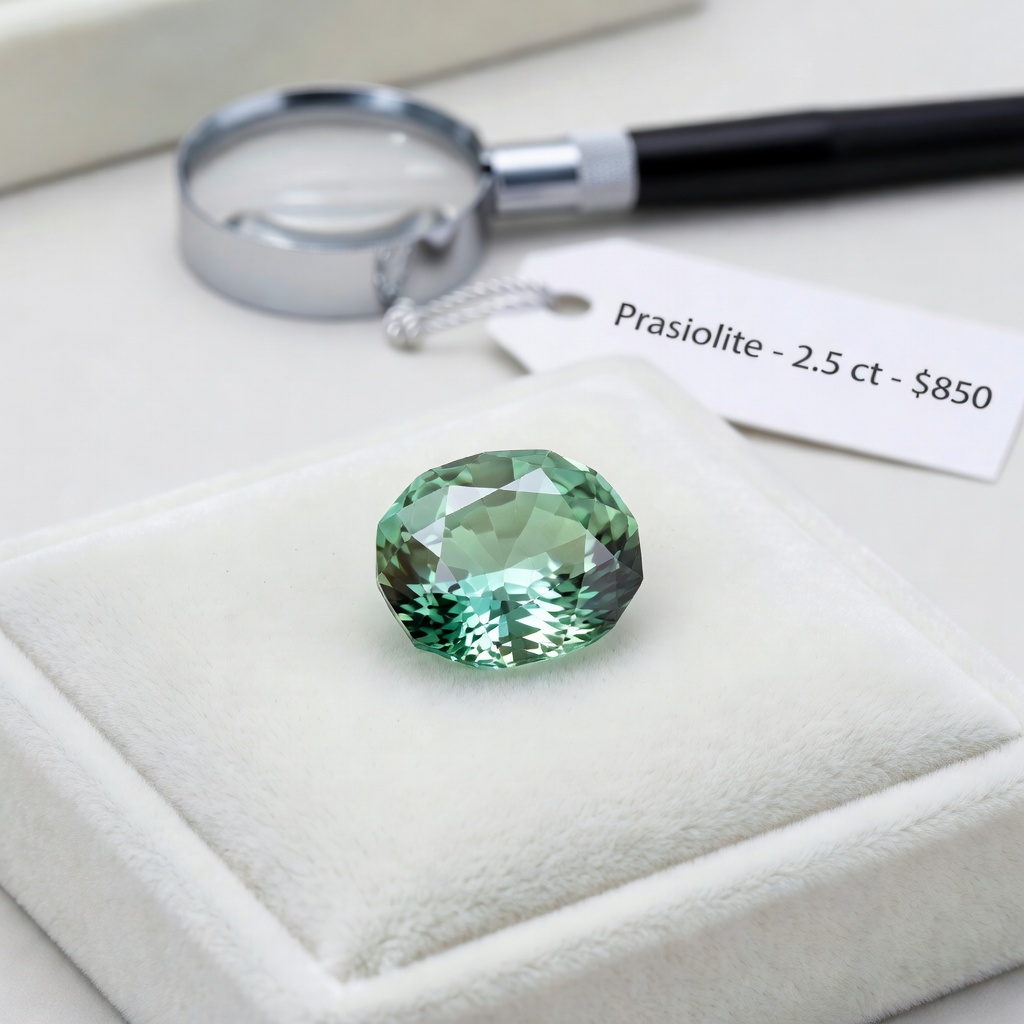
The prasiolite value per carat remains remarkably stable in 2024, with commercial grade material typically trading between five and fifteen dollars per carat for standard calibrated cuts. These entry-level stones usually display lighter mint-green tones with occasional yellowish secondary hues, often cut in commercial factories overseas using automated machinery to maximize yield over optical performance. Retail consumers can expect to find these specimens predominately in sterling silver jewelry or mass-produced fashion pieces where the gemstone cost represents a minor fraction of the final retail price. When purchasing loose stones at this price tier, buyers should anticipate seeing slight windowing or extinction in the center of the stone due to suboptimal cutting angles designed to preserve carat weight.
Fine quality prasiolite commanding twenty to fifty dollars per carat exhibits deeper, more saturated green coloration approaching seafoam or sage tones with superior clarity characteristics. These premium stones appear eye-clean to the unaided observer, meaning no inclusions are visible without magnification, and display excellent brilliance when properly cut with precise facet alignment. Large statement pieces exceeding ten carats carry additional premiums in the prasiolite price guide, particularly when featuring custom cuts such as fantasy shapes, Portuguese cuts, or precision-cut rounds optimized for light return. The pricing curve for prasiolite differs from diamonds in that stones between fifteen and fifty carats may only cost twenty to thirty percent more per carat than five-carat specimens, making dramatic cocktail rings surprisingly affordable.
When comparing loose stone prices versus completed jewelry, consumers encounter significant markups that reflect manufacturing labor, metal costs, and retail margins. A loose five-carat fine quality prasiolite might cost a jeweler seventy-five dollars wholesale, yet appear in a fourteen-karat gold ring retailing for six hundred to eight hundred dollars. Understanding this disparity helps buyers make informed decisions about purchasing loose stones for custom mounting versus buying finished pieces. Estate jewelry markets occasionally offer vintage prasiolite pieces from the 1980s and 1990s at attractive prices, though buyers should verify that stones are not scratched or abraded from previous wear.
Key Factors That Determine Prasiolite Value
Color grading significantly impacts green amethyst price differentials, with the most desirable specimens displaying a pure mint green or seafoam color without yellowish, brownish, or grayish secondary tones. Stones exhibiting pure green with high saturation command the highest prices in the prasiolite gemstone pricing structure, while those showing yellowish-green or olive tints typically sell at twenty to thirty percent discounts. The most valuable color range resembles the fresh green of new spring leaves or the shallow Caribbean waters, avoiding the deeper forest greens associated with chrome diopside or the yellowish tones of peridot. When evaluating color, examine the stone under various lighting conditions, as some lower-quality prasiolite may appear grayish or lifeless under incandescent lighting despite looking acceptable in daylight.
Clarity standards for prasiolite follow quartz family expectations, with eye-clean specimens commanding substantial premiums over included stones that show visible needles, clouds, or color zoning. Unlike emerald, which tolerates inclusions as "jardin," prasiolite buyers expect water-clear transparency that allows maximum light transmission through the stone. Inclusions in prasiolite not only detract from beauty but may indicate instability in the heat treatment process, potentially leading to color fading over time. When examining prasiolite for purchase, tilt the stone under a light source to check for silk, feathers, or twinning planes that might affect durability or visual appeal.
Cut quality represents one of the most significant differentiators in prasiolite gemstone pricing, separating commercial machine-cut stones from precision-cut specimens crafted by artisan lapidaries. Commercial cutting optimized for weight retention often results in shallow pavilion angles that create "fish-eye" effects or windowing where you can see through the stone rather than seeing reflected light. Precision-cut prasiolite, particularly from renowned cutting centers like Idar-Oberstein or custom American lapidaries, commands fifty to one hundred percent premiums due to superior optical performance and unique facet patterns. Carat weight pricing curves favor larger stones in prasiolite, with exponential price increases for specimens over twenty carats that remain eye-clean, as finding large pieces of suitable amethyst rough for heat treatment becomes increasingly difficult.
Natural vs. Heat-Treated Prasiolite: Price Reality
The distinction between natural and heat-treated prasiolite creates the most dramatic price differentials in this gemstone category, with truly natural specimens commanding ten to fifty times the prices of their treated counterparts. Genuine natural prasiolite occurs in only a few specific locations worldwide, most notably the Montezuma Mine in Minas Gerais, Brazil, where geological conditions created green quartz without human intervention. These natural specimens typically exhibit deeper, more stable coloration and may contain distinctive inclusions that identify their origin, making them highly sought after by serious collectors and museums. When available, natural prasiolite prices range from one hundred to five hundred dollars per carat for fine quality, with exceptional museum-grade pieces commanding even higher premiums at specialized auctions.
Approximately ninety-nine percent of prasiolite available in the commercial market undergoes heat treatment, where amethyst rough is heated to approximately 500 degrees Celsius to convert the purple ferric iron color centers to green ferrous iron states. This process is permanent and stable, creating affordable green quartz that satisfies consumer demand for the color at accessible price points. The heat treatment process is inexpensive and scalable, allowing producers to create consistent green coloration across large batches of material, which explains why prasiolite investment value remains limited for treated stones. Buyers should assume that any prasiolite under one hundred dollars per carat has been heat-treated unless accompanied by specific laboratory documentation stating otherwise.
Identifying natural versus heat-treated prasiolite requires advanced gemological testing beyond the capabilities of most retail jewelers, often necessitating certification from laboratories like GIA, AGL, or Gübelin. These certifications cost between fifty and two hundred dollars per stone, adding significant overhead to lower-priced material and explaining why most commercial prasiolite sells without origin reports. Market transparency issues persist regarding treatment disclosure, with some unscrupulous sellers marketing heat-treated material as "rare natural green amethyst" to justify inflated prices. Consumers seeking natural prasiolite should insist on verifiable laboratory reports showing no heat treatment indicators and should be prepared to pay premiums commensurate with the stone's rarity.
Prasiolite Quality Grades and Tiered Pricing
Commercial grade prasiolite occupies the entry-level market segment, typically priced between three and eight dollars per carat for stones exhibiting light color, visible inclusions, and machine-cut faceting. These specimens often display uneven color distribution with patches of gray or yellow, along with visible cutting irregularities such as off-center culets or wavy girdles that affect symmetry. While suitable for fashion jewelry and promotional pieces, commercial grade material rarely satisfies discerning collectors or those seeking durable heirloom pieces. Buyers should examine these stones carefully for surface-reaching fractures that might compromise setting security or lead to chipping during wear.
Fine jewelry grade prasiolite represents the sweet spot for most consumers, offering medium green coloration that appears eye-clean with good brilliance at fifteen to thirty dollars per carat. These stones typically receive cutting in reputable overseas factories with reasonable quality control, featuring proper proportions that maximize beauty while maintaining commercial viability. Fine grade material works beautifully in engagement ring alternatives, anniversary gifts, and professional jewelry where appearance matters but budgets remain constrained. When set in quality mountings, fine grade prasiolite becomes virtually indistinguishable from more expensive material to the casual observer.
Collector grade prasiolite commands fifty dollars or more per carat, featuring deep saturated green colors approaching the finest tourmaline, exceptional clarity with no visible inclusions, and precision cutting by master lapidaries. These specimens often originate from select rough material chosen specifically for its potential to produce premium finished stones, with cutters sacrificing weight to optimize optical performance. Collector grade stones frequently appear in designer jewelry collections, high-end custom pieces, and investment portfolios focused on rare quartz varieties. Certification from prestigious laboratories like GIA or IGI adds credibility and resale value to collector grade material, though the certification cost may represent a significant percentage of the stone's total value.
Price Comparison: Prasiolite vs. Alternative Green Gemstones
When evaluating green amethyst price positioning against other green gemstones, prasiolite offers remarkable affordability compared to emerald, which typically ranges from one hundred to over one thousand dollars per carat depending on quality and origin. Colombian emeralds with fine color and acceptable clarity easily exceed five hundred dollars per carat, while prasiolite provides similar visual impact in the green color family at a fraction of the cost. Tsavorite garnet, another popular green option, commands two hundred to eight hundred dollars per carat for fine specimens, making prasiolite an attractive alternative for budget-conscious buyers seeking larger stones. The price disparity becomes even more pronounced when comparing sizes, as a twenty-carat fine emerald might cost fifty thousand dollars or more, while a comparable prasiolite remains under one thousand dollars.
Against peridot and green tourmaline, prasiolite holds its own in the value proposition, often providing better clarity and larger sizes than similarly priced alternatives. Peridot typically ranges from fifty to four hundred dollars per carat and rarely appears in large clean specimens, while prasiolite routinely offers ten-carat-plus sizes with flawless clarity. Green tourmaline spans a wide price range from twenty to five hundred dollars per carat, with chrome-rich neon green specimens commanding premiums, but prasiolite generally offers more consistent availability in the affordable twenty to fifty dollar range. The size-for-dollar advantage of prasiolite enables jewelry designers to create bold, architectural pieces that would be prohibitively expensive with other green gems.
Durability considerations affect long-term value comparisons, with prasiolite ranking seven on the Mohs hardness scale, similar to tourmaline but softer than emerald (7.5-8) and peridot (6.5-7). While prasiolite resists scratching better than opal or pearl, it requires protective settings for ring wear and may show abrasion over decades of daily use. Unlike emerald, which typically receives oil treatments requiring periodic maintenance, or peridot, which can be sensitive to thermal shock, heat-treated prasiolite remains stable and requires no special care beyond normal jewelry cleaning. These practical advantages enhance prasiolite's value proposition for everyday jewelry that sees regular wear rather than occasional display.
Where to Buy: Retail vs. Wholesale Prasiolite Pricing
Brick-and-mortar jewelry stores typically apply markups of one hundred to three hundred percent over wholesale costs when buying prasiolite jewelry, reflecting overhead expenses, inventory financing, and personalized service. Shopping mall jewelry chains and tourist district stores often represent the highest pricing tier, where green amethyst price points may include additional premiums for brand recognition or convenient location. While these venues offer immediate gratification and the ability to examine stones in person, savvy buyers can reduce costs significantly by exploring alternative purchasing channels. Local independent jewelers sometimes offer better value than chains, particularly when they source prasiolite directly from cutting houses rather than through multiple distribution layers.
Wholesale gemstone dealers and lapidary studios provide access to prasiolite at thirty to sixty percent below retail pricing, though they typically require business licenses or minimum purchase quantities. The Tucson Gem and Mineral Show, held annually in Arizona, represents the largest marketplace for direct prasiolite purchases, where buyers can examine thousands of carats and negotiate bulk pricing with Brazilian and Indian suppliers. Online wholesale marketplaces like GemSelect, Rio Grande, and Fire Mountain Gems cater to both professionals and serious hobbyists, offering certified stones with return policies that mitigate purchase risks. When buying wholesale, request detailed photographs under different lighting conditions and verify return policies before committing to large purchases.
Estate jewelry markets and auction houses occasionally offer vintage prasiolite pieces from the Art Deco revival period of the 1980s or contemporary estate collections at attractive prices. Negotiation strategies for estate pieces include researching comparable sales on platforms like eBay's sold listings or WorthPoint to establish fair market value before making offers. Red flags indicating potential problems include prices significantly below market rates, which may signal glass imitations, synthetic quartz, or dyed stones masquerading as prasiolite. Always verify that extremely inexpensive "prasiolite" is not actually green glass or cubic zirconia by checking for double refraction with a polariscope or having the stone examined by a qualified gemologist.
Jewelry Setting Costs and Design Price Impact
The choice of setting material significantly affects total prasiolite gemstone pricing, with sterling silver mountings adding twenty to fifty dollars to the base cost, while fourteen-karat gold settings range from two hundred to five hundred dollars depending on weight and complexity. Platinum settings command premium prices between four hundred and twelve hundred dollars due to the metal's density and higher material costs, though they provide superior durability for daily wear. The setting often costs more than the prasiolite itself, particularly with smaller stones under five carats, making metal selection the primary driver of final jewelry pricing. White gold settings require periodic rhodium plating to maintain their bright white appearance, adding long-term maintenance costs that buyers should consider.
Designer brand premiums can increase jewelry prices by two hundred to five hundred percent compared to equivalent custom work by local jewelers, reflecting marketing costs, exclusivity, and brand prestige. While Tiffany, David Yurman, or Cartier prasiolite pieces command resale premiums due to brand recognition, unsigned custom pieces often provide superior craftsmanship and unique designs at lower price points. Local custom jewelers typically charge one hundred fifty to three hundred dollars for CAD design fees and wax carving, but offer personalization options impossible with mass-produced lines. When commissioning custom pieces, provide the jeweler with precise prasiolite dimensions to ensure proper setting tolerances and security.
Matching pair premiums apply to earring projects requiring two stones with identical color, clarity, and cut, which can increase per-carat costs by twenty to forty percent due to the difficulty of finding suitable pairs. Coordinated jewelry sets featuring prasiolite necklaces, earrings, and bracelets command additional premiums for color matching across multiple stones. Hidden costs in custom jewelry include rush order fees ranging from fifty to two hundred dollars for expedited production, custom cutting fees of twenty-five to one hundred dollars per stone for specialized shapes, and certification costs if independent laboratory reports are desired. Always request itemized quotes before authorizing work to avoid surprise charges that inflate the final invoice beyond the base prasiolite value.
Investment Potential and Resale Value Considerations
Prospective buyers should approach heat-treated prasiolite with realistic expectations regarding investment potential, as treated stones rarely appreciate significantly and typically lack the liquidity of precious gems like diamonds or sapphires. The abundant supply of amethyst rough suitable for heat treatment, combined with the low cost of the enhancement process, ensures that prasiolite investment value remains stagnant for standard commercial material. Unlike rare natural specimens that might appreciate due to mine depletion, treated prasiolite faces constant new production that caps resale values at roughly forty to sixty percent of retail replacement costs. Collectors seeking appreciation should focus on exceptional natural specimens with documented provenance or historically significant vintage pieces from renowned jewelry houses.
The exception to modest value retention involves rare natural prasiolite from specific depleted mines, particularly early twentieth-century material from Brazilian localities no longer producing gem-quality rough. These specimens occasionally appear at specialized mineral auctions or estate sales, commanding prices that reflect their geological rarity rather than their gemological characteristics. Natural prasiolite from the Thunder Bay region of Canada or specific Siberian localities may hold premium value due to association with amethyst mining districts that produced limited green material. However, verifying the natural origin of such pieces requires expensive laboratory documentation that may exceed the value of smaller specimens.
Resale market limitations for treated prasiolite stem from consumer preference for new stones in fresh settings rather than pre-owned fashion jewelry, creating liquidity challenges for sellers seeking immediate cash. Insurance valuations typically reflect replacement costs at retail pricing, which may be three to five times higher than actual resale values achievable through consignment shops or online marketplaces. Estate jewelry dealers usually offer fifteen to twenty-five percent of retail value when purchasing prasiolite pieces outright, reflecting their need to maintain profit margins and account for holding periods. Buyers should purchase prasiolite for aesthetic enjoyment and wearability rather than financial speculation, treating any future resale value as a secondary consideration.
Frequently Asked Questions
How much does prasiolite cost per carat?
Standard heat-treated prasiolite typically costs between $5 to $30 per carat depending on quality. Commercial grade stones with lighter color and visible inclusions range from $5-$15 per carat, while fine jewelry grade specimens with deep mint-green color and excellent clarity command $20-$50 per carat.
Is natural prasiolite more expensive than heat-treated varieties?
Yes, natural prasiolite is significantly rarer and commands premium prices 10 to 50 times higher than heat-treated material. Natural prasiolite comes from specific locations like the Montezuma Mine in Brazil, whereas most commercial prasiolite is created by heating purple amethyst. Natural specimens often cost $100-$500+ per carat when available.
Why is prasiolite cheaper than purple amethyst?
Despite being made from amethyst, prasiolite is generally less expensive because purple amethyst has stronger market demand and cultural significance. Additionally, the heat treatment process to create green quartz is inexpensive and scalable, creating abundant supply that keeps prices accessible compared to naturally colored purple amethyst.
What factors should I check to ensure fair prasiolite pricing?
Evaluate color saturation (avoid gray or yellow tints), check for eye-clean clarity without visible inclusions, verify the quality of cut for optimal light return, and confirm the carat weight matches the price tier. Always request treatment disclosure documentation and compare prices across multiple reputable dealers before purchasing.
Does prasiolite hold its value over time?
Standard heat-treated prasiolite is not considered a strong investment gemstone and typically does not appreciate in value. However, it retains reasonable resale value in quality jewelry settings. Rare natural prasiolite specimens may hold or increase value due to mine depletion, but treated stones should be purchased for enjoyment rather than investment.
Where can I find the best prasiolite prices?
Online gemstone dealers and wholesalers typically offer the best prices, ranging 30-60% below retail jewelry stores. Tucson gem shows, direct Brazilian suppliers, and reputable online marketplaces like GemSelect or James Allen provide competitive pricing. Avoid tourist trap jewelry stores where markups can exceed 300%.
How do setting choices affect the total price of prasiolite jewelry?
The setting often costs more than the gemstone itself. Sterling silver settings add $20-$75, while 14K gold settings range $200-$800 depending on weight. Platinum settings cost $400-$1200+. Designer brand names can add 200-500% premiums, whereas custom local jeweler settings offer better value for the metalwork quality.