
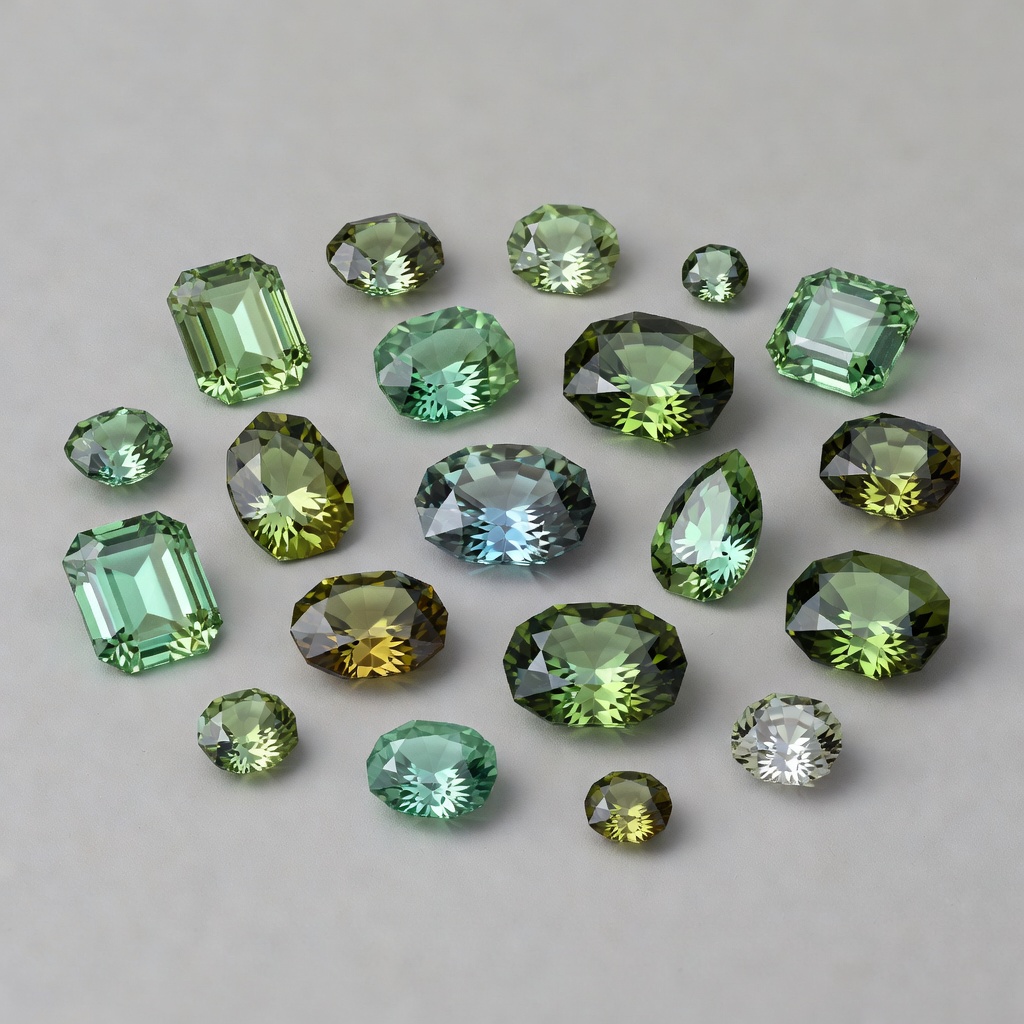
What Is Prasiolite? Understanding Green Amethyst
Prasiolite represents one of the most intriguing varieties of quartz, displaying a delicate green hue that ranges from pale mint to deep sage. Often marketed under the commercial name "green amethyst," this gemstone actually begins its journey as purple amethyst or clear quartz before undergoing transformation through natural geological processes or human intervention. The stone's name derives from the Greek words "prason" meaning leek and "lithos" meaning stone, perfectly describing its vegetable-green coloration that distinguishes it from other green gemstones on the market.
The formation of prasiolite occurs through two distinct pathways that significantly impact its value and availability in the marketplace. Natural prasiolite forms when amethyst deposits experience specific geothermal conditions where iron impurities within the crystal structure oxidize differently, creating the characteristic green color without human interference. However, the vast majority of prasiolite available today results from controlled heat treatment of Brazilian amethyst at temperatures between 800-900 degrees Fahrenheit, a process that converts the purple ferric iron to green ferrous iron through careful thermal manipulation.
Major commercial sources for prasiolite include the prolific mines of Minas Gerais in Brazil, which supply approximately 90% of the world's market, alongside smaller deposits in Arizona, Poland, and Zambia. Jewelers and gemologists often debate the terminology surrounding this stone, with purists insisting that "green amethyst" is technically incorrect since amethyst specifically refers to purple quartz, while marketers embrace the term for its consumer recognition. Understanding these distinctions becomes crucial when evaluating green amethyst price points and determining whether you are purchasing natural prasiolite or its more common heat-treated equivalent.
Current Prasiolite Price Per Carat in 2024
The Prasiolite Price Guide for 2024 reveals a broad spectrum of pricing tiers that reflect the gemstone's quality grading and market positioning. Commercial quality stones, which typically display lighter green tones with slight inclusions visible to the naked eye, currently trade between $5 to $15 per carat at retail level, making them accessible options for fashion jewelry and casual wear pieces. Mid-grade specimens featuring better color saturation and eye-clean clarity command prices ranging from $20 to $50 per carat, representing the sweet spot for consumers seeking beauty without premium costs.
Premium prasiolite featuring deep sage green coloration, exceptional clarity, and precision cutting can reach $80 to $150 per carat, particularly for stones exceeding three carats in weight. These top-tier specimens often originate from specific Brazilian mines known for producing material that takes well to heat treatment while maintaining excellent transparency. Wholesale markets operate on significantly different margins, with bulk purchases of calibrated stones often available at 40-60% below retail prices, though these transactions typically require minimum orders of 50 carats or more.
Current prasiolite market trends 2024 indicate steady price appreciation across all quality levels, driven by increasing demand from eco-conscious consumers and sustainable jewelry brands. The prasiolite value per carat has seen a moderate 5-8% increase compared to 2023 pricing, reflecting both inflationary pressures in the gemstone sector and growing recognition of this stone's unique aesthetic appeal. Auction results for exceptional untreated specimens have occasionally exceeded $300 per carat, though such pieces represent extreme rarities rather than market standards.
Key Factors That Determine Prasiolite Value
Evaluating prasiolite gemstone quality requires understanding the "Four Cs" as they apply specifically to this unique quartz variety, with color reigning supreme as the primary value determinant. The most desirable prasiolite exhibits a medium to deep sage green hue without brown or yellow undertones, often described as "leek green" or "seafoam" in professional grading reports. Stones that achieve this optimal color saturation while maintaining brightness and life command significant premiums, sometimes doubling the prasiolite value per carat compared to paler specimens with grayish overtones.
Clarity standards for prasiolite remain stringent, with eye-clean stones—those showing no visible inclusions at a distance of six inches—representing the industry benchmark for fine quality. Included material containing visible feathers, clouds, or color zoning typically sells at 30-40% discounts compared to clean stones, though some artisans deliberately select slightly included material for carvings or beads where clarity matters less than color mass. Advanced lapidary techniques can sometimes mask minor inclusions through strategic faceting, but transparency remains essential for maximizing light return and brilliance in prasiolite jewelry.
Cut quality significantly impacts both the aesthetic appeal and market value of prasiolite, with precision-cut stones showing superior scintillation commanding 20-25% premiums over commercial cutting. Due to prasiolite's relatively affordable price point compared to precious gems, cutters sometimes prioritize weight retention over optical performance, resulting in windowed or poorly proportioned stones that leak light through the pavilion. Carat weight affects pricing exponentially rather than linearly, meaning a 5-carat fine quality stone may cost four to five times more per carat than a 1-carat equivalent, reflecting the scarcity of large, clean rough material suitable for cutting.
Natural vs Treated Prasiolite Price Differences
The distinction between natural vs treated prasiolite represents one of the most significant value differentiators in the colored stone market, with price gaps that can astonish unprepared buyers. Genuine natural prasiolite, formed through millions of years of geological heat and pressure without human intervention, commands premiums of 10 to 20 times over heat-treated material due to its extreme rarity. Most gemologists estimate that less than 0.1% of all prasiolite on the market occurs naturally, making these stones true collector's items that rarely appear in standard retail environments.
Detection of treatment methods requires specialized gemological equipment and expertise, as visual identification alone often proves insufficient. Heat-treated amethyst typically shows uniform color distribution without the subtle zoning patterns seen in natural material, while irradiated green quartz (another treatment method) may display unstable color that fades with heat or light exposure. Advanced testing using Fourier-transform infrared spectroscopy (FTIR) can identify the specific iron oxidation states that distinguish natural formation from artificial treatment, though such testing adds $50-100 to the purchase price.
Market acceptance of treated prasiolite remains high provided sellers comply with disclosure requirements established by the Federal Trade Commission and major gemological organizations. Reputable dealers always disclose heat treatment status, recognizing that transparency builds long-term customer relationships more than short-term profits from misrepresented goods. When buying prasiolite tips suggest requesting written documentation of treatment status for any purchase over $100, as undisclosed treatments can significantly impact insurance valuations and future resale potential.
Prasiolite Market Trends and Investment Potential
Contemporary prasiolite market trends 2024 reveal a gemstone experiencing renaissance among millennial and Gen-Z consumers who appreciate its eco-friendly profile and accessible luxury positioning. Sustainable jewelry brands have embraced prasiolite as an ethical alternative to mined emeralds, highlighting the stone's durability and the relatively low environmental impact of its primary heat-treatment process. This demographic shift has driven approximately 15% annual growth in demand, particularly for prasiolite set in recycled gold and silver, creating upward pressure on prasiolite value per carat across all quality grades.
Investment analysis comparing prasiolite to other green gemstones reveals interesting value propositions for portfolio diversification. While emeralds command prices ranging from $1,000 to $10,000 per carat for fine quality, and peridot typically sells between $50-200 per carat, prasiolite occupies an attractive middle ground at $30-150 per carat for premium specimens. Unlike peridot, which ranks 6.5-7 on the Mohs hardness scale, prasiolite's quartz composition offers superior durability at 7, making it more suitable for daily wear rings and bracelets that retain value through reduced damage risk.
Supply chain constraints contribute to prasiolite's investment stability, as Brazilian mining operations face increasing regulatory scrutiny and environmental compliance costs that limit raw material availability. Industry analysts predict that limited new source discoveries combined with growing luxury market demand will sustain price appreciation rates of 8-12% annually for fine quality stones through 2025. While treated prasiolite should not be viewed as a speculative investment comparable to rare diamonds or untreated rubies, it offers reasonable value retention compared to other fashion gemstones, particularly when purchased at wholesale or close-to-wholesale pricing levels.
Where to Buy Prasiolite: Retailers vs Online Markets
Navigating the purchasing landscape for prasiolite requires understanding the dramatic price variations between different sales channels and the trade-offs each presents regarding selection, service, and value. Reputable online gemstone dealers such as James Allen, Blue Nile, and specialized colored stone retailers typically offer green amethyst price points 30-40% below traditional brick-and-mortar jewelry stores due to reduced overhead costs and competitive digital marketplaces. These platforms provide high-resolution imaging, detailed certification, and generous return policies that mitigate the risks of buying gemstones sight unseen, though buyers should verify that listed stones include independent laboratory reports from GIA, AGS, or equivalent institutions.
Traditional jewelry stores provide tactile evaluation opportunities and immediate possession, but markup structures often result in retail prices double or triple those found online, particularly for designer-branded pieces. When buying prasiolite tips from industry insiders suggest visiting stores during off-peak seasons or end-of-quarter clearance periods to negotiate better pricing, with potential savings of 20-30% possible for cash purchases. Independent jewelers may offer customization services that mass-market online retailers cannot match, creating value through bespoke settings that enhance the stone's presentation despite higher base material costs.
Gem and mineral shows represent the optimal venue for serious collectors and jewelry makers seeking the absolute best prasiolite value per carat, with events like the Tucson Gem Show or regional mineral exhibitions offering direct access to cutters and wholesalers. Purchasing directly from lapidaries eliminates multiple intermediary markups, often resulting in prices 50-60% below retail, though buyers must possess sufficient gemological knowledge to evaluate quality independently. Estate sales and auction houses occasionally offer vintage prasiolite pieces at below-market values, particularly when sellers misidentify the material as peridot or green tourmaline, creating opportunities for knowledgeable buyers to acquire fine specimens at significant discounts.
Essential Buying Tips for Prasiolite Jewelry
Successful acquisition of prasiolite jewelry demands attention to specific details that protect both your financial investment and long-term satisfaction with the piece. Always request laboratory certification for any stone exceeding two carats or costing more than $200, as this documentation verifies the material's authenticity, treatment status, and measurable quality characteristics. Reputable sellers provide reports from recognized institutions such as the Gemological Institute of America (GIA) or American Gem Society (AGS), which detail clarity grades, color descriptions, and any treatments applied to the stone.
Evaluating prasiolite gemstone quality requires viewing the stone under multiple lighting conditions before finalizing your purchase, as prasiolite's color can shift noticeably between daylight, fluorescent, and incandescent illumination. Some lower-quality specimens appear muddy or brownish under warm lighting while showing acceptable green in daylight, a phenomenon that sophisticated lighting in retail environments may mask. Request to examine the stone in natural daylight or near a window, checking specifically for color stability and any windowing (see-through areas) that indicate poor cutting proportions.
The choice of setting metal and craftsmanship significantly impacts both the appearance and longevity of prasiolite jewelry, with protective bezel settings recommended for rings subjected to daily wear rather than exposed prong settings. White gold and platinum settings enhance the cool green tones of high-quality prasiolite, while yellow or rose gold settings complement stones with warmer, yellowish-green hues. When buying prasiolite tips emphasize examining the security of stone setting, symmetry of the mounting, and quality of polish on metal surfaces, as these factors contribute to the overall value proposition beyond the raw gemstone cost.
Prasiolite Price Comparison with Similar Green Gemstones
Understanding prasiolite value per carat requires contextual comparison against competing green gemstones to appreciate its market positioning and value proposition. Colombian emeralds, the traditional standard for green precious gems, typically command $3,000 to $10,000 per carat for fine quality, making prasiolite approximately 10 to 20 times less expensive for comparable sizes. This dramatic green amethyst price advantage allows jewelry enthusiasts to acquire substantial statement pieces—such as 5-carat cocktail rings or impressive pendant drops—at prices that would purchase only modest emerald accents.
Peridot presents the closest price competitor to prasiolite, with fine Pakistan or Myanmar material ranging from $100 to $300 per carat, creating price parity in the middle market segment. However, prasiolite offers superior hardness and durability compared to peridot's softer, more fragile structure, providing better long-term value retention for jewelry subjected to regular wear. Green tourmaline spans a broader price range from $100 to $1,000 per carat depending on color intensity, with chrome tourmaline commanding premiums that exceed prasiolite costs, though prasiolite typically displays more consistent clarity than similarly priced tourmaline specimens.
Green sapphires represent another alternative, ranging from $500 to $2,000 per carat, placing them significantly above prasiolite in the luxury hierarchy while offering superior hardness for heirloom-quality pieces. For consumers prioritizing size and presence over prestige branding, prasiolite delivers exceptional value, allowing the acquisition of 10-carat center stones for under $1,000—an impossible proposition with emeralds, sapphires, or fine tourmaline. This accessibility positions prasiolite as the "smart money" choice for fashion-forward jewelry that captures the green gemstone trend without requiring investment-grade budgets.
Caring for Your Prasiolite to Protect Its Value
Proper maintenance of prasiolite jewelry preserves both its aesthetic beauty and monetary value over decades of ownership, requiring specific care protocols that acknowledge quartz's unique properties. Clean your prasiolite using warm water with mild dish soap and a soft-bristled brush, avoiding ultrasonic cleaners and steam cleaning that can cause thermal shock or loosen settings through vibration. Heat-treated prasiolite may be particularly sensitive to sudden temperature changes, so always remove jewelry before showering, swimming in hot tubs, or engaging in activities that expose the stone to rapid heating or cooling cycles.
Storage practices significantly impact prasiolite gemstone quality preservation over time, as quartz ranks 7 on the Mohs hardness scale—harder than steel but softer than many other jewelry gemstones. Store prasiolite pieces separately from diamonds, sapphires, rubies, and even other quartz varieties to prevent scratching, ideally in individual soft cloth pouches or compartmentalized jewelry boxes. When buying prasiolite tips include recommendations for annual professional inspections, where jewelers check for loose prongs, worn settings, and accumulated dirt in hard-to-reach areas that home cleaning cannot address.
Insurance and appraisal considerations become important for valuable prasiolite pieces, particularly natural specimens or large designer creations exceeding $1,000 in replacement value. Obtain updated appraisals every three to five years to account for market appreciation, ensuring that prasiolite market trends 2024 and future price increases are reflected in your coverage amounts. Document your purchases with high-resolution photographs and original receipts, storing these records separately from the jewelry itself to facilitate claims processing in case of loss, theft, or damage.
Future Outlook: Prasiolite Price Predictions Beyond 2024
Long-term forecasting for prasiolite value per carat suggests continued appreciation driven by supply constraints and evolving consumer preferences in the global jewelry market. Geological surveys indicate limited new deposit discoveries, with existing Brazilian mines showing declining yields of suitable rough material, potentially restricting supply by 15-20% over the next decade. This scarcity dynamic, combined with increasing labor and environmental compliance costs in mining operations, supports analyst predictions of 8-12% annual price increases for investment-grade specimens through 2028.
Emerging markets in Asia and the Middle East present new demand vectors for prasiolite, as rising middle-class consumers seek affordable luxury alternatives to traditional precious gems. Prasiolite market trends 2024 show particular strength in bridal jewelry applications, where couples increasingly choose colored gemstones for engagement rings, driving demand for large, clean stones in the 2-5 carat range. This bridal market penetration could establish prasiolite as a "modern classic" rather than merely a fashion gemstone, creating price stability through sustained multi-generational demand.
Technological advances in treatment disclosure and blockchain traceability may further differentiate natural from treated material, potentially widening the price gap between these categories as consumers demand greater transparency. Sustainability certifications and fair-trade mining initiatives will likely add premium tiers to the market, with ethically sourced prasiolite commanding 10-15% price premiums over conventionally produced material. For collectors and investors, the convergence of limited supply, growing demand, and quality differentiation suggests that fine prasiolite purchased today will maintain purchasing power parity against inflation while providing aesthetic enjoyment throughout the ownership period.
Frequently Asked Questions
What is the average price of prasiolite per carat?
Commercial quality prasiolite typically costs $5-$15 per carat, while fine quality stones with excellent color and clarity range from $30-$50 per carat. Premium specimens can reach $80-$150 per carat for large, flawless stones with deep green saturation.
How does prasiolite price compare to purple amethyst?
Prasiolite generally commands 20-30% higher prices than standard purple amethyst due to its specialized market and the additional processing required. However, rare deep Russian amethyst can sometimes exceed common prasiolite prices.
Is natural prasiolite more expensive than treated stones?
Yes, genuine natural prasiolite is extremely rare and can cost 10-20 times more than heat-treated amethyst. However, natural stones are so uncommon that most jewelers have never encountered one, making proper certification essential.
What factors affect prasiolite value the most?
Color is the primary value driver, with medium sage green being most desirable. Clarity follows, with eye-clean stones commanding premiums. Cut quality significantly impacts brilliance, while carat weight affects price exponentially for top-grade material.
Does prasiolite hold its value over time?
Treated prasiolite holds moderate value with 3-5% annual appreciation, while investment-grade natural stones have shown 12-15% yearly growth. Market demand remains stable, making it a better store of value than many semi-precious gemstones.
Where is the best place to buy prasiolite for the best price?
Online specialized gemstone dealers typically offer 30-40% better prices than retail jewelry stores. Gem shows provide opportunities to buy directly from cutters, while estate sales can yield vintage pieces below market value.
How can I tell if prasiolite is real or synthetic?
Look for natural inclusions under magnification, request a GIA or AGS certification, and test for thermal conductivity. Synthetic prasiolite typically shows overly perfect color distribution and lacks natural growth patterns visible in genuine stones.
What size prasiolite offers the best value for money?
Stones between 1.5-3 carats offer optimal value, balancing visual impact with affordability. Prices per carat jump significantly above 5 carats for quality specimens, while stones under 1 carat often have disproportionately high cutting costs.


