Introduction to Prasiolite and Its Unique Care Requirements
Prasiolite, also known as green amethyst, vermarine, or verdant quartz, represents one of the most captivating transformations in the gemstone world. This pale green to yellowish-green variety of quartz is typically created through the careful heat treatment of purple amethyst or yellow citrine, resulting in a delicate minty hue that has captured the attention of modern jewelry designers and collectors alike. Unlike its purple counterpart, prasiolite requires specific attention to maintain its ethereal color and glassy luster, making Prasiolite Care and Cleaning an essential knowledge base for any owner. Understanding the nuances of green amethyst care ensures that your investment retains its beauty for decades, as improper handling can lead to color fading, surface damage, or structural compromise that diminishes both aesthetic appeal and monetary value.
The rising popularity of prasiolite in engagement rings, cocktail pendants, and statement earrings stems from its affordable luxury status and unique coloration that complements both white and yellow gold settings. However, many jewelry enthusiasts mistakenly assume that all quartz varieties share identical durability and care protocols. This misconception can lead to premature wear, particularly because prasiolite's heat-treated origin creates specific vulnerabilities that natural green quartz might not exhibit. Whether you have inherited a vintage prasiolite brooch or recently purchased a contemporary green amethyst solitaire, implementing proper maintenance routines from day one will preserve the stone's clarity and prevent the micro-abrasions that cloud its transparent beauty over time.
Understanding Prasiolite's Physical Properties
Before establishing a maintenance routine, understanding the fundamental physical characteristics of this gemstone provides the foundation for appropriate handling decisions. Prasiolite hardness registers at 7 on the Mohs scale, positioning it as moderately durable compared to diamonds (10) or sapphires (9), yet significantly harder than pearls (2.5-4.5) or opals (5-6.5). This rating indicates that prasiolite can withstand everyday contact with dust particles—which typically contain quartz and rate around 7—but remains susceptible to scratching from harder materials commonly found in jewelry boxes or household environments. The hardness level makes prasiolite suitable for rings and bracelets that encounter frequent contact, though owners should remain vigilant about storage separation to prevent surface marring from diamonds, rubies, or even household items like ceramic dishes and granite countertops.
Beyond surface hardness, green quartz properties include significant heat sensitivity that directly impacts cleaning and wearing protocols. Because natural prasiolite is exceptionally rare in nature, virtually all commercial specimens undergo heat treatment to achieve their characteristic coloration. This thermal alteration, while stable under normal conditions, can reverse or shift if the stone experiences temperatures exceeding 200-300 degrees Celsius, potentially returning the gem to its original purple or yellow state. Additionally, prasiolite often contains natural fracture systems and internal cleavage planes that, while invisible to the naked eye, create weak points where thermal shock or physical impact can cause cleaving or chipping. These structural characteristics necessitate gentler cleaning approaches than those used for more robust gemstones like aquamarine or topaz.
Daily Wear Guidelines for Prasiolite Jewelry
Implementing mindful wearing habits forms the first line of defense in comprehensive prasiolite jewelry maintenance. When wearing prasiolite daily, remove your pieces before engaging in physical activities such as gym workouts, gardening, rock climbing, or heavy lifting that might subject the stone to sharp impacts against hard surfaces. Consider the case of a prasiolite ring worn during weightlifting: the metal setting might withstand the pressure, but the stone could contact the textured iron barbell, creating micro-fractures that eventually lead to chipping. Similarly, gardening exposes jewelry to abrasive soil minerals and sudden tugs against roots or tools that can loosen settings or scratch the pavilion (bottom portion) of the stone.
Chemical exposure represents another significant threat to prasiolite's integrity and appearance. Always put on your jewelry after applying cosmetics, hairsprays, perfumes, and lotions, as these products often contain alcohols, acids, or oils that can create a film on the stone's surface, dulling its brilliance. When removing prasiolite pieces, grasp the metal setting rather than the stone itself to prevent the natural oils from your fingers from accumulating on the facets. Household cleaning agents pose particular risks; chlorine bleach, ammonia-based window cleaners, and even some "natural" cleaning solutions containing citrus acids can etch the surface of prasiolite over time. Establish a routine of removing your green amethyst jewelry before washing dishes, cleaning bathrooms, or handling household chemicals to prevent gradual degradation of the polish.
Safe Home Cleaning Methods and Supplies
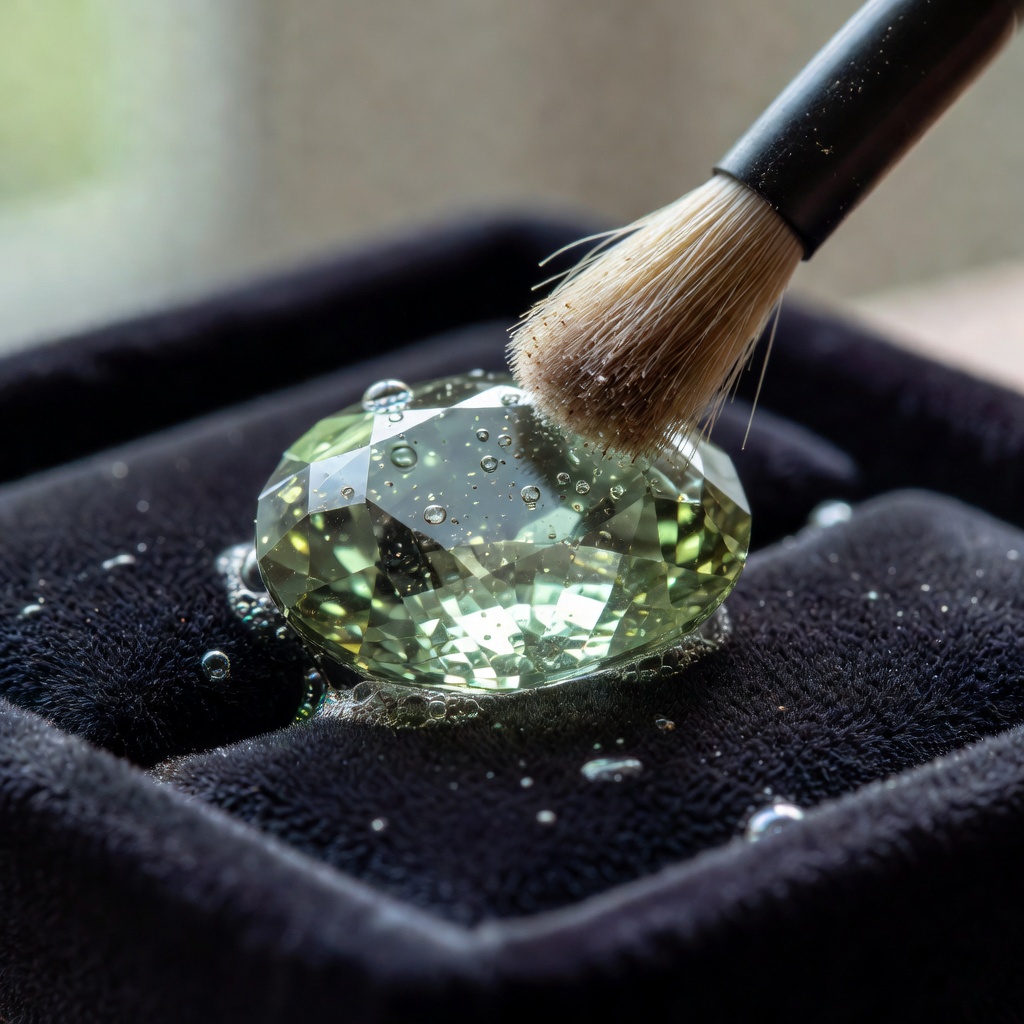
Regular home maintenance keeps prasiolite looking its best without risking the damage associated with aggressive cleaning techniques. The safest method for cleaning green quartz involves a simple warm soapy water bath using mild dish detergent free from harsh degreasers or moisturizers. Begin by filling a small bowl with lukewarm water—never hot, as thermal shock can fracture the stone—and adding a few drops of gentle liquid soap. Submerge your prasiolite jewelry for 15-20 minutes to loosen accumulated skin oils, dust, and cosmetic residues. This passive soaking approach effectively addresses buildup without requiring physical scrubbing that might loosen fragile stones or wear down prongs.
After soaking, use a soft-bristled baby toothbrush or a dedicated jewelry brush with natural bristles to gently clean hard-to-reach areas around the setting and beneath the stone. Work in gentle circular motions rather than aggressive back-and-forth scrubbing, paying special attention to the pavilion and girdle where debris typically accumulates. For intricate vintage settings with filigree work, consider using a cosmetic brush with ultra-soft sable hair to navigate delicate metalwork without snagging. Rinse thoroughly under lukewarm running water, ensuring the drain is closed or covered with a mesh strainer to prevent accidental loss. Dry immediately using a lint-free microfiber cloth specifically designed for optical lenses or jewelry, as paper towels and standard cotton cloths can leave fibers or minor scratches on the stone's surface. Finish by allowing the piece to air dry completely on a fresh cloth for several hours before returning it to storage, ensuring no trapped moisture remains to tarnish metal settings.
Professional Cleaning vs. DIY Approaches
While home maintenance suffices for routine care, understanding when to employ professional prasiolite cleaning methods versus DIY approaches protects your investment from accidental damage. Many jewelry owners wonder about ultrasonic cleaners, which use high-frequency sound waves to dislodge dirt from settings. While these machines effectively clean diamonds and sapphires, they pose risks for prasiolite, particularly specimens with visible inclusions, fractures, or internal cleavage planes. If your green amethyst appears flawless under magnification and lacks surface-reaching fractures, brief ultrasonic cleaning by a professional might be safe; however, the vibration can expand existing cracks in included stones, potentially causing catastrophic breaks. Always consult a gemologist before subjecting prasiolite to ultrasonic waves, and never use home ultrasonic units where you cannot monitor the stone's reaction in real-time.
Steam cleaning, popular in jewelry stores for diamonds, should be strictly avoided for prasiolite due to the risk of thermal shock. The rapid transition from room temperature to steam heat can cause internal fractures to propagate, turning a minor inclusion into a visible crack that splits the stone. For professional stone cleaning, seek jewelers who specialize in colored gemstones rather than those focused primarily on diamonds. These professionals typically employ gentle steam alternatives or specialized ionic cleaning systems that remove buildup without thermal stress. Schedule professional inspections and cleanings every six to twelve months, during which the jeweler should check prong tightness, inspect for loose stones, and polish away minor surface scratches using compounds appropriate for quartz hardness. This professional touch not only restores brilliance but also identifies potential setting failures before they result in stone loss.
Proper Storage Techniques to Prevent Damage
Proper prasiolite storage extends beyond simply tossing jewelry into a box; it requires strategic organization that accounts for the stone's moderate hardness and sensitivity to environmental factors. Always store prasiolite pieces individually in soft fabric pouches, acid-free tissue paper, or dedicated compartments within a fabric-lined jewelry box. This separation prevents contact with harder gemstones like diamonds, rubies, or sapphires that could scratch the surface during drawer movement or travel. Consider the scenario of a prasiolite pendant stored loose alongside a diamond tennis bracelet: the constant vibration and shifting during drawer opening allows the diamonds to act like sandpaper against the softer quartz, creating a network of fine scratches that require professional repolishing to remedy.
Ideal jewelry organization for prasiolite involves maintaining consistent environmental conditions that prevent thermal stress and chemical reactions. Store your collection in a cool, dark place away from direct sunlight, heating vents, or windows where temperature fluctuations occur daily. High humidity environments can accelerate tarnishing in silver or gold settings, potentially creating chemical byproducts that stain the stone, while extremely dry conditions might cause wooden jewelry box interiors to shrink, potentially warping settings. For valuable pieces, consider silica gel packets in your storage area to control moisture, and store items flat rather than hanging to prevent stress on delicate prongs. When traveling, use rigid jewelry cases with individual padded slots rather than soft rolls that allow pieces to contact each other during transit.
Protecting Against Heat and Sunlight Damage
Maintaining prasiolite color stability requires vigilant protection against ultraviolet radiation and temperature extremes that can alter the stone's carefully achieved green hue. Prolonged exposure to direct sunlight or UV rays, such as wearing a prasiolite ring during extended beach vacations or outdoor sports, can cause the color to fade gradually, sometimes reverting toward yellow or becoming noticeably paler. This photochemical reaction occurs because the heat treatment that created the green color altered the iron ion states within the crystal structure, and continued UV exposure can reverse or further modify these states. Store prasiolite jewelry in opaque boxes or drawers rather than glass-topped display cases that magnify sunlight, and remove pieces before tanning bed sessions or prolonged outdoor dining in direct summer sun.
Heat damage prevention extends beyond sunlight to include everyday thermal hazards many owners overlook. Never wear prasiolite while cooking over open flames, reaching into hot ovens, or using curling irons and hair straighteners, as the localized heat can create thermal shock. Similarly, avoid wearing prasiolite in hot tubs, saunas, or steam rooms where temperatures fluctuate rapidly between the hot water and cooler air. The sudden expansion and contraction of the crystal lattice during these transitions can exploit existing fractures or create new ones. When removing prasiolite jewelry in hot environments, place it on a cool surface away from direct heat sources rather than on windowsills or near lamps where residual warmth accumulates. If your stone accidentally undergoes heat exposure, allow it to return to room temperature naturally rather than attempting to cool it rapidly with ice or cold water, which compounds the thermal shock risk.
Common Mistakes to Avoid
Understanding prasiolite damage prevention requires recognizing the jewelry care mistakes that well-meaning owners frequently commit. One of the most damaging errors involves using harsh household chemicals for cleaning. Despite persistent internet myths suggesting vinegar, ammonia, bleach, or baking soda solutions for jewelry cleaning, these substances aggressively attack prasiolite. Acidic vinegar and abrasive baking soda create microscopic etching on the stone's surface, while chlorine bleach can react with metal settings to create pits where bacteria and dirt accumulate, eventually working loose the stone. Even "gentle" denture tablets or effervescent jewelry cleaners often contain abrasives unsuitable for Mohs 7 gemstones.
Another critical mistake involves attempting ultrasonic or steam cleaning on prasiolite without professional assessment of the stone's internal integrity. Many owners assume that because their green amethyst looks perfect to the naked eye, it lacks internal fractures. However, most natural quartz contains some inclusions or healing fractures that ultrasonic vibration can expand into visible cracks. Similarly, ignoring loose settings before cleaning leads to disaster: the agitation of cleaning processes can shake a barely-held stone completely free, sending it down the drain or into the vacuum cleaner. Always perform a gentle wiggle test on prasiolite settings monthly—using your fingernail to lightly tap the stone and check for movement—before any cleaning procedure. If the stone shifts even slightly, secure the setting immediately with clear nail polish as a temporary measure and visit a jeweler before attempting cleaning.
When to Consult a Professional Jeweler
Recognizing when home maintenance transitions into the realm of professional prasiolite repair preserves both the stone and your safety. Schedule a jeweler consultation immediately if you notice deep scratches that catch your fingernail, chips along the girdle or facet junctions, or a persistent cloudiness that remains after proper cleaning. These symptoms indicate surface damage or internal fractures that require professional intervention. A skilled lapidary can assess whether repolishing will restore clarity or if the damage runs too deep, potentially requiring recutting that alters the stone's carat weight but preserves its usability.
Loose prongs or settings represent another urgent signal for professional attention. If your prasiolite ring spins easily within its mounting, if you hear rattling when shaking the piece near your ear, or if prongs appear bent or worn down, discontinue wearing the item immediately. The expense of retipping prongs or tightening bezels pales in comparison to replacing a lost stone. Additionally, seek professional help if the metal setting shows signs of cracking or thinning, particularly in vintage pieces where the gold or silver has worn thin from decades of contact with skin and clothing. Professional jewelers can also perform rhodium plating on white gold settings or deep cleaning of intricate antique mountings without risking the stone, services that maintain the overall integrity of your prasiolite jewelry while ensuring it remains secure for future generations.
Frequently Asked Questions
Can I wear prasiolite jewelry every day?
Yes, with caution. Prasiolite rates 7 on the Mohs hardness scale, making it suitable for daily wear, but you should remove it during physical activities, cleaning with chemicals, or exposure to extreme heat to prevent damage or color fading.
Is prasiolite the same as green amethyst?
Yes, prasiolite is commonly known as green amethyst or vermarine. It is typically produced by heat-treating purple amethyst or yellow citrine to achieve its distinctive pale green to yellowish-green color.
Can I clean prasiolite with vinegar, baking soda, or toothpaste?
No, avoid these household cleaners. Acidic vinegar and abrasive baking soda or toothpaste can scratch the surface or damage the stone's finish. Always use mild dish soap, warm water, and a soft brush for safe cleaning.
Will prasiolite fade in sunlight?
Yes, prolonged exposure to direct sunlight or UV rays can cause prasiolite to fade or lose its green color intensity. Store your jewelry in a dark place and avoid wearing it during extended sunbathing or outdoor activities.
Can I shower or swim while wearing prasiolite?
It's not recommended. Chlorine in pools, salt in ocean water, and harsh soaps or shampoos can damage the stone or metal setting over time. Additionally, sudden temperature changes in hot tubs can cause thermal shock.
How often should I clean my prasiolite ring?
Clean your prasiolite jewelry every 2-4 weeks with mild soapy water to remove skin oils and dirt buildup. Have it professionally inspected and cleaned by a jeweler every 6-12 months to check for loose settings.
Is prasiolite durable enough for an engagement ring?
While prasiolite is relatively durable at Mohs 7, it's softer than diamonds, sapphires, or rubies. It can work for engagement rings if worn carefully, but it may scratch over time and requires more maintenance than harder gemstones.
What should I do if my prasiolite gets scratched?
Take it to a professional jeweler for repolishing. Do not attempt to buff it yourself as amateur polishing can worsen the damage or alter the stone's proportions. Deep scratches require professional lapidary services.