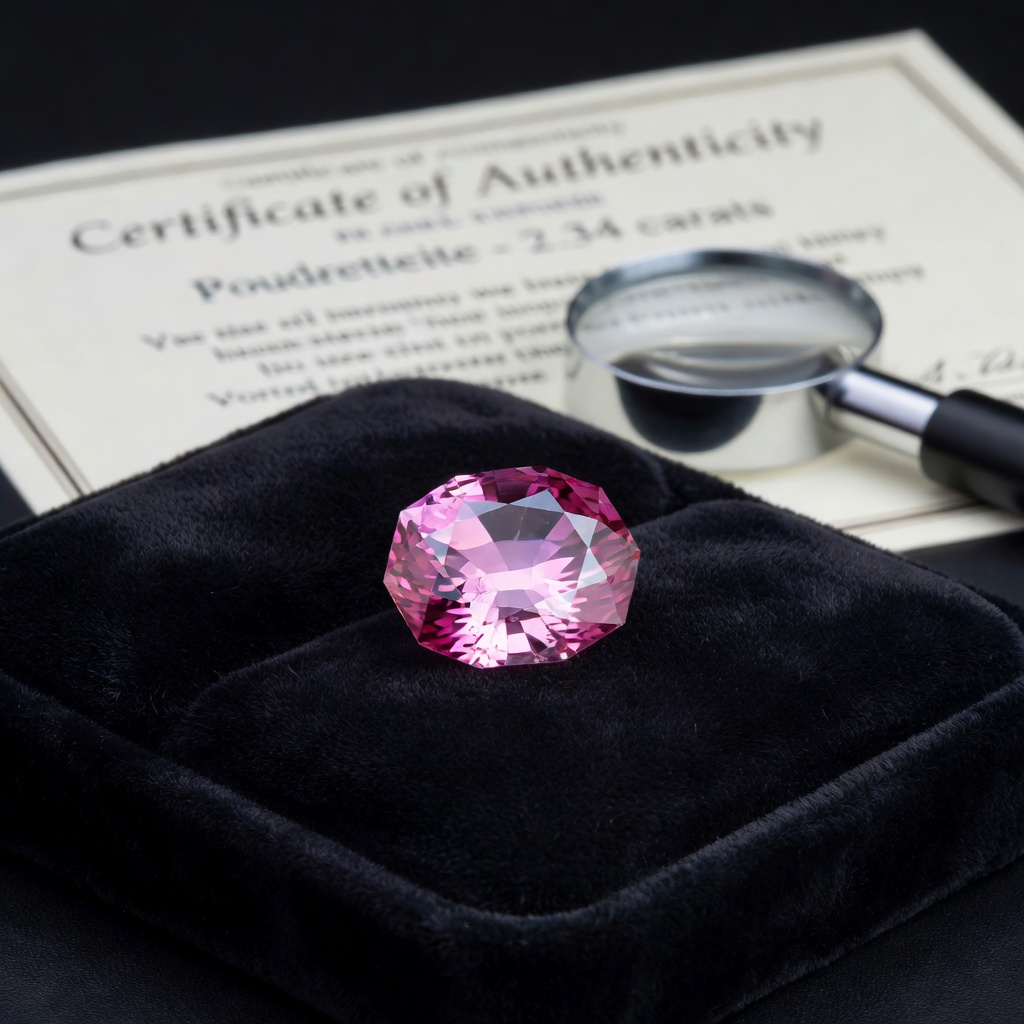
What Is Poudretteite? Understanding the World's Rarest Gemstone
Poudretteite represents the pinnacle of rarity in the gemstone world, a borosilicate mineral that makes even the most exclusive diamonds seem commonplace by comparison. First discovered in 1987 at the famous Mont Saint-Hilaire mineral locality in Quebec, Canada, this extraordinary gem was named in honor of the Poudrette family, who operated the quarry where the initial mineral specimens were found. For decades, the mineral remained a scientific curiosity known only to mineralogists, as the Canadian discoveries yielded only microscopic crystals unsuitable for cutting.
The game-changing moment for Poudretteite came in the early 2000s when gem-quality crystals were discovered in the Mogok Stone Tract of Myanmar (Burma), transforming this mineralogical oddity into one of the most coveted rare pink gemstones on Earth. Unlike diamonds, rubies, or emeralds, which see thousands of carats traded annually, fewer than 25 faceted Poudretteite specimens are known to exist worldwide. This extreme scarcity creates a supply-demand dynamic that places Poudretteite in a category entirely its own, attracting ultra-high-net-worth collectors and museums who view ownership as a privilege reserved for the select few.
From a chemical perspective, Poudretteite is a member of the osumilite/milarite group, with the complex formula KNa2B3Si12O30. Its distinctive pink to purple coloration results from manganese content within the crystal lattice, creating hues that range from delicate rose to intense magenta. For serious collectors of Mont Saint-Hilaire minerals and rare gemstones alike, Poudretteite represents the ultimate trophy acquisition, a stone that generates more excitement at mineral shows than virtually any other gem material due to its combination of beauty, scientific significance, and legendary rarity.
Evaluating Poudretteite Quality: The Four Cs Framework
While the diamond industry standardized the Four Cs decades ago, applying this framework to Poudretteite requires adjusted expectations and specialized knowledge specific to this ultra-rare material. When evaluating Poudretteite quality factors, collectors must balance the stringent standards applied to common gems against the reality that perfect specimens simply do not exist in nature for this mineral. Understanding these nuances is essential for anyone navigating the Poudretteite market, as conventional gemstone grading proves insufficient for assessing these extraordinary crystals.
Color Grading Standards for Rare Pink Gemstones
Color stands as the primary value determinant for Poudretteite, with saturated pink-purple hues commanding significant premiums over pale or washed-out specimens. Unlike pink diamonds, which derive value from subtle pastel tones, Poudretteite achieves maximum desirability when displaying vivid magenta or violet-pink saturation without brown or gray modifiers. Gemstone grading laboratories assess Poudretteite color using modified fancy color standards, specifically evaluating hue, tone, and saturation to determine where a specimen falls on the spectrum from "Fancy Light Pink" to "Fancy Deep Purple-Pink."
Clarity Expectations and Inclusion Tolerance
Prospective buyers must adjust their clarity expectations significantly when examining Poudretteite, as the geological conditions necessary for this mineral's formation virtually guarantee characteristic inclusions. Most specimens contain healed fractures, growth tubes, or mineral inclusions that would disqualify a diamond but represent standard features in Poudretteite. Rather than pursuing loupe-clean stones that likely do not exist, knowledgeable collectors seek "eye-clean" specimens where inclusions remain invisible without magnification, or alternatively embrace distinctive inclusion patterns as proof of natural origin and unique character.
Cut Optimization Challenges
The extreme rarity of rough material creates unique challenges for lapidaries tasked with cutting Poudretteite. cutters must balance maximum carat retention against optical performance, often accepting unconventional proportions to preserve precious weight. Unlike diamonds, where rough is plentiful enough to allow for ideal cutting, Poudretteite cutters face the agonizing decision of sacrificing potentially large percentages of an irreplaceable crystal to achieve optimal brilliance. Consequently, many finished stones exhibit deeper pavilions or thicker girdles than ideal cut standards would dictate, representing necessary compromises given the material's irreplaceable nature.
Carat Weight Scarcity and Value Impact
Size dramatically affects Poudretteite price per carat in ways that defy conventional gemstone pricing models. While most gem varieties see gradual price increases with size, Poudretteite exhibits exponential pricing curves because crystals large enough to yield finished stones over one carat represent statistical anomalies. The majority of known faceted specimens weigh less than 0.50 carats, making any stone exceeding one carat a museum-grade rarity. This scarcity means that a two-carat Poudretteite might command not double, but ten or twenty times the per-carat price of a half-carat stone, reflecting the logarithmic difficulty of finding larger crystals.
Color Characteristics: From Pale Pink to Deep Purple
The chromatic allure of Poudretteite distinguishes it from other pink gemstones, offering a color palette that shifts between romantic rose tones and regal purple depths depending on chemical composition and lighting conditions. Understanding these color variations proves essential for collectors seeking to acquire investment-grade specimens, as subtle differences in hue can translate to substantial value differentials in this esoteric market.
The Ideal Color Spectrum
Top-quality Poudretteite displays a saturated pink to violet-pink color reminiscent of high-quality pink sapphire or spinel, but with a distinctive warmth that sets it apart from cooler-toned competitors. The most valuable specimens achieve a "sweet spot" of color where pink and purple exist in equal balance, creating a mesmerizing magenta that appears to glow from within. Stones leaning too heavily toward brownish-pink or grayish-purple command significantly lower prices, as these secondary modifiers reduce the gem's vibrancy and visual impact.
Pleochroism and Cutting Orientation
Poudretteite exhibits distinct pleochroism, showing different colors when viewed from different crystallographic directions, typically ranging from pink to colorless or pale lavender. Master cutters must orient the rough crystal carefully to ensure the table facet displays the most desirable color face-up, often sacrificing weight to achieve optimal color presentation. This optical phenomenon means that two Poudretteites of identical chemical composition can appear dramatically different depending on cutting orientation, making the lapidary's skill as crucial as the rough material's inherent quality.
Lighting Conditions and Color Appearance
Like many colored gemstones, Poudretteite demonstrates variable appearance under different lighting sources, requiring examination under multiple conditions before purchase. Under daylight-equivalent lighting, fine specimens display their true colors with maximum saturation, while incandescent lighting may emphasize warmer pink tones at the expense of purple components. Prospective buyers should always request videos or examinations under both daylight and artificial light to ensure the stone maintains attractive coloration across various environments, avoiding unpleasant surprises when wearing the gem in different settings.
Treatment Concerns and Natural Specimens
The extreme rarity and high value of natural Poudretteite create strong incentives for treatment or misrepresentation in the marketplace. Unlike rubies or sapphires, which commonly undergo heating to improve color, Poudretteite rarely responds to heat treatment, making unheated specimens the expected standard rather than the exception. However, collectors must remain vigilant against dyed or irradiated look-alikes, particularly stones represented as Poudretteite that are actually treated tourmaline or quartz. Always insist on documentation confirming natural, untreated status when adding these collectible gemstones investment pieces to your portfolio.
Clarity and Cut: Maximizing Visual Impact
The intersection of clarity characteristics and cutting precision determines whether a Poudretteite specimen achieves its full aesthetic potential or falls short of expectations. Given the mineral's formation environment within complex pegmatite deposits, understanding what constitutes acceptable clarity and optimal cutting becomes crucial for distinguishing museum-quality pieces from inferior offerings.
Acceptable Inclusion Levels
While diamond grading demands flawless clarity for top grades, Poudretteite clarity standards reflect the mineralogical reality that completely clean crystals essentially do not exist. Acceptable inclusions include small crystals of associated minerals, growth tubes parallel to the c-axis, and fingerprint-like healing patterns that indicate natural formation. The key consideration involves placement rather than presence; inclusions centered under the table facet prove more distracting than those hidden near the girdle or within pavilion facets. Collectors should examine stones under 10x magnification to assess whether inclusions affect durability or create unsightly reflections that break up the stone's brilliance.
Optimal Cutting Styles
Certain cuts prove particularly suitable for Poudretteite, balancing the competing demands of weight retention, color optimization, and brilliance. Oval and cushion cuts dominate the market, as these shapes accommodate the elongated crystal habit of Poudretteite rough while minimizing waste. Pear shapes also appear frequently, offering elegant proportions that work well for pendants and earrings. Step cuts such as emerald or asscher styles remain rare due to the transparency requirements of these designs, which expose any inclusions mercilessly. When examining a Poudretteite gemstone, look for symmetrical faceting patterns that create even light return across the crown, avoiding stones with obvious windowing where light leaks through the pavilion.
Avoiding Windowing and Extinction
Poorly cut Poudretteite often suffers from windowing, a phenomenon where light passes directly through the stone rather than reflecting back to the viewer, creating a dead area in the center of the gem. Extinction, or dark areas within the stone, similarly indicates suboptimal cutting angles or overly deep pavilion depths. While some extinction proves unavoidable in deeply colored stones, excessive dark areas indicate cutting errors that reduce the gem's beauty and value. Request face-up photographs against white and black backgrounds to evaluate these optical effects before committing to a purchase.
The Carat Retention vs. Brilliance Balance
Given Poudretteite's extreme rarity, cutters face unique pressure to maximize finished weight, sometimes at the expense of ideal optical performance. While a diamond cutter might sacrifice 50% of rough to achieve ideal proportions, losing such material from a Poudretteite crystal could mean destroying a once-in-a-lifetime opportunity to create a large gem. Consequently, collectors must accept slightly deeper pavilions or thicker girdles than ideal cutting standards would dictate, recognizing that a 1.20-carat stone with acceptable rather than perfect proportions represents greater rarity than a 0.70-carat ideal-cut specimen. The key lies in finding stones where the cutter balanced these factors skillfully, preserving weight without creating obvious optical defects.
Understanding Poudretteite Pricing and Investment Value
Navigating the financial aspects of Poudretteite acquisition requires understanding a market that operates by rules distinct from conventional gemstone trading. With Poudretteite price per carat ranging from approximately $2,000 for smaller, lighter-colored specimens to well over $10,000 for exceptional stones, this material occupies a unique position straddling the worlds of gem collecting and mineral investing.
Current Market Pricing Structures
The pricing hierarchy for Poudretteite follows quality gradients that emphasize color saturation and size above other factors. Entry-level specimens under 0.25 carats with pale pink coloration might trade in the $2,000-$4,000 per carat range, accessible to serious but not ultra-wealthy collectors. Mid-tier stones between 0.50 and 1.00 carat with good color and acceptable clarity typically command $5,000-$8,000 per carat. The apex of the market sees exceptional stones over one carat with vivid purple-pink color and eye-clean clarity fetching $10,000-$20,000 per carat or more, with prices negotiated privately between specialized dealers and their clientele.
Price Multipliers for Exceptional Quality
Certain quality combinations create multiplicative rather than additive effects on pricing. A stone combining large size (over 1.5 carats), exceptional color (vivid magenta), and high clarity (eye-clean) might command twenty times the per-carat price of a smaller, included specimen. Documented provenance from famous localities like Mont Saint-Hilaire or specific Myanmar mines adds further premiums, as does association with historic collections or famous mineralogists. Unlike diamonds, which trade on relatively standardized pricing matrices, each Poudretteite transaction represents a unique negotiation based on the stone's specific characteristics and the current demand among the tiny cohort of potential buyers.
Market Liquidity and Investment Horizons
While Poudretteite offers exceptional rarity that typically appreciates in value over time, prospective investors must understand the liquidity challenges inherent in this market. Unlike gold or blue-chip stocks, Poudretteite cannot be liquidated quickly without significant discounts to fair market value. The pool of qualified buyers remains microscopic, often requiring months or years to find the right collector when selling. Consequently, Poudretteite suits investors with long-term horizons (10+ years) and sufficient wealth to hold illiquid assets. The investment thesis relies on increasing recognition of the gem's extreme rarity among ultra-high-net-worth collectors rather than broad market demand, making this suitable only for sophisticated investors with specialized knowledge of the rare gem market.
Value Appreciation Factors
Several specific factors drive appreciation in Poudretteite specimens beyond general market trends. Documented provenance from type localities, particularly Mont Saint-Hilaire minerals, carries significant premiums due to scientific importance. Historical significance, such as ownership by famous collectors or inclusion in museum exhibitions, adds intangible value that often translates to higher resale prices. Additionally, as new collectors enter the ultra-rare gem market and existing specimens disappear into long-term private collections or museum holdings, the available supply shrinks while demand gradually increases, creating favorable supply-demand dynamics for patient investors.
Certification and Authentication: Protecting Your Investment
Given the high stakes involved in Poudretteite transactions, robust authentication protocols prove absolutely essential for protecting against misrepresentation, treatment, and outright fraud. Gemstone certification GIA standards, while developed primarily for diamonds, provide the framework for verifying these rare borosilicate gems, though not all laboratories possess the experience or reference materials to identify Poudretteite accurately.
Mandatory Laboratory Verification
Any Poudretteite purchase exceeding a few thousand dollars requires accompanying documentation from prestigious laboratories such as the Gemological Institute of America (GIA) or the American Gemological Laboratories (AGL). These reports should confirm not only the species identification but also treatment status, geographic origin when determinable, and basic quality parameters including color grade and clarity description. Be wary of certificates from unknown laboratories or "appraisals" issued by the selling dealer, as these lack the independence necessary for high-value transactions. The cost of professional certification (typically $200-$500) represents minimal insurance when purchasing stones worth tens of thousands of dollars.
Distinguishing Poudretteite from Look-Alikes
Several more common gemstones share visual similarities with Poudretteite, creating opportunities for confusion or deliberate misrepresentation. Pink tourmaline (rubellite) offers similar coloration but differs in refractive index and specific gravity, while morganite provides peach-pink tones at significantly lower prices and greater durability. Kunzite (pink spodumene) distinguishes itself through pronounced pleochroism and perfect cleavage, whereas pink sapphire offers greater hardness and typically more saturated color. Advanced testing distinguishes these materials through refractive index measurement (Poudretteite: 1.511-1.532), specific gravity determination (2.53-2.58), and spectroscopic analysis revealing distinct absorption patterns.
Advanced Testing Methodologies
Definitive identification of Poudretteite requires sophisticated analytical techniques beyond standard gemological testing. Raman spectroscopy provides non-destructive molecular fingerprinting that distinguishes Poudretteite from all potential simulants and look-alikes. Energy-dispersive X-ray fluorescence (EDXRF) or electron microprobe analysis can confirm the characteristic chemistry including potassium, sodium, and boron content. For the highest-value specimens, some collectors commission X-ray diffraction studies to confirm crystal structure, though this requires advanced mineralogical laboratories typically associated with universities or major museums.
Red Flags and Warning Signs
Several indicators should trigger immediate caution when evaluating purported Poudretteite. Stones offered at prices significantly below market rates ($1,000 per carat or less) almost certainly represent misidentified material or synthetics. Sellers who resist independent verification or pressure for quick decisions without laboratory examination should be avoided regardless of their reputation. Be particularly suspicious of stones described as "new discoveries" from locations other than Myanmar or Mont Saint-Hilaire, as these represent the only known sources of gem-quality material. Additionally, perfect clarity in large sizes (over 2 carats) should prompt intense scrutiny, as such specimens likely do not exist in nature.
Where to Buy Poudretteite: Dealers, Auctions, and Private Sales
Acquiring authentic Poudretteite requires accessing specialized distribution channels far removed from conventional jewelry retail. The extreme rarity of this material means that standard jewelry stores, online marketplaces, and even high-end boutiques rarely stock genuine specimens, necessitating relationships with dealers who specialize specifically in ultra-rare gemstones and fine minerals.
Reputable High-End Dealers
Establishing relationships with dealers who specialize in rare gemstone investments represents the most reliable avenue for acquiring Poudretteite. These specialists, often based in major financial centers like New York, Geneva, Hong Kong, or Tokyo, maintain networks with collectors and museums worldwide, occasionally brokering private sales when specimens become available. Look for dealers with decades of experience specifically in rare gems, membership in professional organizations like the American Gem Trade Association (AGTA), and willingness to provide extensive documentation and return privileges. Personal referrals from existing collectors or mineralogists often prove more valuable than advertising when locating trustworthy sources.
Major Auction Houses as Primary Markets
Christie's, Sotheby's, and Bonhams serve as the primary public markets for museum-quality Poudretteite specimens, occasionally featuring them in Important Jewels or Magnificent Jewels sales. These venues provide the dual advantages of pre-sale expertise verification and competitive price discovery through open bidding. However, auction purchases require careful examination of condition reports and understanding of buyer's premiums (typically 20-25% above hammer price), which significantly affect total acquisition cost. Additionally, auction fever can drive prices beyond rational levels, particularly when multiple collectors compete for a rare specimen, requiring disciplined bidding strategies.
Online Purchasing Risks and Protocols
While the internet has democratized access to many gem markets, buying Poudretteite online carries substantial risks requiring rigorous due diligence protocols. Never purchase from general e-commerce platforms or auction sites where sellers lack established reputations in the gem trade. If considering online acquisition from a specialized dealer, insist on high-resolution photography and video under multiple lighting conditions, examination by an independent gemologist before payment, and escrow services for high-value transactions. Video conferencing during the examination allows real-time viewing of the stone, providing greater assurance than static photographs.
Return Policies and Verification Periods
Given the complexity of Poudretteite authentication, reputable sellers always offer return privileges ranging from three to fourteen days, allowing buyers to submit the stone to independent laboratories for verification. Never waive this right, regardless of the seller's reputation or time pressure tactics. The purchase agreement should specify that the sale remains contingent on verification of natural, untreated Poudretteite by GIA, AGL, or equivalent institutions. Payment methods should include buyer protection, such as credit cards or escrow services, rather than irreversible wire transfers until trust establishes through successful transactions.
Caring for Your Poudretteite: Preservation and Maintenance
Owning Poudretteite imposes specific stewardship responsibilities due to the gem's relative softness and extreme rarity. Proper care ensures that these irreplaceable specimens remain pristine for future generations, preserving both their beauty and investment value.
Understanding Hardness Limitations
With a Mohs hardness of approximately 5, Poudretteite ranks significantly softer than common jewelry gems like diamonds (10), sapphires (9), or even quartz (7). This hardness level makes the stone vulnerable to scratching from everyday encounters with household dust (which contains silica/quartz particles), metal jewelry components, or accidental impacts. Owners must treat Poudretteite with the same caution afforded to opals or pearls, recognizing that surface damage not only affects appearance but significantly diminishes value given the stone's rarity.
Safe Storage Requirements
Storage protocols for Poudretteite demand strict separation from harder gemstones to prevent contact scratching. Individual soft cloth pouches or dedicated compartmentalized boxes with fabric lining provide appropriate protection. Never store Poudretteite in loose gem jars where stones might contact each other, and avoid plastic baggies that can trap abrasive dust particles against the surface. For valuable specimens, consider safe deposit boxes or home safes with controlled humidity, as extreme environmental fluctuations can stress the crystal structure over time.
Cleaning Protocols and Chemical Avoidance
Clean Poudretteite using only mild soap, warm water, and a soft brush with natural bristles. Never subject these gems to ultrasonic cleaners, which can cause fracturing through vibration, or steam cleaners that may induce thermal shock. Avoid harsh chemicals including bleach, ammonia, or acids found in some jewelry cleaning solutions, as these can etch the surface or attack any fillers that might be present in fractures. After cleaning, pat dry with a soft lint-free cloth rather than rubbing, which might trap abrasive particles against the surface.
Insurance and Appraisal Considerations
Given the illiquid nature of the Poudretteite market and rapidly changing valuations, maintaining current appraisals proves essential for insurance purposes. Schedule appraisals with specialists who understand the rare gem market rather than general jewelry appraisers unfamiliar with Poudretteite price per carat fluctuations. Update appraisals every two to three years or after significant market transactions that might affect value. Ensure insurance policies specifically cover "mysterious disappearance" and provide replacement value rather than cash settlement, as finding comparable replacement stones may prove impossible, requiring custom sourcing through specialized dealers.
Poudretteite vs Other Pink Gemstones: Making the Right Choice
Comparing Poudretteite against alternative pink gemstones helps collectors determine whether this ultra-rare material suits their specific needs, risk tolerance, and aesthetic preferences. While Poudretteite offers unmatched rarity, other pink gems may better serve practical jewelry applications or investment strategies.
Poudretteite vs Diamond: Rarity and Durability Considerations
The Poudretteite vs diamond comparison highlights fundamental trade-offs between durability and exclusivity. Pink diamonds, particularly those from the Argyle mine, command astronomical prices ($100,000+ per carat for vivid stones) but offer unmatched hardness suitable for daily wear. Poudretteite provides superior rarity (fewer than 25 faceted specimens vs. thousands of pink diamonds) at lower absolute prices, but requires protective settings and occasional wear only. For engagement rings or daily jewelry, pink diamonds or sapphires prove more practical, while Poudretteite suits collectors prioritizing exclusivity over utility.
Distinguishing Features of Morganite and Tourmaline
Morganite, the pink variety of beryl, offers peach-pink tones at accessible price points ($100-$500 per carat), making it suitable for fashion jewelry. However, morganite's lighter tones lack the vivid saturation of fine Poudretteite, and its hardness (7.5-8), while superior to Poudretteite, still requires care. Pink tourmaline (rubellite) provides color intensity rivaling Poudretteite at a fraction of the cost ($500-$3,000 per carat) with better durability (7-7.5), but lacks the investment cachet and extreme rarity that defines Poudretteite as a collectible asset.
Pink Spinel and Alternative Options
Pink spinel has emerged as a popular alternative, offering excellent hardness (8), superb brilliance, and colors ranging from pastel to hot pink. Historically mistaken for ruby, fine spinel commands respect among gemologists but remains far more available than Poudretteite. For collectors seeking beautiful pink gems for jewelry wear, spinel represents a pragmatic middle ground between the fragility of Poudretteite and the ubiquity of pink sapphire. However, none of these alternatives provide the conversational prestige or investment scarcity inherent in owning one of the world's twenty-something faceted Poudretteites.
When Poudretteite Makes Sense
Poudretteite suits specific collector profiles: those with established gem collections seeking trophy pieces, mineral enthusiasts fascinated by Mont Saint-Hilaire minerals, and investors with long horizons who value scarcity over liquidity. It makes poor choices for daily jewelry, first-time gem buyers, or those needing quick asset liquidation. Before pursuing Poudretteite, collectors should honestly assess whether they appreciate the stone for its scientific significance and extreme rarity, or whether they simply seek a pink gem, in which case more practical alternatives exist.
Final Purchase Checklist for Poudretteite Buyers
Completing a Poudretteite acquisition requires methodical verification across multiple domains to ensure authenticity, fair pricing, and secure ownership transfer. This comprehensive checklist helps navigate the final stages of what may become one of the most significant collectibles purchases of your lifetime.
Pre-Purchase Verification Questions
Before committing to any Poudretteite transaction, interrogate sellers regarding specific provenance details: exact mine location (Myanmar or Mont Saint-Hilaire), discovery date, previous ownership history, and any known treatments or enhancements. Request detailed photographs under different lighting conditions, magnified views of inclusions to confirm natural origin, and weight measurements precise to hundredths of carats. Verify the seller's return policy explicitly covers misidentification or treatment discovery, and confirm they will hold the stone during independent verification periods.
Required Documentation Assembly
Insist on comprehensive paperwork including original laboratory reports from GIA or AGL less than two years old, detailed invoices specifying the exact nature of the material (natural, untreated Poudretteite), and any available origin documentation or previous appraisal reports. For high-value specimens, request chain-of-custody documentation establishing the stone's journey from rough to cut gem. Ensure all documentation transfers legally to your ownership, including any intellectual property rights to photographs or geological data associated with the specimen.
Payment Protection Methods
Structure payments to maximize buyer protection while respecting seller needs. For transactions under $25,000, credit cards offer dispute resolution options, though many dealers resist card payments due to fees. Escrow services provide balanced protection for mid-range purchases, holding funds until verification completes. For six-figure acquisitions, consider splitting payments between initial deposits and final payments contingent on laboratory verification, with funds held by neutral third parties such as specialized art escrow companies.
Post-Purchase Action Items
Upon receipt, immediately submit the stone to your chosen independent laboratory for verification against the seller's documentation, even if previously certified. Photograph the stone professionally for insurance records and personal archives. Update your home inventory and notify your insurance carrier of the acquisition, providing copies of appraisals and laboratory reports. Finally, arrange appropriate storage, whether in a home safe, safe deposit box, or museum-quality display case, ensuring your Poudretteite remains secure while allowing appropriate enjoyment of this extraordinary natural treasure.
Frequently Asked Questions About Poudretteite
What makes Poudretteite the rarest gemstone in the world?
Poudretteite is considered the world's rarest gemstone because fewer than 25 faceted specimens exist globally. First discovered in 1987 at Mont Saint-Hilaire, Canada, it was only found in gem-quality form in Myanmar in the early 2000s. Its extreme scarcity, combined with its attractive pink-purple color, makes it rarer than red diamonds, alexandrite, or painite.
How much does Poudretteite cost per carat?
Poudretteite typically ranges from $2,000 to $10,000+ per carat, with exceptional specimens commanding significantly higher prices. Factors affecting cost include color saturation (vivid pink-purple commands premiums), clarity, cut quality, and carat weight. Due to extreme scarcity, prices often exceed those of diamonds and rubies on a per-carat basis.
How can I tell if my Poudretteite is authentic?
Authentic Poudretteite requires certification from reputable laboratories like GIA or AGL. Key identification features include a refractive index of 1.511-1.532, specific gravity of 2.53-2.58, and distinctive pleochroism showing pink to colorless tones. Always insist on laboratory verification, as the stone is commonly confused with pink tourmaline or morganite.
Is Poudretteite suitable for engagement rings or daily wear?
Due to its Mohs hardness of 5, Poudretteite is not recommended for daily wear in rings or bracelets. It scratches easily and requires protective settings. It's best suited for pendants, earrings, or occasional-wear rings with bezel settings. Collectors typically purchase Poudretteite as investment specimens rather than jewelry for regular use.
Where is the best place to buy Poudretteite?
Purchase Poudretteite only from established high-end gemstone dealers, reputable auction houses (Christie's, Sotheby's), or specialized mineral shows with verification periods. Avoid general online marketplaces. Ensure the seller offers return privileges and provides GIA or AGL certification. Due diligence is essential given the stone's value and rarity.
What colors does Poudretteite naturally occur in?
Natural Poudretteite occurs in colors ranging from colorless to pale pink, rose pink, magenta, and deep purple-pink. The most valuable specimens display saturated pink to violet-pink hues without brown or gray modifiers. The color results from manganese content, and untreated stones with vivid coloration command the highest premiums.
How should I care for and clean Poudretteite?
Clean Poudretteite using only warm soapy water and a soft brush. Never use ultrasonic cleaners, steam cleaners, or harsh chemicals due to its relative softness (Mohs 5). Store separately from harder gemstones to prevent scratching, and avoid exposure to extreme heat or sudden temperature changes that could cause fracturing.
Is Poudretteite a good investment compared to diamonds?
While Poudretteite offers exceptional rarity that typically appreciates in value, it lacks the liquidity of diamonds. It's best suited for serious collectors with long-term investment horizons (10+ years). Unlike diamonds, Poudretteite has a limited resale market requiring specialized dealers or auction houses. Its investment value lies in extreme scarcity rather than market demand.