
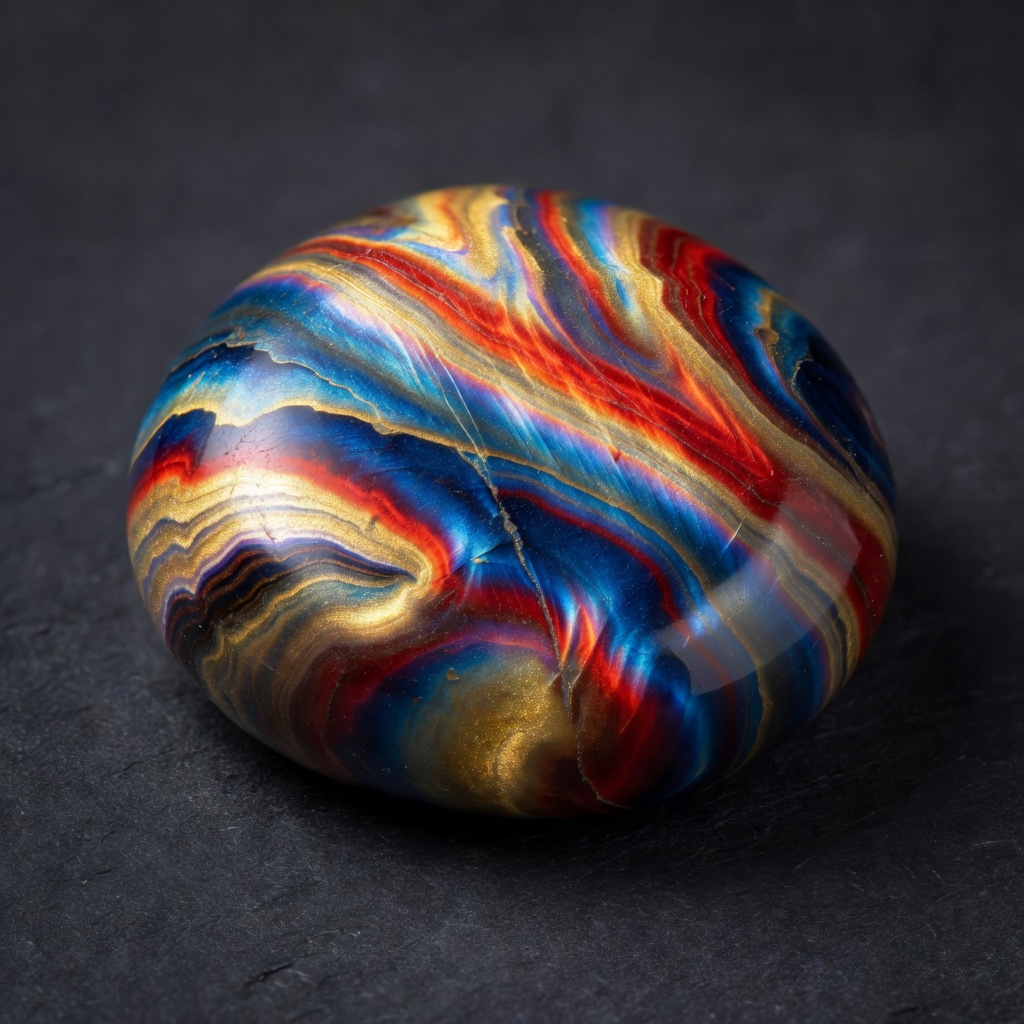
What Is Pietersite? An Introduction to the Tempest Stone
Pietersite stands as one of the most visually arresting gemstones in the mineral kingdom, captivating collectors and jewelry enthusiasts with its dramatic storm-like appearance. This rare brecciated aggregate of hawk's eye and tiger's eye represents a unique geological phenomenon where fractured fragments of these fibrous quartz varieties become re-cemented through natural processes, creating chaotic swirling patterns unlike any other stone. The Pietersite stone meaning extends far beyond its physical beauty, embodying the raw power of transformation and the dynamic energy of weather systems frozen in time.
The discovery of this extraordinary mineral occurred in 1962 when Sid Pieters, a renowned mineral prospector, stumbled upon striking blue and gold specimens while exploring the arid landscapes of Namibia, Africa. Recognizing the material's distinct characteristics from traditional tiger's eye, Pieters documented the find and secured the naming rights, ensuring his legacy would remain forever intertwined with this remarkable gemstone. The nickname "Tempest Stone" emerged naturally from the stone's appearance, as high-quality specimens display violent swirling patterns that evoke images of storm clouds churning across darkened skies, complete with lightning-like flashes of chatoyant light that seem to move across the surface as the stone rotates.
Unlike many gemstones that form through slow crystallization processes, Pietersite represents a moment of geological violence and subsequent healing, where existing mineral structures were shattered and reformed under intense pressure. This turbulent origin story contributes significantly to the stone's metaphysical reputation, making it particularly meaningful for individuals navigating major life transitions or seeking to harness chaotic energies for personal growth. The combination of blue crocidolite fibers (hawk's eye) and oxidized golden fibers (tiger's eye) within a single specimen creates a visual complexity that continues to fascinate gemologists and lapidary artists worldwide.
Geological Formation and Primary Sources
Understanding the Pietersite properties and information surrounding its formation requires examining the complex replacement processes that create this brecciated marvel. The journey begins deep within the earth's crust, where silica-rich hydrothermal solutions permeate existing blue asbestos (crocidolite) deposits, gradually replacing the fibrous structure while maintaining the original alignment of the asbestos fibers. This pseudomorphic replacement creates the foundation for the chatoyancy that defines high-quality specimens, as the parallel silica fibers reflect light in distinctive banded patterns reminiscent of a cat's eye.
The defining characteristic of Pietersite—its chaotic, storm-like appearance—results from a secondary geological process called brecciation, where tectonic forces or meteoric impacts fracture the existing hawk's eye and tiger's eye material into angular fragments. These shattered pieces subsequently become cemented together by additional silica or iron-rich solutions, creating a jigsaw puzzle of differently oriented fiber sections that intersect at random angles. This brecciation process distinguishes Pietersite from its more orderly cousins, ensuring that no two specimens display identical patterns, with each stone preserving a unique moment of geological disruption and reformation.
Currently, authentic Pietersite deposits exist in only two locations worldwide, making it significantly rarer than many commercially available gemstones. The original Namibian deposits discovered by Sid Pieters continue to produce material characterized by dominant blue and gold colorations, with the blue crocidolite fibers creating striking contrasts against golden oxidized sections. Meanwhile, Chinese deposits discovered in the 1990s near the Hunan Province yield material with predominantly red and gold tones, featuring different pattern characteristics due to variations in the brecciation and mineralization processes. Both sources remain limited, with the Namibian material generally considered more valuable due to its superior chatoyancy and the historical significance of the original discovery.
Physical Properties and Durability Factors
When evaluating Pietersite properties for jewelry applications or collection purposes, understanding its physical characteristics becomes essential for proper care and setting selection. Pietersite registers between 6.5 and 7 on the Mohs hardness scale, positioning it as a moderately durable gemstone suitable for various jewelry applications, though it requires protective settings in rings to prevent scratching from harder materials like diamonds, sapphires, or everyday objects such as steel keys and countertops. This hardness level allows lapidaries to achieve a high polish while maintaining sufficient durability for pendants, earrings, and occasional-wear rings when properly cared for.
Gemologically, Pietersite exhibits specific gravity ranging from 2.58 to 2.64, consistent with other microcrystalline quartz varieties, while refractive indices typically fall between 1.54 and 1.55. These measurable characteristics help gemologists distinguish genuine Pietersite from glass imitations or treated materials, as synthetic versions often display uniform optical properties lacking the natural variations found in authentic specimens. Under magnification, genuine Pietersite reveals intricate fibrous structures and the characteristic brecciated texture that defines the material, with visible boundaries between different oriented sections creating the stone's signature chaotic appearance.
The most visually striking physical property of Pietersite remains its distinctive chatoyancy, an optical phenomenon caused by the reflection of light from parallel fibrous inclusions within the stone. Unlike tiger's eye, which displays straight, uniform chatoyant bands, Pietersite exhibits multiple chatoyant sections oriented in different directions, creating the tempest-like effect where light seems to swirl and move across the surface in complex patterns. This multidirectional chatoyancy requires skilled lapidary work to maximize, as cutters must orient the stone to display the most vibrant flashes while accounting for the irregular patterning inherent in brecciated material. High-quality specimens demonstrate sharp, silky luster with light reflections that shift dramatically as the stone moves, mimicking the appearance of sunlight breaking through storm clouds.
Color Variations and Visual Characteristics
The aesthetic appeal of this chatoyant blue gemstone stems from its remarkable color palette, which combines the deep midnight blues of hawk's eye with the warm golden browns of tiger's eye and occasional reddish-orange highlights. Premium specimens display a rich interplay of these colors, with the blue crocidolite fibers creating dramatic backgrounds against which golden and reddish sections swirl in unpredictable patterns. The most valued pieces exhibit intense, saturated colors with sharp contrast between the different mineral components, while lower-quality material may appear muddy or washed out with indistinct color boundaries.
Collectors and gem enthusiasts specifically seek the "tempest effect"—a term describing the appearance of multiple colors swirling together in high-quality specimens to create the illusion of a storm captured within the stone. This effect results from the brecciated structure, where fragments of blue hawk's eye, golden tiger's eye, and occasionally red jasper or iron oxide inclusions meet at sharp angles, creating interfaces that catch light differently depending on viewing angle. When properly cut as cabochons with high domes, these stones display living, moving patterns that seem to churn and shift as the stone rotates, offering an interactive visual experience unmatched by static gemstones.
Distinct differences exist between material sourced from Namibia versus China, providing important considerations for collectors building comprehensive specimen collections. Namibian Pietersite typically features dominant blue and gold color combinations with relatively large brecciated sections, creating bold, dramatic patterns that display excellent chatoyancy across broad areas. In contrast, Chinese Pietersite tends toward red and gold colorations with finer, more intricate brecciation patterns that create a busier, more complex visual texture. While both varieties possess their own aesthetic merits, the Namibian blue material generally commands higher prices in the market due to its rarity, the historical significance of the original discovery, and the striking beauty of its deep blue fibers, which many collectors consider the definitive expression of the Tempest Stone.
Metaphysical Properties and Crystal Healing Benefits
Within crystal healing traditions, Pietersite healing crystals occupy a unique position as stones of transformation and vision, drawing their energetic properties from the storm element they so visually represent. Practitioners associate Pietersite with the raw, cleansing power of thunderstorms, believing that the stone carries the ability to break through stagnant energies and clear away old patterns much as lightning illuminates and purifies the atmosphere. This connection to storm energy makes it particularly valuable for individuals undergoing major life transitions, whether navigating career changes, relationship endings, spiritual awakenings, or personal reinventions, as the stone is thought to provide both the disruptive force necessary for change and the grounding stability to weather the transformation safely.
Energy workers specifically value Pietersite for its ability to activate and align both the third eye (sixth) chakra and the solar plexus (third) chakra simultaneously, creating a powerful bridge between intuitive vision and personal willpower. When placed on the third eye during meditation, practitioners report enhanced psychic abilities, clearer visualization, and strengthened intuition, while placement on the solar plexus is believed to boost confidence, personal power, and the courage to take decisive action. This dual activation is considered rare among healing stones, as most crystals specialize in either upper chakra spiritual work or lower chakra grounding, whereas Pietersite is thought to integrate spiritual insight with practical manifestation.
Protection during spiritual journeys represents another significant application for Pietersite in metaphysical practices. The stone serves as a "stone of vision" for shamanic work and astral travel, believed to create an energetic shield around the user while facilitating safe passage through different planes of consciousness. Many healers recommend carrying Pietersite during times of uncertainty or chaos, not to calm the storm per se, but to help the bearer navigate turbulence with enhanced clarity and purpose. Case studies from crystal therapy practitioners suggest that clients working with Pietersite often experience breakthrough moments regarding long-standing emotional blocks, reporting sudden insights or "lightning bolt" realizations that catalyze profound healing and personal growth.
Pietersite vs Tiger's Eye: Understanding the Relationship
While Pietersite vs tigers eye comparisons often arise due to their shared chemical composition and fibrous structures, understanding their distinct differences helps collectors appreciate the unique value of each stone. Both minerals form through the silica replacement of crocidolite (blue asbestos) fibers, creating the chatoyancy that defines the tiger's eye mineral group. However, Tiger's Eye represents the end result of a straightforward pseudomorphic process where the fibers remain aligned in parallel formations, creating the characteristic straight, banded chatoyant effect that moves uniformly across the stone when rotated.
Pietersite diverges from this pattern through the brecciation process, where the original fibrous material fractures into angular pieces before being re-cemented, resulting in a chaotic, multidirectional structure. While Tiger's Eye displays organized, linear bands that behave predictably under light, Pietersite presents a shattered, storm-like appearance with chatoyant sections oriented in multiple directions simultaneously. This structural difference creates distinct visual experiences: Tiger's Eye offers meditative, steady energy with its regular patterning, while Pietersite provides dynamic, turbulent visual interest with light reflecting from numerous angles at once. The color complexity also differs significantly, as Tiger's Eye typically presents golden to brown tones with occasional blue sections (hawk's eye), whereas Pietersite regularly incorporates blues, golds, and reds in complex intermingled patterns rarely seen in standard Tiger's Eye specimens.
From a collector's perspective, rarity and market value distinguish these stones significantly. Tiger's Eye remains relatively abundant and affordable, with deposits found across multiple continents including South Africa, Australia, and the United States, making it accessible for beginning collectors and jewelry makers. Pietersite, conversely, exists in only two known localities worldwide with limited production, classifying it as a true collector's stone with correspondingly higher price points. While a fine Tiger's Eye cabochon might cost a few dollars per carat, high-quality Namibian Pietersite can command twenty to one hundred times that amount, reflecting not only its scarcity but also the difficulty in finding specimens with intense coloration and strong chatoyancy. For investors building mineral collections, Pietersite offers appreciation potential that Tiger's Eye generally cannot match, though both stones remain beloved for their optical phenomena and earth-toned beauty.
Applications in Jewelry and Decorative Arts
The distinctive Tempest stone properties make Pietersite a favorite among lapidary artists and jewelry designers seeking to create statement pieces that capture attention through natural artistry rather than faceting precision. Optimal cutting styles universally favor the cabochon form, where the stone is shaped and polished into a smooth, domed surface without facets, allowing the chatoyant fibers to display their full visual impact. Experienced cutters carefully study rough material before cutting, sometimes spending hours determining the precise orientation that will maximize the "storm" effect, as improper cutting can result in dull, lifeless appearance or missed opportunities to showcase the most vibrant color sections. High-domed cabochons generally perform best, as the curvature enhances the chatoyancy and creates the illusion of depth within the swirling patterns.
Popular jewelry settings for Pietersite emphasize protection and display equally, given the stone's moderate hardness and unique appearance. Pendants and necklaces allow the stone to rest against the skin—important for those who value the metaphysical properties—while keeping the gem safe from the impacts and abrasions common to rings. When set in rings, protective bezel settings that wrap metal around the stone's edges prove superior to prong settings, safeguarding the vulnerable girdle area from chipping during daily wear. Beaded bracelets featuring Pietersite spheres or nuggets have gained popularity in men's jewelry and unisex designs, offering a way to wear the stone's energy while showcasing its patterns across multiple angles. High-end designers occasionally incorporate Pietersite into cufflinks, tie clips, and statement earrings, where the stone's conversation-starting appearance adds sophistication to formal attire.
Beyond wearable jewelry, Pietersite serves as a premier material for high-end collector specimens and display pieces within mineral collections. Freeform polished slabs that preserve the rough brecciated texture on the back while displaying high-gloss chatoyant surfaces on the front command premium prices among lapidary art collectors. Spheres carved from Pietersite create stunning display pieces where the tempest patterns wrap continuously around the surface, offering 360-degree views of the stone's complexity. Some artisans incorporate Pietersite into inlay work for knife handles, fine writing instruments, or luxury box lids, where small pieces of the material create mosaic patterns that highlight the color variations between blue and gold sections. These decorative applications recognize Pietersite not merely as a gemstone but as a natural artwork worthy of display in curated collections and luxury interiors.
Authenticity, Quality Grading, and Buying Guide
When investing in Namibian Pietersite or Chinese varieties, understanding authentication techniques protects buyers from the glass imitations and dyed materials occasionally encountered in the marketplace. Genuine Pietersite displays natural chatoyancy that shifts and moves with changing light angles, whereas glass imitations often show static, painted patterns or uniform coloration lacking the fibrous structure visible under magnification. Testing hardness provides a reliable identification method, as genuine Pietersite (hardness 6.5-7) will scratch glass (hardness 5.5) while glass imitations obviously cannot. Under a jeweler's loupe or microscope, authentic material reveals intricate fibrous structures and the characteristic brecciated boundaries between differently oriented sections, features that synthetic manufacturing processes cannot replicate convincingly at scale.
Quality grading for Pietersite focuses on three primary indicators: color intensity, pattern complexity, and chatoyancy strength. Premium specimens exhibit vivid, saturated colors—deep midnight blues, rich goldens, and fiery reds—with sharp contrast between the different mineral components rather than muddy, blended tones. Pattern complexity refers to the intricacy and drama of the brecciated sections, with high-quality stones displaying bold, swirling tempest patterns rather than sparse, fragmented sections. Chatoyancy strength determines how sharply the stone reflects light, with top-grade material showing bright, silky bands of light that move dramatically across the surface, while lower grades may display only weak, diffused sheen. Buyers should examine stones under multiple light sources, as some specimens appear vibrant under direct lighting but dull under diffuse indoor lighting.
Price ranges for Pietersite vary dramatically based on quality and origin, with Namibian blue specimens commanding premium positions in the market. Entry-level Chinese material with muted colors and weak chatoyancy might range from $5 to $20 per carat, suitable for costume jewelry or beginning collectors. Mid-grade material from either source showing good color contrast and visible chatoyancy typically falls between $20 and $50 per carat, offering excellent value for serious jewelry pieces. Investment-grade Namibian Pietersite with intense blue coloring, dramatic storm patterns, and sharp chatoyancy can exceed $200 per carat, with exceptional museum-quality specimens potentially reaching higher figures. When building a collection, prioritize stones with provenance documentation indicating Namibian origin, as this material becomes increasingly scarce and historically significant, offering stronger long-term appreciation potential than the more recently discovered Chinese deposits.
Care, Cleaning, and Maintenance Best Practices
Proper maintenance ensures that your Pietersite specimens retain their lustrous beauty and structural integrity for generations, preserving both their aesthetic and monetary value. Safe cleaning methods rely exclusively on mild soap and lukewarm water, using a soft-bristled brush—such as a baby toothbrush—to gently remove accumulated oils and debris from the surface and any setting crevices. After washing, rinse thoroughly under running water to remove soap residue, then pat dry immediately with a soft, lint-free cloth to prevent water spots from dulling the polish. This gentle approach suffices for routine maintenance and addresses the environmental oils and dust that gradually diminish chatoyancy in worn jewelry pieces.
Certain cleaning methods pose significant risks to Pietersite and must be strictly avoided to prevent irreversible damage. Ultrasonic cleaners create vibrations that can exacerbate existing fractures within the brecciated structure, potentially causing stones to crack or shatter during the cleaning process. Steam cleaning subjects the stone to rapid temperature changes and high pressure, which may cause thermal shock or damage to any existing inclusions or fracture lines. Harsh chemicals including bleach, ammonia, and commercial jewelry cleaning solutions can etch the surface or react with iron inclusions, permanently altering the stone's color or luster. Similarly, extended soaking in water should be avoided, as porous sections within the brecciated structure might absorb moisture, leading to internal staining or weakening of the stone over time.
Storage recommendations focus on preventing contact with harder gemstones and protecting against environmental factors. Store Pietersite jewelry separately in soft cloth pouches or individual compartments within a jewelry box, keeping pieces away from diamonds, rubies, sapphires, and other materials that could scratch the surface. For loose specimens or display pieces, acid-free tissue paper or cotton-lined boxes provide ideal environments that buffer against impacts while allowing air circulation to prevent moisture buildup. Avoid storing Pietersite in direct sunlight for extended periods, as prolonged UV exposure might eventually fade the blue crocidolite fibers in some specimens, though this process occurs slowly compared to more photosensitive stones like amethyst. When traveling with Pietersite jewelry, use padded containers and consider removing rings before activities involving impact risks, such as gardening, sports, or heavy lifting, to preserve both the stone and its setting.
Conclusion: Why Pietersite Deserves a Place in Your Collection
As we conclude this exploration of Pietersite Properties and Information, the unique position of this Tempest Stone within the gemstone world becomes abundantly clear. No other chatoyant gemstone matches the dynamic, storm-like visual impact of high-quality Pietersite, where the chaotic interplay of blue, gold, and red fibers creates living artwork within each specimen. Whether you approach this stone as a mineral collector seeking rare specimens, a jewelry enthusiast desiring conversation-starting pieces, or a spiritual practitioner working with crystal energies, Pietersite offers multidimensional value that transcends its physical composition. The Pietersite stone meaning resonates across these diverse interests, representing transformation, vision, and the beautiful results of geological upheaval.
For those navigating periods of change or seeking enhanced intuition, the metaphysical properties of Pietersite provide tools for personal growth that complement its aesthetic appeal. The stone's ability to activate both the third eye and solar plexus chakras creates a rare energetic bridge between spiritual insight and practical action, supporting manifestation work and protective practices simultaneously. As a "stone of vision," it serves practitioners across multiple healing modalities, from reiki masters to shamanic journeyers, offering grounding during astral travel and clarity during meditation. These spiritual applications, combined with the stone's undeniable beauty, create a holistic value proposition that few other gemstones can match.
From an investment perspective, Pietersite represents an increasingly wise acquisition for serious collectors. With authentic deposits limited to Namibia and China, and the Namibian mines producing diminishing quantities of high-grade material, scarcity continues to drive value appreciation in the collector market. Unlike mass-produced gems subjected to treatments and synthetic manufacturing, each Pietersite specimen remains a unique natural creation—literally a frozen moment of geological history captured in silica and iron. Whether displayed as a polished cabochon in a protective pendant setting, showcased as a freeform specimen in a mineral cabinet, or carried as a pocket stone for daily energetic support, Pietersite rewards its owners with endless visual fascination and profound symbolic resonance. In a world of mass-produced uniformity, the Tempest Stone reminds us that nature's most beautiful creations often emerge from chaos, offering both aesthetic pleasure and spiritual wisdom to those who choose to work with its powerful energies.
Frequently Asked Questions About Pietersite
What is Pietersite and how does it form naturally?
Pietersite is a brecciated aggregate of hawk's eye and tiger's eye that forms when silica-rich solutions replace blue asbestos fibers in fractured rock, creating its signature chaotic, storm-like patterns with chatoyant flashes of blue, gold, and red.
What are the main healing properties associated with Pietersite?
Known as the 'Tempest Stone,' Pietersite is believed to support major life transformations, enhance intuition and psychic vision, provide protection during spiritual journeys, and activate both the third eye and solar plexus chakras for balanced personal power.
How can you identify genuine Pietersite versus imitation stones?
Authentic Pietersite displays natural chatoyancy with chaotic, swirling patterns rather than straight bands, has a Mohs hardness of 6.5-7 (can scratch glass), shows fibrous structure under magnification, and possesses a silky luster that glass or plastic imitations cannot replicate perfectly.
Where are the primary sources of Pietersite located?
True Pietersite is found in only two locations worldwide: Namibia (discovered in 1962 by Sid Pieters, characterized by dominant blue and gold colors) and China (featuring predominantly red and gold tones with different pattern characteristics).
Is Pietersite considered an expensive gemstone?
Pietersite is classified as a rare collector's stone, with prices varying significantly by quality. Namibian blue specimens command premium prices ranging from $20 to $200+ per carat, while Chinese material is generally more affordable but still valuable due to the stone's overall rarity.
What is the difference between Pietersite and Tiger's Eye?
While both contain crocidolite fibers, Pietersite is brecciated—meaning it consists of fractured fragments cemented together creating chaotic storm patterns—whereas Tiger's Eye displays straight, parallel fibrous bands. Pietersite also exhibits more color variety including blues and reds rarely seen in Tiger's Eye.
Can Pietersite be cleansed with water or does it require special care?
Pietersite can be safely cleaned with mild soapy water and a soft brush, but should not be soaked for extended periods. Avoid ultrasonic cleaners, steam cleaning, harsh chemicals, and extreme temperature changes which could damage the stone's structure or polish.
Which chakras does Pietersite primarily work with?
Pietersite primarily resonates with the third eye (sixth) chakra to enhance intuition and spiritual vision, and the solar plexus (third) chakra to support personal willpower and confidence, creating a bridge between spiritual insight and practical action during transformation.


