
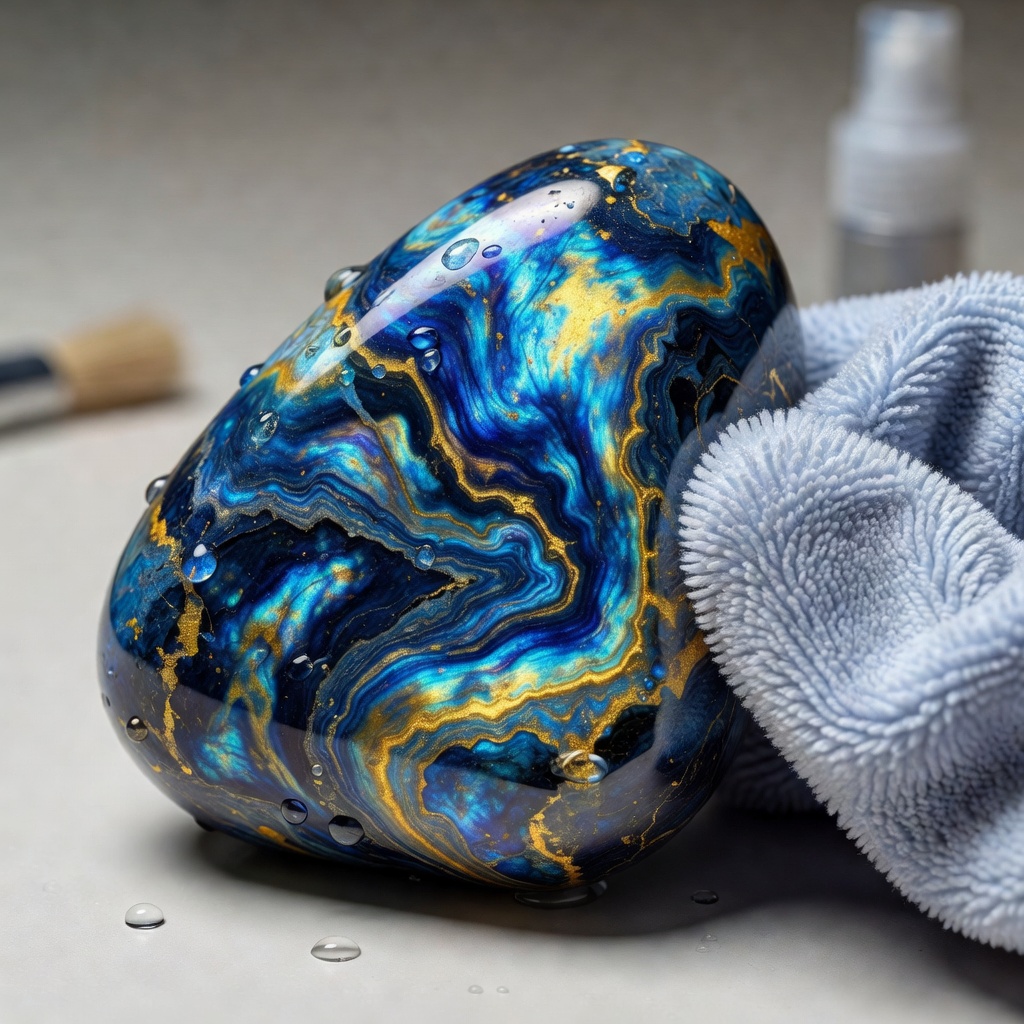
Introduction to Pietersite and Its Unique Properties
Pietersite represents one of the most captivating discoveries in the gemstone world, first identified by Sid Pieters in 1962 while exploring Namibia in Southwest Africa. This extraordinary stone belongs to the quartz family and shares its fibrous composition with Tiger's Eye and Hawk's Eye, yet displays a distinctive optical phenomenon that sets it apart from its geological cousins. The gem exhibits a remarkable tempest-like pattern where gold, blue, and brown hues swirl together in chaotic yet beautiful arrangements, creating what gemologists describe as a "brecciated" chatoyant effect that resembles a storm captured within stone.
Understanding proper Pietersite gemstone maintenance begins with appreciating its unique geological formation, which occurs when crocidolite fibers undergo replacement by silica through a process of pseudomorphism. Unlike the parallel fiber alignment found in Tiger's Eye, Pietersite features fragmented and swirled fibrous structures that create its signature chaotic chatoyancy. This complex internal architecture makes the stone particularly susceptible to damage from improper handling, as the interlocking fibers can separate under stress or harsh chemical exposure. Collectors and jewelry enthusiasts must recognize that these Tempest stone properties require specialized knowledge to preserve both the structural integrity and the mesmerizing optical effects that make Pietersite so valuable.
Understanding Pietersite's Physical Vulnerabilities
Before establishing an effective care routine, owners must comprehend the specific physical limitations that govern Pietersite hardness and durability. Ranking between 6.5 and 7 on the Mohs hardness scale, Pietersite sits in a moderate range that leaves it vulnerable to scratching from harder materials commonly found in jewelry collections and household environments. Diamonds, rubies, sapphires, and even quartz particles present in dust can mar the surface over time, potentially diminishing the stone's characteristic luster and chatoyant display. This moderate hardness combined with its distinctive fibrous gemstone structure creates a unique care challenge that differs significantly from both softer stones like opal and harder gems like topaz.
The fibrous composition that creates Pietersite's beauty also constitutes its primary weakness, as these microscopic mineral fibers can trap dirt, oils, and chemical residues within their interlocking matrix. Unlike non-porous gems such as garnet or diamond, Pietersite possesses a degree of porosity that allows contaminants to penetrate surface layers, potentially causing permanent discoloration or structural degradation if exposed to harsh substances. Additionally, the stone exhibits pronounced sensitivity to thermal shock, meaning rapid temperature fluctuations can cause internal stress fractures or exacerbate existing inclusions. A Pietersite ring left in a hot car during summer or exposed to freezing winter conditions while worn outdoors risks developing internal cracks that compromise both beauty and stability.
Daily Wear and Handling Best Practices
Implementing consistent Pietersite handling tips into your daily routine represents the first line of defense against premature wear and damage. Always remove Pietersite jewelry before engaging in physical activities such as gardening, sports, or gym workouts, as impact against hard surfaces can fracture the stone or loosen its setting. Swimming presents particular risks, as chlorine in pools and salt in ocean water can chemically react with the stone's fibrous structure, while cold water contraction combined with body heat creates thermal stress. Even household chores involving cleaning agents, abrasive scrubbing, or contact with hard countertops should prompt immediate removal of your Pietersite pieces.
Proper daily gemstone care extends to how you put on and remove your jewelry throughout the day. Always wash your hands thoroughly with mild soap before handling Pietersite to prevent the transfer of skin oils, lotions, and cosmetic residues that can accumulate in the stone's surface grooves. When dressing, adopt the "last on, first off" principle: put your Pietersite jewelry on after applying makeup, hairspray, perfume, and sunscreen, as these products contain chemicals that can etch or dull the surface over time. Similarly, remove your pieces before undressing to prevent accidental snagging on clothing fibers or impact against buttons and zippers. Consider designating a specific soft tray or dish near your vanity for temporary placement during these transition periods, ensuring you never place Pietersite directly on hard surfaces like marble or glass countertops.
Safe Home Cleaning Methods for Pietersite
Learning how to clean Pietersite stone properly at home requires gentle techniques that respect its fibrous composition while effectively removing accumulated grime. Begin by filling a small bowl with lukewarm water—approximately room temperature to avoid thermal shock—and add two or three drops of mild pH-neutral soap such as unscented castile soap or specialized jewelry cleaner formulated for delicate stones. Avoid hot water, which can expand the stone unevenly, and never use cold water that might cause contraction stress. Submerge your Pietersite piece briefly, no longer than one to two minutes, to prevent water from seeping into microscopic surface imperfections or setting gaps.
For safe gemstone cleaning methods, employ a soft-bristled brush such as a baby toothbrush or specialized jewelry cleaning brush with extremely fine bristles. Gently work the soapy water around the stone's surface, paying special attention to the grooves and valleys where the chatoyant patterns create natural collection points for dirt and oils. Use light, circular motions rather than aggressive scrubbing, and angle the brush to clean beneath the stone's edges if set in a bezel or prong setting. Rinse thoroughly under a gentle stream of lukewarm water, ensuring all soap residue washes away as dried detergent can leave a filmy deposit that dulls the chatoyant effect.
Proper drying techniques prove equally important for fibrous stone preservation. Pat the Pietersite gently with a lint-free microfiber cloth or chamois, avoiding paper towels that can leave scratch-inducing fibers or dust particles. Allow the piece to air dry completely on a clean towel for several hours before storing, as trapped moisture can promote tarnishing in metal settings or encourage bacterial growth in the stone's porous areas. Never use hair dryers or heat lamps to accelerate drying, as concentrated heat sources can cause internal fracturing. For intricate pieces with extensive metalwork, consider using a soft cosmetic brush to wick away moisture from crevices between the stone and setting.
Cleaning Agents and Methods to Avoid
Understanding what not to do proves just as critical as knowing proper techniques when addressing Pietersite cleaning mistakes. Never subject your stone to ultrasonic cleaners, regardless of how tempting the convenience might seem. These devices operate by generating high-frequency sound waves that create microscopic cavitation bubbles in cleaning solutions; while effective for diamonds or sapphires, this violent vibration can literally shake apart the fibrous structure of Pietersite, causing internal cracks or complete stone failure. The rapid oscillation can also loosen the stone within its setting, leading to catastrophic loss during subsequent wear.
Steam cleaning represents another prohibited method for Pietersite jewelry, despite its popularity for other gem varieties. The combination of extreme heat and pressure forces moisture and steam into the stone's fibrous layers, potentially causing expansion damage and permanent clouding of the chatoyant effect. When considering gemstone chemicals to avoid, eliminate ammonia-based cleaners, bleach, alcohol solutions, acetone, and commercial jewelry dips designed for gold or silver cleaning. These aggressive substances can dissolve the natural oils within the crocidolite fibers, alter the stone's color chemistry, or etch the surface microscopically. Even seemingly mild household products like toothpaste, baking soda pastes, or vinegar solutions pose significant risks due to their abrasive or acidic nature.
Proper Storage Solutions for Longevity
Implementing appropriate Pietersite storage tips ensures your gemstone remains pristine during periods of non-wear. Always store each piece individually in soft fabric pouches, lined jewelry boxes with separate compartments, or acid-free tissue paper to prevent contact with harder gemstones. A Pietersite pendant tossed casually into a jewelry box with diamond earrings or sapphire rings will inevitably accumulate surface scratches that scatter light and diminish its chatoyant display. Consider investing in a jewelry armoire with dedicated soft-lined drawers, or utilize small organza bags within a larger storage container to maintain separation.
Environmental factors play a crucial role in gemstone storage solutions. Maintain stable humidity levels around 40-50% to prevent the stone from drying out excessively or absorbing atmospheric moisture that could affect its fibrous structure. Avoid storing Pietersite in direct sunlight or under strong UV lamps, as prolonged light exposure can fade the vibrant blue and gold patterns that characterize high-quality specimens. Bathrooms, despite their convenience, make poor storage locations due to fluctuating humidity and temperature cycles from showers. Instead, choose a bedroom dresser drawer or closet shelf away from heating vents and windows. For valuable collections, include silica gel packets in your storage containers to control moisture, ensuring they don't touch the stones directly.
Maintaining Pietersite in Jewelry Settings
Effective Pietersite jewelry cleaning requires attention to the interface between the stone and its metal housing, whether set in sterling silver, gold, platinum, or copper alloys. Dirt and debris accumulation around prongs, bezels, or channel settings not only detracts from appearance but can exert pressure on the stone, potentially causing chips or loosening over time. When cleaning at home, use a wooden toothpick or soft rubber ear stick to gently dislodge buildup from these tight spaces, working carefully to avoid prying the stone from its mount. Pay particular attention to the underside of the stone, where body oils and soap residue commonly accumulate and can create a dark, lifeless appearance even when the top surface appears clean.
Regular inspection forms a critical component of gemstone setting maintenance. Examine your Pietersite pieces monthly using a jeweler's loupe or strong magnifying glass to check for loose prongs, worn bezels, or gaps between the stone and setting. If you notice wiggling, clicking sounds when tapping the stone gently, or visible gaps where light passes through, discontinue wearing immediately and consult a professional. Never attempt to tighten prongs or repair settings at home, as the pressure required can crack the Pietersite. For intricate vintage pieces or stones set in adhesive-backed mountings, professional removal for deep cleaning becomes necessary every 12-18 months to address areas impossible to reach with home tools.
Recognizing When Professional Care is Necessary
Despite diligent home maintenance, certain conditions warrant Professional Pietersite cleaning by experienced gemologists or jewelers familiar with fibrous chatoyant stones. If your stone exhibits persistent cloudiness, embedded dirt in deep surface grooves, or a matte appearance that doesn't improve with gentle soap cleaning, professional intervention becomes necessary. Look for specialists who specifically advertise experience with Tiger's Eye, Hawk's Eye, or Pietersite itself, as these stones require different handling than diamonds or emeralds. A qualified professional will use steam-free, chemical-free cleaning methods such as specialized ionic cleaners or manual tools designed for porous stones.
Gemstone restoration services offer solutions for Pietersite that has suffered surface damage or lost its chatoyant luster through years of wear. Professional repolishing involves carefully removing microscopic layers of damaged material using diamond-impregnated wheels and fine polishing compounds specifically selected for quartz-based fibrous stones. This process can restore the tempest-like flash and depth of color that originally attracted you to the stone. However, repolishing should be undertaken sparingly, as each session removes material and can alter the stone's dimensions. Before authorizing any work, request that the jeweler examine the stone for internal fractures that might worsen during the polishing process, and always obtain documentation of the stone's pre-treatment condition for insurance purposes.
Restoring and Enhancing Natural Chatoyancy
Over time, even well-cared-for Pietersite may require intervention to restore its characteristic optical effects, making knowledge of restoring Pietersite shine valuable for collectors. Gentle buffing using specialized gemstone polishing cloths impregnated with micro-abrasives can remove superficial oxidation and minor surface scratches that diffuse light. Work in small circular motions using minimal pressure, checking frequently under good lighting to monitor progress. For stones set in jewelry, protect the metal components by masking them with painter's tape during buffing to prevent accidental scratching of gold or silver surfaces.
The gemological community remains divided regarding mineral oil treatments for chatoyant stone care. Some collectors apply tiny amounts of colorless mineral oil or baby oil to Pietersite to temporarily enhance the chatoyancy by filling microscopic surface pores and reducing light scatter. While this can create a dramatic temporary improvement in appearance, opponents argue that oil residues attract dust, turn rancid over time, and require frequent reapplication that ultimately attracts more grime than it prevents. If you choose this method, apply one drop to a soft cloth rather than directly to the stone, wipe gently, and remove all excess immediately. Alternatively, professional opticon or similar sealant treatments offer longer-lasting protection but should only be applied by experienced lapidaries.
Light management significantly impacts the long-term preservation of Pietersite's coloration. The vibrant blues and golds that create the stone's storm-like appearance can fade when exposed to prolonged direct sunlight or intense artificial UV sources. When not wearing your Pietersite, store it in opaque containers or dark drawers rather than glass display cases that might magnify light exposure. If displaying specimens in a collection, use LED lighting rather than halogen or incandescent bulbs, which emit more UV radiation and heat. Rotate displayed pieces every few months to ensure even aging, and consider using museum-quality UV-filtering glass for valuable specimens in shadow boxes or display cases.
Long-Term Preservation Strategies
Developing a comprehensive Pietersite care and cleaning summary for your collection ensures these unique gemstones remain vibrant for future generations. Establish a regular maintenance calendar: perform quick visual inspections weekly, gentle cleaning monthly for frequently worn pieces, and deep evaluation annually with a professional jeweler. Document each cleaning session in a jewelry log, noting any changes in appearance, new scratches, or setting concerns. This documentation proves invaluable for tracking degradation patterns and establishing provenance if you later choose to sell or insure the piece.
Insurance and appraisal considerations form critical components of long-term gemstone preservation. Ensure your Pietersite pieces are specifically listed on your homeowner's or renter's insurance policy with current appraisals that account for the stone's rarity and condition. Photograph each piece under natural light from multiple angles to capture the chatoyant effects, and store these images with your appraisal documents. When acquiring estate pieces or inherited Pietersite, request any existing care history from the previous owner to understand prior treatments or known vulnerabilities.
Passing down proper care knowledge ensures heirloom preservation for future generations. Create written care instructions to accompany gifted pieces, explaining the stone's unique properties and specific maintenance requirements. Consider establishing a "care kit" including a soft pouch, microfiber cloth, and pH-neutral soap to accompany significant pieces given to family members. By educating recipients about the stone's geological significance and proper handling, you ensure that the tempest-like beauty of Pietersite continues to captivate viewers for decades to come, maintaining both sentimental and monetary value across generations.
Frequently Asked Questions
Can Pietersite be cleaned with water?
Yes, Pietersite can be safely cleaned with lukewarm water and mild soap. However, avoid extreme temperature changes and never soak the stone for extended periods. Always dry thoroughly with a soft cloth to prevent water spots from forming in the fibrous structure.
Is Pietersite sensitive to sunlight?
Pietersite is moderately sensitive to prolonged direct sunlight, which can cause the vibrant blue and gold chatoyant colors to fade over time. Store your Pietersite in a dark jewelry box and avoid wearing it during extended sun exposure to preserve its tempest-like appearance.
Can I use commercial jewelry cleaner on my Pietersite?
No, commercial jewelry cleaners containing ammonia, alcohol, or harsh chemicals should never be used on Pietersite. These substances can damage the fibrous structure and dull the stone's chatoyancy. Stick to mild pH-neutral soap and water only.
How often should I clean my Pietersite jewelry?
Clean Pietersite jewelry every 2-3 months with regular wear, or immediately after exposure to sweat, cosmetics, or pollutants. Daily wear pieces may need monthly cleaning, while occasional wear items can be cleaned every 6 months unless visibly soiled.
Why is my Pietersite losing its chatoyant effect?
Loss of chatoyancy usually results from surface scratches, accumulated dirt in the fibrous layers, or dried oils from skin contact. Gentle cleaning with soap and water often restores the effect. If the phenomenon doesn't return, professional repolishing may be necessary to remove microscopic surface damage.
Can Pietersite get scratched easily?
With a hardness of 6.5-7 on the Mohs scale, Pietersite can be scratched by harder materials like diamonds, sapphires, quartz, and even household dust over time. Store it separately from other jewelry and avoid wearing it during activities that might cause abrasion against hard surfaces.
Is it safe to wear Pietersite every day?
While Pietersite is durable enough for occasional daily wear, it's not recommended for constant everyday use, especially in rings or bracelets. The fibrous structure makes it vulnerable to knocks and chemicals encountered in daily life. Reserve daily wear for protected settings like pendants or earrings.
Can ultrasonic cleaners damage Pietersite?
Yes, ultrasonic cleaners can cause severe damage to Pietersite by vibrating the fibrous structure apart, potentially causing cracks or breaking the stone entirely. The rapid vibrations can also loosen the stone in its setting. Always avoid ultrasonic cleaning for Pietersite and other fibrous gemstones.


