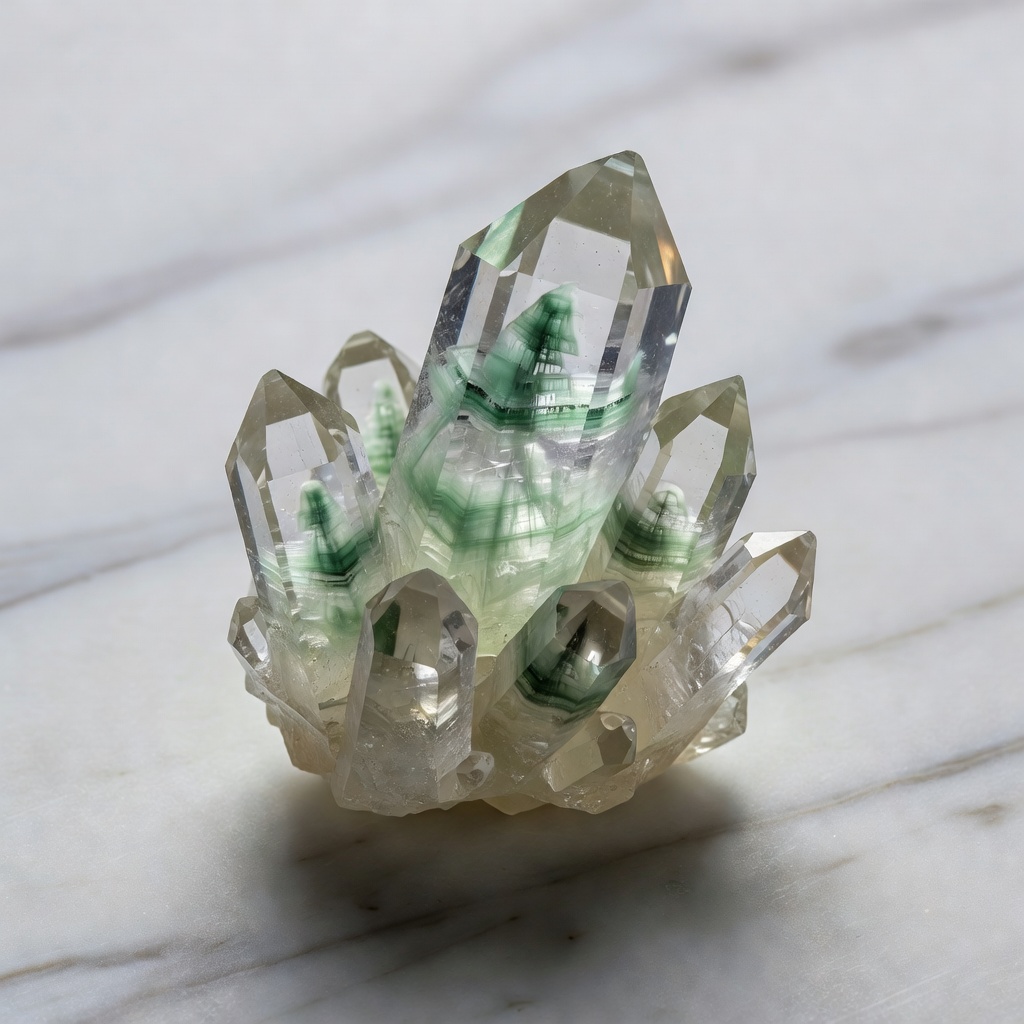
What Is Phantom Quartz? Understanding the Basics
Phantom quartz represents one of nature's most fascinating crystallographic phenomena, displaying ghost-like mineral inclusions that appear suspended within transparent quartz structures. The term "phantom" derives from the Greek word phantasma, meaning ghost or apparition, perfectly describing the ethereal, shadowy layers visible inside these remarkable crystals. Unlike standard clear quartz varieties that form continuously without interruption, phantom quartz captures distinct snapshots of the crystal's growth history, creating three-dimensional images of its former self encapsulated within new crystalline layers. This unique characteristic has captivated mineralogists, collectors, and spiritual practitioners for centuries, establishing phantom quartz as both a scientific curiosity and a powerful metaphysical tool.
Visual identification of authentic ghost phantom quartz requires observing the distinct, ghost-like formations that mirror the original crystal's termination and faces. These phantoms typically appear as slightly cloudy or colored outlines within the crystal, creating the illusion of a smaller crystal floating inside a larger one, much like a Russian nesting doll made of stone. Historical records indicate that ancient civilizations, including the Egyptians and early Asian cultures, revered these stones as physical manifestations of spiritual evolution and the soul's journey through multiple lifetimes. When examining phantom quartz properties and information, collectors distinguish these specimens from standard clear quartz by looking for these internal growth interruptions, which tell the story of environmental changes during the crystal's million-year formation process.
The Geological Formation Process
Understanding phantom quartz formation requires appreciating the delicate dance between geological time, mineral-rich solutions, and environmental stability. The process begins when a quartz crystal starts growing in a hydrothermal vein or pegmatite environment, developing its characteristic hexagonal prism shape and pointed termination. At some point during its development—whether due to tectonic shifts, temperature fluctuations, or changes in the chemical composition of the surrounding hydrothermal fluids—the crystal's growth pauses, creating a momentary resting phase where the crystal face becomes exposed to its environment.
During these growth pauses, mineral-rich solutions containing chlorite, hematite, clay, or other trace minerals deposit microscopic layers onto the crystal's surface, creating a thin "skin" that records the exact shape of the crystal at that specific moment in time. When conditions stabilize and growth resumes, new clear quartz encapsulates this mineral layer, effectively fossilizing the crystal's previous form within its expanding structure. This process may repeat multiple times over millions of years, creating specimens with multiple phantom layers that document different eras of the crystal's development. The specific timeframe required for significant phantom quartz formation typically spans hundreds of thousands to millions of years, depending on the availability of silica-rich solutions and the stability of the geological environment.
The distinction between primary and secondary growth phases becomes crucial when examining these specimens, as primary growth refers to the original crystal formation while secondary growth encompasses the quartz that forms around the mineral inclusions. Chlorite phantom quartz typically forms when iron and magnesium-rich solutions create green phantoms during the resting phase, whereas red and orange varieties result from hematite or iron oxide deposits. Environmental conditions such as pressure, temperature, and the pH level of surrounding fluids determine not only the color of the phantom layers but also their clarity and definition, making each specimen a unique geological time capsule.
Types and Varieties of Phantom Quartz
The world of phantom quartz encompasses a stunning spectrum of varieties, each distinguished by the specific minerals that created their ghostly inclusions. Green chlorite phantom quartz stands as the most commonly encountered variety, displaying vibrant emerald to forest-green phantoms created by chlorite group minerals rich in magnesium and iron. These specimens often form in alpine-type fissures and hydrothermal veins, with the chlorite layers creating particularly vivid contrasts against the crystal's transparent body. Collectors prize chlorite phantoms for their dramatic coloration and the way light interacts with the layered structures, creating depth effects that seem to draw the eye into infinite crystalline spaces.
Red and orange hematite phantom varieties offer distinctly different energetic and visual properties, with iron oxide creating warm, fiery layers that range from brick-red to burnt orange. These specimens often form in iron-rich environments and may display phantoms with metallic luster or earthy, matte finishes depending on the specific iron compounds present. When exploring lodolite vs phantom quartz distinctions, mineral enthusiasts note that while both contain internal inclusions, lodolite—also known as garden quartz or scenic quartz—features mossy, dendritic, or cloud-like inclusions that resemble underwater landscapes or garden scenes rather than the precise geometric layers characteristic of true phantoms. Lodolite inclusions appear randomly distributed throughout the crystal, whereas phantom layers strictly follow the crystallographic form of the host crystal's earlier growth stages.
Rare blue phantom quartz specimens contain inclusions of dolomite, tourmaline, or rare earth minerals that create cool, aquatic-colored layers highly sought after by serious collectors. Amethyst phantom quartz represents another scarce variety, where purple phantoms form through the inclusion of iron and aluminum compounds during specific growth phases, often creating stunning contrast between violet ghost layers and clear or smoky quartz bodies. Some exceptional specimens display multiple colored phantoms stacked within a single crystal, documenting numerous environmental changes and growth interruptions over geological time. These poly-chromatic varieties command premium prices in the collector's market due to their rarity and the complex conditions required for their formation.
Physical Properties and Mineral Characteristics
Comprehensive phantom quartz properties and information must include the mineral's fundamental physical characteristics that define its durability and optical qualities. Phantom quartz maintains the same fundamental structure as standard quartz, crystallizing in the trigonal crystal system with a Mohs hardness rating of 7, making it suitable for jewelry and daily handling while remaining susceptible to scratches from harder materials like topaz or corundum. The specific gravity of phantom quartz typically ranges between 2.65 and 2.66, though this may vary slightly depending on the density of the included minerals within the phantom layers. Refractive indices generally fall between 1.544 and 1.553, creating the brilliant sparkle and light refraction that makes these specimens so visually captivating.
Distinguishing natural phantoms from manipulated or synthetic specimens requires careful visual inspection of the inclusion boundaries and overall crystal structure. Authentic phantom layers display slightly irregular, organic edges that follow the natural crystallographic forms, often showing minor variations in thickness and color intensity rather than the perfect uniformity seen in artificially created specimens. Natural phantoms may also contain tiny fluid inclusions, microscopic bubbles, or healing fractures near the phantom layers, whereas treated stones might show dye concentrations along cracks or perfectly geometric color bands that don't align with natural crystal growth patterns. The inclusions within genuine phantom quartz affect transparency differently depending on their composition—chlorite creates translucent to opaque layers, while some hematite inclusions may appear nearly transparent with metallic highlights.
Market value for these specimens depends significantly on the clarity of both the host crystal and the phantom layers, with highly transparent quartz containing well-defined, colorful phantoms commanding the highest prices. Crystal size also plays a crucial role, with terminated specimens over three inches in length considered collector-grade material. The orientation of the phantom layer matters as well—phantoms that are centered and fully visible through the crystal's main faces prove more desirable than off-center or partially obscured inclusions. Understanding these physical properties helps collectors make informed decisions when adding specimens to their collections and ensures proper care to maintain the stone's natural beauty.
Metaphysical Properties and Healing Benefits
Practitioners working with phantom quartz healing properties consistently report profound effects on emotional processing and trauma release, making these stones particularly valuable for therapeutic settings. The layered structure of phantom quartz serves as a powerful metaphor for the human experience, with each ghost layer representing past experiences, healed wounds, or developmental stages that have shaped the present self. During meditation or energy work, holding a phantom quartz specimen against the heart or third eye chakra facilitates the gentle surfacing of suppressed memories and emotional blockages, allowing for conscious processing and release without overwhelming the practitioner. Many crystal therapists recommend placing phantom quartz under pillows or on nightstands to promote healing dreams and subconscious integration of past experiences.
Physical healing associations with phantom quartz often center on detoxification processes and immune system support, with green chlorite varieties particularly linked to cellular regeneration and cleansing. Healers may place these stones on specific body areas during sessions to draw out stagnant energy or visualize the phantom layers absorbing physical toxins and emotional impurities from the aura. The stone's connection to growth and transformation makes it an excellent companion during major life transitions, such as career changes, relationship shifts, or recovery from illness, providing steady energetic support while navigating unfamiliar territory. Some practitioners create gem elixirs using the indirect method (placing the stone outside the water container) to harness these detoxifying properties for internal use.
Shadow work and self-acceptance practices find powerful allies in phantom quartz, as the visible layers of past growth encourage acknowledgment of all life stages—including mistakes, traumas, and periods of stagnation—as essential components of current wisdom. Unlike some crystals that promote bypassing difficult emotions, phantom quartz insists on integration, teaching that every phase of existence contributes to the complete self. Therapists working with clients on self-esteem issues often use these stones to demonstrate that perceived flaws or "ghosts" from the past actually create depth, character, and beauty when properly integrated. Regular work with phantom quartz can shift perspective from viewing past hardships as burdens to recognizing them as foundational layers that support current spiritual maturity.
Spiritual Meaning and Consciousness Expansion
The phantom quartz crystal meaning extends deeply into realms of past life recall and akashic record access, with the stone's layered structure serving as a physical metaphor for the soul's journey through multiple incarnations. Spiritual practitioners believe that each phantom layer within the crystal corresponds to different lifetimes or spiritual stages, making these stones particularly effective tools for accessing memories and wisdom from previous incarnations. During deep meditation, focusing on the phantom layers while holding the crystal can facilitate journeys through the akashic records—the energetic library of all human experience—providing insights into karmic patterns, soul contracts, and unresolved issues carried forward from past lives. Many users report spontaneous visions or sudden intuitive knowing when working with these stones during spiritual practices.
Advanced meditation techniques utilizing phantom quartz involve visualizing oneself entering the crystal through the tip and descending through each phantom layer as if traveling through time or dimensional portals. Practitioners may set specific intentions to meet spirit guides, ancestral helpers, or higher aspects of their own consciousness residing within particular layers of the stone. The crystal's natural programming for growth and evolution supports shamanic journeying and vision quest practices, providing stable grounding while simultaneously expanding awareness beyond ordinary reality. Some spiritual teachers recommend placing phantom quartz at the center of medicine wheels or sacred circles to anchor the energy of transformation and facilitate communication between physical and spiritual realms.
Symbolically, phantom quartz represents the universal truth that growth occurs through layers of experience, with each stage building upon and encompassing what came before. This makes the stone an powerful ally for those undergoing spiritual awakening or consciousness expansion, as it demonstrates that enlightenment doesn't erase past experiences but rather integrates them into a more comprehensive understanding of existence. The ghost-like nature of the phantoms reminds practitioners that all physical reality is temporary and layered, encouraging detachment from current circumstances while maintaining appreciation for the present moment's role in soul development. Regular spiritual work with phantom quartz often results in increased synchronicity, enhanced dream recall, and a deeper sense of connection to the vast timeline of human and cosmic evolution.
Practical Applications and Daily Use
Incorporating ghost phantom quartz into daily spiritual practices offers numerous practical applications for those seeking continuous energetic support and transformation. Crystal grid layouts utilizing phantom quartz as center stones prove particularly effective for manifestation work related to personal growth, healing past trauma, or navigating major life transitions. When constructing grids for transformation goals, place the phantom quartz at the center surrounded by complementary stones such as clear quartz points for amplification, black tourmaline for grounding, and rose quartz for emotional support. Arrange the grid in a spiral pattern to mirror the evolutionary energy of the phantom layers, activating it with intention during the new moon and allowing it to work through the complete lunar cycle.
Wearing phantom quartz jewelry provides continuous energetic support throughout daily activities, with pendants keeping the stone near the heart chakra for emotional healing or earrings positioning it near the third eye for enhanced intuition. When selecting jewelry pieces, choose settings that allow light to pass through the crystal, illuminating the phantom layers and maximizing their visual and energetic impact. Bracelets and rings offer grounding benefits, constantly connecting the wearer to the earth while maintaining access to the stone's higher vibrational properties. For those working in high-stress environments, keeping a small phantom quartz tumble stone in a pocket allows for discreet grounding during difficult moments—simply rubbing the stone while focusing on the phantom layers can quickly recenter energy and perspective.
Altar placement and feng shui applications maximize phantom quartz properties within home or office environments, with specific placements enhancing different life areas. Positioning phantom quartz in the northeast sector of a space supports spiritual growth and education, while placement in the center of the home promotes overall health and balance for all inhabitants. On personal altars, arrange phantom quartz specimens with photographs or objects representing different life stages to create powerful vortexes for integration and healing work. Pairing phantom quartz with moldavite accelerates spiritual transformation and cosmic consciousness, while combinations with labradorite enhance psychic protection and intuitive abilities during spiritual work. Smoky phantom quartz paired with black kyanite creates particularly effective grids for cutting energetic cords and releasing past attachments.
Identifying Authentic Phantom Quartz
Developing expertise in phantom quartz properties and information requires learning sophisticated visual inspection techniques to distinguish genuine specimens from heat-treated or artificially created imitations. Authentic phantom quartz displays natural phantom layers that follow the exact crystallographic orientation of the host crystal, often showing slight irregularities, variations in thickness, and organic color distribution rather than perfect geometric uniformity. When examining potential purchases, use a bright light source to illuminate the crystal from multiple angles, observing whether the phantom layers appear three-dimensional and integrated within the crystal structure rather than painted on the surface or concentrated only along fractures. Natural phantoms typically show gradual color transitions and may contain microscopic inclusions or fluid pockets within the ghost layers, whereas synthetic or treated specimens often display unnaturally sharp boundaries and consistent color saturation.
Common synthetic indicators include perfectly uniform color layers that don't follow natural crystal faces, dye concentrations visible along cracks or fractures under magnification, and phantoms that appear only on one side of the crystal rather than fully enclosed within the structure. Some unscrupulous dealers create fake phantoms by sandblasting crystals to create cavities, then filling them with colored resins or epoxy to simulate mineral inclusions—these fakes feel unnaturally smooth or waxy compared to the hard, crystalline feel of genuine mineral deposits. Heat-treated amethyst sometimes masquerades as phantom quartz, but close inspection reveals color zoning inconsistent with natural growth patterns and phantom layers that lack the three-dimensional depth of true inclusions. Always examine specimens under natural light when possible, as artificial lighting can mask dye colors and enhance synthetic appearances.
Understanding market value helps collectors avoid scams while ensuring fair prices for quality specimens, with factors including phantom clarity, color intensity, crystal size, and termination quality determining worth. Small tumbled stones with faint phantoms may retail for $20-$50, while museum-quality specimens with multiple vibrant phantoms, perfect terminations, and exceptional clarity can command prices from $500 to several thousand dollars. When purchasing, seek trusted sources that provide detailed provenance information and ethical mining guarantees, as responsible sourcing ensures both the authenticity of the specimen and fair compensation for mining communities. Reputable dealers should willingly provide information about the specimen's origin, formation type, and any treatments applied, while offering return policies for verification by independent gemologists if desired.
Cleansing, Charging, and Care Instructions
Proper maintenance of phantom quartz healing properties requires understanding safe cleaning methods that preserve delicate phantom inclusions while removing accumulated dust and energetic debris. Unlike hardy stones that tolerate aggressive cleaning, phantom quartz demands gentle handling—use lukewarm water with mild, phosphate-free soap and a soft microfiber cloth or natural bristle brush to clean surface grime without scratching the crystal faces. Avoid ultrasonic cleaners and harsh chemical solvents, as these can potentially loosen the mineral bonds within phantom layers or create internal stress fractures that compromise the stone's structural integrity. After washing, pat the crystal dry immediately with a soft cloth to prevent water spots from forming on the surface, particularly important for specimens with rough or etched faces where minerals might retain moisture.
Charging protocols vary depending on the specific phantom variety and its mineral inclusions, with general guidelines suggesting moonlight exposure as the safest universal method for all types. Place phantom quartz on a windowsill or outdoor surface during the full moon to absorb lunar energies that enhance intuition and emotional healing, leaving the stone overnight for maximum effect. While sunlight can energize clear quartz, prolonged exposure may fade chlorite phantoms or cause thermal shock in crystals with existing fractures, so limit solar charging to brief periods of morning or evening light if used at all. Water cleansing requires caution—while brief rinsing under running water generally proves safe for polished specimens, raw crystals with internal fractures or porous phantom layers should avoid water immersion to prevent liquid from entering cavities and causing internal clouding or mineral degradation.
Smudging with sacred herbs such as white sage, palo santo, or cedar provides effective energy clearing without physical risk to the crystal, with the smoke penetrating the stone's energetic field to neutralize accumulated negative vibrations. Sound healing techniques using singing bowls, tuning forks, or bells create vibrational frequencies that shake loose stagnant energy from the phantom layers, particularly effective when the sound source is held near but not touching the crystal surface. For storage, wrap individual specimens in natural fiber cloths or place them in padded compartments to prevent scratching, keeping them away from direct sunlight and extreme temperature fluctuations that could stress the crystal lattice. Creating a designated sacred space or altar for phantom quartz storage not only protects the physical stone but also maintains the energetic programming and intentions set during previous working sessions.
Frequently Asked Questions
What is phantom quartz good for?
Phantom quartz is primarily used for spiritual growth, emotional healing, and accessing past life memories. It's excellent for meditation, helping release past traumas, and supporting personal transformation by symbolizing the layers of growth we experience throughout life.
How can you tell if phantom quartz is real?
Authentic phantom quartz shows natural, irregular phantom layers that follow the crystal's growth patterns. Real specimens have three-dimensional ghost-like inclusions inside the crystal, not just surface markings. Natural phantoms often have slightly fuzzy or diffused edges rather than sharp, perfect lines.
What causes the phantom effect in quartz crystals?
The phantom effect occurs when crystal growth pauses and mineral-rich solutions deposit a thin layer of chlorite, hematite, or other minerals on the crystal's surface. When growth resumes, new clear quartz encapsulates this mineral layer, creating the ghost-like phantom visible inside the crystal.
Is phantom quartz rare?
While clear quartz is common, high-quality phantom quartz with well-defined, colorful phantoms is considered relatively rare and collectible. Chlorite phantoms are more commonly available, whereas specimens with multiple colored phantoms or amethyst phantoms command higher prices due to scarcity.
What's the difference between phantom quartz and lodolite?
While often confused, lodolite (garden quartz) contains mossy, garden-like inclusions that appear to float throughout the crystal, whereas phantom quartz specifically shows distinct ghost-like layers that mirror the crystal's former growth stages. Lodolite inclusions are more random and scenic, while phantoms follow the crystal's geometric form.
Can phantom quartz be fake or man-made?
Yes, some unscrupulous sellers create fake phantoms by sandblasting or etching crystals, then filling cavities with colored resins or dyes. Others heat-treat amethyst to create false phantoms. Always buy from reputable dealers and examine specimens for natural mineral compositions rather than perfectly uniform color layers.
How much is phantom quartz worth?
Phantom quartz prices range from $20-$50 for small tumbled stones to several hundred or thousands of dollars for museum-quality specimens with multiple vibrant phantoms. Factors affecting value include phantom clarity, color intensity, crystal size, and whether the specimen is terminated or damaged.
Which chakra is phantom quartz associated with?
Phantom quartz primarily resonates with the crown chakra and third eye chakra, facilitating spiritual connection and intuition. However, depending on the phantom's color, it may also activate other chakras—green chlorite phantoms connect to the heart chakra, while red hematite phantoms ground through the root chakra.