What Is Phantom Quartz? Understanding the Basics
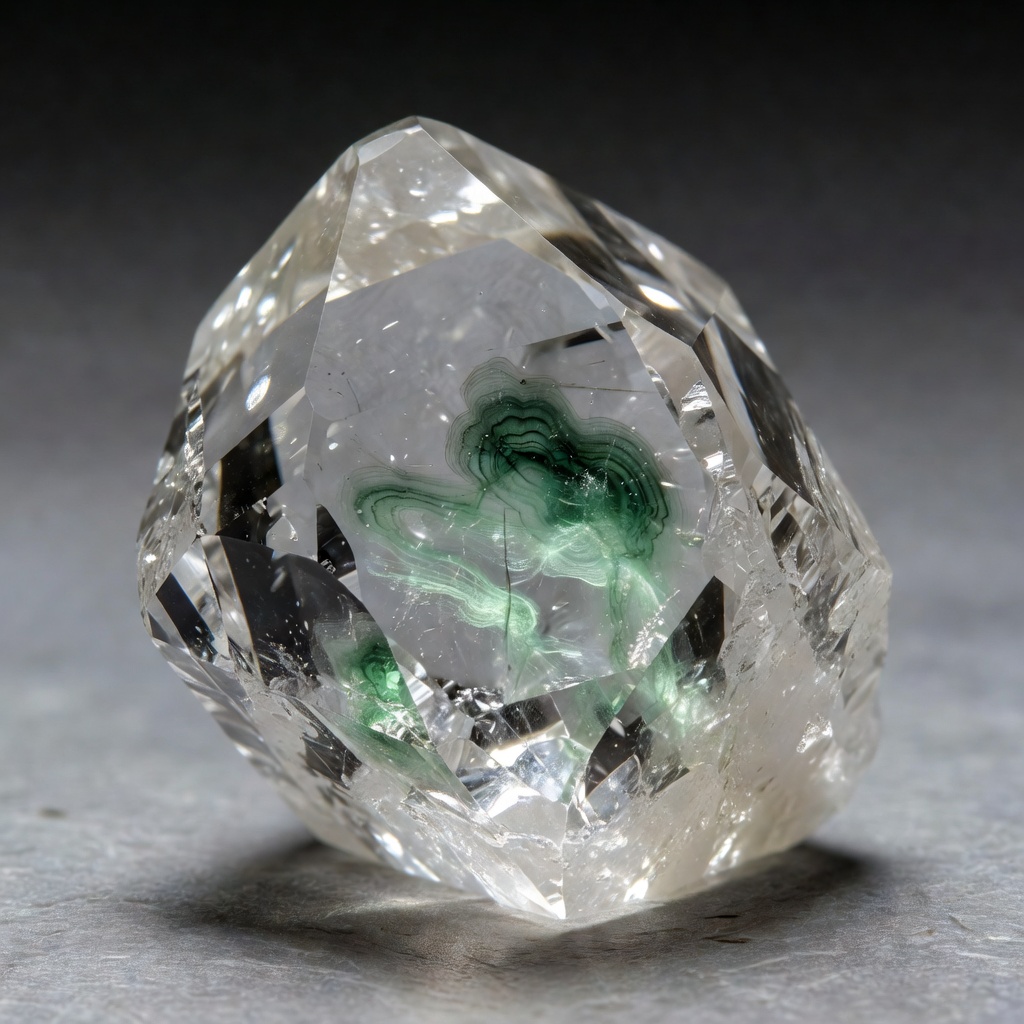
Phantom quartz represents one of nature's most fascinating geological time capsules, formed through a complex process spanning millions of years. During the crystal's growth cycle, environmental conditions occasionally interrupt the formation process, causing mineral-rich solutions to deposit microscopic layers of chlorite, hematite, or other minerals onto the existing crystal faces. When growth resumes, these mineral deposits become permanently trapped within the crystalline structure, creating distinct ghost-like outlines or "phantoms" that mirror the original shape of the crystal at that specific moment in time. The resulting formations offer collectors and metaphysical practitioners windows into the crystal's geological history, with each phantom layer representing a distinct chapter of mineral deposition.
Visually, authentic phantom quartz displays remarkable three-dimensional depth, with translucent or colored outlines floating mysteriously within the clear quartz matrix. These phantom layers may appear as faint shadows, sharp geometric outlines, or complex landscape-like scenes depending on the mineral content and growth conditions. High-quality specimens often reveal multiple phantom generations stacked within a single crystal point, creating intricate chronological records that mineralogists study to understand ancient environmental conditions. The clarity of the host quartz combined with the distinctness of these internal formations makes each piece uniquely identifiable.
Beyond its geological significance, phantom quartz carries profound phantom quartz meaning in metaphysical traditions worldwide. Crystal healers associate these stones with personal growth, transformation, and the integration of past experiences into present wisdom. The phantom layers symbolize the various stages of one's life journey, reminding practitioners that past challenges contribute to current strength and clarity. Many meditation practitioners work with phantom quartz to access past life memories, release old patterns, or gain perspective on long-term personal evolution, viewing the stone as a physical manifestation of the adage that we are the sum of our experiences.
Popular Types and Varieties
The world of phantom quartz encompasses diverse mineralogical variations, each offering distinct visual characteristics and energetic properties. Understanding these varieties proves essential for collectors seeking specific aesthetic or metaphysical qualities in their acquisitions. While all phantom quartz shares the common characteristic of internal growth interruptions, the specific minerals involved during these pauses create dramatically different appearances and market values.
Chlorite Phantom Quartz
Chlorite phantom quartz stands as perhaps the most recognizable variety, distinguished by its characteristic green coloration ranging from pale sage to deep forest hues. These specimens form when chlorite group minerals coat the crystal faces during growth interruptions, creating phantoms that often resemble mystical landscapes, underwater scenes, or moss-covered forests suspended within the quartz. Brazilian mines produce exceptional chlorite phantoms, particularly from the Minas Gerais region, where geological conditions create perfect environments for both quartz crystallization and chlorite deposition. Collectors particularly prize specimens where the green phantoms appear as sharply defined three-dimensional "ghosts" rather than diffuse clouds, especially when the chlorite forms distinct triangular or hexagonal outlines following the original crystal termination.
Amphibole Phantom Quartz
Amphibole phantom quartz, often called angel phantom quartz or celestial quartz, contains inclusions of amphibole group minerals including hornblende, riebeckite, or aegirine, resulting in striking red, yellow, orange, or white phantoms. These specimens command significant attention in the collector market due to their rarity and the dramatic contrast between the colored amphibole minerals and the transparent quartz host. The red and orange varieties particularly stand out, creating visual effects reminiscent of flames, wings, or celestial nebulae within the crystal structure. High-grade amphibole phantoms from Madagascar and Brazil often display multiple color zones within a single specimen, with different amphibole minerals creating layered rainbow effects that catch light dramatically when displayed in collections.
Garden Quartz vs Phantom Quartz
The relationship between garden quartz vs phantom quartz frequently confuses new collectors, though understanding the distinction helps in making informed purchasing decisions. Garden quartz specifically refers to quartz containing green chlorite inclusions that form landscape-like scenes resembling moss, ferns, or garden vistas, often with loose, organic shapes rather than sharp geometric phantoms. While all garden quartz containing distinct growth layers technically qualifies as phantom quartz, not all phantom quartz qualifies as garden quartz. True garden quartz emphasizes the scenic, landscape quality of the inclusions, whereas phantom quartz emphasizes the ghost-layer phenomenon regardless of the mineral type involved. Some dealers use the terms interchangeably, but strict mineralogists reserve "garden quartz" for specimens where the chlorite creates pictorial, landscape-like internal scenes rather than simple geometric phantom outlines.
Quality Factors That Determine Value
When conducting phantom quartz identification for valuation purposes, experienced collectors evaluate several critical characteristics that separate museum-quality specimens from commercial-grade material. The interaction between the host crystal's clarity and the phantom layer's definition creates the primary value determinant, requiring careful examination under various lighting conditions. Professional collectors often use fiber-optic lighting to illuminate specimens from below, revealing phantom structures invisible under normal viewing conditions and assessing the three-dimensional quality of the inclusions.
Clarity and transparency of the host crystal matrix serve as fundamental quality indicators, with water-clear quartz commanding premium prices over cloudy or heavily included material. However, collectors must distinguish between milkiness caused by microscopic fluid inclusions (which reduces value) and the natural haze sometimes present around phantom boundaries (which can enhance the ghost-like effect). The ideal specimen offers lens-like transparency through the quartz while maintaining sharp contrast at the phantom interfaces. Brazilian specimens often achieve this balance perfectly, offering glass-like clarity that makes phantom layers appear to hover mysteriously within the crystal.
The sharpness and definition of phantom layer boundaries significantly impact collector interest and market pricing. Premium specimens display phantoms with knife-edge sharpness, where the mineral inclusion creates a distinct, crisp line separating the original crystal face from the new growth. Diffuse, fuzzy phantoms suggest either natural erosion of the crystal face before mineral deposition or lower-quality formation conditions. Additionally, color saturation and distribution play crucial roles; vivid, evenly distributed colors throughout the phantom layer indicate high mineral concentration during formation, while patchy or pale coloration suggests sparse mineral availability. Specimens showing multiple, well-defined phantom generations stacked like geological pancakes represent the pinnacle of collectibility, documenting several distinct growth phases within a single crystal.
Phantom Quartz Pricing Guide
Understanding phantom quartz price structures requires recognizing the vast spectrum between mass-produced tumbled stones and singular museum specimens that appreciate as alternative investments. Entry-level collectors can acquire small tumbled phantom quartz pieces, typically measuring one to two inches, for modest investments ranging from $10 to $30 at mineral shows or online marketplaces. These commercial-grade pieces usually display single, somewhat diffuse phantoms in common chlorite green, offering newcomers accessible entry points into phantom quartz collecting without significant financial commitment.
Mid-range specimens featuring sharp, clearly defined phantoms in desirable colors command substantially higher prices, typically falling between $100 and $500 depending on size and specific characteristics. A three-inch chlorite phantom cluster with museum-quality clarity and sharp green outlines might retail for $250-$400, while comparable amphibole specimens with red or orange phantoms often reach $400-$600 due to relative scarcity. Large display specimens exceeding six inches with exceptional phantom visibility, multiple growth phases, or rare mineral combinations regularly achieve four-figure valuations, particularly when accompanied by documentation verifying the specific mine of origin.
Rarity of specific inclusion colors dramatically affects market dynamics, with red and orange amphibole phantoms consistently outpacing common green chlorite varieties in price-per-gram calculations. Crystal size follows non-linear pricing curves, where doubling the crystal size often quadruples the price due to the geological rarity of large, inclusion-free quartz hosts capable of preserving pristine phantom structures. Furthermore, specimens exhibiting unusual phantom orientations—such as phantoms oriented perpendicular to the crystal axis or multiple phantoms creating three-dimensional geometric patterns—command significant premiums from specialized collectors seeking unique additions to mineralogical displays.
How to Identify Authentic vs. Fake Phantom Quartz
The growing popularity of phantom quartz has unfortunately spawned sophisticated counterfeiting operations, making phantom quartz identification skills essential for serious collectors. Artificially created phantoms typically involve dyeing clear quartz crystals, injecting colored epoxy into fractures, or heat-treating stones to create false color zones that mimic natural mineral inclusions. Learning to distinguish these fakes protects both your collection's integrity and your investment portfolio from fraudulent material that holds no geological or resale value.
Natural phantom quartz exhibits gradual color transitions following the crystal's natural growth patterns, with inclusion minerals concentrating along specific crystallographic planes that respect the hexagonal symmetry of quartz. Authentic phantoms appear three-dimensional when rotated under light, showing depth and structure that extends into the crystal rather than sitting superficially on surfaces. Conversely, dyed fakes often display unnaturally uniform colors that ignore crystallographic constraints, or show color concentrations exclusively along surface-reaching fractures where dyes penetrated the stone. When examined with a 10x loupe, artificial colorants often reveal bleeding along fracture lines or color gradients that run perpendicular to natural growth directions.
Simple at-home tests help verify authenticity without requiring laboratory equipment. The hot point test, performed carefully with a heated needle on inconspicuous areas, detects epoxy fillers through acrid chemical smells or melting reactions absent in natural stone. Immersing suspected stones in water or mineral oil sometimes reveals dye bleeding in treated material. Additionally, natural phantom quartz feels noticeably cooler than ambient temperature due to quartz's thermal properties, while resin-filled fakes warm quickly in the hand. Purchasing from dealers who provide detailed provenance documentation and offer inspection periods remains the safest strategy, particularly when investing in high-value specimens where laboratory spectroscopic analysis might warrant the additional expense for certainty.
Where to Buy High-Quality Phantom Quartz
Executing a successful Phantom Quartz Buying Guide strategy requires identifying reputable sources capable of providing authentic, ethically sourced specimens with transparent disclosure of any treatments. Established online mineral dealers specializing in quartz varieties offer the most reliable purchasing avenues, particularly those providing high-resolution photography from multiple angles, including backlit images that reveal phantom structures. Dealers like The Arkenstone, iRocks, or specialized Brazilian mineral direct-import operations maintain reputations built on decades of accurate representation and geological expertise, often providing detailed locality information crucial for serious collectors.
When evaluating potential vendors, astute buyers ask specific questions regarding sourcing practices, treatment disclosures, and return policies. Reputable sellers willingly disclose whether specimens have been heated, oiled, or otherwise enhanced, and can provide specific mine locations—particularly important for Brazilian material from renowned localities like Bahia or Minas Gerais. Request information about the mining conditions and whether specimens were obtained through fair-trade practices, as ethical sourcing increasingly influences collector values. Avoid vendors using stock photos rather than images of the specific specimen for sale, or those offering unrealistically low prices on supposedly rare varieties like red amphibole phantoms, which almost certainly indicates fraudulent material.
Red flags signaling potentially fraudulent sellers include vague locality descriptions ("from Brazil" rather than specific mines), refusal to provide additional photographs upon request, or pressure tactics suggesting artificial scarcity. Social media marketplace purchases require heightened vigilance; while legitimate dealers operate through these platforms, the anonymous nature facilitates scams involving dyed glass or plastic composites passed off as natural phantom quartz. Gem and mineral shows offer excellent opportunities for hands-on evaluation, allowing buyers to examine phantom definition under proper lighting and verify weight and temperature characteristics impossible to assess online. Building relationships with established dealers at these shows often provides first access to new finds before specimens reach broader markets.
Caring for Your Phantom Quartz Collection
Proper maintenance preserves both the physical integrity and energetic properties of phantom quartz, ensuring these geological treasures remain pristine for future generations. Despite quartz's relative hardness of 7 on the Mohs scale, the delicate phantom layers within require gentler handling than solid quartz crystals, as aggressive cleaning methods can damage the inclusion interfaces or remove subtle surface deposits that enhance visual depth. Understanding appropriate care protocols protects your investment while maintaining the stone's aesthetic and metaphysical qualities.
Safe cleaning methods prioritize mild, non-invasive techniques that remove dust and oils without risking the phantom structures. Lukewarm water with mild, phosphate-free soap applied with soft microfiber cloths effectively cleans most specimens without chemical risks. Ultrasonic cleaners, while suitable for solid quartz, potentially loosen phantom layers or exacerbate internal fractures near inclusion boundaries, making manual cleaning preferable for valuable specimens. After washing, air-drying away from direct sunlight prevents thermal shock, while storing specimens in individual padded compartments prevents scratching—particularly important for display pieces where surface scratches diffract light and obscure phantom visibility.
Beyond physical care, many collectors maintain phantom quartz meaning through energetic cleansing practices aligned with metaphysical traditions. Moonlight bathing during full moons, burial in dry sea salt for 24 hours, or smudging with sage and Palo Santo represent popular methods for clearing accumulated energies without physical risk to the stone. Some practitioners program their phantom quartz with specific intentions related to personal growth, utilizing the stone's natural association with transformation and evolutionary processes. When displaying collections, consider rotating specimens periodically to prevent permanent color fading in amphibole varieties, as prolonged exposure to intense sunlight can bleach red and yellow inclusions over decades, significantly reducing both aesthetic appeal and monetary value.
Investment Potential and Collectibility
Serious mineral collectors increasingly view high-grade phantom quartz as tangible alternative investments, with certain varieties demonstrating consistent appreciation trajectories that outperform traditional collectible markets. Rare amphibole phantoms, particularly those displaying vivid red or orange colors with sharp definition, have appreciated 200-300% over the past decade as Brazilian and Madagascar deposits yield increasingly fewer museum-quality specimens. Similarly, large chlorite phantom clusters exceeding five pounds with exceptional clarity represent finite geological resources that grow scarcer as mining operations exhaust accessible pockets.
Building a diverse collection requires strategic acquisition across different inclusion types, sizes, and localities to hedge against market fluctuations in specific varieties. Investors should prioritize specimens with documented provenance from depleted or regulated mines, as these carry premium scarcity value. Documentation proves crucial for resale value; maintaining detailed records of purchase dates, prices, vendor information, and any laboratory certifications creates provenance chains that significantly enhance liquidity when selling to other collectors or auction houses. Photographing specimens upon acquisition establishes condition baselines essential for insurance valuations and future sales negotiations.
Market trends indicate increasing demand for "self-collected" specimens with verifiable mining documentation, as collectors seek ethical sourcing assurances alongside geological authenticity. Investment-grade specimens should display characteristics that appeal to multiple buyer demographics: sharp phantom definition for mineralogical purists, aesthetic appeal for interior designers, and manageable sizes for display flexibility. While small tumbled pieces serve entry-level markets, serious investment focuses on large cabinet specimens (6+ inches) with multiple phantom generations or rare color combinations. As with fine art, condition significantly impacts value—specimens with chips, fractures, or faded colors should be avoided unless priced accordingly for restoration projects or lapidary material.
Frequently Asked Questions
What exactly is phantom quartz and how does it form naturally?
Phantom quartz forms when crystal growth pauses and mineral deposits (like chlorite or iron oxide) coat the crystal faces, then growth resumes, trapping the ghost-like outline of the earlier crystal point inside the new growth layers over millions of years.
How much should I expect to pay for quality phantom quartz?
Small tumbled phantom quartz pieces typically cost $10-$30, while high-quality display specimens with sharp, colorful phantoms can range from $100 to $500+. Rare large clusters with exceptional clarity may command $1,000 or more depending on the inclusion type.
How can I tell if my phantom quartz is real or artificially created?
Natural phantom quartz shows gradual color transitions and three-dimensional phantom layers that follow the crystal's natural growth patterns. Fakes often display unnaturally uniform colors, surface-level dye penetration, or phantoms that look painted on rather than integrated into the crystal structure.
What is the difference between phantom quartz and garden quartz?
While often used interchangeably, garden quartz specifically refers to quartz with green chlorite inclusions resembling landscapes or gardens. Phantom quartz is broader, describing any quartz with visible ghost layers from any mineral type, including chlorite, hematite, or amphibole.
Which color of phantom quartz is most valuable?
Red and orange amphibole phantom quartz typically commands the highest prices due to rarity, followed by vivid green chlorite phantoms. Clear quartz with sharply defined black hematite phantoms is also highly sought after by collectors.
Is phantom quartz durable enough for jewelry making?
With a hardness of 7 on the Mohs scale, phantom quartz is durable for jewelry but requires protective settings due to potential cleavage planes. Pendants and earrings are safer choices than rings, which receive more impact.
Where are the best places to buy authentic phantom quartz online?
Look for established dealers who provide detailed photos, disclose any treatments, offer return policies, and specialize in mineral specimens rather than generic crystal shops. Reputable gem shows and directly sourcing from miners in Brazil or Madagascar are also excellent options.