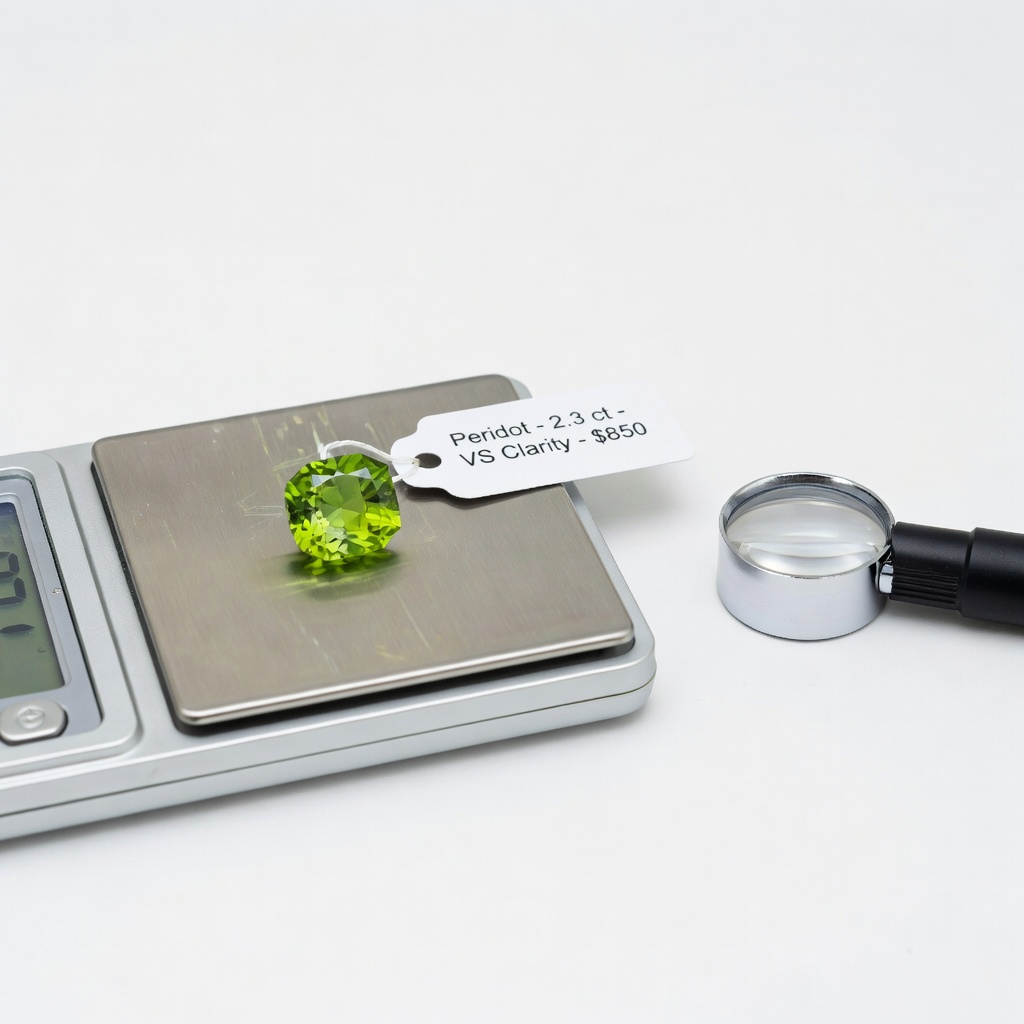
Understanding Peridot Prices: A Complete Guide
Peridot stands as one of the gemstone world's best-kept secrets, offering exceptional beauty at a fraction of the cost of emeralds or sapphires. This comprehensive peridot price guide reveals why this lime-green treasure remains accessible to collectors and jewelry enthusiasts across all budget levels. Whether you are searching for an August birthstone gift, expanding your gemstone collection, or designing custom jewelry, understanding current market valuations ensures you never overpay for quality.
Throughout this detailed analysis, you will discover the intricate factors that influence peridot cost per carat, from geographic origins to clarity grades that separate museum-quality specimens from commercial stones. We will explore the subtle distinctions between Pakistani Kashmiri peridot and Arizona-mined varieties, examine how treatment affects long-term value, and provide actionable strategies for negotiating the best prices. By the conclusion, you will possess the knowledge to evaluate peridot like a trained gemologist, confidently assessing whether a $50 stone or a $500 specimen represents fair market value.
What Makes Peridot Special?
Peridot belongs to the olivine mineral family, a magnesium iron silicate formed deep within Earth's mantle and brought to the surface through volcanic activity and meteorite impacts. Unlike most gemstones that crystallize in Earth's crust, peridot originates 20 to 55 miles beneath the surface, making its journey to jewelry stores a geological miracle spanning millions of years. This unique formation process creates the distinctive lime-green to olive color spectrum that distinguishes peridot gemstone from other green stones.
The color intensity of peridot depends entirely on iron content within its crystal structure, producing hues ranging from yellowish-green to deep olive-brown. Ancient civilizations treasured this gemstone long before modern mining techniques existed, with Egyptians mining peridot on the Red Sea island of Zabargad as early as 1500 BCE. Hawaiian cultures revered peridot as the tears of Pele, their volcano goddess, believing the gemstone embodied the essence of volcanic fire and natural power.
Modern metaphysical practitioners continue to value peridot as the August birthstone, attributing to it properties of prosperity, growth, and emotional healing. Its association with the heart chakra makes it particularly popular in wellness jewelry, while its relatively affordable price point allows designers to create statement pieces without the prohibitive costs associated with emeralds or tsavorites. This combination of historical significance, unique geological origins, and accessible pricing establishes peridot as a distinctive choice for discerning buyers.
Key Factors That Determine Peridot Value
Understanding peridot value factors requires examining four primary characteristics that gemologists use to grade these olive-green treasures. Color serves as the most critical determinant, with pure grass green specimens commanding significant premiums over stones exhibiting yellowish or brownish undertones. The ideal peridot displays a medium-dark tone with vivid saturation, avoiding the pale, washed-out appearance of lower-quality material or the overly dark, muddy tones that obscure brilliance.
Clarity standards for peridot differ from diamonds, as most connoisseurs accept minor inclusions that do not detract from the stone's beauty when viewed with the naked eye. However, visible black spots, surface-reaching fractures, or cloudy areas significantly reduce value. Eye-clean stones, those without visible inclusions at six inches under normal lighting, represent the benchmark for fine quality and command prices 40-60% higher than included specimens.
Cut quality dramatically affects how peridot displays its signature color and fire. Master cutters orient the crystal to minimize windowing (light leakage through the bottom) while maximizing brilliance through proper pavilion angles. Poorly cut stones may appear lifeless despite excellent raw material, while precision cutting can elevate mediocre rough into spectacular gems. Additionally, peridot quality grades shift dramatically based on carat weight, with prices increasing exponentially above three carats due to the rarity of large, clean crystals.
Geographic origin significantly influences pricing within the peridot market. Pakistani material from the Kashmir region, particularly from the Suppatt and Sapat mines, produces the most coveted stones with intense green color and exceptional clarity. Burmese peridot from the Mogok region offers similar quality, while Arizona peridot from the San Carlos Reservation provides more abundant but typically smaller and slightly yellower material. Origin documentation can increase prices by 25-100% for premium Pakistani specimens compared to comparable Arizona stones.
Peridot Cost Per Carat: 2024 Price Ranges
Current peridot market trends indicate stable pricing with modest annual increases of 3-5% for fine material, making this an excellent time for acquisition. Understanding peridot cost per carat requires segmenting the market by size categories, as prices do not scale linearly with weight. Stones under one carat represent the most accessible entry point, with commercial quality material ranging from $15 to $50 per carat, while fine specimens in this size category command $80 to $150 per carat.
The one to three carat range serves as the sweet spot for most jewelry applications, with good quality peridot typically selling between $50 and $150 per carat. In this category, color consistency becomes crucial, as matched pairs for earrings or multiple stones for bracelets require uniform appearance. Prices escalate significantly in the three to five carat range, where premium specimens fetch $150 to $300 per carat, reflecting the increasing rarity of clean material at these sizes.
Museum-quality peridot exceeding five carats represents true collector territory, with exceptional stones commanding $300 to $500 or more per carat. These large crystals typically originate from Pakistan or Burma, displaying the pure green color that justifies premium pricing. When comparing value propositions, peridot offers remarkable affordability relative to other green gemstones; fine peridot costs approximately 1/10th to 1/20th the price of comparable emeralds and roughly half the cost of tsavorite garnet, while offering superior durability for daily wear.
Peridot Quality Grades Explained
Professional gem dealers categorize peridot quality grades into four distinct tiers that help consumers navigate the market efficiently. Commercial grade peridot, priced between $10 and $30 per carat, typically presents pale yellow-green coloration with visible inclusions, poor cutting proportions, and windowing that reduces brilliance. While suitable for fashion jewelry or beading projects, these stones lack the depth of color that defines fine peridot and may appear washed out in certain lighting conditions.
Good grade peridot ranges from $30 to $80 per carat and represents the minimum standard for fine jewelry. These stones display medium green color with minor inclusions visible only under 10x magnification, paired with decent cutting that produces acceptable brilliance. This grade works beautifully in earrings and pendants where stones receive less scrutiny than rings, offering excellent value for buyers seeking genuine peridot without premium pricing.
Fine grade peridot, commanding $80 to $200 per carat, showcases rich green color approaching the coveted grass-green ideal, eye-clean clarity, and excellent cutting that maximizes light return. These stones typically originate from Pakistan or Burma and represent the benchmark for serious collectors. When shopping for this grade, examine the stone under natural daylight, incandescent, and LED lighting to confirm color stability across different environments.
Extra fine peridot, exceeding $200 per carat, features vivid pure green color without secondary hues, flawless clarity under magnification, perfect cutting proportions, and documented rare origins such as Kashmir or historic Burmese mines. These investment-grade stones appreciate consistently and often appear at auction houses or specialized gem dealers rather than mainstream jewelry stores. Identifying this grade requires certification from recognized laboratories like GIA or AGS, confirming untreated status and origin when possible.
Natural vs. Treated Peridot: Price Differences
Unlike many gemstones that undergo routine enhancement, approximately 95% of peridot enters the market completely natural and untreated, a fact that appeals to purist collectors. The remaining 5% may receive heat treatment to improve color, though this practice remains controversial within the industry due to peridot's inherent instability under extreme temperature changes. Natural peridot vs treated distinctions significantly impact both value and long-term durability, making disclosure requirements essential for ethical transactions.
Heat treatment of peridot typically occurs at temperatures between 400-600 degrees Celsius to reduce yellowish tones and enhance green saturation. However, treated stones often exhibit reduced value, selling for 30-50% less than their untreated counterparts of equivalent appearance. Detection requires spectroscopic analysis or microscopic examination for specific inclusion patterns altered by heating. Reputable dealers always disclose treatments, and certification from laboratories like GIA explicitly states enhancement status.
When purchasing peridot, request documentation confirming natural status, particularly for stones exceeding $300. Untreated peridot offers superior long-term stability and resale value, while treated material, though initially attractive, may suffer from color fading or brittleness over time. Ethical considerations also favor natural stones, as untreated peridot represents Earth's creation without human intervention, aligning with sustainable and transparent sourcing principles increasingly important to modern consumers.
Best Places to Buy Peridot Gemstones
Navigating the marketplace for buying peridot gemstone requires understanding the advantages and risks associated with different purchasing channels. Online retailers such as Blue Nile and James Allen offer extensive inventories with 360-degree video technology that allows detailed virtual inspection, often at prices 20-40% below traditional brick-and-mortar stores. These platforms provide generous return policies, typically 30 days, allowing laboratory verification before final commitment.
Local independent jewelers offer the irreplaceable advantage of physical inspection, enabling buyers to examine color under various lighting conditions and assess cutting quality through direct observation. Building relationships with neighborhood gemologists often yields access to unlisted inventory and trade-in opportunities for future upgrades. However, local selection may prove limited, particularly for larger stones exceeding three carats or rare Pakistani origins.
Gem shows and trade events provide direct access to wholesalers and cutters, eliminating retail markups for knowledgeable buyers. Events like the Tucson Gem and Mineral Show or regional jewelry trade fairs offer opportunities to examine rough material and finished stones from specific mines. Auction houses including Sotheby's and Christie's occasionally feature rare, museum-quality peridot for serious collectors, though buyer's premiums typically add 15-25% to hammer prices.
Regardless of purchasing venue, verify four critical elements before transaction completion: independent certification from GIA, AGS, or equivalent laboratories; clear return policies allowing professional appraisal; origin documentation for premium material; and secure payment methods offering buyer protection. For peridot market trends indicate increasing importance of ethical sourcing, inquire about mining practices and community impact, particularly for Arizona San Carlos material sourced from Native American mining operations.
Expert Tips for Buying Peridot at the Right Price
Successful buying peridot gemstone strategies begin with comprehensive market research across multiple vendors before committing to purchase. Always compare prices for comparable quality stones across at least three reputable sellers, including online platforms, local jewelers, and specialized gem dealers. This comparison shopping reveals market averages and identifies outliers pricing material significantly above or below fair value, protecting you from both overpayment and suspiciously low prices indicating synthetic or treated material.
For purchases exceeding $300, insist on independent certification from the Gemological Institute of America (GIA) or American Gem Society (AGS). These reports confirm natural origin, absence of treatment, and provide objective assessments of color, clarity, and carat weight. While certification adds $50-100 to purchase price, this investment proves essential for insurance purposes, resale value, and peace of mind regarding authenticity.
Examining peridot under multiple light sources prevents disappointment after purchase. Natural daylight reveals true color, while incandescent lighting may enhance yellow tones, and LED lighting can make stones appear cooler or more blue-green. Request viewing videos or in-person examination under these different conditions to ensure color satisfaction across all environments. Additionally, thoroughly understand return windows and restocking fees; reputable sellers offer at least 14 days for inspection, while some discount vendors impose strict no-return policies on loose gemstones.
Finally, resist paying premiums for brand names or designer labels when purchasing loose stones. A peridot's value derives from its intrinsic qualities—color, clarity, cut, and carat—not the logo on the box. Allocate your budget toward superior stone quality rather than marketing overhead, focusing on eye-clean clarity and vivid green color that will provide lasting satisfaction regardless of current fashion trends.
Peridot Jewelry Price Guide: Rings, Earrings & More
When evaluating peridot jewelry prices, the setting quality often rivals or exceeds the gemstone cost, particularly for smaller stones under two carats. Solitaire peridot rings range from $150 for sterling silver settings with commercial grade stones to $800 or more for platinum or 18k gold mountings featuring fine quality gems. The setting craftsmanship dramatically affects durability and appearance; poorly constructed prongs risk stone loss, while superior metalwork enhances the gem's presentation through proper light exposure.
Stud earrings represent popular entry points for peridot jewelry, typically costing $100 to $400 depending on matched pair size and quality. Matched pairs command premiums over single stones due to the difficulty of finding two peridots with identical color, clarity, and cutting proportions. When purchasing studs, verify that both stones originate from the same geographic source to ensure color consistency, as mixing Arizona and Pakistani material often results in noticeable mismatch.
Pendants and necklaces offer versatile styling options ranging from $200 for simple bezel-set solitaires to $1,500 or more for elaborate designs featuring diamond accents or intricate metalwork. The necklace chain quality significantly impacts overall value; 14k or 18k gold chains provide longevity superior to gold-plated alternatives that may wear thin within months. Designer pieces from luxury brands like Tiffany or Cartier command premiums of 200-500% over intrinsic stone value, appealing to brand-conscious consumers but offering poor value for those prioritizing gemstone quality.
Evaluating craftsmanship requires examining prong symmetry, setting security, and finish quality. High-quality peridot jewelry features smoothly polished interiors that prevent skin irritation, securely tightened prongs that grip without crushing the gem, and hallmarks indicating metal purity. For vintage or antique peridot pieces, inspect for loose stones, worn prongs, or previous repairs that may affect structural integrity and long-term wearability.
Is Peridot a Good Investment?
Analyzing peridot market trends reveals a gemstone suited primarily for personal enjoyment rather than speculative financial investment. While fine peridot appreciates steadily at 3-5% annually, this growth rate barely outpaces inflation and lacks the dramatic value increases seen in rare diamonds, untreated rubies, or alexandrite. Market demand remains consistent due to peridot's status as August birthstone and its popularity in Bohemian-inspired jewelry, but this stable demand does not generate the scarcity-driven price spikes that characterize true investment-grade gemstones.
The resale reality for peridot proves challenging for those expecting liquidity. Secondary market values typically range from 30-50% of original retail prices, similar to most consumer jewelry, due to the significant markups applied by retailers and the limited auction market for mid-range material. Unlike gold or platinum, peridot does not function as a fungible commodity, and finding buyers for pre-owned stones requires patience and realistic pricing expectations.
However, exceptions exist for truly exceptional specimens. Museum-quality peridot exceeding ten carats from historic Pakistani mines or documented Burmese material occasionally appears at specialty auctions, sometimes appreciating significantly over decades. These collectible stones possess documented provenance, exceptional color, and flawless clarity that distinguish them from commercial material. For the average collector, peridot offers excellent value as wearable art and heirloom jewelry, but funds allocated specifically for investment purposes would better serve in traditional vehicles or rarer gemstone categories.
Long-term ownership of peridot provides intangible returns through daily enjoyment, birthstone significance, and the satisfaction of owning a natural gemstone formed by volcanic forces. Rather than viewing peridot as a financial instrument, consider it an affordable luxury that maintains value better than costume jewelry while providing the aesthetic pleasure of fine green gemstone at accessible price points.
Frequently Asked Questions About Peridot Pricing
How much does a 1 carat peridot cost?
A 1 carat peridot typically costs between $50-150 for good to fine quality. Commercial grade stones can be found for $15-30, while extra fine specimens may reach $200-250 per carat.
What color peridot is most valuable?
The most valuable peridot displays a pure grass green without yellow or brown undertones. Stones with intense saturation and medium-dark tone from Pakistan command the highest prices.
Is peridot expensive compared to other gems?
Peridot is one of the more affordable gemstones. It's significantly less expensive than emerald or tsavorite garnet, but more valuable than common stones like citrine or amethyst of similar size and quality.
Does peridot increase in value over time?
Fine peridot appreciates modestly at 3-5% annually, but commercial grade stones rarely increase in value. It's best purchased for enjoyment rather than investment, as resale typically yields 30-50% of retail price.
How can I tell if peridot is real?
Real peridot has a distinctive lime-green color, doubles refraction visible under magnification, and may contain lily-pad inclusions. Purchase certified stones and have them appraised by a GIA gemologist to ensure authenticity.
Where does the most valuable peridot come from?
Pakistan's Kashmir region produces the most valuable peridot with exceptional color and clarity. Burmese peridot is also highly prized. Arizona peridot is more abundant and typically less expensive.
Should I buy peridot online or in a physical store?
Online retailers offer better prices (20-40% less) and larger selections with 360° videos. Physical stores allow hands-on inspection. For stones over $500, consider in-person viewing or purchase from online sellers with excellent return policies.
What's the difference between cheap and expensive peridot?
Cheap peridot ($15-30/carat) appears pale yellow-green with visible inclusions and poor cuts. Expensive peridot ($200+/carat) showcases vivid pure green color, is eye-clean, excellently cut, and often originates from premium sources like Pakistan.